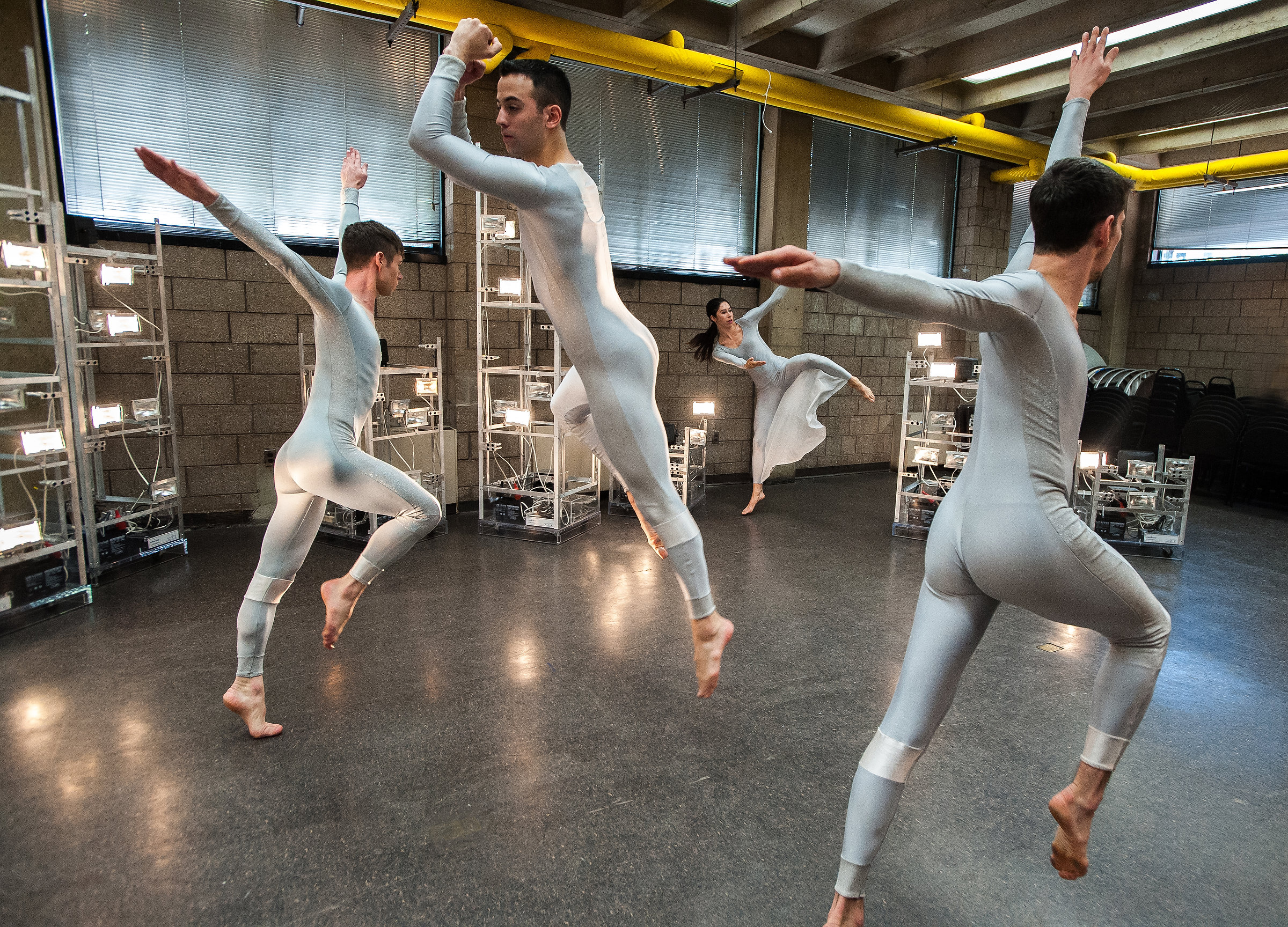
Trisha Brown’s ASTRAL CONVERTED will be performed July 10-14 at the Park Ave. Armory (photo © Stephanie Berger 2012)
Park Avenue Armory
643 Park Ave. at 67th St.
July 10-14, $35-$45, 7:30
212-933-5812
www.armoryonpark.org
www.trishabrowncompany.org
Last year, the Trisha Brown Dance Company celebrated its fortieth anniversary by presenting new works and updated repertory pieces at such locations as the Whitney, the High Line, and, for the first time ever, Dance Theater Workshop. Following a series of open rehearsals, lectures, panel discussions, and children’s workshops on Governors Island as part of the River to River Festival this summer, the company will premiere its latest work, a reconstruction of 1991’s Astral Converted, at another offbeat location, the Park Ave. Armory’s cavernous Ward Thompson Drill Hall, from July 10 to 14. Originally adapted from 1989’s Astral Convertible, Astral Converted features an extraordinary pair of collaborators: Robert Rauschenberg, who designed the set and lighting with Ken Tabatchnik as well as the costumes, and John Cage, who composed the score, which is impacted by motion detectors triggered by the dancers’ movement. The fifty-five-minute Astral Converted is the finale of Brown’s Valiant series, which began in 1985 with Lateral Pass and continued with 1987’s Newark, Astral Convertible, and 1990’s Foray Forêt. In conjunction with the performances, there will be a number of public programs held at the armory, including free screenings July 11-14 at 6:30 of Burt Barr’s 1990 documentary, Aeros, which goes behind the scenes with Brown; the preshow talk “Trisha Brown & John Cage: Seeing the Score” with Julie Martin and Susan Rosenberg on July 10 ($10, 6:00); the postshow talk “Reconstructing Astral Converted” on July 11 with Kristy Edmunds and members of the company and crew (free for ticket holders); the postshow talk “Deconstructing Astral Converted” on July 13 with Neal Beasley and members of the company (free for ticket holders); an onstage master class with company dancer Samuel Wentz on July 14 at 10:00 am ($15 for preregistration, $20 for walk-ins); and an “Astral Artists” family workshop on July 14 (free for ticket holders but advance registration is required).
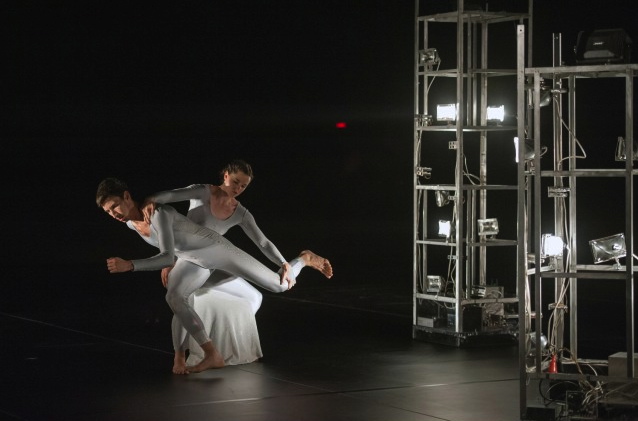
Samuel Wentz and Megan Madorin go cosmic in beautifully reconstructed ASTRAL CONVERTED (photo by Stephanie Berger)
Update: As Trisha Brown’s reconstructed Astral Converted begins, it appears to have picked up right after the previous exhibition in the massive Wade Thompson Drill Hall, Tom Sachs’s charming “Space Program: Mars.” Robert Rauschenberg’s eight wheeled metal towers, which contain car batteries, headlights, and speakers that are triggered by motion, look like leftover lunar equipment from Sachs’s engaging re-creation, and Rauschenberg’s costumes evoke space suits, although much tighter fitting. Even the dancers’ graceful, elegant, fluid movements recall astronauts floating in zero gravity. And when two of the dancers pick up large brooms, well, it’s as if they’re cleaning up the mess left behind when Sachs unsuccessfully tried to dig up the armory floor / lunar landscape. Set to a dazzling electronic score by John Cage — although on opening night the sound of a photographer snapping away in the balcony during the live performance proved to be rather distracting — Astral Converted is a beautiful piece, fifty-five smooth-flowing minutes of human and mechanical interaction, as the towers are occasionally moved around the stage to provide barriers as well as companionship. The dancers — Patrick Ferreri, Tara Lorenzen, Megan Madorin, Leah Morrison, Tamara Riewe, Jamie Scott, Stuart Shugg, Nicholas Strafaccia, and Samuel Wentz — wait their turn on the dark sidelines, then slither across the black mat and fold their bodies into unusual shapes with an intoxicating gentleness that is reminiscent of some of the movement in Stanley Kubrick’s 2001: A Space Odyssey. Running through July 14 at the Park Ave. Armory, Astral Converted, which made its debut in 1991 in Washington, DC, outside by the Mall, is a wonderfully cosmic experience reconstituted for a terrific indoor location that continues to surprise with its many splendid presentations.
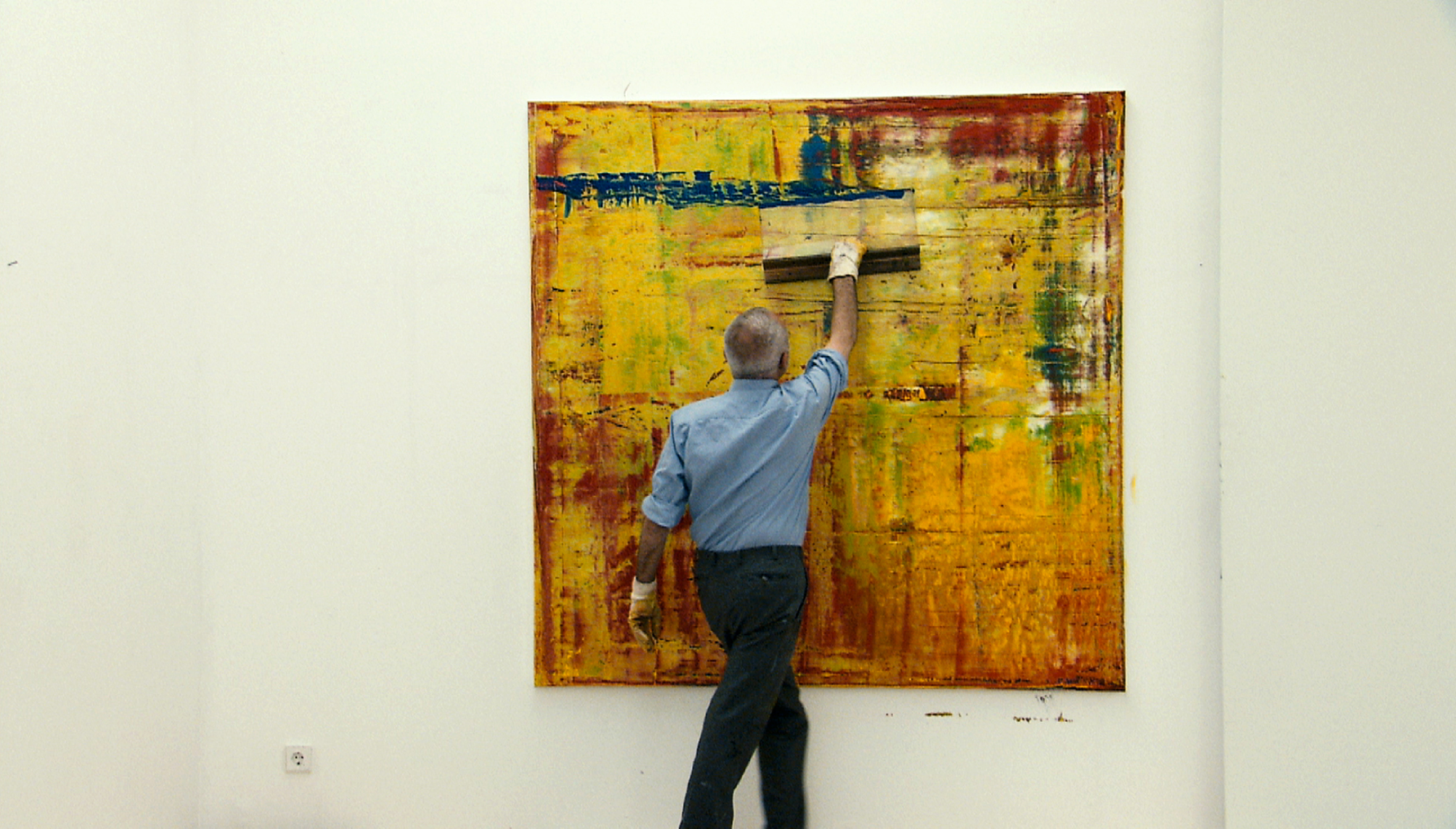
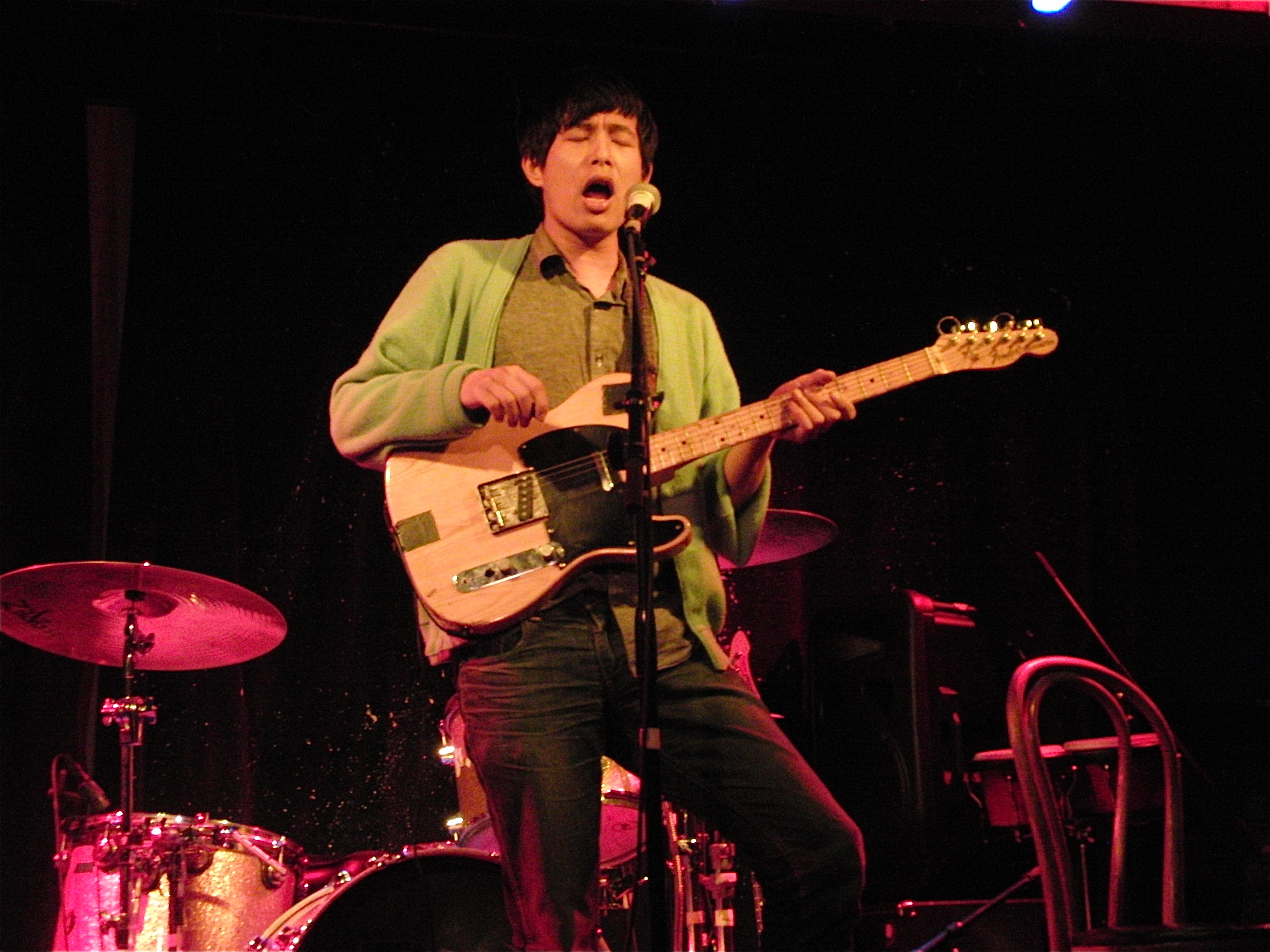
 There’s nothing abstract about the title of Corinna Belz’s documentary on German artist Gerhard Richter, no missing words or punctuation marks. Gerhard Richter Painting is primarily just that: Ninety-seven minutes of Gerhard Richter painting as he prepares for several exhibitions, including a 2009 show at the Marian Goodman Gallery in New York City. In 2007, Belz got a rare chance to capture Richter on camera, making a short film focusing on the stained-glass window he designed for the Cologne Cathedral. Two years later, the shy, reserved German artist, who prefers to have his art speak for itself, invited Belz into his studio, giving her remarkable access inside his creative process, which revealingly relies so much on chance and accident. Belz films Richter as he works on two large-scale canvases on which he first slathers yellow paint, adds other colors, then takes a large squeegee and drags it across the surface, changing everything. It’s fascinating to watch Richter study the pieces, never quite knowing when they are done, unsure of whether they are any good. It’s also painful to see him take what looks like an extraordinary painting and then run the squeegee over it yet again, destroying what he had in order to see if he can make it still better. “They do what they want,” he says of the paintings. “I planned something totally different.” About halfway through the film, a deeply concerned Richter starts regretting his decision to allow the camera into his studio. “It won’t work,” he says. “At the moment it seems hopeless. I don’t think I can do this, painting under observation. That’s the worst thing there is.” But continue he does, for Belz’s and our benefit. Belz (Life After Microsoft) even gets Richter to talk a little about his family while looking at some old photos, offering intriguing tidbits about his early life and his escape to Düsseldorf just before the Berlin Wall went up. Belz also includes clips from 1966 and 1976 interviews with Richter, and she attends a meeting he has with Goodman about his upcoming show, lending yet more insight into the rather eclectic artist. “To talk about painting is not only difficult but perhaps pointless, too,” Richter, who turned eighty last month, says in the 1966 clip. However, watching Gerhard Richter Painting is far from pointless; Belz has made a compelling documentary about one of the great, most elusive artists of our time. “Man, this is fun,” Richter says at one point, and indeed it is; watching the masterful artist at work is, well, a whole lot more fun than watching paint dry. Gerhard Richter Painting is screening at Symphony Space on July 8, 15, and 22 at 8:00 as part of the ongoing series Thalia Film Sundays.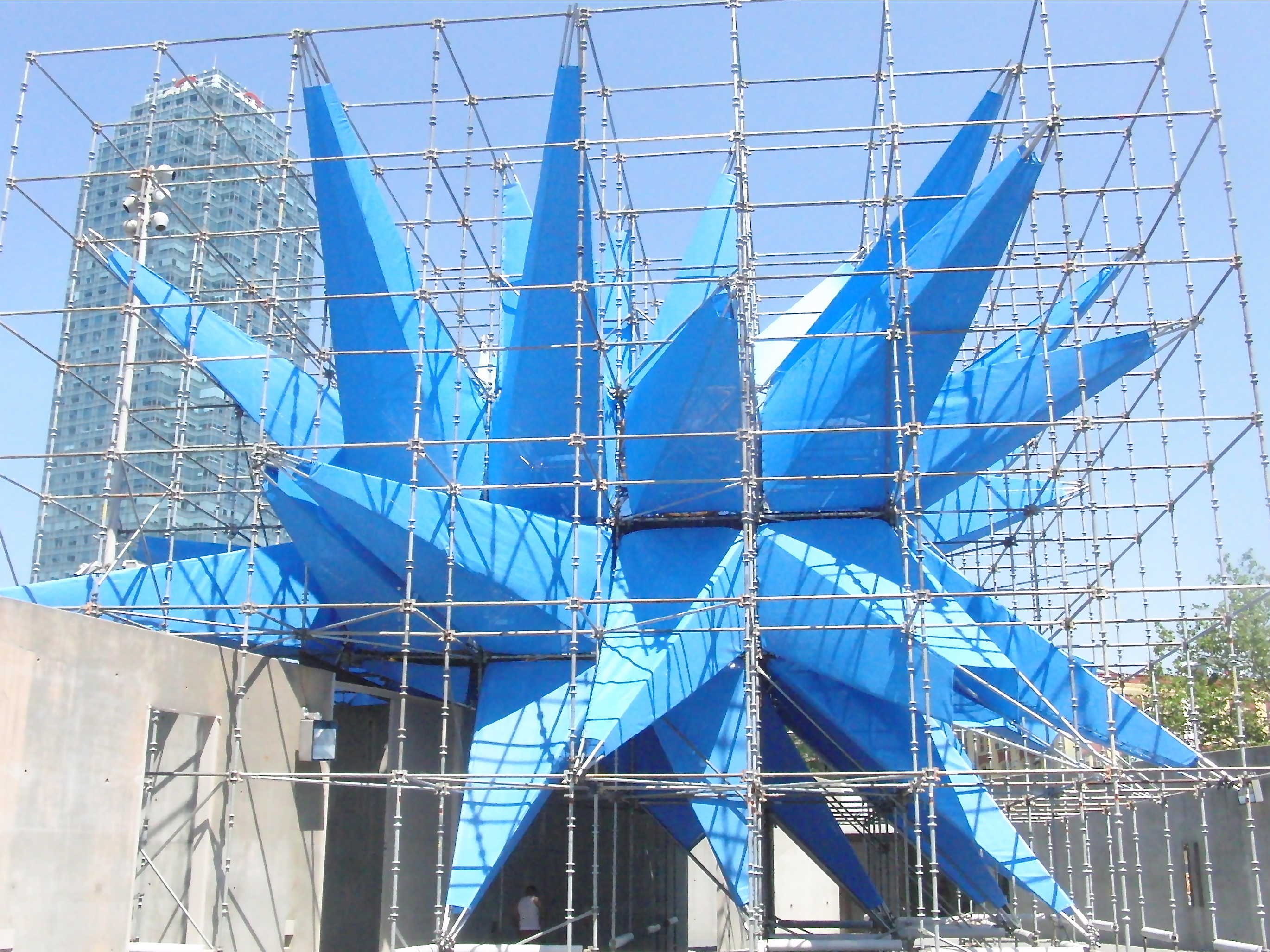
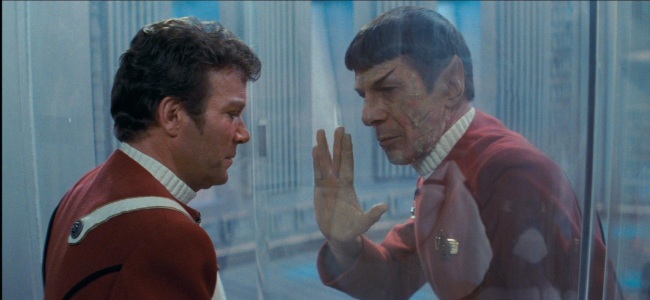
 With all the movies, TV series, and everything else, Star Trek II: The Wrath of Khan just might be the best thing that has ever come out of Star Trek land. We’re talking the Genesis project here, earwigs, Kirk’s offspring, Khan’s superior intellect, Kirstie Alley as a Vulcan, Spock bending the truth, the Kobayashi Maru no-win scenario, and Kirk screaming out his enemy’s name in unforgettable fashion, a classic movie moment. Everybody’s on board the USS Enterprise for this journey, including Dr. Leonard McCoy (DeForest Kelley), Montgomery Scott (James Doohan), Hikaru Sulu (George Takei), Lt. Uhura (Nichelle Nichols), Chekhov (Walter Koenig), Captain Spock (Leonard Nimoy), and Admiral James T. Kirk (William Shatner). The enemy is the conniving but brilliant Khan Noonien Singh, played with delightful relish by Ricardo Montalban, returning from an episode of the original television series. Just the way Montalban pronounces “Kirk” is worth the price of admission; the film serves up a bevy of memorable quotes throughout. The ending is both surprising and surprisingly heartwarming, laying the groundwork for the third film. The Wrath of Khan is about loyalty, friendship, honor, honesty, midlife crisis, fathers and sons, aging — and a bunch of great characters coming together yet again to do a far, far better thing than they have ever done before, or since.