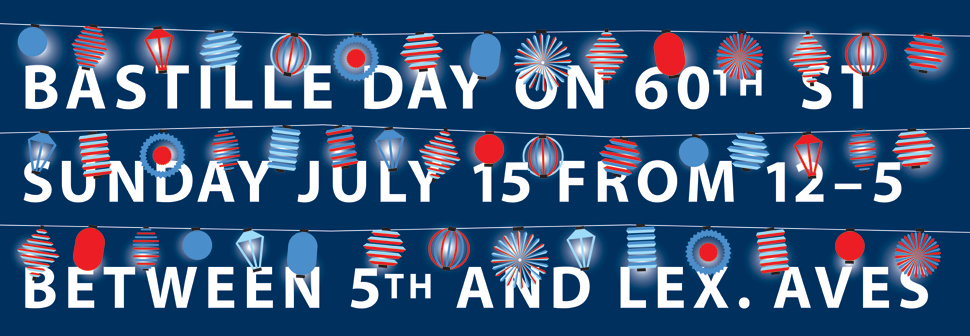
60th St. between Fifth & Lexington Aves.
Sunday, July 15, free, 12 noon – 5:00 pm
www.bastilledaynyc.com
www.fiaf.org
On July 14, 1789, a Parisian mob stormed the Bastille prison, a symbolic victory that kicked off the French Revolution and the establishment of the Declaration of the Rights of Man and of the Citizen. Ever since, July 14 has been a national holiday celebrating liberté, égalité, and fraternité. In New York City, the festivities will actually take place on Sunday, July 15, along Sixtieth St., where the French Institute Alliance Française hosts its annual daylong party of food, music, dance, and other special activities. There will be tastings ($20) inside FIAF, including wine and cheese, cocktails, and beer; a raffle drawing with such prizes as trips to France, St. Barts, and New Orleans; a Twitter challenge with yet more prizes; food and drink from Le Souk, Richart, Gastronomie 491, Bistro 61, Macaron Café, Financier, Opia, Ponty Bistro, Rouge Tomate, Tiny Treats, Bel Ami, Mille-feuille, and more; a macaron demonstration by master chef François Payard; French language workshops; live performances by the Hungry March Band and Can-Can Dancers; and a Kids’ Corner with such family activities as face-painting, arts & crafts, games, and more.
 Two years ago, Japanese auteur Toshiaki Toyoda presented

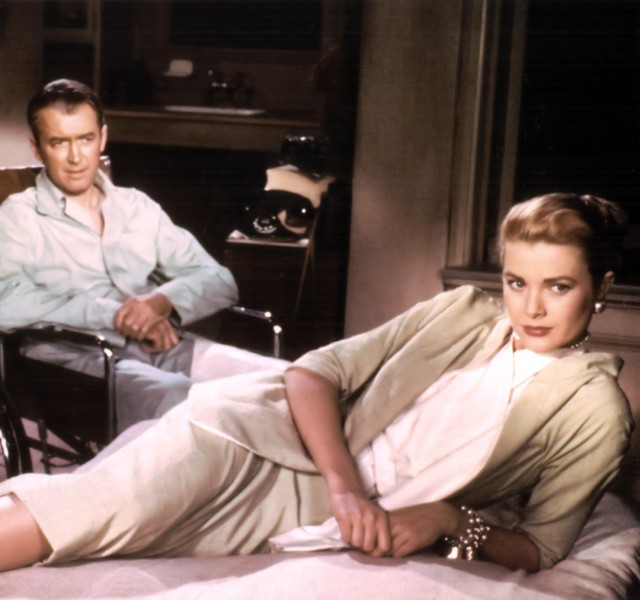
 One of Alfred Hitchcock’s best films is an unforgettable voyeuristic thriller starring James Stewart as temporarily wheelchair-bound photojournalist L. B. Jeffries and Grace Kelly as his society-girl friend (and extremely well dressed) Lisa Carol Fremont. Bored out of his mind, Jeffries grabs a pair of binoculars and starts spying on the apartments across the courtyard from him, each one its own television show, including a musical comedy, a lonely romance, an exercise program, and, most ominously, perhaps a murder mystery. Ever the reporter, Jeffries decides to go after the possible killer, Lars Thorwald (Raymond Burr), and he’ll risk his life — and Lisa’s — to find out the truth. Sensational from start to finish, Rear Window works on so many levels, you’ll discover something new every time you watch it. Rear Window is screening July 13-18 at BAM Rose Cinemas, kicking off BAMcinématek’s “Grace Kelly: The Cool Blonde” series, honoring the career of the gorgeous, talented actress who made eleven films between 1951 and 1956 before being swept off her feet by Prince Rainier, starting a family, and building an international reputation that has continued even after she died in a car accident in 1982 at the age of fifty-two. The series also includes such other Kelly classics as High Society, High Noon, To Catch a Thief, and The Country Girl as well as her lesser-known debut, Fourteen Hours.

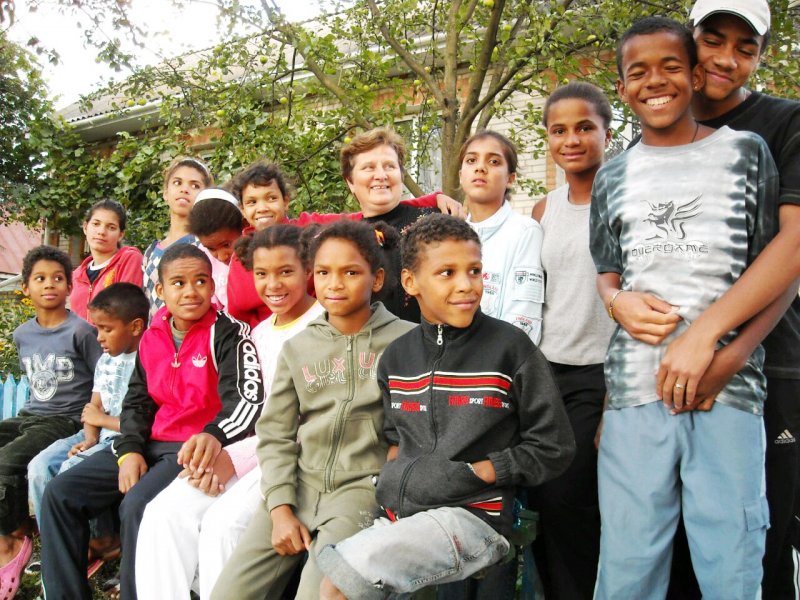
 “What difference does it make — black, white, yellow? They are just kids,” says Olga Nenya in the intriguing documentary Family Portrait in Black and White. Evoking the classic nursery rhyme about an old woman who lives in a shoe, Nenya runs a foster home in the Ukraine suburb of Sumy, where she takes care of as many as twenty-seven children (including four of her own), most of whom are mixed-race boys and girls abandoned by their parents, primarily local women and African men who were studying in Eastern Europe. Because of their heritage, the children are despised by neighbors, the growing, violent neo-Nazi movement, and the government, which gives Nenya very little money but then sends inspectors who decry the living conditions in her house. Canadian filmmaker Julia Ivanova, who wrote, directed, and edited the eighty-five-minute documentary in addition to serving as cinematographer, follows the kids as they do their daily chores, go to school, spend the summer with families in Italy, and look forward to the day when they are old enough to go out on their own, either to be legally adopted or to attend university. For as much as most of them love and respect Nenya, she can be a tough, dominating taskmaster with old-fashioned values who selfishly holds on to her flock even when better opportunities are out there for some of her children. A product of Stalinism, Nenya can be dictatorial, yet she clearly loves and cares deeply about her children; as Ivanova focuses in on Kiril, Roman, Anya, and Andrey, each of whom has serious issues about the way they are being raised, the individual relationships become more and more tense. A multiple-award-winning international festival favorite, Family Portrait in Black and White is a compelling look at racism, value systems, and just what family means in today’s ever-changing society.