One of the ultimate cult classics and the best bowling movie ever, the Coen brothers’ The Big Lebowski has built up such a following since its 1998 release that fans now gather every year for Lebowski Fest, where they honor all things Dude, and with good reason. The Big Lebowski is an intricately weaved gem that is made up of set pieces that come together in magically insane ways. Jeff Bridges is awesome as the Dude, a laid-back cool cat who gets sucked into a noirish plot of jealousy, murder, money, mistaken identity, and messy carpets. Julianne Moore is excellent as free spirit Maude, Tara Reid struts her stuff as Bunny, and Peter Stormare, Flea, and Torsten Voges are a riot as a trio of nihilists. Also on hand are Philip Seymour Hoffman, David Huddleston, Aimee Mann, Jimmie Dale Gilmore, David Thewlis, Sam Elliott, Ben Gazzara, Jon Polito, and other crazy characters, but the film really belongs to the Dude and his fellow bowlers Jesus Quintana (John Turturro, who is so dirty he is completely cut out of the television version), Donny (Steve Buscemi), and Walter (John Goodman), who refuses to roll on Shabbos. And through it all, one thing always holds true: The Dude abides. The Big Lebowski is screening Tuesday night in McCarren Park, concluding Paramount+ and Brooklyn magazine’s free summer Movie Nights series.
[Mark Rifkin is a Brooklyn-born, Manhattan-based writer and editor; you can follow him on Substack here.]
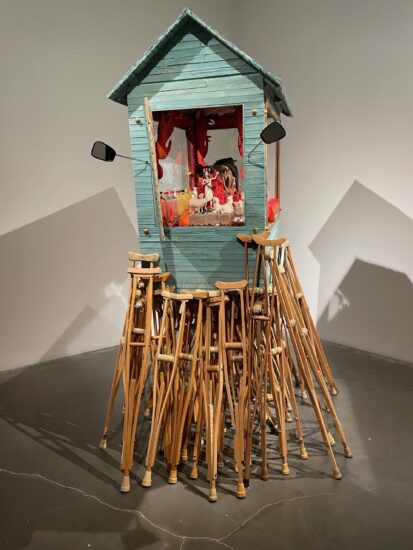
Pepón Osorio, Lonely Soul, 2009 (photo by twi-ny/mdr)
Who: Pepón Osorio, Bernardo Mosqueira, Margot Norton What: Artist conversation Where:New Museum of Contemporary Art, 235 Bowery at Prince St. When: Thursday, September 14, $10, 6:30 (exhibition continues through September 17) Why: “I’ve always been interested in people’s stories, always interested in somehow transforming my life through the lens of people’s experiences,” Puerto Rican artist Pepón Osorio says in a New Museum video about his stunning exhibition, “Pepón Osorio: My Beating Heart/ Mi corazón latiente,” which continues through September 17.
When he moved from San Juan to what he refers to as the Republic of the South Bronx in 1975 at the age of twenty, Osorio learned English and about American culture. He worked for the Department of Social Services, visiting some four thousand homes, finding trouble, safety, and spirituality.
“What I was doing was collecting stories, collecting experiences, collecting the memory of what it was to be with all those families, and then translating them into an installation,” he says. “And I also saw myself not bearing the responsibility of a caseworker but that of an artist, trying to figure out a way to allow myself and the people that I work with to step back and look at the situation.”
The exhibition features large-scale environments that Osorio calls “the social architecture of communities.” No Crying Allowed in the Barbershop (En la barbería no se llora) is a barbershop filled with videos, hubcaps, a pool table, photos of Latino men, and a tableaux with a saint; the piece questions masculinity and faith within a dazzling space. (The piece was originally presented in a storefront, with people getting actual haircuts.) Badge of Honor pairs a boy’s bedroom, stuffed to the gills with baseball cards, sports posters, sneakers, and other items, next to a jail cell with only a toilet, a mattress, and one pair of sneakers; the boy and his imprisoned father, Nelson Gonzalez, communicate in poignant video projections.
Osorio worked with a real detective when putting together Scene of the Crime (Whose Crime?), the inside of an elaborately detailed home where a murder has taken place, evoking how Latinos are portrayed in Hollywood films, particularly Fort Apache, the Bronx. Osorio re-creates the shuttered Fairhill Elementary in Philadelphia in ReForm, complete with videos of students’ reactions to the closure.
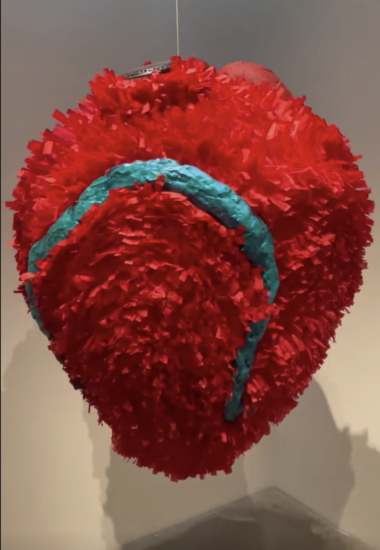
Inspired by Osorio’s own cancer treatment, Convalescence indicts the American health-care system; next to it, in the corner, is My Beating Heart (Mi corazón latiente), an oversized piñata-like heart that emits the sound of the artist’s own pumping organ. Osorio honors Amina Lawal, a Nigerian woman who was sentenced to death by stoning for adultery in 2002, in Lonely Soul, a shaved-ice cart held up by crutches, with religious elements and other key objects inside.
Pepón Osorio, My Beating Heart (Mi corazón latiente), 2000 (photo by twi-ny/mdr)
On September 14 at 6:30, Osorio will be at the New Museum for a conversation with exhibition curators Margot Norton of the Berkeley Art Museum and Pacific Film Archive and Bernardo Mosqueira of the Institute for Studies on Latin American Art; judging from their discussion in the catalog, it should be an enlightening event.
[Mark Rifkin is a Brooklyn-born, Manhattan-based writer and editor; you can follow him on Substack here.]
A pair of wonderful exhibits that contemplate time and space through striking, fragile visuals come to a close this weekend; be sure to make time to see them.
“Gego: Measuring Infinity” is a career retrospective of Hamburg-born Venezuelan artist Gertrud Goldschmidt, known as Gego. Nearly two hundred works are on view, arranged chronologically and thematically, dating from the early 1950s to the early 1990s; Gego died in 1994 at the age of eighty-two, leaving behind a plethora of sculptures, textiles, drawings, prints, sketches, watercolors, letters, artist’s books, and more. “To visualize a solution is what matters: to make visible that which still does not exist outside of me,” she said.
An architect and engineer who fled the Nazis, Gego used such materials as bronze, steel, aluminum, iron, nylon, copper, plastic, and lead to create three-dimensional structures that are like line drawings in space — she even calls some Drawing without Paper — appearing so delicate that you might think you can blow them apart (but please don’t try). On the floor, on tables, and hanging from the ceiling, the works evoke scientific helixes and nets, with titles that often explain what they are: Cube in Sphere,12 Concentric Circles,Four Red Planes,Eight Squares. Gego’s ink-on-paper pieces play with grids and offer optical illusions that delight the eye.
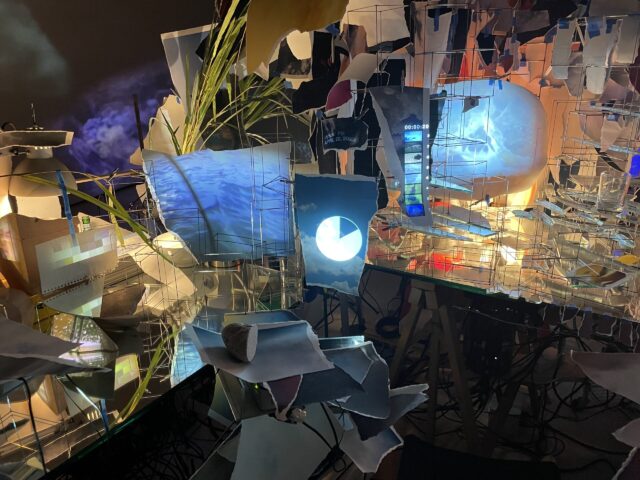
“Gego: Measuring Infinity” is brilliantly paired with “Sarah Sze: Timelapse,” in which the Boston-born, New York City–based Sze incorporates elements of the Guggenheim’s spiraling Frank Lloyd Wright building — both outside and inside — into complex, spirited installations that explore time and space while revealing much of her creative process. Combining cutting-edge digital technology with tireless handwork and large-scale paintings, Sze invites visitors to marvel at the nearly impossibly detailed works, which feature plants, a pendulum hovering over water, tools, clothespins, thread, ladders, writing implements, coffee cups, tape, lamps, salt, string, wood, cords, mirrors, fans, remote controls, books, dice, and live video feeds and projections. “I often use found objects because they are scaled to me, like a compass for my own body,” Sze says. Be careful where you step; it appears that the constructions can fall apart with one tiny misstep.
Sze’s imagination extends to the titles; works have such names as The Moon’s Gravity Causes the Oceans’ Tides,Travelers Among Streams and Cascades,Images that Images Beget,The Night Sky Is Dark Despite the Vast Number of Stars in the Universe, and Things Caused to Happen (Oculus). As Sze explains, her installations consider “how we mark and measure time — constructing our own personal timelines of memory through images and fragments of experiences that are constantly evolving.” Evoking Gego, Sze also notes, “There is fragility in drawing a line through space; with this one simple powerful gesture, you can occupy an entire space.”
The show concludes at the top tower with 2016’s Timekeeper, a multimedia marvel that gets its own room. Myriad objects and projections are on and surround a desk, offering a look inside the mind of this wildly talented artist, who calls the exhibition “a contemplation on how we mark time and how time marks us.” She adds, “Every exhibition is a timekeeper. Art is a way to have a conversation over time. The show becomes almost like a forensic site for an installation or an archaeology site for a series of works, so you see the process of making, the evidence of that process left over, live in the space.” Happy digging!
[Mark Rifkin is a Brooklyn-born, Manhattan-based writer and editor; you can follow him on Substack here.]
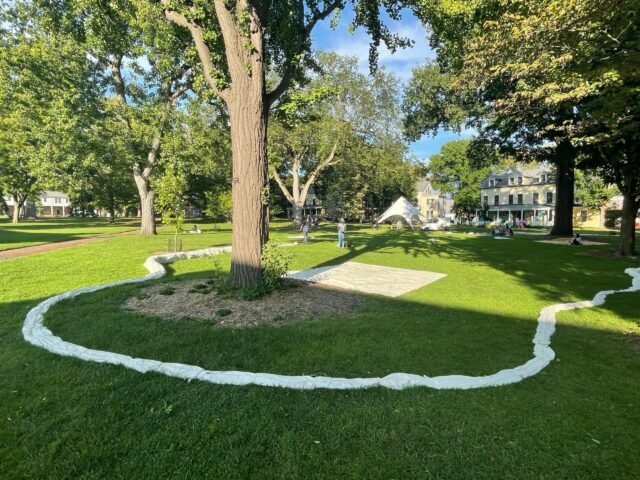
Molly Gochman’s participatory Gathering will have special activations Sundays through October 1 on Governors Island (photo by twi-ny/mdr)
GATHERING
Nolan Park, Governors Island
Sunday, September 10, 17, 24, and October 1, free, 1:00 – 3:00
Installation open Friday-Sunday through October 1, 11:00 am – 5:00 pm mollygochman.com online slide show
As part of House Fest 2023 on Labor Day weekend on Governors Island, San Antonio–born, New York City–based artist Molly Gochman began installing the site-specific Gathering, a twisting, snakelike series of two hundred white and gray rolled-up waxed canvas tarps. “Stitched” together with rope, they create a thirteen-thousand-square-foot outline of the original shape of the island. Winding around trees on the grass at the center of Nolan Park, the work invites visitors to sit on it; to grab a tarp, spread it out, and have a picnic; to contemplate how the island has changed over the last hundred years through excavation and dredging; or to relax on a tarp and take it home, with Gochman’s blessing, her work spreading like gentle tentacles from the peaceful nature of Nolan Park to the endless hustle and bustle of New York City. Gochman, a friendly and enthusiastic woman, loves to engage with passersby, talking about the piece and helping them choose a tarp to use and perhaps keep. Eventually, Gathering will erode like the land itself, leaving no trace of what once was but living on through those who have engaged with it.
“I believe we live in a world where thoughtful participation — with our environment, with our objects, with our community, with ourselves, and with our fellow human beings — is the greatest good we can do. This involvement, on every level, creates a world where empathy and freedom are our primary values,” Gochman explains in her artist statement. “I hope that the person who experiences my work feels welcomed to go from the work into his or her own contemplation of what the work inspires in them or just offers them an opportunity to pause and be in that moment. In a sense, the works are only half-done when I complete my work on them. They are invitations to experience, and it’s up to each person who comes into contact with them to decide how — or if — to accept that invitation.”
Every Sunday at 1:00 through October 1, Gathering will be activated, and visitors are invited to bring a picnic and be part of the experience; all events are free. On September 10, community leaders and organizers from Black Women’s Blueprint and Black Joy Farm will come together to make unique use of the space; on September 17, Ani Weinstein will lead a guided meditation; on September 24, artist, dancer, and amulet maker Annmaria Mazzini will host a moving meditation around the work, joined by vocalist and musician Paula Jeanine Bennett and others; and on October 1, dancer and actress Christine Elmo will perform a new work created in response to Gathering to wish it a fond farewell.
[Mark Rifkin is a Brooklyn-born, Manhattan-based writer and editor; you can follow him on Substack here.]
Series explores the political documentaries of Chilean filmmaker Patricio Guzmán
PATRICIO GUZMÁN, DREAMING OF UTOPIA: 50 YEARS OF REVOLUTIONARY HOPE AND MEMORY
Anthology Film Archives, Brooklyn Academy of Music (BAM), IFC Center
September 7—15 www.cinematropical.com www.patricioguzman.com
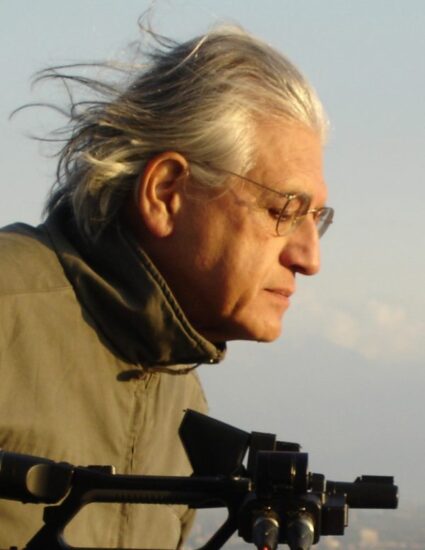
“A country without documentary cinema is like a family without a photo album,” Chilean filmmaker Patricio Guzmán has said. In conjunction with the fiftieth anniversary of General Augusto Pinochet’s coup d’état on September 11, 1973, when the military overthrew the government of democratically elected Chilean president Salvador Allende, Icarus Films and Cinema Tropical are presenting “Patricio Guzmán, Dreaming of Utopia: 50 Years of Revolutionary Hope and Memory,” consisting of nine works by the award-winning eighty-two-year-old Santiago-born, France-based director. Screening at Anthology Film Archives, BAM, and IFC Center, the festival opens September 7-10 at Anthology with 2004’s Salvador Allende, followed September 8-15 by the US premiere of a new restoration of 1972’s The First Year, which documents Allende’s initial twelve months as president, with the 6:45 show of the latter on September 8 followed by a Q&A with Chilean artist Cecilia Vicuña and Lehigh University professor of art history Florencia San Martín and a reception.
BAM highlights Guzmán’s three-part The Battle of Chile September 8-14, with filmmakers Pamela Yates, Paco de Onís, and Bernardita Llanos participating in a conversation after the 5:15 screening of part three on September 9 at 5:15. And on September 13-14, IFC screens Guzmán’s Chile Trilogy, consisting of 2010’s Nostalgia for the Light, 2015’s The Pearl Button, and 2019’s The Cordillera of Dreams, along with his latest film, 2022’s My Imaginary Country, about recent social unrest and protests. “A piano sonata cannot be heard in a large room. Documentary works need a different framework, a space and an intelligent programming formula,” Guzmán told Uruguayan critic Jorge Ruffinelli for a 2001 book. That’s just what Icarus Films and Cinema Tropical have given us with “Dreaming of Utopia.”
Nostalgia for the Light offers a breathtaking look at memory and the past, from above and below
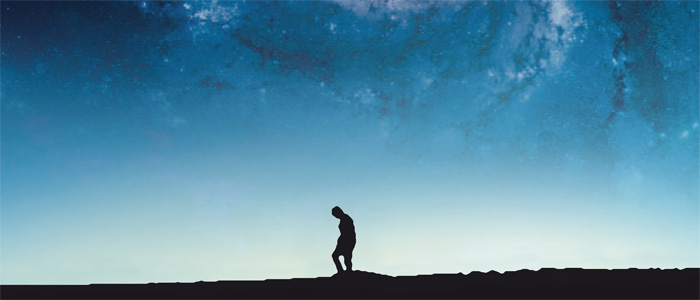
Master documentarian Patricio Guzmán’s Nostalgia for the Light is a brilliant examination of memory and the past, one of the most intelligent and intellectual films you’re ever likely to see. But don’t let that scare you off — it is also a vastly entertaining, deeply emotional work that will blow you away with its stunning visuals and heartbreaking stories. Guzmán, who chronicled the assassination of Salvador Allende and the rise of Augusto Pinochet in the landmark three-part political documentary The Battle of Chile, this time visits the Atacama Desert in his native Chile, considered to be the driest place on Earth. Situated ten thousand feet above sea level, the desert is home to La Silla and Paranal Observatories, where astronomers come from all over the world to get unobstructed views of the stars and galaxies, unimpeded by pollution or electronic interference. However, it is also a place where women still desperately search for the remains of their loved ones murdered by Pinochet’s military regime and hidden away in mass graves. In addition, archaeologists have discovered mummies and other fossilized bones dating from pre-Columbian times there. Guzmán seamlessly weaves together these three journeys into the past — as astronomers such as Gaspar Galaz and Luis Hernandez note, by the time they see stars either with the naked eye or through the lens of their massive telescopes, the celestial bodies have been long dead — creating a fascinating narrative that is as thrilling as it is breathtaking.
Constructing a riveting tale of memory, Guzmán speaks with architect Miguel Lawner, who draws detailed maps of the Chacabuca desert concentration camp where he and so many other political prisoners were held; Valentina, a young astronomer whose grandparents had to give up her parents in order to save her when she was a baby; archaeologist Lautaro Nunez, who digs up mummies while trying to help the women find “los desaparecidos”; and Victoria and Violeta, who regularly comb the barren landscape in search of their relatives. “I wish the telescopes didn’t just look into the sky but could also see through the earth so that we could find them,” Violeta says at one point. Spectacularly photographed by Katell Dijan, Nostalgia for the Light is a modern masterpiece, an unparalleled cinematic experience that has to be seen to be believed. The screening will be introduced by San Francisco State University School of Cinema assistant professor Elizabeth Ramírez Soto, author of (Un)veiling Bodies: A Trajectory of Chilean Post-dictatorship Documentary.
[Mark Rifkin is a Brooklyn-born, Manhattan-based writer and editor; you can follow him on Substack here.]
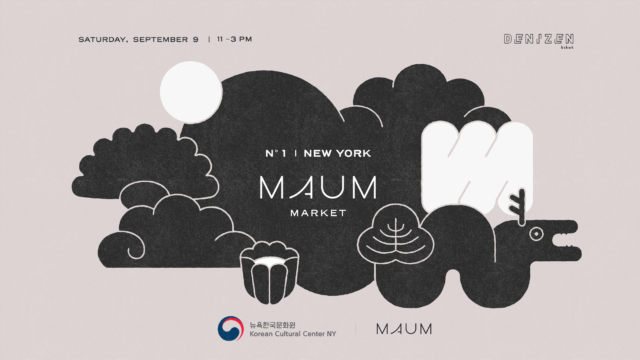
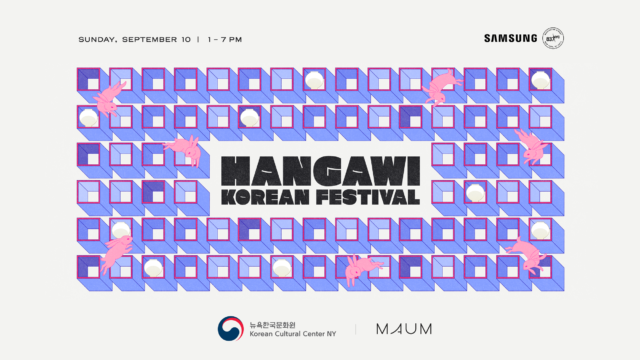
MAUM MARKET / HANGAWI KOREAN FESTIVAL Market: Saturday, September 9, Denizen Bushwick, 123 Melrose St., free with advance RSVP, 11:00 am – 3:00 pm Festival: Sunday, September 10, Samsung 837, 837 Washington St., free with advance RSVP, 1:00 – 7:00 www.koreanculture.org
In celebration of Chuseok, the Korean Thanksgiving and harvest festival that honors the ancestors, and the seventieth anniversary of the ROK-US Alliance, the Korean Cultural Center New York (KCCNY) is presenting the Hangawi Korean Festival on September 10 at Samsung 837 in the Meatpacking District. From 1:00 to 7:00, there will be talks, panel discussions, arts and crafts, food tastings, fashion, workshops, and more. The day before, on Friday, September 9, the MAUM Market will make its New York debut as a one-day-only pop-up in Denizen Bushwick at 123 Melrose St. Maum, which means “heart and mind,” will feature fifty AAPI artists, creatives, and entrepreneurs participating in maker and business spotlights, including Grace Nyugen, Hwa Joong Kim, Hannah Lee, Alice Jun, Hana Jun, Ryan Kim, and Sungmee Cho. Below is the full schedule for the Hangawi main stage; be sure to wish everyone 추석 잘 보내세요 (chuseok jal bonaeseyo).
Kickoff Panel, with Kevin D. Kim, NYC Department of Small Business Services, and Michael Cheonsoo Kim, executive director of KCCNY, 1:00
Cookbook Authors, with Hooni Kim (My Korea: Traditional Flavors, Modern Recipes). Sohui Kim (Korean Home Cooking), James Park (Chili Crisp: 50+ Recipes to Satisfy Your Spicy, Crunchy, Garlicky Cravings), and Jennifer Ban (Rice Blossoms: Modernized Korean Desserts), moderated by Irene Yoo, 2:00
Beauty & Fashion, with Wonny Lee, Erica Choi, and Grace Chi Nguyen, moderated by Terrence Kim, 3:00
Food & Drink, with Ryan Kim, Hannah Bae, and John Limb, moderated by Madeline Park, 4:00
Gallery Artists, with Ho Jae Kim, Jane Yang-D’Haene, and Yoona Hur, moderated by Diana Lee, 5:00
Restaurants, with Wesley Sohm, Jae Lee, Ahris Kim, and Esther Choi, moderated by Matt Rodbard, 6:00
[Mark Rifkin is a Brooklyn-born, Manhattan-based writer and editor; you can follow him on Substack here.]
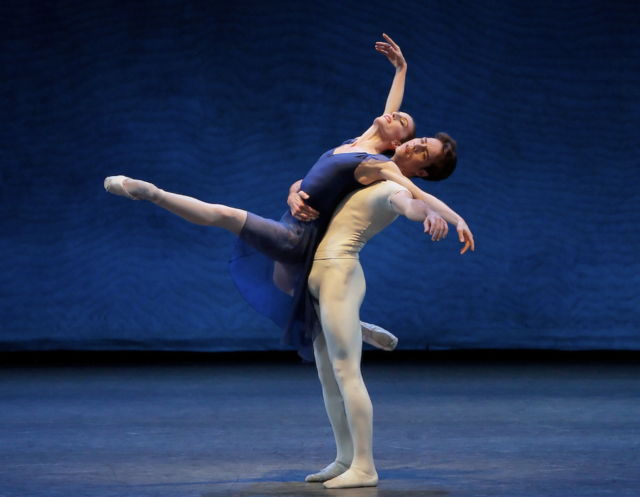
Who:Paul Kolnik,Wendy Whelan, Linda Murray What:Works & Process illustrated conversation Where: Bruno Walter Auditorium, the New York Public Library for the Performing Arts, 40 Lincoln Center Plaza When: Thursday, September 7, free with advance RSVP, 6:00 Why: Chicago native Paul Kolnik saw his first ballet in 1971, at the age of twenty-three, and soon moved to New York City, where he worked as an assistant to New York City Ballet staff photographer Martha Swope before taking his own pictures of the company, under the leadership of cofounding artistic director George Balanchine. In celebration of the seventy-fifth anniversary of NYCB, Kolnik will sit down for a special Works & Process discussion on September 7 at 6:00 in the Bruno Walter Auditorium with NYCB associate artistic director Wendy Whelan and moderator Linda Murray, NYPL curator of the Jerome Robbins Dance Division. Kolnik, who has also extensively photographed Broadway shows and Alvin Ailey American Dance Theater, has had his work published in such books as New York City Ballet Workout,Dancing to America,The Producers, and Beacon and Call: A Cisterian Monastic Pilgrimage. Admission is free with advance RSVP.
[Mark Rifkin is a Brooklyn-born, Manhattan-based writer and editor; you can follow him on Substack here.]