
Crotchety old drummer Ginger Baker has quite a story to tell in BEWARE OF MR. BAKER
BEWARE OF MR. BAKER (Jay Bulger, 2012)
Film Forum
209 West Houston St.
November 28 – December 11
212-727-8110
www.filmforum.org
www.bewareofmrbaker.com
 “A great virtuoso madman,” “scary,” “a motherfucker,” “a lovable rogue,” “a dope addict,” “the hammer of the gods,” “a force of nature,” “horrible,” “the world’s greatest drummer” — these are just some of the terms of affection heaped on legendary drummer Ginger Baker by his friends, relatives, and musical colleagues at the beginning of Jay Bulger’s propulsive documentary, Beware of Mr. Baker. In 2009, after spending three months with Baker and his family in South Africa, Bulger published the in-depth article “The Devil and Ginger Baker” in Rolling Stone. Two years later, Bulger went back to expand the story into a feature-length film, but Baker was not about to make it easy for him, continually insulting his questions, calling him names, and even cracking him in the nose with his cane. “He influenced me as a drummer but not as a person,” Bad Company and Free drummer Simon Kirke says of Baker, an opinion shared by many in this revealing film. Baker might be crotchety, but he also opens up to Bulger, particularly in describing when, as a child during WWII, he would hear the bombings outside, sounds that would have an impact on his playing. Bulger speaks with such other percussionists as the Rolling Stones’ Charlie Watts, Rush’s Neal Peart, the Grateful Dead’s Mickey Hart, Metallica’s Lars Ulrich, the Police’s Stewart Copeland, Vanilla Fudge’s Carmine Appice, and Pink Floyd’s Nick Mason, as well as such former Baker bandmates as Eric Clapton, Jack Bruce, and Steve Winwood, who all rave about Baker’s remarkable abilities behind the kit while also delving into his self-destructive behavior, which led him through a parade of groups, home countries, and spouses. “I don’t know if it’s his ability to move on or it’s his inability to stay,” points out Baker’s third wife, Karen Loucks Rinedollar, a statement that applies to both Baker’s personal and professional lives.
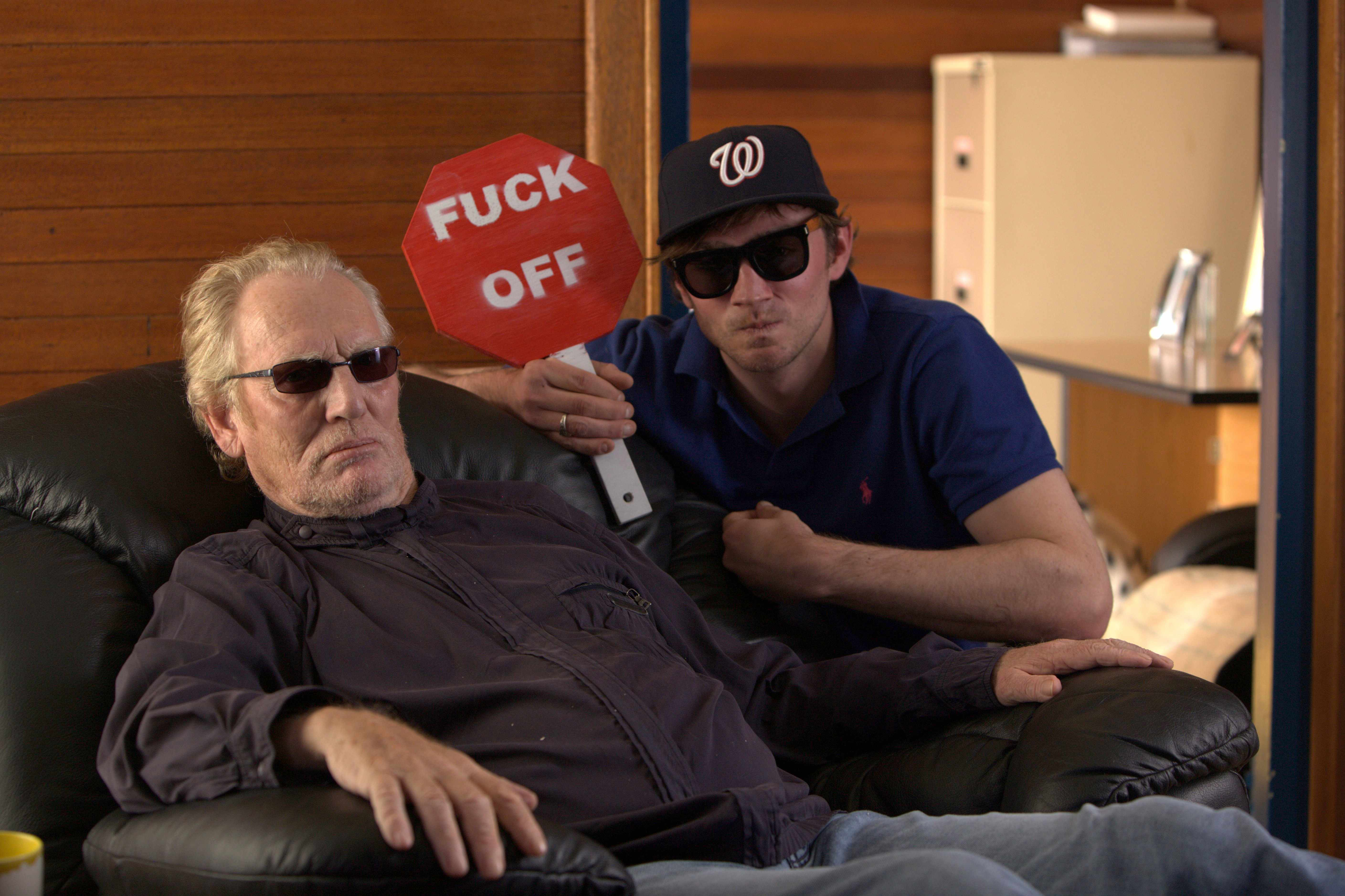
Drummer Ginger Baker and director Jay Bulger developed a rather unique relationship during the making of fascinating documentary
Through photographs, old and new interviews, playful animation, and superb archival footage of live performances, Bulger traces Baker’s career path from the Graham Bond Organisation, Cream, Blind Faith, Ginger Baker’s Air Force, the Baker Gurvitz Army, and Masters of Reality to his little-known collaboration with Fela Kuti and his drum battles with three of his four major influences: Phil Seamen, Elvin Jones, and Art Blakey. (The fourth is Max Roach; Baker gets emotional discussing how all four men eventually became friends of his.) In ninety-two freewheeling minutes, Bulger crafts a fascinating portrait of a wild anomaly, an immensely talented musician whose difficult, unpredictable personality and selfish refusal to ever compromise continues to result in controversy and separation everywhere he goes. Yet through it all, everyone still speaks fondly of Baker; Bruce might talk about how much they hated each other and couldn’t stand playing together — Baker once punched Bruce onstage in the face for stepping on his drum solo — but in the end Bruce can’t help but profess his love for the enigmatic, eclectic Baker. Winner of the Grand Jury Prize at the 2012 SXSW festival, Beware of Mr. Baker begins a two-week run at Film Forum on November 28, with Bulger in attendance at the 8:20 show on opening night to talk about the film.
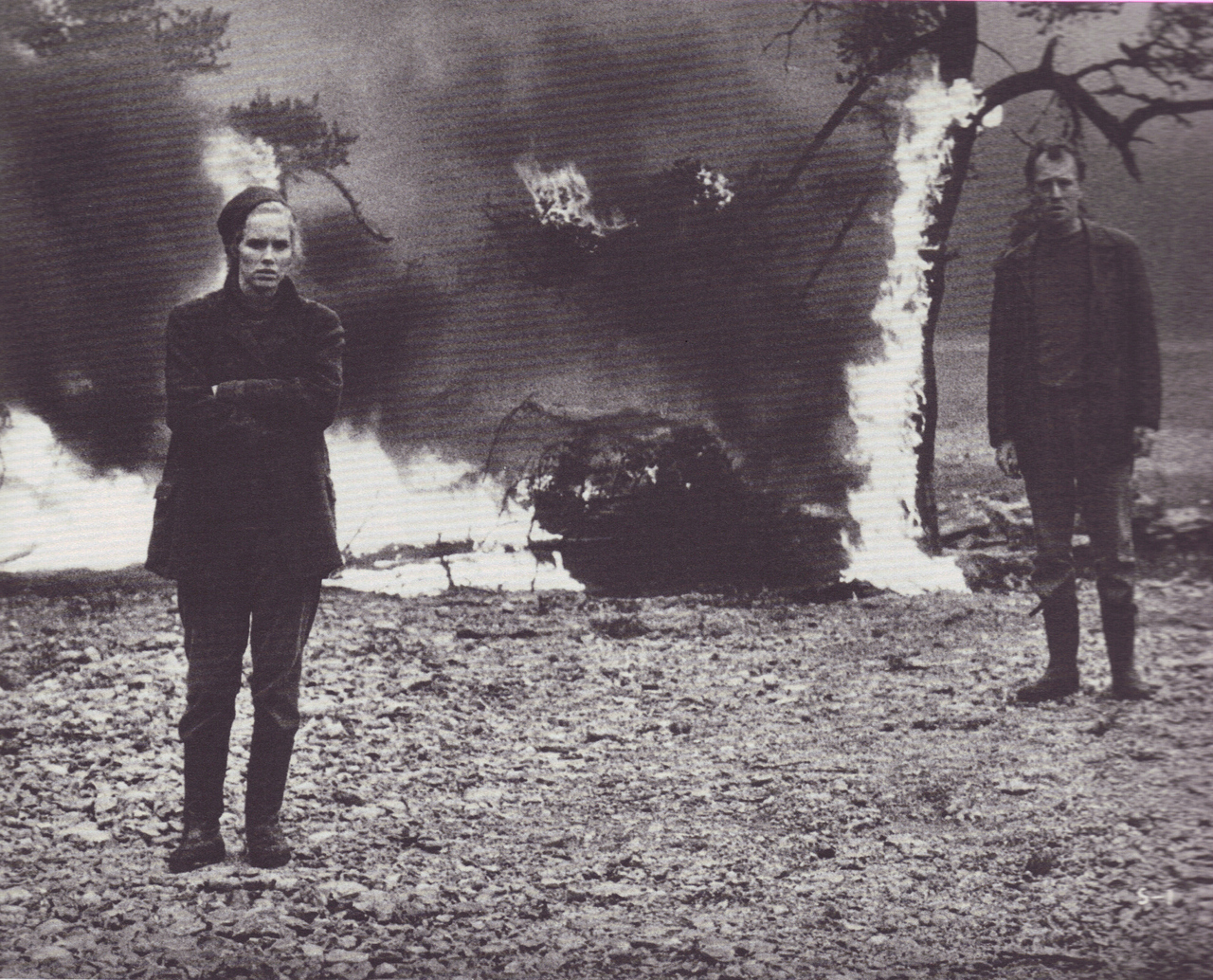
 Ingmar Bergman’s Shame is a brilliant examination of the physical and psychological impact of war, as seen through the eyes of a happily married couple who innocently get caught in the middle of the brutality. Jan (Max von Sydow) and Eva Rosenberg (Liv Ullmann) have isolated themselves from society, living without a television and with a broken radio, maintaining a modest farm on a relatively desolate island a ferry ride from the mainland. As the film opens, they are shown to be a somewhat ordinary husband and wife, brushing their teeth, making coffee, and discussing having a child. But soon they are thrust into a horrific battle between two unnamed sides, fighting for reasons that are never given. As Jan and Eva struggle to survive, they are forced to make decisions that threaten to destroy everything they have built together. Shot in stark black-and-white by master cinematographer Sven Nykvist, Shame is a powerful, emotional antiwar statement that makes its point through intense visual scenes rather than narrative rhetoric. Jan and Eva huddle in corners or nearly get lost in crowds, then are seen traversing a smoky, postapocalyptic landscape riddled with dead bodies. Made during the Vietnam War, Shame is Bergman’s most violent, action-filled film; bullets can be heard over the opening credits, announcing from the very beginning that this is going to be something different from a director best known for searing personal dramas. However, at its core, Shame is just that, a gripping, intense tale of a man and a woman who try to preserve their love in impossible times. Ullmann and von Sydow both give superb, complex performances, creating believable characters who will break your heart. Shame is screening November 30 at BAM as part of the BAMcinématek series “Max von Sydow,” consisting of twenty-two wide-ranging films celebrating the outstanding career of the now-eighty-three-year-old Swedish actor; the festival continues with such other works as William Friedkin’s The Exorcist, Bille August’s Pelle the Conqueror,, Woody Allen’s Hannah and Her Sisters, John Milius’s Conan the Barbarian, and, yes, Mike Gordon’s Flash Gordon, with von Sydow playing Ming the Merciless.




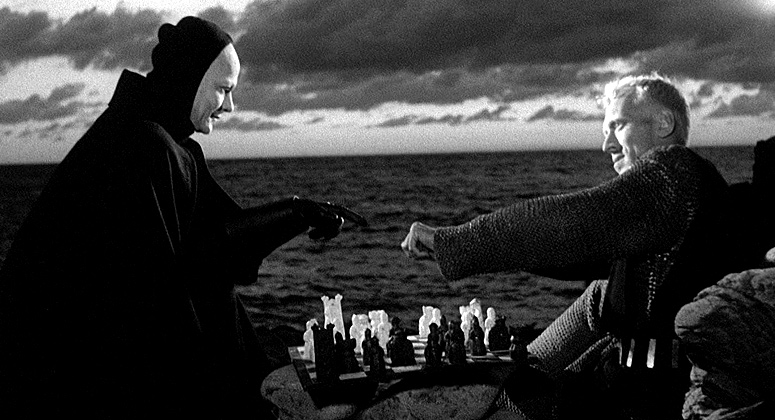
 It’s almost impossible to watch Ingmar Bergman’s The Seventh Seal without being aware of the meta surrounding the film, which has influenced so many other works and been paid homage to and playfully mocked. Over the years, it has gained a reputation as a deep, philosophical paean to death. However, amid all the talk about emptiness, doomsday, the Black Plague, and the devil, The Seventh Seal is a very funny movie. In fourteenth-century Sweden, knight Antonius Block (Max von Sydow) is returning home from the Crusades with his trusty squire, Jöns (Gunnar Björnstrand). Block soon meets Death (Bengt Ekerot) and, to prolong his life, challenges him to a game of chess. While the on-again, off-again battle of wits continues, Death seeks alternate victims while Block meets a young family and a small troupe of actors putting on a show. Rape, infidelity, murder, and other forms of evil rise to the surface as Block proclaims “To believe is to suffer,” questioning God and faith, and Jöns opines that “love is the blackest plague of all.” Based on Bergman’s own play inspired by a painting of Death playing chess by Albertus Pictor (played in the film by Gunnar Olsson), The Seventh Seal, winner of a Special Jury Prize at Cannes, is one of the most entertaining films ever made. (Bergman fans will get an extra treat out of the knight being offered some wild strawberries at one point.) The Seventh Seal is screening November 27 at BAM, kicking off the BAMcinématek series “Max von Sydow,” consisting of twenty-two wide-ranging films celebrating the outstanding career of the now-eighty-three-year-old Swedish actor. Von Sydow has appeared in such other serious fare as Bergman’s The Virgin Spring and Shame, such thrillers as Sydney Pollack’s Three Days of the Condor and Martin Scorsese’s Shutter Island, such epics as Bille August’s Pelle the Conqueror and Jan Troell’s The Emigrants, and such comedies as Rick Moranis and Dave Thomas’s Strange Brew and Woody Allen’s Hannah and Her Sisters. In addition, he’s been in two of the biggest bombs ever, Mike Gordon’s Flash Gordon (as Ming the Merciless!) and David Lynch’s Dune, was the older priest in William Friedkin’s The Exorcist, and he even played Blofeld in Irvin Kershner’s Never Say Never Again opposite Sean Connery’s James Bond. Of course, no matter what the project, Sydow brings an elegance and grace to it, lifting it up and always making it a whole lot better just for his presence.