twi-ny recommended events

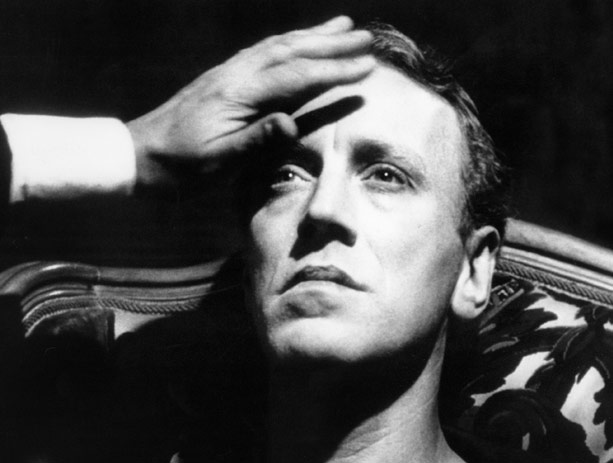
MAX VON SYDOW: HOUR OF THE WOLF (VARGTIMMEN)

Max von Sydow goes through a fantastical disintegration in Bergman horror film

HOUR OF THE WOLF (VARGTIMMEN) (Ingmar Bergman, 1968)
BAMcinématek, BAM Rose Cinemas
30 Lafayette Ave. between Ashland Pl. & St. Felix St.
Friday, November 30, 4:30 & 9:15
Series runs through December 14
718-636-4100
www.bam.org

One of Ingmar Bergman’s most critically polarizing films — the director himself wrote, “No, I made it the wrong way” three years after its release — Hour of the Wolf is a gripping examination of an artist’s psychological deterioration. Bergman frames the story as if it’s a true tale being told by Alma Borg (Liv Ullmann) based on her husband Johan’s (Max von Sydow) diary, which she has given to the director. In fact, as this information is being shown in words onscreen right after the opening credits, the sound of a film shoot being set up can be heard behind the blackness; thus, from the very start, Bergman is letting viewers know that everything they are about to see might or might not be happening, blurring the lines between fact and fiction in the film itself as well as the story being told within. And what a story it is, a gothic horror tale about an artist facing both a personal and professional crisis, echoing the life of Bergman himself. Johan and Alma, who is pregnant (Ullmann was carrying Bergman’s child at the time), have gone to a remote island where he can pursue his painting in peace and isolation. But soon Johan is fighting with a boy on the rocks, Alma is getting a dire warning from an old woman telling her to read Johan’s diary, and the husband and wife spend some bizarre time at a party in a castle, where a man walks on the ceiling, a dead woman arises, and other odd goings-on occur involving people who might be ghosts. Bergman keeps the protagonists and the audience guessing as to what’s actually happening throughout: The events could be taking place in one of the character’s imaginations or dreams (or nightmares), they could be flashbacks, or they could be part of the diary come to life. Whatever it is, it is very dark, shot in an eerie black-and-white by Sven Nykvist, part of a trilogy of grim 1968-69 films by Bergman featuring von Sydow and Ullmann that also includes Shame and The Passion of Anna. Today, Hour of the Wolf feels like a combination of Roman Polanski’s Rosemary’s Baby and Stanley Kubrick’s The Shining with elements of Mozart’s The Magic Flute — which Bergman would actually adapt for the screen in 1975 and features in a key, extremely strange scene in Hour of the Wolf. But in Bergman’s case, all work and no play does not make him a dull boy at all. Hour of the Wolf is screening November 30 at BAM as part of the BAMcinématek series “Max von Sydow,” consisting of twenty-two wide-ranging films celebrating the outstanding career of the now-eighty-three-year-old Swedish actor; the festival continues with such other works as William Friedkin’s The Exorcist, Bille August’s Pelle the Conqueror,, Woody Allen’s Hannah and Her Sisters, John Milius’s Conan the Barbarian, and, yes, Mike Gordon’s Flash Gordon, with von Sydow playing Ming the Merciless.

THE CINEMA AND ITS DOUBLES: THE OTHER

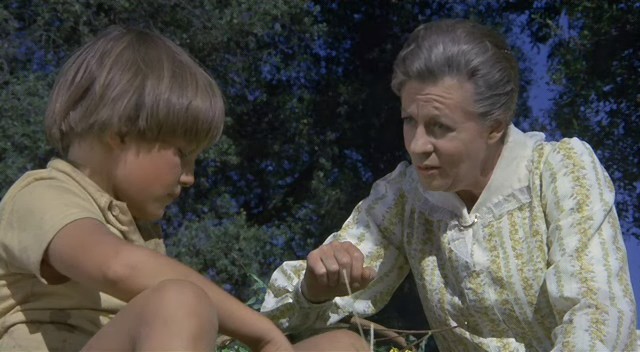
Grandma Ada (Uta Hagen) harbors quite a secret in Robert Mulligan’s creepy THE OTHER

THE OTHER (Robert Mulligan, 1972)
Museum of the Moving Image
35th Ave. at 36th St., Astoria
Saturday, December 1, free with museum admission, 6:00
718-777-6800
www.movingimage.us

Twins Niles (Chris Udvarnoky) and Holland (Martin Udvarnoky) do everything together, playing around their family’s farm with a reckless abandon that gets them into a lot of trouble — especially when they leave a body or two lying around. Their mother (Diana Muldaur) has become sort of a walking zombie since the sudden death of her husband, so their grandmother, Ada (Uta Hagen), watches out for the kinder. Ada has taught Niles to play what she calls the Game, which involves psychic phenomena, but the Game goes bad very quickly. Director Robert Mulligan (To Kill a Mockingbird, Summer of ’42) keeps things very creepy, especially as Niles tries to understand what makes Holland do the things he does. The screenplay is by Thomas Tryon, based on his bestselling novel. The boys’ uncle, Rider, is played by a young John Ritter, while Victor French, Agent 44 on Get Smart and Mark Gordon on Highway to Heaven, is Angelini the handyman. The Other is screening December 1 as part of the Museum of the Moving Image series “The Cinema and Its Doubles,” consisting of films that involve physical, fantastical, or psychological doppelgängers; the festival continues through December 16 with such films as Luis Buñuel’s That Obscure Object of Desire, David Fincher’s Fight Club, and David Cronenberg’s Dead Ringers.
REEL ROCKERS: COME GET CRAZY IN THE EAST VILLAGE

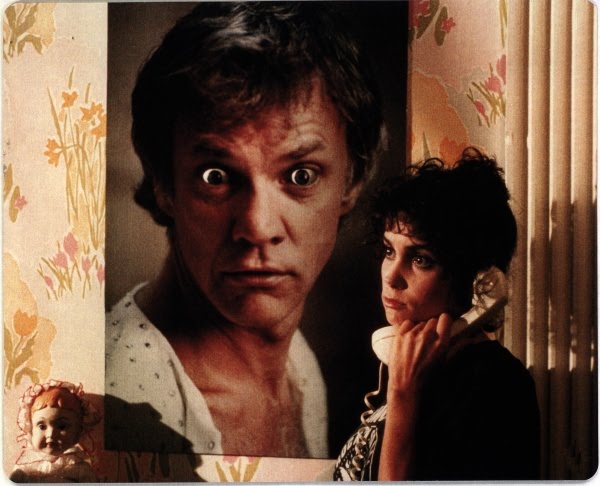
Malcolm McDowell gets plenty crazy as rock god Reggie Wanker in Allan Arkush’s GET CRAZY

GET CRAZY (Allan Arkush, 1983)
Anthology Film Archives
32 Second Ave. at Second St.
Saturday, December 1, $45-$70, 2:00
Series continues through August 9
212-505-5181
www.anthologyfilmarchives.org
www.gvshp.org

One of the most underrated, little-seen rock-and-roll movies ever made, Get Crazy should be a cult classic. Directed by Allan (Rock ‘n’ Roll High School) Arkush, Get Crazy evokes the closing of the Fillmore East as Neil Allen (Daniel Stern) and Willy Loman (Gail Edwards) help put together a New Year’s Eve farewell concert for the beloved Saturn Theater, which the conniving Colin Beverly (Ed Begley Jr.) is trying to steal out from under Max Wolfe (Allen Garfield). Among the special guests at the show are Bill Henderson as the Muddy Waters clone King Blues, Captain Cloud (Howard Kaylan of the Turtles) and the Rainbow Telegraph, and Nada (Kid Creole Coconut Lori Eastside) with Piggy (Lee Ving of Fear), but the movie is stolen by Malcolm McDowell as the Mick Jagger ripoff Reggie Wanker, who literally lets his member do the talking, and Lou Reed as the Dylan/Donovan homage Auden, a folksinger desperate to write a song before the show, so he spends most of the film riding around in a cab, rambling on about whatever is right in front of him. And be sure to keep an eye out for John Densmore, Fabian, Bobby Sherman, Clint Howard, Linnea Quigley, and Paul Bartel. In addition to the live numbers, the soundtrack includes songs by Sparks, Marshall Crenshaw, the Ramones, and Reed, whose awesome “Little Sister” plays over the closing credits. Extremely silly but still loads of fun Get Crazy is screening December 1 at 2:00 at Anthology Film Archives as a fundraiser for the Greenwich Village Society for Historic Preservation and will be followed by a panel discussion about the history of the East Village cultural scene with members of the cast and crew and Joshua White of the Joshua Light Show, moderated by Jesse Kornbluth. The festivities will then continue at the after-party at Veselka Bowery, with a two-hour open bar and appetizers.

THE CONTENDERS 2012: THE DARK KNIGHT RISES

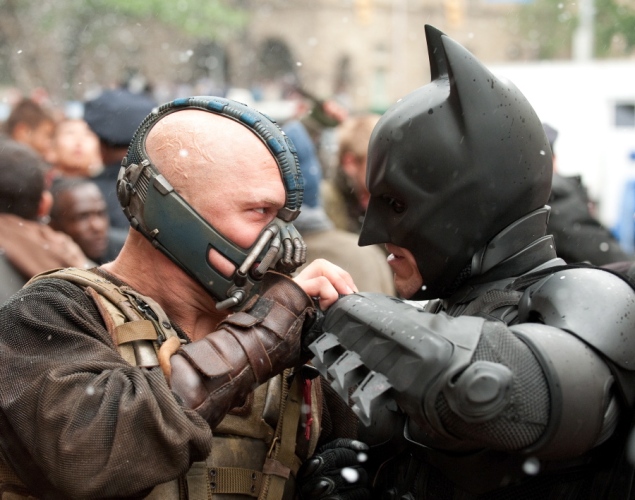
The Bat Man might have met his match in the villainous Bane in THE DARK KNIGHT RISES

THE DARK KNIGHT RISES (Christopher Nolan, 2012)
MoMA Film, Museum of Modern Art
11 West 53rd St. between Fifth & Sixth Aves.
Friday, November 30, 7:00
Series continues through January 12
Tickets: $12, in person only, may be applied to museum admission within thirty days, same-day screenings free with museum admission, available at Film and Media Desk beginning at 9:30 am
212-708-9400
www.moma.org
www.thedarkknightrises.com

Christopher Nolan’s dazzling Dark Knight Trilogy comes to a rousing conclusion with The Dark Knight Rises. It’s been eight years since the death of Harvey Dent (Aaron Eckhart), and things have been relatively quiet in Gotham City under a new prison initiative enacted by Commissioner Jim Gordon (Gary Oldman). The Bat Man has disappeared, believed to have gone into hiding after being accused of murdering Dent in cold blood, with the real story kept buried by Gordon. Meanwhile, Bruce Wayne (Christian Bale) has become a Howard Hughes-like recluse, limping around stately Wayne Manor with a cane and refusing to see anyone as his grand fortune wastes away. But the sudden appearance of a new master criminal, the Darth Vader-esque Bane (Tom Hardy), a crafty cat burglar named Selina Kyle (Anne Hathaway), and a potential hostile takeover of Wayne Industries brings the Bat Man back to try to save the city against seemingly impossible odds. The Dark Knight Rises is the darkest Batman movie yet, as Wayne searches even deeper into his soul to find his reason for being and to determine his future — and that of his beloved city. He is joined by financial wizard Miranda Tate (Marion Cotillard), Wayne Industries technical mastermind Lucius Fox (Morgan Freeman), and determined cop John Blake (Joseph Gordon-Levitt) in a race against time, something they have precious little of. Various plot elements and imagery evoke such previous movie series as Star Wars, Star Trek, and Mad Max while, to the film’s detriment, also calling up the 9/11 terrorist attacks and even the Occupy Wall Street movement. But the film gets past those faults as it rises up to an absolutely breathtaking, sensational finale. Nolan wraps things up brilliantly, even bringing back Ra’s Al Ghul (Liam Neeson) and giving a cool cameo to Cillian Murphy (a veteran now of all three movies), but it’s Bale’s complex performance as a man in search of his identity that is the driving force behind what has been a magnificent trilogy. The Dark Knight Rises is being shown November 30 at 7:00 as part of MoMA’s annual series “The Contenders,” consisting of exemplary films they believe will stand the test of time, with Nolan on hand to participate in a postscreening discussion; upcoming entries include Peter Ramsey’s Rise of the Guardians, Ben Lewin’s The Sessions, David France’s How to Survive a Plague, and Behn Zeitlin’s Beasts of the Southern Wild.

MARGARET MEAD FILM FESTIVAL: WHOSE STORY IS IT?

BAY OF ALL SAINTS examines the water slums of Bahia, Brazil, known as the palafitas

American Museum of Natural History
Central Park West at 79th St.
November 29 – December 2, $12-$45
212-769-5200
www.amnh.org

The thirty-sixth annual Margaret Mead Film Festival, held at the American Museum of Natural History in honor of the revolutionary work done by the master cultural anthropologist, focuses this year on the narrative itself. “The stories build bridges, dissolve ownership,” North American ethnology curator Peter M. Whiteley explains in the festival brochure. “Whose story is it? It is mine, yours, now via film, all the world’s. The local is made global, the unfamiliar familiar, and the universe of human understanding is expanded.” From November 29 through December 2, viewers will be taken to contemporary Pakistan in Saida Shepard and Samina Quraeshi’s The Other Half of Tomorrow, India and Burma in Patrick Morell’s Nagaland: The Last of the Headhunters, the slums of Bahia, Brazil, in Annie Eastman, Diane Markrow, and Davis Coombe’s Bay of All Saints, a “shack side” district of South Africa in Benjamin Kahlmeyer’s Meanwhile in Mamelodi, and Tajikistan for a look at an unusual sport in Najeeb Mirza’s Buzkashi! Two food-themed films, Valérie Berteau and Philippe Witjes’s Himself He Cooks, which goes inside the Sikh tradition of langar in the Golden Temple of Amritsar, and Rob and Lisa Fruchtman’s Sweet Dreams, about a group of Rwandan women opening the country’s first ice-cream shop, are being presented in conjunction with the museum’s new exhibit, “Our Global Kitchen: Food, Nature, Culture.” There will also be a tribute to legendary filmmaker George Stoney, featuring screenings of Man of Aran and How the Myth Was Made, a Bhangra Dance Party with DJ Rekha, an African drumming performance in the Hall of Birds of the World, a Mead Arcade with online games, and several Mead Dialogues, including “Re-Seeing the Century: The Expedition on Film,” “Through Navajo Eyes,” and “Sun Kissed.” The Mead is one of the city’s most important film festivals, offering penetrating, educational, joyful, and frightening looks at a world outside our own — and sometimes a lot closer to home that we could ever imagine.

AN AUTEURIST HISTORY OF FILM: IN THE STREET / UNDER THE BROOKLYN BRIDGE / ON THE BOWERY

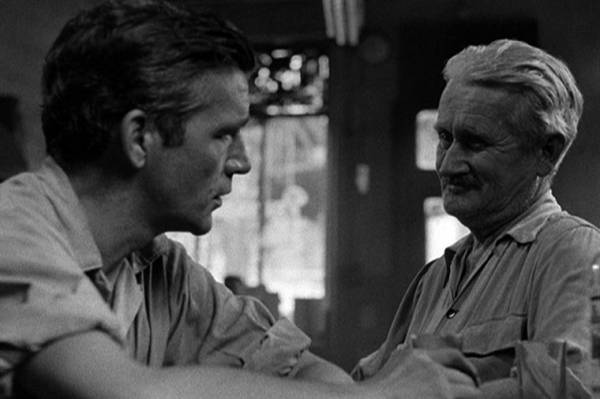
Ray Salyer and Gorman Hendricks are two of the forgotten men in Lionel Rogosin’s unforgettable ON THE BOWERY

ON THE BOWERY (Lionel Rogosin, 1956)
MoMA Film, Museum of Modern Art, Education and Research Building
11 West 53rd St. between Fifth & Sixth Aves.
Thursday, November 29, and Friday, November 30, 1:30
Tickets: $12, in person only, may be applied to museum admission within thirty days, same-day screenings free with museum admission, available at Film and Media Desk beginning at 9:30 am
212-708-9400
www.moma.org
www.ontheboweryfilm.com

One of the greatest documentaries ever made about New York City can now be seen in a recently restored 35mm print, offering a new look at an underground classic. Lionel Rogosin’s On the Bowery caused quite a stir upon its release in 1956, winning prizes at the Venice Film Festival while earning criticism at home for daring to portray the grim reality of America’s dark underbelly. After spending six months living with the poor, destitute alcoholics on Skid Row as research, idealistic young filmmaker Rogosin spent the next four months making On the Bowery, a remarkable examination of the forgotten men of New York, ne’er-do-wells who can’t find jobs, sleep on the street, and will do just about anything for another drink. Rogosin centers the film around the true story of Ray Salyer, a journeyman railroad drifter stopping off in New York City seeking temporary employment. Salyer is quickly befriended by Gorman Hendricks, who not only shows Salyer the ropes but also manages to slyly take advantage of him. Although the film follows a general structure scripted by Mark Sufrin, much of it is improvised and shot on the sly, in glorious black and white by Richard Bagley. The sections in which Bagley turns his camera on the streets, showing the decrepit neighborhood under the El, set to Charles Mills’s subtle, jazzy score and marvelously edited by Carl Lerner, are pure poetry, yet another reason why On the Bowery is an American treasure. The film is screening November 28 & 29 at 1:30 as part of MoMA’s continuing series “An Auteurist History of Film,” along with a pair of seminal silent shorts also set in New York City, Rudy Burckhardt’s 1953 Under the Brooklyn Bridge and Helen Levitt and James Agee’s 1952 In the Street; interestingly, Rogosin tried unsuccessfully to get Agee to work on On the Bowery and fired Levitt as the film’s editor.

TWI-NY TALK: STEVE GOULDING OF THE RUMOUR

Graham Parker and the Rumour (with Steve Goulding, second from right) have reunited after more than thirty years

GRAHAM PARKER & THE RUMOUR
Saturday, December 1, the Concert Hall at the New York Society for Ethical Culture, 2 West 64th St., $45-$75, 8:00
Sunday, December 2, the Paramount, 370 New York Ave., Huntington, $25-$49.50, 8:00
www.grahamparker.net

Since the mid-1970s, Graham Parker has been making his unique brand of pub/punk/pop music, featuring smart, incisive lyrics in all-out rockers and sweet, tender ballads. Although he has never stopped putting out outstanding albums and touring with various backing bands or playing solo, the London-born, New York-based Parker came out swinging, releasing a string of seminal records between 1976 and 1980 with the group he is most associated with, the Rumour. Consisting of Brinsley Schwarz and Martin Belmont on guitar, Andrew Bodnar on bass, Bob Andrews on keyboards, and Steve Goulding on drums, the Rumour helped define Parker’s angry-young-man sound on such classic discs as Howlin’ Wind, Heat Treatment, and Squeezing Out Sparks, ending their five-year run with 1980’s The Up Escalator (without Andrews). After thirty-one years, Parker and the Rumour have reunited for Three Chords Good, another exceptional record on which Parker examines the current state of America, taking on the conservative movement, war, and love in these critical times as only he can. (You can stream the new album here.) “I practice mass hypnosis / You’ll get sucked in by osmosis / But here comes my gnostic gnosis / (and guess what my gross is),” he sings on “Snake Oil Capital of the World,” continuing, “I’m suffering from psychosis / But I’ll give you my diagnosis / You need my medicine (in massive doses).” On the lovely “Long Emotional Ride,” Parker, who just turned sixty-two — and plays a musician named Graham Parker in the upcoming Judd Apatow film This Is 40 — acknowledges his past in a song that relates to the Rumour reunion. “I thought I was a cold, cold man / As a writer you have to be / Got to observe everything from a distance / Record it for posterity / But lately I’ve been feeling things / That I’ve never felt before / Maybe I’m just getting old or something / But something broke down my resistance / And opened the door.” Graham Parker and the Rumour will be playing the Concert Hall at the New York Society for Ethical Culture on December 1, with Parker’s previous backing band, the Figgs, opening up, followed by a highly anticipated show December 2 at the Paramount in Huntington with another British legend still making great new music, Ian Hunter & the Rant Band. As Parker and the Rumour rehearsed last week in Poughkeepsie for the tour, which began November 24 in Tarrytown, we corresponded with the irrepressible Goulding, a drummer’s drummer whose wide-ranging resume includes playing with the Mekons, the Cure, Poi Dog Pondering, Elvis Costello, Carlene Carter, Gang of Four, Nick Lowe, and many others.

Drummer Steve Goulding and the Rumour are back with Graham Parker and playing two area shows this weekend

twi-ny: How did you first find out about the reunion?

Steve Goulding: Graham asked me and Andrew Bodnar to play on his new album, so I said, “If you asked Martin and Bob and Brinsley, you’d have a band!” So he did, and much to my surprise, they all agreed, even Brinsley, who used to be hard to get on the road.

twi-ny: Is it something that you ever thought would happen?

Steve Goulding: I didn’t really think we’d get back together until I heard Brinsley had agreed to do the album.

twi-ny: Did you guys gel instantly upon getting back together, or did it take a while to find the old magic?

Steve Goulding: Yes, it was pretty instantaneous. The recording sessions were like buttah.

twi-ny: The tour is about to start. What are your expectations for the live show?

Steve Goulding: I just hope an audience turns up! The show will be more, er, mature. If we remember the beginnings and endings of the songs, and play the bits in the middle okay, I will be happy.

twi-ny: Will it be odd having one of Graham’s other backing bands, the Figgs, opening some of the shows?

Steve Goulding: I think opening the shows may be odder for the Figgs than for us, as they’ve now played with Graham about three times as long as we did. I hope they don’t feel too bad about it.

twi-ny: How is the Graham Parker of 2012 different from the GP of 1976?

Steve Goulding: Graham is probably a bit happier and has a bigger song catalog to choose from. But he’s really not much different from 1976. He still has a certain prickly energy about him.

twi-ny: What about you?

Steve Goulding: I’m much nicer than I was in 1976. And fatter.

twi-ny: Who are some of the drummers who most influenced you?

Steve Goulding: My early influences were Keith Moon, Ginger Baker, Ringo, Charlie Watts — the usual suspects. Later I got into Bernard Purdie, Max Roach, Jim Gordon, Tony Williams, Al Jackson, and a whole bunch more. Everybody I listen to influences me a little bit. It’s hard to stop things sliding into one’s subconscious.

twi-ny: You are also a member of such bands as the Mekons and the Waco Brothers, and you regularly play with such solo artists as Megan Reilly, Laura Cantrell, and Garland Jeffreys. How is your approach to playing the drums different, if at all, in so many musical genres?

Steve Goulding: I try to listen to what people around me are playing and go along with that. The artists you mention are stylistically very different but they all have similar points of reference. So it’s not that difficult to play with all of them. If Sonny Rollins and Slayer were in there, that’d be much more impressive!