SPIRITUS/VIRGIL’S DANCE
Rattlestick Playwrights Theater
224 Waverly Pl.
Through March 9, $50, 7:00 www.rattlestick.org
In Dante Alighieri’s fourteenth-century epic The Divine Comedy, Publius Virgilius Maro, better known simply as Virgil, shepherds the Italian poet through the “Inferno” and “Purgatory,” two of the three realms of the dead. “Thou follow me, and I will be thy guide, / And lead thee hence through the eternal place, / Where thou shalt hear the desperate lamentations, / Shalt see the ancient spirits disconsolate, / Who cry out each one for the second death,” Virgil, who represents human reason, says to Dante. Virgil (70–19 BCE) was the author of The Aeneid, which tells the story of Trojan War hero and refugee Aeneas’s journey toward his fate and destiny.
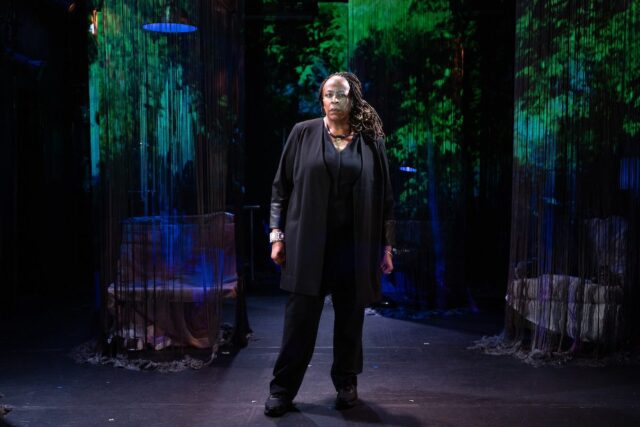
In Spiritus/Virgil’s Dance, solo show master Dael Orlandersmith portrays a fictional character named Virgil who takes the audience at the Rattlestick Theater on a sixty-minute multimedia odyssey into death and destiny, fate and fulfillment.
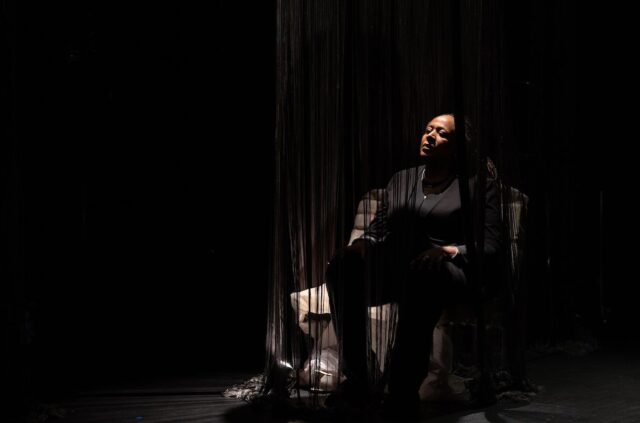
The mood is set early, with such songs as Johnny Cash’s Nine Inch Nails cover “Hurt” and Mavis Staples’s “See That My Grave Is Kept Clean” playing as the crowd enters the space, giving it a holy feel. Takeshi Kata’s set features six floor-to-ceiling string-curtained cylinders containing furniture: a chair, a table, a lamp on a stand. We soon learn that each one symbolizes a chapter in Virgil’s own epic narrative as they try to find their place in a world complicated by loss and loneliness.
“Have I done it right?” Virgil asks. “Have I used time — my time — right?” Have any of us?
Virgil wanders from cylinder to cylinder, sharing moments from their past. They grew up in the Bronx, hanging out at Woodlawn Cemetery and going to St. Barnabas. Their parents’ love of music led Virgil to become a deejay at a pirate radio station in the East Village. As the years pass, Virgil realizes they need something more. “I make a decision to make more money / Move to another part of downtown / Because / That must be the answer / Me / Thinking the money / Another place / Has got to be the answer,” they explain, but it takes their mother’s unexpected death and their father’s sudden illness for Virgil to take a long look at their life, significantly influenced by their friendship with funeral director Jimmy McHugh and hospice nurse Peggy Callahan.
Born in East Harlem, Orlandersmith has been staging one-person dramas, some semiautobiographical, most featuring the playwright performing multiple characters, since 1995’s Beauty’s Daughter, which earned her an Obie. She won the prestigious Susan Smith Blackburn Prize in 2003 for Yellowman. More recently, Forever was a deeply intimate show about the severely dysfunctional relationship between a daughter and her alcoholic mother, while Until the Flood explored the tragic story of the killing of Michael Brown at the hands of police officer Darren Wilson in Ferguson, Missouri, on August 9, 2014.
Orlandersmith is masterful in Spiritus/Virgil’s Dance, a beautifully rendered production lovingly directed by Neel Keller, who has been working with Orlandersmith for four decades. As Orlandersmith says at one point in the play, it’s a “celebration of life and death.” She doesn’t make major shifts in tone or body as she switches among the characters, always wearing the same all-black outfit (the costume is by Kaye Voyce) as she walks slowly around the cylinders, which have a heavenly glow (the sensitive lighting is by Mary Louise Geiger), the people they represent prepared for the great beyond. Nicholas Hussong’s projections include leaves blowing in the wind and the subway speeding by, accompanied by Lindsay Jones’s tender original music and sound.
As Virgil discovers their true vocation, it’s like they have been given a giant hug from the universe, something we all seek — and something we all receive from Orlandersmith in this gently, enveloping experience. You’ll leave the theater thinking of the words Peggy shared with Virgil: “Live your life / Live it fully / Do not leave here regretfully.”
Spiritus/Virgil’s Dance continues at Rattlestick through March 9; the March 6 performance will be followed by the discussion “Music Lives On” with Javier Arau, Felice Rosser, Elliot Sharp, and Matt Stapleton.
[Mark Rifkin is a Brooklyn-born, Manhattan-based writer and editor; you can follow him on Substack here.]
MUNICH MEDEA: HAPPY FAMILY
WP Theater
2162 Broadway between Seventy-Sixth & Seventy-Seventh Sts.
Through February 25, $30-$100 wptheater.org
An undercurrent of Greek tragedy winds its way through Corinne Jaber’s debut, Munich Medea: Happy Family, a compelling but ultimately unsatisfying drama.
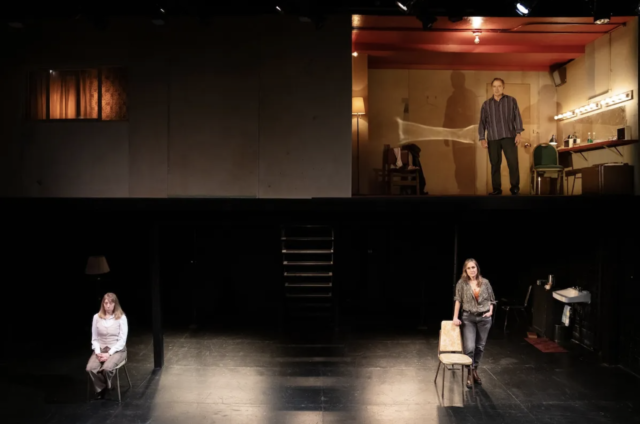
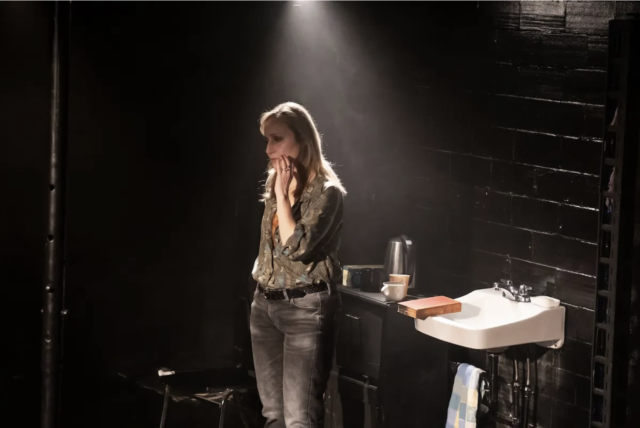
The seventy-five-minute play is told in a series of monologues delivered to the audience by Alice (Heather Raffo), her childhood bestie, Caroline (Crystal Finn), and Caroline’s Father (Kurt Rhoads), a well-known stage actor. They each have their place on Kristen Robinson’s two-level set: Alice stays on the right side, which has a chair and a sink; Caroline is on the left, with a chair and a bench; and Father hovers over them literally and figuratively, his curtained private room in his house above his daughter, his open theater dressing room above Alice. A staircase looms in the back middle, separating all three characters except when Father, who has been sleeping with Alice since the girls were sixteen, comes down.
They all live in Germany, where Father is starring as Jason in a production of Medea, the character who cheats on his wife, their two young children paying the price for his infidelity.
“When I got to the theater the show had already started / I waited / And watched / Jason abandon his wife / And Medea plot on vengeance / Torn by pain, all of them / Too much love, I thought,” Alice says.
Alice initially believes she is a willing participant in the sordid proceedings, while Father is unrepentant: “Why did you tell them about our secrets? Why share things with them that they cannot understand? / Throwing pearls in front of sows / Why tell them what is precious and daring and other? / This otherness that disrupts their little middle-class lives / That scares them / And fascinates them / Why? / When I was here to protect you / To hold on to our stories / To hold on to this world of ours / To not let them tear it apart / We need to shield ourselves from them / We are not like them / We are made from other stock.”
Meanwhile, Caroline recalls her terror of Father, with good reason. She remembers, “My mother would go to bed very early / Once my sister had been put to sleep / My father was at the theater / And when he wasn’t / He was in his room / His sanctuary, as he called it / Locked up / Not to be disturbed / His room next to my room / Far away from my parents’ bedroom / His room where he worked his lines and read / I’d hear him recite / Loud and strange noises / And then go quiet again / I don’t really know what he did in there / I was frightened by the mysterious room / And his presence next to me / Invisible / At eight pm he’d watch the Sportschau / I could always hear the introductory tune of the Sportschau / I hated that tune / It meant that we were alone now / My father with his television and me with my book in bed / Only a wall between us / All I wanted was to be at the other end of the corridor / Where my mother was / In another world / A world of happy family / I still don’t know what that is / Happy family / But it does exist / I know it does.”
Father quotes Friedrich Schiller, Georg Büchner, and Rainer Maria Rilke, cleans his feet as if he is some kind of Jesus, and insists that anyone in his situation would have done the same thing; he defends his love of Alice by using Jason’s words, specifically misogynistic ones at that: “There should be some other way for men to produce children. Women would not have to exist at all. And then humanity would be saved a lot of trouble.”
Twenty years after everything went down, Alice and Caroline meet up again, but they still speak only to the audience and never to each other. Throughout, there is not a single scene in which the characters interact.
Munich Medea: Happy Family is a coproduction of PlayCo and WP Theater, the latter specializing in the work of Women+. The title is misleading; it feels like the play could have been set anywhere, not necessarily in Germany, and the Medea references might make one expect a different kind of ending.
Finn (Birthday Candles,Plano) ably portrays the tightly wound Caroline, Rhoads (Julius Caesar,Off Peak) is appropriately beastly as Father, and Raffo (Noura,9 Parts of Desire) is riveting as Alice, but Jaber and director Lee Sunday Evans (Oratorio for Living Things,Dance Nation) can’t bring the disparate parts together. Just as the characters never connect onstage, the play never connects with its title or its promise and feels strangely unfulfilled, neither adding to the contemporary dialogue surrounding sexual abuse nor adequately exploring its namesake’s theme of parents killing their children with their own unbridled desire.
[Mark Rifkin is a Brooklyn-born, Manhattan-based writer and editor; you can follow him on Substack here.]
Emmy nominee Tim Daly and Tony winner Daphne Rubin-Vega star in new production of The Night of the Iguana (photo by Joan Marcus)
THE NIGHT OF THE IGUANA
The Pershing Square Signature Center
The Irene Diamond Stage
480 West 42nd St. between Tenth & Eleventh Aves.
Wednesday-Sunday through February 25, $81-$161 iguanaplaynyc.com
On “Night of the Iguana,” from her last album, 2007’s Shine, Joni Mitchell sings, “The tour bus came yesterday / The driver’s a mess today / It’s a dump of a destiny / But it’s got a view . . . / Now the kid in the see-through blouse / Is moving in hard on his holy vows . . . / Since the preacher’s not dead / Dead drunk will have to do!”
Tennessee Williams’s 1961 play, The Night of the Iguana, has always attracted star power. It began as a 1948 short story, then developed from a one-act to a two-act to a 1961 three-act Tony-nominated play starring Patrick O’Neal, Bette Davis, and Margaret Leighton, followed by a 1964 John Huston film with Richard Burton, Ava Gardner, and Deborah Kerr.
The play is now back in a messy revival at the Signature Center from La Femme Productions that makes it clear why the show has not previously been performed in New York City this century: It’s not very good.
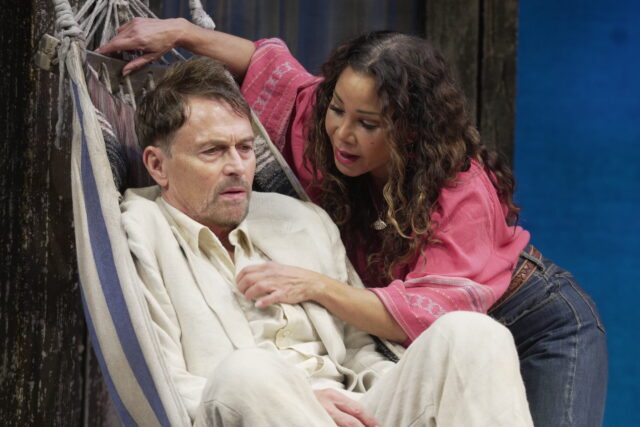
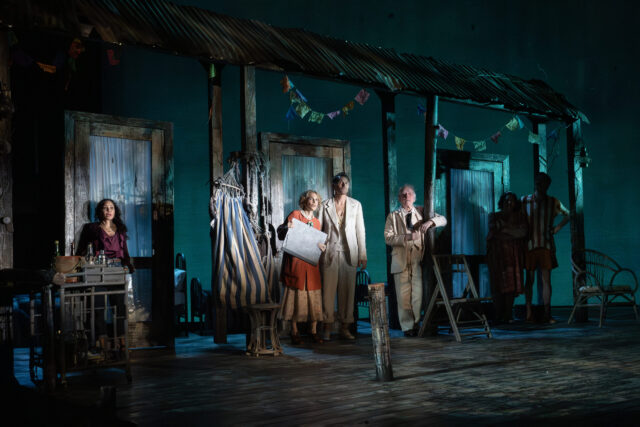
Directed by Emily Mann, the show centers on Rev. Shannon (Tim Daly), a defrocked priest who is now an alcoholic tour guide exhausted with life. It’s the summer of 1940, and he brings his busload of Texas Baptist female schoolteachers to the ramshackle Costa Verde Hotel in Acapulco, run by recent widow Maxine Faulk (Daphne Rubin-Vega), who is more than ready to get back in the action. The leader of the teachers, Judith Fellowes (Lea DeLaria), is angry at the shoddy tour while also trying to keep the teenage Charlotte (Carmen Berkeley) away from Shannon. Also at the hotel are aging poet Jonathan Coffin (Austin Pendleton) and his granddaughter, Hannah (Jean Lichty), who is caring for him; Pedro (Bradley James Tejeda) and Pancho (Dan Teixeira), who work for Maxine; and Frau Fahrenkopf (Alena Acker) and Herr Fahrenkopf (Michael Leigh Cook), a pair of Nazis traipsing around the place. Shannon has the bus keys, so Hank, the bus driver (Eliud Garcia Kauffman), can’t take off without the guide, who might be replaced by his colleague Jake (Keith Randolph Smith).
The Night of the Iguana takes place at a ramshackle Acapulco hotel (photo by Joan Marcus)
It’s a hot and sweaty day, but the play is cold and distant. The actors feel like they’re in different shows, never forming a solid whole. Beowulf Boritt’s invitingly decrepit set is wasted.
The Night of the Iguana came at the end of Williams’s most fertile period, the fifteen years in which he wrote The Glass Menagerie,A Streetcar Named Desire,Summer and Smoke,The Rose Tattoo,Cat on a Hot Tin Roof,Orpheus Descending,Suddenly Last Summer, and Sweet Bird of Youth. It was part of a downward spiral of poorly reviewed and attended shows that still attracted big stars but often had to cut their runs short. The Night of the Iguana is one of those Williams plays that everyone has heard of but does not live up to the hype.
Mitchell’s lines capture it best: “The night is so fragrant / These women so flagrant / They could make him a vagrant / With the flick of a shawl. / The devil’s in sweet sixteen / The widow’s good looking but she gets mean / He’s burning like Augustine / With no help from God at all.”
[Mark Rifkin is a Brooklyn-born, Manhattan-based writer and editor; you can follow him on Substack here.]
David Greenspan portrays four roles in one-man On Set with Theda Bara (photo by Emilio Madrid)
ON SET WITH THEDA BARA
The Brick
579 Metropolitan Ave.
Monday – Saturday through March 16, $25-$89 transportgroup.org
Bushwick-based playwright Joey Merlo became obsessed with Theda Bara after his sisters searched online for his celebrity doppelgänger and it turned out to be the silent film star known as the Vamp. His infatuation led to the one-person genderqueer show On Set with Theda Bara, running at the Brick through March 9. (The play, which Merlo wrote while he was bedridden during his last semester at Brooklyn College, premiered at the 2023 Exponential Festival; Transport Group and Lucille Lortel Theatre have teamed up to present this encore run.)
Bara, whose name is an anagram for “Arab death,” was born Theodosia Burr Goodman in 1885 and died in 1955 at the age of sixty-nine. But in Merlo’s sixty-five-minute play, she is alive and well at 139, living in an upstate mansion. Six-time Obie winner David Greenspan portrays all four characters: Detective Finale; his adopted daughter, Iras; Ulysses, a Tennessee Williams–esque southerner who started playing the organ at screenings of Bara’s films when he was twelve; and the Vamp herself.
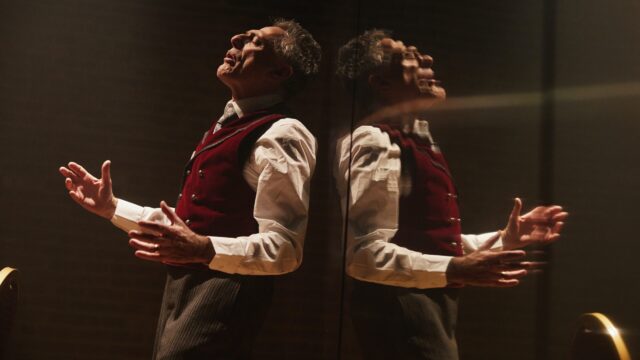
Frank J. Oliva’s set features a long, narrow table covered in black cloth, where thirty audience members sit, advised to not place any items on it, including their hands and elbows. At either end is one empty chair where Greenspan occasionally sits, behind each of which is a shadowy mirror. Twenty other patrons are on stools against the brick walls on opposite sides of the table; above the table is a row of low-hanging lamps, and there are two additional creepy lights on the walls. Greenspan wears old-fashioned slacks, a white shirt, and a red vest, vaguely resembling a carnival barker. (The lighting is by Stacey Derosier, with costume by Avery Reed and ominous sound by Brandon Bulls.) It all makes for a kind of eerie noir séance.
The muddled plot is difficult to parse out, so don’t try too hard. The sixteen-year-old Iras is missing, and Finale is determined to find her. She uses the pronouns they/them, which confuses Finale, who is also having a hard time with his husband, Richie. “The evening of February twenty-ninth I knew something was wrong because all I heard was silence,” he says about coming home from work and not hearing Iras “doing her Tick Tocks or giggling with her girlfriends.” His reference to silence being a problem evokes Bara’s career; she appeared in more than forty silent films between 1914 and 1926, but most were destroyed in a 1937 fire, and she never made a sound picture.
Duality is central to On Set with Theda Bara at the Brick (photo by Emilio Madrid)
Ulysses, who was sexually abused as a child, moves in with Theda, a campy vampire queen and modern-day Norma Desmond who enjoys watching videos of herself on YouTube and reading the comments section. “I know I’m a little twisted. I’m a very self-aware person. But sometimes I like to see myself,” she says. “These little clips from my lost films. All that exist of my former self. I look daring and surreal. Who doesn’t like to remember. . . .”
Greenspan, telling stories like Dracula, is mesmerizing in this tour de force, bending and curving his face and his fingers as he switches between roles, each with its own different vocal twang. Director Jack Serio, who has recently helmed intimate versions of Uncle Vanya and The Animal Kingdom for a limited audience, makes full use of the space; Greenspan (Four Saints in Three Acts,Strange Interlude) stops in front of the mirrors, hides against the wall, and glides across the table with a graceful majesty. However, none of that helps distill the raggedy plot.
The play is an enigma, as was Bara herself. “My life is one big lie,” she says in the play. “But so are the movies. . . . The truth is so subjective anyway. What’s wrong with a little lie!” One of cinema’s first sex symbols, she was married to one of her directors for more than thirty years, but they never had children. She was born in Cincinnati but her studio promoted her as being from exotic Egypt, the daughter of an artist and an Arabian princess.
Even her gender identity is debated in the show. “People used to think I looked like a man. I hated those sneering comments. At first. But then I came to enjoy the criticism,” she admits. “Yes, I look like a man! Because men have power! Maybe I am a man! Maybe I’m not. You’re mine now you’re mine. Kiss me, you fool! or was it Kiss me, my fool? I can never remember the line.”
The famous line comes from her 1915 psychological drama A Fool There Was, which can be watched in full on YouTube. It’s a splendid follow-up to On Set with Theda Bara.
[Mark Rifkin is a Brooklyn-born, Manhattan-based writer and editor; you can follow him on Substack here.]
Alonzo King LINES Ballet makes Lincoln Center debut with Deep River
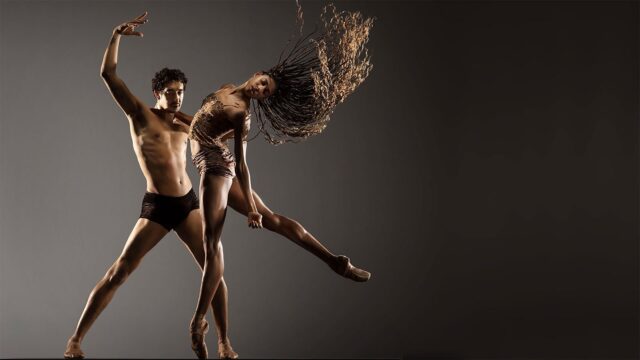
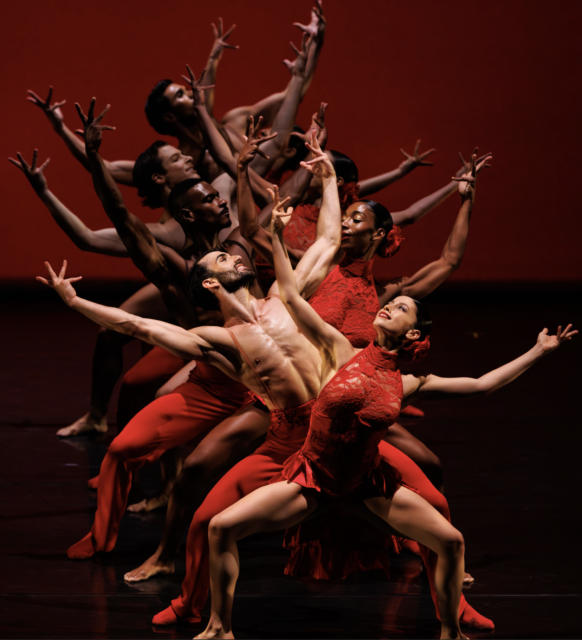
Who:Alonzo King LINES Ballet What: Lincoln Center debut Where:Rose Theater, Broadway at West Sixtieth St., fifth floor When: February 22-24, choose-what-you-pay (suggested admission $35), 7:30 Why: San Francisco–based Alonzo King LINES Ballet makes its Lincoln Center debut this week with Deep River, an evening-length piece that kicked off its fortieth anniversary season last year. The title is taken from the popular spiritual performed by such singers as Marian Anderson, Paul Robeson, Odetta, Johnny Mathis, Mahalia Jackson, and Beverly Glenn-Copeland. The sixty-five-minute work features an original score, incorporating Jewish, Indian, and Black traditions, by multidisciplinary artist and longtime King collaborator Jason Moran and is sung live onstage by vocalist Lisa Fischer, alongside music by Pharoah Sanders, Maurice Ravel, and James Weldon Johnson, who wrote “Lift Every Voice and Sing.”
The company consists of dancers Babatunji, Adji Cissoko, Madeline DeVries, Theo Duff-Grant, Lorris Eichinger, Shuaib Elhassan, Joshua Francique, James Gowan, Ilaria Guerra, Maya Harr, Marusya Madubuko, Michael Montgomery, and Tatum Quiñónez, with lighting by Jim French, costumes and sets by Robert Rosenwasser, and sound by Philip Perkins. King, who was born in Georgia to parents who were staunch civil rights activists, notes in a statement about Deep River, “Love is the ocean that we rose from, swim in, and will one day return to.”
Annabelle Lopez Ochoa’s Línea Recta is part of special Ballet Hispánico program at 92Y (photo by Ben McKeown / courtesy of the American Dance Festival)
Who:Ballet Hispánico What: Celebrating 150th anniversary of the 92nd Street Y Where:The 92nd Street Y, Kaufmann Concert Hall, 1395 Lexington Ave. between Ninety-First & Ninety-Second Sts. When: Wednesday, February 21, $10-$40 in person, $20 virtual, 7:30 Why: As part of the 92nd St. Y’s continuing celebration of its 150th anniversary, New York City–based Ballet Hispánico will present a special evening at Kaufmann Concert Hall that can be seen live in person February 21 or online February 22-24. The night features a restaging of Talley Beatty’s 1985 Recuerdo de Campo Amor, Annabelle Lopez Ochoa’s 2016 flamenco piece Línea Recta, and Pedro Ruiz’s 2000 Cuban-infused Club Havana. Ballet Hispánico celebrates the fifteenth anniversary of artistic director Eduardo Vilaro in its spring season, which arrives April 25-28 at City Center, consisting of the world premiere of Vilaro’s Buscando a Juan, a restaging of Ochoa’s 2010 House of Mad’moiselle, and Gustavo Ramírez Sansano’s 18+1.
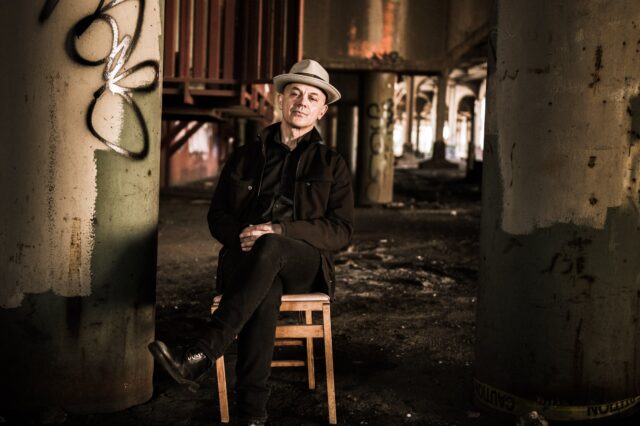
I first met James Mastro in the late 1980s, when he had a side gig as a freelance proofreader and I worked at a small publisher and used to assign him work. I already knew who he was from his time in the iconic Hoboken band the Bongos; he would go on to form Strange Cave and the Health & Happiness Show before joining Ian Hunter’s Rant Band in 2001.
Mastro started playing in New York City when he was teenager in the late 1970s, eventually performing with Patti Smith, John Cale, the Jayhawks, Alejandro Escovedo, Richard Lloyd, Garland Jeffreys, the Feelies, Jesse Malin, Amy Speace, Jill Sobule, and Robert Plant, among so many others throughout his career. He opened Guitar Bar in Hoboken in 1996 as a place where musicians could not only shop but play live and hang out. He has now followed that up with 503 Social Club, an art gallery that hosts live events, including recent concerts by Sobule, Freedy Johnston, and Bobby Bare Jr.; Jon Langford performed there with friends amid his paintings on the walls.
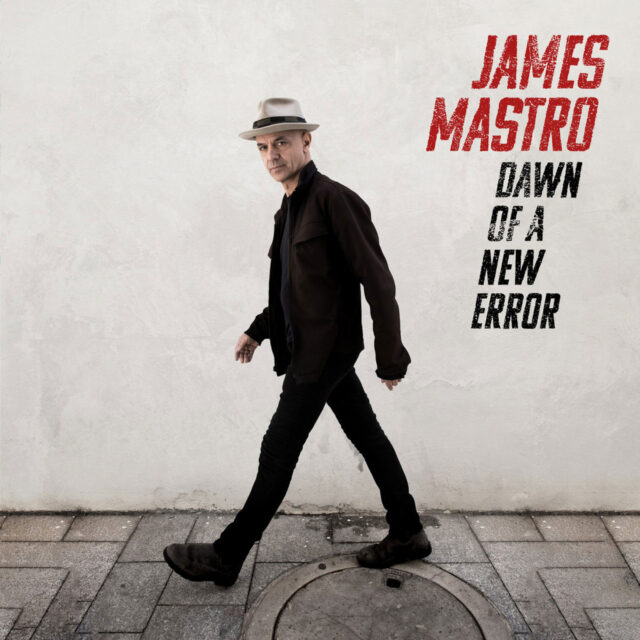
At long last Mastro has made his debut solo album, Dawn of a New Error, out from MPress Records on February 21. The title has multiple meanings, referring to the state of the world, Mastro’s shift to being the main man, and, at least to me, those old days when I was hiring him to find mistakes in kids books. Longtime Smith bassist and New Jersey native Tony Shanahan produced and plays bass and keyboards on the LP, which ranges from jangly pop, acoustic folk, and romantic ballads to gospel and country, celebrating such influences as the Beatles, the Ramones, T-Rex, Roxy Music, Bob Dylan, and David Bowie. Reilly and Hunter each appear on three tracks, with Hunter as “the voice of god” on “The Face of the Sun.” Mastro takes on faith and religion in “My God,” death and loss in “Never Die,” true love in “Gangster Baby” and “Three Words,” and fake news in “Right Words, Wrong Song.” “Trouble” was inspired by Dr. Seuss and Levon Helm.
Mastro will have album release parties on February 21 at Bowery Electric and February 24 at Transparent Clinch Gallery in Asbury Park. We recently spoke over Zoom, discussing music, art, family, hats, and stepping out into the spotlight.
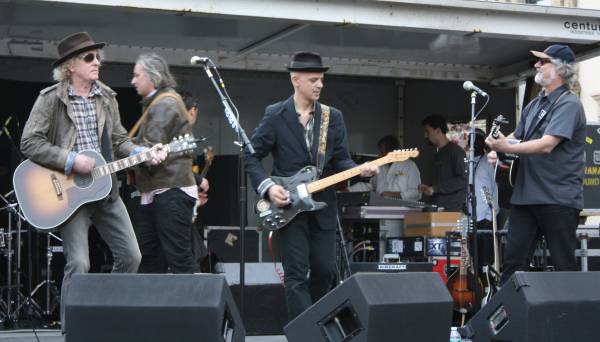
James Mastro plays with Ian Hunter and R.E.M’s Peter Buck and Scott McCaughey of the Baseball Project at the 2011 Hoboken Music & Art Festival (photo by twi-ny/mdr)
twi-ny: We’ve known each other for thirty-five years. Back in the late 1980s and early ’90s, I would send you freelance work while you were out on the road. What was that like to be playing in bands and proofreading children’s nonfiction books?
james mastro: I had a family to feed, by any means necessary. And luckily, I was doing two things that I love to do: playing music and reading books. So it was a good marriage.
For us too; you did both exceptionally well. How has the road changed for you since then?
jm: With Ian Hunter, it definitely got a little bit more comfortable. The things I love about it I still love, always trying to take the dirt road as opposed to the highway. Touring can be a drag, but you can also make it incredibly great and fun. We would plan out an agenda every time. It’s worth it to get up an hour or two earlier to take a little trip and go see a museum or something crazy that a friend told you about.
twi-ny: Back in 2011, you very generously played at twi-ny’s tenth anniversary party with Megan Reilly at Fontana’s, which is gone. New York City has had such a turnover of music venues. Are there specific clubs that you miss from the old days? Obviously, I think we’re going to mention Maxwell’s.
jm: CBGBs especially will always hold a place in my heart, just playing there as a teenager and getting to see some of the bands that inspired me to play and getting to play with some of them. So CBs and Maxwell’s, yes; huge holes that were left. I miss Fez under Time Cafe a lot; it was just a really special place. Usually what makes a place special — I was thinking about Maxwell’s this morning and CBs — are the people that ran it. Maxwell’s, I remember, was one of the first clubs that would feed you, no matter who you were; if you were playing there, they would feed you, which for a musician is huge. You may not get paid, but at least you knew you were getting fed. [Maxwell’s owner] Steve Fallon always treated musicians well, Hilly Kristal at CBGB. It starts at the top if you have great people running a space.
twi-ny: Maxwell’s was such a fan-friendly venue. I saw your bands, Robyn Hitchcock, the Mekons, Bob Mould. So you played that tenth anniversary show with Megan, who sings backup on several songs on your new record. What is it about you and Megan that gels so well over the years?
jm: I think she’s one of the finest singers out there right now. I mean, her voice just kills me. It’s kinda like beauty and the beast. I’m not crazy about my voice, so anything that will complement it, like a voice like Megan’s, I love singing with. And just musically, she’ll show me a song of hers and right away I don’t even have to think about it; these parts come out because the way she writes is so dreamy and from a special place. I connect with that so well. The other day she and I just did a rehearsal together, the two of us playing and singing for my show coming up. And I was just thrilled. I’d be happy just doing that too. She’s a very special person musically, and as a person. Just very talented.
twi-ny: On “Three Words” she really just takes it and builds to that finale.
jm: It’s like from the purr of a lion . . . She starts off so subtle and by the end of that song, she takes it to a place I never would’ve thought of going. I don’t think that that song would’ve made it on the record if she didn’t sing on it. I really think she sells it.
twi-ny: You’re very self-deprecating about your voice. On the record you say a couple of things that really lends insight to you. I’ve been listening to you play for decades. I’ve seen you in bands that you lead and bands that you’re the guitarist, the backup vocalist. So to hear you front and center on an entire record and writing songs that sound very intimate and personal, I’m learning things about you that I never knew.
jm: Therapy begins. [laughs]
twi-ny: On “Right Words,” you sing, “The lead singer at the mic wants so badly to be liked.” And on “Three Words,” you claim, “I’m not a singer and I can’t write songs.”
jm: Mm-hmm.
twi-ny: But clearly you can sing and you can write songs.
jm: Mm-hmm.
twi-ny: Humble as ever. What’s it like to finally have a solo album under your own name? Songs you wrote, songs you’re singing lead on. Why now?
jm: Good question, Why now? Well, I’ve really enjoyed being a side guy all these years, and especially when you’re working with someone like Ian Hunter, or Patti or John, anyone I’ve worked with, Megan. So it’s been nice to go in and try to contribute and watch how other people work. It takes a lot of pressure off. Running a band is a pain in the ass; you gotta make sure the drummer doesn’t get arrested —
twi-ny: Is that a Steve Holley problem?
jm: No, no, not at all. [laughs] At that time in my life, it was very nice to just take some of the responsibility off. Even though I started recording these songs before Covid just kind of as fun, with no pressure or no idea of making a record, when Covid hit, that really made me realize, Well, I’ve got time on my hands. Everything is kind of slowed down. Let’s take a look at these songs and see if we have an album here.
twi-ny: So the songs were already written?
jm: Yes, they were. Most of them were either recorded or just about finished. Tony Shanahan had just opened a studio in Hoboken. He called me up and says, Hey, I wanna just check out the room and the gear and see how things go in here. Do you have any songs? We’ll record. I was like, great. So we went in and it was just me, him, and, for the first few, Louie Appel on drums. Three friends just playing some songs.
I’d show them the songs right then and there. There was a great spontaneity and contribution from them. And it was really fun, so we just did that over a course of a few years, on and off, whenever the studio was open.
twi-ny: No pressure.
jm: No pressure.
twi-ny: So now, not only are you front and center, on lead vocals, you’re turning to people like Ian Hunter to participate. Ian hasn’t been performing because he’s got tinnitus?
jm: Tinnitus, yeah.
twi-ny: What was his reaction when you asked him to be on the album?
jm: He did one track, “Right Words, Wrong Song,” and it was perfect. It’s exactly what I wanted. He sounded just like Ian Hunter, you know? And then he finished that and he’s like, What else you got? And so he sat and I locked the door right away.
twi-ny: Oh, so he was with you in Tony’s studio?
jm: Yeah. He came down to do that. So we played him songs. He is like, “Oh, I hear a part on this. Let me try this. This is great.” He’s a very musical guy, a very giving guy. And so for me, having the guy that inspired me to pick up a guitar sing on my record after I worshiped his, it was a nice little payback.
twi-ny: And then you get to direct him in a video. You directed it, you star in it, you’ve got Tammy Faye Starlite, you’ve got Ian, you put on these great wigs. To me it’s a throwback to the early days of MTV. Is that what you were going for?
jm: Definitely. I think it was a mix of early MTV and the Colbert show and The Daily Show. I guess you could say it could be a serious song, but I think sometimes you can get a point across better by being a little irreverent about it.
twi-ny: It looks like it was fun to shoot.
jm: It was a riot. I usually backpedal at things like this. I’ve been asked to be in other videos, and I’m just like, Oh, no, I can’t. So I went into this with a little trepidation, but we had a great time.
twi-ny: How often before have you gotten to act without a guitar in your hand? Has that happened a lot?
jm: You know, since high school.
twi-ny: So you have a little acting bug inside you?
jm: It’s a good career to have to fall back on if music doesn’t work out. It’s a good safety net. Do some acting.
twi-ny: It looks to me like you’re sitting right now in 503 Social.
jm: I am. Yeah.
twi-ny: In 1996, you started Guitar Bar, which revolutionized the music scene in Hoboken. And now you’ve expanded it with 503 Social Club. How did that get going?
jm: Well, all these projects are done for selfish reasons. Guitar Bar was because I just got tired of going into New York to buy strings, and Social Club, it just popped up. A friend of mine told me about this space that became available for rent, and he’s like, You gotta go see it. The last thing I need is something that takes more sleep away from me. But it was just crying to be something. There are so many talented people in this area and there’s a lack of venues, be it for artists or musicians. So I just felt, let’s give it a shot. It’s selfish because I get to see my friends’ artwork up close and see my friends play. So it’s a labor of love, but it’s been really fun, and the feedback’s been great.
twi-ny: You had a big night there with the great and mighty Jon Langford.
jm: He’s a dynamo in every way. I love his artwork, and so he had a great show. I thought he was just gonna come in solo, but he brought half the Mekons with them, Sally [Timms] and some of the others. And they just tore this place apart.
twi-ny: I’m mad that I missed that.
jm: I understand. Well, he’s coming back. So the fact that I can get people like that here . . . it’s very fun and special for me and inspiring.
twi-ny: Speaking of inspiring, you’ve been married for thirty-one years, you’ve got two daughters, and at least one of them is a musician.
jm: Yeah, Lily is in Long Neck, her professional name and band. [Daughter Ruby, a London-based sound designer and filmmaker, edited the “Right Words, Wrong Song” video.]
twi-ny: So is music just in the Mastrodimos blood?
jm: Neither of my parents were musical. Both my brother and I were, and, my kids by default. There were always guitars in the house, music playing.
twi-ny: Is your wife musical?
jm: She is; she doesn’t play, but she sings great. She has no desire to do that. I truly think the kids get their talent from her, not me.
twi-ny: On February 21, you’ll be at Bowery Electric for the album release party. You’ve told us that you’re gonna be playing with Megan; who else will be joining you?
jm: It’s a great band and people. I’m really happy to be playing with Tony, who produced the record and has been with Patti Smith for years.
twi-ny: He’s doing a special Lunar New Year show with Patti at Bowery Ballroom on February 10.
jm: Yes, I will be there.
twi-ny: Awesome. I will be there too. So you’ve got Tony.
jm: He and I have been playing together for thirty-something years. So that’s easy. Dennis Diken from the Smithereens will be on drums. Megan will be singing, playing some guitar, and I got her playing some keyboards. She’s excited about that. The other guitar player, Chris Robertson, he’s in a band now called Elk City; he was in the Psychedelic Furs side project Feed and played with Richard Butler, just great, another friend. If I’m gonna do this, I want it to be fun for me, and if it’s fun for me, hopefully it’ll be for everybody else. These are good mates to be in a room with.
twi-ny: Okay, so one last question, something I’ve always wanted to ask you. You have always worn hats onstage; how many do you have, and how did the hat thing get started?
jm: I always wore boleros or something. I just I love that era. My dad used to wear hats, and I love that era when you look at old photos of Yankee Stadium, and men are in suits and in hats, like the whole crowd is at a baseball game but they’re dressed to the nines. So I just always have loved hats. How many do I have? Not as many as you would think. Not as many as Alejandro Escovedo — talk about a snappy dresser. I aspire to be him when I grow up. He and I are always going out hat shopping when we’re on the road.
twi-ny: Oh, speaking of which, you’re about to go out on the road with him again.
jm: I am. Yeah.
twi-ny: He previously played with the Rant Band when Ian couldn’t tour.
jm: Right. Alejandro’s got a new album coming out too [Echo Dancing], and it’s really a great, interesting record. He’s kind of revisited some of his old songs but totally deconstructed them. I don’t want to say it’s techno, but it’s unique and great. So it’s gonna be a little different from what people might expect from him. It’s kind of what John — he’s worked with John Cale also — it’s what John would do. Nothing was sacred to Cale. We’d go onstage and he’d be like, You know what, let’s change this song (that we had done the night before). But he would just totally revamp it. And I love that. Nothing should be set in stone. So that’s kind of what Alejandro’s done. I’ll be playing with him in that, but I’m also opening the shows acoustically and, depending on what town we’re in, if I have some friends there, I’ll ask them to come up and join me.
So I’m looking forward to it. Traveling with good friends and playing music, what could be better, you know?
twi-ny: You’re just having a ball, right? Just loving life?
jm: It may sound like a cliché, but if I wake up in the morning, it’s a good day. Anything after that is icing on the cake.
[Mark Rifkin is a Brooklyn-born, Manhattan-based writer and editor; you can follow him on Substack here.]