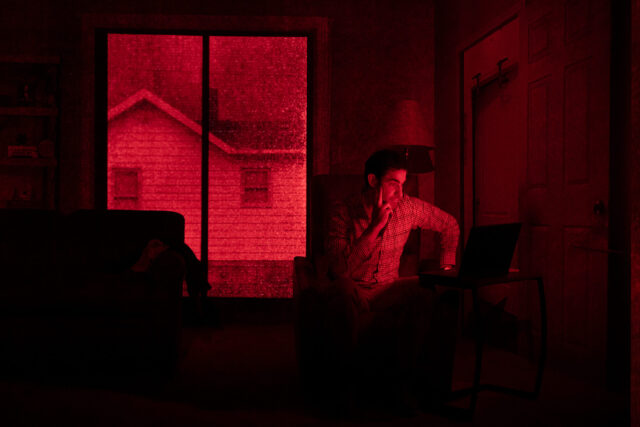
live performance

DHARMA FRIENDS: NUALA CLARKE AT TIBET HOUSE

Who: Nuala Clarke, Crystal Gandrud, Rob Ward, Megan Mook, Kevin Townley
What: “Alchemy and Art on the Spiritual Path”
Where: Tibet House NYC and online, 22 West Fifteenth St.
When: Monday, March 24, free – $20 – $225, 6:30
Why: “I swim in the sea, and my experience of cold has changed. I can no longer be trusted with the question ‘Is it cold out?’ I experience it without the tightening of torso muscles and raising of shoulders. It has become separate from the whole, less readily identifiable. In my hands it feels like leanness, the appendages pared away to the essential; in my back and around my ribs it tingles; it is fresh on my lips; in my toes it is clear and my chest, above my heart, accepts it as youngness, in need of care. I am an effervescent being.” So writes Irish artist Nuala Clarke in her new book, Irish Moss of a Dead Man’s Skull (the Owl Circus, March 18, $33).

Influenced by the work of Irish alchemist and natural philosopher Robert Boyle (1627–91), author of Experiments and Considerations Touching Colours, with Observations on a Diamond that Shines in the Dark, as well as by installation artist Robert Irwin, serigrapher and ceramicist Robert Brown, and spiritual coach and meditation teacher Robert Chender, Clarke has spent nearly five years “thinking about whether a painting could be prescribed for an ailment.” The result is a work that Clarke calls “an ode to light, color, loss, and the elements.” The 224-page book features 86 full-color images and details the impact each of the four Roberts has had on her art and her meditation practice.

On Monday, March 24, Clarke will launch the book at Tibet House as part of the Dharma Friends series, joined by experimental writer and acquiring editor Crystal Gandrud, Food Will Win the War violist, songwriter, and lead vocalist Rob Ward, and monthly Dharma Friends hosts Megan Mook and Kevin Townley, who will lead guided meditations. Having participated back in 2010 with composer Roarke Menzies, Gandrud, my wife, and others in a performance Clarke curated for her show “You Delight Me” on Shelter Island, I can vouch for how terrific her events are, and this one should offer its own numerous pleasures.

[Mark Rifkin is a Brooklyn-born, Manhattan-based writer and editor; you can follow him on Substack here.]
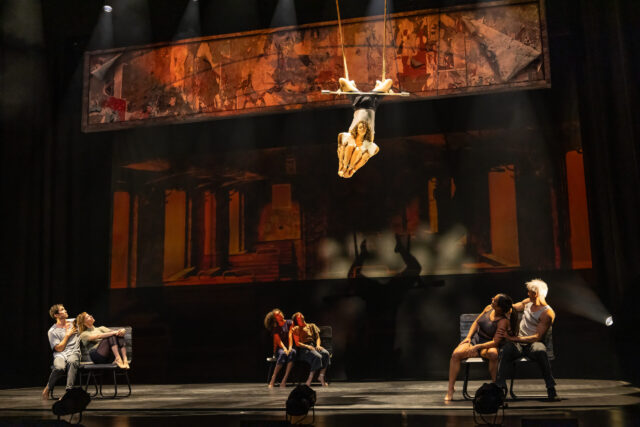
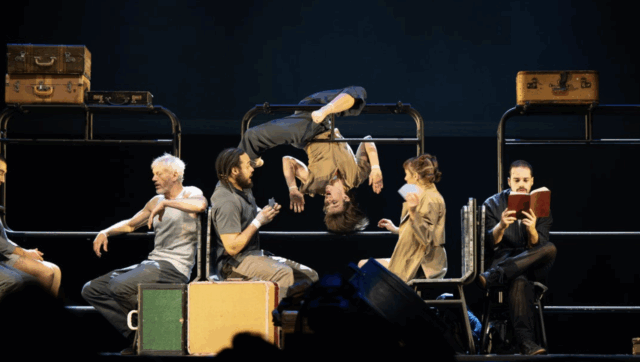
THE NEXT GENERATION OF DANCE: AILEY II RETURNS HOME

Ailey II brings Houston Thomas’s Down the Rabbit Hole back home in two-week NYC season (photo by Nir Arieli)

AILEY II AT CITIGROUP THEATER
Ailey Citigroup Theater
405 West Fifty-Fifth St. between Ninth & Tenth Aves.
March 26 – April 6, $62.25
ailey.org

Ailey II has been on the road, visiting more than two dozen cities, but the company called “the next generation of dance” is coming back to New York for its annual season at the Ailey Citigroup Theater on West Fifty-Fifth St. Running March 26 to April 6, the season is dedicated to longtime Ailey dancer, choreographer, and artistic director Judith Jamison, who passed away in November at the age of eighty-one.

“Ailey II is thrilled to come back to our home stage after an incredible tour across the country as we leap into our sixth decade,” artistic director Francesca Harper said in a statement. “We are eager to welcome both our loyal supporters and new audiences to experience the exciting artistry of Ailey II through two programs that bridge the past and present, celebrating how each generation shapes the future. Whether audiences find joy, connection, or a sense of empowerment, I want them to carry that discovery into their lives long after they leave the theater.”

The company of twelve dancers — Carley Brooks, Meredith Brown, Jennifer M. Gerken, Alfred L. Jordan II, Xavier Logan, Kiri Moore, Corinth Moulterie, Xhosa Scott, Kayla Mei-Wan Thomas, Darion Turner, Eric Vidaña, and Jordyn White — will present “Echoes,” comprising Harper’s Luminous, the world premiere of Houston Thomas’s Down the Rabbit Hole, and a new production of Alvin Ailey’s Streams, and “New Vintage,” consisting of an excerpt from Jamison’s Divining, excerpts from Ailey’s Blues Suite, The Lark Ascending, and Streams, Down the Rabbit Hole, and Baye & Asa’s John 4:20. Each program is approximately 105 minutes with two intermissions; tickets are $62.65.

[Mark Rifkin is a Brooklyn-born, Manhattan-based writer and editor; you can follow him on Substack here.]

BOXED IN: JOSHUA WILLIAM GELB’s [untitled miniature] AT HERE

Joshua William Gelb spends three hours a night in a tiny box at Here through March 25 (photo by Maria Baranova)

[untitled miniature]
HERE Arts Center
145 Sixth Ave.
March 18-25, $27-$102 (livestream only $10), 7:00, 8:00, 9:00
here.org
theaterinquarantine.com

In January, Joshua William Gelb, who had transformed his eight-square-foot closet in the East Village into a pristine white digital stage during the pandemic, escaped the safety of his home in order to present The 7th Voyage of Egon Tichy [Redux], a staggeringly inventive hourlong multimedia play performed in a replica of his closet, accompanied by live and prerecorded video segments interacting with each other.

Gelb, whose collaborative virtual productions, dubbed Theater in Quarantine, include I Am Sending You the Sacred Face: One Brief Musical Act with Mother Teresa, Footnote for the End of Time, and Nosferatu: A 3D Symphony of Horror, now steps further into the technological avant-garde with the hybrid [untitled miniature], running through March 25 at Here. Each evening from 7:00 to 10:00, Gelb, nude and covered in white talcum powder, will perform in a white box measuring only 35″ wide by 19.5″ tall. His actions, which begin with him seemingly asleep, can be seen on an iPhone facing the box, a screen on the back of the box, three video monitors in the hallway, and a wall around the corner with nine screens that alternate between live and prerecorded scenes of Gelb in the box, sometimes bathed in yellow, pink, or other colors, along with television test patterns, the SMPTE color-bar grids that, sixty years ago, appeared on television sets after broadcasters shut down for the night — and which, if they came on today, would signal the end is near.

Audience members can relax on the vivid blue floor in the central space, sit in a chair, or walk around the room, following the show on an app that shares different views of Gelb and encourages everyone to participate in a chat that is read out loud by a female AI voice, audible to both the audience and Gelb. The only other items in the room are a red fire extinguisher and an old metal first-aid kit on the wall; after I accidentally knocked my head against it, one of the black-clad stage managers silently came over, opened it up, took out a small package that said “bandages,” and offered me a brown Tic Tac.

[untitled miniature] features a live video feed broadcast to numerous screens and online (photo by Maria Baranova)

In an Instagram post, Gelb delves into the nature of the work, explaining, “Why am I naked? . . . The naked body is the foundation of art. . . . I’m trying to see if it’s possible to find a real impression of tactility in the digital medium. I wanted to make a piece that really felt distilled down to its most essential elements, the smallest performance space possible and a human body. That shouldn’t be controversial, but try putting a naked body on the internet outside of OnlyFans and you hit a wall — algorithmic sensors, AI moderators, the corporate infrastructure that decides what is and is not acceptable. . . . Art isn’t about comfort or what’s acceptable. And artists need a digital space where they can push boundaries, even ones that make us uncomfortable.”

Gelb certainly looks uncomfortable as he wiggles, turns, squirms, and reconfigures his limbs; often, when he bumps into or purposely strikes the box, harsh, loud sounds reverberate blast out, a cacophonous symphony. At times the audience is enveloped in the much more rewarding sounds of chirping birds and a gently rushing river. Gelb occasionally lets out a grunt but is mostly quiet as he struggles inside the claustrophobic box.

Durational performance offers numerous ways to experience it (photo by Maria Baranova)

Gelb is clearly not enjoying himself, grimacing, staring out blankly, seemingly unable to get out of his predicament. Although one side of the box is open, he is trapped, in a cage he has built for himself. It’s as if he’s been sent to solitary confinement for an unnamed crime. Maybe he wakes up, wrestles with another difficult day, and goes back to bed — or perhaps has decided, once awake, to eventually stay under the covers, avoiding facing the world. He could be stuck on a social media platform on which he no longer wants to reveal himself. Or maybe he has experienced an entire lifetime in forty-five minutes, being birthed from the womb and later laid to rest in a grave.

The piece can also be taken more literally, applied to how we were all penned in at home during lockdown, terrified of leaving, spending too much time with our little electronic boxes that kept warning us of impending doom — and with which Gelb has carved out a unique and fascinating career.

At the show’s conclusion, there are no bows, no applause. Some members of the audience gingerly leave, and others stay, no one sure whether anything else is going to happen, sort of like life itself, before, during, and after a pandemic.

[Mark Rifkin is a Brooklyn-born, Manhattan-based writer and editor; you can follow him on Substack here.]
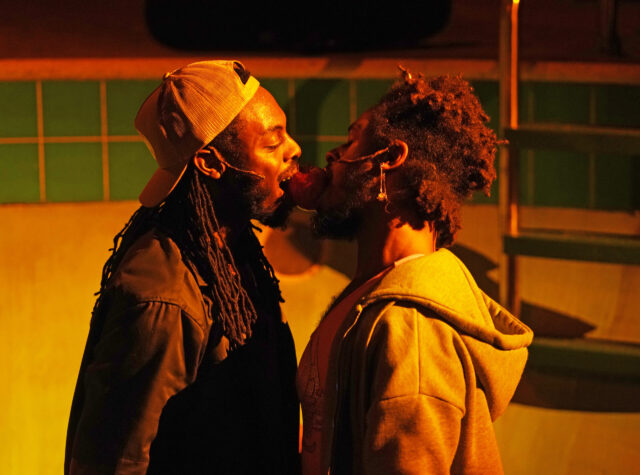
THE GREAT PRIVATION: BLACK BODIES IN THE TIME OF CHOLERA AND TODAY

Charity (Clarissa Vickerie) seeks comfort in Nia Akilah Robinson’s The Great Privation (How to flip ten cents into a dollar) (photo by Julieta Cervantes)

THE GREAT PRIVATION (HOW TO FLIP TEN CENTS INTO A DOLLAR)
Soho Rep at Playwrights Horizons, Peter Jay Sharp Theater
416 West Forty-Second St. between Ninth & Tenth Aves.
Tuesday – Sunday through March 26, $45
sohorep.org

Making striking off-Broadway debuts, writer Nia Akilah Robinson and director Evren Odcikin excavate the mistreatment of Black bodies through American history in the haunting yet exhilarating The Great Privation (How to flip ten cents into a dollar), the inaugural production of Soho Rep’s residency at Playwrights Horizons after the company had to leave its longtime Walker St. home.

The hundred-minute play takes on even greater meaning given the recent elimination of government internet links to the gravesites of Black, brown, and women veterans buried at Arlington National Cemetery.

The Great Privation switches between 1832 and the present. In the past, thirty-four-year-old Missy Freeman (Crystal Lucas-Perry) and her sixteen-year-old daughter, Charity (Clarissa Vickerie), have just buried Moses, their respective husband and father, in the African Baptist Church graveyard in Philadelphia. He died of cholera, which is sweeping through poor communities. A white man named John (Holiday) shows up with tools and a large sack; Missy surmises that he is a student at the college who has come to dig up Moses and use his body for medical experimentation. But Missy knows that after seventy-two hours, the body will have decayed enough to be worthless to the institution, so she plans to watch over the grave for three days while praying for Moses’s safe spiritual journey back to Sierra Leone. Throughout the play, a countdown clock keeps track of the time, beginning at 72:00:00 and moving swiftly between scenes.

“You told me white people take bodies to torture us further. Like what they did to Nat Turner last year. But students are the ones who take our bodies? . . . Why didn’t you tell me this before?!” Charity asks her mother, who replies, “I didn’t want it to be true. Not for US. It couldn’t be.” But it is.

Missy Freeman (Crystal Lucas-Perry) makes a deal with John (Holiday) as Charity (Clarissa Vickerie) looks on (photo by Julieta Cervantes)

Later, a Black janitor named Cuffee (Miles G. Jackson) arrives, also carrying tools and a sack, ready to do what John didn’t. “How can you, a Black man, how can you live with yourself?” Missy asks him.

In the modern day, Missy and Charity, who live in Harlem, are working at a sleepaway camp on the grounds of the Philly graveyard. They’re on a break, discussing with John, a gay white counselor, how they are being unfairly disciplined by their boss, Cuffee. The women also discover that they are being paid less than John even though they have the same job and Missy has more experience than John. Meanwhile, Charity has gotten in trouble for vandalizing her school with her friends and posting it on social media. She tells her mother that she can’t delete it because “it’s already viral,” like it was a disease that can’t be cured (not unlike cholera once upon a time). “TikTok is the bane of my existence,” Missy says.

John then offers to show them the graveyard at night, and time and memory collapse into each other.

In researching the play, Robinson, who was born and raised in Harlem, read works by such authors, professors, and historians as Daina Ramey Berry, Lesley M. Rankin-Hill, and Gary B. Nash and scoured through the library at the Schomburg Center for Research in Black Culture with the help of associate chief librarian Maira Liriano. Harriet A. Washington’s 2008 book, Medical Apartheid: The Dark History of Medical Experimentation on Black Americans from Colonial Times to the Present, served as a major source. “Enslavement could not have existed and certainly could not have persisted without medical science,” Washington writes. “However, physicians were also dependent upon slavery, both for economic security and for the enslaved ‘clinical material’ that fed the American medical research and medical training that bolstered physicians’ professional advancement.”

A digital clock counts down from seventy-two hours to zero in Soho Rep production at Playwrights Horizons (photo by Julieta Cervantes)

The word “privation” in the title is short for “deprivation,” something the Black people in the show experience over and over in both time periods as they deal with generational trauma, grief, and stolen land and labor. It’s no coincidence that Missy’s husband’s name was Moses, the same as the leader of the Israelites who escaped slavery in Egypt but who was not allowed to enter the Promised Land, much like Moses Freeman’s spirit may not return to Sierra Leone. The second part of the title, the parenthetical How to flip ten cents into a dollar, is a phrase Robinson learned from her parents, referring to making something great with very little.

Mariana Sanchez’s set features a soft-sculpture tree near the middle of the stage, next to where Moses is buried. It is a place where Charity finds comfort, resting on the extensive roots that reach into the past and stretch out toward the future, enveloping her (and at several points seemingly coming to life with flashing LED colors). The two women wear the same long skirts throughout most of the play, adding coats to differentiate between 1832 and now; at camp they also wear more summery casual clothing. The costumes are by Kara Harmon; Marika Kent’s lighting and Tosin Olufolabi’s sound build a mysterious atmosphere, while Maxwell Bowman’s video and programming contribute an eerie surprise.

Missy Freeman (Crystal Lucas-Perry) and Charity (Clarissa Vickerie) enjoy a fun moment with John (Holiday) during a break at camp (photo by Julieta Cervantes)

The four-person cast is exemplary, led by Tony nominee Lucas-Perry (A Sign of the Times, A Bright Room Called Day), who imbues Missy with an earth-mother devotion and dedication, and Juilliard MFA student Vickerie, who already has the chops of a pro. Holiday, in his off-Broadway debut, and Jackson (Pay the Writer, Endlings) offer fine support as the women’s allies and enemies.

Despite its potent subject matter, The Great Privation is extremely funny, complete with a rousing fourth-wall-breaking finale that will have you moving and grooving. But it won’t make you forget the hard-hitting story you just experienced, especially as Black bodies both alive and dead continue to be disrespected in America, long past the time the clock hits zero.

[Mark Rifkin is a Brooklyn-born, Manhattan-based writer and editor; you can follow him on Substack here.]
MADNESS AND MELODRAMA: FIVE EVENINGS AT THE CHAIN

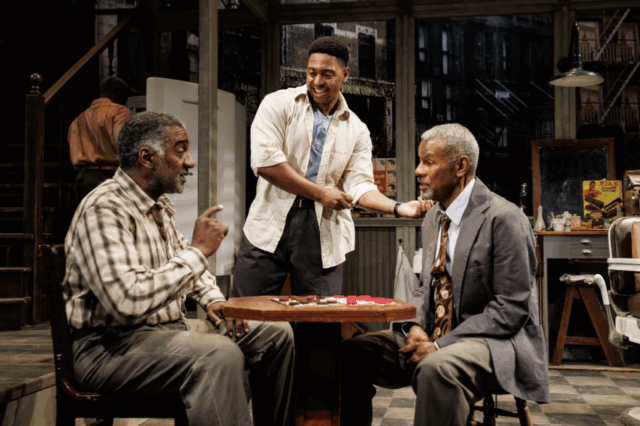
Tamara (Snezhana Chernova) and Ilyin (Roman Freud) reunite after being apart for seventeen years in Five Evenings (photo by Alexandra Vaynshtein)

FIVE EVENINGS
Chain Theatre
312 West Thirty-Sixth St. between Eighth & Ninth Aves.
March 20-30, $49.87 – $71.21
www.fiveevenings.com

“No, this is madness,” Zoya says to Ilyin at the start of Jewish-Soviet playwright Aleksandr Volodin’s Five Evenings, a five-act multigenerational melodrama that is as relevant today as it was when it was first presented in 1959 at the Leningrad State Academic Bolshoi Drama Theater and later adapted into an award-winning 1978 film by Nikita Mikhalkov.

The work is now being revived by director Eduard Tolokonnikov and producer Polina Belkina for a thirteen-show run at the Chain Theatre, with Lana Shypitsyna or Snezhana Chernova as Tamara, Roman Freud as Ilyin, Ekaterina Cherepanova as Katya, Aleksei Furmanov as Slava, Inna Yesilevskaya as Zoya, and Dima Koan as Timofeev. The ninety-minute play (with intermission) will be performed in Russian with English surtitles; the set design is by Jenya Shekhter, with lighting by Ken Coughlin, sound by Denis Zabiyaka, and costumes by Natasha Danilova.

The story looks at two relationships, between the older Tamara and Ilyin and the younger Katya and Slava. In the second evening, they’re together at Tamara’s, and the two men have a chat while Slava sets the table, a scene that is representative of Volodin’s character development and dialogue:

Ilyin: See how nice it is? When there’s a white tablecloth and flowers on the table; it’s awkward to be petty, rude, or mean. The tablecloth should have creases from the iron — they bring back childhood memories.
Slava: How poetic.
Ilyin: One must live wisely, without haste. Remember, life’s book is full of unnecessary details. But here’s the trick: You can skip those pages.
Slava: Well, this is one page I don’t feel like reading. Aunt Toma can clean up when she gets here. After all, isn’t there a division of labor?
Ilyin: Don’t make me angry — get to work.

Katya walks in as Ilyin is teaching Slava how to box, declaring, “What are you doing, you slimy snake? What are you doing?!” A moment later, Ilyin says to Katya, “A demonic woman. Is that a manicure you’ve got there?”

Katya (Ekaterina Cherepanova) and Slava (Aleksei Furmanov) seek freedom and love in Five Evenings (photo by Alexandra Vaynshtein)

Born in Minsk and raised in Moscow after his mother’s death when he was five, Aleksandr Lifshitz — he changed his last name to Volodin because Lifshitz was too Jewish and was impacting his ability to get published — was drafted into the Red Army during WWII and was injured twice before earning a medal for courage. His first play, The Factory Girl, debuted in 1955 and traveled throughout the USSR. Five Evenings, which deals with time, suffering, resilience, and rebuilding, was followed by such plays as My Elder Sister and Do Not Part with Your Beloved in addition to several screenplays.

A champion of the individual who subtly rejected Stalinism in his works, Volodin died in 2001 in St. Petersburg at the age of eighty-two; his son Vladimir Lifschitz, professor emeritus of computer science at the University of Texas at Austin, revoked the copyright of his father’s plays in Russia after Putin invaded Ukraine. Lifschitz will be at the Chain Theatre to participate in a postshow discussion on March 20.

[Mark Rifkin is a Brooklyn-born, Manhattan-based writer and editor; you can follow him on Substack here.]

LITERARY INSIGHT: KYLE THOMAS SMITH AND JOHN MADERA AT NYI MEDITATION CENTER

Who: John Madera, Kyle Thomas Smith, Josh Wexler
What: Writers’ Voices — An Evening of Literary Readings
Where: New York Insight Meditation Center, 115 West Twenty-Ninth St. between Sixth & Seventh Aves., twelfth floor, and online
When: Sunday, March 16, free with advance RSVP (suggested donation $15), 2:00
Why: “There’s an album called Classical Music for Creativity that is perfect, or almost perfect, for blocking out noise so you can read, write, or study. I suppose you could paint or draw or sculpt or design clothes to it too. You can buy it on iTunes for $7.99. I could look up the track listings and rattle them off for you, but the truth is, I don’t know which track is which, or who composed what, when it’s sounding away in my earbuds. All I know is that when I hit shuffle, there are no lyrics and no singing to distract me, and the orchestras’ crescendos are often all that it takes to bring what I’m writing to a crescendo. Theories like the Mozart effect say that just listening to classical music will raise your IQ. That kind of thing used to be hugely important to me when I was younger, but what’s more important to me now is that the music drowns out other people’s chatter. I don’t want anyone or anything intruding on my flow. Still, there’s too much cabin fever when you write at home past a certain number of days and libraries are so stuffy. Plus, you can’t bring drinks in. So, I go to cafes. I’ve been going to them ever since I was a teenager. It’s good to be around people, and even to hear a dull roar of their voices, just to know you’re a part of something larger than yourself and your confines. It’s even better if you can tune everybody out when you’re around them and for me, Classical Music for Creativity does the trick.”

So begins award-winning author Kyle Thomas Smith’s latest memoir, François (StreetLegal Press, 2024), the Chicago-born, Brooklyn-based author’s follow-up to the hilarious 2018 Cockloft: Scenes from a Gay Marriage and the poignant 2010 novel 85A. Smith will be around people on Sunday, March 16, when he appears at New York Insight Meditation Center to read from François, which features William Etty’s dramatic 1828 oil painting Male Nude, with Arms Up-Stretched on the cover. Smith, a practice leader in New York Insight’s Brooklyn sangha, will be joined by New York City–based writer, editor, and publisher John Madera, who will read from Nervosities (Anti-Oedipus Press, 2024), his debut collection of short experimental fiction that includes such stories as “Some Varieties of Being and Other Non Sequiturs,” “Anatomy of a Ruined Wingspan,” and “Notes Toward the Recovery of Desiderata.” Following the readings, Smith and Madera will sit down for a conversation moderated by bookseller, activist, musician, piano teacher, and suicide hotline director Josh Wexler. The event, hosted by the NYI Artist Salon and being livestreamed as well, will begin with presentations by other members of New York Insight’s community.

And just in case Smith is interested, among the works on Classical Music for Creativity are Carl Philipp Emanuel Bach’s Symphony in G Major, Wq. 182 No. 1: I. Allegro di molto, conducted by Hartmut Haenchen; several Vivaldi concertos for violin, cello, mandolin, and/or strings; and Handel’s Music for the Royal Fireworks, HWV 351: IV. La réjouissance, in addition to compositions by Johann Sebastian Bach, Arcangelo Corelli, Mozart, Schubert, Beethoven, and Jean-Philipe Rameau.

[Mark Rifkin is a Brooklyn-born, Manhattan-based writer and editor; you can follow him on Substack here.]

JAMES JOYCE AND SEXUAL FREEDOM: EXILES GETS A RARE REVIVAL

Robert Hand (Rodd Cyrus) and Richard Rowan (Jeffrey Omura) are in love with the same woman in James Joyce’s only published play (photo by George Vail)

EXILES
Jeffrey and Paula Gural Theatre
A.R.T./NY Theatres
502 West Fifty-Third St. between Tenth & Eleventh Aves.
Wednesday – Sunday through March 15, $25-50
www.themaptheater.com/whats-on

Dublin-born writer James Joyce revolutionized literature with such novels as Ulysses, Finnegans Wake, and A Portrait of the Artist as a Young Man. It is little known that he published a single play, Exiles, an intriguing and frustrating work that is currently having its first New York City revival in nearly half a century, staged by the MAP Theater at the Jeffrey and Paula Gural Theatre through March 15. (He reportedly destroyed his only other play, the five-act A Brilliant Career.) While the semiautobiographical work does not revolutionize live drama, it proves to be more than just a side note in Joyce’s history.

Written in 1914–15, Exiles was inspired by the author’s seven-month sojourn to Rome and features characters loosely based on Joyce himself; his wife, Nora Barnacle; his friend Oliver St. John Gogarty; and Vincent Cosgrove, a suitor of Nora’s. It takes place in the summer of 1912, nine years after journalist Robert Hand (Rodd Cyrus) and writer Richard Rowan (Jeffrey Omura) both fell for Bertha (Layla Khoshnoudi), but Richard won her heart — and also impregnated her, causing a scandal. Richard has just finished a book about Robert’s former fiancée Beatrice Justice (Violeta Picayo), who Richard was in love with when he met Bertha. Beatrice teaches music to Richard and Bertha’s son, Archie (Mattie Tindall), a happy child who runs around with glee.

Richard, a dour, humorless man, and Robert, a flamboyant, Byronic figure, are best friends and rivals at the same time. One afternoon Robert stops by Richard and Bertha’s home and finds Beatrice there. “Oh, but I’m sorry I did not know you were coming. I would have met you at the train. Why did you do it? You have some queer ways about you, Beatty, haven’t you?” Robert, carrying flowers for Bertha, ask Beatrice, who coldly responds, “Thank you, Robert. I am quite used to getting about alone.”

Beatrice exits, leaving Bertha with Robert, who poetically proclaims his desire for Richard’s wife, who drinks it all in, returning the flirtation. Robert asks if she can kiss her hand, and she holds it out for him. He asks to kiss her eyes and she obliges. He inquires about kissing her mouth and she replies, “Take it.”

Richard arrives, pretending he does not know what is going on between them. Robert has helped get Richard invited to a dinner with the vicechancellor, where they can discuss the open chair of romance literature at the university. They speak of Robert’s cottage, where he and Richard had some wild times with a bevy of women when they were younger. “It was not only a house of revelry; it was to be the hearth of a new life. And in that name all our sins were committed,” Richard says. Robert answers, “I have no remorse of conscience. Maybe you have.”

Having arranged that Richard will be busy that night, Robert makes a secret rendezvous with Bertha, imploring her to come to the cottage so they can consummate their desire. After Robert leaves, Bertha tells Richard everything; he wants to know every detail, and he listens without jealousy but with a touch of excitement, or at least as excited as he ever gets.

Calling Robert “a liar, a thief, and a fool,” Richard encourages Bertha to go. “You forget that I have allowed you complete liberty — and allow you it still,” Richard says, the first of many times he does so. Bertha gives Richard the opportunity to tell him not to visit Robert, asking if he will blame her if she goes, but Richard proclaims with little emotion, “No, no! I will not blame you. You are free. I cannot blame you.”

It’s a key moment in the narrative, complicating the audience’s relationships with the main characters in a drawing room morality play without a moral. Bertha does indeed go to the cottage — but so does Richard.

Robert (Rodd Cyrus) declares his love for the married Bertha (Layla Khoshnoudi) in Exiles (photo by George Vail)

Adapted and gracefully directed by Zachary Elkind, Exiles is a post-Victorian intellectual soap opera that evokes the love triangle in François Truffaut’s 1962 Jules et Jim and the partner-swapping in Paul Mazursky’s 1969 Bob & Carol & Ted & Alice, tinged with the J. Geils Band’s 1980 hit “Love Stinks,” in which Peter Wolf sings, “You love her / But she loves him / And he loves somebody else / You just can’t win / And so it goes / ’Til the day you die / This thing they call love / It’s gonna make you cry.”

There may not be any tears in Exiles, but there aren’t a whole lot of laughs either. For all the freedom Richard keeps talking about, the adult characters are constrained by social mores, while the fun-loving Archie always has a smile on his face and a bounce in his step, too young to know of life’s many ills.

Cate McCrea’s set is a horizontal space with the audience sitting in three rows of rafters on either of the long sides. At each end is a white curtain and a chair, with two small, round ottomans in the middle, one oddly containing a pile of books and a few other objects. Amara McNeil’s lighting stays fairly bright throughout, so everyone in the audience is visible. Alyssa Korol’s contemporary costumes are highlighted by Bertha’s sexy flower-print dress.

Khoshnoudi is alluring as Bertha; it’s easy to see why everyone is in love with her. Omura, wearing wire-rim glasses that make him resemble Joyce, and Cyrus are each fine individually but don’t quite connect; it is difficult to imagine Richard and Robert were ever close friends. Picayo does what she can with the underwritten Beatrice, who is more of a plot device, while Tindall injects much-needed energy switching between Archie and Brigid, the Rowans’ servant.

Even at a trim ninety minutes, the show gets repetitive, but Exiles is no mere curiosity; it is an intelligent work written by a man at the peak of his abilities, exploring the idea of free love and open marriage in that brief window around the First World War, decades before they were to become hot topics in movies and on daytime television.

[Mark Rifkin is a Brooklyn-born, Manhattan-based writer and editor; you can follow him on Substack here.]