live performance

AFROFEMONONOMY / WORK THE ROOTS

AFROFEMONONOMY / WORK THE ROOTS
Performance Space New York and other locations
150 First Ave.
May 15 – June 27, free with RSVP
performancespacenewyork.org
www.instagram.com/afrofemononomy

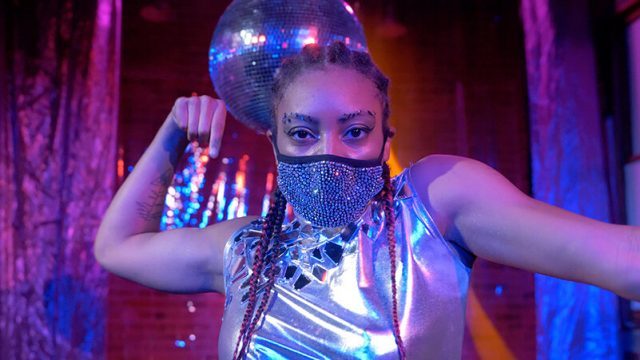
A multidisciplinary collaboration by some of today’s preeminent Black women creators, “Afrofemononomy / Work the Roots” features live theater, music, discussion, and installation, inspired by the career of activist, author, poet, playwright, editor, director, filmmaker, educator, and mother Kathleen Collins (Losing Ground, Whatever Happened to Interracial Love?), who died of breast cancer in 1988 at the age of forty-six.

According to the collective, “‘Afrofemononomy / Work the Roots’ is an affirmation of how we, as Black women, expected to maintain the world’s health, can restore and not imperil our own. Black women absorb disproportionate stress and often develop a variety of risk factors, including higher early mortality rates with cancer and other diseases. Working inside the unsustainable economy and time structures of theater-making are often depleting for us. ‘Afrofemononomy / Work the Roots’ is a Black femme reclaiming of time and space, a model for restoration, a continuation of the lineage of our foremothers’ formative presence in the downtown avant-garde. We claim our health and sovereignty, prioritizing our human needs, and translate the ease, free expression, and non-compulsory ethos of our informal gatherings to our working conditions and aesthetic.”

The six-week celebration, produced by Performance Space New York with New Georges, kicks off this weekend with Collins’s 1984 Begin the Beguine: A Quartet of One-Acts, which is having its theatrical world premiere at Oakland Theater Project later this month. Part of the Downtown Live festival, Remembrance, a kind of personal séance starring Eisa Davis and Kaneza Schaal and with directorial consultation by Jackie Sibblies Drury, takes place at 85 Broad St. on May 16 at 6:30, May 22 at 1:30 and 4:00, and May 23 at 4:00, in an arcade next to the Stone Street Historic District. Those same days at 2:30 and 3:45, Lileana Blain-Cruz, Amelia Workman, Kara Young, Gabby Beans, and Jennifer Harrison Newman will present The Reading in the Courtyard at 122CC, Performance Space New York’s home, a tale set in a psychic’s waiting room with a white novelist and a Black fashion designer.

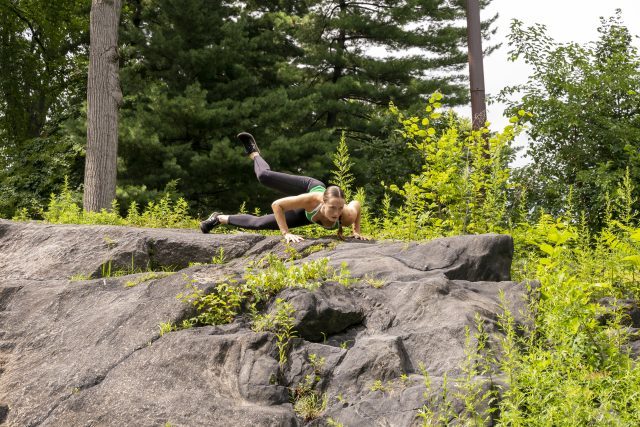
Begin the Beguine unfolds May 15 and 16 on a lawn in East Harlem, performed by April Matthis and Stacey Karen Robinson about an actress mother and her adult son and created with Charlotte Brathwaite, and The Healing is set in a Bed-Stuy park May 15-16 with Joie Lee, Schaal and Drury, as a white healer tries to help a Black woman with an unnamed illness.

In addition, Blain-Cruz’s installation “Last night, I dreamt I danced in the image of God” provides “a space for dance, rest and sustenance made for and in appreciation of Black women,” running May 15-16 and 22-23 from noon to 2:30 and 4:00 to 7:00 in the Courtyard at 122CC, and Davis’s audio-visual installation “The Essentialisn’t: Gold Taste” is open Thursdays to Sundays from May 29 to June 27 from noon to 6:00 at Performance Space New York’s Keith Haring Theatre and in the Courtyard, with occasional live sound interaction that asks the question “Can you be Black and not perform?” And finally, on May 15, “Afrofemononomy” will launch an online, international, interactive radio project. All events are free but require advance RSVP for timed tickets and because of limited space.

La MaMa MOVES! DANCE FESTIVAL

Mei Yamanaka will be part of Tiffany Mills Company presentation at 2021 La Mama Moves! Dance Festival

Who: Tiffany Mills Company; Hadar Ahuvia and Tatyana Tenenbaum; J. Bouey; Morgan Bullock, Gerald Casel, Daudi Fayar, BamBam Frost, and John Scott; Ricarrdo Valentine/Brother(hood) Dance!; Jasmine Hearn; Sugar Vendil; more
What: Digital and in-person dance festival
Where: La MaMa online and at Downtown Art/Alpha Omega
When: May 12–23, free – $25 (pay-what-you-can)
Why: The 2021 edition of La MaMa Moves! will be a hybrid dance festival, consisting of workshops, discussions, and performances streamed live from the Ellen Stewart Theatre and the Downstairs Theatre at its home at 66 East Fourth St. as well as held in front of a limited audience at Downtown Art/Alpha Omega at 19 East Third St. “Performing artists have always proven to be resilient and resourceful even during the most challenging times,” La MaMa Moves! curator Nicky Paraiso said in a statement. “Since the pandemic began last March, dance practitioners have been both taking time to reflect and going ahead in doing the creative work they are always doing. This past year has certainly been painful and frustrating, both mentally exhausting and physically debilitating. Dance artists have, however, continued to make work, and I believe that the artists participating in this season’s La MaMa Moves! Dance Festival are making work that is essential and true to this pivotal moment in time.”

The sixteenth annual festival kicks off May 12 with an intergenerational discussion in recognition of Asian American and Pacific Islander Heritage Month with Yoshiko Chuma, Sophia Gutchinov, Potri Ranka Manis, Paz Tanjuaquio, and Sugar Vendil, moderated by choreographer and writer Maura Nguyen Donohue. Tiffany Mills Company will offer a Zoom workshop for kids on May 13, Hadar Ahuvia and Tatyana Tenenbaum will perform Prayer of the Morning on May 13 and 15, J. Bouey will present untitled: an exploration of grief on May 14 and 16, and Morgan Bullock, Gerald Casel, Daudi Fayar, BamBam Frost, and John Scott will participate in a Virtual International Showcase on May 18. Tiffany Mills Company will give a sneak peek at the excerpts-in-process Home Project on May 20 and 22 (with Mills, Jordan Morley, Nikolas Owens, Emily Pope, and Mei Yamanaka), Ricarrdo Valentine/Brother(hood) Dance! shares All About Love about Black healing on May 21 and 23, and, on May 22 and 23 at 4:00, La MaMa moves to the nearby Downtown Art/Alpha Omega for outdoor performances of Jasmine Hearn’s Songs from Pleasure Memory and Vendil’s Test Sites. All events require advance RSVP and are either free or pay-what-you-can ($5-$25).

BLESSED UNREST: TOUCH

Touch takes place on the sidewalk, with Madison Square Park in the background (photo by Maria Baranova)

TOUCH
Blessed Unrest; NYC Open Culture Program
Saturday, May 8, 7:00, and Sunday, May 9, 3:00 & 5:00
Admission: free with RSVP (suggested donation $25)
East 26th Street (between 5th and Madison Avenue, NYC)
www.blessedunrest.org
www1.nyc.gov

The Manhattan-based Blessed Unrest company explores our deep-seated need for physical and emotional connection in Touch, a dance-theater piece performed guerrilla-style just outside Madison Square Park. Part of the city’s Open Culture Program, the forty-five-minute work takes place on the sidewalk near the southwest corner of East Twenty-Sixth St. and Broadway, the park right behind them. Wearing masks, Michael Gene Jacobs, Tatyana Kot, Ariel Polanco, and Anna Wulfekuhle nimbly move across a long bench and interact with a lamppost, a circular bike rack, and a low railing around a tree as overlapping stories are broadcast from two small, portable speakers. The narratives, based on personal stories of isolation shared by the performers and edited and expanded by Keith Hamilton Cobb (American Moor) and Teddy Jefferson (One Inch Leather, The Insomniac), involve Oedipus, a horse, and a mysterious neighbor. The socially distanced audience, also wearing masks, stand or sit in the street, which is blocked off to vehicular traffic but not to pedestrians and bicyclists, who sometimes walk or pedal right through the performance, lending an unpredictable quality to the proceedings.

Performers make use of a bench, a bike rack, a lamppost, and more in site-specific Touch (photo by Maria Baranova)

“When we finished working on our 2015 show Body: Anatomies of Being, which was also built around personal testimonials from the performers, we felt strongly that the idea of touch hadn’t been explored fully in the final work,” director Jessica Burr (The Snow Queen, Eurydice’s Dream), who founded the company in 1999, said in a statement. “It seemed particularly fitting to revisit this subject now, as the months of detachment and related touch deprivation began to take a toll on all of us. When workshopping this piece remotely, each in our own isolated bubble, we spoke about research on mirror neurons and the emotional brain. That research suggests that our witnessing of the authentic corporeal experiences of others can stimulate the very same visceral response in our own brains, as though the experience were ours. It’s the forging of literal compassion through neural growth in our audiences.”

Touch, which features music composition, arrangement, and sound design by Adrian Bridges and costumes by Sohn Plenefisch, continues May 8 and 9; admission is free with RSVP. (There is a suggested donation of $25.) Be sure to also take a walk through Madison Square Park, where Maya Lin’s Ghost Forest, consisting of forty-nine bare trees representing impending environmental calamity, is on view through mid-November.

SIXTH ANNUAL NEW YORK OPERA FEST

New Camerata Opera’s The Brooklyn Job is one of numerous cutting-edge productions in New York Opera Fest

The New York Opera Alliance
May 1 – June 30, free – $60
newyorkoperafest.org

I have a confession to make: Everything I know about opera I learned from Warner Bros. cartoons: The Rabbit of Seville, Long-Haired Hare, What’s Opera Doc? In my nearly twenty years of covering New York City events, I’ve been to only a handful of performances at the Metropolitan Opera, and mostly because of my interest in multidisciplinary artist William Kentridge.

But during the pandemic, I discovered that there’s a vibrant, experimental side to the four-hundred-year-old classical art form. Since April 2020, I have watched several dozen operas made for Zoom, filmed onstage and in the nooks and crannies of theaters, outdoors, in virtual cities, and in a trailer by a forest. Opera Philadelphia’s Soldier Songs followed a military man with PTSD. White Snake Projects’ Alice in the Pandemic employed cutting-edge technology to send Alice into a dark, virtual wonderland. On Site Opera’s audio-only To My Distant Love presented a Beethoven song cycle over the telephone. Boston Lyric Opera’s The Fall of the House of Usher reimagined Philip Glass’s work using puppets and stop-motion animation. City Lyric Opera’s adaptation of Brecht and Weill’s The Threepenny Opera featured audience participation. And HERE Arts Center’s all decisions will be made by consensus was the first Zoom opera, with performers in boxes.

So there is much to look forward to in the New York Opera Alliance’s sixth annual New York Opera Fest, which takes place online and in person through June 30, consisting of more than two dozen events that stretch the bounds of what opera can be. “This year’s festival transformed its lineup entirely due to performative restrictions,” NYOF chairwoman Megan Gillis said in a statement. “Having to reinvent itself as a virtual festival, the range of work being presented is astounding. We are pleasantly surprised to learn of so many innovative productions on tap this year, as well as the essential courage, energy, and hard work required from their respective staff members and artists. We are honored to provide this unique platform at a time when both artists and audiences are starving for live performance.”

Among the highlights of the 2021 festival, which honors bass-baritone Antoine Hodge, who died from Covid-19 on February 22 at the age of thirty-eight, are encores of Prototype’s self-guided Modulation and Times3 (Times x Times x Times), the latter a collaboration by Pamela Z and Geoff Sobelle best experienced in Times Square; On Site Opera’s The Road We Came, an immersive musical walking tour through local Black history; Heartbeat Opera’s workshop production of the Brooklyn-set futuristic dark comedy The Extinctionist; New Camerata Opera’s The Brooklyn Job, an interactive virtual museum heist in which the audience can order at-home cocktail kits and party favors; the return of HERE’s fun live serial space opera Only You Will Recognize the Signal; and Divaria Productions’ Rival Queens, about Mary Queen of Scots and Queen Elizabeth I.

Below is the full schedule in chronological order; all presentations are available through June 30 unless otherwise noted:

dell’Arte Opera Ensemble, “Songs from Hibernation,” winter and spring recital series on YouTube led by artistic director Chris Fecteau, through August 31, free

Divaria Productions, Rival Queens, biopic about Mary Queen of Scots and Queen Elizabeth I, directed by Antón Armendariz, cinematography by Fabián Jiménez Asis, and music direction by pianist Sergio Martínez Zangróniz from Donizetti’s Maria Stuarda, with Ashley Bell as Mary, Anna Tonna as Elizabeth, and Michal Gizinski as the narrator, $20

Experiments in Opera, Aqua Net & Funyuns, podcast operas with music by Tariq Al-Sabir, Jason Cady, Kamala Sankaram, Aaron Siegel, and Michi Wiancko and librettos by Cady, Cara Ehlenfeldt, Annie-Sage Whitehurst, and Daniel Shepard, free

HERE Arts Center, Only You Will Recognize the Signal, serial space opera composed by Kamala Sankaram, directed by Kristin Marting, with libretto by Rob Handel, and performed by Paul An, Christopher Burchett, Hai-Ting Chinn, Adrienne Danrich, Joy Jan Jones, Joan La Barbara, and Jorell Williams, $5-$50

Hunter Opera Theater, the Richard Burke Pocket Opera at Hunter College, featuring The Taxi Driver (libretto and music by Joe Young), The Blue Bird Opera: The Pursuit of Happiness (libretto and music by Alyssa Regent), Panic Room (libretto and music by Deshawn Withers), and Prince Danila Govorila (music by Matthew Sandahl, libretto by Alkiviades Meimaris), free

Lighthouse Opera, Mozart’s Die Zauberfloete (“A Distant Flute”), conducted by Stephen Francis Vasta and directed by John Tedeschi, and excerpts from Verdi’s La Traviata, free

No Dominion Theater Company, Hindsight: Behind the Lens, exploration of true crime opera based on the Leopold and Loeb case, libretto by Bea Goodwin, music by Felix Jarrar, with singers Gabriel Hernandez and Joseph Beutel, free

On Site Opera, The Road We Came, three self-guided tours of the Black history of New York City featuring works by Black composers, multimedia collaboration between On Site Opera, Ryan & Tonya McKinny’s Keep the Music Going Productions, and Harlem historian Eric K. Washington, through July 31, $60 – $165

Prototype, Modulation, multimedia self-guided exploration of isolation, identity, fear, and connection, available for download, free

Prototype, Times3 (Times x Times x Times), site-specific sonic journey through Times Square by composer Pamela Z and theatre artist Geoff Sobelle, $5 and up

Regina Opera Company, “2021 Spring Concert,” with soprano Lisa Bryce, mezzo-soprano Galina Ivannikova, tenors Lindell Carter and Hyunho Cho, and pianist Dmitry Glivinskiy, filmed in the company’s Sunset Park theater, free

New Camerata Opera, The Brooklyn Job, written and directed by Sarah Morgan Ashey, with music direction by Dan Franklin Smith, and featuring sopranos Samina Aslam and Barbara Porto, mezzo-sopranos Eva Parr, Julia Tang, and Anna Tonna, tenors Erik Bagger and Victor Khodadad, baritones Stan Lacy and Scott Lindroth, and bass Kofi Hayford, May 6 & 8, 8:00, $40-$160

Fab Fulton/ART360° and the American Opera Project, Brooklyn Cultural Tours Kick-off, self-guided audiovisual tour led by Ron Janoff, with songs by contralto Nicole Mitchell, May 8, 11:00 am, Betty Carter Park, free

Bronx Opera, Mozart’s Impresario, Zoom broadcast on YouTube, directed by Benjamin Spierman, conducted by Michael Spierman, with pianist Eric Kramer and singers Blake Friedman, Halley Gilbert, Ben Spierman, Hannah Spierman, and Jack Anderson White, May 8-9, free

The American Opera Project and the Center for Fiction, “Note/Books: The Night Falls,” libretto reading with musical excerpts, book and lyrics by Karen Russell, music and lyrics by Ellis Ludwig-Leone, choreographed and directed by Troy Schumacher, and moderated by Joseph V. Melillo, May 13, 7:30, free

Brooklyn College Conservatory, Bizet’s Carmen, directed by Isabel Milenski, with music preparation by Dmitry Glivinskiy, performed by the Brooklyn College Opera Theatre on Facebook, May 14, 7:00, and May 18, 12:30, free

Bronx Opera and Bronxnet Community Cable, “Sunday Night at the Opera,” Sundays at 7:00 beginning May 16, free

Heartbeat Opera’s The Extinctionist takes place in person and online

Victor Herbert Renaissance Project, Heart O’Mine, including the Irish drinking song “Cruiskeen Lawn,” with music by Victor Herbert and his grandfather Samuel Lover, May 16-23, $20

Beth Morrison Projects, Next Generation concert featuring rising composers, singers, and artists, streamed digitally from National Sawdust in Brooklyn, May 27, 7:00, free

AS/COA, Ebbó, opera-oratorio by composer Louis Aguirre and librettist Rafael Almanza, online production commissioned by Americas Society from Dominican artist Yelaine Rodríguez, with solo soprano Estelí Gómez, Ahmed Gómez as the narrator, Jeremy Antonio Caro as Bird and Orula, Rayser Rafelina Campusano Rosario as Queen Apetebí, Michelle Wong on oboe, David Byrd-Marrow on horns, Pala Garcia on violin, Stephanie Griffin on viola, Jacob Greenberg on piano, and Haruka Fujii and Booby Sanabria on percussion, May 28, 7:00, free

Heartbeat Opera, The Extinctionist, music by Daniel Schlosberg, libretto by Amanda Quaid, directed, conceived, and developed by Louisa Proske, semistaged sneak peek at show about a potential Brooklyn apocalypse, with four singers and four multi-instrumentalists, performed live with a socially distanced audience and streamed online from PS21 in Chatham, New York, May 29, 7:30, and May 30, 3:00, $5

Little Opera Theater of NY, “Monteverdi & Other Treasures from the Seicento,” featuring Il combattimento di Tancredi e Clorinda, composed by Claudio Monteverdi, and music of the era by Barbara Strozzi and Dario Costello, with tenor Raúl Melo as the Narrator, music director Elliot Figg on harpsichord, violinists Manami Mizumoto and Rebecca Nelson, violist Majka Demcak, theorbist and guitarist Paul Morton, and viol de gamba and bassist Doug Balliett, livestreamed from St. John’s in the Village, June 4, 7:30, $5-$50

SAS Performing Arts Company and Studios, “A Night at the Opera,” music by Mozart, Rossini, Bellini, Donizetti, Verdi, Puccini, and Strauss, performed by members of SAS Performing Arts Concert Opera, June 5-12, 7:30, $15

Professional Women Singers Association, songs dealing with the current crisis, June 6-30, free

The American Opera Project, “Sing Together, Children!,” created and hosted by soprano Adrienne Danrich, with the Music as the Message (MaM) choir and Q&A, June 13, 4:00, free

EXQUISITE CORPSE COMPANY: ZOETROPE

Zoetrope’s Performance Space
134 Vanderbilt Ave., Brooklyn
Thursday – Sunday, May 1-23, $35
www.exquisitecorpsecompany.com

Cofounded in 2012 by artistic director Tess Howsam, Brooklyn-based Exquisite Corpse Company produces site-specific works in unusual places; Odd.A.See was set in the basement of an abandoned hospital ward, The Chechens and Killjoy were staged in a Fifth Ave. loft, and A Ribbon About a Bomb, Secession 2015, The Enchanted Realm of Rene Magritte, and Water, Water, Everywhere . . . made their way through houses on Governors Island. With the coronavirus crisis preventing the troupe from finding another unique space, ECC presented Insulted. Belarus(sia) on Zoom last fall.

Now the company has brought together the outside and the inside with Zoetrope. The interactive, immersive thirty-five-minute show, written by ECC writers-in-residence Elinor T Vanderburg, Leah Barker, and Emily Krause and directed by Porcia Lewis and Howsam, unfolds in a cramped New York City apartment on a cargo trailer bed on Vanderbilt Ave. in Brooklyn. Five audience members at a time watch the action through socially distanced windows and listen on headphones as Angel and Bae (and their fish) deal with the pandemic, politics, racism, and their relationship; the cast features Jules Forsberg-Lary, Leana Gardella, Vanessa Lynah, and Starr Kirkland. A button next to each window allows viewers to impact the action in the room, which is decorated in black-and-white by designers Emily Addision and Dominica Montoya and is so tiny that the most important member of the team might be intimacy director Daniella Caggiano. Zoetrope runs Thursdays to Sundays, May 1-23; tickets are $35, but the code PREVIEW will save you ten bucks May 1-2.

ALMOST HOME: A SPRING REUNION SEASON — THE END OF WHITE SUPREMACY: AN AMERICAN ROMANCE

André Holland’s dramatic reading of Saidiya Hartman’s “The End of White Supremacy: An American Romance” will take place at 92Y and online

Who: André Holland, Saidiya Hartman
What: Virtual and in-person dramatic monologue and conversation
Where: 92Y’s Unterberg Poetry Center, Kaufmann Concert Hall, 1395 Lexington Ave., and online
When: Thursday, April 29, $20, 7:00
Why: The 92nd St. Y is transitioning from virtual events to in-person presentations with its “Almost Home” series, in which up to 150 people can buy tickets to see the event in the Kaufmann Concert Hall while an unlimited amount can pay the same $20 price and watch on their screens at home. The spring miniseason kicks off April 29 at 7:00 with André Holland (Moonlight, The Knick) reading Saidiya Hartman’s “The End of White Supremacy: An American Romance,” a June 2020 article the American writer and academic penned for Bomb magazine. The piece is a retelling of W. E. B. Du Bois’s 1920 postapocalyptic short story, “The Comet,” along with a new interpretation of it. The tale begins:

“He watches the human swirl as it moves determinedly along Broadway. Perched at the top of the stairs, the customers and employees of the bank brush by as he hesitates near the entrance. A nod, a look of recognition, a meager hello, a begrudging acknowledgment that he exists are not forthcoming. The street is teeming with people. No one glancing casually at him would use a phrase like ‘towering figure”’ or waste a moment wondering about his position at the bank; words like idle or lingering or un-mastered or servile brush at the murky edges of consciousness, latent and without the full awareness or deliberateness of thought, because most of the men rushing through the streets of the financial center rarely perceive him. Few noticed him. Few ever noticed him except in a way that stung. He was outside the world — ‘nothing!’”

Following the reading, Holland and National Book Critics Circle Award winner Hartman (Scenes of Subjection: Terror, Slavery, and Self-making in Nineteenth Century America; Lose Your Mother: A Journey Along the Atlantic Slave Route; Wayward Lives, Beautiful Experiments) will discuss the work, in which Hartman writes, “Du Bois believed that telling such stories mattered. In hindsight, he would explain this earnestness (the belief that intelligent argument and reasoned judgment might defeat racism) as a consequence of not having read psychoanalysis. He ‘was not sufficiently Freudian to understand how little human action is based on reason’ or to apprehend the deep psychic investment in racism, what others have since described as the libidinal economy of an antiblack world. He had assumed that ‘the majority of Americans would rush to the defense of democracy,’ if they realized that racism threatened it, not only for blacks, but for whites, ‘not only in America, but in the world.’”

“Almost Home” continues May 3 with “Alyson Cambridge and Friends in Concert” and May 5, 11, and 26 with a trio of shows that are part of the Marshall Weinberg Spring 2021 Classical Music Season. For all in-person events, a negative COVID-19 test or proof of vaccination is required.

SOCIAL! THE SOCIAL DISTANCE DANCE CLUB

Park Ave. Armory, Wade Thompson Drill Hall
643 Park Ave. at 67th St.
April 9-22, $45 ($35 standby tickets available)
212-933-5812
www.armoryonpark.org

Twister is the most physical of board games. The more people come into contact with one another on the plastic mat — which contains colored circles that participants must touch with one of their hands or feet depending on what the spinner tells them to do — the more fun it is to play and to watch. The same can be said for dancing, a social activity that brings people together in numerous ways. In a 2015 study, Bronwyn Tarr, Jacques Launay, Emma Cohen, and Robin Dunbar explained, “All human cultures perform and enjoy forms of music and dance in a group setting. Dancing involves people synchronizing their movements to a predictable, rhythmic beat (usually provided by music) and to each other. In this manner, dance is fundamentally cooperative in nature, and may have served the evolutionary function of encouraging social bonds, cooperation, and prosocial behaviors between group members. To date, empirical support for this social bonding hypothesis is based mainly on a link between synchrony (i.e. performing the same movement at the same time) and bonding.” In a twist on both Twister and dancing, the Park Ave. Armory commission Social! the social distance dance club incorporates people, colorful circles on the floor, and synchronous bonding in an immensely boisterous evening of interaction that features no touching whatsoever.

The armory was supposed to kick off its Social Distance Hall series with Bill T. Jones’s Afterwardsness, but several positive Covid tests in the company led to its postponement until May, after Party in the Bardo, a collaboration between Laurie Anderson and Jason Moran running May 5-9. Conceived by choreographer Steven Hoggett (The Curious Incident of the Dog in the Night-Time, Harry Potter and the Cursed Child), Tony-winning set designer and solo show specialist Christine Jones (American Idiot, Here We Are: Theatre for One), and multidisciplinary artist David Byrne (Talking Heads, American Utopia), Social! takes place in the fifty-five-thousand-square-foot Wade Thompson Drill, where nearly one hundred ticket holders spend fifty-five minutes moving and grooving in their own private circle.

Audience members must arrive about an hour before showtime to have a Covid-19 shallow-swab rapid response test. While waiting for the results — anyone who comes up positive will need to immediately leave the building with the rest of their party (and will be refunded the $45 ticket price) — groups of about twenty-four waited in different locations in the historic armory, where monitors displayed quotes about dancing from a March 2021 Financial Times article, “Covid will not squash our deep-seated need to dance,” by Will Coldwell, who references the above study in his piece, along with YouTube videos of men, women, and children from around the world dancing with joy. (For example, “Dance provides us with a universal language — one deeper and more emotional than words — that helps us to bond with other, often unfamiliar, people.”) Eventually we audience members were marched into the drill hall in formation, and each was sent to an assigned spotlight, spaced at twelve-to-fifteen-foot intervals. (The lighting design, which includes the projection of abstract shapes and a disco ball, is by Kevin Adams; the above videos are © DBOX.) In the center, on a slowly revolving raised platform, is DJ Mad Love (Tony nominee Karine Plantadit), who spins tunes on two computers (mixed by DJ Natasha Diggs) while Byrne’s disembodied voice guides us, suggesting specific movements and encouraging self-expression. (His instructions were done in conjunction with choreographer Yasmine Lee.)

To songs by D-Train, Daft Punk, James Brown, Benny Goodman, Olivia Newton-John, Fatback, Byrne, and others, the former Talking Heads leader prompts us through various scenarios (hands waving in the air, weaving through a subway car, balancing at the edge of your circle, swaying slowly, etc., although some of it is hard to hear amid the thumping beats) before leading up to the grand finale, a unified dance that we were advised to rehearse in advance via a video in which Byrne demonstrates the moves.

The drill hall is a judgment-free space; no one is going to laugh at your dancing, and you’re not going to laugh at anyone else’s. It’s a time to kick loose and let it all go, immerse yourself in a worry-free hour of nonstop exhilaration. It’s not always easy — several people in my vicinity had to take rests, and one woman spent much of the show sitting in her circle — but the more you are able to put into it, the more you will get out of it. (Coldwell explains, “As we now know so well, it’s far easier to start dancing than it is to stop.”) And when you are taken back to your seat, a small, relevant little gift is waiting for you, one last reminder that even if we can’t be together in a physical way — Twister might not be on the menu for a bit longer — we can now gather safely and bond, as long as we’re tested, masked, socially distanced, and ready to have a blast.