live performance

ALMOST HOME: A SPRING REUNION SEASON — THE END OF WHITE SUPREMACY: AN AMERICAN ROMANCE

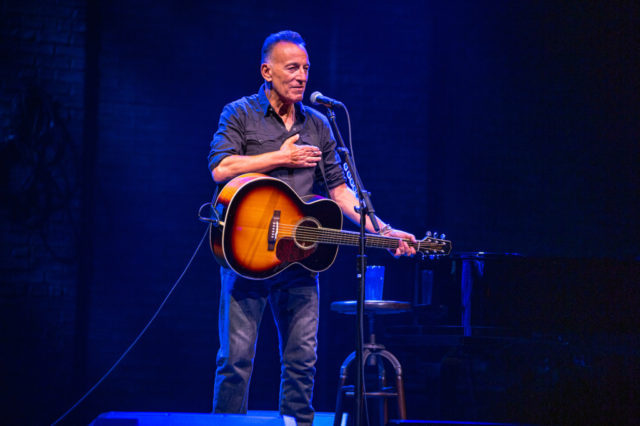
André Holland’s dramatic reading of Saidiya Hartman’s “The End of White Supremacy: An American Romance” will take place at 92Y and online

Who: André Holland, Saidiya Hartman
What: Virtual and in-person dramatic monologue and conversation
Where: 92Y’s Unterberg Poetry Center, Kaufmann Concert Hall, 1395 Lexington Ave., and online
When: Thursday, April 29, $20, 7:00
Why: The 92nd St. Y is transitioning from virtual events to in-person presentations with its “Almost Home” series, in which up to 150 people can buy tickets to see the event in the Kaufmann Concert Hall while an unlimited amount can pay the same $20 price and watch on their screens at home. The spring miniseason kicks off April 29 at 7:00 with André Holland (Moonlight, The Knick) reading Saidiya Hartman’s “The End of White Supremacy: An American Romance,” a June 2020 article the American writer and academic penned for Bomb magazine. The piece is a retelling of W. E. B. Du Bois’s 1920 postapocalyptic short story, “The Comet,” along with a new interpretation of it. The tale begins:

“He watches the human swirl as it moves determinedly along Broadway. Perched at the top of the stairs, the customers and employees of the bank brush by as he hesitates near the entrance. A nod, a look of recognition, a meager hello, a begrudging acknowledgment that he exists are not forthcoming. The street is teeming with people. No one glancing casually at him would use a phrase like ‘towering figure”’ or waste a moment wondering about his position at the bank; words like idle or lingering or un-mastered or servile brush at the murky edges of consciousness, latent and without the full awareness or deliberateness of thought, because most of the men rushing through the streets of the financial center rarely perceive him. Few noticed him. Few ever noticed him except in a way that stung. He was outside the world — ‘nothing!’”

Following the reading, Holland and National Book Critics Circle Award winner Hartman (Scenes of Subjection: Terror, Slavery, and Self-making in Nineteenth Century America; Lose Your Mother: A Journey Along the Atlantic Slave Route; Wayward Lives, Beautiful Experiments) will discuss the work, in which Hartman writes, “Du Bois believed that telling such stories mattered. In hindsight, he would explain this earnestness (the belief that intelligent argument and reasoned judgment might defeat racism) as a consequence of not having read psychoanalysis. He ‘was not sufficiently Freudian to understand how little human action is based on reason’ or to apprehend the deep psychic investment in racism, what others have since described as the libidinal economy of an antiblack world. He had assumed that ‘the majority of Americans would rush to the defense of democracy,’ if they realized that racism threatened it, not only for blacks, but for whites, ‘not only in America, but in the world.’”

“Almost Home” continues May 3 with “Alyson Cambridge and Friends in Concert” and May 5, 11, and 26 with a trio of shows that are part of the Marshall Weinberg Spring 2021 Classical Music Season. For all in-person events, a negative COVID-19 test or proof of vaccination is required.

SOCIAL! THE SOCIAL DISTANCE DANCE CLUB

Park Ave. Armory, Wade Thompson Drill Hall
643 Park Ave. at 67th St.
April 9-22, $45 ($35 standby tickets available)
212-933-5812
www.armoryonpark.org

Twister is the most physical of board games. The more people come into contact with one another on the plastic mat — which contains colored circles that participants must touch with one of their hands or feet depending on what the spinner tells them to do — the more fun it is to play and to watch. The same can be said for dancing, a social activity that brings people together in numerous ways. In a 2015 study, Bronwyn Tarr, Jacques Launay, Emma Cohen, and Robin Dunbar explained, “All human cultures perform and enjoy forms of music and dance in a group setting. Dancing involves people synchronizing their movements to a predictable, rhythmic beat (usually provided by music) and to each other. In this manner, dance is fundamentally cooperative in nature, and may have served the evolutionary function of encouraging social bonds, cooperation, and prosocial behaviors between group members. To date, empirical support for this social bonding hypothesis is based mainly on a link between synchrony (i.e. performing the same movement at the same time) and bonding.” In a twist on both Twister and dancing, the Park Ave. Armory commission Social! the social distance dance club incorporates people, colorful circles on the floor, and synchronous bonding in an immensely boisterous evening of interaction that features no touching whatsoever.

The armory was supposed to kick off its Social Distance Hall series with Bill T. Jones’s Afterwardsness, but several positive Covid tests in the company led to its postponement until May, after Party in the Bardo, a collaboration between Laurie Anderson and Jason Moran running May 5-9. Conceived by choreographer Steven Hoggett (The Curious Incident of the Dog in the Night-Time, Harry Potter and the Cursed Child), Tony-winning set designer and solo show specialist Christine Jones (American Idiot, Here We Are: Theatre for One), and multidisciplinary artist David Byrne (Talking Heads, American Utopia), Social! takes place in the fifty-five-thousand-square-foot Wade Thompson Drill, where nearly one hundred ticket holders spend fifty-five minutes moving and grooving in their own private circle.

Audience members must arrive about an hour before showtime to have a Covid-19 shallow-swab rapid response test. While waiting for the results — anyone who comes up positive will need to immediately leave the building with the rest of their party (and will be refunded the $45 ticket price) — groups of about twenty-four waited in different locations in the historic armory, where monitors displayed quotes about dancing from a March 2021 Financial Times article, “Covid will not squash our deep-seated need to dance,” by Will Coldwell, who references the above study in his piece, along with YouTube videos of men, women, and children from around the world dancing with joy. (For example, “Dance provides us with a universal language — one deeper and more emotional than words — that helps us to bond with other, often unfamiliar, people.”) Eventually we audience members were marched into the drill hall in formation, and each was sent to an assigned spotlight, spaced at twelve-to-fifteen-foot intervals. (The lighting design, which includes the projection of abstract shapes and a disco ball, is by Kevin Adams; the above videos are © DBOX.) In the center, on a slowly revolving raised platform, is DJ Mad Love (Tony nominee Karine Plantadit), who spins tunes on two computers (mixed by DJ Natasha Diggs) while Byrne’s disembodied voice guides us, suggesting specific movements and encouraging self-expression. (His instructions were done in conjunction with choreographer Yasmine Lee.)

To songs by D-Train, Daft Punk, James Brown, Benny Goodman, Olivia Newton-John, Fatback, Byrne, and others, the former Talking Heads leader prompts us through various scenarios (hands waving in the air, weaving through a subway car, balancing at the edge of your circle, swaying slowly, etc., although some of it is hard to hear amid the thumping beats) before leading up to the grand finale, a unified dance that we were advised to rehearse in advance via a video in which Byrne demonstrates the moves.

The drill hall is a judgment-free space; no one is going to laugh at your dancing, and you’re not going to laugh at anyone else’s. It’s a time to kick loose and let it all go, immerse yourself in a worry-free hour of nonstop exhilaration. It’s not always easy — several people in my vicinity had to take rests, and one woman spent much of the show sitting in her circle — but the more you are able to put into it, the more you will get out of it. (Coldwell explains, “As we now know so well, it’s far easier to start dancing than it is to stop.”) And when you are taken back to your seat, a small, relevant little gift is waiting for you, one last reminder that even if we can’t be together in a physical way — Twister might not be on the menu for a bit longer — we can now gather safely and bond, as long as we’re tested, masked, socially distanced, and ready to have a blast.

WE PERSIST! I CAN’T REMEMBER ANYTHING

Who: Penny Fuller, Bob Dishy, James Naughton, Susan Charlotte
What: In-person and livestreamed play reading
Where: Theatre 80 St. Marks and Zoom
When: Monday, April 19, live and on Zoom, 2:00 (available on demand April 24-25, 646-366-9340 / info@foodforthoughtproductions.com)
Why: Food for Thought Productions is now in its twenty-first season of presenting all-star readings of little-known and classic one-act plays by major writers. Its current series, “We Persist!,” kicked off with Christopher Durang’s For Whom the Southern Belle Tolls and Tennessee Williams’s Life Boat Drill, presented live at Theatre 80 St. Marks to a limited, masked audience. The award-winning company is now back for Arthur Miller’s I Can’t Remember Anything, directed by Antony Marsellis and starring Penny Fuller and Bob Dishy as an elderly widow and her late husband’s best friend, respectively; FFTP previously presented the play two decades ago with Elaine Stritch and Dishy, with Miller in attendance. (Miller would later go on to direct shows for the troupe.) The play will be followed by a Q&A with the cast, moderated by FFTP founder Susan Charlotte, with a special appearance by James Naughton, who directed Dishy in Miller’s The Price at the 1999 Williamstown Theatre Festival. In addition, FFTP regular Tony Roberts will read from his 2015 memoir, Do You Know Me? Free tickets to see the show in person are first come, first served, for those who agree to be part of a documentary being made about the company; the recording will be available for a small fee April 24-25. Next up for FFTP is Charlotte’s The Hairdresser on May 24.

PARTY IN THE BARDO

Park Ave. Armory, Wade Thompson Drill Hall
643 Park Ave. at 67th St.
May 5-9, $45
212-933-5812
www.armoryonpark.org

The Park Ave. Armory’s Social Distance Hall series has been selling out almost immediately, so act right now if you want to get the chance to experience Party in the Bardo, a collaboration between Laurie Anderson and Jason Moran, consisting of only four sixty-minute shows in which they will play live music over the epic soundscape that is Lou Reed: Drones, joined by special guests. The season began with Steven Hoggett, Christine Jones, and David Byrne’s SOCIAL! the social distance dance club, in which audience members get to dance in their own spotlights in the drill hall (through April 22), and continues May 9-26 with Bill T. Jones’s previously Covid-delayed Afterwardsness. Curator of the armory’s Artists Studio Series, Moran is a musician, composer, visual artist, MacArthur Fellow, and more, as depicted in his revelatory 2019-20 Whitney exhibition. In October 2015, Anderson presented Habeas Corpus at the armory with Mohammed el Gharani, a dazzling multimedia, sociopolitical installation. And Lou Reed’s former guitar tech and collaborator Stewart Hurwood has been guiding Drones through a variety of locations, from outdoors at Lincoln Center to the Cathedral Church of St. John the Divine, keeping Lou’s guitars humming. It should all come together for a compelling evening of improvisation and meditation at New York City’s best venue to see just about anything.

JEWELS: A BALLET IN THREE PARTS

San Francisco Ballet presents a dazzling virtual production of Balanchine’s Emeralds (photo by Erik Tomasson)

JEWELS
SF Ballet online
Available on demand through April 21, $29
www.sfballet.org

You’re likely to let out a gasp when the curtain rises on San Francisco Ballet’s newly filmed production of George Balanchine’s Emeralds, the first section of the legendary choreographer’s three-part masterpiece, Jewels. I know I did. Onstage are a dozen dancers, the most I’ve seen at any one time together since the pandemic lockdown started. Then Gabriel Fauré’s score kicks in — consisting of extracts from Pelléas et Mélisande Suite, Op. 29 and incidental music to Shylock, Op. 57, conducted by Martin West — and principals Misa Kuranaga and Angelo Greco touch hands, leading to another gasp. I’ve watched a lot of dance pieces made during the current health crisis, but it’s mostly been solos or works outdoors, with no contact between performers. To see a full ensemble dance without restrictions for thirty glorious minutes is exhilarating, especially every lift, throw, and turn involving physical human connection. (Of course, SFB followed all Covid-19 protocols.)

The floor of the War Memorial Opera House reflects the dancers, who are wearing dark tops with necklaces, the women in green calf-length tulle skirts. A chandelier laden with faux emeralds hangs above, while stars dot the back wall, melding inside and outside. Balanchine considered Emeralds to be “an evocation of France — the France of elegance, comfort, dress, and perfume,” and that’s precisely what comes across in this glittering production, staged by the late Elyse Borne and Sandra Jennings, with additional decor by Susan Touhy and costumes by Karinska (re-created by Haydee Morales).

The camera slowly zooms in and out and pans right and left but always stays at orchestra level while concentrating on two couples, a trio, and a corps de ballet of ten women. The many stunning moments include a line of four women in attitude position, with three men on their knees, their right leg flat behind them, all holding hands; a gorgeous solo by Kuranaga; duets first with Kuranaga and Greco, then with Sasha Mukhamedov and Aaron Robison; and a concluding trio with Greco, Robison, and Esteban Hernandez, the three men left all alone at the end, their arms reaching out dramatically.

As the curtain descends, something strange and unexpected happens; applause can be heard, getting louder as the dancers take their bows. The work was filmed on January 28 without an audience, and there was no piped-in applause at intermediary points of beauty. It’s a bit unnerving, since we know that the seats are empty, though the show is well worthy of high praise.

Emeralds debuted at the New York City Ballet on April 13, 1967, followed by Rubies and Diamonds, a sparkling trilogy inspired by Claude Arpels’s designs for jeweler Van Cleef & Arpels. For both of the latter pieces, applause is heard as the curtain rises and throughout; the former was recorded February 2, 2016, the latter March 12, 2017, both at the War Memorial as well, giving the full program an added visual continuity, making it feel as if it is all occurring over the course of one evening. It also might explain why SFB decided not to add more camera angles to the 2021 performance; it would have been exciting to see closeups as well as views from the mezzanine, but it would not have matched the next two works.

The featured trio for Rubies are Mathilde Froustey, Pascal Moulat, and Wanting Zhao; the cast is dressed in tight red bejeweled tops with frills at the waist, the women with red hair accessories. Set to Stravinsky’s Capriccio for Piano and Orchestra, Rubies is passionate and exuberant; in one pas de deux, Froustey, wearing a flowery red tiara, and Moulat run, bounce, and spin around the floor. The focus is on the movement itself; there is no chandelier, and the stars on the backdrop are muted.

An homage to Marius Petipa, Diamonds is an opulent, luxurious climax, taking place in an icy blue world with two chandeliers and Tchaikovsky’s lovely Symphony No. 3 in D major, Op. 29, movements 2, 3, 4 & 5, conducted by Ming Luke. It begins with a glorious seven-minute scene with first twelve, then fourteen women, in glistening white tutus, followed by a pas de deux between De Sola and Tiit Helimets. In the finale, more than thirty dancers come together for a grand ball, intersecting and weaving among themselves with an infectious romanticism as the music builds to a thrilling crescendo.

And then, one last surprise; as the dancers take their bows, audience members rise to give a standing ovation, their heads partially blocking our view. It is an apt reminder that ballet — and theater, music, opera, et al. — is meant to be seen live and in person, in a crowd of people all there for one purpose, to share an experience that is happening right then and there, in real time. May it soon be so again.

(For more on SFB’s Jewels, you can stream a virtual discussion about “three composers, three styles, three moods” with De Sola, Helimets, Mukhamedov, and Molat here; there is also extensive background information available here.)

JOHN CULLUM: AN ACCIDENTAL STAR

John Cullum shares a life in the theater in one-man show (photo by Carol Rosegg)

JOHN CULLUM: AN ACCIDENTAL STAR
Available on demand through May 6, $28.75 – $81 (pay-what-you-can)
Live watch party: Saturday, April 17, 2:00
irishrep.org
www.vineyardtheatre.org

“Most of the shows I’ve done – and the parts I’ve played – have come to me through the back door, by accidents, you might say, or coincidence, or just plain luck. And tonight, I’d like to share with you some of my lucky accidents,” two-time Tony winner John Cullum says at the start of his wonderful one-man show, An Accidental Star, streaming on demand through April 21. Copresented by three theaters that have played an important role in Cullum’s long, distinguished career, the Vineyard, the Irish Rep, and Goodspeed Musicals, the eighty-minute production takes viewers behind the curtain as Cullum relates funny and poignant anecdotes and sings songs from throughout his more than sixty years in the business.

Cullum, who turned ninety-one last month, was born in Tennessee and had dreams of making it as an actor. When he arrived in New York City in 1956, he was ready to do whatever it took to land an audition and get an acting job. Through a series of lucky accidents, he soon found himself cast in three summer plays for Joe Papp’s Shakespeare in the Park, even though he had zero experience with the Bard. That led directly to auditioning for Moss Hart for Camelot on Broadway, where Cullum would meet Richard Burton, who became a lifelong friend.

Julie McBride plays piano as John Cullum reflects on his long career in An Accidental Star (photo by Carol Rosegg)

Cullum, who won Tonys for Shenandoah and On the Twentieth Century, was nominated for On a Clear Day You Can See Forever, Urinetown, and 110 in the Shade, and scored an Emmy nomination for his role as Holling Vincoeur in Northern Exposure, also chronicles experiences involving Maximilian Schell, Louis Jourdan, Lerner & Lowe, Hal Prince, Robert Preston, Robert Goulet, Madeline Kahn, The Scottsboro Boys, and his wife of more than sixty-one years, choreographer and writer Emily Frankel. Filmed by Carlos Cardona in January onstage at the Irish Rep, An Accidental Star was conceived by Cullum and Jeff Berger, written by David Thompson (The Scottsboro Boys; Priscilla, Queen of the Desert), and directed by Lonny Price and Matt Cowart (110 in the Shade, Lady Day at Emerson’s Bar & Grill), with music supervision by Georgia Stitt and music direction by Julie McBride, who accompanies Cullum on piano. The cameras shoot Cullum, dressed in an unbuttoned vest, purple shirt, and brown pants, from all sides as he sits on a stool, gets up and spreads his arms for a big finale, and walks over to the piano to join McBride. He’s an engaging raconteur who is deservedly proud of what he’s accomplished yet humble enough to understand how fortunate he’s been on this amazing journey, which includes a live watch party on April 17 at 2:00.

RUDE MECHS: DIONYSUS IN 69

Rude Mechs will faithfully restage Performance Group environmental theater classic DIONYSUS in 69 at New York Live Arts

New York Live Arts
219 West 19th St. between Seventh & Eighth Aves.
November 6-10, $30
212-924-0077
www.newyorklivearts.org
www.rudemechs.com

In 1968, the Performance Group, an experimental SoHo theater company founded by artistic director Richard Schechner the year before, staged Dionysus in 69, an avant-garde version of Euripides’ Greek tragedy The Bacchae, which involves the beautiful young partying god Dionysus; Pentheus, the king of Thebes, who took over for his grandfather Cadmus; the blind prophet Teiresias; and Pentheus’s mother, Agauë. The production was filmed by Brian De Palma, who had been impressed by the participatory environmental show that melds audience and performer. Now the Austin-based Rude Mechs, who specialize in organic theatrical performances, are faithfully restaging Dionysus in 69 at New York Live Arts, using the original production and film as sources for the evening-length piece, which features, among other things, full-frontal male and female nudity. Once again the audience gets in on the action, as all seats are general admission on wooden platforms on the floor or accessed via ladders. The show runs November 6-10; on November 8, there will be a preperformance conversation, “The (Re)performance of Discussing Dionysus in 69,” with Schechner and Rude Mechs co-artistic producing directors Madge Darlington and Shawn Sides, while on November 9 there will be a special talk following the 7:30 performance, “Discussing Dionysus in 69, NOW,” with Schechner, Darlington, and Sides speaking with writer and dance critic Elizabeth Zimmer.