live performance

HARLEM AIR SHAFT

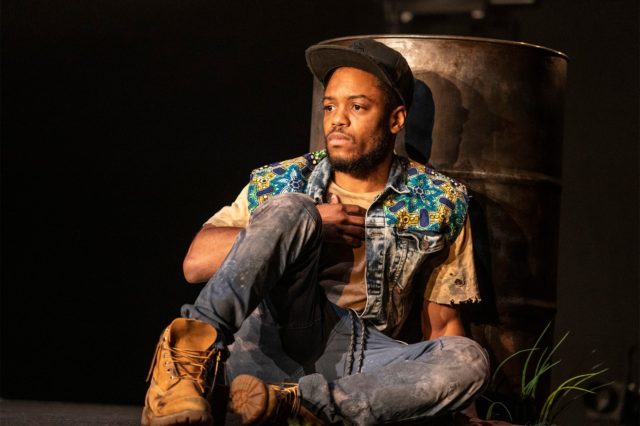
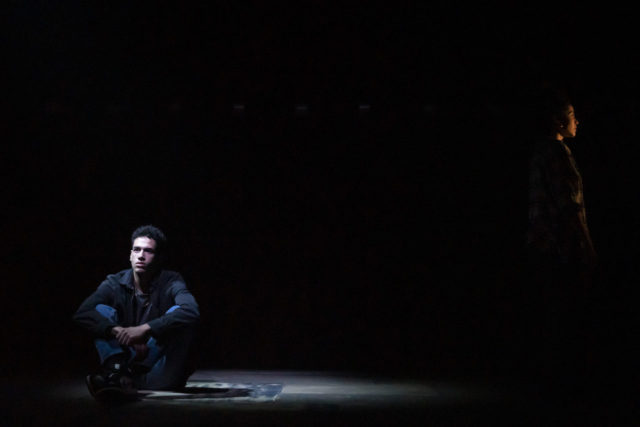
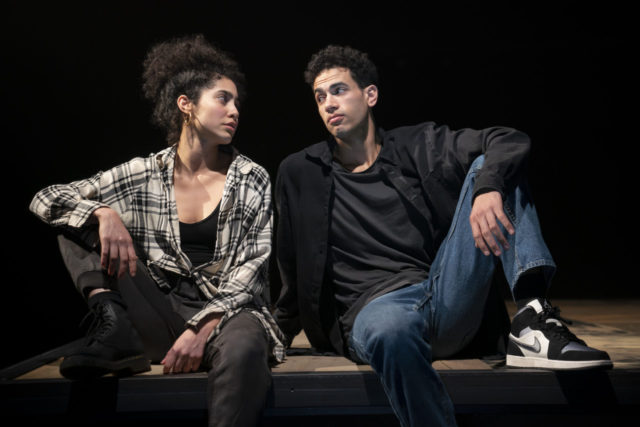
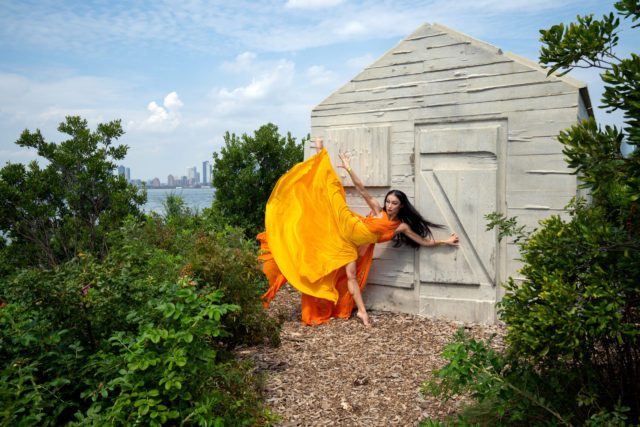
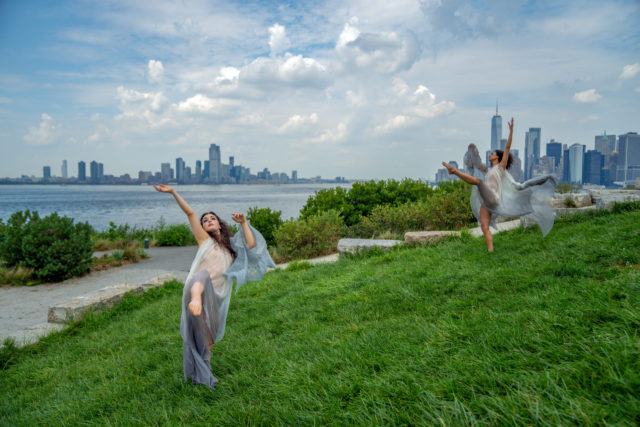
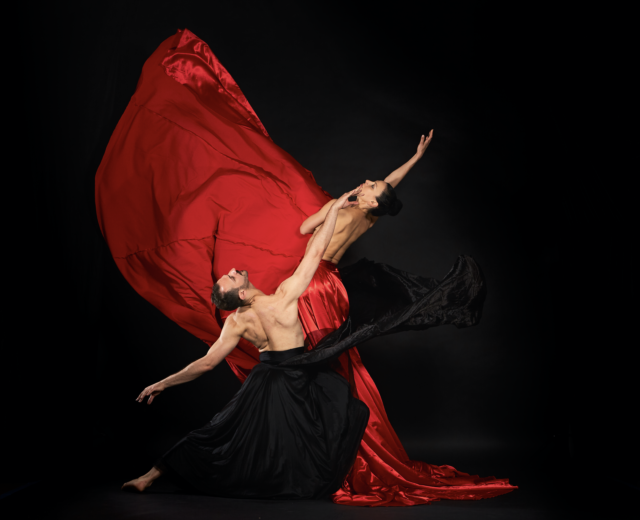
The collaborative Harlem Air Shaft features art, dance, music, spoken word, and activism

Who: James Brandon Lewis, Thomas Sayers Ellis, Kwami Coleman, Todd Bryant Weeks, Bianca Cosentino, Dolores Sanchez, Emily Tellier, Omari Wiles
What: Experimental multidisciplinary street performance ritual exploring links between jazz and memory in Harlem
Where: 126th & 125th Sts. between Fifth & Madison Aves.
When: Thursday, June 24, free, 5:00
Why: Conceived by new media artist Justin Randolph Thompson, choreographer Stefanie Nelson, and visual artist Bradly Dever Treadaway, Harlem Air Shaft takes place on June 24 at 5:00, a forty-minute live performance that recalls the rent parties of the 1930s and 1940s. Melding jazz and memory through ritual, the improvisatory, immersive piece features dancers Bianca Cosentino, Dolores Sanchez, Emily Tellier, and Omari Wiles, saxophonist James Brandon Lewis, poet Thomas Sayers Ellis, musicologist Kwami Coleman, and jazz union representative Todd Bryant Weeks, paying tribute to the community and local jazz history, including Duke Ellington (whose 1940 composition lends its name to the work), in the neighborhood where Art Kane took his famous “A Great Day in Harlem” photo.

“With Harlem Air Shaft, I continue the work that started with Friskin’ the Whiskers – a performance project I initiated in 2014 which focuses on bringing together people connected to the jazz community to highlight the economic realities in which jazz musicians have to function,” Thompson said in a statement. “Jazz and economy have a long and complicated history where strategies for developing new systems of community support have always been prevalent. The pandemic made evident to all what many of us already knew. To me, the various forms of cultural production as represented by practitioners from different fields in this piece speaks to the constant need for reminding ourselves about art’s inherent social dimension.” Nelson added, “I have a longstanding interest in the fleeting nature of memory, which I have been exploring in numerous projects with my dance ensemble. Justin, who has been my collaborator over the years, gave me an idea of presenting this concept in the context of jazz and the history of this unique neighborhood. We would like for this piece to inspire the memory of Harlem’s resilient past for a more hopeful, community-driven, creative future.” Admission is free, with no RSVP required.

RASHID JOHNSON: RED STAGE

Creative Time’s Red Stage continues through July 4 at Astor Plaza (photo by twi-ny/mdr)

CREATIVE TIME: THE PEOPLE’S PLATFORM
Astor Plaza
Through July 4, free (some events require advance RSVP and in-person sign-in)
creativetime.org

Since June 5, the nonprofit arts organization Creative Time as been hosting live events in Astor Plaza in celebration of the reopening of New York City and the return of live performance in front of audiences. “Amidst an ongoing global pandemic and multiple human rights crises that have kept the world in isolation and grief, Rashid Johnson’s Red Stage is an emergency call to artists and creatives to experiment, collaborate, and gather in an act of resurgence,” Creative Time associate curator Diya Vij said in a statement. “The minimalist sculpture — akin to a bandshell stage — is rendered in steel and powder-coated in a color Johnson describes as ‘alarm red.’ Its simplicity is imbued with life: The entirety of the surface is marked by Johnson’s hand and the structure holds a vibrancy of thriving living plants. Stewarding this work requires a commitment to engender and nurture life-affirming futures.”

Chicago-born artist Johnson filled the first two weeks of Red Stage with a wide array of events, including Ethan Philbrick’s 15 cellists, Emily Johnson’s The Rising Stomp, Papi Juice’s The Portal, Jason Moran and Total Freedom, poetry, a dance party, karaoke, and community discussion. Coming up are an audio installation, a painting demonstration and workshop, a farmer’s market, a participatory marathon reading, a commencement ceremony honoring the end of the school year, a special Black trans Pride empowerment, and other presentations.

“As the world unevenly experiences the impact of Covid-19, and New York City begins to economically and socially reawaken, Red Stage affords us the opportunity to come together in this complexity to question the idea for a new normal and to envision the potential of truly engaging in public space,” Vij continued. “Red Stage establishes a temporary public-led public space for artists, organizers, and agitators. It is a proposition to the public to occupy space through movement — activation of the body in dance, the breath in song, the fist in protest, and the collective in revolutionary potential.” Everything is free, although some programs require advance RSVP to attend and/or take part in. Below is the full schedule as of June 19.

Monday, June 21
Graphic reading: The People’s Platform, 10:00 am–2:00 pm

Brooklyn Music School, with vocalist and faculty member Emily Tepe performing original works, 3:00- 5:00

An Exploration in Still Life Movement with Black Painters Academy, led by artist and academy founder Azikiwe Mohammed, painting supplies available for first ten people, 5:30 – 6:30

Meditation Journey for Renewal & Emergence with Lana Homeri, 6:00 – 8:00

The first sky is inside you: A sound experience by sunlove, 7:00 -7:45

Tuesday, June 22
GrowNYC Farmer’s Market, 8:00 am – 5:00 pm

Wednesday, June 23
Graphic reading: The People’s Platform, 10:00 am

Thursday, June 24
Echo Location by Charlotte Brathwaite, intimate public marathon reading of Alexis Pauline Gumb’s Undrowned: Black Feminist Lessons from Marine Mammals, embraced by song, initiated by Brathwaite in collaboration with Sunder Ganglani and y.o.u., 10:00 am – 10:00 pm

Friday, June 25
Graphic reading: The People’s Platform, 10:00 am–2:00 pm

Commencement: A Procession & Ceremony of Gratitude, Reunion, Celebration and the Closing of School Year led by Tiffany Lenoi Jones, 3:00 – 4:30

Graphic reading: The People’s Platform, 5:00

Saturday, June 26
Arts on Site, with the Bang Group, ARKAI Music, Jamal Jackson Dance Company, BOiNK! Dance & Film, and Dual Rivet, 2:30 – 3:30

Live Arts Pride 2021: The House Party, with DJ THELIMITDOESNOTEXIST, Switch n’ Play (Divina GranSparkle, K.James, Nyx Nocturne, the Illustrious Pearl, and Zoe Ziegfeld, hosted by Miss Malice), Bubble_T (Sammy Kim, Keekai, Sina, Kiko Soiree, Snix), Oops! (Chiquitita & West Dakota), Ragga NYC (Shawn Neon, Viva Ruiz, Batalá New York), and Linda La & the Perfect Poison (Linda La, the Perfect Poison, Rozay LaBeija, and guests), introduced by Bill T. Jones, free with RSVP, 4:00 – 8:00

Sunday, June 27
Stonewall Protests Takeover: Black Trans Liberation, with special guests, 10:00 am –

OHIO STATE MURDERS

Goodman Theatre is streaming live performances of Ohio State Murders from their stage in Chicago (photo by Flint Chaney)

OHIO STATE MURDERS
Goodman Theatre online
June 17-20, $25
www.goodmantheatre.org

It might have taken a pandemic lockdown and national protests against racial injustice for eighty-nine-year-old Pittsburgh-born playwright Adrienne Kennedy to be rediscovered, but we’re all the better for it. Last November, the Round House Theatre in Maryland and the McCarter Theatre Center at Princeton kicked off “The Work of Adrienne Kennedy: Inspiration & Influence,” featuring four productions filmed onstage at the Round House. It was a deep dive into Kennedy’s growing legacy, dealing with police brutality, racism, white supremacy, sin, bigotry, and murder. One of the plays has become a touchstone for past and present societal ills that have been front and center during the Covid-19 crisis.

“I was asked to talk about the violent imagery in my work; bloodied heads, severed limbs, dead father, dead Nazis, dying Jesus,” Kennedy alter-ego Suzanne Alexander explains directly to the camera at the start of the hourlong Ohio State Murders. “The chairman said, we do want to hear about your brief years here at Ohio State but we also want you to talk about violent imagery in your stories and plays.” There’s a good reason for Kennedy’s use of violent imagery in her work.

Jacqueline Williams stars as Adrienne Kennedy alter ego Suzanne Alexander in Goodman Theatre production of Ohio State Murders (photo by Flint Chaney)

First produced by the Great Lakes Theater Festival in 1992 with Ruby Dee as Suzanne, the play made its New York premiere in 2007 at the Duke starring LisaGay Hamilton. Round House and McCarter’s 2020 online version featured Lynda Gravatt in the role, while Broadway’s Best Shows’ benefit livestream reading for the Actors Fund earlier this month had six-time Tony winner Audra McDonald as Suzanne, directed by Tony winner Kenny Leon. Now the Goodman Theatre in Chicago is presenting five live productions June 17–20 that can only be experienced in real time, as it happens, filmed live by three mobile camera operators, with no audience in the seats.

Jacqueline Williams is exquisite as Suzanne, delivering her speech in an almost matter-of-fact manner as she moves about the Goodman stage, watching scenes from her past unfold before her eyes. It’s essentially a memory play, with Suzanne detailing her time at Ohio State — Kennedy’s alma mater — when she was a student (portrayed in flashbacks by Eunice Woods) studying English with white professor Robert Hampshire (Shane Kenyon) and sharing a room with musician Iris Ann (Destini Huston) in a dorm where there are only twelve Black girls among six hundred female students. Suzanne displays a profound interest in Thomas Hardy’s Tess of the D’Urbervilles while also learning about Sergei Eisenstein’s Battleship Potemkin, but her options at college are limited because she is Black.

When she becomes pregnant, her relationships with the men in her life — her father, her friend Val (Ernest Bentley), and Hampshire — change dramatically. She is treated unfairly by dorm head Miss Dawson but is supported by her aunt Louise and widowed landlady Mrs. Tyler (all three of whom are portrayed by Dee Dee Batteast), and she grows close with law student David (Bentley) after horrific tragedy strikes.

Director Tiffany Nichole Greene (Between Riverside and Crazy, Blood at the Root) and video director Christiana Tye bring the tale to the computer screen superbly, creating a compelling hybrid presentation that has the exciting feel of live theater, or at least as much as you can get streaming at home. Greene also makes the play’s exploration of loss, trauma, mourning, race-based suppression, and unexpected violence relevant to what has occurred over the last fifteen months in America. When Hampshire reads King Arthur, the words hit hard: “‘Till the blood bespattered his stately beard. / As if he had been battering beasts to death. / Had not Sir Ewain and other great lords come up, / His brave heart would have burst then in bitter woe: / ‘Stop!’ these stern men said, ‘You are bloodying yourself!’ / Your cause of grief is cureless and cannot be remedied. You reap no respect when you wring your hands: To weep like a woman is not judged wise.’”

Director of photography Gabe Hatfield and cameramen Matt Cozza and Eugene Hahm, wearing the complex equipment on their backs, calmly navigate Arnel Sancianco’s comfortable set, which consists of library shelves, a desk and chalkboard, a dorm bedroom with two mattresses, a few chairs, and piles of books that look like they might tumble over at any moment. They follow the older Suzanne’s point of view as she shares her story, moving in and out of her old life without strong emotion but instead a kind of perceptive acceptance and admirable grace. In one memorable shot, Hampshire peers at the younger Suzanne from the shadows, suspicion palpable. The lighting is by Jason Lynch, with costumes by Mieka van der Ploeg and sound by Melanie Chen Cole. The cast is exceptional, led by Williams and Woods portraying the same character at different points in her life, revealing that time doesn’t necessary heal all wounds, especially as the world fails to change nearly enough over the decades.

AMPHITHEATER

Jody Oberfelder Projects rehearses Amphitheater prior to June 21 live performance (photo courtesy JOP)

Who: Jody Oberfelder Projects, Frank London Ensemble
What: Live site-specific performance
Where: East River Park Amphitheater
When: Monday, June 21, suggested donation $15, 6:30
Why: The continuing effort to save East River Park includes protecting the bandshell-like amphitheater, which has become an important place of creation during the pandemic. On March 15, choreographer Andrea Miller, directors Henry Joost and Ariel Schulman, and New York City Ballet principal dancer Sara Mearns released the five-minute short Another Dance Film, in which Mearns, following a cautious approach, propels herself around the mostly empty amphitheater. Last week, in conjunction with Pride month, choreographer, dancer, and activist Ani Taj of the Dance Cartel posted Sunday, in which Taj arises in the space and cuts loose, with an infectious joy that is enhanced by Daniel Kluger’s galvanizing electronic score.

In an interview, Taj told me, “The amphitheater definitely has a draw for many different artists and communities. It’s a versatile public space that gets shared and repurposed in meaningful ways. I’ve loved seeing how many different ways people have used that space through the pandemic, especially since outdoor spaces have become so treasured during this time — on the day we were shooting alone, we saw folx doing workouts, having meetings, performing outdoor comedy shows, impromptu dance parties. . . . The architecture of the amphitheater definitely drew us, since it has a certain geometric framing that seems to invite movement and a camera — and of course being by water and open air, in a time of such confinement, was appealing. But I think the main draw was that energetically, it’s a space that can hold many different expressive and social dynamics, gatherings — and that’s what we wanted to make contact with and honor in this project. An open-air theater, as a container for everything that we were missing, felt right.”

On June 21 at 6:30, the Manhattan-based company Jody Oberfelder Projects will activate the space, hosting a public gathering with a live performance and an audience amid the summer solstice. Amphitheater is choreographed by Oberfelder, whose site-specific work includes 4Chambers on Governors Island, The Brain Piece at New York Live Arts, Object Place (for Astor Place), and On the Move Shortly in London’s St. Pancras Station. Amphitheater will be performed by Emily Giovine, Jade Manns, Daniel Morimoto, Maya Orchin, and Mark Willis, with an original score composed by Grammy-winning klezmer-jazz bandleader Frank London, featuring London on trumpet, Javier Diaz on percussion, Brian Drye on trombone, and Marcus Rojas on tuba. The event will begin with a land acknowledgement by Bessie Award-winning multidisciplinary artist and Guggenheim Fellow Emily Johnson of the Yup’ik Nation, who has been at the forefront of the fight to save East River Park, and a poem by poet, author, arts journalist, filmmaker, activist, and Guggenheim Fellow Eileen Myles.

The work “challenges the pending demolition of this fifty-acre park that transformed Lower Manhattan more than eighty years ago through inscribing the space with our movement inspired from human connections,” Oberfelder explains in a press release. “We believe it is time to be happy again and reconnect with our community through our common joie de vivre, our passion for dance.” Admission is free, with a suggested donation of $15.

STAGE DOOR MIXER

Who: Kathryn Allison, Jacqueline B. Arnold, DeMarius R. Copes, Robyn Hurder, Clyde Alves, Ashley Loren, Isabelle McCalla, Alise Morales, Stephanie Park, Demi Remick, Jelani Remy, Daniel Quadrino, Jessica Vosk, Olivia Puckett
What: Live music benefit for the Actors Fund
Where: Watermark Bar, 78 South St., Pier 15
When: Monday, June 21, $40, 8:00
Why: The outdoor Watermark Bar, jutting out on Pier 15 on South St., celebrates the return of live music and theater to New York City with a benefit concert on June 21 at 8:00, raising funds for the Actors Fund, which has done an extraordinary job helping the entertainment community during the Covid-19 crisis. “Stage Door Mixer” will feature performances by Kathryn Allison, Jacqueline B. Arnold, DeMarius R. Copes, Robyn Hurder and Clyde Alves, Ashley Loren, Isabelle McCalla, Alise Morales, Stephanie Park, Demi Remick, Jelani Remy, Daniel Quadrino, and Jessica Vosk, with Olivia Puckett serving as host. In addition, the audience will be treated to a sneak peek screening of Australian dancer and choreographer Reed Luplau’s short film Places, Please, starring Danny Burstein, Krysta Rodriguez, Pixie Aventura, Ben Cook, Deborah S. Craig, Joseph Haro, and Bahiyah Hibah in a story about a therapy session for artists struggling during the pandemic.

RED GIANT

RWO’s sci-fi chamber opera Red Giant blasts off live online June 20 at 7:00

Who: Rhymes with Opera
What: Live, virtual sci-fi opera
Where: Rhymes with Opera online
When: Live on Sunday, June 20, $20, 7:00 (available on demand June 22 – July 6, $10)
Why: In 2013, New York-based ensemble Rhymes with Opera presented a fully staged production of composer Adam Matlock and librettist Brian Slattery’s Red Giant, a futuristic sci-fi chamber opera in which three humans take off into space, heading toward parts unknown to escape from a dying planet engulfed by the sun. RWO has now reimagined the show for virtual viewing in its first digital presentation, streaming live on Sunday, June 20, at 7:00. Sopranos Bonnie Lander and Elisabeth Halliday-Quan and baritone Robert Maril will be performing from three different locations, accompanied by the six-member RWOrchestra, conducted by George Tsz-Kwan Lam. The forty-minute work is directed by Ashley Tata, with video design by Eamonn Farrell and set design by Afsoon Pajoufar. David Crandall voices the radio announcer.

“As a lifelong fan of science fiction and a composer enamored of opera as a medium, it only made sense to combine the two when given the opportunity to work on a piece,” Matlock said in a statement. “Of course, in the beginning the scenario — people trying to escape a planet’s surface that has become uninhabitable due to their sun becoming the titular Red Giant — was pure fantasy. But in the nearly decade since this piece was first written, we’ve seen governments and societies struggle to reach a consensus as to whether or not climate change is really happening in the face of readily observable evidence — and it’s hard not to feel that this story has gained some resonance in the face of that. And of course, even in the face of a true existential crisis, humans will still find time to bicker.” Tickets for the live performance, in which Lander streams in from Baltimore, Halliday-Quan from Rochester, and Maril from New York City, are $20; a recording of the show will be available on demand June 22 – July 6 for $10.

JULIE MEHRETU / PALIMPSEST / PRIDE CELEBRATION

Julie Mehretu, Ghosthymn (after the Raft), ink and acrylic on canvas, 2019–21 (photo by Tom Powel Imaging / © Julie Mehretu / courtesy Marian Goodman Gallery)

JULIE MEHRETU
Whitney Museum of American Art
99 Gansevoort St.
Exhibit continues Thursday – Monday through August 8, $18-$25
Palimpsest: Thursday, June 17, free with RSVP, 8:00 (available on demand June 18-20)
Pride Celebration with Julie Mehretu: Friday, June 25, free with RSVP, 7:00
212-570-3600
whitney.org

Over the years, I’ve seen many works by Julie Mehretu, but her eponymously titled midcareer retrospective at the Whitney is still a revelation. Running through August 8, the show consists of approximately thirty paintings and forty works on paper and prints from 1996 to the present by the Ethiopian-born artist, who moved with her family to Michigan when she was seven in 1977 and is now based in Harlem. Her large canvases are palimpsests of architectural urban maps, news clippings, allegorical references, economic charts, art history, and abstract lines and shapes, coming together to form a tantalizing whole that is both visually dazzling and empowered with meaning. “Mehretu analyzes and reimagines divergent cultural narratives through her own artistic methodology; an extraordinary thinker and observer, she produces work that is full of empathy, innovation, complexity, and contradiction,” LACMA CEO and director Michael Govan writes in the forward to the catalog.

Installation view of “Julie Mehretu” at the Whitney, with Cairo, 2013, and Invisible Line (collective), 2010-11 (photo by Ron Amstutz)

As captivating as her works are from a distance, the exhibition rewards visitors who spend time with them at close range, their face as near as permissible to the smooth surfaces to take in every detail. “Few artistic encounters are more thrilling than standing close to one of her large canvases, enveloped in its fullness, color, forms, and symbolic content,” Whitney director Adam D. Weinberg writes in his catalog introduction. “One is easily swept up, into, and away by the works’ informational overload and force field of visually magnetic strokes, lines, routes, and trajectories. Viewers can, and do, lose their bearings in the attempt to read, comprehend, locate themselves, and make meaning from the confrontation.”

Julie Mehretu, Stadia II, ink and acrylic on canvas, 2004 (Carnegie Museum of Art, Pittsburg; gift of Jeanne Greenberg Rohatyn and Nicolas Rohatyn and A. W. Mellon Acquisition Endowment Fund 2004.50 / photo courtesy the Carnegie Museum, © Julie Mehretu)

Such ink-on-acrylic canvases as Conjured Parts (eye), Ferguson, Haka (and Riot), (A Painting in Four Parts) Part 1, Transcending: The New International, and Retopistics: A Renegade Excavation are prime examples of the virtuosity of her technique, from her delicate brushwork to her attention to the smallest of elements, as she explores such issues as migration, colonialism, white supremacy, and racial injustice. Meanwhile, ink-on-paper drawings such as her “Inkcity” series delve into the psychology behind her vision. “I was really interested in mining myself and who I was and what made me,” Mehretu says in a Whitney video. “My interest is not in trying to dictate or determine or explain or try to give any information to anyone in that way. There aren’t any directives or any proposals in these paintings. These paintings are really experiential paintings that are informed by the time, by me, by this moment, by trying to digest that.”

Julie Mehretu, Epigraph, Damascus, photogravure, sugar lift aquatint, spit bite aquatint, and open bite on six panels, 2016 (Los Angeles County Museum of Art, gift of Kelvin and Hana Davis through the 2018 Collectors Committee M.2018.188a–f, printed by BORCH Editions, Copenhagen, © Julie Mehretu)

The centerpiece is Ghosthymn (after the Raft), a large-scale canvas that has its own space opposite a window looking out at the Hudson River, David Hammons’s Day’s End, and the recently opened pier park known as Little Island. Created specifically for the Whitney show, the work references Théodore Géricault’s Raft of the Medusa as well as New York City’s past. “The insistence on new work and the idea of how that’s important . . . there was this time of suspension with the pandemic,” Mehretu says in the video. “There’s a wall that faces the river, and I was really interested in that wall and the relationship to the river and the relationship to the exterior. As you look out — I look at it every day from my studio [in Chelsea] — you sense the nineteenth-century-ness of this city even though so much of the architecture has changed. The Hudson River is the reason the city exists. There’s a sensibility in different periods of life, of the history of the making of this place, and the kind of immigrant nature of this place.” From a distance, bursts of red, yellow, and green battle it out with ghostly whites, but up close you’re likely to be surprised by what Mehretu uses to create some of her smaller images.

Julie Mehretu works on Haka (and Riot) in new documentary Julie Mehretu: Palimpsest (photo courtesy Checkerboard Film Foundation)

Mehretu was intimately involved with the survey, which began at LACMA before coming to New York City; she is extremely generous on the audio guide when talking about her process, a must-listen. You can also find out more when the museum premieres the documentary Julie Mehretu: Palimpsest from June 17 to 20, introduced by exhibition cocurator Rujeko Hockley and Checkerboard Film Foundation president Edgar Howard. And on June 24 at 7:00, Mehretu will be at the Whitney for a special in-person Pride celebration with DJ Reborn and refreshments, during which the ravishing exhibition will be open.