live performance

TICKET ALERT: YOU ARE HERE

You Are Here takes place across the Lincoln Center campus July 14-30 (photo by Justin Chao)

YOU ARE HERE
The Isabel and Peter Malkin Stage, Josie Robertson Plaza, Hearst Plaza, Paul Milstein Pool and Terrace, Lincoln Center campus
Installation: July 14-23, free
Live performances: July 24-30, free two weeks in advance through TodayTix lottery, 7:00
www.lincolncenter.org

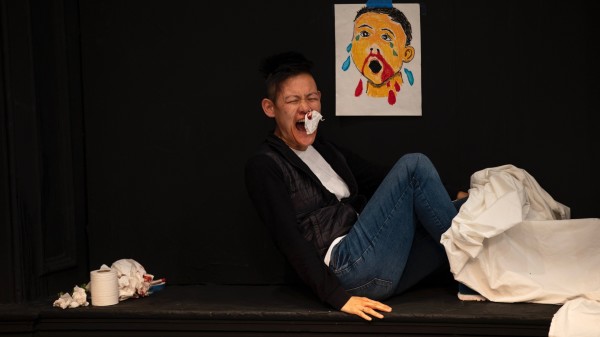
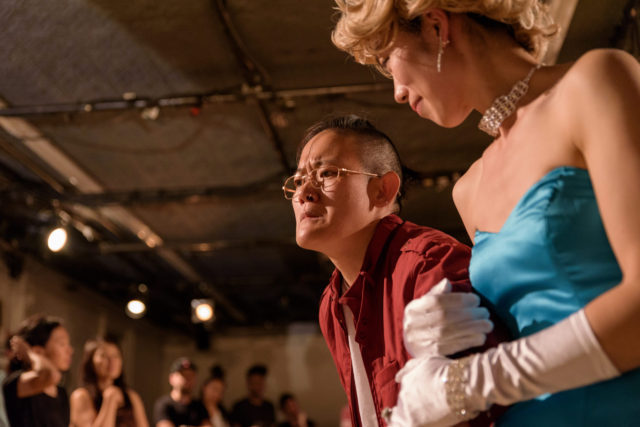
Lincoln Center continues its free Restart Stages program with You Are Here, a multidisciplinary audio and performance installation on Josie Robertson Plaza and Hearst Plaza. From July 13 to 23, the work, conceived by Andrea Miller, the founder and artistic director of the Brooklyn-based Gallim dance company, will be open to the public, who can make their way through a series of sculptures featuring audio portraits of twenty-five New Yorkers affiliated with Lincoln Center and its arts and education community partners. Sharing their experiences over the last sixteen months is a diverse group of individuals, including Bruce Adolphe of the Chamber Music Society of Lincoln Center, Kiri Avelar of Ballet Hispánico, Anthony Roth Costanzo of the Metropolitan Opera, Alphonso Horne of Jazz at Lincoln Center, Egyptt LaBeija of BAAD! Bronx Academy of Arts and Dance, Cassie Mey of the New York Public Library for the Performing Arts, Muriel Miguel of Spiderwoman Theater, Hahn Dae Soo of Korean Cultural Center New York, Taylor Stanley of the New York City Ballet, Gabriela Torres of Juilliard, and Valarie Wong of NewYork-Presbyterian. Other participants are Dietrice Bolden, Jessica Chen, Ryan Dobrin, Jermaine Greaves, Milosz Grzywacz, Lila Lomax, Ryan Opalanietet, Elijah Schreiner, Alexandra Siladi, Paul Smithyman, Jen Suragiat, KJ Takahashi, Fatou Thiam, and Susan Thomasson of Lincoln Center Security, Film at Lincoln Center, the Asian American Arts Alliance, the School of American Ballet, Fiorello H. LaGuardia High School, and other institutions and organizations. The sound sculptures are by Tony-winning scenic designer Mimi Lien, spread across an aural garden created by composer Justin Hicks; costumes are by Oana Botezan, with choreography by Miller and direction by Miller and Lynsey Peisinger.

From July 24 to 30 at 7:00, the audio portraits will be replaced by live performances in and around the Paul Milstein Pool and Terrace that are free through a TodayTix lottery available two weeks in advance; activating the space will be Gallim dancers Lauryn Hayes, Christopher Kinsey, Nouhoum Koita, Misa Lucyshyn, Gary Reagan, Connor Speetjens, Taylor Stanley, Haley Sung, Georgia Usborne, and Amadi Washington. (The audio sculptures will be open to ticket holders at 6:00.) In addition, on July 22 at 6:00, Miller will host the latest edition of the virtual Gallim Happy Hour, a livestreamed discussion with Stanley and Mey about You Are Here, taking place over Zoom and Facebook Live.

BLINDNESS

Blindness plunges in-person audiences into literal and metaphorical darkness (photo by Helen Maybanks)

BLINDNESS
Daryl Roth Theatre
101 East Fifteenth St. at Union Square
Tuesday – Sunday through September 5, $116 per pair
www.blindnessevent.com
www.darylroththeatre.com

The first in-person, extended-run indoor theatrical presentation in New York since restrictions lifted has arrived, and it’s a doozy. British playwright Simon Stephens’s adaptation of Portuguese Nobel laureate José Saramago’s 1995 dystopian novel, Blindness, was long in the works prior to the coronavirus crisis, but its subject matter and staging are tailor-made for this precise moment in time.

The seventy-minute socially distanced sound and light installation debuted at the Donmar Warehouse last August and opened last night at the Daryl Roth Theatre in Union Square. Originally conceived as a fully staged production with a cast of a hundred by Tony winner Stephens and director Walter Meierjohann, it has been reimagined for the pandemic. A maximum of eighty-six masked people are allowed in the theater, seated in chairs in pods of two, either facing the same or opposite directions; each couple is at least six feet away from other pairs.

The set consists of dozens of horizontal and vertical fluorescent lights hanging from above, forming a kind of abstract traffic pattern, warmly changing colors from red, blue, and green to yellow and orange; as the audience enters, the sounds of cars can be heard. The otherwise empty, ominous set is by Lizzie Clachan, with lighting by Jessica Hung Han Yun. Every audience member receives a pair of headphones through which the foreboding tale unfolds. The text is performed by Olivier-winning English actress Juliet Stevenson (Truly, Madly, Deeply; Death and the Maiden), who starts out as the Storyteller before becoming the protagonist. “If you can see, look,” the Storyteller begins. “If you can look, observe.”

The dark parable immerses you in an epidemic in which a man driving down the street suddenly and inexplicably goes blind — everything turns white — and after he goes to an ophthalmologist, the doctor and several of his patients soon lose their sight as well. The contagion spreads, and only the doctor’s wife retains her vision; she takes over the narrative, which turns into an apocalyptic nightmare in which the nation’s leaders turn their back on its citizenry. “If there was a government, it was a government of the blind trying to rule the blind,” the doctor’s never-named wife says. “I didn’t know if there was going to be a future. We needed to decide how we were going to live.”

Juliet Stevenson comes face-to-face with Trevor the binaural microphone while recording Blindness (photo courtesy Donmar Warehouse)

The audio was recorded using a binaural microphone, called Trevor, that is shaped like a human head, similar to the one Simon McBurney used in his 2016 Broadway show, The Encounter. Stevenson’s physical proximity to Trevor affects how we ultimately hear her words, giving it a three-dimensional quality. At times it seems that the doctor’s wife is far away, her voice muffled in the distance, while a minute later you can practically feel her hot breath on your neck as she whispers in your ear, as if she is standing right next to you. It can be unnerving, and it’s supposed to be, melding well with the story, which grows harsher and harsher. The genius sound design is by Ben and Max Ringham, who previously used binaural recordings and silent disco headphones for Ella Hickson’s spy thriller, Anna, at the National Theatre in May 2019. You might be sitting in a space with no stage, no furniture, no props, only chairs and lights, but Stephens’s writing is so descriptive, and Stevenson’s reading so clear and poetic, that you’ll think you are in the quarantine bunker where the blind characters are struggling to survive.

Although the theater does transform into total darkness for several scenes, random flashes of white lights in the second half are distracting, with no apparent connection to the story except to perhaps evoke an instant of white blindness. Depending on where you are sitting, you might be facing another audience member, which can be unsettling; usually at the theater, the only people in front of you who you might make eye contact with are the actors onstage. That said, it’s fabulously exciting to be in a theater with other people, experiencing something together. In addition, everyone gets a flashlight to turn on in case they require technical or personal assistance, although that can be disruptive, particularly when it’s pitch black and someone suddenly flicks the light on. There is no intermission, no bathroom breaks, no gathering in the lobby to chat; if you have to leave for some reason, there is no reentry. And speaking of distractions, the night I was there, I did not see anyone on their cell phone or hear any ringers go off. Sheer bliss.

Blindness, which was adapted into a 2007 play by Godlight Theatre Company, a 2008 film by Fernando Meirelles starring Julianne Moore, Mark Ruffalo, and Danny Glover, and a 2011 opera by Anno Schreier and Kerstin Maria Pöhler — Saramago also wrote a sequel, Seeing, in 2004 — is not simply a technological marvel that explores the breakdown of society in a health crisis that is all too familiar today; it examines how we as a culture interpret how and what we see. It’s merely coincidental that we are watching a show about a pandemic, involving food insecurity, economic distress, governmental refusal to take action, and so much grief and loss, during a pandemic. Blindness delves into the interconnectedness of humanity amid greed, selfishness, and a metaphorical blindness that can lead to racism, hate, militarism, and othering. Stephens follows Saramago’s style of not using proper names for characters or locations; this could be happening to anyone, anywhere, at any time.

In writing the play, Stephens (Sea Wall, Heisenberg, The Curious Incident of the Dog in the Night-Time), who is partially sighted, consulted with Hannah Thompson, a partially sighted professor of French and Critical Disability Studies at Royal Holloway, University of London, who explained ocularcentrism to him, the belief that sight is the most privileged of the five senses and how misunderstood having less vision is. (She prefers the term “vision gain” to “vision loss.”) Early on, the Storyteller says, “Who would have believed it? Seen at a glance, the man’s eyes seemed healthy. The iris looked bright, luminous. The sclera white, as compact as porcelain. The eyes wide open, the wrinkled skin of the face, the eyebrows suddenly screwed up.” As this immersive sound and light installation reminds us, taking life, and all its wonders, for granted comes at your own risk.

THE DARK MASTER

Kuro Tanino’s The Dark Master is a VR treat for the senses (photo © Japan Society)

THE DARK MASTER
Japan Society
333 East 47th St.
June 23-28, $45
212-715-1258
www.japansociety.org

Kuro Tanino’s The Dark Master was originally scheduled to be a fully staged production at Japan Society in January 2021 as part of a four-city US tour. However, because of the pandemic lockdown, Japan Society artistic director Yoko Shioya suggested that Tanino reimagine the piece for virtual reality. The result is a thoroughly satisfying and uniquely tasty experience, a delectable treat for the senses.

Continuing through June 28, The Dark Master is presented to ten audience members at a time, sitting in individual mirrored cubicles on Japan Society’s stage. Wearing headphones and VR headsets (and facemasks), you are taken into a tiny, claustrophobic restaurant where you are served food by a grouchy owner-chef (Kiyobumi Kaneko). He decides that you are to become the next cook, and your training begins as hungry customers come in and sit at the counter, excited for the carefully prepared fare.

Inspired by first-person video games and an indie manga written by Marei Karibu and illustrated by Haruki Izumi, The Dark Master immerses you in a mysterious world that can be as funny as it is creepy. Kaneko is a hoot as a surly smoker who seems relatively disinterested in what he’s doing yet creates miraculous dishes that not only look good but smell great — be prepared for a multisensory adventure. The virtual reality extends about 180 degrees, so be sure to turn to your right and left and up and down to take it all in; you are also given hands that hold a menu, pour a drink, and bring the victuals to your mouth, which could produce a sort of personal AMSR encounter A brief video at the end takes you behind the scenes of how some of it was done.

The Dark Master takes place for only ten people at a time at Japan Society (photo © Keizo Maeda)

A sculptor, painter, and former psychiatrist, Tanino (Frustrating Picture Book for Adults, Fortification of Smiles) literally and figuratively gets into your head for forty-five minutes as performers from his experimental theater company, Niwa Gekidan Penino (NGP), including Kaneko, F. O. Pereira Koichiro, and Bobmi Hidaka, traipse through the restaurant, with narration by Saika Ouchi. The dialogue has been dubbed into English by the original Japanese cast; the fab set is by Takuya Kamiike, with moody lighting by Masayuki Abe, crackling sound by Koji Sato and Shintaro Mastunomiya, and videography and editing by Nobuhiro Matsuzawa. In 2014, NGP made its American debut at Japan Society with The Room Nobody Knows, which featured a spectacular two-level set that represented the unconscious and subconscious minds. With this VR iteration of The Dark Master, Tanino serves up a wonderful physical and psychological meal, one that can be enjoyed together by strangers, just like watching theater or eating in a restaurant, two of life’s necessities (and genuine pleasures) that were unavailable for so much of the last sixteen months.

ANDROMEDA’S SISTERS: AN ARTS & ADVOCACY GALA

Who: The Neo-Political Cowgirls
What: Fifth annual benefit gala
Where: NPC Cowgirls online and Leiber Collection Museum in East Hampton
When: Saturday, June 26, $25 streaming, $125-$250 in person, 5:00
Why: Last summer, the nonprofit organization the Neo-Political Cowgirls hosted the fourth annual “Andromeda’s Sisters” online, two virtual evenings of short performances, workshops, and discussion focused on advocacy, including, most memorably, Catherine Curtin in Joy Behar’s stirring monologue Where Are You At? and Laura Gómez in Dipti Bramhandkar’s Brown Girl’s Guide to Self-Pleasure. This year, “Andromeda’s Sisters: An Arts & Advocacy Gala,” which took place in person in 2019 at Guild Hall, goes hybrid, happening online as well as at the Leiber Collection Museum in East Hampton on June 26 at 5:00.

The 2021 event includes a reading of Kathryn Grant’s one-act play Order My Steps, about a prison inmate reconnecting with her estranged adult daughter, directed by Florencia Lozano and NPC founder Kate Mueth and starring Curtin and Irene Sofia Lucio, followed by a panel discussion on social justice and advocacy with Planned Parenthood Federation of America president and CEO Alexis McGill Johnson, New Hour for Women and Children — Long Island founder Serena Ligouri, and novelist and editor Angie Cruz. Founded in 2007, the Neo-Political Cowgirls “are committed to making work for women and about women — to creating a space where women and girls from all walks of life can share their experiences, joys, concerns, and spirits through professional dance.” The gala gets its name from the legend in which Princess Andromeda, captured by Poseidon, is saved by the daughters of the God of the Sea, leading to the idea that sisters should seek to help one another in these difficult times. Access to the livestream is $25; in-person tickets are $125-$250.

NY CLASSICAL THEATRE: KING LEAR WITH HAPPY ENDING

NY Classical returns to live, in-person performances with King Lear in parks around the city this summer

KING LEAR
Multiple locations
Tuesday – Sunday, June 24 – August 8, free with RSVP, 7:00
nyclassical.org/king-lear

In June 2020, with the pandemic lockdown shuttering live performance around the country, theater companies scrambled for ways to present work in virtual platforms. NY Classical, which has presented more than seven hundred free, mostly outdoor shows since 2000, was working on an adaptation of King Lear for that summer, using Nahum Tate’s 1681 “happy ending.” Instead, they staged an online Zoom reading last June. In a twi-ny talk, artistic director Stephen Burdman explained, “King Lear, with alternating endings (both Shakespeare’s and Tate’s), was always our plan for our 2020 summer season. This is the culmination of a three-year project of investigating how Shakespeare’s company toured their shows outside London. In the time of plague, theaters were closed in Elizabethan London, and while we never expected to have a pandemic of our own. . . . We also had great success with both our six-actor Romeo and Juliet as well as the alternating versions of The Importance of Being Earnest, so this project was a combination of these recent experiments. We auditioned and hired the actors and staff prior to New York State on Pause, and we wanted to make sure to keep our commitments to these wonderful people. In addition to a union salary, they are receiving pension and healthcare. This is an opportunity for us to develop the production with these artists and serve our audience community in the safest way possible.”

With the lockdown over and New York rising from the ashes of a devastating health and economic crisis, NY Classical is ready to stage King Lear the way it originally intended to, in parks across the city. The cast features John Michalski as Lear, Connie Castanzo as Cordelia and the Fool, Jasminn Johnson as Goneril, Aryana Sedarati as Regan, Nick Salamone as Gloucester, Linden Tailor as Edgar, Amar Atkins as Edmund, Michael Stewart Allen as Cornwall, Grant Chapman as Oswald, Cedric Lamar as Kent, and Clay Storseth as Albany, with Ollie Corchado, Evan Moore-Coll, and Saleemah Sharpe. The two-hour production, directed by Burdman, will run Tuesdays to Sundays beginning June 24 through July 11 in Central Park at West 103rd St., followed July 13-18 at MetroTech Commons in Brooklyn, July 20-25 in Carl Schurz Park, and July 27 – August 8 at the Battery. Admission is free, but advance RSVP is strongly suggested, as tickets are limited.

HARLEM AIR SHAFT

The collaborative Harlem Air Shaft features art, dance, music, spoken word, and activism

Who: James Brandon Lewis, Thomas Sayers Ellis, Kwami Coleman, Todd Bryant Weeks, Bianca Cosentino, Dolores Sanchez, Emily Tellier, Omari Wiles
What: Experimental multidisciplinary street performance ritual exploring links between jazz and memory in Harlem
Where: 126th & 125th Sts. between Fifth & Madison Aves.
When: Thursday, June 24, free, 5:00
Why: Conceived by new media artist Justin Randolph Thompson, choreographer Stefanie Nelson, and visual artist Bradly Dever Treadaway, Harlem Air Shaft takes place on June 24 at 5:00, a forty-minute live performance that recalls the rent parties of the 1930s and 1940s. Melding jazz and memory through ritual, the improvisatory, immersive piece features dancers Bianca Cosentino, Dolores Sanchez, Emily Tellier, and Omari Wiles, saxophonist James Brandon Lewis, poet Thomas Sayers Ellis, musicologist Kwami Coleman, and jazz union representative Todd Bryant Weeks, paying tribute to the community and local jazz history, including Duke Ellington (whose 1940 composition lends its name to the work), in the neighborhood where Art Kane took his famous “A Great Day in Harlem” photo.

“With Harlem Air Shaft, I continue the work that started with Friskin’ the Whiskers – a performance project I initiated in 2014 which focuses on bringing together people connected to the jazz community to highlight the economic realities in which jazz musicians have to function,” Thompson said in a statement. “Jazz and economy have a long and complicated history where strategies for developing new systems of community support have always been prevalent. The pandemic made evident to all what many of us already knew. To me, the various forms of cultural production as represented by practitioners from different fields in this piece speaks to the constant need for reminding ourselves about art’s inherent social dimension.” Nelson added, “I have a longstanding interest in the fleeting nature of memory, which I have been exploring in numerous projects with my dance ensemble. Justin, who has been my collaborator over the years, gave me an idea of presenting this concept in the context of jazz and the history of this unique neighborhood. We would like for this piece to inspire the memory of Harlem’s resilient past for a more hopeful, community-driven, creative future.” Admission is free, with no RSVP required.

RASHID JOHNSON: RED STAGE

Creative Time’s Red Stage continues through July 4 at Astor Plaza (photo by twi-ny/mdr)

CREATIVE TIME: THE PEOPLE’S PLATFORM
Astor Plaza
Through July 4, free (some events require advance RSVP and in-person sign-in)
creativetime.org

Since June 5, the nonprofit arts organization Creative Time as been hosting live events in Astor Plaza in celebration of the reopening of New York City and the return of live performance in front of audiences. “Amidst an ongoing global pandemic and multiple human rights crises that have kept the world in isolation and grief, Rashid Johnson’s Red Stage is an emergency call to artists and creatives to experiment, collaborate, and gather in an act of resurgence,” Creative Time associate curator Diya Vij said in a statement. “The minimalist sculpture — akin to a bandshell stage — is rendered in steel and powder-coated in a color Johnson describes as ‘alarm red.’ Its simplicity is imbued with life: The entirety of the surface is marked by Johnson’s hand and the structure holds a vibrancy of thriving living plants. Stewarding this work requires a commitment to engender and nurture life-affirming futures.”

Chicago-born artist Johnson filled the first two weeks of Red Stage with a wide array of events, including Ethan Philbrick’s 15 cellists, Emily Johnson’s The Rising Stomp, Papi Juice’s The Portal, Jason Moran and Total Freedom, poetry, a dance party, karaoke, and community discussion. Coming up are an audio installation, a painting demonstration and workshop, a farmer’s market, a participatory marathon reading, a commencement ceremony honoring the end of the school year, a special Black trans Pride empowerment, and other presentations.

“As the world unevenly experiences the impact of Covid-19, and New York City begins to economically and socially reawaken, Red Stage affords us the opportunity to come together in this complexity to question the idea for a new normal and to envision the potential of truly engaging in public space,” Vij continued. “Red Stage establishes a temporary public-led public space for artists, organizers, and agitators. It is a proposition to the public to occupy space through movement — activation of the body in dance, the breath in song, the fist in protest, and the collective in revolutionary potential.” Everything is free, although some programs require advance RSVP to attend and/or take part in. Below is the full schedule as of June 19.

Monday, June 21
Graphic reading: The People’s Platform, 10:00 am–2:00 pm

Brooklyn Music School, with vocalist and faculty member Emily Tepe performing original works, 3:00- 5:00

An Exploration in Still Life Movement with Black Painters Academy, led by artist and academy founder Azikiwe Mohammed, painting supplies available for first ten people, 5:30 – 6:30

Meditation Journey for Renewal & Emergence with Lana Homeri, 6:00 – 8:00

The first sky is inside you: A sound experience by sunlove, 7:00 -7:45

Tuesday, June 22
GrowNYC Farmer’s Market, 8:00 am – 5:00 pm

Wednesday, June 23
Graphic reading: The People’s Platform, 10:00 am

Thursday, June 24
Echo Location by Charlotte Brathwaite, intimate public marathon reading of Alexis Pauline Gumb’s Undrowned: Black Feminist Lessons from Marine Mammals, embraced by song, initiated by Brathwaite in collaboration with Sunder Ganglani and y.o.u., 10:00 am – 10:00 pm

Friday, June 25
Graphic reading: The People’s Platform, 10:00 am–2:00 pm

Commencement: A Procession & Ceremony of Gratitude, Reunion, Celebration and the Closing of School Year led by Tiffany Lenoi Jones, 3:00 – 4:30

Graphic reading: The People’s Platform, 5:00

Saturday, June 26
Arts on Site, with the Bang Group, ARKAI Music, Jamal Jackson Dance Company, BOiNK! Dance & Film, and Dual Rivet, 2:30 – 3:30

Live Arts Pride 2021: The House Party, with DJ THELIMITDOESNOTEXIST, Switch n’ Play (Divina GranSparkle, K.James, Nyx Nocturne, the Illustrious Pearl, and Zoe Ziegfeld, hosted by Miss Malice), Bubble_T (Sammy Kim, Keekai, Sina, Kiko Soiree, Snix), Oops! (Chiquitita & West Dakota), Ragga NYC (Shawn Neon, Viva Ruiz, Batalá New York), and Linda La & the Perfect Poison (Linda La, the Perfect Poison, Rozay LaBeija, and guests), introduced by Bill T. Jones, free with RSVP, 4:00 – 8:00

Sunday, June 27
Stonewall Protests Takeover: Black Trans Liberation, with special guests, 10:00 am –