this week in literature

HOWL! FESTIVAL 2011

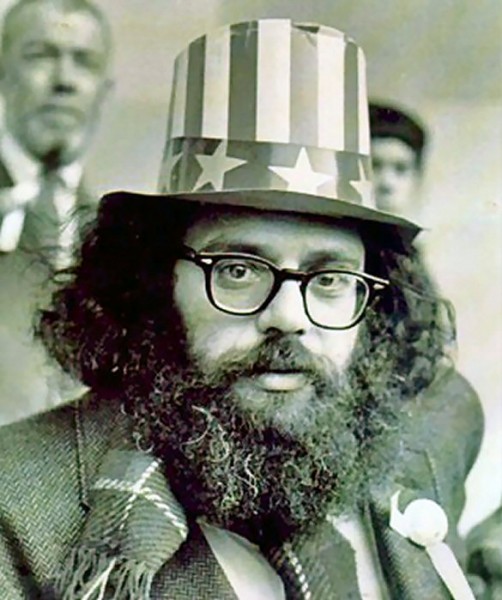
This weekend’s Howl! Festival pays tribute to what would have been Allen Ginsberg’s eighty-fifth birthday

Tompkins Square Park
Ave. A to Ave. B between Seventh & Tenth Sts.
June 3-5, free
www.howlfestival.com

The somewhat annual Howl! Festival has moved from the end of the summer to the beginning of the season, kicking off June 3 with the group reading of Allen Ginsberg’s epic 1955 poem “Howl,” with its unforgettable opening: “I saw the best minds of my generation destroyed by madness. . . .” Getting under way at 5:00 in Tompkins Square Park, the free gathering, which also will be celebrating what would have been Ginsberg’s eighty-fifth birthday, will include such local literary luminaries as Darian Dauchan, Nicole Wallace, Curtis Jensen, Fay Chiang, Eliot Katz, Bob Rosenthal, John Giorno, Hettie Jones, and others, led by Bob Holman. The party continues on Saturday with the Great Howl! Out Loud Carnival for children (12 noon – 7:00 pm, Sunday also), with arts & crafts, games, miniature golf, face painting, balloon art, and more; the Hot Howl! Disco (1:00 to 4:00), with DJ Johnny Dynell; and live performances (2:00 to 7:00) by International Street Cannibals, Ekayani and the Tom Glide Space, Timbila, Emily XYZ, the Living Theater, LJ Murphy, John S. Hall & Musicians, Church of Betty, Bina Shariff, Vangeline Theater, Ed Sanders & Steven Taylor, Tyler Burba, and Arthur’s Landing, in addition to yoga classes, chanting monks, painting and sculpture, poetry circles, and other activities. On Sunday, Hip Hop Howl! (2:00 – 2:30) will feature a live mixtape showcase, House of Howl! (3:00 – 5:00) will consist of live music and dance under the theme “The High Life,” and Low Life 5: Flaming Queens (5:00 – 7:00) will conclude things with the much-loved two-hour production that this year pays tribute to the East Village’s LGBT artistic community and history, with such performers as Sade Pendavis, Vangeline Theater, the Pixie Harlots, Rachel Klein Theater, Go-Go Harder, and many more, dressed in elaborate costumes.

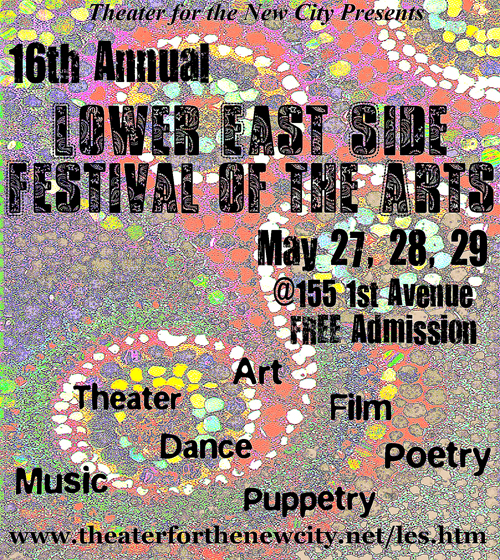
LOWER EAST SIDE FESTIVAL OF THE ARTS 2011

Theater for the New City
155 First Ave. between Ninth & Tenth Aves.
May 27-29, free
www.theaterforthenewcity.net

The sixteenth annual Lower East Side Festival of the Arts runs May 27-29, three days of experimental, cutting-edge, and campy performances based at the Theater for the New City. You can catch just about any kind of artistic discipline you want, from music, dance, and poetry to film, comedy, theater, and puppetry, and it’s all free. Held in TNC’s Cabaret Theater, Johnson Theater, Community Space Theater, and lobby as well as outside on East Tenth St., the festival includes Michael Patrick Flanagan Smith performing songs from his upcoming play Woody Guthrie Dreams, Tony-winning actress-singer Tammy Grimes, Maariana Bekerman Dance Company, Ben Harburg singing Songs of Social Comment by his grandfather Yip Harburg, spoken word by Jennifer Blowdryer, Unstuffy Divas Mary Riley and Jennifer Gelber, Reno, Barbara Kahn’s The Book of Merman, Kalpulli Atl-Tlachinolli re-creating an Aztec dance ritual, an excerpt from Jonathan Slaff’s The Adventures of Siggy and Carl about Freud and Jung, an Urban Aerial Fairytale by Suspended Cirque, an excerpt from Stephen Adly Gurgis’s The Last Days of Judas Iscariot, Josh Fox’s documentary Gasland, Lei Zhou and Natalia Korablina in Alan Ball’s The M Word, Elijah Black’s Fresh Fruit Festival, Micha Lazare’s Lazer Lady and the Buddha Babies, Robert Adanto’s film Pearl on the Ocean Floor, and an unpublished one-act play by Lanford Wilson in addition to the New York School of Rock, JT Lotus Dance Company, Supercute, Yana Schnitzler’s Human Kinetics Movement Arts, the Stop Shopping Gospel Choir’s James Solomon Benn, John J. Zullo Dance, David Amram, the Constellation Moving Company, Roger Manning, Jessica Delfino, Penny Arcade, Taylor Mead, KT Sullivan, the one and only Joe Franklin, and dozens more.

WORLD SCIENCE FESTIVAL 2011

Multiple venues
June 1-5
www.worldsciencefestival.com

The mind-expanding World Science Festival kicks off June 1 with a gala celebration at Alice Tully Hall as a group of stars (Liev Schreiber, Allison Janney, Maggie Gyllenhaal, and others) will read Radiance: The Passion of Marie Curie, a new play written by WSF veteran Alan Alda and directed by Bob Balaban. What follows are more than three dozen events over four days that examine the impact of science on today’s world, including panel discussions, lectures, film screenings, live music, magic, and more. Tickets are still available for most programs, including “Spotlight: Women in Science” on June 2 at Galapagos, a cabaret happy hour featuring Joy Hirsch, Jean Berko Gleason, Priyamvada Natarajan, Corina Tarnita, and Tal Rabin, moderated by Faith Salie; “World Science Festival Salon: The Mystery of Dark Matter” on June 3 at the Rosenthal Pavilion, where you can mingle with Elena Aprile, Glennys Farrar, Enectali Figueroa-Feliciano, Katherine Freese, Jocelyn Monroe, and Priyamvada Natarajan; “A Thin Sheet of Reality: The Universe as a Hologram” June 3 at the Skirball Center, a cutting-edge discussion with John Hockenberry, Gerard ’t Hooft, Leonard Susskind, Raphael Bousso, and Herman Verlinde; “Scents and Sensibilities: The Invisible Language of Smell” June 4 at the New School, with Juju Chang, Leslie Vosshall, Sissel Tolaas, Consuelo De Moraes, and Avery Gilbert; “Music and the Spark of Spontaneity” June 4 in the Great Hall of the Cooper Union, in which Pat Metheny will perform and Jamshed Bharucha, Charles Limb, Aaron Berkowitz, and Gary Marcus will focus on his brain and creativity, moderated by John Schaefer; “Man-Made Minds: Living with Thinking Machines” on June 4 at the Kaye Playhouse, as IBM’s Watson supercomputer will be joined by Hod Lipson, David Ferrucci, Eric Horvitz, and Rodney Brooks; and “Chemistry on Canvas: A Revealing Portrait of Monsieur and Madame Lavoisier” on June 5 at the Metropolitan Museum of Art with Garrick Utley, Kathryn Calley Galitz, Harold Varmus, and Roald Hoffmann. There are also several free events, including the opening reception of “BIORHYTHM: Music and the Body” at Eyebeam on June 3 at 6:00, with Chesney Snow, the Theremin Inspectors, Sonic Bed, Optofonica Capsule, and Stone Forest Ensemble; “From the City to the Stars: A Night of Stargazing at Brooklyn Bridge Park” on June 3 at 8:30; “Science on Site: Explorations on Governors Island” on June 4 with Timothy Ferris, Mark Kurlansky, Dean Pesnell, and Robert Naczi; and the 2011 World Science Festival Street Fair in Washington Square Park on June 5.

TWI-NY TENTH ANNIVERSARY TALK: NOVA REN SUMA

Nova Ren Suma will read from her highly anticipated YA debut, IMAGINARY GIRLS, at twi-ny’s tenth anniversary bash Wednesday night at Fontana’s

Fontana’s
105 Eldridge St. between Grand & Broome Sts.
Wednesday, May 18, free, 7:00 – 9:30
212-334-6740
www.fontanasnyc.com
www.novaren.com

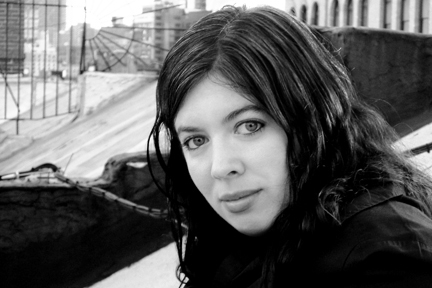
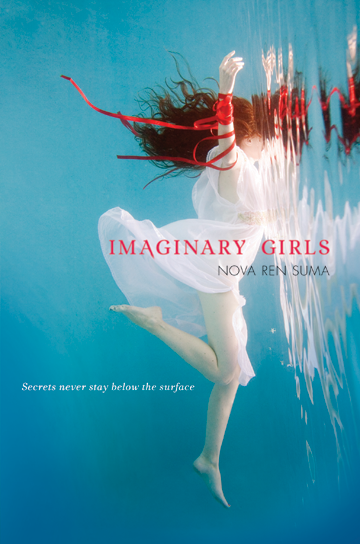
A self-described “easily distracted writer,” “daydreamer,” and “big sister,” New York City-based author Nova Ren Suma is making quite a splash with her debut YA novel, Imaginary Girls (Dutton, June 14, $17.99). Suma agonized over every sentence and every word of the stunning book, resulting in a beautifully written story of the deep bond between two sisters living in upstate New York, not far from where Suma was raised. “Ruby said I’d never drown — not in deep ocean, not by shipwreck, not even by falling drunk into someone’s bottomless backyard pool,” the slightly surreal novel begins. Suma’s first book, the 2009 middle-grade hardcover Dani Noir, was an engaging tale of a thirteen-year-old girl obsessed with film noir, Rita Hayworth, and a suspicious relationship. Suma, a charming young woman who loves talking about music, literature, food, and cats, will be appearing May 23 at the NYC Teen Author Carnival at the Mulberry Street Library, but before that she’ll be giving the first public reading from Imaginary Girls at twi-ny’s tenth anniversary celebration May 18 at Fontana’s, along with Dean Haspiel, Andrew Giangola, and Kyle Thomas Smith and live musical performances from Megan Reilly and James Mastro, Paula Carino and the Sliding Scale, and Evan Shinners. In preparation for the event, Suma chatted with twi-ny about her creative process.

twi-ny: After reading an early draft of Imaginary Girls, I told you not to let your agent or editor change a thing because I found it so beautiful. I’m now poring over an advance reader’s copy, and you have indeed made changes, which make the book even better. You were wise not to listen to me. What was the editing/revising experience like for you, especially when you had so many people lavishing you with praise?

Nova Ren Suma: Imaginary Girls is a surreal novel in which unexplainable things happen, and where reality is in question, which pretty much mirrors my entire experience getting the book published. My agent signed me on just two chapters, sent me off to write more, and then when I had a couple more chapters he quickly sold the novel unfinished to my dream publisher, which meant that I got to work with my editor very early on during the writing of the manuscript. It doesn’t sound real. My editor did say some extremely nice things about those early pages that made me blush, but she also worked me harder than I ever expected, seeing the potential in the story and finding ways to dig it out of me through quite a few revision letters, phone calls, and edit meetings. It was a thrilling, humbling experience to have the help of such a brilliant editor. Even now I suspect that she knows Ruby, one of the main characters, as well as I do. At one point I rewrote about two hundred pages in the middle of the book. At another point I cut about twenty thousand words. I was revising long after I thought I’d be finished. I pulled all-nighters like I haven’t done since college. I laughed, I cried, I wore pajamas out in the street. . . . It was intense. It was also the best experience I’ve ever had writing anything in my life. I love what the book became.

So I have to thank you for not just reading my manuscript at such a rough, raw stage but for saying just the right things. I was about to dive headfirst into a summer and fall of deep revision. I think I really needed that praise to make it through to the other side.
twi-ny: You have a strong online presence, on Facebook, your Distraction no. 99 blog, and other sites, connecting not only with readers but with other teen writers. What are some of the benefits you’ve gained from being part of this growing community of YA authors? What are the drawbacks?

NRS: The YA community online inspires me to no end and I am so grateful to be a part of it — everyone was so welcoming. But it’s also true that all the time spent connecting with other writers and readers and booksellers and bloggers and librarians is time not spent writing. It’s easy to get caught up in being online, to think you need to have a presence on every site, doing every shiny new thing in the way of social networking, and I’m easily swept away by that. I find blogging to be a great way to kick-start my writing — warm up my typing fingers, you know — but sometimes I think longingly of the years before Twitter was invented, wishing I could time-travel back there for a week or two, just to finish this manuscript.

Even so, I do think the benefits outweigh the distractions — at least, we authors have to hope they do. We tell ourselves they do. I happen to believe that if you’re writing for teens in this day and age and you’re not connecting with other authors and readers online, you’re doing yourself a great disservice. Then again, you probably wrote a hundred pages more than I did this month, so what do I know?

twi-ny: You have very eclectic musical tastes. Were there any specific songs or albums that got you going while writing Imaginary Girls? You’re now working on your next novel; has the song list changed for that?

NRS: I write to music, so Imaginary Girls is deeply connected to a series of songs I listened to while writing and revising the book. I often find a song that goes with a certain chapter and then I loop it and play it on repeat whenever I’m working on that particular piece of the manuscript. I play it until the words melt away and I can’t hear them anymore. I’ve been known to play one song over and over again for a week. Imaginary Girls is written in the voice of a sixteen-year-old girl, and the great majority of the songs on the novel’s playlist are sung by women. The first song to make an appearance was “Werewolf” by Cat Power. The first chapter of the book was written to “Hanging High” by Lykke Li — a song my little sister introduced me to. Other songs on the playlist include “Family Tree” by Bellafea, “These White Lights Will Bend to Make Blue” by Azure Ray, “Eighties Fan” by Camera Obscura, “Blinding” by Florence + the Machine, and “Never. Always. Good.” by Today the Moon, Tomorrow the Sun—a song you introduced me to while I was writing the book, if you remember. The only song from my own teenage years that made it to the playlist was an old Jane’s Addiction song, for nostalgia’s sake: “Summertime Rolls.”

As for my next novel — another dark, surreal story . . . but not a sequel — as I write, I build its playlist. Certain sections must be written to certain songs: “Zebra” by Beach House, “Lilac Wine” by Nina Simone, “The Spine Song” by Cake Bake Betty, “Stars” by the Xx. I’m always looking for new music because I never know what piece of the novel a new song might inspire.

twi-ny: As a full-time writer, you now have the freedom to decide when and where you write. So, when and where are your favorite places and times to write? Is it easier or harder to remain disciplined with fewer obligations outside of writing?

NRS: One of my favorite places to write is a particular café downtown. I only like to go in the mornings, before it gets too packed with NYU students. If you’re curious about what the café is, you’ll find it thanked in my book’s acknowledgments. I pick a table against the back wall, near an outlet, order a mocha — they have delicious mochas — and then dive in. The full-time writing life is still very new to me, so I have to treat going to write like I did going to my job. Even though I have a writing desk at home, I only let myself use it at night. I force myself to get up early, put on clothes and not pajamas, leave my apartment, get caffeine, and go to my “office.” That’s the Writers Room in Manhattan, where many other writers work. I like to visit my favorite café before going to the Writers Room because that is the very same routine I had while working my last full-time day job. I used to write in the café every morning before going in to work, so I go there to remind myself. The truth is that it’s harder to stay disciplined when time is so boundless, so if I can trick myself into thinking I don’t have very much time left in the day, I tend to write more.

There are some mornings now when I forget that I’m not supposed to be stopping at a certain point and rushing to the subway to get to work . . . and then reality washes over me: I have all day.

I have all day, I think excitedly. Then comes the weight of it, the responsibility, recalling how much I’ve always wanted this, and that washes over me too: I have ALL day. So I damn well better make good use of it.
TWI-NY TENTH ANNIVERSARY TALK: KYLE THOMAS SMITH

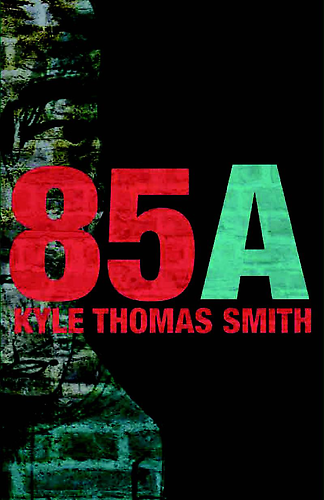
Kyle Thomas Smith will read from his debut novel, 85A, on May 18 at Fontana’s as part of twi-ny’s tenth anniversary celebration

Fontana’s
105 Eldridge St. between Grand & Broome Sts.
Wednesday, May 18, free, 7:00 – 9:30
212-334-6740
www.fontanasnyc.com
www.85anovel.com

“Every detention, every chip of glass piercing my forearm from the inside, every minute the 85A is late drives me that much closer to London.” So begins Kyle Thomas Smith’s harrowing debut novel, 85A (Bascom Hill, August 2010, $14.95), the brutally honest story of Chicago teenager Seamus O’Grady, who is desperate to get out of a city, school, and family that relentlessly beats him down both mentally and physically. Although the plot of the book is not based on Smith’s real life — he was born and raised in Chicago and moved to Brooklyn in 2003, where he currently lives with his partner and cats — the setting is, and he does a marvelous job capturing the heart and soul of the dark underbelly of his hometown over the course of one long day in January 1989. Smith, a passionate, engaging young man with an infectious joie de vivre, has written for websites and magazines including Sentient City: The Art of Urban Dharma, Boston’s Edge, and The Brooklyn Rail, is an ardent Buddhist practitioner and meditator, and is a multidimensional, enthusiastic individual who feels right at home whether at a punk-rock show or a classical music concert, at experimental theater or an opera at the Met. Smith will read from 85A as part of twi-ny’s free tenth anniversary celebration May 18 at Fontana’s, which will also feature readings from Dean Haspiel, Nova Ren Suma, and Andrew Giangola and live performances from James Mastro and Megan Reilly, Paula Carino and the Sliding Scale, and Evan Shinners.

twi-ny: Seamus is a fascinating character who doesn’t quite understand that with actions come consequences, at least not always the desired kind. How much did you play with Seamus’s lack of/dawning self-awareness?

Kyle Thomas Smith: I was always careful to keep Seamus’s naïveté front-and-center. On the one hand, he’s a city kid who coolly assesses every environment he enters. On the other hand, he’s a misfit and a dreamer. He’s in a bad situation at home, he doesn’t have many friends, he’s not learning in school, so he copes by escaping into fantasy. He projects these fantasies on to the wrong people and builds all sorts of castles in the air. I have always been preoccupied with the notion that there are different types of intelligence. Seamus is hopeless when it comes to academics but his imaginative capacities are off the charts. Yet it’s his imaginative intelligence that could also plunge him headlong into an abyss. In order to illustrate that conflict, I had to constantly ground Seamus’s character in “ungroundedness.”

twi-ny: Music plays a key role in 85A, but you have said that the music that inspires Seamus is not the music that inspires you. What music inspired you when you were Seamus’s age, and what music inspires you today?

KTS: Well, when I was Seamus’s age, the music I listened to and the music that inspired me were two different things. In early high school, I let the scene dictate my tastes. So I listened to a lot of Skinny Puppy and Ministry and a lot of their industrial-goth side projects, but inside I was much more drawn to Bauhaus and Joy Division and even softer stuff like the Smiths, Cocteau Twins, and Robyn Hitchcock. But things changed for me when the Pixies’ Surfer Rosa and Jane’s Addiction’s Nothing’s Shocking surfaced. That was incredible shit and it inspired me to abandon what I was supposed to be listening to and go straight for what I wanted. I went way, way, way back to basics at that point and steeped myself in the Stones (pardon my orgasm), Bowie, Lou Reed, John Cale, and Dylan (especially) — my soul was much more in alignment with all of them. I still love them and I still love the Pixies, but I’m more hooked on Miles Davis and Nina Simone these days. My partner is an opera and classical music aficionado, so my ear has become trained on the Brahms and Chopin that he’s always playing. I keep going back in time. I’m afraid I don’t know much about what’s going on in music anymore, though I do like Gnarls Barkley and Danger Mouse a lot. That’s some deep, inventive stuff right there.

twi-ny: You’ve had readings in your native Chicago, where the book is set, as well as in New York City, your adopted hometown. Has reaction to the book been different in each city? Based on your personal experience, what are some of the major differences between the two cities?

KTS: 85A has been well received in New York. Maybe it’s because there’s been too much written about New York already and New Yorkers are sick of always reading about themselves; they want to read about another dynamic American city for a change. And a lot of nostalgic, homesick Chicago transplants in New York tell me how much the book brings them back.

As for Chicago itself, I can’t tell you how over the moon I was when the Chicago Tribune gave 85A a great review. It was one of those hometown-boy-makes-good experiences. But Chicago is another kettle of fish. It’s an extremely proud city, and people in its music, lit, and art scenes can be incredibly territorial. I recently saw a spot-on documentary about Chicago’s 80s punk scene called You Weren’t There. The title perfectly sums up that chest-thumping, I-was-there-you-weren’t attitude that some people still cop to this day. And that attitude was on flagrant display on this one major Chicago website that posted a poorly written review of 85A that bashes Seamus and completely misrepresents the book. It set off a shit-storm of parochial, internecine comments from people who admitted that they’d never even read 85A. The day it was posted, I had just come to town and was supposed to do a reading at Quimby’s Books the following night. I had no idea how I was going to get through it. But when I got up in front of the audience, a more confident spirit overtook me and people couldn’t have been more receptive to what I was reading. So . . . Chicago can be a tough crowd but it can give a lot of love too.

The difference between the two cities — that’s a damned good question. Chicago winters are never easy, but I never knew why they got such a bad rap until I first moved to New York and then went home for a visit. Holy witch’s tit in a steel bra! How I got through daily life for so many years in that town I have no idea. I like Chicago’s modern architecture better, but New York and Chicago are both world-class cities with some of the best cultural offerings on the planet. Many New Yorkers who have moved to Chicago say they don’t miss New York at all. They say they have just as good a time in Chicago and it’s much cheaper and more manageable. I would probably see Chicago the same way if I wasn’t from there, but there just seems to be more here and you never know what you’re going to stumble upon next when you explore New York neighborhoods, no matter how long you’ve lived in its boroughs.

TWI-NY TENTH ANNIVERSARY TALK: DEAN HASPIEL

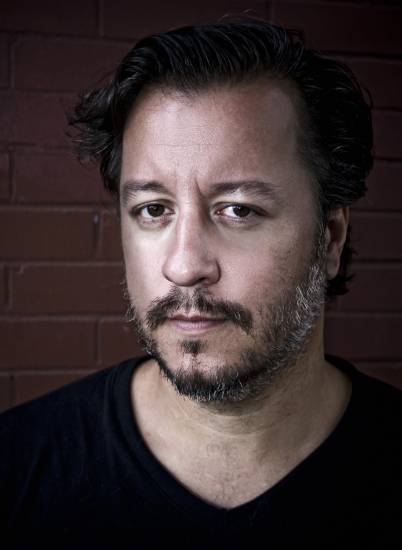
Dean Haspiel will participate in twi-ny’s tenth anniversary celebration on May 18 at Fontana’s (photo by Seth Kushner)

Fontana’s
105 Eldridge St. between Grand & Broome Sts.
Wednesday, May 18, free, 7:00 – 9:30
212-334-6740
www.fontanasnyc.com
www.deanhaspiel.com

For more than two decades, Dean Haspiel has been a comic book force all his own. A wildly talented and gregarious writer, illustrator, promoter, creator, and organizer, Dino works nonstop to build up his own expansive resume as well as the industry itself. In February 2006, he started ACT-I-VATE, a web-based comics collective that features such series as Josh Neufeld’s “Lionel,” Kevin Colden’s “Fishtown,” Nick Bertozzi’s “Iraq War Stories,” and his own “Billy Dogma” and “Street Code,” the latter a terrific semiautobiographical tale set in New York City, where Dino was born and raised. Along the way, he has collaborated on prestigious projects with Harvey Pekar (American Splendor, The Quitter), Jonathan Lethem (Back on Nervous St.), Michael Chabon (The Escapist), and Jonathan Ames (The Alcoholic), and he contributes drawings and illustrations to Ames’s HBO cable series Bored to Death, which features Zach Galifianakis playing a character inspired by Haspiel’s real life.

On May 14, Ames and Haspiel will be honored at the “100 Works on Paper” benefit at Kentler International Drawing Space in Red Hook, where attendees donate $200 and go home with an original work of art. On May 18, the Emmy-winning Haspiel will be presenting a new Street Code comic as part of twi-ny’s tenth anniversary celebration at Fontana’s, which will also feature readings from Nova Ren Suma, Andrew Giangola, and Kyle Thomas Smith and live performances from James Mastro and Megan Reilly, Paula Carino and the Sliding Scale, and Evan Shinners.

twi-ny: You’ve collaborated with such talented writers as Harvey Pekar, Jonathan Lethem, Michael Chabon, and Jonathan Ames; who is your next dream collaborator?

Dean Haspiel: I’ve been itching to collaborate with author Tim Hall on an original graphic novel and we have something planned. I’d also like to collaborate with mystery writer Joe R. Lansdale on adapting his brilliant Hap and Leonard characters into comics form. Plus, I don’t think my career would feel satisfactory if I hadn’t collaborated with some of my favorite comic book writers, the likes of Mark Waid, J. M. DeMatteis, and a handful of others.

twi-ny: Who is your favorite character to draw, whether created by you or another artist?

DH: My favorite characters to draw are my creator-owned Billy Dogma & Jane Legit. But I love drawing Stan Lee and Jack Kirby’s the Thing from the Fantastic Four, and I was recently afforded the opportunity to write and draw a short Thing story in an upcoming issue of Marvel Comics’ Strange Tales sequel.

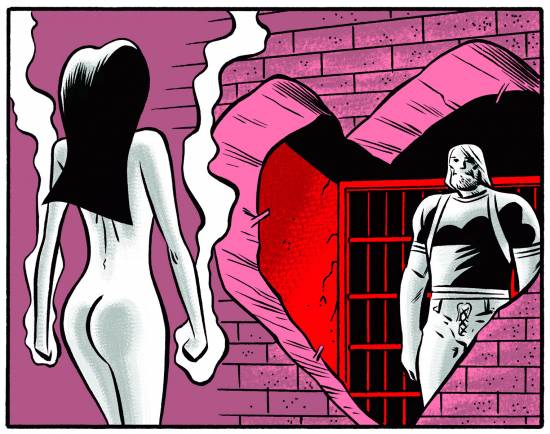
Jane Legit shows her love for Billy Dogma in Dean Haspiel’s “Bring Me the Heart of Billy Dogma,” from THE ACT-I-VATE PRIMER

Jane Legit shows her love for Billy Dogma in Dean Haspiel’s “Bring Me the Heart of Billy Dogma,” from THE ACT-I-VATE PRIMER

twi-ny: On Bored to Death, Zach Galifianakis’s Ray Hueston character is based on you. Is it easy to watch him, or does it hit a little too close to home?

DH: The Ray Hueston character on Bored to Death is loosely based on some events that happened to me, but I don’t think Zach Galifianakis was subjected to a parallax view of my life and my behavioral traits by any stretch of the imagination. So, I can safely declare that Zach and Jonathan Ames have wholly created Ray from spirited, albeit inspired, cloth. However, I was recently privy to the filmmaking of a certain scene in the upcoming season and I remarked how bizarre it was to watch my proposed doppelganger play out an important event, something I never got the opportunity to do in my own life, and how frustrating yet weirdly cathartic that was for me.

twi-ny How do you find the time to do all the things you do, including serving as a relentless promoter of the comics industry?

DH: Don’t even get me started. If everyone on their chosen social networking sites would just share what they liked with the simple click of a button rather than whine about this and that and publish what they had for lunch, I might be able to shrug off my self-imposed burden to cheer what is good and, instead, produce more stories and eat dinner before ten pm with the people I love to spend time with. Alas, the internet accesses a dark gene in humanity that encourages some folks to constantly complain and act like jerks and do things they wouldn’t dare do in front of real people. I don’t do anything that we all couldn’t do together if we just took a minute to think straight and understand our information and entertainment values.

HEY, BOO: HARPER LEE AND TO KILL A MOCKINGBIRD

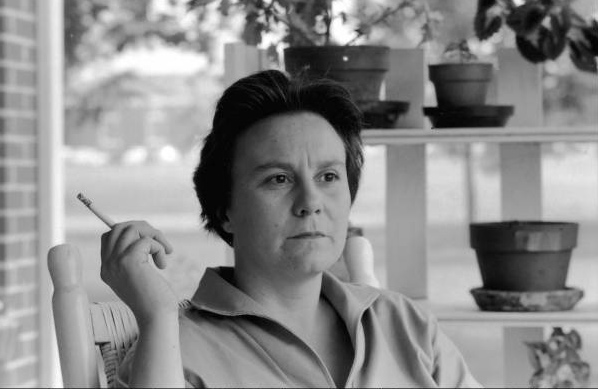
The inside story behind Harper Lee and TO KILL A MOCKINGBIRD still remains elusive in HEY. BOO (photo by Donald Uhrbrock)

HEY, BOO: HARPER LEE AND TO KILL A MOCKINGBIRD (Mary McDonagh Murphy, 2010)
Quad Cinema
34 West 13th St.
Opens Friday, May 13
212-255-2243
www.firstrunfeatures.com/heyboo
www.quadcinema.com

On May 4, 1961, Harper Lee won the Pulitzer Prize for Fiction for what turned out to be her only novel and an enduring American classic, To Kill a Mockingbird. A captivating tale of racism in a small southern town based on her own, the book was made into a hit film the next year starring Gregory Peck as determined lawyer and single parent Atticus Finch, garnering eight Oscar nominations and three wins, including one for Peck for Best Actor. As famous as the book and film are, very little is known about Lee, who has not given an interview since 1964 and is rarely seen in public. In Hey, Boo: Harper Lee and To Kill a Mockingbird, documentarian Mary McDonagh Murphy sets out to uncover the story behind this mysterious figure. She speaks with Lee’s ninety-nine-year-old sister, Alice; actress Mary Badham, who played Scout in the movie; and Joy and Michael Brown, who helped Lee afford to quit her job as an airline reservation agent so she could concentrate on her book back in the late 1950s. Although they lend insight into Lee’s character and the creation of To Kill a Mockingbird, the rest of Hey, Boo consists primarily of a series of talking heads discussing what the book means to them, coming off more like a PBS special than a feature-length theatrical documentary. Murphy, who has indeed spent most of her career making television documentaries (for PBS, CNBC, and CBS), speaks with Oprah Winfrey, Tom Brokaw, Wally Lamb, Andrew Young, Rosanne Cash, Scott Turow, Richard Russo, James McBride, Anna Quindlen, Allan Gurganus, and other writers, historians, and public figures who discuss various aspects of the book, but it’s mostly filling the time the director — and the viewer — would have rather spent with Lee herself, who declined to participate. Murphy does play excerpts from the 1964 radio interview and reveals interesting tidbits about the editing process Lee and the novel went through, but there’s just not enough new information to sustain the film’s already-brief eighty-two minutes. You’re better off reading the novel again — or for the first time — if you really want to delve into its many wonders.