featured

MADWOMEN OF THE WEST

Melanie Mayron, Marilu Henner, Brooke Adams, and Caroline Aaron enjoy a hilarious brunch from hell in Madwomen of the West (photo by Carol Rosegg)

MADWOMEN OF THE WEST
Actors Temple Theatre
339 West 47th St. between Eighth & Ninth Aves.
Through December 31, $48.50 – $110
sandratloh.ag-sites.net
actorstempletheatre.com

The tag line for Sandra Tsing Loh’s Madwomen of the West might be “Brunch Is Hell,” but that doesn’t mean it can’t be a whole lotta fun, especially with four heavenly actresses having a blast together. The play itself, if you can even call it that, is a mess, with plot holes galore, inexplicable tangents, confusing breaks of the fourth wall, and unimaginative direction. But spending one hundred minutes with this quartet of lovely seventysomethings is wonderful.

Madwomen of the West features four delightful talents; for the uninitiated, who should know better, they are: Caroline Aaron, a regular on The Marvelous Mrs. Maisel who has appeared onstage in The Iceman Cometh, The Sisters Rosensweig, and Come Back to the Five and Dime, Jimmy Dean, Jimmy Dean and in a bevy of films by Woody Allen, Robert Altman, Nora Ephron, Paul Mazursky, and Mike Nichols; Brooke Adams, the star of such films as Invasion of the Body Snatchers and Days of Heaven and such plays as Happy Days, Key Exchange, and Lend Me a Tenor; Marilu Henner, most famous for her role as Elaine Nardo on Taxi but who has also appeared on Broadway in Gettin’ the Band Back Together, The Tale of the Allergist’s Wife, and Chicago and in such films as Bloodbrothers, Perfect, and L.A. Story; and Melanie Mayron, who won an Emmy for thirtysomething, appeared in such plays as Godspell, Crossing Delancey, and The Goodbye People and such indies as Girlfriends and Sticky Fingers, and has directed nearly one hundred episodes of television series and movies. I’m not embarrassed to admit that I’ve had long crushes on three of them.

It’s Claudia’s (Mayron) birthday, and Jules (Adams) has invited her to her ritzy Brentwood mansion for a special brunch, along with Marilyn (Aaron). “Birthdays can be fraught — especially our dear friend Claudia’s,” Marilyn tells the audience. “She’s been feeling a little down — she needed a lift!” The three college friends are soon unexpectedly joined by another member of their old gang, the fabulously famous Zoe (Henner).

“Oh, for Pete’s sakes, Zoey! I’m happy for your mega-success but I haven’t read any of your books!” Marilyn declares. “I’m on this fucking sugar cleanse and I don’t know why you’ve suddenly turned up in our lives to make them look shitty when we’re just trying to mark Claudia’s sad ‘run out of condiments’ birthday and I’m just so hungry!”

College friends Jules (Brooke Adams) and Claudia (Melanie Mayron) share a happy moment at the Actors Temple Theatre (photo by Carol Rosegg)

Many of the characters’ attributes are based on the actors’ real lives. Marilyn is a growly voiced kvetcher who founded a private girls school for underrepresented minorities and has been married to Barry for thirty-five years (in actuality, Aaron teaches at HB Studio; the show begins with her telling a story about her and Shelley Winters at the Actors Temple Theatre); Zoey is a world-renowned actress and self-help guru with a perfect memory (Henner is renowned for her own memory skills and has written numerous wellness books); Claudia is a single mother and photographer who is “vaguely Jewish, vaguely lesbian” (Mayron played a Jewish photographer on thirtysomething and in Girlfriends and has twins with her ex, screenwriter Cynthia Mort); and Jules was a law partner who gave it up to start a family (the role was originally going to be played by JoBeth Williams, who was replaced by Adams in October).

Christian Fleming’s set looks like a special edition of an afternoon women’s TV chat show on location, featuring two comfy chairs, a matching couch, a large backdrop of a photo of palm trees, a piñata just waiting to be broken open, and a round, gold-plated circular table that is oddly misused. Sharon Feldstein and Erin Hirsh’s costumes do a good job helping define the four friends, with Zoe in a sexy, tight-fitting black bodysuit with a gold chain belt, Marilyn in black shirt and pants and a blue blazer, Jules in a long, elegant black Issey Miyake gown and boots, and Claudia in pajamas and sneakers. When Jules says, “No costume budget. I brought this from home,” it’s easy to believe her.

Loh, whose previous books and plays include The Madwoman in the Volvo: My Year of Raging Hormones, Mother on Fire, Aliens in America, and Bad Sex with Bud Kemp, doesn’t give much of a chance for Caruso (Emojiland, Southern Comfort) to make sense of things, so the story is all over the place as the actors go in and out of character and the plot meanders. Meanwhile, the quartet’s first-wave feminism doesn’t do the show any favors as they discuss the women’s movement, Hillary Clinton, Mary Tyler Moore, motherhood, smoking, female bodies, sexual liberation, getting canceled, and what Marilyn calls the “trans wave.”

Spoiler alert: They never bust open that piñata, which is a shame.

“You really can’t have it all,” Jules says.

Maybe not, but these actors do deliver a lot of it.

[Mark Rifkin is a Brooklyn-born, Manhattan-based writer and editor; you can follow him on Substack here.]

GOODBYE, DRAGON INN

Tsai Ming-liang’s Goodbye, Dragon Inn is a poignant, poetic farewell to the cinema

GOODBYE, DRAGON INN (Tsai Ming-liang, 2003)
Metrograph (in-person and digital)
7 Ludlow St. between Canal & Hester Sts.
Thursday, December 21, 7:15
Thursday, December 28, 1:45
Saturday, December 30, 12:30
metrograph.com

Taiwanese master Tsai Ming-liang’s Goodbye, Dragon Inn is a heart-stirring elegy to going to the movies, returning to Metrograph screens after streaming in a gorgeous 4K restoration at Metrograph Digital in 2020. The accidentally prescient 2003 film takes place in central Taipei in and around the Fu-Ho Grand Theater, which is about to be torn down. For its finale, the Fu-Ho is screening King Hu’s 1967 wuxia classic Dragon Inn, Hu’s first work after moving from Hong Kong to Taiwan; the film is set in the Ming dynasty and involves assassins and eunuchs.

In 2021, Tsai’s film seems set in a long-ago time as well. It opens during a crowded showing of Dragon Inn in which Tsai’s longtime cinematographer, Liao Pen-jung, places the viewer in a seat in the theater, watching the film over and around two heads in front of their seat, one partially blocking the screen, which doesn’t happen when viewing a film on a smaller screen at home — especially during a pandemic, when no one was seeing any films in movie theaters. So Goodbye, Dragon Inn takes on a much bigger meaning, since the lockdown has changed how we experience movies forever.

Most of the film focuses on the last screening at the Fu-Ho, with only a handful of people in the audience: a jittery Japanese tourist (Mitamura Kiyonobu), a woman eating peanuts or seeds (Yang Kuei-mei), a young man in a leather jacket (Tsai regular Chen Chao-jung), a child, and two older men, played by Jun Shih and Miao Tien, who are actually the stars of the film being shown. (They portray Xiao Shao-zi and Pi Shao-tang, respectively, in Dragon Inn.) In one of the only scenes with dialogue, Miao says, “I haven’t seen a movie in a long time,” to which Chun responds, “No one goes to the movies anymore, and no one remembers us anymore.”

The tourist, a reminder of Japan’s occupation of Taiwan from 1895 to 1945, spends much of the movie trying to find a light for his cigarette — a homoerotic gesture — as well as a better seat, as he is constantly beset by people sitting right next to him or right behind him and putting their bare feet practically in his face or noisily crunching food, even though the large theater is nearly empty. In one of the film’s most darkly comic moments, two men line up on either side of him at a row of urinals, and then a third man comes in to reach over and grab the cigarettes he left on the shelf above where the tourist is urinating. Nobody says a word as Tsai lingers on the scene, the camera not moving. In fact, there is very little camera movement throughout the film; instead, long scenes play out in real time as in an Ozu film, in stark contrast to the action happening onscreen.

Meanwhile, the ticket woman (Chen Shiang-chyi), who has a disabled foot and a severe limp, cleans the bathroom, slowly steams and eats part of a bun, walks down a long hallway, and brings food to the projectionist (Tsai mainstay Lee Kang-sheng). She is steeped in an almost unbearable loneliness; she peeks in from behind a curtain to peer at the few patrons in the theater, and at one point she emerges from a door next to the screen, looking up as if she wishes to be part of the movie instead of the laborious life she’s living.

A woman (Chen Shiang-chyi) works during the final screening at the Fu-Ho Grand Theater in Goodbye, Dragon Inn

In his Metrograph Journal essay “Chasing the Film Spirit,” Tsai, whose other works include Rebels of the Neon God, The River, The Hole, Days, and What Time Is It There? — which has a scene set in the Fu-Ho, where he also held the premiere — writes, “My grandmother and grandfather were the biggest cinephiles I knew, and we started going to movies together when I was three years old. We would go to the cinema twice a day, every day. Sometimes we would watch the same film over and over again, and sometimes we would find different cinemas to watch something new. That was a golden age for cinema, and I’m proud my childhood coincided with that time.”

He continues, “Nowadays everyone watches movies on planes. On any given flight, no matter the airline, you can choose from hundreds of films: Hollywood, Bollywood, all different types of movies. However, you can count on one thing: You’ll never find a Tsai Ming-liang picture on a plane, as I make films that have to be seen on the big screen.” Unfortunately, in 2020-21, we had no choice but to watch Goodbye, Dragon Inn on small monitors, but now you can catch this must-see, stunningly paced elegiac love letter on the silver screen, sitting in a dark theater with dozens or hundreds of strangers, staring up at light being projected onto a screen at twenty-four frames per second, telling a story as only a movie can, with a head partially blocking your view, bare feet in your face, and someone crunching too loudly right behind.

[Mark Rifkin is a Brooklyn-born, Manhattan-based writer and editor; you can follow him on Substack here.]

ABOUT GOLSHIFTEH: PATERSON

PATERSON

Adam Driver and Golshifteh Farahani star as a happy New Jersey couple in Jim Jarmusch’s Paterson

PATERSON (Jim Jarmusch, 2016)
Metrograph
7 Ludlow St. between Canal & Hester Sts.
Tuesday December 26, 2:15
Series runs December 20-26
212-660-0312
metrograph.com
www.bleeckerstreetmedia.com

Metrograph is celebrating the career of forty-year-old award-winning Iranian French actress Golshifteh Farahani in the four-film series “About Golshifteh,” which kicks off December 20 with Asghar Farhadi’s 2009 About Elly and continues with Abbas Kiarostami’s 2008 Shirin and Marjane Satrapi and Vincent Paronnaud’s 2011 Chicken with Plums before concluding with Jim Jarmusch’s Paterson. Farahani was banned from living and working in Iran in 2009 because she appeared in the Ridley Scott thriller Body of Lies.

Paterson is a beautifully poetic, deceptively simple wonder about the beauty, poetry, and wonderful simplicity of life, an ode to the little things that make every day special and unique. Adam Driver stars as Paterson, a New Jersey Transit bus driver and poet who lives in Paterson with his girlfriend, Laura (Golshifteh Farahani), who spends much of her time decorating their small, quaint house, painting black and white circles and lines on curtains, couches, dishes, walls, and even her clothing, continually creating works of art out of nearly everything she comes into contact with. The film takes place over an ordinary week for the sweet-natured couple, who are very much in love, each allowing the other the freedom to explore who they are and offering their complete support. Every morning, Paterson wakes up around 6:12, as the sunlight streaks over their sleeping bodies. He checks his Casio wristwatch to confirm the time — he doesn’t use an alarm clock, nor does he own a cell phone or a computer — then snuggles closer with Laura for a few extra minutes. He eats Cheerios out of a bowl painted by Laura with circles that match the shape of the cereal. He studies a matchbook, which becomes the starting point for his next poem.

Lunchbox in hand, he walks to the Market St. garage and gets on board the 23 bus. He writes a few lines of poetry, listens to fellow bus driver Donny’s (Rizwan Manji) daily complaints, then heads out on his route through his hometown, picking up pieces of some very funny passenger conversations. For lunch he sits on a bench overlooking the Paterson Great Falls and composes more mostly non-rhyming lines in his “Secret Notebook,” which he will not show anyone but Laura. At quitting time, he walks home, checks the mail, fixes the tilted mailbox, sees what new art Laura has created, and takes their English bulldog, Marvin (Nellie, who won the Palm Dog at Cannes and passed away two weeks after shooting concluded), for a walk after dark, stopping for a beer and chatting with bar owner Doc (Barry Shabaka Henley). He then goes back home, ready to do it all over again the next day. But Paterson is no bored working-class suburbanite living out a dreary routine; he finds something new and special in every moment, from his job to his relationship to his nightly trips to the bar. Every day is different from the one before, Jarmusch celebrating those variations that make life such a joy.

Adam Driver

Adam Driver plays a poetic New Jersey Transit bus driver named Paterson in Paterson

Set to a subtle electronic score by Sqürl, Jarmusch and Carter Logan’s band, Paterson is a gorgeous film, lovingly photographed by Frederick Elmes, who captured a very different kind of town in David Lynch’s Blue Velvet, and edited to the sweet rhythm of a basic existence by Affonso Gonçalves. Paterson’s poems were written by award-winning poet Ron Padgett, who, like Jarmusch, studied with Kenneth Koch; the works, which unfold day by day, include the previously published “Love Poem” (a tribute to Ohio Blue Tip Matches and love), “Glow,” “Pumpkin,” and “Poem” as well as three written specifically for the film, “Another One,” “The Run,” and “The Line.” The words appear on the screen in a font based on Driver’s handwriting as he narrates them in voiceover. (Among the other poets referenced in the film are Frank O’Hara, Wallace Stevens, Petrarch, and Emily Dickinson.)

The film is also very much about duality and pairs, which Jarmusch has said in interviews was not always intentional. Adam Driver, who served in the Marines, plays a driver and former Marine named Paterson who lives and works in Paterson. He is constantly seeing twins, from two brothers named Sam and Dave (Trevor and Troy Parham) to two young girls on his bus to two older men on a bench. While Paterson and Laura seem meant to be together, their happiness infectious, he looks on every night as Everett (William Jackson Harper) desperately pleads with Marie (Chasten Harmon) to take him back. At the bar, Paterson often speaks to Doc about the pictures on the wall of fame, photos about such native sons as Uncle Floyd and his brother, Jimmy Vivino, as well as local superstar Lou Costello, part of one of the most popular comedy duos ever with Bud Abbott, who was born in Asbury Park (and thus does not qualify for the wall). Paterson’s favorite poet is lifelong New Jersey-ite William Carlos Williams, who Laura playfully refers to as Carlos Williams Carlos. (In making the film, Jarmusch was inspired by one of Williams’s most popular phrases, “No ideas but in things.”) And when Paterson’s not encountering twins, he’s bumping into random poets (Sterling Jerins, Method Man, Masatoshi Nagase) during his walks.

Paterson is a poetic marvel all its own, a dazzling film about love and harmony, about finding creativity in every aspect of life, led by marvelous performances by Driver and Farahani and written and directed by a master of cinematic restraint.

[Mark Rifkin is a Brooklyn-born, Manhattan-based writer and editor; you can follow him on Substack here.]
JOHN ADAMS’ EL NIÑO: NATIVITY RECONSIDERED

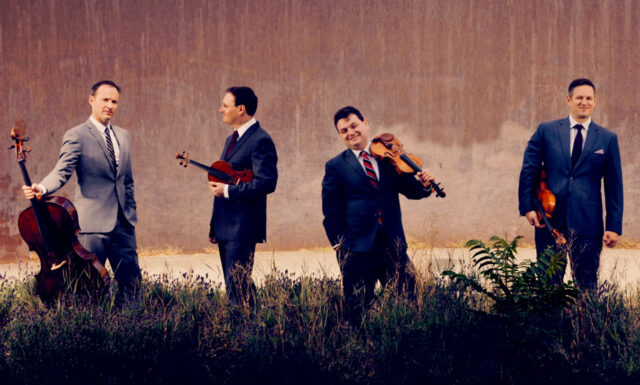
John Adams’ El Niño: Nativity Reconsidered returns to St. John the Divine on December 21 (photo by Nina Westervelt)

Who: American Modern Opera Company (AMOC)
What: John Adams’ El Niño: Nativity Reconsidered
Where: The Cathedral Church of St. John the Divine, 1047 Amsterdam Ave. at 112th St.
When: Thursday, December 21, choose-what-you-pay; suggested admission $35, 7:30
Why: Originally presented by American Modern Opera Company (AMOC) in 2018 at the San Martín at Fuentidueña chapel in the Cloisters, John Adams’ El Niño: Nativity Reconsidered was performed last December at the Cathedral Church of St. John the Divine, in a slightly revised iteration, and it is now back for an encore presentation. A retelling of the traditional Christmas story, El Niño premiered in Paris in 2000, with a libretto by Peter Sellars. At St. John the Divine, the nativity oratorio, conceived and curated by Julia Bullock, includes soprano Bullock, countertenor Anthony Roth Costanzo, bass-baritone Davóne Tines, violinists Miranda Cuckson and Keir GoGwilt, cellist Coleman Itzkoff, bassist Doug Balliett, flutist Emi Ferguson, percussionist Jonny Allen, pianist Conor Hanick, guest soloist contralto Jasmin White, and the Choir of Trinity Wall Street; the conductor is Christian Reif, who is responsible for the new chamber opera arrangement.

In a program note for the Met Museum digital premiere, Bullock wrote, “El Niño is one of my favorite pieces of music and I feel one of John and Peter’s greatest collaborations. . . . It is rarely programmed, either because of the resources needed or possibly because our North American holiday tradition insists upon multiple performances of Handel’s Messiah. The Messiah is, of course, a beloved work, but it doesn’t meditate solely on the nativity story; it also encompasses the life, death, and resurrection of Christ. El Niño, on the other hand, explores the central themes of the nativity — the immaculate conception, the unique relationship between mother and child, and gift giving — and also ruminates on the notion that with the promise of new life, there is the equal threat of inexplicable violence and sacrifice. In creating El Niño, John and Peter consciously decided that alongside European interpretations from the male-centric biblical canon, they would feature the contributions of women and Latin American poets.” Tickets for this special event are choose-what-you-pay with a suggested donation of $35.

[Mark Rifkin is a Brooklyn-born, Manhattan-based writer and editor; you can follow him on Substack here.]
STEREOPHONIC

Engineers Grover (Eli Gelb) and Charlie (Andrew R. Butler) chew the fat as the band readies to record in David Adjmi’s Stereophonic (photo by Chelcie Parry)

STEREOPHONIC
Playwrights Horizons, Mainstage Theater
416 West 42nd St. between Ninth & Tenth Aves.
Through December 17, sold out
www.playwrightshorizons.org

In many ways, the creation of David Adjmi’s Stereophonic mimics the record that the fictional band is making in the play. Following such well-received works as Elective Affinities, Stunning, The Evildoers, and Marie Antoinette, Adjmi announced to friends and colleagues in 2013 that he was leaving the theater, but he immediately started receiving offers of grants and residencies. A three-year residency at Soho Rep resulted in what would become the widely hailed Stereophonic, which went from a seventy-minute play to a two-act, then three-act, and ultimately four-act, three-hour epic whose premiere was delayed because of the pandemic.

In the play, a successful, unnamed rock band suddenly has an eighteen-month-old song called “Dark Night” rising on the charts and are working on a new one, titled “Bright,” echoing the up-and-down nature of personal and professional partnerships. The band is in a Sausalito recording studio in the summer of 1976 for what was expected to be quick, low-budget sessions that start turning into much more.

The band consists of British bass player Reg (Will Brill), British keyboard player and singer Holly (Juliana Canfield), British drummer Simon (Chris Stack), American guitarist and lead singer Peter (Tom Pecinka), and American singer and tambourine player Diana (Sarah Pidgeon). Reg is getting lost in a haze of booze and coke; Simon, who also serves as manager, is having trouble keeping the beat; Holly, who is married to Reg, is reevaluating her living situation; and the controlling Peter is jealous of his girlfriend, Diana, as she brings another potential hit to the group.

Grover (Eli Gelb), who lied on his resume to get the gig, is the recording engineer, assisted by Charlie (Andrew R. Butler); while Grover, a stoner, is nervous and fidgety, worried that he is in over his head, especially when the discord within the band grows, Charlie is gentle and quiet, preferring to remain in the background, their relationship somewhat recalling that between Jay and Silent Bob in Kevin Smith’s films.

Band and crew members take a much-needed break in three-hour Stereophonic (photo by Chelcie Parry)

The show unfolds like a cool double, or even triple, LP. Not every play scene / LP song works, but the cast/band are uniformly excellent, as are the engineers/crew (with studio set by David Zinn, costumes by Enver Chakartash, lighting by Jiyoun Chang, sound by Ryan Rumery, and music direction by Justin Craig). The songs, by former Arcade Fire multi-instrumentalist and Grammy winner Will Butler, capture the essence of 1970s California rock as the angst increases among the members of the band and they attempt to balance professional and personal success. Director Daniel Aukin helms the play like a star album producer.

Sure, it’s too long at three hours in four parts, the equivalent of a quadruple album. At one point, concerned about the length of the record they’re making and one song in particular, Peter says, “We can’t fit everything. I know no one wants to cut anything and we’ve talked a whole lot about continuity. But I’m sorry. We need to have this conversation. We need to decide what we’re gonna do; we’re four minutes over and it’s not enough for a double album. . . . We need to cut stuff.” Reg asks, “Why can’t we do a double album?”

Younger audience members might not know that on cassettes and LPs, artists were limited to 22.5 minutes per side, and sometimes the songs on the cassette were in a different order than on the record, resulting in a loss of continuity. In addition, listeners had to flip the cassette or album to hear the other side; musicians couldn’t just make an album of any length that could stream online endlessly, complete with the ability to easily skip over songs they might not like.

You can’t do that in the theater. Thus, Stereophonic contains some fluff, repetition, and scenes that don’t seem to fit with the others, but for the most part it’s a fun and poignant behind-the-scenes look at artistic creation, collaboration, ego, and jealousy. We’re all the better with Adjmi deciding not to quit the band/theater; I’m looking forward to the several plays he has coming up, including an exploration, with Lila Neugebauer, of the making of Brian Wilson’s Smile album.

[Mark Rifkin is a Brooklyn-born, Manhattan-based writer and editor; you can follow him on Substack here.]
TAISHO ROMAN: FEVER DREAMS OF THE GREAT RECTITUDE

Teruo Ishii’s Horrors of Malformed Men is one of six wild and unpredictable films in Japan Society series (photo © 1969 Toei Co., Ltd)

TAISHO ROMAN: FEVER DREAMS OF THE GREAT RECTITUDE
Japan Society
333 East 47th St. at First Ave.
Friday, December 15, and Saturday, December 16, $12-$16 per film
212-715-1258
japansociety.org

“Taisho is the best,” legendary Japanese filmmaker Seijun Suzuki once said. I can’t disagree.

Japan Society is celebrating the Western-influenced Taisho period, which followed the Meiji and ran from 1912 to 1926, during the reign of the country’s 123rd emperor, Yoshihito, with the film series “Taisho Roman: Fever Dreams of the Great Rectitude.” As a general rule, I am always attracted to the most unusual, bizarre, and strange films of festivals, the kind most likely to be shown at midnight screenings. In the case of “Taisho Roman,” however, that would essentially mean all six movies.

The festival kicks into high gear Friday night with a half dozen wide-ranging works, beginning with a double feature at 6:00 of Teinosuke Kinugasa’s hourlong 1926 silent classic, A Page of Madness (the 1970s New Sound version of this previously lost silent film), about a man who takes a custodial job in a mental institution where his ailing wife is being treated, partly inspired by the director having met the emperor, and Shuji Terayama’s 1979 forty-minute Grass Labyrinth, a psychosexual memory tale based on the novel by Kyoka Izumi. At 9:00, Japan Society screens a thirty-fifth-anniversary 35mm print of Toshio Matsumoto’s 1988 Dogra Magra, a surreal drama of memory and identity from a story by detective novelist Kyusaku Yumeno.

On Saturday at 3:00, it’s time for Teruo Ishii’s wild and unpredictable 1969 Horrors of Malformed Men, in which the protagonist escapes an asylum and tries to figure out who he is. At 5:00 is the international premiere of Suzuki’s 1980 genre-defying Zigeunerweisen, a unique adaptation of Hyakken Uchida’s Disk of Sarasate and Yamataka-boshi. The series concludes at 8:00 with a thirty-fifth-anniversary screening of Akio Jissoji’s 1988 Tokyo: The Last Megalopolis, based on the first three volumes of Hiroshi Aramata’s 1980s epic Teito Monogatari, an occult reimagining of the history of Tokyo.

“Exploring one of Japan’s most fascinating periods, ‘Taisho Roman’ pulls from some of Japanese literature’s most occult and imaginative texts — writings that to this day remain untranslated,” Japan Society film programmer and series curator Alexander Fee said in a statement. “Featuring films that range from exploitation to avant-garde and angura, this series collects both well-known and forgotten works that envisage differing realities of the often-mythologized era of Japanese history.”

You might as well just movie in to Japan Society for a few days so you can also check out the current exhibition “Out of Bounds: Japanese Women Artists in Fluxus.”

[Mark Rifkin is a Brooklyn-born, Manhattan-based writer and editor; you can follow him on Substack here.]
ATMOSPHERES: ARTISTS ON FEMINISM AND THE ENVIRONMENT

Torkwase Dyson (photo by Suzie Howell), Candice Hopkins (photo by Thatcher Keats), and Joan Jonas (photo by Toby Coulson) will be at New Museum December 14 for special conversation

Who: Candice Hopkins, Torkwase Dyson, Joan Jonas
What: Artist talk inspired by Judy Chicago’s ecofeminist performances from the 1970s
Where: New Museum Theater, 235 Bowery at Rivington St.
When: Thursday December 14, $10, 6:30
Why: Between 1968 and 1974, Chicago-born multidisciplinary artist Judy Chicago staged a series of events, called “Atmospheres,” that used fireworks to bring feminist impulses to site-specific environments, sometimes involving butterflies; she revisited the works in 2012, 2015, 2020, and 2021. In conjunction with the New Museum career survey “Judy Chicago: Herstory,” the Bowery institution is hosting what should be a compelling discussion on December 14. “Atmospheres: Artists on Feminism and the Environment” brings together curator Candice Hopkins, abstract artist Torkwase Dyson, and multimedia installation pioneer Joan Jonas to discuss the incorporation of the natural world into works that explore ecofeminism, from the 1970s to today. Hopkins is the executive director of Forge Project, which “fosters relationships between the land and the built environment, creating spaces of kinship for the people who use them.” The exhibition, which covers four floors of the New Museum, continues through March 3; there will be a live virtual tour on January 9 at 2:00 and the conversation “Herstory: Responses to ‘The City of Ladies’” on January 11 at 6:30 with scholar Sophie Lewis, poet Simone White, novelist Kate Zambreno, and moderator and exhibition cocurator Madeline Weisburg.

[Mark Rifkin is a Brooklyn-born, Manhattan-based writer and editor; you can follow him on Substack here.]