A summer outing offers multiple traumatic situations in Lithuanian drama Drowning Dry
DROWNING DRY (SESĖS; SISTERS) (Laurynas Bareiša, 2024)
IFC Center
323 Sixth Ave. at West Third St.
July 18-31 www.ifccenter.com www.dekanalog.com
In 2018, Lithuanian filmmaker Laurynas Bareiša served as one of the cinematographers on Marija Kavtaradzė’s debut feature, Summer Survivors, about young adults dealing with mental illness. Bareiša now follows up his own debut feature, the 2021 crime drama Pilgrims, with the haunting Drowning Dry, which could have also been called Summer Survivors. (The Lithuanian title, Sesės, means “Sisters.”)
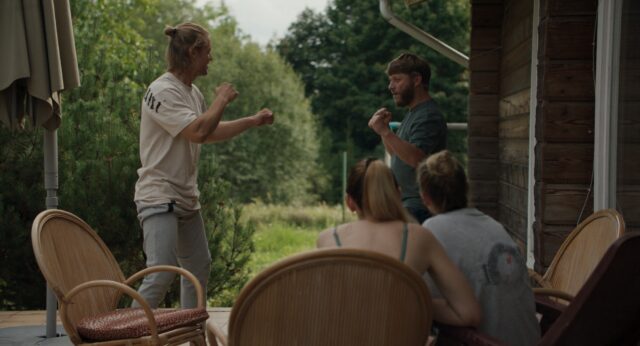
Close siblings Ernesta (Gelminė Glemžaitė) and Justė (Agnė Kaktaitė) have traveled with their families for a weekend getaway at a cabin on a lake. Ernesta is married to Lukas (Paulius Markevičius), an MMA champion, and they have a young son, Kristupa (Herkus Sarapas); Justė is married to Tomas (Giedrius Kiela), a schlubby dude jealous of Lukas’s strength, and they have a young daughter, Urte (Olivija Eva Viliüné). They all go swimming off the pier, but when tragedy strikes, their relationships with one another change — until Bareiša, who wrote, directed, and photographed the film, reverses time and the result of the event is altered, rearranging the dynamics. Bareiša ends up doing this multiple times, as various episodes happen differently from how they occurred originally, so the interaction among the characters keeps shifting as they face alternate forms of grief and trauma.
Drowning Dry is named after the medical term “dry drowning,” an urban myth that instills fear in parents that their children can drown long after they have been rescued from water. “Dry drowning is a symbol of this overprotection of kids because the real medical condition is very rare,” Bareiša told the Hollywood Reporter. Bareiša was inspired to make the film after having to resuscitate his two-year-old son and thinking about four paths the near-tragedy could have taken, represented by the adults in the film. By the end, numerous characters are having breathing difficulties, requiring help.
The film unfurls in long, uncut scenes in which Bareiša barely moves the camera; it is as if we are there with the family, sitting at the table, standing by the pier, waiting for the ambulance — or perhaps seeing it as a memory of our own grief. The repetition, or doubling, of certain scenes puts the audience in the position of questioning what they’re experiencing and wondering about the disparate paths their personal trauma could have led to.
Drowning Dry opens July 18 at IFC Center, with Bareiša on hand for Q&As at the 7:20 shows on Friday, moderated by Ryan Lattanzio, and Saturday, moderated by Sierra Pettengil.
[Mark Rifkin is a Brooklyn-born, Manhattan-based writer and editor; you can follow him on Substack here.]
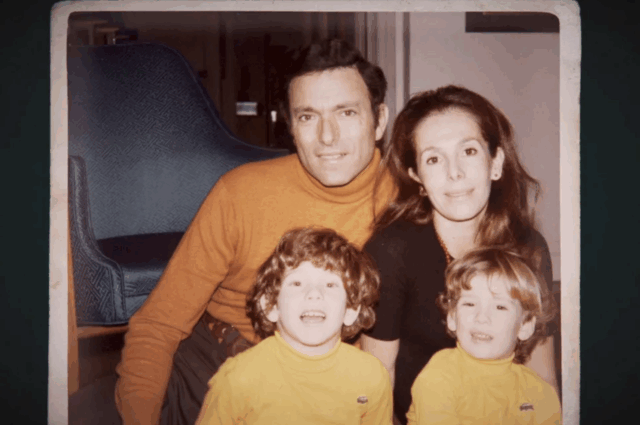
Harvey Schein, Joy Schein, Justin Schein, and Mark Schein pose for a family photo in 1978 (courtesy Schein Family Archives)
DEATH & TAXES: MY FATHER, OUR FAMILY, AND THE COST OF THE AMERICAN DREAM (Justin Schein, 2024)
IFC Center
323 Sixth Ave. at West Third St.
July 17–24 www.ifccenter.com www.deathandtaxesfilm.com
“If more and more wealth can be accumulated and provided to heirs without ever paying any taxes, then we are on the way to a permanent aristocracy in America,” Clinton Labor secretary Robert Reich says in Justin Schein’s Death & Taxes, a heartfelt and passionate film opening July 17 at IFC.
More than twenty years in the making, the documentary focuses on Justin’s father’s obsession with the estate tax. Harvey Schein was a successful executive in the music industry, landing top jobs at Columbia, Sony in Japan, and Warner, although his famous temper often got him in trouble. Born in 1927 in the Bronx and raised in East New York, Harvey joined the navy, then went to school on the GI Bill and graduated from Harvard Law. He married Joy Gitlin, a dancer and social worker from toney Jamaica Estates, and they had two sons, Mark and Justin.
The film begins in 2003 as the Scheins are in their country home in Connecticut; Harvey has gathered them there to discuss what to do after he is gone.
“Welcome to a Schein family meeting,” Justin narrates in voice-over. “That’s my dad, holding forth on his favorite subject: keeping his hard-earned money from the taxman when he dies. It’s not a bad problem to have, as long as you don’t let it drive you crazy. But unfortunately it did.”
Justin, codirector Robert Edwards, and editors Purcell Carson and Brian Redondo intercut archival news footage, home movies and photos, animation, and new interviews with family members, friends, Harvey’s colleagues, and numerous economists and consultants who offer their thoughts about Harvey and taxes and how things have changed over the years.
Mark Schein talks about how saving money was a “military dictate.” Harvey’s executive assistant Yvonne Johnson calls him “frugal. . . . Everybody knows he had a very, very difficult personality.” Former CBS Records president Clive Davis notes that Harvey “had one Achilles heel in his tendency to be argumentative.”
Harvey’s parents left him nothing, so he was proud of what he built, but he wasn’t about to just hand over millions of dollars to the government to use for welfare and other programs he disagreed with. His disdain for the estate tax even led to his moving to Florida to avoid paying it, jeopardizing his marriage when Joy wanted to head back north and live in New York City.
Meanwhile, Justin, acknowledging the privilege he was born into, speaks with experts on both sides of the estate tax controversy. Republican pollster and strategist Frank Luntz, who renamed the estate tax “the death tax,” considers it “confiscation.” Americans for Tax Reform founder Grover Norquist argues, “I think the death tax does violate people’s sense of the American dream. . . . It’s up to you, and as long as you don’t hurt anybody else, nobody cares.” Heritage Foundation senior fellow Stephen Moore defends Harvey, explaining, “The evidence shows that giving money to the people is not a formula for economic success.”
Justin points out that the estate tax affects only those who are worth at least $13.6 million, a tiny minority of Americans. Institute on Tax and Economic Policy director Amy Hanauer says, “It is 0.1 percent of estates in America that have been subject to the estate tax. It is really the very, very, very wealthy.” Institute for Policy Studies senior scholar Chuck Collins, referring to “the wealth defense industry,” asks, “Should we be ruled by small numbers of wealthy families? Should they dominate our system? So it’s a very American idea to limit the concentration of power.” ProPublica journalist James Bandler posits, “The wealthy have found all sorts of legal ways to reduce their taxes, in some cases to zero.” Discussing government programs, Princeton University sociologist Matthew Desmond offers, “We’re all on the dole.” And Bootstrapped author Alissa Quart contends, “If you think you’re self-made, call your mother.”
While the right-wing news media claims that the death tax is a form of double taxation, Roosevelt Institute president and CEO Felicia Wong, Maven Collaborative economist Anne Price, and New School economist Darrick Hamilton delve into the racial wealth gap. “That kind of passing down of inequalities end up crystalized in wealth inequality,” Wong says. Hamilton adds, “Taxes are used to strategically direct resources in ways to promote economic activity; a big question is for whom.”
Harvey Schein and Joy Schein’s retirement in Sanibel, Florida, did not go as planned (photo by Justin Schein, 1994)
At the heart of the film is the concept of the American dream, something that Justin wants to be available to everyone but is distressed by people like his father who refuse to pay their fair share. Remembering his daily trip to private school, passing through minority communities in disrepair, he recalls, “Looking out the bus window as a kid, I could see that people were hurting.” Showing a map depicting the redlining of New York City, he continues, “My school bus drove right through one of these red areas; each one marks a nonwhite neighborhood excluded from loans. And without a loan, a whole segment of the population was prevented from buying into the American dream of building family wealth.”
Under the current administration, the wealth gap is likely to grow, based on projections surrounding the passage of the One Big Beautiful Bill, and the bickering over the Trump tax cuts will remain as heated as ever. Republicans will battle with Democrats, red states will feud with blue states, the rich will fight with the poor, and fathers will clash with sons.
Since this is Justin’s film, he gets the last word: “When the wealthy are able to avoid paying their share of taxes, the rest of the country gets left behind.”
The US theatrical release of Death & Taxes takes place July 17–24 at IFC. Justin Schein will be on hand for several Q&As, on July 17 at 7:00 with Patriotic Millionaires chair Morris Pearl, New York City comptroller Brad Lander, and New York Working Families Party codirector Ana María Archila, moderated by Strong Economy for All Coalition executive director Michael Kink, on July 18 at 6:35 with Collins, on July 19 at 6:35 with Desmond, and on July 20 at 1:35 with Hamilton and Stronger Together deputy director Charles Khan.
[Mark Rifkin is a Brooklyn-born, Manhattan-based writer and editor; you can follow him on Substack here.]
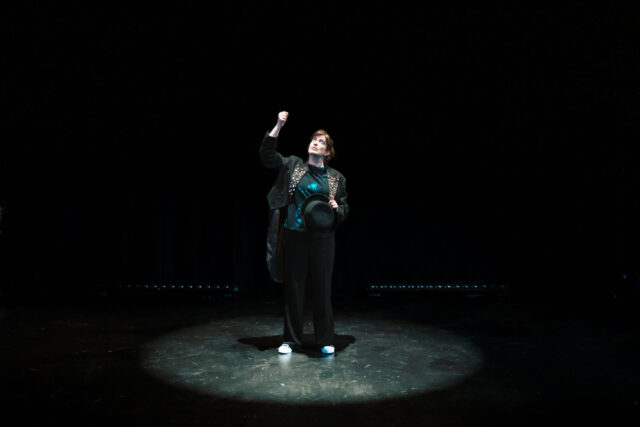
Megan Hill reprises her role as a magician in Crystal Skillman’s Open (photos by Jeremy Varner)
OPEN
WP Theater
2162 Broadway at 76th St.
Tuesday – Sunday through July 27, $65.79 wptheater.org
In the off-Broadway premiere of Crystal Skillman’s 2019 Open, Kristen (Megan Hill), a queer magician and writer, uses her talent as an amateur prestidigitator in telling her heart-wrenching story of true love, relating specific sleight-of-hand acts to events in her life, believing that she might be able to affect the outcome.
In The Year of Magical Thinking, Joan Didion’s memoir of personal tragedy that was adapted into a solo play, the National Book Award winner writes, “I was thinking as small children think, as if my thoughts or wishes had the power to reverse the narrative.”
Psychology Today defines magical thinking as “the need to believe that one’s hopes and desires can have an effect on how the world turns. . . . Spirits, ghosts, patterns, and signs seem to be everywhere, especially if you look for them. People tend to make connections between mystical thinking and real-life events, even when it’s not rational.”
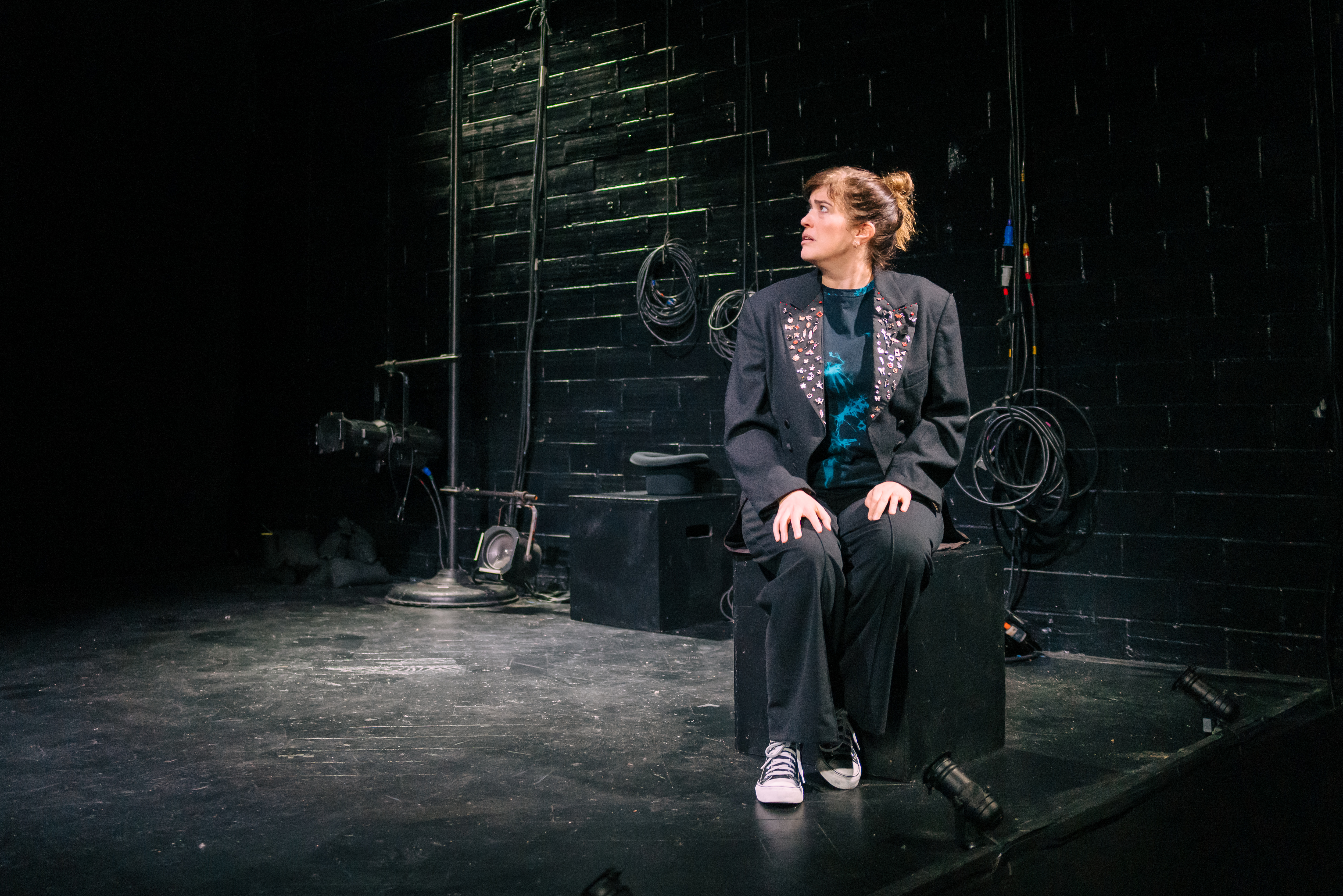
The seventy-five-minute play is divided into three sections and a bonus: “First Love,” “Commitment,” “Sacrifice,” and “Promise.” It takes place on a spare black set designed and lit by Sarah Johnston. Kristen is already onstage as the audience enters, doing a small, slow dance, in her own world. Once everyone is seated, she addresses the audience directly: “I’m here. I’m here. I am here. Your magician,” she begins, as if trying to convince herself. “Here you are. An audience. A kind of audience. Thank you for joining me. It’s incredible. Imagining you here.”
Of course, she is here, and we are here, but Open is about, as Kristen declares, “the power of the imagination!” There are no props; Kristen mimics all the magic — pulling flowers out of a hat, shuffling a deck of cards, levitating, linking metal rings — with just her body, Johnston’s lighting (which casts dramatic shadows), and Emma Wilk’s sound effects, so we can hear the specific tricks if not actually see them happening in front of us. It’s all connected to her relationship with Jenny, a woman she meet-cutes at the Strand, then goes to Marie’s Crisis with on a date.
Kristen pantomimes handing an audience member an egg covered by a red scarf, and the person obliges; she shares the background of the scarf, which had been handed down from her grandmother to her mother to her, and then she gave it to Jenny. The tale delves into love, birth, and homophobia, ending with the squawks of a parrot flying away. The scene prepares us for what is to follow, memories initiated by imaginary magic tricks that drive a nonlinear narrative in which Kristen attempts to come to terms with a tragedy that she considers herself significantly responsible for.
Kristen has written a YA romantasy about two boys who use magic and fall in love. Jenny asks what the first line is, and Kristen tells her: “Magician! Are you a coward? Don’t you want to live?” Fear and apprehension are themes Skillman keeps returning to. For example, when Kristen mimes juggling, she says, “Secrets are the balls we keep in the air. Ours will come crashing down this evening.”
Everything Kristen does is for Jenny; she believes they were destined to be together. She explains, “Well . . . every person who has ever loved — has a magician! King Arthur had Merlin. Roy had Siegfried. Penn has Teller. Jenny has me. So we imagine.” But then she adds, “For I have to confess — this world and I . . . reality . . . we don’t really get along.”
But therein lies the problem with the play: reality and fantasy never quite mesh and too often seem forced. At one point Kristen cuts a rope in two, ties them in a knot, makes the knot disappear, then reveals to us that the rope is in one piece again; it is a too-obvious metaphor for what is happening between her and Jenny, especially when she next compares it to the boys in her novel, explaining, “They would make their own rules. They would take each other apart and put each other back together again. They were . . . safe.”
Kristen works at Staples, a company whose motto is “Worklife Solutions for All. We Inspire What Could Be, and Help Make It a Reality,” while Jenny works at an LGBT Community Center, which declares, “They can try to diminish our flame. But our flame is so strong we only grow bigger and burn brighter.”
Aptly directed without flourish by Jessi D. Hill (Surely Goodness and Mercy,Vanishing Point), Open starts slowly and does build energy; Megan Hill (Eddie and Dave,Trade Practices), who originated the role — Skillman (Wild,Geek) wrote the part with her in mind — takes a while to hit her stride. Some vignettes work better than others, and the details of the plot occasionally get confusing. But certain parts hit hard and are deeply affecting; at one shocking moment, a woman sitting behind me let out the loudest, most heartbreaking gasp I have ever heard at a show.
Continuing at the WP Theater on the Upper West Side through July 27, Open also deals with the concepts associated with the title, from being open to new challenges, new loves, and new situations (including watching a show about a magician with no actual magic in it) to being emotionally open and honest with friends and relatives to standing in front of a door and wondering whether to open it to, perhaps most critically, opening one’s eyes to reality. Early on, Kristen tells us, “Magic isn’t denial. . . . When I say ‘abracadabra’ we will accomplish our task! To bring forth the reality of the imagination. Abracadabra, did you know? Means ‘as it is spoken.’ As I have been brought here, so have you.”
Too much of Open feels like it is based on magical thinking, if not ultimately to reverse the narrative or affect the outcome but to convince oneself how to face reality, even in the most dire of circumstances, more like a dramatized therapy session than a play imbued with the intoxicating spirit of magic and imagination.
[Mark Rifkin is a Brooklyn-born, Manhattan-based writer and editor; you can follow him on Substack here.]
A disengaged online reseller (Masaki Suda) gets more than he bargained for in Kiyoshi Kurosawa’s Cloud
JAPAN CUTS — FESTIVAL OF NEW JAPANESE FILM 2025: KIYOSHI KUROSAWA
Japan Society
333 East 47th St. at First Ave.
January 10-20 www.japansociety.org
The annual summer Japan Cuts festival is underway at Japan Society, eleven days of new and restored works that began July 10 with Yasuhiro Aoki’s debut feature, ChaO, and continued with Yuya Ishii’s The Real You, Kenichi Ugana’s The Gesuidouz, and Kichitaro Negishi’s Yasuko, Songs of Days Past, prime examples of the wide range of works at the fest, many of them North American premieres and followed by Q&As. Upcoming highlights include Daihachi Yoshida’s Teki Cometh, Takashi Miike’s Blazing Fists, Masashi Iijima’s Promised Land, and the closing night selection, Joseph Overbey’s documentary The Spirit of Japan, complete with a shochu reception.
The 2025 edition celebrates the career of Kiyoshi Kurosawa, who will participate in Q&As and introductions at several screenings. “The very base of cinematic expression is to film the reality in front of you using cameras. So, the similarity with the reality would be the feature of a movie,” Kurosawa told Dirty Movies in 2018. “This could be also its limitation, but anyway, I am particularly interested in the fact that a movie is almost the same as reality, but at the same time is slightly different than reality. This difference or unreality is always my starting point when I create my work.” That quote can be applied to the two Japan Cuts films that are reviewed below.
Kobe-born suspense master Kiyoshi Kurosawa returns to Japan Cuts with a pair of intense revenge thrillers that are not for the faint of heart. Both were made in 2024, both feature torture and violence, and both are tons of fun.
Up first for Kurosawa, who has made such horror faves as Cure,Pulse, and Creepy as well as such psychological dramas as Bright Future and Tokyo Sonata, is Cloud, the centerpiece selection. Masaki Suda stars as Yoshii, a quiet, disengaged young man who works at a cleaning factory, supplementing his income as an online reseller, purchasing goods at cut rates — unethically taking advantage of people — and selling them online at exorbitant prices, with no care whether the items are actually legitimate or fakes. He is upset when the owner, Takimoto (Yoshiyoshi Arakawa), offers him a promotion; Takimoto sees promise in Yoshii, but Yoshii has no interest in taking on more responsibility. When one of his deals makes him a lot of money, he quits his job and dedicates all his time to reselling whatever products he can get his hands on, from designer handbags to anime figures. Yoshii alienates his business partner, Muraoka (Masataka Kubota), and moves with his girlfriend, Akiko (Kotone Furukawa), to a house in a small, faraway town, where a young local man, Sano (Daiken Okudaira), insists on being his assistant. As his deals get more and more lucrative and dangerous, Yoshii builds a well-deserved bad reputation as a ruthless operator, and soon a group of men, armed to the hilt, come after him, determined to get even.
Cloud is a fierce, propulsive trip down the internet rabbit hole, where anonymity might feel safe but reality threatens to blow it all up. Yoshii ruins every relationship he has, with clients, customers, Sano, Akiko, Takimoto, et al., seemingly without any care or regard; he spends hours staring at his computer screen, waiting for his items to start selling, with more concern and passion than he has for any human being. And when the posse finds him, he has no understanding why they want him dead.
Suda (Kamen Rider,Cube) is terrific as Yoshii; we are initially offput by his herky-jerky movement and disengagement from society, but as everything closes in on him, we also feel compassion for his potential fate. The film is beautifully shot by Yasuyuki Sasaki and expertly directed by Kurosawa, who knows just how to make the audience squirm, especially at unexpected moments.
“Grudges, revenge, they’ll only drag you down,” one member of the posse tells another. “Think of this as a game.” It’s a wry comment on how too many people look at the real world these days.
Cloud is screening July 16 at 6:00 and will be followed by a Q&A with Kurosawa, who will also receive the Cut Above Award at a reception afterward.
Kiyoshi Kurosawa’s remake of his own Serpent’s Path is another suspense gem
THE SERPENT’S PATH (『蛇の道』) (HEBI NO MICHI) (Kiyoshi Kurosawa, 2024)
Thursday, July 17, 6:00 japansociety.org
When Kiyoshi Kurosawa was asked by a studio in France to remake one of his earlier films, he opted to revisit his 1998 straight-to-video thriller Serpent’s Path, which was written by Hiroshi Takahashi (Ringu,Sodom the Killer) and starred Show Aikawa and Teruyuki Kagawa. He cowrote the new script with French journalist Aurélien Ferenczi, who passed away in October 2024 at the age of sixty-one. The result is a brutal, gripping white-knuckle shocker that you won’t be able to turn away from, no matter how much you might want to.
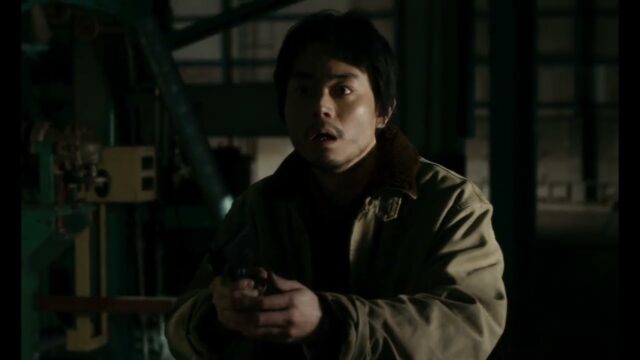
Albert Bacheret (Damien Bonnard) is a disheveled, distraught man who is determined to find whoever murdered and dismembered his eight-year-old daughter, Marie (Hélène Caputo). He is helped by Sayoko Mijima (Ko Shibasaki), a calm, composed hospital psychiatrist who is treating Yoshimura (Hidetoshi Nishijima), a Japanese man having trouble adjusting to life in France. Sayoko has also moved from Japan to Paris, leaving behind her partner, Soichiro (Munetaka Aoki).
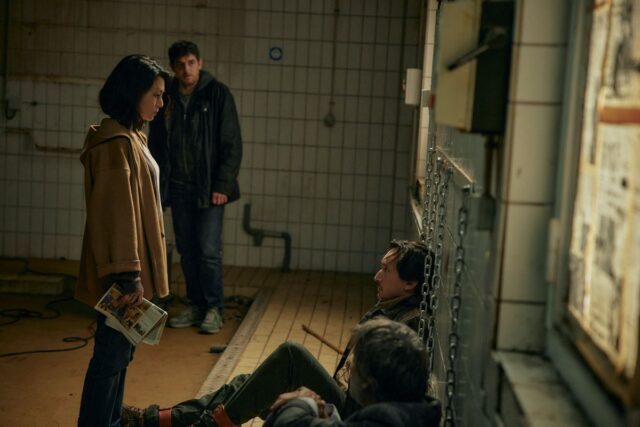
Albert and Sayoko are not criminal masterminds, but they expertly kidnap Laval (Mathieu Amalric) and chain him to a wall in an abandoned warehouse. Albert accuses Laval of having killed Marie, but Laval adamantly denies he had anything to do with it, claiming he is just an accountant at the Minard Foundation, an institution that we slowly learn more about, none of it good. Deprived of food, drink, and a bathroom, Laval eventually gives up his boss, Pierre Guérin (Grégoire Colin), who Albert and Sayoko decide to capture as well. Like Laval, Pierre is not forthcoming at first, but torture has a way of making people talk, whether it be truth or lies, and the plot thickens, offering more and more surprises along with more and more violence.
Throughout the film, Albert, who became estranged from his wife, Lola (Vimala Pons), after the tragic incident, shows a short video of Marie playing the piano and roller skating as he reads a newspaper report that details exactly what happened to her, making Laval, Pierre, and, later, Christian Samy (Slimane Dazi) watch it — but the audience as well, as if inuring us to the atrocity while also feeling Albert’s torment. Kurosawa and cinematographer Alex Kavyrchine have created a fascinating dichotomy between the kind of violence we see onscreen, whether a movie in a theater or a video on a smartphone or laptop, and the kind we are not shown but only have to imagine, especially when it involves children. We cringe every time Albert narrates the video but not at what Albert and Sayoko do; in fact, we are rooting for them. As the body count rises, so do humorous shots of the victims, eliciting uncomfortable yet necessary laughter.
Albert Bacheret (Damien Bonnard) and Sayoko Mijima (Ko Shibasaki) hunt for a killer in The Serpent’s Path
Bonnard (Staying Vertical,Les Misérables) is terrific in a similar way as Suda is in Cloud, portraying a laser-focused but perhaps misguided man who has disconnected from society, impulsive and restless, turning to screens to redefine his purpose. His unease is so palpable you just want to give him a giant hug — but maybe not when he’s armed. Actress and singer Shibasaki (One Missed Call,xxxHolic) adds just the right amount of mystery to Sayoko, who might be more than she seems. Meanwhile, the mighty Amalric (Kings and Queen,The Grand Budapest Hotel) once again proves why he’s one of the best actors on the planet.
At one point, when Yoshimura talks to Sayoko about facing the end, she replies, “The end? The end of what? Are you afraid of the end? Isn’t the hardest part when there is no end?”
Or, in other words, be careful what you wish for.
The Serpent’s Path is screening July 17 at 6:00 and will be followed by a Q&A with Kurosawa, who had a busy 2024, directing Cloud,The Serpent’s Path, and the forty-five-minute experimental Chime following a four-year pause at least in part because of the pandemic. In addition, you can catch the North American premiere of the 4K restoration of the 1998 original on July 19 at 9:00 as well as Kurosawa’s 1998 License to Live on July 17, a reconstruction of Sam Peckinpah’s 1970 western The Ballad of Cable Hogue.
[Mark Rifkin is a Brooklyn-born, Manhattan-based writer and editor; you can follow him on Substack here.]
NOT A FILM: FILMS OF JAFAR PANAHI
Metrograph
7 Ludlow St. between Canal & Hester Sts.
July 12 – August 5 metrograph.com
“The hope of creating again is a reason for existence,” Iranian filmmaker Jafar Panahi said in a statement at the 2022 New York Film Festival, where his latest work, No Bears, was screening. Panahi could not attend the festival because he had been arrested again and sentenced to six years, a political prisoner of the regime that had banned him from making films. But that has never stopped Panahi, who was released following a hunger strike in February 2023.
In anticipation of the October release of his newest film, It Was Just an Accident, another illegal, banned-in-Iran production and winner of the Palme d’Or at Cannes, Metrograph is presenting “Not a Film: Films of Jafar Panahi,” consisting of eight of his eleven features, from his 1995 debut, The White Balloon, cowritten by his mentor, Abbas Kiarostami, through 2000’s Golden Lion–winning The Circle, the 2003 thriller Crimson Gold, and the 2015 Golden Bear–winning Taxi Tehran, one of several films in which Panahi plays a fictionalized version of himself.
It’s worth reading the full NYFF statement from this masterful auteur:
“We are filmmakers. We are part of Iranian cinema. For us, to live is to create. We create works that are not commissioned. Therefore, those in power see us as criminals. Independent cinema reflects its own times. It draws inspiration from society. And cannot be indifferent to it. The history of Iranian cinema witnesses the constant and active presence of independent directors who have struggled to push back censorship and to ensure the survival of this art. While on this path, some were banned from making films, others were forced into exile or reduced to isolation. And yet, the hope of creating again is a reason for existence. No matter where, when, or under what circumstances, an independent filmmaker is either creating or thinking about creation. We are filmmakers, independent ones.”
The Metrograph series runs July 12 to August 5; below are select reviews.
The unscripted Offside is part of Metrograph tribute to Iranian filmmaker Jafar Panahi
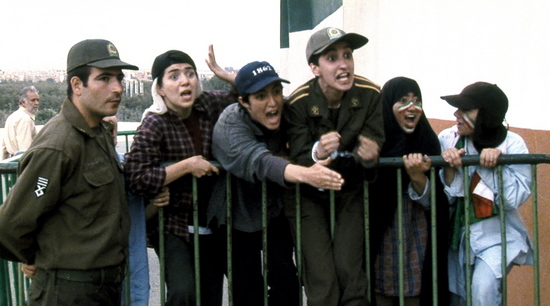
Filmed on location in and around Tehran’s Azadi Stadium and featuring a talented cast of nonprofessional actors, Jafar Panahi’s Offside is a brilliant look at gender disparity in modern-day Iran. Although it is illegal for girls to go to soccer games in Iran — because, among other reasons, the government does not think it’s appropriate for females to be in the company of screaming men who might be cursing and saying other nasty things — many try to get in, facing arrest if they get caught. Offside is set during an actual match between Iran and Bahrain; a win will put Iran in the 2006 World Cup. High up in the stadium, a small group of girls, dressed in various types of disguises, have been captured and are cordoned off, guarded closely by some soldiers who would rather be watching the match themselves or back home tending to their sheep. The girls, who can hear the crowd noise, beg for one of the men to narrate the game for them. Meanwhile, an old man is desperately trying to find his daughter to save her from some very real punishment that her brothers would dish out to her for shaming them by trying to get into the stadium.
Despite its timely and poignant subject matter, the unscripted, Silver Bear–winning Offside — which was banned in Iran before it was released — is a very funny film, with fine performances by Sima Mobarak Shahi, Shayesteh Irani, Ida Sadeghi, Golnaz Farmani, Mahnaz Zabihi, and Nazanin Sedighzadeh as the girls and M. Kheymeh Kabood as one of the soldiers.
Even house arrest and potential imprisonment cannot stop Iranian auteur Jafar Panahi from telling cinematic stories
THIS IS NOT A FILM (IN FILM NIST) (Jafar Panahi & Mojtaba Mirtahmasb, 2011)
Saturday July 26, 12:15
Sunday July 27, 2:25 metrograph.com
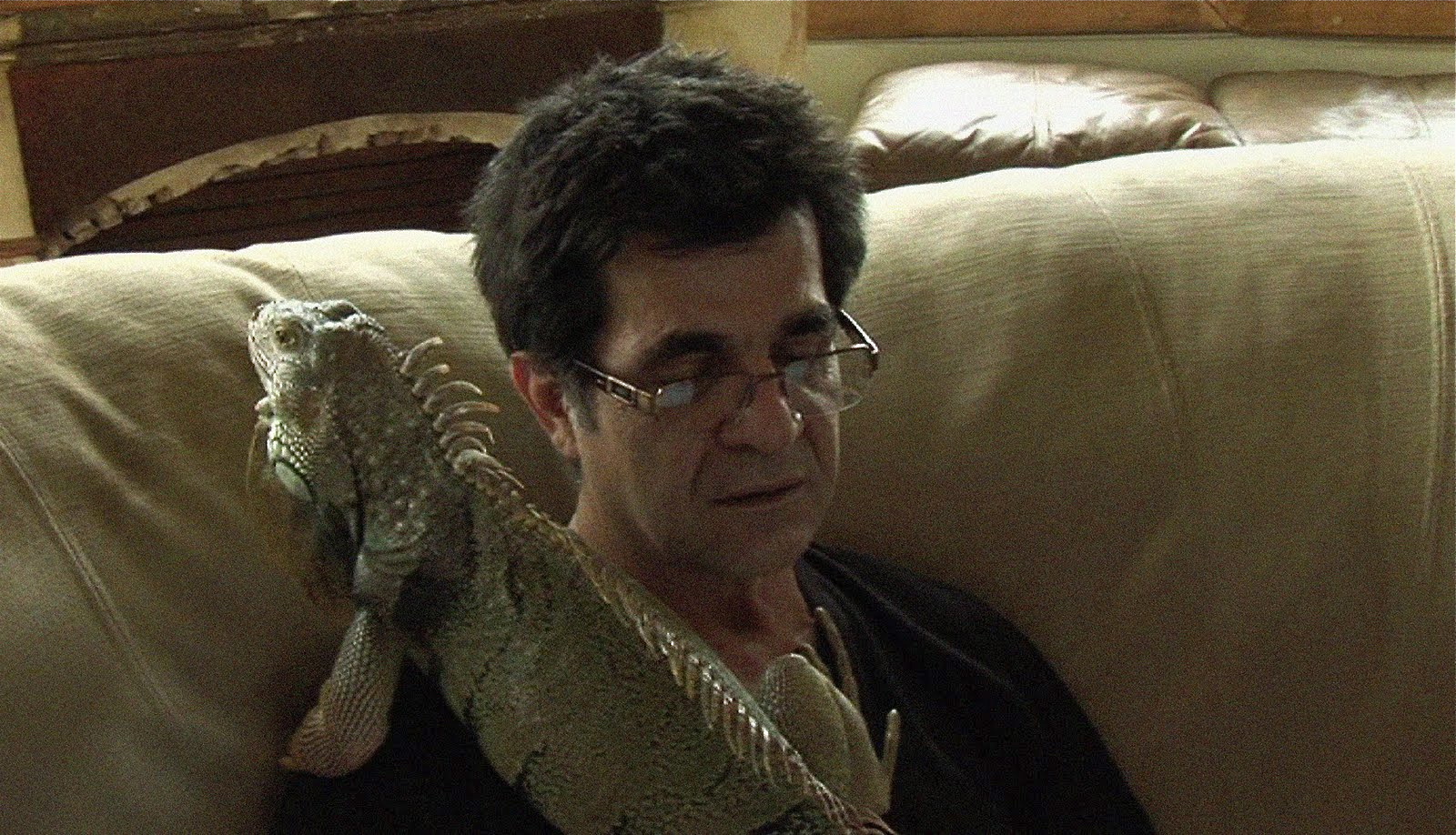
“You call this a film?” Jafar Panahi asks rhetorically about halfway through the revealing 2011 documentary This Is Not a Film. After several arrests beginning in July 2009 for supporting the opposition party, highly influential and respected Iranian filmmaker Panahi was convicted in December 2010 for “assembly and colluding with the intention to commit crimes against the country’s national security and propaganda against the Islamic Republic.” Although facing a six-year prison sentence and twenty-year ban on making or writing any kind of movie, Panahi is a born storyteller, so he can’t stop himself, no matter the risks. Under house arrest, Panahi has his friend, fellow director Mojtaba Mirtahmasb (Lady of the Roses), film him with a handheld DV camera over ten days as Panahi plans out his next movie, speaks with his lawyer, lets his pet iguana climb over him, and is asked to watch a neighbor’s dog, taking viewers “behind the scenes of Iranian filmmakers not making films.” Panahi even pulls out his iPhone to take additional video, photographing New Year’s fireworks that sound suspiciously like a military attack. Panahi is calm throughout, never panicking (although he clearly does not want to take care of the barking dog) and not complaining about his situation, which becomes especially poignant as he watches news reports on the earthquake and tsunami disaster in Japan.
“But you can’t make a film now anyhow, can you?” Mirtahmasb — who will later be arrested and imprisoned as well — asks at one point. “So what I can’t make a film?” Panahi responds. “That means I ask you to take a film of me? Do you think it will turn into some major work of art?” This Is Not a Film, which was smuggled out of Iran in a USB drive hidden in a birthday cake so it could be shown at Cannes, is indeed a major work of art, an important document of government repression of free speech as well as a fascinating examination of one man’s intense dedication to his art and the creative process. Shortlisted for the Best Documentary Academy Award, This Is Not a Film is a mesmerizing experience from a genius who has since gifted the world with Closed Curtain,Taxi Tehran,3 Faces, and No Bears, defying the government while constantly looking over his shoulder.
Iranian auteur Jafar Panahi plays a version of himself in gorgeously photographed and beautifully paced 3 Faces
3 FACES (SE ROKH) (Jafar Panahi, 2018)
Saturday, August 2, 4:30, and Sunday, August 4, noon metrograph.com
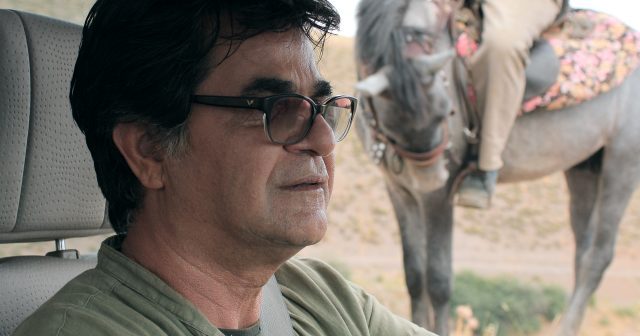
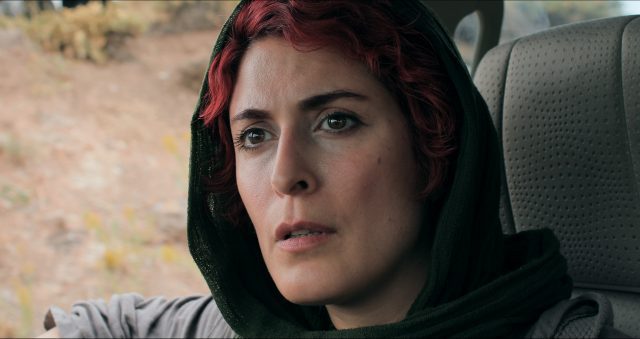
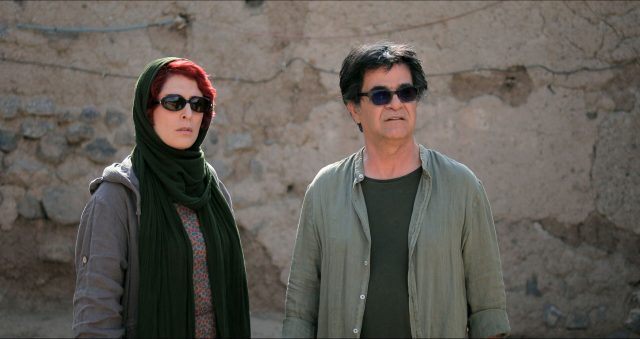
One of the most brilliant and revered storytellers in the world, Iranian auteur Jafar Panahi proves his genius yet again with another cinematic masterpiece, the tenderhearted yet subtly fierce road movie 3 Faces. The film made its US premiere at the New York Film Festival, won the Best Screenplay prize at Cannes, and was shown in IFC’s inaugural Iranian Film Festival New York. As with some of Panahi’s earlier works, 3 Faces walks the fine line between fiction and nonfiction while defending the art of filmmaking. Popular Iranian movie and television star Behnaz Jafari, playing herself, has received a video in which a teenage girl named Marziyeh (Marziyeh Rezaei), frustrated that her family will not let her study acting at the conservatory where she’s been accepted, commits suicide onscreen, disappointed that her many texts and phone calls to her hero, Jafari, went unanswered. Deeply upset by the video — which was inspired by a real event — Jafari, who claims to have received no such messages, enlists her friend and colleague, writer-director Panahi, also playing himself, to head into the treacherous mountains to try to find out more about Marziyeh and her friend Maedeh (Maedeh Erteghaei). They learn the girls are from a small village in the Turkish-speaking Azeri region in northwest Iran, and as they make their way through narrow, dangerous mountain roads, they encounter tiny, close-knit communities that still embrace old traditions and rituals and are not exactly looking to help them find out the truth.
Iranian star Behnaz Jafari plays herself as she tries to solve a mystery in Jafar Panahi’s 3 Faces
Panahi — who is banned from writing and directing films in his native Iran, is not allowed to give interviews, and cannot leave the country — spends much of the time in his car, which not only works as a plot device but also was considered necessary in order for him to hide from local authorities who might turn him in to the government. He and Jafari stop in three villages, the birthplaces of his mother, father, and grandparents, for further safety. The title refers to three generations of women in Iranian cinema: Marziyeh, the young, aspiring artist; Jafari, the current star (coincidentally, when she goes to a café, the men inside are watching an episode from her television series); and Shahrzad, aka Kobra Saeedi, a late 1960s, early 1970s film icon who has essentially vanished from public view following the Islamic Revolution of 1978-79, banned from acting in Iran. (Although Shahrzad does not appear as herself in the film, she does read her poetry in voiceover.) 3 Faces is gorgeously photographed by Amin Jafari and beautifully edited by Mastaneh Mohajer, composed of many long takes with few cuts and little camera movement; early on there is a spectacular eleven-minute scene in which an emotionally tortured Jafari listens to Panahi next to her on the phone, gets out of the car, and walks around it, the camera glued to her the whole time in a riveting tour-de-force performance.
Behnaz Jafari and Jafar Panahi encounter culture clashes and more in unique and unusual road movie
3 Faces was Panahi’s fourth film since he was arrested and convicted in 2010 for “colluding with the intention to commit crimes against the country’s national security and propaganda against the Islamic Republic”; the other works are This Is Not a Film, Closed Curtain, and Taxi Tehran, all of which Panahi starred in and all of which take place primarily inside either a home or a vehicle. 3 Faces is the first one in which he spends at least some time outside, where it is more risky for him; in fact, whenever he leaves the car in 3 Faces, it is evident how tentative he is, especially when confronted by an angry man. The film also has a clear feminist bent, not only centering on the three generations of women, but also demonstrating the outdated notions of male dominance, as depicted by a stud bull with “golden balls” and one villager’s belief in the mystical power of circumcised foreskin and how he relates it to former macho star Behrouz Vossoughi, who appeared with Shahrzad in the 1973 film The Hateful Wolf and is still active today, living in California. Panahi, of course, will not be at Metrograph for the series, as his road has been blocked, leaving him a perilous path that he must navigate with great care.
[Mark Rifkin is a Brooklyn-born, Manhattan-based writer and editor; you can follow him on Substack here.]
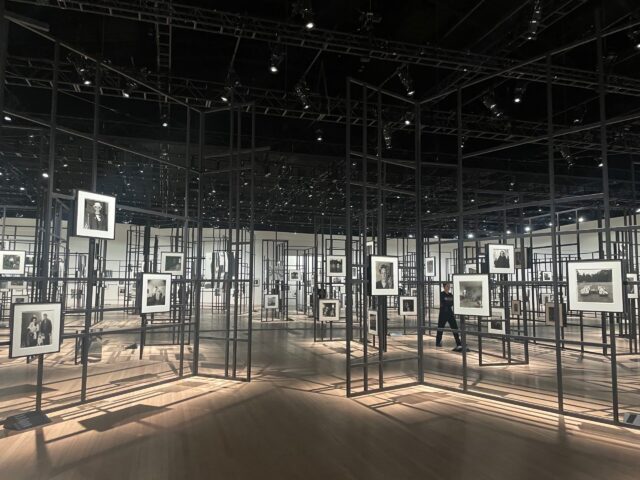
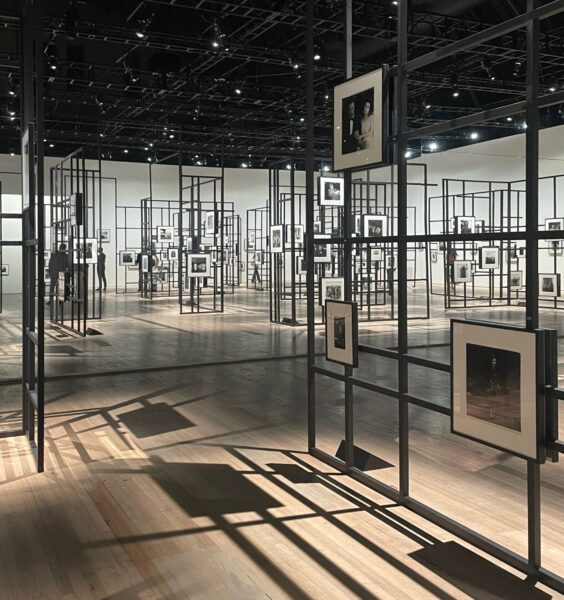
“Diane Arbus: Constellation” continues at Park Avenue Armory through August 17 (photo by twi-ny/mdr)
DIANE ARBUS: CONSTELLATION
Park Avenue Armory, Wade Thompson Drill Hall
643 Park Ave. at 67th St.
Daily through August 17, $25 www.armoryonpark.org
Don’t look too hard for a theme to “Constellation,” the exciting and dramatic Diane Arbus installation at Park Ave. Armory. “The connection is that there is no connection,” curator Matthieu Humery explained at a press preview.
The exhibition fills half of the armory’s 55,000-square-foot Wade Thompson Drill Hall, with a mylar mirror in the middle that makes it look like the entire space is populated by the seemingly endless parade of diverse people the New York City–born Arbus photographed during the course of her career, cut short by her suicide in 1971 at the age of forty-eight. There are 454 photos in all, arranged on gridlike beams that form a kind of maze, where visitors can take multiple paths, like walking through the streets of the metropolis that was her canvas; the setup also evokes an alternate subway map. The black frames match the black beams, giving it an organic feel.
The photos are placed at different heights, identified by small blocks on the floor and in a long list inside the official pamphlet; there are no detailed labels, making each photo, like each person she photographed, equal, whether a stripper, a drag performer, a political supporter, kids playing, a circus strongman, twins and triplets, a well-known artist, a corpse, a dominatrix, or swimmers at the beach. The only specific organization is the section that includes her breakthrough limited edition “box of ten,” which contains iconic, familiar images. Other favorites are scattered about in a colossal, inviting jumble. The lighting creates fascinating shadow patterns that have a ghostly presence on the floor.
“They are the proof that something was there and no longer is. Like a stain,” Arbus wrote in a 1971 letter to Davis Pratt of Harvard’s Fogg Museum. “And the stillness of them is boggling. You can turn away but when you come back they’ll still be there looking at you.” To take that philosophy to another level, numerous photos at the armory are backed by mirrors so visitors can imagine themselves being caught by Arbus’s lens and becoming part of the unique and welcoming community she built more than fifty years ago. “I would like to photograph everybody,” she wrote in the margin of a letter to photographer, graphic designer, and teacher Marvin Israel, seen in #120 in the show. Famous faces range from Tiny Tim, Jorge Luis Borges, Norman Mailer, and Roy Lichtenstein to James Brown, Charles Atlas, Peter Ustinov, and Jayne Mansfield, but Arbus treated all of her subjects as celebrities.
However, whereas we’re all taught to avoid making eye contact on New York City buses, subways, and sidewalks, you should take your time as you wander through the aisles, making friends with these hundreds of strangers, among them a young couple eating hot dogs in a park, an elderly gentleman apparently with three legs, a woman on a couch holding a baby monkey like an infant, a Jewish giant towering over his parents in their Bronx home, four members of the radical feminist group the Red Stockings, a transvestite on her bed with her birthday cake, a girl in a devil mask with a naked doll, a wax museum ax murderer, a boy clutching a toy grenade, a silhouetted couple watching a newsreel of a cross burning, kids playing baseball, two women at the Automat, and Ronald C. Harrison, the Human Pincushion. Most shots are posed, with many of the subjects looking directly into the camera.
“Constellation” offers a multitude of paths to take (photo by twi-ny/mdr)
I highly recommend not reading the titles of the works, at least not during your first trip around, to get the full impact of Arbus’s egalitarian view of humanity; each one of us is unique, yet we are also alike, and we basically all want the same thing out of life: happiness. Arbus’s photos inherently make us happy.
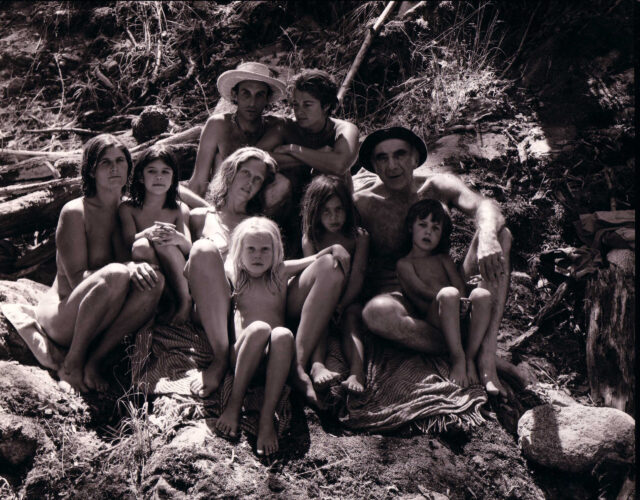
The prints were made by Neil Selkirk, a photographer who studied with Arbus and is the only person authorized by her estate to produce prints from the original negatives, using what he calls an “abstruse technical process.” He has cited A family one evening in a nudist camp as one of the works that stands out for him, holding a special place; it’s a 1965 gelatin print of a husband, wife, and child hanging out naked in a grassy field, the corner of a car’s tailfin visible on one side, all three people peering at us as if they have something better to do.
The display, sponsored by the LUMA Foundation, is supplemented with a short video of close-up eyes from Arbus’s photos, projected onto a freestanding wall in the drill hall, as well as, in the Board of Officers Room, two documentaries, including the ninety-minute What Diane Arbus Wasn’t Doing, and How She Wasn’t Doing It, a filmed conversation between Selkirk and Darius Himes from Christie’s.
“I have learned to get past the door, from the outside to the inside. One milieu leads to another,” Arbus wrote in her 1966 application for her second Guggenheim fellowship (which she received), “a certain group of young nihilists, a variety of menages, a retirement town in the Southwest, a new kind of Messiah, a particular Utopian cult who plan to establish themselves on a nearby island, Beauties of different ethnic groups, certain criminal types, a minority elite.”
Just another day in New York City, this time courtesy of Diane Arbus and Park Ave. Armory.
[Mark Rifkin is a Brooklyn-born, Manhattan-based writer and editor; you can follow him on Substack here.]
Restored documentary looks at life at Northern California commune from 1968 to 1979 and beyond (photo by Jock Sturges)
COMMUNE (Jonathan Berman, 2005 / restored 2025)
DCTV Firehouse Cinema
87 Lafayette St.
July 11-17 www.dctvny.org
Jonathan Berman’s twentieth anniversary restoration of his documentary Commune could hardly be more timely. The film details the fascinating story of Black Bear Ranch in Siskiyou County in Northern California near Mt. Shasta, where dozens of people left their traditional lives and started their own community to escape what was happening in the country in the wake of the violent Democratic National Convention in Chicago in 1968.
“After going to Washington, DC, for a while and thinking, boy, it’s going to be a long time before all these people retire and get out of here and something changes, I don’t think I can stand to wait around,” Mahaj Seeger says in the film.
Actor Peter Coyote explains, “We thought the government was going to be overthrown in two years and there would be a new culture rising from the ashes, and we wanted to have an alternative, a nonmercantile alternative that offered citizens the options of being something other than a consumer or an employee.”
And Cedar Seeger admits, “I moved there to get away from America; I did not want to be an American as defined by the mainstream, although I guess deep down I’ve always felt proud that I’m an American. But to me those values are represented in open-mindedness and free thinking and tolerance and the ability to do what you want.”
The group purchased eighty acres of woods for twenty-two thousand dollars, with contributions from the Doors, the Monkees, Frank Zappa, and others. The goal was to create a society that played by its own rules, not subject to political parties or any existing set of laws and mores. As Michael Tierra declares in the film, their motto was “Free Land for Free People.”
In addition to all the above, Berman speaks with such commune participants as Creek Hanauer, Martin Linhart, Peter Leaf, and Kenoli Oleari. Elsa and Richard Marley share critical behind-the-scenes information. Tierra relates how he tried to get James Coburn involved. Catherine Guerra preaches free love. Osha Neumann, a member of the anarchist Motherfuckers, says that it “felt like coming home.” Activist Harriet Beinfeld brings up the FBI, which in 1970 reported, “Commune might be a training ground for militants planning insurrection in Northern California.” Geba Greenberg and Allegra Brucker discuss becoming self-trained midwives to help women give birth on the ranch.
We learn what they are doing in 2005 and meet some of the children who grew up in the commune, including Aaron Marley, a scientist who works with experimental lab rats, and Tesilya Hanauer, a writer and massage therapist.
While neighbor Hoss Bennett remembers fondly about how he helped the commune, local resident Mel Kramer declares, “It was shocking,” and public defender Larry Bacon calls it an “invasion of flower children.”
Berman and editors Michael Taylor and Marisa Simpson interweave archival news footage and photos and home movies taken at the ranch, showing the group renovating a ramshackle barn, growing vegetables, preparing food, and prancing about naked, which they did a lot. Ultimately, it was not as idyllic as was hoped, as the concept of free love led to jealousies, and there was debate over how the children were being raised. The beginning of the end might have been the infiltration of the Shivalila cult in 1979, led by Gridley Wright, who had unique and controversial views of child-rearing. A 1987 reunion offers engaging perspective.
In his 2025 director note, Berman (The Shvitz,Calling All Earthlings) points out, “With the very real modern struggles of Trump’s America, people are seeking solutions of every kind to an increasing authoritarianism. As feminist activist Carol Hanisch wrote in 1969, ‘The personal is political,’ and nothing is more personal than how we live and the who, what, and where of the place we call home. . . . In our modern high-tech world, where an Amazon delivery is moments away and there’s less need to leave our dwellings, we face a plague of loneliness. Is coming together the cure? Or perhaps, as Sartre wrote, ‘Hell is other people’!”
Accompanied by a lovely country-bluegrass-groovy-pop soundtrack by Elliott Sharp, Commune makes a compelling case for living off the grid, at least for a little while.
The twentieth anniversary restoration is screening July 11–17 at DCTV Firehouse Cinema, with Q&As with Berman on July 11 at 7:00 with a live performance by Sharp, on July 12 at 7:00 with Taylor, and on July 13 at 4:00; on July 17 at 7:00.
[Mark Rifkin is a Brooklyn-born, Manhattan-based writer and editor; you can follow him on Substack here.]