Yearly Archives: 2011

BREAKING THE WAVES — THE FILMS OF ZERO CHOU: SPLENDID FLOAT

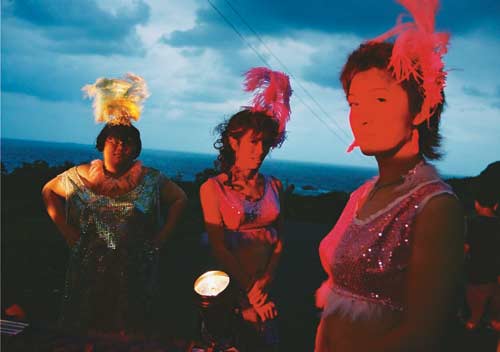
SPLENDID FLOAT tells the bittersweet story of a Taiwanese drag queen in love

SPLENDID FLOAT (YAN GUANG SI SHE GE WU TUAN) (Zero Chou, 2004)
New York Public Library for the Performing Arts
Dorothy and Lewis B. Cullman Center, Bruno Walter Auditorium
40 Lincoln Center Plaza (111 Amsterdam Ave. & 66th St.)
Thursday, June 16, free, 6:30
Series continues Thursday nights at 6:30 through June 30
www.nypl.org

Following more than a dozen documentaries, Zero Chou, Taiwan’s only openly lesbian filmmaker, made her feature-length debut with Splendid Float in 2004. The poignant work tells the bittersweet tale of Roy/Rose (James Chen), one of a group of drag queens who perform on a colorful float that plays waterside concerts as it makes its way across Taipei. By day he is a Taoist priest conducting funeral rites, while at night he transforms into a beautiful woman and sings heartbreaking and celebratory songs to a devoted crowd of men who revel in being able to unleash a side of themselves that is usually shunned in public. Roy falls instantly in love with Sunny, a young man who works in a fishing village with his mother but who decides to go on the road with Roy. But their burgeoning love comes to an abrupt halt when tragedy strikes and Roy is forced to reevaluate their relationship. Splendid Float begins with a steamy sex scene between Roy and Sunny that instantly challenges viewers’ expectations as it slowly becomes apparent that it is not a man and a woman making love, nor is it two women, but it is in fact two men. Unfortunately, Chou moves too fast through the rest of the film, which at seventy-one minutes is actually too short, awkwardly jumping from scene to scene without much-needed transition. Once again Chou reveals her tendency toward melodrama, as evident in such other works as Wave Breaker and Spider Lilies. Still, Chou offers a rare look at a part of Taiwanese culture rarely depicted on-screen. Splendid Float also began Chou’s use of one of the colors of the gay pride rainbow flag in each of her films; in this case, she features yellow. Splendid Float will be shown at the New York Public Library for the Performing Arts on June 16 at 6:30 as part of the series “Breaking the Waves: The Films of Zero Chou,” which continues June 23 with 2008’s Drifting Flowers and June 30 with 2001’s Corner’s.
MUSEUM MILE FESTIVAL

Multiple locations on Fifth Ave. between 82nd & 105th Sts.
Tuesday, June 14, 6:00 – 9:00 pm
Admission: free
www.museummilefestival.org

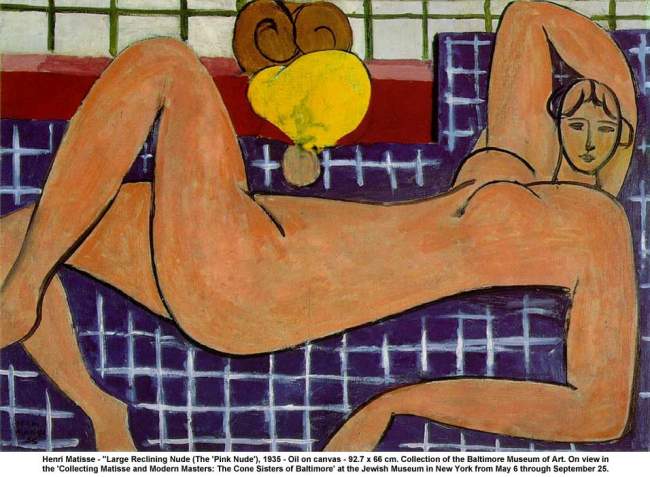
Once again, many of the city’s finest art institutions will open their doors for free for the thirty-third annual Museum Mile Festival, from 6:00 to 9:00 on Tuesday night, June 14. The participating museums (with one of their current shows listed here) include El Museo del Barrio (“El Museo’s Bienal: The (S) Files 2011”), the Museum of the City of New York (“Joel Grey / A New York Life”), the Jewish Museum (“Collecting Matisse and Modern Masters: The Cone Sisters of Baltimore”), the Cooper-Hewitt, National Design Museum (“Color Moves: Art & Fashion by Sonia Delaunay”), the Guggenheim (“The Hugo Boss Prize 2010: Hans-Peter Feldmann”), the Neue Galerie (“Vienna 1900: Style and Identity”), and the Met (“Richard Serra Drawing: A Retrospective”), along with the Goethe-Institut (which has moved downtown), Museum for African Art (which is opening later this year), and the National Academy (which is currently undergoing renovation). Fifth Ave. will be closed to vehicular traffic and instead will be filled with art activities (chalk drawing with De La Vega, live model drawing), street performances (clowns, jugglers, magicians), and live music and dance featuring P-STAR: the ABAKUÁ Afro-Latin Dance Company, the Folkloric Ballet of New York: Estampas Negras, Johnny Colón and His Orchestra, Paul Labarbera and Rockbeat Music Group, Quarteto Rodriguez Cuban Jewish Allstars, Kim Smith, and the Hayes Greenfield Jazz Duo. Don’t try to do too much; just pick one or two exhibitions in one or two museums and enjoy.

MALAYSIA RESTAURANT WEEK

Multiple locations
June 13-19, $20.11
www.malaysiakitchennyc.com

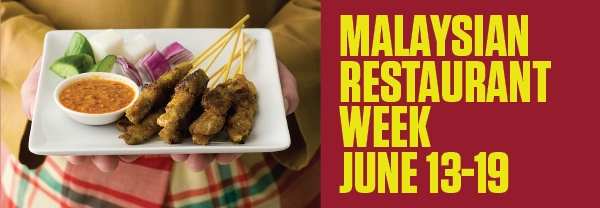
We fell in love with Malaysian food after spending a week in Bali and Singapore about ten years ago, delighting in its unusual mix of flavors and unexpected combinations. You can try such signature dishes as Hainanese chicken rice, char kway teow, teh tarik, mee goreng, laksa, ais kacang, nasi lemak, and murtabak during the second annual Malaysian Restaurant Week, which runs June 13-19, offering traditional dishes at Malaysian eateries as well as Malaysian specialties at other Asian establishments. There will be $20.11 meals available at more than two dozen restaurants in Manhattan, Queens, Connecticut, and New Jersey, including Laut, Sentosa, Penang, New Malaysia, Nyonya, Char Koon 1800, Forbidden City Bistro, and Fatty Crab and other specials at such restaurants as Sho Shaun Hergatt, Double Crown, and Stanton Social.

JAUME PLENSA: ECHO / ANONYMOUS

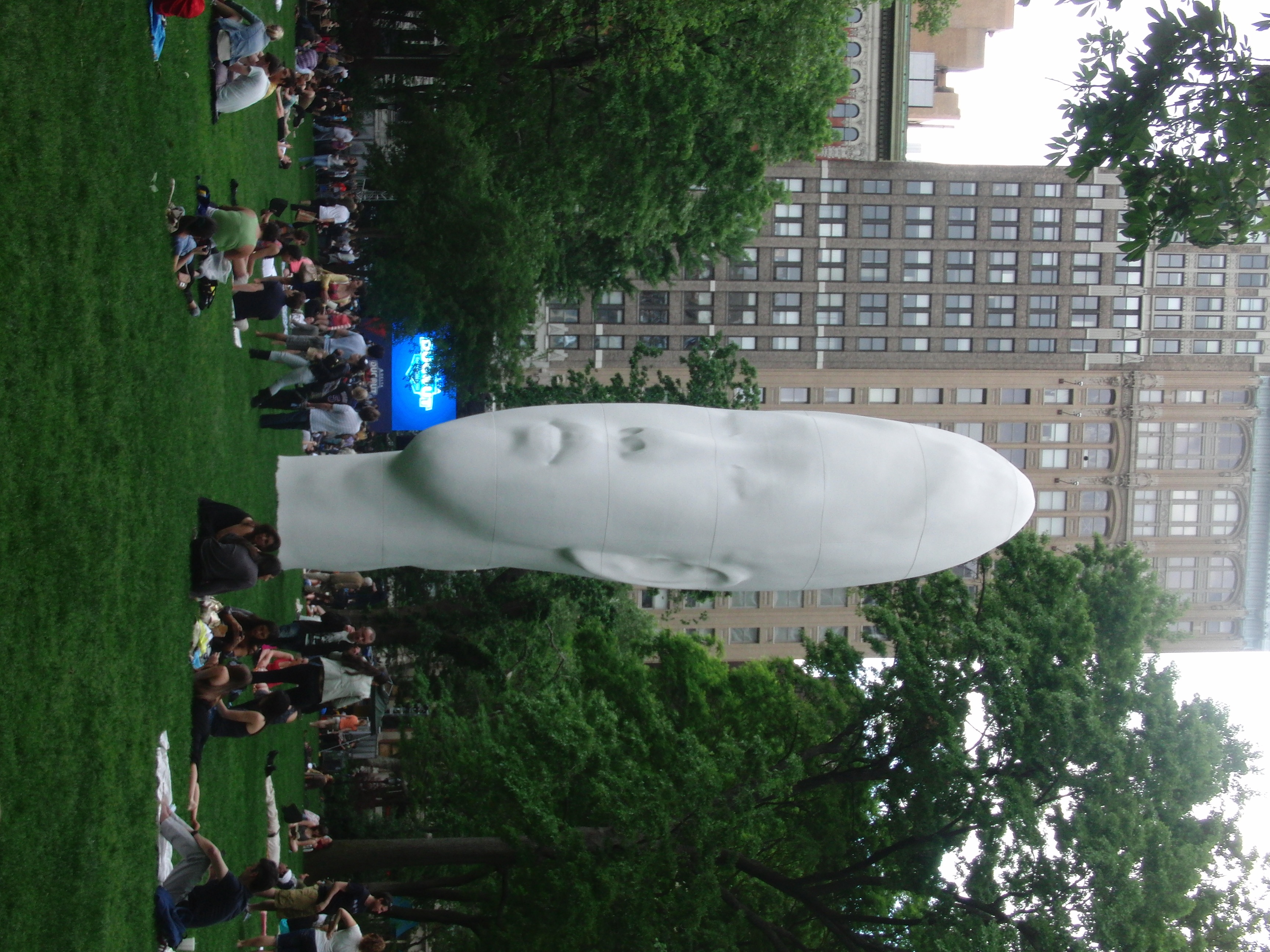
Jaume Plensa’s dazzling white “Echo” stands tall in the midst of the greenery of Madison Square Park (photo by twi-ny/mdr)

Galerie Lelong, 528 West 26th St., Tuesday – Saturday through June 18
Madison Square Park, Oval Lawn, through August 14 [extended through September 11]
Admission: free
www.galerielelong.com
www.madisonsquarepark.org

Barcelona artist Jaume Plensa, who has installed large-scale public sculptures in London, Zaragosa, Canada, Antibes, Chicago, Grand Rapids, Dubai, and Des Moines, at last makes his New York City debut with the intoxicating “Echo.” The forty-four-foot-high work, composed of marble, plastic, fiberglass, and white pigment and dusted in white marble, depicts the seven-layered elongated head of a nine-year-old girl, rising in the middle of Madison Square Park’s Oval Lawn, mimicking the surrounding buildings. Her eyes closed, the girl appears to be meditating, dreaming, or lost in deep thought, her whiteness in stark contrast to the lush greenery of the grass and trees around her. Plensa has carefully crafter her face, from the nose and full lips to the ears and even the braid in the back of her head. She adds to the peaceful respite the Oval Lawn offers, as people congregate around her, lie down on the grass, and nap in the sun. And at night she glows, with lights shining on her in the darkness. “Echo” will remain in the park through August 14. [Note: The installation has been extended through September 11.]

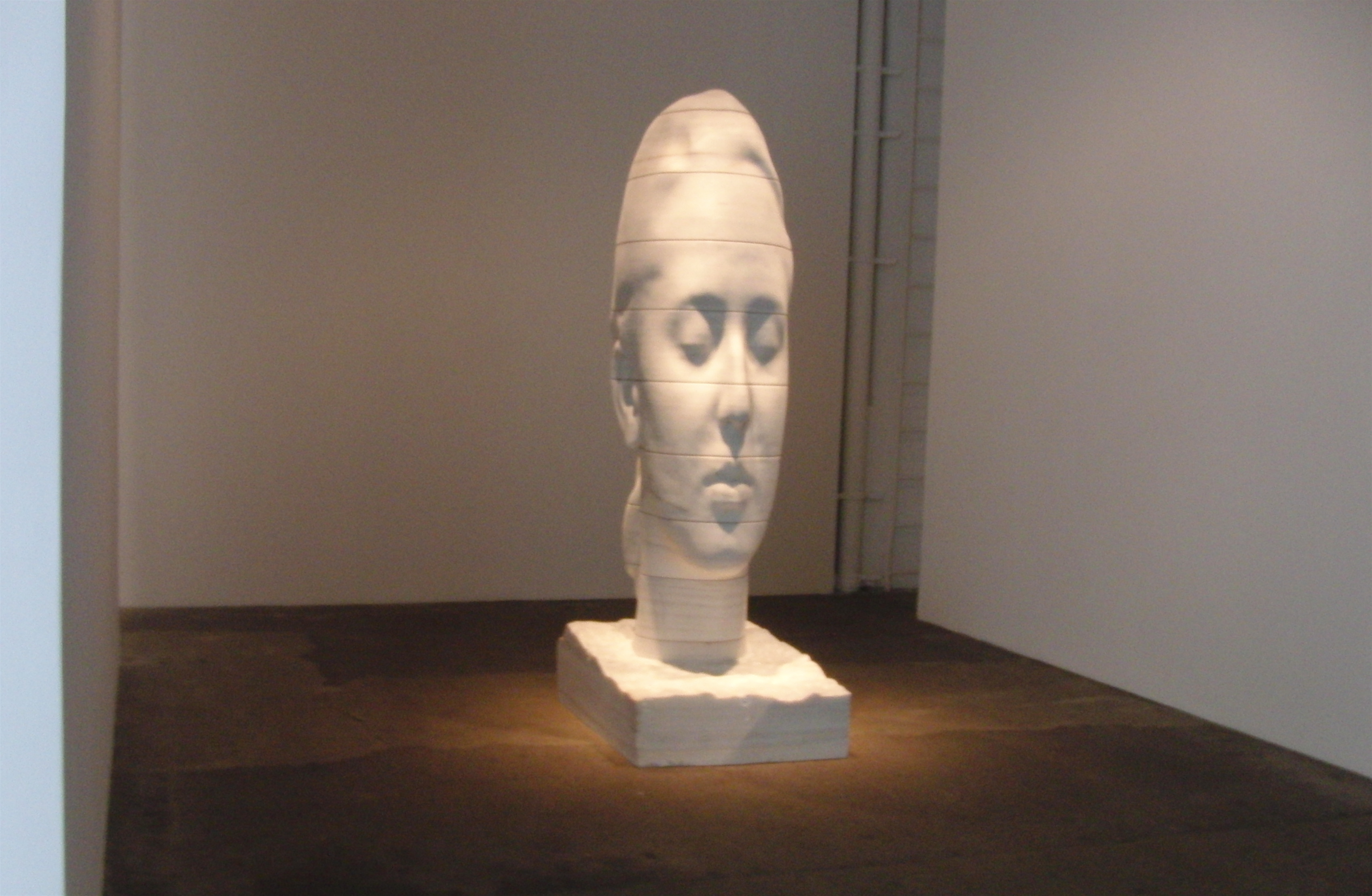
Jaume Plensa’s “Humming” is part of outstanding show at Galerie Lelong in Chelsea (photo by twi-ny/mdr)

Downtown in Chelsea, more of Plensa’s work is on view in the Galerie Lelong show “ANONYMOUS” (through June 18). In a small room in the front, “Humming” is another elongated sculpture of a female’s head, this one of an older woman and standing a mere eight feet high atop a small base, allowing visitors to get right in her face and examine every detail. As with “Echo,” it was created using a real model and 3D technology, although lead was added to the process here. The clearly delineated layers represent the different parts of the woman’s inner self, her divided psyche for all to see. In the main gallery, Plensa focuses on more faces, but in this case it is a collection of photographic works on paper that pair each image with a word, many of which are charged with meaning, such as “Beauty,” “Dread,” “Innocence,” “War,” “Spirit,” “Disease,” and “Humiliation” along with such “tamer” words as “Door,” “Night,” and the questions “Who?” and “When?” The italicization of the NY in the show’s name implies that these mixed-media portraits represent the melting pot that is New York, but the inclusion of the words and dirty, vertical brown stains that run down the paper and often across the faces plays off the idea of stereotyping, imbuing each image with mixed messages amid complex states of consciousness. It’s a powerful installation that works on several levels and an intriguing counterpoint to the sheer white beauty of “Humming” and “Echo.”

DINE AROUND DOWNTOWN

Chase Manhattan Plaza
Between Liberty & Pine and Nassau & William Sts.
Tuesday, June 14, 11:00 am – 3:00 pm
Admission: free, dishes $3-$7
212-566-6700
www.downtownny.com

Sponsored by the Downtown Alliance, the twelfth annual Dine Around Downtown will feature signature dishes from more than four dozen local downtown restaurants, from pizza places and burger joints to steak and seafood houses. Among the participating eateries are Battery Gardens, the Beekman Pub, the Bridge Café, the Capital Grille, City Hall, Delmonico’s, the Dubliner, Haru, Kitchenette, Les Halles, the Libertine, MarkJoseph, P.J. Clarke’s, Pound & Pence, Salud, Sequoia, Stella, Stone Street Tavern, Suteishi, Trinity Place, Ulysses’ Folk House, and Zeytuna. There will also be live entertainment. Each plate goes for $3 to $7, with proceeds benefiting the Alliance for Downtown New York, which “is striving to make Lower Manhattan a wonderful place to live, work, and play by creating a vibrant multi-use neighborhood.”

U.S. OPEN 2011

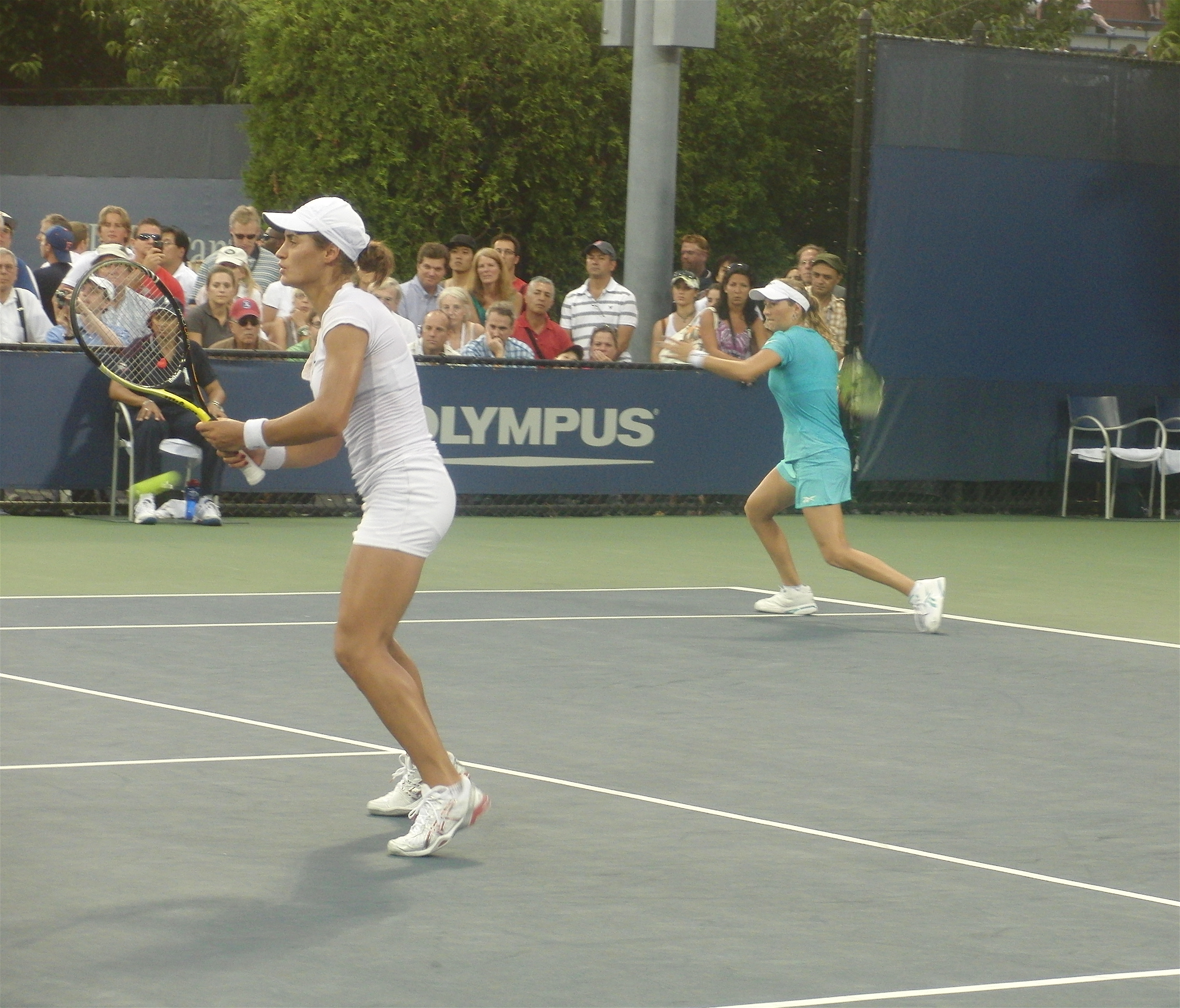
Doubles matches on the smaller courts offer tennis fans an up-close-and-personal perspective (photo by twi-ny/mdr)

USTA Billie Jean King National Tennis Center
Flushing Meadows Corona Park
August 29 – September 11, $36-$1,000
www.usopen.org

Tickets for one of New York City’s truly great annual events, the U.S. Open, go on sale Monday morning, June 13, at 9:00 am. Taking place at the USTA Billie Jean King National Tennis Center in Flushing Meadows Corona Park from August 29 through September 11, the Open features the best tennis players in the world converging on Queens, playing in Arthur Ashe Stadium, Louis Armstrong Stadium, the Grandstand, and smaller courts where you can watch thrilling matches at eye level. (You’ll never enjoy a doubles match as much as seeing it up close and personal.) Tickets begin at $36 for evening sessions and $58 for day sessions and head toward $1,000 for the finals; as always, if you go to a day session, you can stick around for all the night matches as well, except for the ones going on in Arthur Ashe. Defending champions Rafael Nadal, who won his first Open last year, and Kim Clijsters, who has lifted the winner’s trophy in 2005, 2009, and 2010, will be back, facing stern challenges from the likes of Novak Djokovic, Juan Martin Del Potro, and Roger Federer on the men’s side and Vera Zvonareva, Caroline Wozniacki, and the Williams sisters in the women’s brackets. The Open also features live concerts throughout the two weeks, with specific performers to be announced. Arthur Ashe Kids’ Day ($13-$44) is set for August 27, with appearances by celebrities from the worlds of tennis, music, movies, and more. Don’t hesitate; get your tickets now to an experience no New Yorker should miss.

RICHARD SERRA DRAWINGS: A RETROSPECTIVE

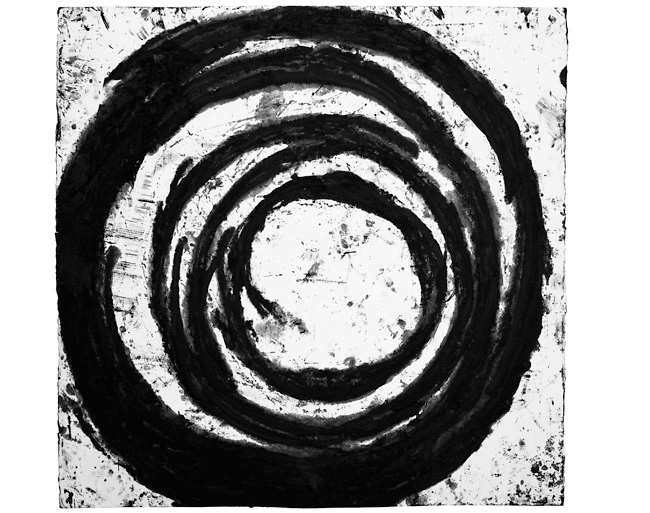
Richard Serra, “Pacific Judson Murphy,” paintstick on Belgian linen, 1978 (© Richard Serra / photo by twi-ny/mdr)

Metropolitan Museum of Art
The Tisch Galleries, second floor
1000 Fifth Ave. at 82nd St.
Tuesday – Sunday through August 28, $20
212-570-3949
www.metmuseum.org

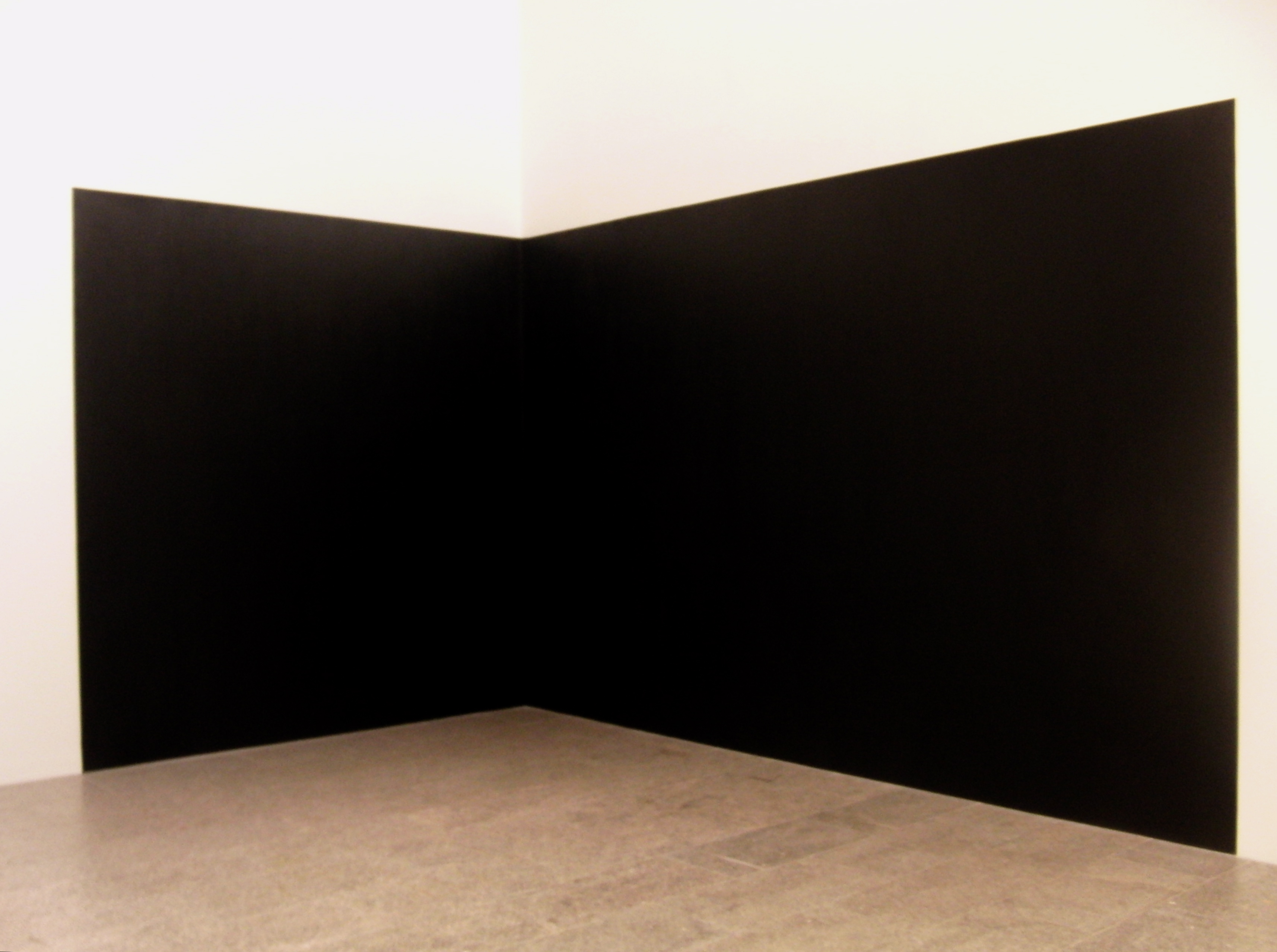
San Francisco-born conceptual artist Richard Serra does things in a big way. Based in New York City and Nova Scotia, Serra is justly celebrated for his enormous Cor-Ten steel curved plates that have been shown at the Gagosian in Chelsea and, most dramatically, at the Museum of Modern Art as the centerpiece of the 2007 retrospective “Richard Serra Sculpture: Forty Years.” But “Richard Serra Drawing: A Retrospective,” on view at the Metropolitan Museum of Art through August 28, sheds a whole new light on his creative thought process and working methods. In 1977, he famously said, “There is no way to make a drawing — there is only drawing.” But he’s more recently said of drawing, “It’s just another way of thinking.” Comprising nearly eighty works, this first-ever retrospective of Serra’s drawings, which is arranged more or less chronologically from a charcoal-on-paper drawing from 1971 to a site-specific piece commissioned for this exhibition, reveals how Serra once again re-creates and reimagines an artistic medium, taking it to new heights, both literally and figuratively. The majority of works were made using paintstick on such materials as Belgian linen, forged steel, and handmade paper. “I’d melt down paintstick, then flood a board or a table with the liquid paintstick and then lay down the screen on top of the heated material, lay the paper over that and work on the reverse side of the paper by applying pressure with a hard tool, usually a piece of metal,” Serra describes on the accompanying audio guide. “The drawings assume a variable density of the material through the liquid suction coming up through the screen, as a way of making a continuous repetitive mark without seeing what I was doing.” The resulting drawings emit a physicality that echoes much of his sculptural work, from “Heir,” which recalls one of his wall-leaning pieces, to “Blank,” an intriguing space in which a pair of ten-foot-by-ten-foot black squares, stapled to the wall, face each other, making the viewer feel like he or she is standing in between two of Serra’s huge plates.

Richard Serra, “September,” paintstick on handmade paper, 2001 (© Richard Serra / photo by Rob McKeever)

In fact, winding through the exhibit as a whole mimics the feeling of moving through Serra’s sculptural installations, only in black and white, but with a new surprise around every corner. A series of Robert Smithson-esque circular drawings, including “Black Tracks” and “September,” feature thick globs of paintstick. Such charcoals as “Giza Pyramids, Egypt” and “Le Corbusier, Notre Dame du Haut, Ronchamp, France” offer a much lighter touch. The round “Institutionalized Abstract Art” sits high on the wall like a black sun or black hole. The short 1968 videos Hands Scraping, Hand Catching Lead, Hand Lead Fulcrum, and Hands Tied predict the unusual function of the hand in Serra’s future oeuvre. The diptychs “The United States Courts Are Partial to Government” and “No Mandatory Patriotism” comment on Serra’s emotional reaction to the abrupt removal of the 1981 public art installation “Tilted Arc” from Federal Plaza downtown. And “Union,” commissioned for the retrospective, is composed of two floor-to-ceiling black rectangles that occupy their own room, a white wall between them, forming their own fascinating alley. Clearly, Serra likes doing things in a big way, and the Met Museum is indeed big, in more ways than one. In conjunction with the retrospective, the Met will host gallery talks with special consultant Magdalena Dabrowski on June 14 and 29 at 10:00 and with Ian Alteveer on July 12 & 27 and August 10 & 18. The films Art21: Richard Serra and Richard Serra: To See Is to Think will be screened on June 28 & 30 at 2:00, Judith Wechsler’s Drawing the Thinking the Hand will be shown July 26 & 28 at 2:00, and Serra’s Frame (1969), Railroad Turnbridge (1976), and Steelmill/Stahlwerke (1979) will be presented August 23 & 24 at 2:00, all free with museum admission. In addition, Serra will be at the Strand at 828 Broadway on June 14 at 7:00 talking about his work and signing copies of the exhibition catalog.