The always elegant Pascal Rioult will present two new works and repertory favorites at the Joyce this week
The Joyce Theater
175 Eighth Ave. at 19th St.
June 14-19, $10-$49
212-691-9740
www.joyce.org
www.rioult.org
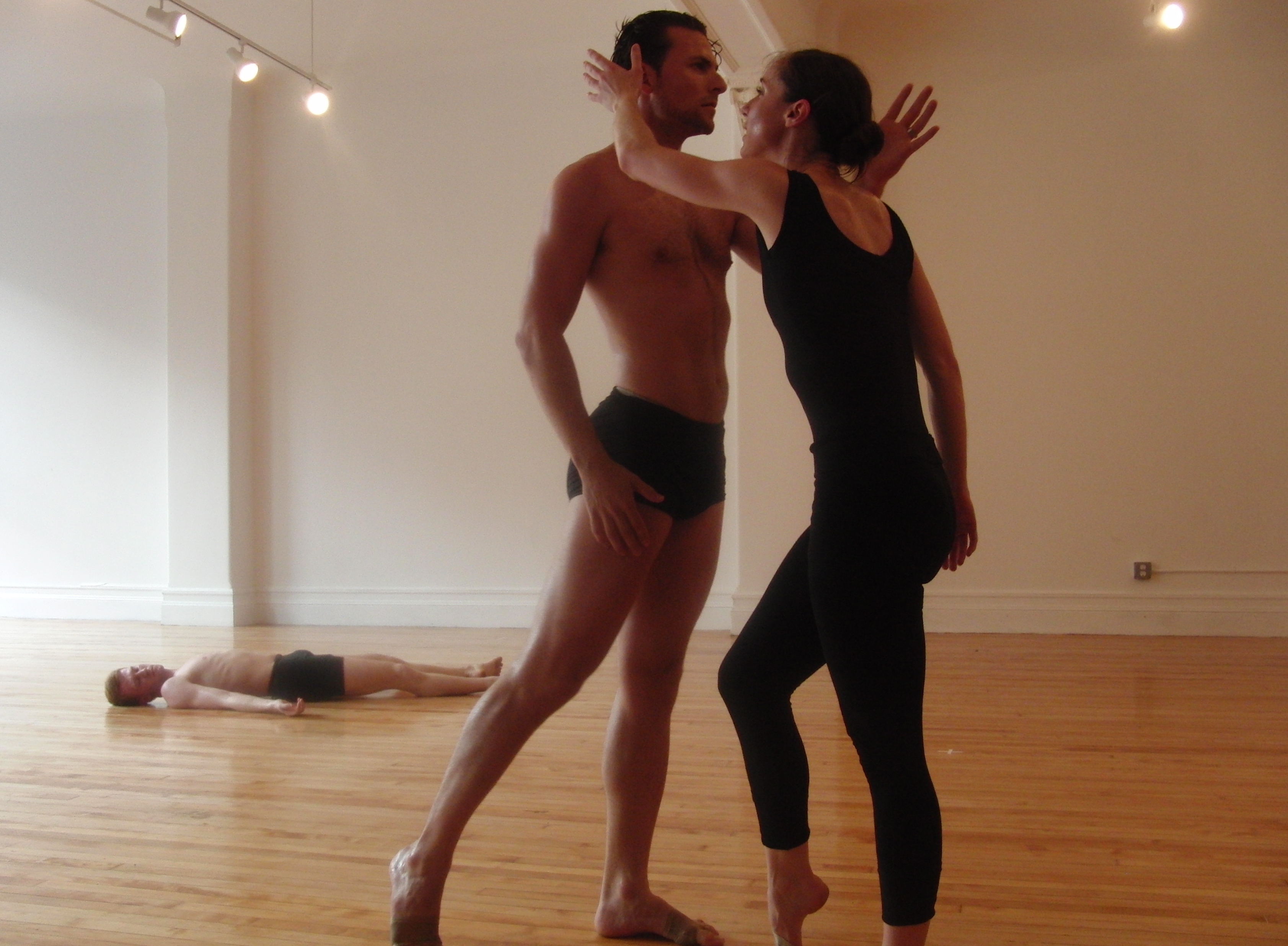
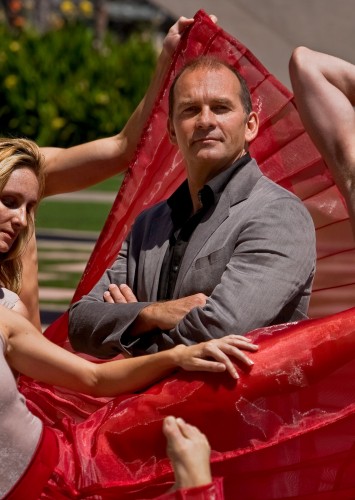
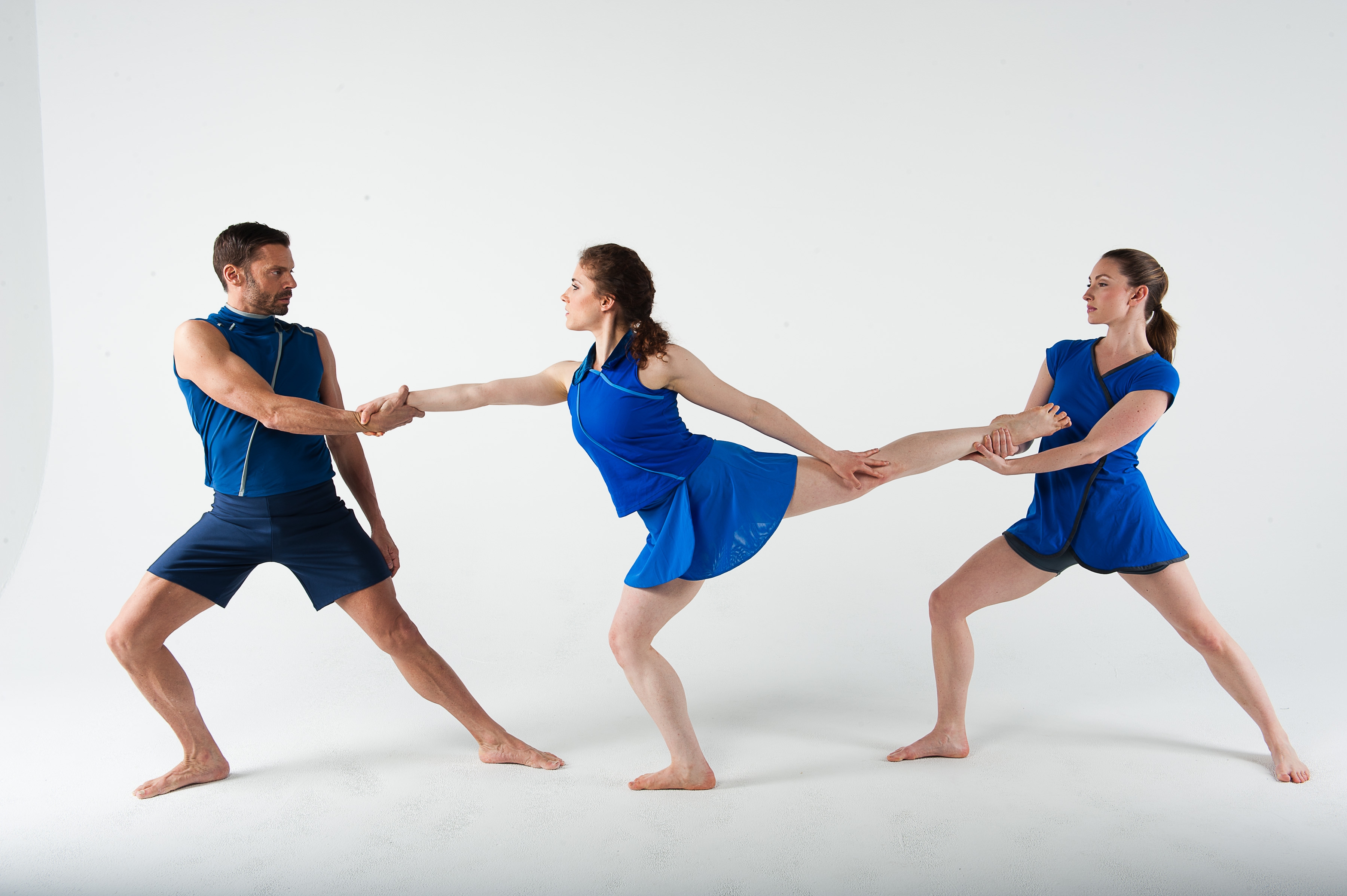
New York City–based French choreographer Pascal Rioult, who established himself as a performer dancing with May O’Donnell, Paul Sanasardo, and, most famously, Martha Graham in the late 1980s and early 1990s, formed his own company in 1994 and has been challenging the precepts of contemporary dance ever since. Favoring sensual movement set to classical music, Rioult has put together such thematic evenings as “The Ravel Project,” “The Stravinsky Program,” and “Bare Bach” that combine new works with reimagined and reinterpreted classics. For his upcoming season at the Joyce, running June 14-19, he will be presenting two programs: one consisting of the all-Bach Views of the Fleeting World (“The Art of Fugue”), City (“Sonata for Violin and Harpsichord #6 in G major”), and the world premiere of Celestial Tides (the Brandenburg Concerti), the second, performed to live music, featuring Black Diamond (Stravinsky), Bolero (Ravel), and the new On Distant Shores, a beautiful dance about Helen of Troy (a sparkling Charis Haines) with a commissioned score by Pulitzer Prize–winning composer Aaron J Kernis. After watching a sweaty rehearsal of On Distant Shores and Celestial Tides on an impossibly hot day, twi-ny met with the former track and field athlete, who graciously agreed to participate in a twi-ny talk as he prepared for his latest New York season.
twi-ny: You’ve devoted previous evenings to Ravel, Stravinsky, and Mozart, and you will be presenting a night of Bach at the Joyce. What are some of the specific challenges, as well as joys, in interpreting Bach onstage?
Pascal Rioult: I have always loved Bach’s music, instinctively and without understanding where the magic came from. It is specifically because of my intense work with the music of two great composition masters, Ravel and Stravinsky, in the past eight years that I felt it was time to “go to the source” of contrapuntal music and try to understand the great mystery of “Harmony.” (“Mysterium Harmonicum” was at the time of Bach an art and philosophy theory believing that there was some sort of mysterious forces that kept the Universe in balance and created a “Music of the Spheres” — a Divine Harmony.)
I love this concept in Art as in Life (I called the closing piece of the Bach program Celestial Tides). Certainly Bach’s mastery of counterpoint must come very close to this Divine Harmony.
But I also want with my dances to show that Bach’s music, contrary to common belief, is unbelievably rich emotionally.
twi-ny: Which composer might you have your sights set on next?
PR: I am not sure yet about which composer will be next, although I love Russian music and have not used it yet.
twi-ny: You also have the new series “Dance to Contemporary Composers,” which includes a newly adapted composition by Aaron J Kernis that will be performed live at the Joyce. How did that collaboration come about?
PR: It is time for me to work with contemporary composers (living composers). On the other hand, I suffer from not being able to have live music for my performances, which makes such a difference. So I decided to try to get support for the project of commissioning new music and have it played live for the next three years.
I have known and admired Aaron J Kernis’s music for many years, and we had wanted to collaborate for a while but did not get the opportunity yet. His music fits my concerns about the classical form as well as being filled with emotional content. I discussed with him my idea about a piece based on the character of Helen of Troy that I described as a “redemption fantasy.” We had to portray in a few minutes the epic of the Trojan war for the male heroes, then slip into the dream world created by Helen’s imagination and finish with a way to redemption. I knew it would be very rewarding to work with Aaron, and it has been a great collaborative experience resulting in a brilliant piece of music.
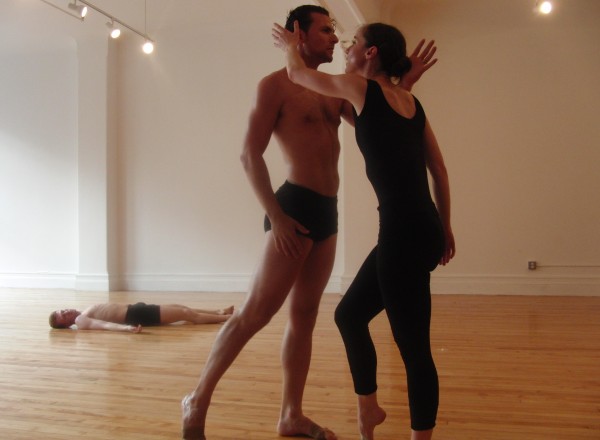
Michael Spencer Phillips and Charis Haines get hot and heavy rehearsing ON DISTANT SHORES in preparation for world premiere at the Joyce (photo by twi-ny/mdr)
twi-ny: What is it about Helen that drew you to her?
PR: I have always thought that Helen of Troy got a wrongful reputation. She would have been the cause of one of the most horrible wars that ever was, because she left her husband for another man. Was it not as usual the men’s unrelenting need of violence and conquest that drove them to Troy and made Helen a convenient pretext?
I found in the Euripides play Helen a similar version of the fact/myth. The mischievous gods had made a likeness of Helen from the clouds and that is the mirage that Paris took away to Troy, and it is for that “mirage” that so many lives were lost.
It was time for me to redeem Helen.
twi-ny: In addition to the obvious physical contact, your dancers make extraordinary, very emotional eye contact with one another while performing. Is that something you teach them? How important is that when you are choreographing a piece?
PR: As a matter of fact, I never give the dancers direction about expressions. On the contrary, I usually keep them from using facial expressions at all. Dancers do not need it because the expression comes forth through the body itself, from the inner core (you could say the inner self). Then the energy that creates the appropriate expression radiates towards the outside (including, at last, the face). You see, that is what we call “radiance,” “projection.” . . . You cannot help it if it comes from the right place. You don’t need to “put it on” and I don’t need to teach it.
I learned that from my mentor, Martha Graham.
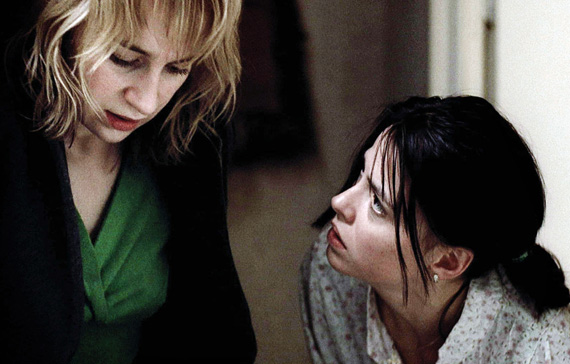
 Winner of the Palme D’Or at the 2007 Cannes Film Festival, Cristian Mungiu’s 4 Months, 3 Weeks and 2 Days is a harrowing look at personal freedom at the end of the Ceausescu regime in late-’80s Romania. Anamaria Marinca gives a powerful performance as Otilia, a young woman risking her own safety to help her best friend, Gabita (Laura Vasiliu), out of a difficult, dangerous situation. Their lives get even more complicated when they turn to Bebe (Vlad Ivanov) to take care of things. Cinematographer Oleg Mutu, who shot Cristi Puiu’s brilliant The Death of Mr. Lazarescu, keeps the camera relatively steady for long scenes, without cuts, pans, dollies, or zooms, as the actors walk in and out of view, giving the film a heightened level of believability without looking like a documentary. Set in a restrictive era with a burgeoning black market, 4 Months goes from mystery to psychological drama to thriller with remarkable ease — and the less you know about the plot, the better. Four Months is screening at MoMA on June 17 & 18 as part of the series “In Focus: IFC Films,” which continues with such films as Gus Van Sant’s Paranoid Park (2008), Lukas Moodysson’s Together (2001), Hirokazu Koreeda’s Nobody Knows (2004), and a sneak peek at Errol Morris’s Tabloid (2010).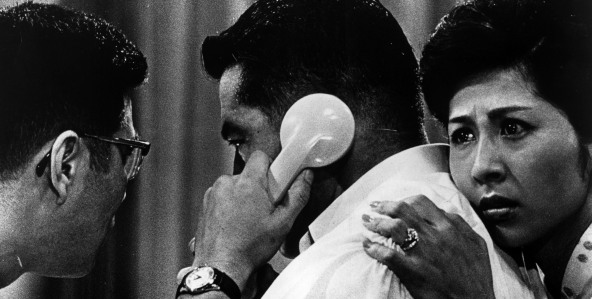
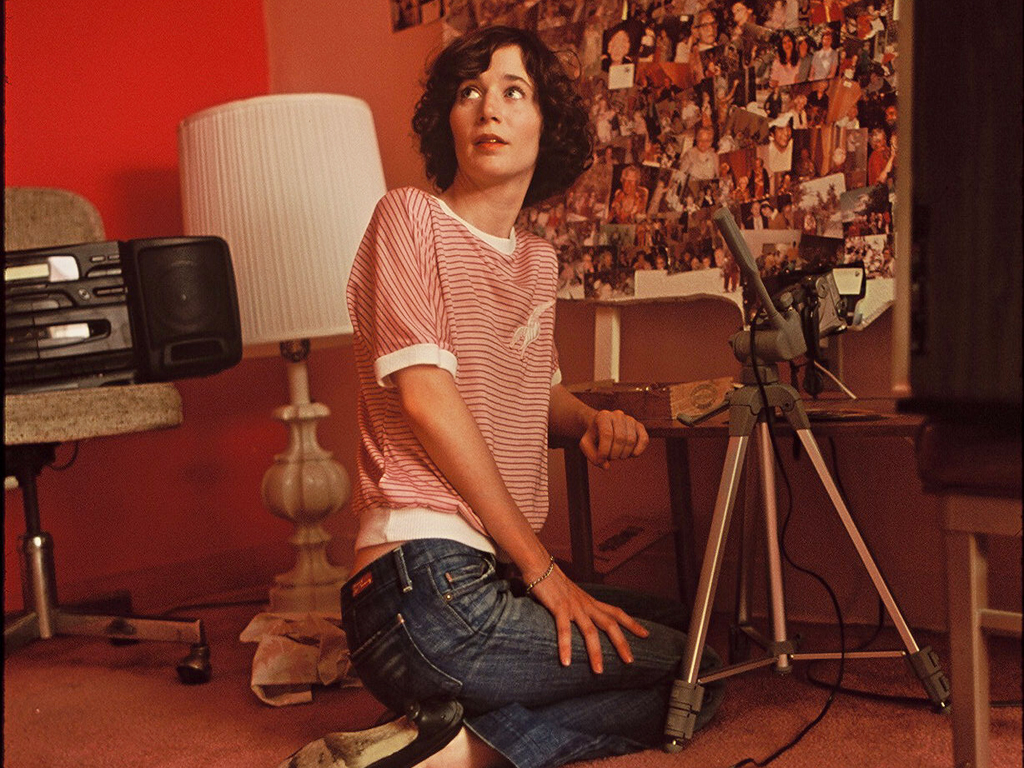
 Winner of a Special Jury Prize at Sundance “for originality of vision,” performance artist Miranda July’s feature-film directorial debut is a success from start to finish, an original, engaging, and utterly charming romantic comedy that is as unique as it is familiar. July, who also wrote the screenplay, stars as a quirky young performance artist who is looking for a relationship in her rather mundane life. She immediately falls for a shoe salesman (John Hawkes) who is separating from his wife and trying to understand his kids (Brandon Ratcliff and Miles Thompson), who are having a strange online dalliance with a mystery e-mailer. Meanwhile, two high school girls (Najarra Townsend and Natasha Slayton) are sexually tormenting a bizarre loner (Brad Henke) who is sexually tormenting them right back, both humorously and dangerously. It’s nearly impossible to take your eyes off of July, whose innovative audio and visual installations and short films have been shown at the Andy Warhol Museum, the Whitney Biennial, the Kitchen, Lincoln Center, the Museum of Modern Art, Union Square Park, and the Rotterdam International Film Festival, among many other prestigious places. Me and You and Everyone We Know is screening at MoMA on June 16 as part of the series “In Focus: IFC Films,” which continues with such films as Kevin McDonald’s Touching the Void (2003), Alfonso Cuaron’s Y tu mamá también (2001), Armando Iannucci’s In the Loop (2009), and Steven Soderbergh’s four-hour epic, Che (2008). MoMA will also present a sneak peek at July’s latest feature, The Future, on July 13 prior to its New York opening on July 29.