Jorge Michel Grau’s debut feature about a hungry Mexican family is a tasty little treat
WE ARE WHAT WE ARE (SOMOS LE QUE HAY) (Jorge Michel Grau, 2010)
IFC Center
323 Sixth Ave. at West Third St.
Opens Friday, February 18
212-924-7771
www.ifccenter.com
www.ifccenter.com
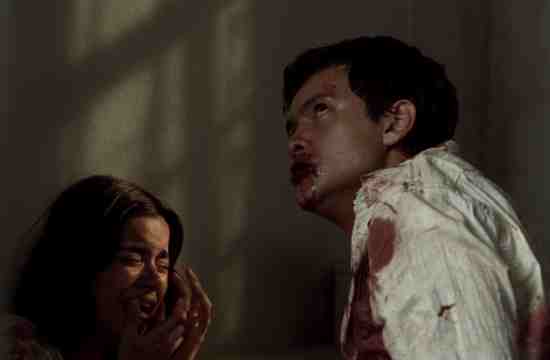
 There’s an old saying “You are what you eat,” and it couldn’t be more true of the protagonist family in Mexican writer-director Jorge Michel Grau’s debut feature, We Are What We Are (Somos lo que hay). A veteran of both the Cannes and New York Film Festivals, the creepy horror flick begins as a decrepit old man wanders through a mall, apparently drunk and sick. After dropping dead on the street, his body is quickly whisked away as if just another piece of trash, but when the medical examiner finds part of a finger inside the man’s body, a pair of corrupt cops are on the case. Meanwhile, the dead man’s wife, daughter, and two sons are really, really hungry, because Daddy was the one who always brought home the bacon, so to speak, which they would devour in ritualistic ceremonies. But now they’re bickering over who should be the hunter, where they should do their hunting, and how they should prepare their potential victims. With the cops closing in, the family’s in-fighting isn’t helping as the body count, including a fair amount of blood and gore, begins to rise. Starring Francisco Barreiro, Alan Chávez, Paulina Gaitán, and Carmen Beato, We Are What We Are is a tasty little treat that is no mere flavor-of-the-moment vampiric rip-off but an admirable homage to late-night Brava/Argento fare, with some social commentary thrown in for good measure.
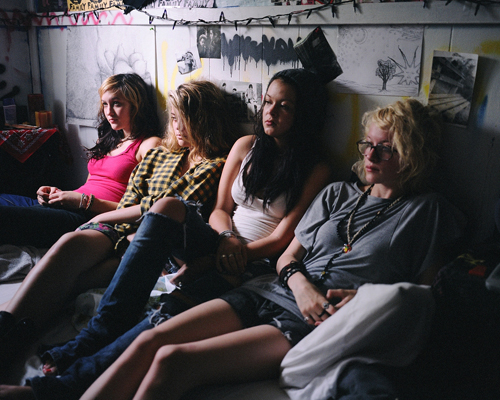
 The city of Baltimore has not exactly been depicted kindly in film and on television, with such series as Homicide: Life on the Street, The Wire, and The Corner: A Year in the Life of an Inner-City Neighborhood focusing on the rash of drugs and violence that have devastated the community, while native son John Waters has shown its wackier side in such films as Polyester and Hairspray. Born and raised in a suburb just inside the Baltimore city line, writer-director Matt Porterfield (Hamilton) has taken a different view in his second feature film, Putty Hill. When financing for his coming-of-age drama Metal Gods fell through, he decided to keep the cast and crew together and instead shoot a cinéma verité story about the after-effects of a young man’s drug overdose on a tight-knit community inspired by the one he grew up in. Not much is revealed about Cory as his funeral nears and life goes on, with his younger brother, Cody (Cody Ray), playing paintball with Cory’s friends; his uncle, Spike (Charles Sauers), tattooing customers in his apartment; and Spike’s daughter, Jenny (Sky Ferreira), returning to her hometown for the first time in several years and hanging out with her old friends like nothing much has changed. Working off a five-page treatment with only one line of scripted dialogue, Porterfield and cinematographer Jeremy Saulnier capture people just going on living, taking Cory’s death in stride; Porterfield interviews much of the cast, who share their thoughts and feelings in relatively unemotional ways. Shot on a minuscule budget in only twelve days, Putty Hill uses natural sound and light, nonprofessional actors, and real locations, enhancing its documentary-like feel, maintaining its understated narrative and avoiding any bombastic or sudden, big revelations. It’s a softly moving film, a tender tale about daily life in a contemporary American working-class neighborhood. The film opens today at Cinema Village and will include Q&As all weekend long, with such special guests as filmmakers Amos Poe (The Blank Generation), Jem Cohen (Benjamin Smoke), and Ross Kauffman (Born into Brothels), Yeasayer’s Chris Keating, film critics Jeronimo Rodriguez and Richard Brody, IFP’s Amy Dotson, and members of the cast and crew, followed by after-parties at Beauty Bar and Lit Lounge, with live performances by Co La, Dustin Wong, and Dope Body.