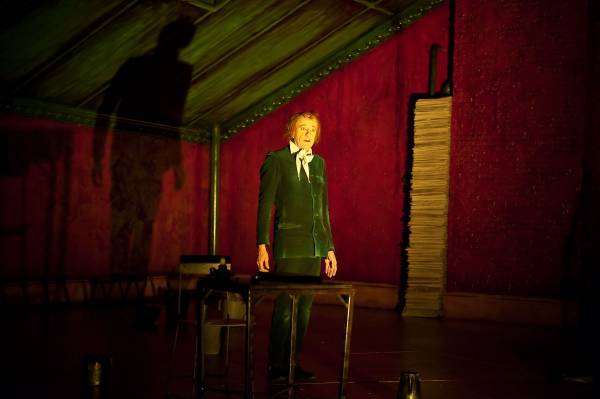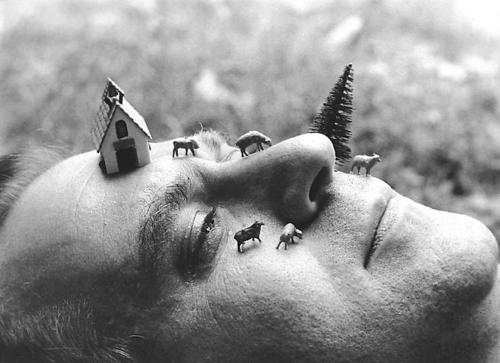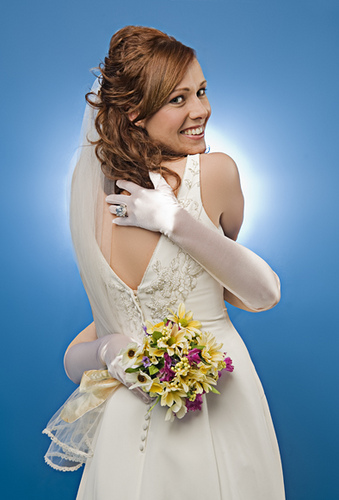
Christel Bartelse takes the audience on a very different kind of wedding and honeymoon in Frigid New York show ONEymoon
Kraine Theater, 85 East Fourth St.
Red Room, 85 East Fourth St.
Under St. Marks, 94 St. Marks Pl.
February 23 – March 6, $10-$16
www.frigidnewyork.info
The fifth annual Frigid New York offers lovers of indie experimental theater the chance to come in from the cold on the Lower East Side to experience short bursts of low-budget productions, with all tickets a mere $10-$16. Taking place at the Kraine Theater, the Red Room, and Under St. Marks, the official Fringe Festival presentation features thirty shows all running less than an hour, from emerging and established artists who will garner all the profits. Under St. Marks is home to the most provocatively titled shows, including Kevin J. Thornton’s I Love You (We’re F*#ked), Bricken Sparacino’s I’m Not Sure I Like the Way You Licked Me, Dutch Girl’s ONEymoon (A Honeymoon for One), and Tania Katan’s Saving Tania’s Privates. The Kraine Theater is getting in on the action as well, with Matthew Wells’s femme fatale noir homage Scarlet Woman, Ben Thompson’s bromance Fucking Girls, and Una Aya Osato’s one-woman show JapJAP; even Scott Durwood’s tamer-sounding Hi, How Can I Help You? is about dominatrixes. Not wanting to be left out in the cold, the Red Room is offering Jennifer Lieberman’s one-woman show, Year of the Slut. But not all of the productions deal with sex and sexuality or contain double-entendre titles; there’s also My Pal Izzy — The Early Life and Music of Irving Berlin, John Milton’s Paradise Lost, Wonder Woman: A How to Guide for Little Jewish Girls, Fate, Fury, and Musical Theatre: A Kind of Cabaret, and Yippie! Founded in 2007 by Horse Trade and EXIT Theatre, Frigid New York proclaims, “New York City is an indisputable hotbed of groundbreaking talent. We’re proud to once again provide this opportunity for ingenuity to thrive in a venue that values freedom of expression and artistic determination.”

 Throughout his professional career, which began with the 1997 underground hit Pickpocket, Sixth Generation Chinese writer-director Jia Zhang-ke has shuttled easily between documentaries (Useless, 24 City) and narrative features (The World, Still Life) — and it’s not always obvious which is which, as his steady, poetic style is built on subtlety, slow rhythms, and an innate sense of realism (and he freely mixes fantasy and reality as well). His latest documentary, the Cannes Film Festival Un Certain Regard selection I Wish I Knew, adds elements of fiction to its compelling examination of the intimately personal side effects that resulted from the Chinese civil war and Cultural Revolution, as many people left Shanghai for Taipei and Hong Kong. Jia and interviewer Lin Xudong meet with elderly men and women who tell tragic stories of family and friends being murdered and executed by the government; an especially poignant scene is set at a community gathering where senior citizens dance to Dick Haymes’s version of the old standard “I Wish I Knew”; one of the interviewees sings into the camera, “I wish I knew someone like you could love me / I wish I knew you place no one above me / Did I mistake this for a real romance? / I wish I knew, but only you can answer,” which could be as much about a personal relationship as the revolution itself. Jia also talks with several filmmakers and actresses, from Hou Hsiao-hsien and Wang Toon to Huang Baomei, Rebecca Pan, and Wei Wei, illustrating how Shanghai has been depicted on film with clips from such movies as Hou’s Flowers of Shanghai, Xie Jin’s Huang Baomie, Wang’s Red Persimmon, Lou Ye’s Suzhou River, Wang Bing’s To Liberate Shanghai, Wong Kar-wai’s Days of Being Wild, and Michelangelo Antonioni’s Cina. As the nearly two-hour documentary reaches its conclusion, they interview younger people, including bestselling writer, blogger, and race-car champion Han Han, who don’t share the same conflicted memories of communism and the Cultural Revolution, instead praising an evolving modern-day capitalistic Shanghai that has brought them vast wealth, with no interest in the past of Deng Xiaoping, Mao Zedong, and Chiang Kai-shek. Throughout the film, Jia’s onscreen muse, Zhao Tao, who has appeared in six of his previous works, walks through contemporary Shanghai, pausing as she languidly looks out over the ever-changing city, where intensely poor neighborhoods are being torn down right around the corner from massive construction projects. Commissioned for the 2010 World Expo held in Shanghai, I Wish I Knew might not have been quite what the expo folk expected, but then again, they did give carte blanche to Jia, who never takes the easy way out, creating yet another complex, confusing, and controversial cinematic experience.