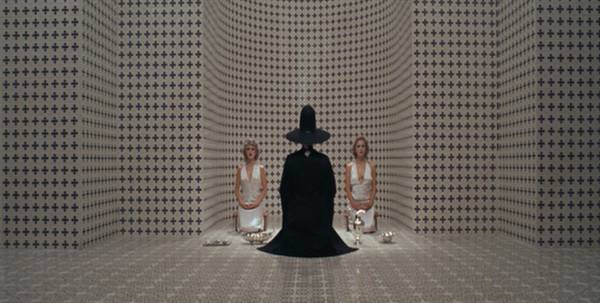
The beautiful weirdness never ends in Jodorowsky cult classic THE HOLY MOUNTAIN
THE HOLY MOUNTAIN (Alejandro Jodorowsky, 1973)
IFC Center
323 Sixth Ave. at West Third St.
Friday, April 22, and Saturday, April 23, $13, 12:10 am
212-924-7771
www.ifccenter.com
 For the third time in about a month, this rarely screened cult classic is being shown in the city, so you have no excuse to miss it yet again. Inspired by Rene Daumal’s Mount Analogue: A Novel of Symbolically Authentic Non-Euclidean Adventures in Mountain Climbing, Alejandro Jodorowsky’s The Holy Mountain also involves symbolically non-Euclidean adventures in mountain climbing, funneled through Carlos Castaneda, Stanley Kubrick’s 2001: A Space Odyssey, and magic mushrooms and LSD galore. What passes for narrative follows a Jesus look-alike thief (Horacio Salinas) and an alchemist with a thing for female nudity (Jodorowsky) on the path to enlightenment; along the way they encounter the mysterious Tarot, stigmata, stoning, eyeballs, frogs, flies, cold-blooded murder, naked young boys, chakra points, life-size plaster casts, Nazi dancers, sex, violence, blood, gambling, turning human waste into gold, death and rebirth, and the search for the secret of immortality via representatives of the planets, each with their own extremely bizarre story to tell. Jodorowsky, who is credited with having invented the midnight movie with the acid Western El Topo (1970), literally shatters religious iconography in a kaleidoscopic whirlwind of jaw-droppingly gorgeous and often inexplicable imagery composed from a surreal color palette, set to a score by free jazz trumpeter Don Cherry and Archies keyboardist Ron Frangipane. (Frangipane also worked with John Lennon and Yoko Ono, who produced this film with their business manager, Allen Klein.) The Holy Mountain — which brings a whole new insight to Matthew Barney’s Cremaster Cycle — is filled with psychedelic mysticism centered around the human search for transcendence in a wilderness of the sacred and profane. Jodorowsky’s work can move you deeply, but don’t expect it to make much sense. Sit back and let in pour in and over you — you’ll feel it. You may hate it, but you’ll feel it. Although you’ll definitely hate the very end.
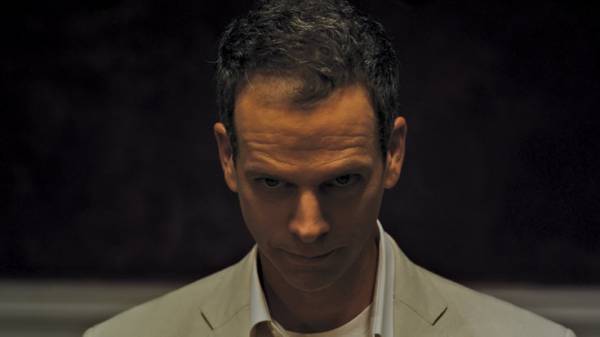
 There’s something not quite right about the Smiths, and first-time writer-director Philip Gelatt isn’t about to share their deep, dark secret until he’s good and ready in the psychological horror-thriller The Bleeding House. Mother Marilyn (Betsy Aidem), father Matt (Richard Bekins), eighteen-year-old son Quentin (Charlie Hewson), and sixteen-year-old daughter Gloria (Alexandra Chando), who only responds when called Blackbird, are living a cloistered life in a lonely house in the Texas woods, exiled by the community ever since a neighbor’s place mysteriously burned down, with the family inside. When a very odd southern gentleman named Nick (Patrick Breen) shows up at their doorstep one evening, asking to stay for the night because his car broke down, Marilyn at first refuses to allow a stranger into their midst but soon changes her mind, deciding that it might be good karma for the Smiths to help out a person in need, and boy do they need some good karma. But when they ask Nick, who is all dressed in white and speaks in an affected voice, what he does for a living and he says he cuts up people, well, things do not necessarily appear like they’re about to go the Smiths’ way. Gelatt provides plenty of twists on the slasher genre in The Bleeding House, eschewing sudden shocks, chase scenes, loud music, and ear-piercing screams in favor of a relaxed, calm pace, a subtle score by Hildur Guðnadóttir, and more intellectual thrills and chills reminiscent of the Showtime series Dexter. It doesn’t get much more creepy than the way Nick addresses Blackbird, saying her name in a way that is both menacing and mothering as he comes to learn that she is at the heart of the family’s secret. Making its world premiere at the Tribeca Film Festival, The Bleeding House is bloody good fun. (Gelatt will be at the Apple Store on Prince St. on April 25 at 6:00 for a free Meet the Filmmakers program.)

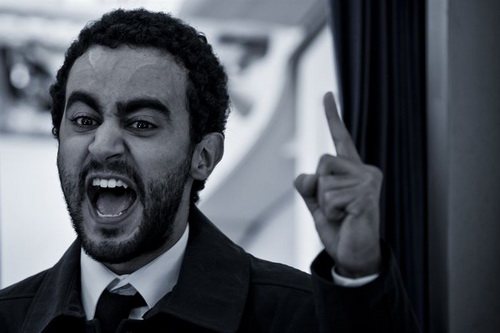
 French director Julien Leclercq re-creates an infamous 1994 hijacking in the action thriller The Assault. On Christmas Eve, four members of the Algerian Armed Islamic Group (the GIA) boarded Air France Flight 8969 at Algiers’ Houari Boumedienne Airport and took the crew and 227 passengers hostage, demanding the release of two imprisoned Islamic Salvation Front leaders. Leclercq (Chrysalis) and screenwriter Simon Moutaïrou tells the story like a police procedural as the heavily armed terrorists begin killing passengers when their plan goes awry and they do not immediately get what they want. Meanwhile, the French Interior Ministry and the National Gendarmes Intervention Group (GIGN) are debating their response, including a possible all-out raid on the plane. Leclercq focuses on SWAT team member Thierry Prugnaud (Vincent Elbaz), whose wife (Marie Guillard) prays for his safe return; Yahia Abdallah (Aymen Saidi), a cold-blooded terrorist fiercely dedicated to his cause; and Carole (Melanie Bernier), a ministry worker who risks her career by taking charge. Although technically adept, The Assault lacks emotional resonance. The depiction of the relationship between Thierry and his wife and daughter feels forced, more of a soapy aside than an integral part of the film. There is little subtlety in evidence and plenty of clichés, with the hijackers representing pure evil, the GIGN officers primarily faceless, machinelike automatons, and the politicians overly concerned about themselves and how this will look to the world. The events, which were broadcast live in France, are quite remarkable, but Leclercq ends up draining them of much of their power, resulting in a surprisingly cold tale.