City Winery
155 Varick St. at Vandam St.
Monday, April 25, $10, 8:00
212-608-0555
www.citywinery.com
www.brucespringsteen.net
 After the breakout success of Born to Run in 1975, Bruce Springsteen became embroiled in a lawsuit over control of his music that prevented him from going into the studio to make the highly anticipated follow-up. Springsteen found himself at a crossroads; “You didn’t know if this would be the last record you’d ever make,” he says in the revealing behind-the-scenes documentary The Promise: The Making of Darkness on the Edge of Town. Combining archival footage of the Darkness sessions shot by Barry Rebo with new interviews with all the members of the E Street Band in addition to producers Jimmy Iovine, Jon Landau, and others, editor and director Thom Zimny melds Bruce’s past with the present, delving deep into Springsteen’s complex, infuriating, and fiercely dedicated creative process. “I had to disregard my own mutation,” Springsteen says at one point, regarding his battle to avoid getting caught up in the hype that came with Born to Run, so he decided that his next album would be “a meditation on where are you going to stand.” Rebo captures Springsteen and the E Street Band — from a bare-chested Bruce to a bandanna-less Steve Van Zandt — rehearsing and recording alternate takes of familiar songs as well as tunes that would later wind up on such albums as The River and Tracks, opening up Bruce’s famous notebooks and examining his intense creative process, which included throwing away dozens and dozens of songs that he believed just didn’t fit within his vision of what Darkness should be. Two of the most fascinating parts of the The Promise involve Patti Smith discussing “Because the Night,” which is about her waiting for her boyfriend at the time, Fred “Sonic” Smith, to call her, and Toby Scott talking about mixing the Darkness record to get the sound pictures in Bruce’s head onto vinyl. The Promise: The Making of Darkness on the Edge of Town is screening April 25 at 8:00 at City Winery as a benefit for the American Red Cross, with all proceeds going to Japanese tsunami and earthquake relief; the screening is just one of many being held around the country over the coming week, all of which will include special giveaways.
 Avant-garde filmmaker Bill Morrison (Decasia) collaborates with Icelandic musician and composer Jóhann Jóhannsson in the elegiac The Miners’ Hymn, a tribute to the now-gone collieries, or coal mines, of Northeast England. The fifty-two-minute documentary opens with new aerial shots of the locations where the Durham coal mines were, since replaced by luxury housing and megastores. The film shows the birth and death dates of several collieries going back to the nineteenth century, then seamlessly blends into archival black-and-white footage of the miners at work underground, the community coming together for a local fair, and a union rally during a strike that includes a confrontation with the police. There is no text and no narration in The Miners’ Hymn; instead, Morrison’s savvy editing of the found footage, consisting of both moving pictures and still photographs primarily acquired through the British Film Institute and the BBC, brings the old-fashioned town and its old-fashioned ways to vibrant life even though they roll across the screen in slow motion. Jóhannsson’s score punctuates the proceedings with an occasional brassy flare when not sounding more funereal. Despite the lack of text and narration, Morrison’s point of view is clear and all too obvious, paying homage to something that has been lost, and he is never quite able to make an emotional or personal connection with the viewer. However, The Miners’ Hymn contains remarkable footage that still manages to tell an important story, even if it is one-sided and lacking at least a little more historical context.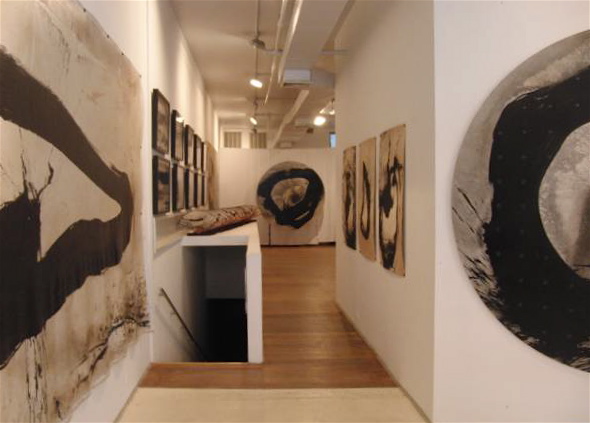

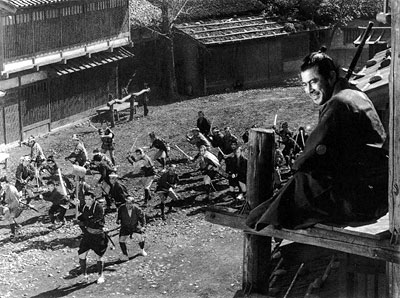
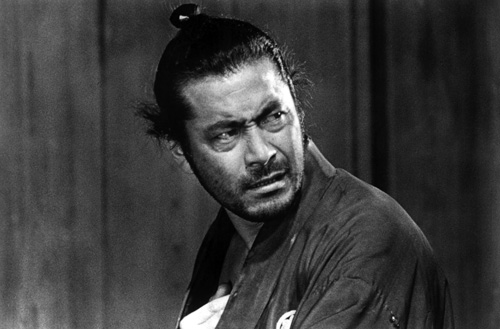
 Toshirō Mifune is a lone samurai on the road following the end of the Tokugawa dynasty in Akira Kurosawa’s unforgettable masterpiece. Mifune comes to a town with two warring factions and plays each one off the other as a hired hand. Neo’s battles with myriad Agent Smiths are nothing compared to Yojimbo’s magnificent swordfights against growing bands of warriors that include one man with a gun. Try watching this film and not think of several Clint Eastwood Westerns (particularly Sergio Leone’s A Fistful of Dollars, since this is a direct remake of that 1964 Italian flick) as well as High Noon. Yojimbo will be screening at 11:00 am on April 22, 23, and 24 as part of the IFC Center’s Weekend Classics — Kurosawa series, which continues next week with the Kurosawa-Mifune follow-up Sanjuro.