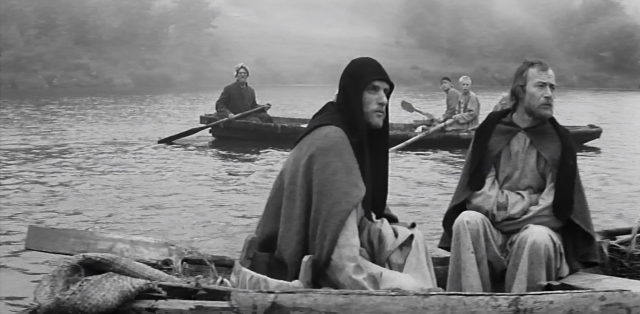
Icon painter Andrei Rublev (Anatoly Solonitsyn) takes off on an epic journey in Soviet masterpiece
ANDREI RUBLEV (ANDREY RUBLYOV) (Andrei Tarkovsky, 1966)
Film Society of Lincoln Center, Walter Reade Theater
144 West 65th St. between Eighth Ave. & Broadway
August 24-30
212-875-5050
www.filmlinc.org
 In May 2017, the Film Society of Lincoln Center’s exclusive presentation of the Mosfilm 2K digital restoration of Andrei Tarkovsky’s 1979 sci-fi masterpiece, Stalker, broke the opening-weekend box-office record at the arts institution. That was followed the same month by the digital restoration of Tarkovsky’s 1972 Solaris. Next up from Mosfilm and Janus is a restoration of Tarkovsky’s preferred 183-minute version of his epic Andrei Rublev, which arrives August 24 for a one-week Revival Run at the Walter Reade Theater. In 1966, Soviet auteur Tarkovsky followed up his dazzling debut, Ivan’s Childhood, with Andrei Rublev, a quietly powerful tale of a monk and icon painter making his way through early fifteenth-century Russia. But it is much more than a historical, biographical look at the real-life figure during the creation of tsarist Russia. “I knew it would certainly not be a historical or biographical work,” Tarkovsky wrote in his 1986 book Sculpting in Time. “I was interested in something else: I wanted to investigate the nature of the poetic genius of the great Russian painter. I wanted to use the example of Rublyov to explore the question of the psychology of artistic creativity, and analyse the mentality and civic awareness of an artist who created spiritual treasures of timeless significance.”
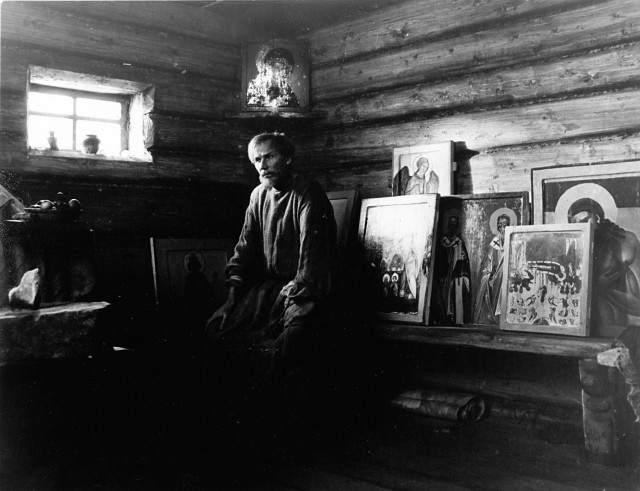
Tarkovsky classic explores the nature of faith and sin and art and creativity as seen through the eyes of several Russian icon painters
The film begins with a seemingly unrelated prologue in which a man named Yefim (Nikolay Glazkov) takes off in a hot-air balloon as the townspeople try to prevent him from flying, as if he is defying God by soaring in the sky. Tarkovsky then spreads out his tale over the course of eight vignettes, some of which feature Rublev (Anatoly Solonitsyn) as a minor character, more of a background observer than the protagonist. A gentle, slow-moving man with a deep contemplation of existence, Rublev, along with his traveling companions and fellow painters Daniil (Nikolai Grinko) and Kirill (Ivan Lapikov), encounters a skomorokh (Rolan Bykov) performing in a barn before being interrupted by the authorities; meets up with aging master Theophanus the Greek (Nikolai Sergeyev); has a falling-out with Kirill; is joined by a new apprentice, Foma (Mikhail Kononov); comes upon a pagan bacchanalia in the woods; befriends the beautiful holy fool Durochka (Irma Raush, Tarkovsky’s wife at the time); finds himself in the middle of a power struggle between the grand prince and his brother, leading to a brutal Tatar invasion; takes a vow of silence after committing a major sin; and watches as a young boy, Boriska (Nikolai Burlyayev, who played Ivan in Tarkovsky’s feature debut), leads the construction of a church bell in a small town, the ropes surrounding the lifting of the bell referencing the ones that Yefim hung from earlier, each trying to get closer to God in their own way.
At a surprisingly fluid pace despite the film’s length, Tarkovsky and cowriter Andrei Konchalovsky (Runaway Train, Maria’s Lovers) explore such issues as sin, guilt, fear of God, vanity, loyalty, jealousy, poverty, and the search for truth, with Rublev often more of a secondary character or commenter. “People should be reminded that they are human beings, that the Russian people are of one blood and one land. Evil is everywhere around. And there are always those who would sell you for thirty coins,” the cynical Kyrill tells Theophanus as Andrei takes part in a passion procession. “New trials are heaping on the Russian men — Tatars, famine, pestilence. But they keep on working. And carrying their cross humbly. They never despair but resign themselves to their fate, only praying to God to give them strength. Won’t the Most High forgive them their ignorance?” Tarkovsky employs many of the visual leitmotifs first seen in Ivan’s Childhood and used throughout his career, including numerous scenes with horses, water, tree roots, and dense forests, beautifully photographed by Vadim Yusov in black-and-white. Among the many memorable images: Paint spills into a river, Andrei pets a bird under a tree in the wind, and the bell is cast as if rising from the fiery pits of hell. Several moments involve brutal violence and torture, particularly of animals; Tarkovsky defended his treatment of one horse that he pushed down an outdoor staircase and is actually killed onscreen. Color brightens the epilogue of the film as Tarkovsky and Yusov lovingly pan across many of Rublev’s actual icon paintings in a kind of artistic creative epiphany. Twice during the film, a poetic masterpiece that can often be found on lists of the best films ever made, Andrei looks directly at the camera, right at the viewer, as if he can see us, imploring us to take heed of his mission. It is nearly impossible not to follow him.
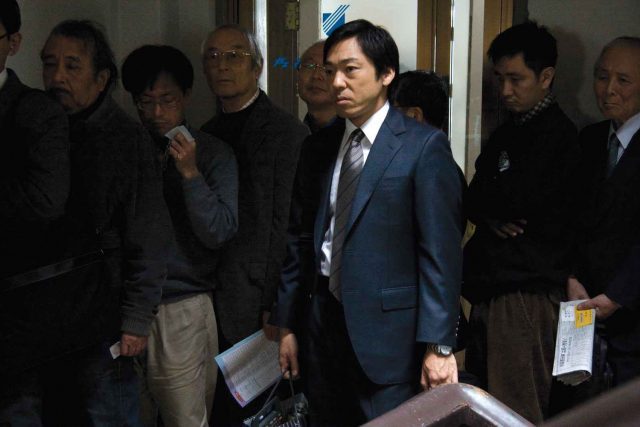
 Winner of the Un Certain Regard Jury Prize at Cannes, Tokyo Sonata serves as a parable for modern-day Japan. Ryuhei Sasaki (Teruyuki Kagawa) is a simple family man, with a wife, Megumi (Kyōko Koizumi), two sons, Takashi (Yu Koyanagi) and Kenji (Kai Inowaki), and an honest job as an administration director for a major company. When Ryuhei is suddenly let go — he is being replaced by much cheaper Chinese labor — he is so ashamed, he doesn’t tell his family. Instead, he puts on his suit every day and, briefcase in hand, walks out the door, but instead of going to work, he first waits on line at the unemployment agency, then at an outdoor food kitchen for a free lunch with the homeless — and other businessmen in the same boat as he is. Taking out his anger on his family, Ryuhei refuses to allow Kenji to take piano lessons and protests strongly against Takashi’s desire to join the American military. But then, on one crazy night — which includes a shopping mall, a haphazard thief (Koji Yakusho), a convertible, and some unexpected violence — it all comes to a head, leading to a brilliant finale that makes you forget all of the uneven missteps in the middle of the film, which is about a half hour too long anyway.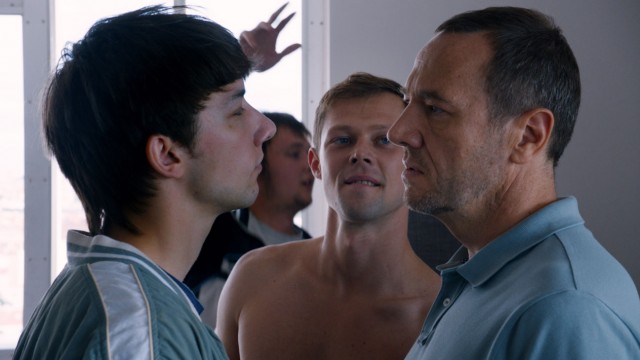
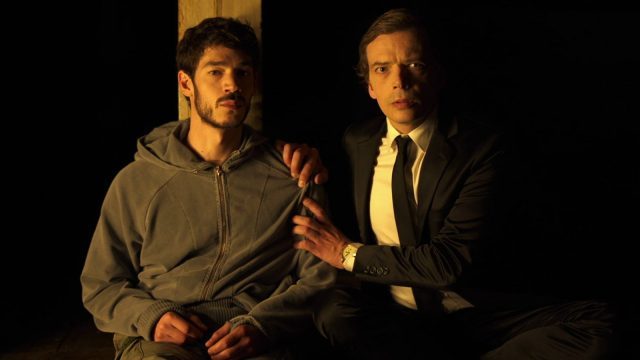
 Robin Campillo takes a genuinely compassionate look at immigration, home invasion, and sexual obsession in the compelling, always surprising Eastern Boys. Seeking out companionship, middle-aged Daniel (Olivier Rabourdin) spots young Marek (Kirill Emelyanov) and cruises him at the Gare du Nord station in Paris. They set up a paid rendezvous at Daniel’s apartment for the next day, but Marek’s arrival is preceded by that of his primarily male friends from Eastern Europe, illegal immigrants who begin taking things from Daniel’s place as they dance and drink; it’s a heartbreaking party scene, with Daniel not knowing how to react, an implicit if not overt threat to his physical well-being hovering over the thick atmosphere. But when Marek eventually does show up, Daniel is desperate for his attention, still determined to be alone with him, an attraction that has dangerous consequences.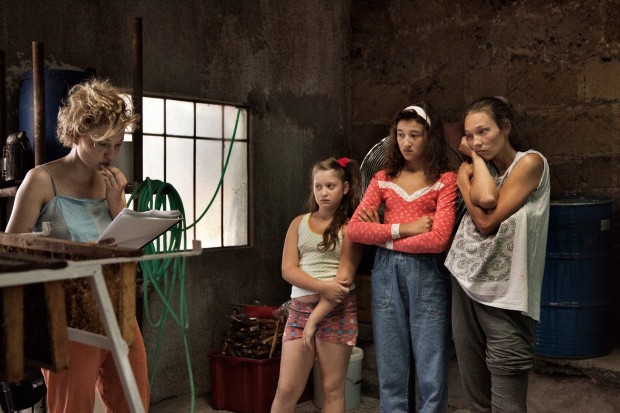
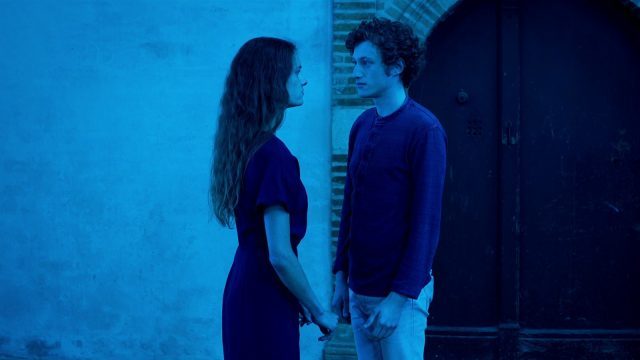
 Winner of the Grand Prix at the Cannes Film Festival, Alice Rohrwacher’s The Wonders is a sweet little gem of a movie, focusing on a German-Italian family that finds itself at a critical crossroads. Set in Rohrwacher’s (Corpo celeste) hometown in the countryside between Umbria-Lazio and Tuscany, the film follows the travails of a beekeeping family led by the gangly Wolfgang (Sam Louwyck), a grumpy ne’er-do-well from one of the Germanic countries who is trying to live some kind of back-to-the-land life away from authorities in an undeveloped backwater. His allegiance to old-fashioned tradition includes overworking his four young daughters while his wife, Angelica (Alba Rohrwacher, the director’s older sister), keeps at a distance and live-in friend Cocò (Sabine Timoteo) keeps stirring up the pot. At the center of it all is twelve-year-old Gelsomina (first-time actress Maria Alexandra Lungu, who was discovered in a catechism class), an exceptional beekeeper who wants her father to allow the family to participate in a television contest, Countryside Wonders, that could earn them much-needed money. But her father prefers taking care of things himself — though not very well, particularly when he acquires a camel for no apparent reason. Suspicious of the government and contemporary society, Wolfgang likes living in relative isolation; inviting strangers into their world could reveal the illegal working conditions, not to mention abuse of child labor laws. However, Gelsomina is determined to improve their existence, starting with the competition, which is hosted by the beguiling, fairy-tale-like Milly Catena (Monica Bellucci in a marvelous white head piece, partially poking fun at her own sex-symbol image).