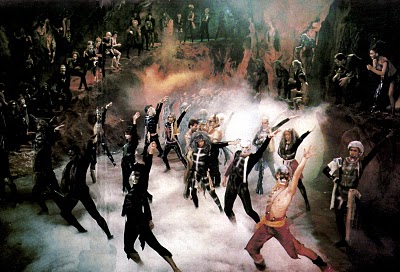
Menahem Golan's own THE APPLE is part of Cannon Films festival at Lincoln Center
Film Society of Lincoln Center, Walter Reade Theater
165 West 65th St. at Amsterdam Ave.
November 19-24, $12, three-film pass $27
212-875-5601
www.filmlinc.com
In the late 1970s and 1980s, Israeli cousins Menahem Golan and Yoram Globus gained a reputation as schlockmeisters as their Cannon Films company released such turkeys as EXTERMINATOR 2, THE DELTA FORCE, MASTERS OF THE UNIVERSE, ROBOTECH: THE MOVIE, numerous DEATH WISH sequels, and the Golan-directed sic-fi disco mosh-up THE APPLE. However, it is less well known that Golan and Globus also produced some of the most interesting works of the 1980s, by such auteurs as John Cassavetes, Nicolas Roeg, and Jean-Luc Godard. The Film Society of Lincoln Center will be honoring Golan and Globus with a thirteen-film salute November 19-24, featuring such films as Andrei Konchalovsky’s RUNAWAY TRAIN and SHY PEOPLE, Raul Ruiz’s TREASURE ISLAND, Jerry Schatzberg’s STREET SMART (with Schatzberg in person), Norman Mailer’s TOUGH GUYS DON’T DANCE, John Frankenheimer’s 52 PICK-UP, Cassavetes’s LOVE STREAMS, Godard’s KING LEAR, and Roeg’s CASTAWAY. The eighty-one-year-old Golan, winner of the 1999 Israel Prize, and the sixty-nine-year-old Globus will join director Barbet Schroeder for a Q&A following the November 19 screening of BARFLY, while G&G will also participate in a conversation after the November 20 screening of RUNAWAY TRAIN. The series also includes THE APPLE (complete with prescreening disco reception, raffles, and a special surprise guest) as well as Golan’s OPERATION THUNDERBOLT, with Golan on hand for both.
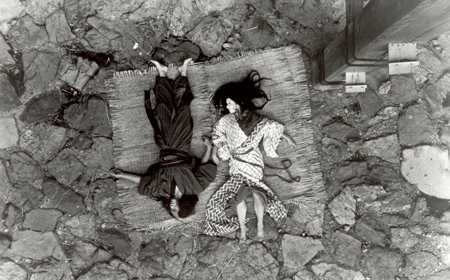
 Based on a 1720 Bunraku puppet play by Monzaemon Chikamatsu, Masahiro Shinoda’s DOUBLE SUICIDE is a stagy style-over-substance adaptation that features some beautiful sets, a compelling score by Toru Takemitsu, but an overly dramatized, talky production in which the characters’ devotion to duty and honor ultimately grows weary and frustrating, even if that’s part of the point. Kichiemon Nakamura stars as Jihei, a paper merchant who is in love with a courtesan, Koharu (Shima Iwashita, Shinoda’s real-life wife). Jihei is willing to risk everything — his business, his reputation, and his family, including his wife, Osan (Iwashita in a dual role), and their two children — in order to redeem Koharu and take her away from the red-light district. But wealthy entrepreneur and crude loudmouth Tahei (Hosei Komatsu) threatens to redeem Koharu first, forcing Jihei to decide between his family and Koharu — knowing that either decision could lead to tragedy. Much of what little action there is takes place on claustrophobic sets that evoke the theater, with men dressed in dark clothing, their faces covered, serving as Koroku, or puppeteers, helping things along without directly influencing what comes next. Considered a classic of the Japanese Nouvelle Vague, DOUBLE SUICIDE was named Best Picture at both the Kinema Junpo and Mainichi Film Concours awards. DOUBLE SUICIDE is part of the NYFF Masterworks section of the forty-eighth New York Film Festival, in the series “Elegant Elegies: The Films of Masahiro Shinoda,” which honors the genre-bending Japanese New Wave auteur with screenings of such works as THE ASSASSIN, KILLERS ON PARADE, MOONLIGHT SERENADE, and PALE FLOWER.
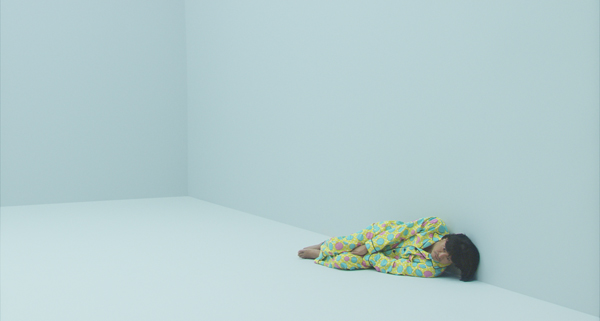
 Hitoshi Matsumoto’s SYMBOL is a mega-weird existential mind trip that would make Michel Gondry proud. The less you know going in, the better, so if you’re in the mood for a unique cinematic experience that constantly leads to more questions than answers, a brain warp that is part live-action video game, part investigation of humanity’s very existence, then hustle over to Lincoln Center to catch one of the best, and strangest, movies at this year’s New York Asian Film Festival.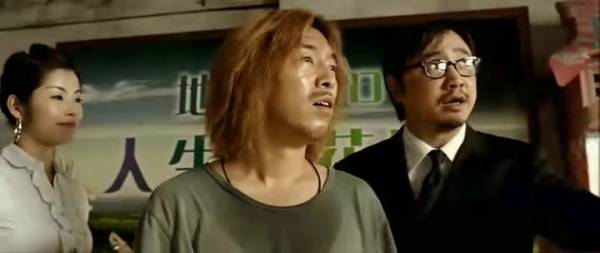
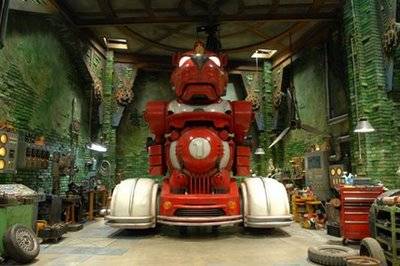
 Although Japanese director Takashi Miike is best known for such gruesome, violent, cutting-edge films as AUDITION, ICHI THE KILLER, the DEAD OR ALIVE trilogy, and GOZU, he has recently been showing off his more childlike side in such kid-friendly fare as THE GREAT YOKAI WAR and ZEBRAMAN. Now Miike has focused his attention on the popular late 1970s animated television show YATTERMAN, turning it into a goofy live-action flick filled with bright, bold colors, a fairly simplistic plot, and very cute machinery. On the side of good is Gan-chan (Japanese teen idol Sho Sakurai) and Ai-chan (Saki Fukuda), while rat-faced Doronjo (Kyoko Fukada), pig-nosed Tonzura (Kendo Kobayashi), and sexy leader Boyakki (Katsuhisa Namase) form the nasty, rather hapless villainous trio after the giant mecha-hero Yatterman and the four pieces of the valuable Skull Stone. Nothing short of the fate of the world is in jeopardy as the increasingly silly bad guys battle our beautiful, innocent heroes. Much of YATTERMAN is discombobulated and hard to follow, and the production values at times are more akin to Saturday-morning television than a trip to the movies, but it has such a charming sense of humor and playfulness that you might just overlook many of its needless excesses.