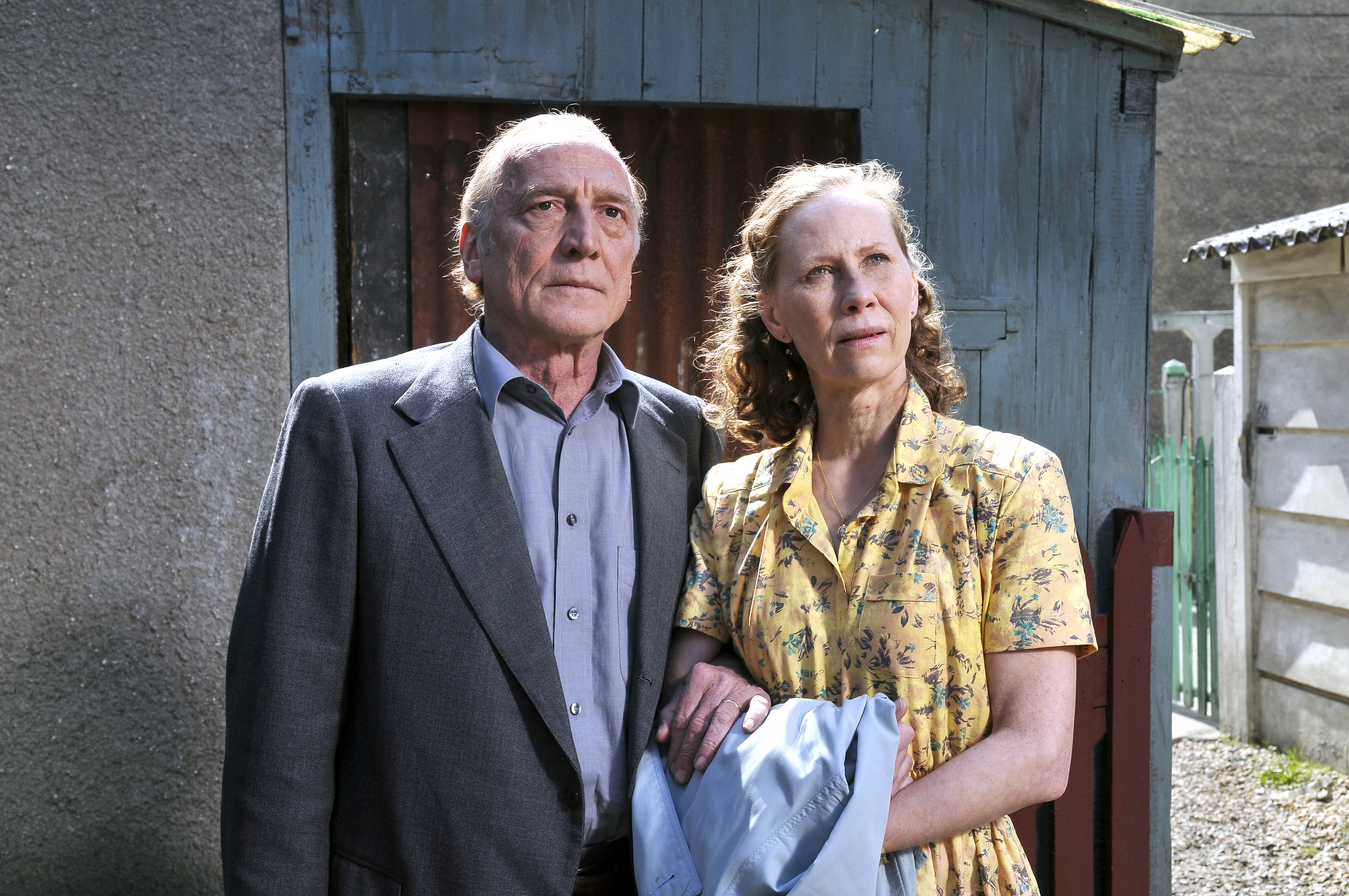
Marcel (André Wilms) and Arletty Marx (Kati Outinen) face life with a deadpan sense of humor in Aki Kaurismäki’s LE HAVRE
LE HAVRE (Aki Kaurismäki, 2011)
Sunday, October 2, Alice Tully Hall, 1941 Broadway at 65th St., $24, 7:00
Monday, October 3, and Wednesday, October 5, Walter Reade Theater, 165 West 65th St. at Amsterdam Ave., $20, 9:00
Festival runs September 30 – October 16
212-875-5601
www.filmlinc.com
 For nearly thirty years, Finnish auteur Aki Kaurismäki (Leningrad Cowboys Go America, The Man Without a Past) has been making existential deadpan black comedies that are often as funny as they are dark and depressing. Has there ever been a film as bleak as 1990’s The Match Factory Girl, in which a young woman (Kati Outinen) suffers malady after malady, tragedy after tragedy, embarrassment after embarrassment, her expression never changing? In his latest film, the thoroughly engaging Le Havre, Kaurismäki moves the setting to a small port town in France, where shoeshine man Marcel Marx (André Wilms), a self-described former Bohemian, worries about his seriously ill wife (Outinen) while trying to help a young African boy (Blondin Miguel), who was smuggled into the country illegally on board a container ship, steer clear of the police, especially intrepid detective Monet (Jean-Pierre Darroussin), who never says no to a snifter of Calvados. Adding elements of French gangster and WWII Resistance films with Godardian undercurrents — he even casts Jean-Pierre Léaud in a small but pivotal role — Kaurismäki wryly examines how individuals as well as governments deal with illegal immigrants, something that has taken on more importance than ever amid the growing international economic crisis and fears of terrorism. Through it all, Marcel remains steadfast and stalwart, quietly and humbly going about his business, deadpan every step of the way. Wouter Zoon’s set design runs the gamut from stark grays to bursts of color, while longtime Kaurismäki cinematographer Timo Salminen shoots scene after scene with a beautiful simplicity. Winner of a Fipresci critics award at Cannes this year and Finland’s official entry for the Best Foreign Language Film Oscar, Le Havre is another marvelously unusual, charmingly offbeat tale from a master of the form. After screening at the New York Film Festival on October 2, 3, and 5, Le Havre will open theatrically October 21 at the IFC Center, which will also be hosting a Kaurismäki festival on weekends from October 7 through December 18, showing nine of the director’s works, beginning with the Proletariat Trilogy of Shadows in Paradise (October 7-10), Ariel (October 14-16), and The Match Factory Girl (October 28-30). Keep watching twi-ny for more information and select reviews in the coming weeks.
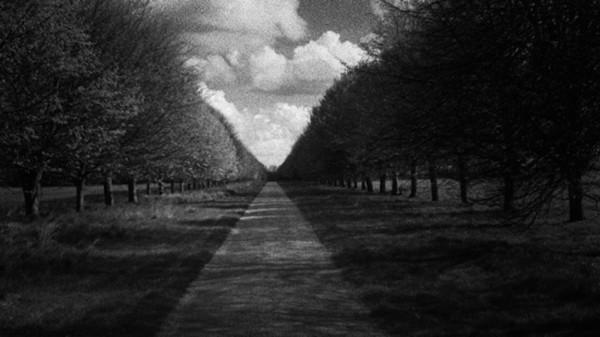
 British director Grant Gee, who has previously made such music documentaries as Meeting People Is Easy (about Radiohead), Demon Days: Live at the Manchester Opera House (with Gorillaz), and Joy Division, takes off on a more literary journey with Patience (After Sebald). Commissioned to examine a written work of fiction or nonfiction, Gee chose to delve into W. G. Maximilian Sebald’s highly influential 1995 book, The Rings of Saturn, about a character named W. G. Sebald who goes on a walk through Suffolk in East Anglia, veering off in his mind in all directions, waxing poetic on history, geography, life, death, literature, and other subjects. “In August 1992,” Sebald begins in the existential travelogue, “when the dog days were drawing to an end, I set off to walk the county of Suffolk, in the hope of dispelling the emptiness that takes hold of me whenever I have completed a long stint of work.” In the film, Gee includes shots of his own feet as he follows Sebald’s path, along with archival footage that relates to the book itself as such writers, artists, and cultural critics as Rick Moody, Tacita Dean, Ian Sinclair, Marina Warner, Adam Phillips, Andrew Motion, and Robert McFarlane talk about Sebald, who died in 2001 at the age of fifty-seven, and the importance of the hard-to-define Rings. To match the older footage, Gee shot much of the new material in a hazy, grainy black and white, with the talking heads occasionally appearing on camera almost in the background. The film includes fascinating snippets of a rare radio interview with Sebald in addition to a narrator reading sections from the book, both of which end up being far more interesting than what many of the other contributors have to say. Reminiscent of Patrick Keiller’s Robinson in Ruins, Robinson in Space, and London, Gee’s Patience fetishizes its subject but lacks the visual and aural poetry of those works, with the walk becoming somewhat tiresome until its offbeat surprise ending. As on most trips, there are beautiful moments, engaging digressions, and gorgeous landscapes to linger over, but they grow fewer and farther between as the story unfolds. Although it’s not necessary to have read the book in order to follow Gee’s wanderings, it would probably help.
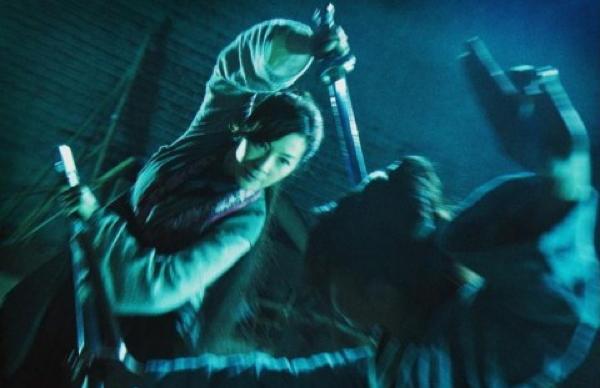
 During the early Tang Dynasty in the late seventh century, Wu Zetian (Carina Lau sporting some great hairdos) is about to become the first empress of China. In preparation for her ascendance to the throne, architect Shatuo (Tony Leung Ka Fai) is leading the construction of a two-hundred-foot Buddha statue with her face, a massive structure that is like its own city inside. But when people start spontaneously combusting after a pair of amulets in the statue are moved, Wu calls in Detective Dee (Andy Lau sporting some great facial hair), who has been in prison for eight years for previously opposing her, to find out who is behind the horrific deaths. Dee is teamed up with Wu’s right-hand woman, Shangguan Jing’er (Li Bingbing), and albino warrior Donglai Pei (Deng Chao) to get to the bottom of the killings, which many believe is a curse not being perpetrated by humans. As the unlikely threesome gets closer to the answers, they become enmeshed in a series of battles featuring unusual weapons and unexpected twists and turns, not knowing whom they can trust, their lives in constant danger. Nominated for the Golden Lion at the 2010 Venice Film Festival and winner of six Hong Kong Film Awards (including Tsui Hark for Best Director, Carina Lau for Best Actress, and Phil Jones for Best Visual Effects), Detective Dee and the Mystery of the Phantom Flame is a fun and exciting old-fashioned wuxia tale, with exciting if repetitive action scenes directed by Sammo Hung and sumptuous production design by James Chiu. The inner workings of the enormous statue is a thing of beauty that has to be seen to be believed. A mix of actual and invented characters — there really was a Judge Dee (Di Renjie), who was turned into a detective hero in a series of novels by Dutch author Robert van Gulik — the film is a thrilling historical mystery epic that could have used a little more back story but is still a return to form for Hark. Detective Dee and the Mystery of the Phantom Flame opens September 2 after having screened at the Tribeca Film Festival and the New York Asian Film Festival earlier this year.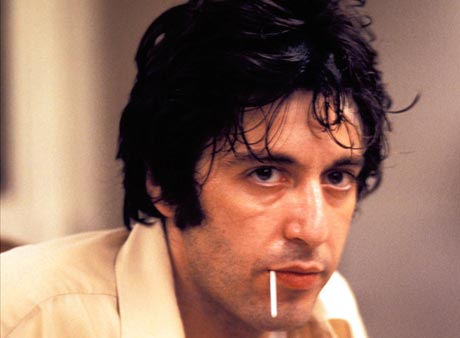
 The Film Society of Lincoln Center’s tribute to the late Sidney Lumet continues tonight with two of the Philadelphia-born New Yorker’s greatest works, a pair of tense, powerful fact-based dramas starring Bronx native Al Pacino that helped define the 1970s, both onscreen and off. First up, at 6:30, is one of the most bizarre bank robberies gone wrong you’ll ever see, Dog Day Afternoon. Pacino stars as Sonny, a confused young man desperate to get money to pay for his boyfriend’s (Chris Sarandon) sex-change operation. But things don’t go quite as planned, and soon Sonny is leading the gathered crowd in chants of “Attica! Attica!” while his partner, Sal (John Cazale), wants a plane to take them to Wyoming and Det. Moretti (Charles Durning) is trying to get them to surrender without hurting anyone, primarily themselves. Dog Day Afternoon is a blistering, funny, biting commentary on mid-’70s New York as well as a fascinating character study of a deeply conflicted man. Following at 9:00 is another gritty, realistic drama, Serpico, with Pacino giving an unforgettable performance as an undercover cop single-handedly trying to end the rampant corruption that has spread like a disease throughout the NYPD. When his fellow officers and supposed friends turn their back on him, he is left on his own, vulnerable but still committed, risking both his career and his life to do what he thinks is right. Pacino is explosive in both films, playing two very different protagonists on different sides of the law yet similar in so many ways. “Prince of the City: Remembering Sidney Lumet” features three other Lumet films today, 1978’s The Wiz (10:30 am), 1968’s The Sea Gull (1:15), and 1988’s Running on Empty (4:00), while tomorrow’s schedule includes 1962’s Long Day’s Journey into Night (12:30), 1990’s Q&A (4:00), and 1981’s Prince of the City (7:15), the latter two followed by Q&As with cast members and real characters depicted in the films.