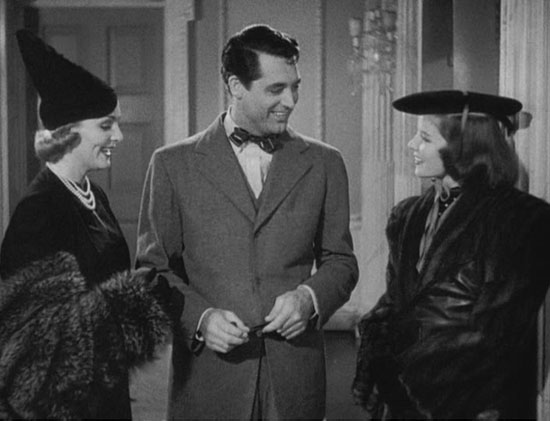
Cary Grant gets caught in the middle of two sisters in George Cukor’s HOLIDAY
HOLIDAY (George Cukor, 1938)
Film Society of Lincoln Center, Walter Reade Theater
165 West 65th St. between Eighth Ave. & Broadway
Wednesday, December 18, 1:00, 5:00, 9:15
Series runs through January 7
212-875-5050 / 212-875-5166
www.filmlinc.com
 Although the screwball romantic comedies are perhaps best loved for their madcap antics and fast-paced dialogue, there was also a fascinating underlying motif to many of them — as America came out of the Great Depression and WWII beckoned, the films tackled the theme of the growing disparity between the rich and the poor. George Cukor’s 1938 classic, Holiday, however, looks at the world from a slightly different perspective, pitting the rich vs. the super-rich. Based on the Broadway play by Philip Barry, which was turned into a 1930 film featuring Ann Harding, Mary Astor, Edward Everett Horton, Hedda Hopper, Robert Ames, and William Holden, Cukor’s version stars Cary Grant as Johnny Case, a self-made humble financial wizard who dreams of making just enough money to be able to afford to leave the business and go find himself. Following a whirlwind ten-day courtship with Julia Seton (Doris Nolan) while on vacation in Lake Placid, Johnny is shocked to find out that his fiancée is a member of the Seton clan, one of the richest families in America. Julia’s father, Edward (Henry Kolker), is not about to let his beloved daughter marry just anyone, so he puts Johnny through the ringer. Meanwhile, Johnny bonds with Julia’s sister, the black sheep Linda (Katharine Hepburn, who was the understudy for Linda on Broadway), who is desperate to live her own life but seems trapped in a fantasy, receiving only marginal support from their brother, Ned (Lew Ayres), who is never without a drink and a cynical word about the family, washing away his failure in cocktail after cocktail. “Walk, don’t run, to the nearest exit,” he advises Johnny. Honest, dependable, and a surprisingly good gymnast, Johnny finds solace from the crazy Setons in his longtime friends, Nick (Horton, reprising his role from the earlier film) and Susan (Jean Dixon), simpler folk with a fine sense of humor and little time for high society. As midnight on New Year’s Eve approaches, the main characters’ lives come together and fall apart in hysterical yet serious ways. Holiday is not your average screwball comedy, instead seeking to take on more personal, psychologically intimate issues and succeeding wildly, continually defying expectations and turning clichés inside out. Grant is as cool as ever, but he adds a seldom-seen vulnerability that adds to his charm. Holiday is screening December 18 as part of the Film Society of Lincoln Center series “The Discreet Charm of George Cukor,” which runs through January 7 and consists of all fifty of the Lower East Side native’s films, from Keeper of the Flame and Heller in Pink Tights to Our Betters and Tarnished Lady as well as such unforgettable classics as Sylvia Scarlett, Pat and Mike, It Should Happen to You, Camille, Gaslight, and many others.
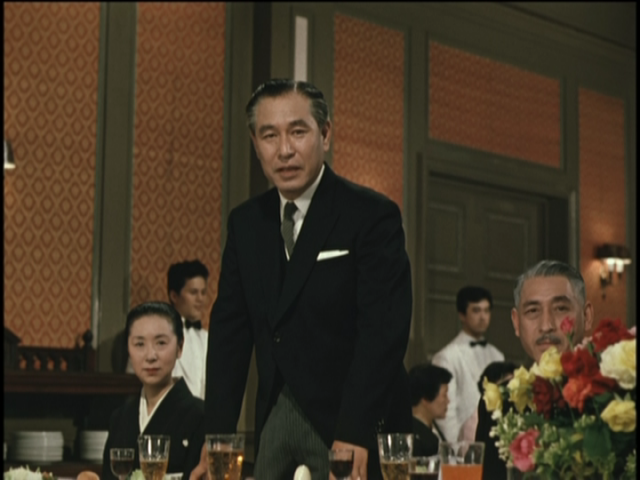
 Yasujirō Ozu’s first film in color, at the studio’s request, is another engagingly told exploration of the changing relationship between parents and children, the traditional and the modern, in postwar Japan. Both funny and elegiac, Equinox Flower opens with businessman Wataru Hirayama (Shin Saburi) giving a surprisingly personal speech at a friend’s daughter’s wedding, explaining that he is envious that the newlyweds are truly in love, as opposed to his marriage, which was arranged for him and his wife, Kiyoko (Kinuyo Tanaka). Hirayama is later approached by an old middle school friend, Mikami (Ozu regular Chishu Ryu), who wants him to speak with his daughter, Fumiko (Yoshiko Kuga), who has left home to be with a man against her father’s will. Meanwhile, Yukiko (Fujiko Yamamoto), a friend of Hirayama’s elder daughter, Setsuko (Ineko Arima), is constantly being set up by her gossipy mother, Hatsu (Chieko Naniwa). Hirayama does not seem to be instantly against what Fumiko and Yukiko want for themselves, but when a young salaryman named Taniguchi (Keiji Sada) asks Hirayama for permission to marry his older daughter, Setsuko (Ineko Arima), Hirayama stands firmly against their wedding, claiming that he will decide Setsuko’s future. “Can’t I find my own happiness?” Setsuko cries out. The widening gap between father and daughter represents the modernization Japan is experiencing, but the past is always close at hand; Ozu and longtime cowriter Kōgo Noda even have Taniguchi being transferred to Hiroshima, the scene of such tragedy and devastation. Yet there is still a lighthearted aspect to Equinox Flower, and Ozu and cinematographer Yuharu Atsuta embrace the use of color, including beautiful outdoor scenes of Hirayama and Kiyoko looking out across a river and mountain, a train station sign warning of dangerous winds, the flashing neon RCA Victor building, and laundry floating against a cloudy blue sky. The interiors are carefully designed as well, with objects of various colors arranged like still-life paintings, particularly a red teapot that shows up in numerous shots. And Kiyoko’s seemingly offhanded adjustment of a broom hanging on the wall is unforgettable. But at the center of it all is Saburi’s marvelously gentle performance as a proud man caught between the past, the present, and the future. Equinox Flower is screening December 8-12 as part of the Film Society of Lincoln Center festival “Ozu and His Afterlives,” which honors the 110th anniversary of the master filmmaker’s birth and the 50th anniversary of his death; he died on his birthday at the age of sixty in 1963. The series also features Ozu’s An Autumn Afternoon in addition to seven works that were either directly or indirectly inspired by Ozu and his unique style, including Hirokazu Kore-eda’s Still Walking, Jim Jarmusch’s Stranger Than Paradise, Aki Kaurismäki’s The Match Factory Girl, Claire Denis’s 35 Shots of Rum, Pedro Costa’s In Vanda’s Room, and Wim Wenders’s Tokyo-Ga.
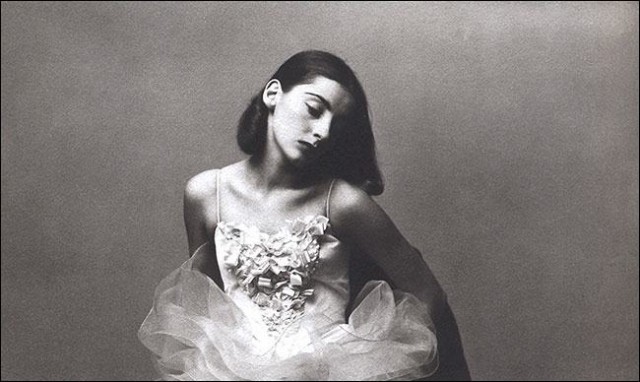
 “Tanny’s body created inspiration for choreographers,” one of the interviewees says in Nancy Buirski’s documentary Afternoon of a Faun: Tanaquil Le Clercq. “They could do things that they hadn’t seen before.” The American Masters presentation examines the life and career of prima ballerina Tanaquil Le Clercq, affectionately known as Tanny, who took the dance world by storm in the 1940s and ’50s before tragically being struck down by polio in 1956 at the age of twenty-seven. Le Clercq served as muse to both Jerome Robbins, who made Afternoon of a Faun for her, and George Balanchine, who created such seminal works as Western Symphony, La Valse, and Symphony in C for Le Clercq — and married Tanny in 1952. In the documentary, Buirski (