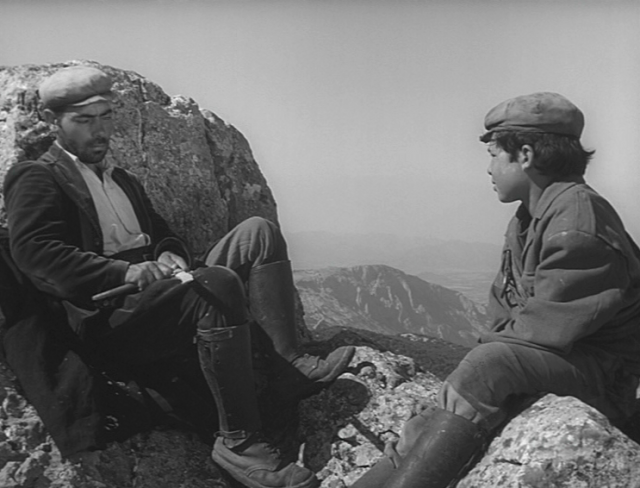
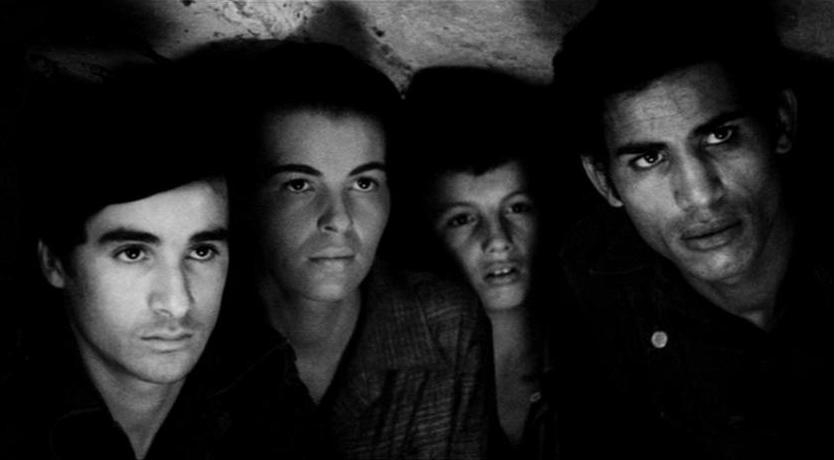
Sardinian brothers Michele (Michele Cossu) and Peppeddu (Peppeddu Cuccu) are on the run from the law in Vittorio De Seta’s BANDITI A ORGOSOLO
BANDITI A ORGOSOLO (BANDITS OF ORGOSOLO) (Vittorio De Seta, 1961)
Film Society of Lincoln Center, Walter Reade Theater
144 West 65th St. between Eighth Ave. & Broadway
Saturday, May 23, 7:00
Festival runs May 22-31
212-875-5050
www.filmlinc.com
 “The souls of these men are still primitive. What is right according to their law is not right according to that of the modern world,” an unseen narrator explains at the beginning of Vittorio De Seta’s sadly overlooked debut feature, Banditi a Orgosolo, about shepherds scraping to get by in a vast mountainous region of Sardinia. In the black-and-white post-neorealist film, Michele (Michele Cossu) and his young brother, Peppeddu (Peppeddu Cuccu), tend to their flock of sheep, for which Michele still owes money. After a trio of former shepherds turned bandits shows up, Michele is visited by the police; not wanting to get involved, he lies to the carbinieri, insisting he has not seen anyone else. A firefight ensues between the police and the bandits, leaving one cop dead, and Michele and Peppeddu are on the lam, hunted by the police while desperately trying to hold on to their flock as they make their way through what Michele refers to as “bad places.” Winner of the New Cinema Award at the 1961 Venice Film Festival, Banditi a Orgosolo is a dark, bleak tale, shot by De Seta in nearly infinite gradations of black and white, Valentino Bucchi’s ominous score lurking in the background. Cossu, a nonprofessional actor from the region, portrays Michele with a stark earnestness and a clear understanding of the futility of his character’s situation. A former documentarian, De Seta (The Uninvited, Lettere dal Sahara), who wrote the screenplay with Vera Gherarducci, doesn’t make any epic proclamations about society’s ills, instead letting the story about changing times and abject poverty in Sardinia unfold at an often agonizing snail’s pace. The shepherds and their small villages, representative of the old ways, are being left behind, even as the state takes the place of centuries-old oppressors, doing what it can to keep them down and destitute.
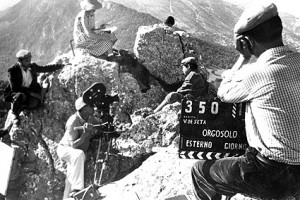
BANDITI A ORGOSOLO is set in the mountainous region of Sardinia
Banditi a Orgosolo is getting a rare screening on May 23 at 7:00 as part of the Film Society of Lincoln Center series “Titanus: A Family Chronicle of Italian Cinema,” a ten-day, twenty-three-film retrospective honoring the Italian production company founded by Gustavo Lombardo in 1904 and later run by his son, Goffredo, and grandson, Guido, that remained active until 1964 (although it continues to occasionally release work). The festival displays the wide range of Titanus’s output, including Michelangelo Antonioni’s Le Amiche, Dario Argento’s The Bird with Crystal Plumage, Ermanno Olmi’s The Fiancés, Francesco Rosi’s The Magliari, Elio Petri’s Numbered Days, Federico Fellini’s The Swindle, Steno’s Totò Diabolicus, and Vittorio De Sica’s Two Women, but not Luchino Visconti’s The Leopard; the tremendous cost of filming Giuseppe di Lampedusa’s epochal novel played a major role in the company’s downward fortune.
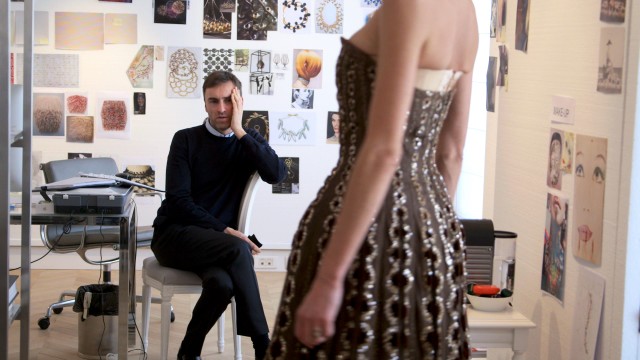
 After working on two previous fashion-related films, Diana Vreeland: The Eye Has to Travel and Valentino: The Last Emperor, Frédéric Tcheng makes his solo directorial debut with Dior and I. In April 2012, fashion designer Raf Simons was named the new creative director of Christian Dior, bringing along his right-hand man, Pieter Mulier. Tcheng goes behind the scenes to follow Simons as he prepares his first-ever haute couture collection, which is due in a mere two months. Tcheng zooms in on the Belgian designer’s working methods and general anxiety as he takes over at the legendary company, developing important relationships with Dior CEO Sidney Toledano, première atelier flou Florence Chehet, première atelier tailleur Monique Bailly, the seamstresses, the models, and other employees. Simons chooses to pay homage to Dior’s past with his new collection while attempting to rid himself of the designation of “minimalist designer.” One of his most fascinating directions is attempting to incorporate the work of artist Sterling Ruby into his designs. All the while he is haunted by the ghost of company founder and New Look creator Christian Dior, who is shown by Tcheng in archival footage accompanied by a voice-over of Omar Berrada reading from Dior’s memoirs. Dior and I is a slight but affecting race against time, as one man in the present honors the past while laying the groundwork for a bright future. Dior and I opens April 10 at Film Forum and the Film Society of Lincoln Center, with Tcheng and Berrada appearing at Film Forum for the 7:30 show April 10 and the 5:20 show April 11; Tcheng will also be at the Walter Reade Theater for a Q&A following the 7:00 show April 11.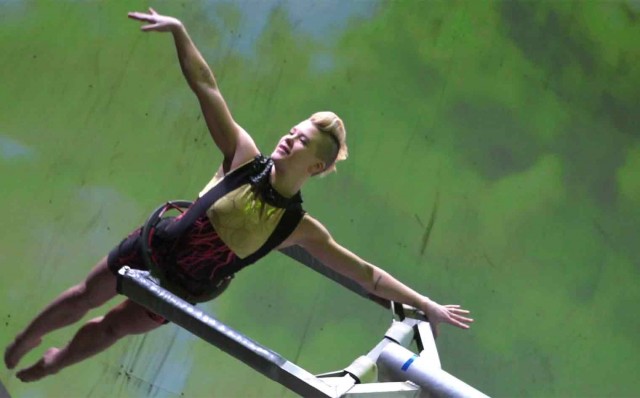
 Over the last several years, New Yorkers have gotten the chance to see Elizabeth Streb’s Extreme Action Company perform such dazzling works as
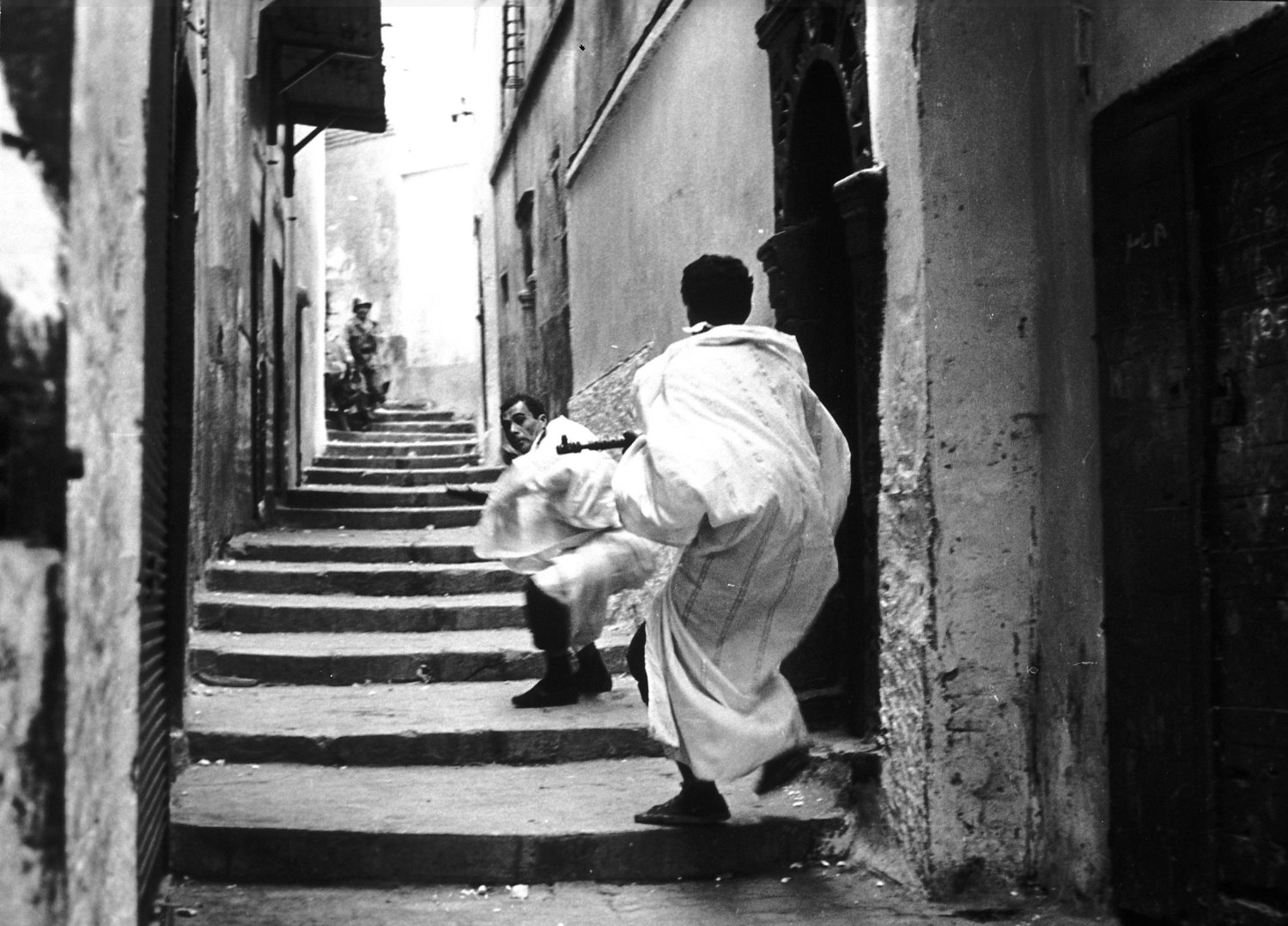
 In Italian director Gillo Pontecorvo’s gripping neo-Realist war thriller The Battle of Algiers, a reporter asks French paratroop commander Lt. Col. Mathieu (Jean Martin), who has been sent to the Casbah to derail the Algerian insurgency, about an article Jean-Paul Sartre had just written for a Paris paper. “Why are the Sartres always born on the other side?” Mathieu says. “Then you like Sartre?” the reporter responds. “No, but I like him even less as a foe,” Mathieu coolly answers. In 1961, French existentialist Sartre wrote in the