EdgeCut and New York Live Arts offer new way to experience live events with other people
When I posted the first edition of the Pandemic Awards on July 4, I never expected that on January 1, 2021, we would still be at least six months away from opening venues for live, in-person entertainment. As I wrote then, it would be “the first of hopefully only two This Week in New York Pandemic Awards.” Well, here is the second round, with a third likely to come in the summer. Once again, there’s only one rule for eligibility: There must be a live facet to a performance — either the performance is happening at the minute one is watching onscreen or has an interactive element such as a live Q&A or live chatting.
We’ve come a long way since March, as creators have displayed remarkable ingenuity and forward thinking in coming up with innovative and exciting ways of developing virtual works, from dance, music, and art to theater, literature, and discussion, from all around the globe. Below is the best of the best, productions both big and small, that took the ball and ran with it. I can’t wait to see what will evolve over the next six months to keep us entertained online while we continue to shelter in place.
Happy 2021 to all!
BEST NEW PLAY ABOUT THE PANDEMIC
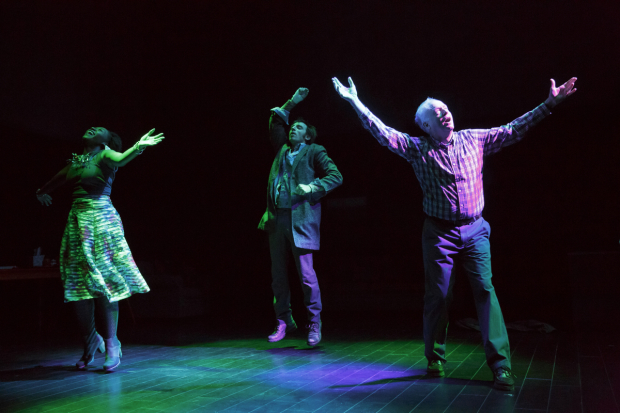
The Line, written by Jessica Blank and Erik Jensen, directed by Blank, the Public Theater. Blank and Jensen’s Coal Country had to be postponed because of the lockdown, so they turned their attention to the health crisis, teaming again with the Public Theater to present a harrowing look at what New York healthcare workers were experiencing as Covid-19 raged through the city, with Santino Fontana, Alison Pill, John Ortiz, Arjun Gupta, Nicholas Pinnock, Lorraine Toussaint, and Jamey Sheridan speaking the real words of doctors, nurses, EMTs, and others on the front lines of this dread virus.
BEST NEW PLAY NOT ABOUT THE PANDEMIC
Woolly Mammoth Theatre Company, This Is Who I Am, written by Amir Nizar Zuabi, directed by Evren Odcikin. Amir Nizar Zuabi’s poignant livestreamed tale of an estranged father (Ramsey Faragallah) and son (Yousof Sultani) preparing a family dish together over Zoom is a warm and heartfelt look at loss, loneliness, and reconnection.
BEST NEW PLAY READING NOT ABOUT THE PANDEMIC
pen/man/ship, written by Christina Anderson, directed by Lucie Tiberghien, Molière in the Park. Brooklyn-based Molière in the Park went contemporary with Christina Anderson’s pen/man/ship, a smart, moving play that takes place in 1896 aboard a ship heading for Liberia shortly after the US Supreme Court decided in Plessy v. Ferguson to uphold the constitutionality of racial segregation under the concept of “separate but equal”; the solid cast features Crystal Lucas-Perry as Ruby, the only woman on board, Kevin Mambo as an unyielding minister named Charles, Jared McNeill as his son, Jacob, and Postell Pringle as Cecil, who is working on the ship, with interstitial animation by Emily Rawson, sea-shanty music by Victoria Deiorio, and green-screen set design by Lina Younes that mimic being on a real ship.
BEST LIVESTREAMED PLAY WITH AN AUDIENCE
Crave, Chichester Festival Theatre. Chichester presented a stirring, socially distanced revival of Sarah Kane’s brutal Crave, happening in real time as a masked audience watched Tinuke Craig’s fierce adaptation that was the closest thing yet to capturing the feeling of live theater online.
BEST FILMED PLAY
The Flying Lovers of Vitebsk, written by Daniel Jamieson, directed by Emma Rice, recorded at the UK’s Bristol Old Vic Theatre. The virtual tour of the Bristol Old Vic, Kneehigh, and Wise Children’s beautifully staged adaptation of The Flying Lovers of Vitebsk, about the romance between painter Marc Chagall (Marc Antolin) and Bella Samoylovna Rosenfeld (Audrey Brisson) amid some very difficult situations in the world, made its way to Skirball, where viewers were treated to its lush look, outstanding acting, and compelling, intimately told story.
BEST SHOCKING MOMENT IN A PLAY
Ali Ahn and William Jackson Harper, Outside Time without Extension, written by Ben Beckley, directed by Vivienne Benesch, Red Bull Theater. A few minutes into Ben Beckley’s Outside Time without Extension, part of Red Bull’s Tenth Annual Short New Play Festival, Ali Ahn and William Jackson Harper joined together in the same Zoom box, the first time I saw two actors in the same space. It turns out that they are partners living together; they would later appear in Matt Schatz’s two-character play The Burdens as a Jewish brother and sister.
BEST SOUND DESIGN OF A FILMEDJoshua D. Reid PLAY
Joshua D. Reid, A Christmas Carol, directed by Michael Arden. As good as Jefferson Mays’s mostly one-man version of Charles Dickens’s A Christmas Carol looked, it sounded even better, immersing the audience in the more ghostly aspects of the story, including one moment that made my heart drop into my stomach.
BEST REIMAGINING OF AN IMMERSIVE PLAY
Inside the Wild Heart, Group.BR. In Inside the Wild Heart, New York–Brazilian company Group.BR ingeniously used the Gather.town digital platform to allow the audience to guide their avatar across various rooms and floors and interact with other viewers as they navigated through a recorded version of the multidisciplinary show about author Clarice Lispector and her writings.
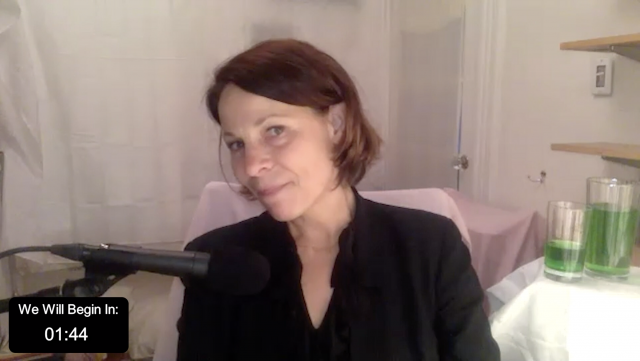
Lilli Taylor tantalizes the audience during countdown to New Group reunion reading of Aunt Dan and Lemon
BEST OPENING OF A REUNION READING
Lilli Taylor, Aunt Dan and Lemon, the New Group. The New Group’s reunion reading of Wallace Shawn’s Aunt Dan and Lemon begins with three minutes of narrator Lilli Taylor getting ready by calmly looking around and making all kinds of facial gestures during the countdown to the start of the play.
BEST ACTOR IN A REUNION READING OF A PLAY
Edie Falco, The True, the New Group. Edie Falco gave a master class in Zoom acting as she re-created her role as the real-life Albany political mover and shaker Polly Noonan in Sharr White’s powerful play, alongside Michael McKean, Peter Scolari, John Pankow, and the rest of the original cast of this New Group production.
BEST ACTOR IN A REUNION READING OF A MOVIE
Mandy Patinkin, The Princess Bride. Mandy Patinkin was a hoot as the revenge-seeking swashbuckler Inigo Montoya in the reunion-reading benefit for the Democratic Party of Wisconsin, having trouble remaining in his Zoom box while joined by original costars Cary Elwes, Robin Wright, Carol Kane, Chris Sarandon, Wallace Shawn, and Billy Crystal, along with director Rob Reiner and Josh Gad as Fezziwig.
BEST INTERACTIVE READING
Read Subtitles Aloud, written by Onur Karaoglu and Kathryn Hamilton. Media Art Xploration and PlayCo teamed up for this thirteen-part series in which the viewer supplies half the dialogue, reading off the screen in response to the words spoken by the prerecorded actors onscreen.
BEST ACTOR IN A SHORT PLAY
LeeAnne Hutchison, Pigeons, written by Amy Berryman, directed by Amber Calderon, Eden Theater Company. LeeAnne Hutchison was mesmerizing as a conspiracy theorist dealing with the death of her husband from Covid-19 in Pigeons, one of Eden Theater Company’s “Bathroom Plays.”
BEST DUO IN A TWO-CHARACTER ZOOM READING
Marsha Mason and Brian Cox, Dear Liar, Bucks County Playhouse. Marsha Mason and Brian Cox are deliciously wicked in Bucks County Playhouse’s Zoom reading of Jerome Kitty’s Dear Liar, about the longtime correspondence between George Bernard Shaw and actress Mrs. Patrick Campbell; Cox is so good as Shaw that even Mason has a ball watching him.
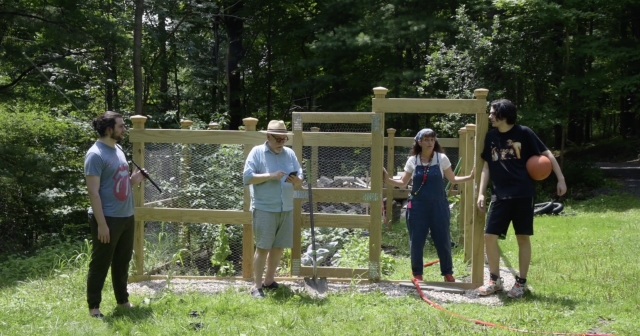
Brian Cox and family get involved in some playful high jinks in Melis Akers’s Fractio Panis for the Homebound Project
BEST FAMILY IN A SHORT PLAY
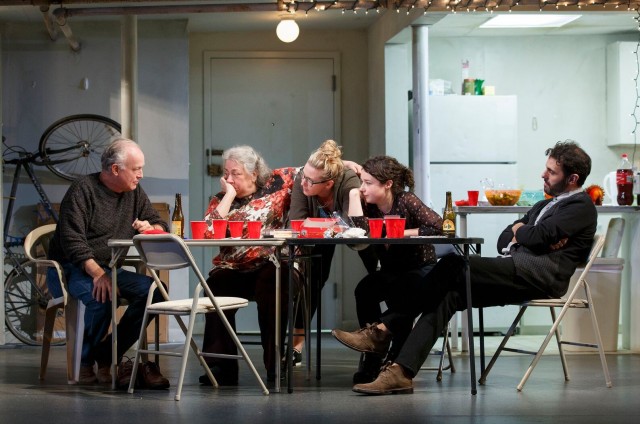
The Coxes, Fractio Panis, written by Melis Aker, directed by Tatiana Pandiani, Homebound Project 5: Homemade. Melis Aker’s Fractio Panis, part of the Homebound Project benefiting No Kid Hungry, took us inside the country home of Brian Cox, his wife, Nicole Ansari-Cox, and their children, Orson and Torin, as they have a ball baking bread and discussing rectal thermometers.
BEST ZOOM REVIVAL
The Wolves, Philadelphia Theatre Company. Sarah DeLappe’s 2017 Pulitzer finalist The Wolves felt more empowering than ever in Philadelphia Theatre Company’s Zoom version, with a terrific cast of young women in uniform in front of a green-screened practice field as soccer became a metaphor for what ails us and what brings us together.
BEST REVIVAL EXCERPTS
“The Great Work Begins,” amfAR. An amazing lineup performed moving scenes from Tony Kushner’s Angels in America AIDS epic, benefiting amfAR’s Fund to Fight Covid-19, with Andrew Rannells, Paul Dano, and Brian Tyree Smith as Prior Walter, Glenn Close as Roy Cohn, Jeremy O. Harris, Larry Ownes, and S. Epatha Merkerson as Belize, Laura Linney, Vella Lovell, and Lois Smith as Harper Pitt, and Daphne Rubin-Vega, Linda Emond, Nikki M. James, Patti LuPone, and Brandon Uranowitz in other parts, not in Zoom boxes but in well-designed backdrops.
MOST PASSIONATE SHAKESPEARE SPEECH
Ralph Fiennes, Antony and Cleopatra, Act 4, Scene 14, Shakespeare Everywhere. Shakespeare has been just about everywhere during the pandemic, but no one got into the heart of the Bard as much as Ralph Fiennes did at Shakespeare Theatre Company’s Shakespeare Everywhere gala, where he chewed up all of the desert scenery in his prerecorded soliloquy from Antony and Cleopatra, the camera getting up close and personal with his grizzled face; Fiennes portrayed Antony opposite Sophie Okonedo’s Cleopatra at the National Theatre in 2018.
MOST PASSIONATE SHAKESPEARE DISCUSSION
Patrick Page, RemarkaBULL Podversations, Red Bull Theater. Patrick Page delivers the “I hate the Moor” speech from Othello, then delves into the nature of the character, the play, and Shakespeare himself in an unforgettable discussion that will leave you exhausted and exhilarated.
BEST WALLPAPER IN A PLAY
Gore Vidal’s The Best Man, Tomorrow Tix. Discount ticket service Today Tix rebranded itself as Tomorrow Tix in streaming prerecorded Zoom versions of Broadway plays with all-star casts, including Morgan Freeman, John Malkovich, Zachary Quinto, Vanessa Williams, Stacy Keach, Rashad, Reed Birney, Robert Sella, and Katie Finneran for Gore Vidal’s play about a vicious election, but the wallpaper around the tall, vertical Zoom boxes garnered plenty of attention itself.
BEST SCENIC DESIGN OF A ZOOM PLAY
The Irish Rep, A Touch of the Poet, written by Eugene O’Neill, directed by Ciarán O’Reilly. The Irish Rep has been among the most innovative of theater companies during the lockdown, each successive filmed production getting closer and closer to the real thing, and in its revival of A Touch of the Poet, director Ciarán O’Reilly incorporates props, costumes, and photographs and video of Charlie Corcoran’s set to make it appear that the actors are in the same room, sometimes even seated at the same table, even though they are Zooming in from different locations.
BEST PERFORMANCE WITH A CHILD IN THE BACKGROUND
Why Would I Dare: The Trial of Crystal Mason, directed by Tyler Thomas, Rattlestick Playwrights Theater. In Rattlestick’s Zoom staging of the transcript of the trial of Crystal Mason, an ex-con who was facing jail time for trying to vote in the 2016 election, Crystal Dickinson is electrifying as she and her lawyer (Shane McRae) battle with the judge (Peter Gerety) and the prosecutor (Peter Mark Kendall), but as gripping as the production is, it’s hard not to notice Dickinson’s six-year-old son playing in the background of the large living room where she is broadcasting from, a sign of better times to come.
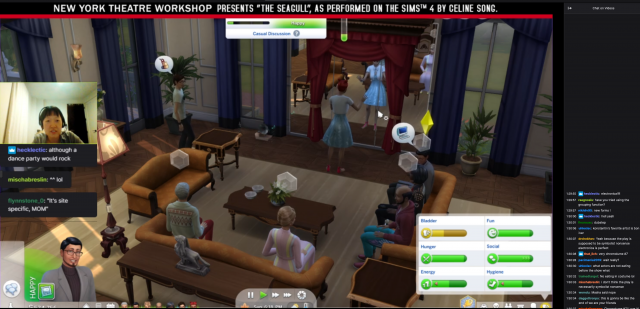
Celine Song transports The Seagull to the Sims 4 for New York Theatre Workshop
BEST CASTING FOR A DIGITAL PLAY
The Seagull on the Sims 4, written and performed by Celine Song, New York Theatre Workshop. Playwright Celine Song busted down barriers with her spectacularly inventive adaptation of Anton Chekhov’s The Seagull, re-creating the classic work live on the simulation game “Play with Life: The Sims 4,” chatting with the audience and several other theater creators as she molded Irina, Konstantin, Nina, Trigorin, Medvendenko, and others from scratch using the digital platform and then placed them in a virtual world where they had free will.
BEST THEATRICAL EXPERIENCE
“Here We Are,” Theatre for One. Theatre for One reinvented the solo show with “Here We Are,” a collection of eight microplays written by, starring, and directed by BIPOC women (except for one male actor), performed live for one person at a time, with their camera and audio on so each could see the other and, in some of the works, interact; a virtual lobby allowed attendees to communicate anonymously, as if in a real theater, waiting for the lights to go down and the show to begin.
BEST MUSICAL PERFORMANCE AT A GALA FUNDRAISER
The cast of The Amen Corner, “I’m Not Tired Yet,” and “Sonnet 69,” Biko’s Manna and Family, Shakespeare Everywhere. DC’s Shakespeare Theatre Company hosted one of the best gala fundraisers, including a pair of exciting musical performances, with the cast of The Amen Corner delivering a rousing Zoom version of “I’m Not Tired Yet” and Biko’s Manna and Family performing a lovely rendition of the Bard’s “Sonnet 69.”
BEST BIRTHDAY TRIBUTE TO A LATE ROCK STAR
The Flaming Lips, “Listen to Her Heart,” Tom Petty’s 70th Birthday Bash. Dozens of musicians sent in musical contributions to celebrate what would have been Tom Petty’s seventieth birthday, but it was the Flaming Lips’s herky-jerky take on “Listen to Her Heart” that warranted repeat viewing, in addition to Benmont Tench and Mike Campbell’s touching finale.
BEST LIVESTREAMED CONCERT SERIES
“Live Streaming at the Vanguard,” Village Vanguard. The legendary Village Vanguard began streaming live jazz concerts from its intimate stage, without an audience, with concerts by Ron Carter’s Golden Striker Trio, the Eric Reed Quartet, Joe Lovano’s Trio Fascination, and others.
BEST INTERACTIVE OPERA
The Threepenny Opera, City Lyric Opera. Audience members were sent advance instructions so they could take part in City Lyric Opera’s extremely fun virtual production of Kurt Weill and Bertolt Brecht’s opera for the people, with Justin Austin as Macheath, Philip Kalmanovitch as Mr. Peachum, Rachelle Pike as Mrs. Peachum, Sara LaFlamme as Polly Peachum, Michael Parham as Tiger Brown, Sara LeMesh as Lucy Brown, Shanelle Valerie Woods as Jenny, and Kameron Ghanavati as Filch, with live and prerecorded scenes ingeniously staged at HERE Arts Center in individual rooms and boxes terrifically lit by Karina Hyland and designed by Anna Driftmier.
BEST POP OPERA
Is This the End? Part One: Dead Little Girl, libretto by Éric Brucher, music and lyrics by Jean-Luc Fafchamps, directed by Ingrid Von Wantoch Rekowski, La Monnaie. FIAF streamed Jean-Luc Fafchamps’s frantic “New Pop Requiem,” Is This the End? from the Brussels company La Monnaie, in which Sarah Defrise plays a teenager on the run through La Monnaie’s labyrinthine buildings, with Amaury Massion as the man and Albane Carrère as the woman in a futuristic nightmare scenario.
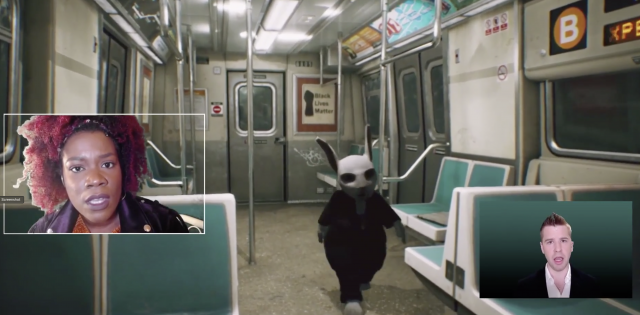
The virtual opera Alice in the Pandemic takes place down an alternate New York City rabbit hole
BEST USE OF TECHNOLOGY IN A VIRTUAL OPERA
Alice in the Pandemic, libretto by Cerise Lim Jacobs, music by Jorge Sosa, art by Anna Campbell, White Snake Projects. Boston’s White Snake Projects incorporated cutting-edge digital animation in its livestreamed production of the one-act opera Alice in the Pandemic, as the title character (Carami Hilaire) traverses a lonely city in search of her ill mother (Eve Gigliotti) with the help of the White Rabbit (Daniel Moody).
BEST SERIOCOMIC TRIPPY SCI-FI OPERA SERIES
Only You Will Recognize the Signal, libretto by Rob Handel, music by Kamala Sankaram, directed by Kristin Marting, video design by David Bengali, virtual stage design by Liminal, HERE Arts Center. HERE’s seven-part, seventy-minute space opera, Only You Will Recognize the Signal, will shake you out of your therapeutic hypothermia and blast you off into another dimension, where a cast of pseudo-astronauts and a humanlike AI system (Paul An, Christopher Burchett, Hai-Ting Chinn, Adrienne Danrich, Joy Jan Jones, Joan La Barbara, Jorell Williams) share their fears amid kaleidoscopic imagery, melting wallpaper, video of Cambodia and NYC, high- and low-tech computer graphics, and a fab score.
BEST OUTDOOR CHAMBER OPERA CONCERT
Speaking Truth to Power / Egmont, Orpheus Chamber Orchestra. Orpheus Chamber Orchestra went to the Beechwood Park bandshell in New Jersey to perform a socially distanced version of Beethoven’s Egmont, Op. 84, with a new English translation by Philip Boehm, featuring soprano and activist Karen Slack and narration by Liev Schreiber.
BEST MULTIMEDIA OPERA
Marina Abramović, 7 Deaths of Maria Callas, Bayerische Staatsoper. Performance artist Marina Abramović died seven times as she reenacted death scenes from seven operas in which Maria Callas had played the lead, accompanied by dancers onstage in masks and Willem Dafoe onscreen.
BEST DANCE SCORE
Michael Wall, Brown Eyes, BalletX, Works & Process at the Guggenheim. Penny Saunders’s haunting black-and-white Brown Eyes, danced by Andrea Yorita and Zachary Kapeluck, among the first pandemic pieces to feature dancers touching each other, is set to Michael Wall’s propulsive percussive score that features ventilator-like breathing and a constant knocking that evokes a clock running out of time.
BEST LONG-FORM ZOOM DANCE
Rooms, Sokolow Theatre/Dance Ensemble. The New York–based Sokolow Theatre/Dance Ensemble was preparing to present Anna Sokolow’s 1955 Rooms when the pandemic hit, so it adapted the forty-five-minute work, with such aptly titled sections as “Alone,” “Escape,” “Going,” “Desire,” and “Panic,” for online viewing, with dancers filming themselves from wherever they were sheltering in place, both indoors and outdoors, set to Kenyon Hopkins’s groovy jazz score.
BEST REIMAGINED DANCE MASTERPIECE
Alvin Ailey American Dance Theater, Revelations Reimagined. For its winter virtual season, Alvin Ailey presented an exuberant sixtieth anniversary outdoor version of its signature masterpiece, retitled Revelations Reimagined, weaving together old footage with new scenes shot at Wave Hill, directed by Preston Miller.
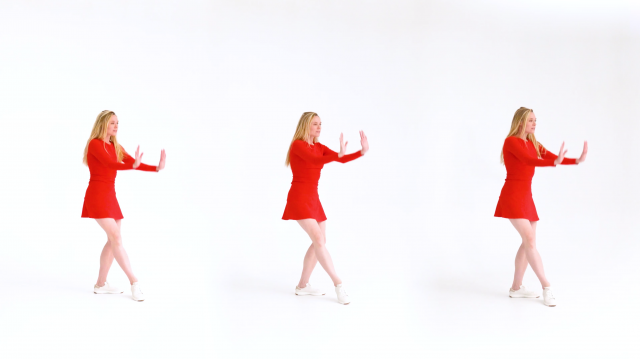
Sara Mearns appears in triplicate in L.A. Dance Project work
BEST SOLO DANCE AS A TRIO
Sara Mearns, Sonata for Saras, choreographed by Janie Taylor. New York City Ballet principal dancer Sara Mearns has been a star during the pandemic, appearing in Joshua Bergasse’s Storm for Works & Process at the Guggenheim, Molissa Fenley’s State of Darkness for the Joyce, and Justin Peck’s Thank You, New York for NYCB’s Festival of New Choreography, but in Janie Taylor’s Sonata for Saras, we get three versions of Mearns, in a cute, short red dress, dancing together against a white background, flipping her long hair for six delightful minutes.
BEST SOLO DANCE SEEN SEVEN TIMES
Molissa Fenley, State of Darkness, JoyceStream. Molissa Fenley revisited her 1994 epic solo, State of Darkness, for the Joyce, where it was performed by Jared Brown, Lloyd Knight, Sara Mearns, Shamel Pitts, Annique Roberts, Cassandra Trenary, Michael Trusnovec, and Peter Boal, displaying how the same choreographic movements are interpreted by difference dancers.
BEST USE OF TECHNOLOGY IN A ZOOM DANCE
Continuous Replay / Come Together, Bill T. Jones / Arnie Zane Dance Company, New York Live Arts. Bill T. Jones reimagines his partner Arnie Zane’s Continuous Replay in a glorious reinvention featuring a large, wide-ranging cast spanning four decades and four continents performing in Zoom boxes that video editor Janet Wong turns into a futuristic digital architectural landscape in constant motion.
BEST EXPERIMENTAL DIGITAL DANCE FILM
Untitled (perfect human), Danspace Project. Dean Moss’s Untitled (perfect human) offered a kaleidoscopic, nearly scientific exploration of the human body, inspired by Jørgen Leth’s 1967 The Perfect Human, while commenting on our epic loneliness.
BEST SHORT ZOOM DANCE
“…it’s okay too. Feel,” Hope Boykin, BalletX, Works & Process at the Guggenheim. Savannah Green and Ashley Simpson dance separately in Hope Boykin’s “…it’s okay too. Feel,” which includes poetic narration wondering what comes next for all of us.
BEST LIVESTREAMED DANCE
Yoann Bourgeois, I wonder where the dreams I don’t remember go, Nederlands Dans Theater. Streamed live from NDT’s Zuiderstrandtheater in front of a limited audience, Yoann Bourgeois’s I wonder where the dreams I don’t remember go is a mesmerizing, meditative, awe-inspiring, gravity-defying piece about identity and personal relationships that uniquely captures the emotional and physical ups and downs of life during this age of Covid-19 and quarantine.
BEST BEACH DANCE
iyouuswe II, White Wave Dance. Young Soon Kim took her company’s name literally for iyouuswe II, a short dance film with Mark Willis, Katie Garcia, and Joan Rodriguez in the water and on the sand at Jones Beach, with music by Greg Haines and cinematography by Alexander Sargent.
The Love Space, the New Harmony Project. Gabrielle Hamilton, Janae Snyder-Stewart, Zaire Michel, and Jamal Josef join hands in Jace’s The Love Space, with text by Mfoniso Udofia and choreography by Josef, part of the New Harmony Project’s digital Sunrise Gallery series.
BEST ZOOM BIRTHDAY DANCE
“Event2 for Jasper Johns,” Whitney Museum of American Art. Seventy former members of the Merce Cunningham Dance Company celebrated the ninetieth birthday of artist and Cunningham friend and collaborator Jasper Johns with excerpts from more than three dozen Cunningham works, filmed by the dancers at lovely outdoor locations, hitting the bull’s-eye.
BEST DURATIONAL DANCE
Lee Mingwei and Bill T. Jones, Our Labyrinth, Metropolitan Museum of Art. Taiwanese-American contemporary artist Lee Mingwei and American choreographer, director, dancer, and activist Bill T. Jones collaborated on Our Labyrinth, a trio of four-plus-hour meditative, hypnotic performances recorded at the Met’s Great Hall consisting of a dancer sweeping a sand labyrinth and a vocalist, including one iteration with the indefatigable Sara Mearns and Alicia Hall Moran.
MOST EXUBERANT DANCE
A Jam Session for Troubling Times, choreographed by Jamar Roberts, music by Charlie Parker and Dizzy Gillespie, narration by Max Roach, directed by Emily Kikta and Peter Walker, Alvin Ailey American Dance Theater. Jamar Roberts’s Cooped was the most explosive, fierce five minutes of dance of the first part of the pandemic; his twelve-minute Jam Session for Troubling Times, which premiered at AAADT’s virtual winter season and features seven dancers reveling in newfound freedom — even though they never touch one another — is a celebration of the nightclub scene of the 1940s and ’50s and the glorious sounds of Charlie Parker and Dizzy Gillespie, at a time when New Yorkers are still wondering when they’ll be allowed back in jazz and other music venues.
BEST WEB SERIES
The Gaze: No_Homo. Larry Powell’s twelve-part series follows the fictional Evergreen Theatre Festival as young actor Jerome Price (Galen J. Williams) fights for his personal beliefs and battles institutional racism with director Miranda Cryer (Sharon Lawrence); TC Carson stands out as the wise and experienced Buddy DuBois.
FUNNIEST FICTIONAL FAMILY ZOOM CALL
Jordan E. Cooper, Mama Got a Cough. Jordan E. Cooper’s laugh-out-loud hysterical Zoom call was actually posted in the first half of the year, but I only saw it recently and so am including it here, the funniest sketch I saw in 2020, with Amber Chardae Robinson, Brittany Inge, Da’Vine Joy Randolph, Dewayne Perkins, Juanita Jennings, Marcel Spears, and Danielle Brooks meeting up online to discuss the health of the family matriarch.
BEST TELEPHONE PRODUCTION
Woolly Mammoth, Telephonic Literary Union’s Human Resources. Woolly Mammoth takes listeners down an audio rabbit hole in Human Resources, a choose-your-own-adventure play on the telephone, offering the chance to acquire the super-secret happiness access code.
BEST MEMORY AT A ZOOM CAST REUNION
Marilu Henner, Taxi, Stars in the House. While it was great to watch Juddy Hirsch, Danny DeVito, Carol Kane, and Christopher Lloyd reminisce about their Taxi days, it was Marilu Henner, who played Elaine Nardo in the 1977-83 hit sitcom, who stole the show, not only for looking a generation younger than the other actors but for displaying an unbelievable level of recall for names, dates, places, and dialogue because of her highly superior autobiographical memory, a rare condition that only about a hundred people in the world have.
BEST CAST REUNION OF A FILM SERIES / STREAMING SHOW
Reunited Apart, The Karate Kid and Cobra Kai. Josh Gad keeps serving up fun cast reunions for his Reunited Apart series, including a dual reunion of the stars of the 1984-94 Karate Kid movie franchise and the actors of the current YouTube/Netflix sequel, Cobra Kai, which brings back Ralph Macchio, William Zabka, and others.
MOST EMOTIONAL MOMENT AT AN AWARDS SHOW
Eugene Levy, Newport Beach Film Festival. When Eugene Levy was presented with the Lifetime Achievement Award at the virtual 2020 Newport Beach Film Festival, he was surprised with Zoom tributes from Martin Short, Andrea Martin, Steve Martin, Jason Biggs, and his entire Schitt’s Creek family, resulting in lots of tears and laughter.
MOST FUN HAD BY THE CAST DURING A NON-REUNION BENEFIT READING
The cast of Fast Times at Ridgemont High, CORE. The all-star cast assembled for a live table read of Amy Heckerling’s 1982 fave Fast Times at Ridgemont High — including Brad Pitt, Morgan Freeman, Jennifer Aniston, Ray Liotta, Jimmy Kimmel, Julia Roberts, John Legend, Dance Cook, Matthew McConaughey, and Sean Penn not as Spicoli — was having an absolute blast watching their fellow actors as they made their way through the script, especially Shia Lebeouf as Spicoli in this fundraiser for CORE’s COVID-19 relief efforts.
BEST LIVE CHATTING WITH THE ARTIST DURING A WORK-IN-PROGRESS SCREENING
Raja Feather Kelly, Any Given Wednesday, New York Live Arts. Half the fun of watching director and choreographer Raja Feather Kelly’s sneak peak at his upcoming documentary, Any Given Wednesday, about the making of his show Wednesday, a unique take on Sidney Lumet’s Dog Day Afternoon, was following the live chat, in which Kelly excitedly interacted with friends, collaborators, and just plain audience members, sharing insight into his thought process while having a grand old time.
BEST DEBATE RE-CREATION
Baldwin vs. Buckley, BRIC. BRIC restaged the famous February 1965 debate between James Baldwin (Teagle F. Bougere) and William F. Buckley (Eric T. Miller) at Cambridge, which asked the question “Is the American Dream at the expense of the American Negro?,” an inquiry that feels just as relevant today as it did then.
BEST OPEN REHEARSALS
The Commissary, “Lessons in Survival,” Vineyard Theatre. A group named the Commissary, with such actors and directors as Marin Ireland, Peter Mark Kendall, Tyler Thomas, and Reggie D. White, re-created important speeches and interviews involving such Black creators and leaders as James Baldwin, Nina Simone, Angela Davis, Maya Angelou, Nikki Giovanni, Bobby Seale, Muhammad Ali, and others, but as striking as those reenactments were, it was their open live rehearsals that were revelatory, regarding not only the works to be performed but the genuine, infectious pleasure they were experiencing in being able to collaborate with others during the pandemic.
BEST SOLO LITERARY READING
Paul Giamatti, “Bartleby, the Scrivener,” by Herman Melville. Emmy-winning, Oscar-nominated actor Paul Giamatti gives a wonderfully spry reading of Herman Melville’s classic story, “Bartleby, the Scrivener,” along with an in-depth analysis of the tale and the author with scholar Andrew Delbanco.
BEST VIRTUAL REIMAGINING OF A SHORT STORY
Theater in Quarantine, Footnote for the End of Time. Joshua William Gelb’s endlessly creative use of his closet continued with this retelling of Jorge Luis Borges’s short story “The Secret Miracle,” in which Gelb narrated the tale of Jewish writer Jaromir Hladik as the Nazis take over Prague, with live black on white and red drawing by Jesse Gelaznik, music by Alex Weston (performed by Rob Walker on clarinet, Alex Weill on violin, Susan Mandel on cello, and Weston on piano) inspired by Olivier Messiaen’s Quartet for the End of Time, and movement by Katie Rose McLaughlin, directed by Jonathan Levin
BEST POETRY READING
Theater of War, “Poetry for the Pandemic.” Theater of War moved away from its virtual readings of classic works to bring together established poets and National Student Poets for an evening of readings in which each young poet read a piece by an older poet and vice versa, with both onscreen to watch and listen, along with contributions from Bill Murray and Tracie Thoms, followed by a discussion.
BEST VIDEO POEM
The Baptism, written and performed by Carl Hancock Rux, directed by Carrie Mae Weems. Commissioned by Lincoln Center, Carl Hancock Rux’s tribute to John Lewis and C. T. Vivian, a sharecropper’s son and the boy from Boonville, features lush videography of scenes from nature by Herman Jean-Noel, James Wang, and Ermanno de Biagi, music by Brian Eno, and such text as “The lifeblood of transition, one city to the next city, story upon story, house upon house, our wanting always cleaning the air, nourishing the soil of insistence. Every being is a building with music — grace upon grace upon grace.”
BEST TWO-STAGE BOOK LAUNCH
Chuck Palahniuk, The Invention of Sound, Garden District Book Shop. New Orleans’s Garden District Book Shop had difficulty getting Chuck Palahniuk to join the Zoom launch for his latest novel, The Invention of Sound, so the first try turned into a gossipfest with fans talking amongst themselves, displaying singed copies, treats won at the author’s famed in-person events, and Chuck tattoos; the rescheduled evening was a fascinating journey inside the mind of Palahniuk, who has also written such books as Fight Club and Invisible Monsters.
BEST MUSEUM GALA
“Frick on the Move,” the Frick. In addition to appearances by Rosanne Cash, Maira Kalman, Nico Muhly, Aimee Ng, Simon Schama, and others, the Frick’s virtual gala was highlighted by a new edition of “Cocktails with a Curator” with Xavier F. Salomon and a sneak peek behind the scenes of the Frick Madison with director Ian Wardropper.
BEST ARTS MARATHON
Yoshiko Chuma, Love Story, the School of Hard Knocks, La MaMa Experimental Theatre Club. Yoshiko Chuma celebrated the fortieth anniversary of her collective with an extraordinary live, twenty-four-hour virtual presentation incorporating dance, film, discussion, music, art, and just about anything else you could think of.
BEST SOCIOCULTURAL MULTIDISCIPLINARY PROGRAM
Unfinished Live. Host Baratunde Thurston led audiences through unique explorations of “Economy & Justice,” “Democracy & Voice,” “Technology & Humanity,” and “Questions, Culture & Change,” with contributions from Abigail Disney, Julián Castro, Yo-Yo Ma, Carrie Mae Weems, Hank Willis Thomas, Alfredo Jaar, Andrew Yang, Nadya Tolokonnikova, Lynn Hershman Leeson, Alicia Garza, Hans Ulrich Obrist, Anna Deavere Smith, Bruce Springsteen, and others, along with a live, interactive chat.
BEST FUTURISTIC INTERACTIVE EXPERIENCE
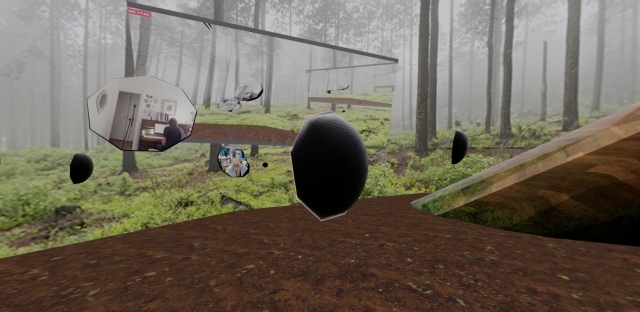
“EdgeCut,” New York Live Arts. In “Captivity” and “Sanity,” EdgeCut used the Nowhere platform, placing each attendee in an oval pod they steer through fantastical landscapes to watch short presentations (dance, art installations, experimental technology demos, music videos) and talk to other viewers and the creators themselves; I’ve tried just about every form of online entertainment while we’re all sheltering in place and arts venues are closed, and nothing else comes close to this one, even given various hiccups that require patience.