Tag Archives: New York Live Arts

WINTER PERFORMANCE FESTIVALS: LIVE ARTERY

(photo by Maria Baranova)

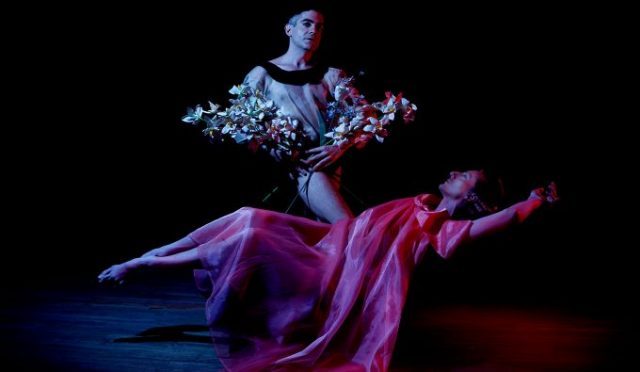
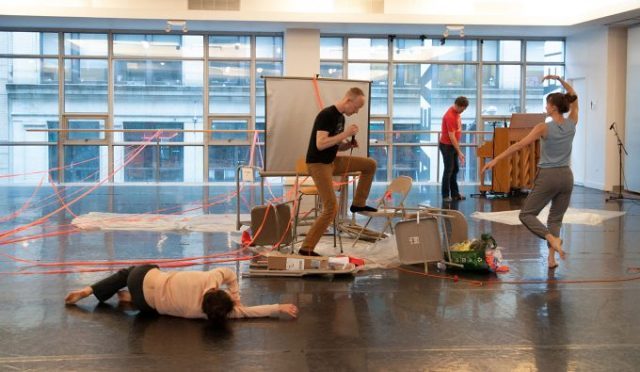
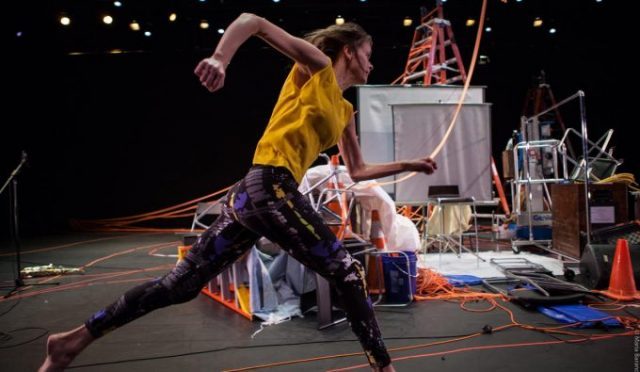
Joanna Kotze’s what will we be like when we get there returns to New York Live Arts for encore performances (photo by Maria Baranova)

LIVE ARTERY
New York Live Arts
219 West 19th St.
January 4-7, $10-$20
newyorklivearts.org

The annual Live Artery winter performance festival at New York Live Arts brings back popular shows from the previous year as well as advance looks at works-in-progress. This year’s creators include such fab dancers and choreographers and twi-ny faves as Jack Ferver, Kimberly Bartosik, Yanira Castro, Netta Yerushalmy, and Joanna Kotze, with tickets between twenty and thirty bucks.

what will we be like when we get there, by Joanna Kotze, January 4, 8:00, and January 5, 12 noon, $20

Last Audience, by Yanira Castro / a canary torsi, January 5, 5:00, $10

I hunger for you, by Kimberly Bartosik / daela, January 5, 7:00, January 7, 5:00, $10

Body Comes Apart, by Molly Lieber & Eleanor Smith, January 6, 2:00, $10

Paramodernities (3 Installments), by Netta Yerushalmy, January 7, 7:00, $10

BILL SHANNON: TOUCH UPDATE

(photo courtesy Kelly-Strayhorn)

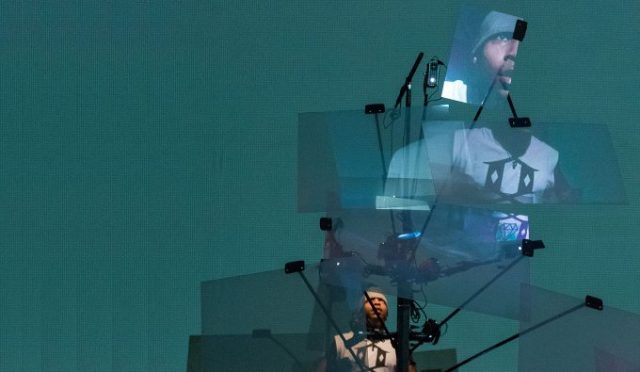
Bill Shannon’s multidisciplinary Touch Update will be presented at New York Live Arts this week (photo courtesy Kelly Strayhorn Theater)

New York Live Arts
219 West 19th St. between Seventh & Eighth Aves.
November 14-17, $15-$20, 7:30
212-924-0077
newyorklivearts.org
www.whatiswhat.com

Extraordinary multidisciplinary artist Bill Shannon brings his latest project, the multimedia Touch Update, to New York Live Arts this week, accompanied by special programs. Shannon is best known for his performances and unique technique using crutches, as he was born with a degenerative hip condition. But that hasn’t stopped Shannon from skateboarding through the Financial District, moving through Duarte Square and Governors Island, and appearing at the Maker Faire in Queens. Over the years, he has been adding cutting-edge technology to his performances and installations, culminating in Touch Update, which incorporates dance, theater, prerecorded and live video, and a cubist mask onto which images are projected; Shannon met with neuroscientists to get everything just right. “It’s built around basic philosophical questions about humanity: Can people change?” he says in an online promo piece in which he also calls the show “a response to the filter of social and digital media and how humans interact.” The seventy-minute work, which was developed at a residency at the Kelly Strayhorn Theater in Pittsburgh, includes reverse engineering of the Shannon Technique for those who do not require crutches and will be performed by Raphael Botelho Nepomuceno, Ron Chunn Jr., Teena Marie Custer, Anna Thompson and Taylor Knight of slowdanger, Jacquea Mae, Cornelius Henke, and David Whitewolf. The November 15 show will be followed by a Stay Late Conversation moderated by Jennifer Edwards; there will also be a Reverse Engineering Workshop ($15) on November 17 at 1:00 and a lecture, “The Condition Arriving” ($10, $5 with ticket), the same day at 5:00.

NICK CAVE: THE LET GO / WEATHER OR NOT / THESE BAGS WE CARRY ARE FILLED WITH PROMISE

(photo by James Ewing)

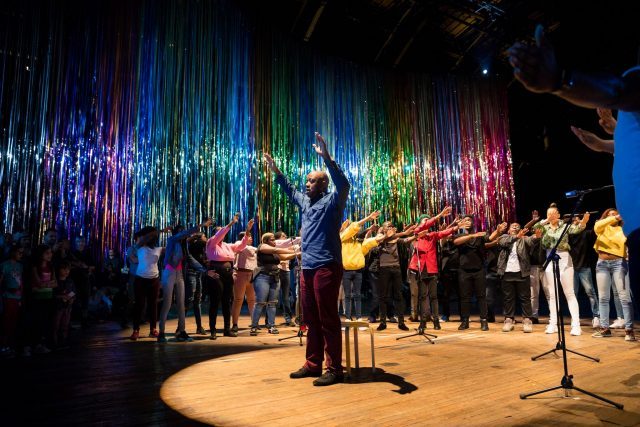
Jorell Williams holds his hands up near the beginning of Nick Cave’s Up Right presentation at the Park Avenue Armory (photo by James Ewing)

Park Avenue Armory and other locations
Wade Thompson Drill Hall
643 Park Ave. between 66th & 67th Sts.
Through July 1, $17-$45
www.armoryonpark.org
nickcaveart.com

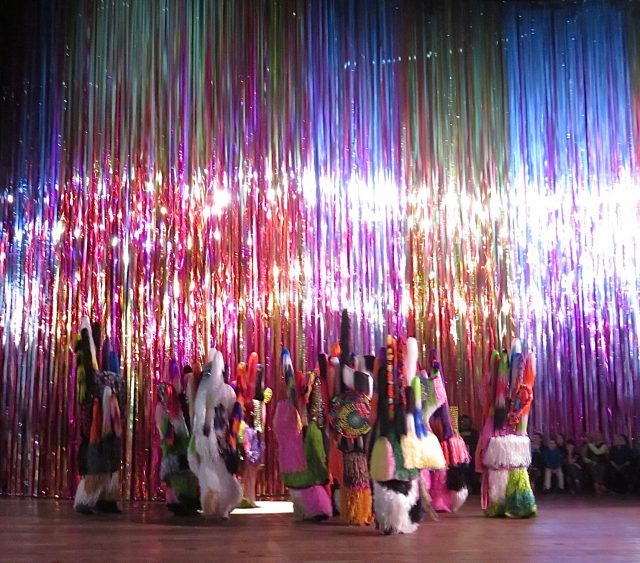
Multidisciplinary artist and fashion educator Nick Cave offers relief and release from these hard times with Up Right, a ritual-laden immersive performance that slowly builds to an explosive dance party in the massive Wade Thompson Drill Hall in the Park Avenue Armory, part of his major installation The Let Go. As visitors enter the hall, they encounter the hundred-foot-long, forty-foot-high “chase,” two enormous curtains made of many-colored Mylar strips, representing social justice, that glitter in the light as they glide across the space. You can walk through them, but don’t sit on any of the small stools among them, which are for the performers. Ticket holders sit on the periphery on the floor, on benches, or in folding chairs as the curtains stop moving and Darrell Nickens begins playing the piano. Members of Vy Higginsen’s Sing Harlem Choir, consisting primarily of teen girls of color, enter the room, followed by a dozen men with their hands up, in the now-all-too-familiar “Don’t shoot” pose. Jorell Williams starts singing the gospel classic “Wonderful Change” while he and the other men sit in the stools and are dressed by men and women in white lab coats, putting them in Cave’s shaman-like soundsuits, made of colorful accessories that completely cover the body, hiding their gender, age, race, ethnicity, etc. The Sing Harlem Choir then performs a gospel version of Rodgers and Hammerstein’s “You’ll Never Walk Alone,” from Carousel, as the men in the soundsuits march and dance around the room to choreography by Francesca Harper and Cave and approach some audience members, taking their hands and making connections. It’s all rather tame, obvious, overly simplistic, and repetitive, like the United Colors of Benetton telling us that we can indeed all get along. But after the ninety-minute show, the hall turns into a dance party where some of the performers return and move and groove to the hot beats with anyone who wants to now cut loose as “chase” winds around the space again.

(photo by twi-ny/mdr)

Nick Cave’s soundsuits are activated as part of The Let Go (photo by twi-ny/mdr)

Taking place Wednesdays through Fridays through July 1, Up Right ($35, 8:00) is only one of a number of Let Go programs that are part of the installation, which is curated by Tom Eccles. On Saturdays and Sundays, the general installation is open to the public ($17, 11:00 am to 6:00 pm), with DJs getting things rocking at 2:00, including Joe Claussell on June 16, JD Samson on June 17, Noise Cans on June 23, Sabine Blaizin on June 24, Sammy Jo on June 30, and Tedd Patterson on July 1, with games of Twister, Soul Train lines, soundsuit invasions, a special line dance that you can rehearse here, and more. Numerous sections of the soundsuits are on display in various period rooms, bursting with color and mystery. On June 14 ($25, 7:00), the Freedom Ball should be a splashy evening of fashion, music, and dance, hosted by Matthew Placek and featuring Marshall Jefferson, Ladyfag, Papi Juice, Saada of Everyday People, and others. There will be a Dress to Express ball-style costume contest at 11:00 with $20,000 in prize money spread around three categories, State of the World, Unlike Anything Else, and Dare-Flair; among the judges are artist Mickalene Thomas, art collector and consultant Racquel Chevremon, and Cave. And on June 26 ($45, 7:30), “An Evening of Artistic Responses: The Let Go” brings together songwriter and musician Nona Hendryx, vocalist and artist Helga Davis, dancer and choreographer Harper, and FLEXN dance pioneer Reggie (Regg Roc) Gray and the D.R.E.A.M. Ring for site-specific performative responses curated by Cave, who in 2013 transformed Grand Central Terminal’s Vanderbilt Hall into a wildly inventive petting zoo for “Heard•NY.”

(photo by twi-ny/mdr)

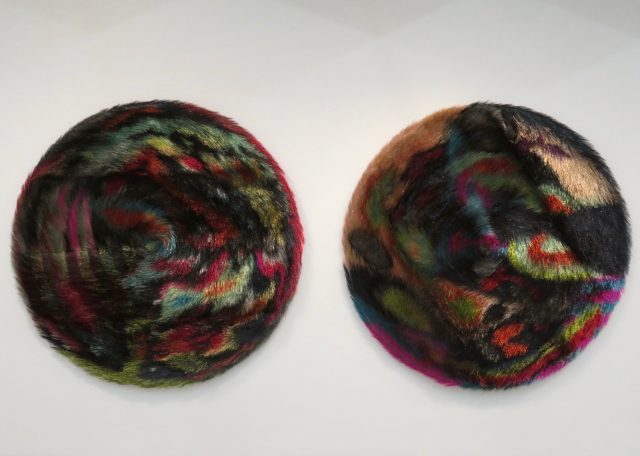
Nick Cave’s Tondos deliver a critical message in “Weather or Not” at Jack Shainman Gallery in Chelsea (photo by twi-ny/mdr)

Cave fans will also want to check out “These bags we carry are filled with promise,” the new kaleidoscopic three-dimensional mural he and his design collaborator, Bob Faust, have installed in the lobby of New York Live Arts; the opening reception is June 15 from 4:30 to 6:30. On view through September, the soundsuit mural is made from woven bags and is meant to represent the hopes, dreams, and aspirations we all carry inside us but don’t always let out. And through June 23, Cave’s “Weather or Not” exhibition at Jack Shainman in Chelsea is a gorgeous collection of eye-catching wire Tondos that swirl with life on the walls; the mesmerizing, bold colors are based on weather patterns, but they’re superimposed on barely visible scans of the brains of black youths suffering from PTSD because of gun violence. As always, Cave offers beauty and originality tinged with both hope and fear.

LIVE IDEAS: RADICAL VISION

Public Reading on Democracy

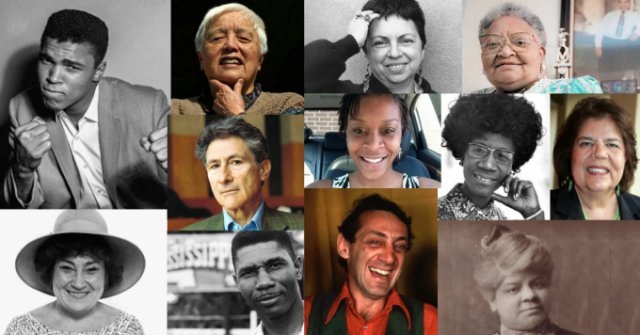
“Public Reading on Democracy” at Live Ideas festival features Tamar-kali, Aisha Tandiwe-Bell, Greg Tate, Liz Abzug, and others reading works by Medgar Evers, Ida B. Wells, Muhammad Ali, Shirley Chisholm, Harvey Milk, Bella Abzug, and more

New York Live Arts
219 West 19th St. between Seventh & Eighth Aves.
April 18-22, free – $30
212-924-0077
newyorklivearts.org

The annual Live Ideas festival at New York Live Arts has previously explored the legacies of Dr. Oliver Sacks and James Baldwin, examined social, political, artistic, and environmental issues (curated by Laurie Anderson), and looked into a nonbinary future (curated by Mx Justin Vivian Bond). The five-day 2018 festival, “Radical Vision,” asks such questions as “How do we not simply protect democracy but make it stronger?,” “What are new (radical) ways forward — ways that go to the roots of our current democratic crisis?,” “What is your radical vision of Democracy?,” and “What would you give up to make it real?” New York Live Arts will host live performances, panel discussions, special presentations, and participatory events addressing these issues, kicking things off on April 18 with a gala at Irving Plaza honoring Elizabeth A. Sackler and Bryan Stevenson, with performances by Bill T. Jones/Arnie Zane Company, Samora Abayomi Pinderhughes, Abby Z and the New Utility, and Esperanza Spalding. The festivities then move to New York Live Arts, with three days of free public readings on democracy, the forum “Bending Towards Justice?,” “The Press + the Resistance,” “By the People?,” and “How Do We Prepare for Trump’s Second Term?,” with such creators and thinkers as Xenobia Bailey, Lawrence Lessig, Alicia Hall Moran, Roger Berkowitz, Emily Johnson, Max Kenner, and Erin Markey. Live Ideas 2018 concludes April 22 at 7:30 ($10) with the Democrazy Ball, with DJ JLMR and performances by Daphne Always and the Dauphine of Bushwick. Below are some of the other highlights of “Radical Vision.”

Wednesday, April 18
Contents Under Pressure: Democracy in Crisis, keynote conversation with Sherrilyn Ifill and Professor Lawrence Lessig, moderated by Bill T. Jones and with an opening performance by mezzo-soprano Alicia Hall Moran with artist and puppeteer Matt Acheson, $15-$30, 6:30

Thursday, April 19
Dahlak Brathwaite: Spiritrials, one-man multidimensional play written by and starring Dahlak Brathwaite, with a score by Brathwaite and Dion Decibels, directed by Marc Bamuthi Joseph and Sean San Jose, $15-$30, 8:00

Friday, April 20
Mike Daisey: The End of Journalism, monologue, $15-$30, 8:00

Saturday, April 21
Zephyr Teachout: Hands-on Politics, workshop with Zephyr Teachout, free with advance RSVP (suggested donation $5-$10), 1:00
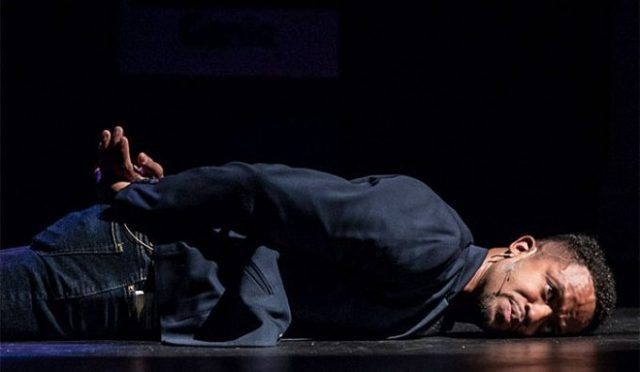
Spiritrials

Dahlak Brathwaite will perform Spiritrials at New York Live Arts’ Live Ideas festival

Resistance & Friends, with live performances by vocalist and composer Like a Villain (Holland Andrews), singer Joseph Keckler, choreographer and dancer Marguerite Hemmings, drag queen and performance artist Ragamuffin, poet and performer Saul Williams, the Bill T. Jones/Arnie Zane Company, and choreographer and dancer Keely Garfield (Mandala), hosted by drag king Elizabeth (Macha) Marrero, $15-$25, 8:00

Sunday, April 22
Cynthia Hopkins: Learn a Song of Resistance, free with advance RSVP (suggested donation $10), 11:00 am

The Secret Court, staged reading by Abingdon Theatre Company, written by members of the Plastic Theatre and conceived by Tony Speciale, $12-$15, 12:30

Kenyon Adams: Prayers of the People, a secular liturgical performance of Martin Luther King Jr.’s “Letter from a Birmingham Jail,” participatory ritual/performance conceived by Kenyon Adams (little ray), directed by Bill T. Jones, featuring Cynthia Hopkins, Padraic Costello, Vinson Fraley, Rebecca L. Hargrove, Walker Jackson, and Adams, $15-$25, 6:00
EVERYTHING IS IMAGINABLE

Jack Ferver

Jack Ferver collaborates with Reid Bartelme as well as James Whiteside, Lloyd Knight, and Garen Scribner in the world premiere of Everything Is Imaginable at New York Live Arts (photo by Jason Akira Somma)

New York Live Arts
219 West 19th St. between Seventh & Eighth Aves.
April 4-7, $15-$35, 8:00 (bonus 10:00 show on April 6)
212-924-0077
newyorklivearts.org
www.jackferver.org

A few weeks before the world premiere of Everything Is Imaginable, New York City treasure Jack Ferver tore his calf while preparing a piece for Reid Bartelme and Harriet Jung at the Guggenheim. But leave it to the Wisconsin-born actor, writer, dancer, choreographer, teacher, and director to incorporate the injury into the narrative of the two-act, seventy-minute show. As the audience enters the theater at New York Live Arts, the curtain is down, a rarity at the venue, upping the growing sense of anticipation that accompanies every Ferver work. The curtain soon opens on Jeremy Jacob’s playful set, consisting of four white cardboard columns with drawings of leaves on them, along with a central cardboard chandelier hovering at the top of a screen in the back. It immediately immerses the crowd into the wonders of Ferver’s imagination while exposing the artifice behind staged productions in general. The first act features four queer men in sheer, butt-revealing outfits dancing solos inspired by their childhood memories and one major role model: American Ballet Theater principal James Whiteside, in a short, glittering dress of silver sequins, pays tribute to Judy Garland, dancing to Garland’s version of Cole Porter’s “I Happen to Like New York”; Martha Graham principal dancer Lloyd Knight honors Graham, moving to a recording of the legendary choreographer speaking about dance; dancer and actor Garen Scribner slides across the stage in socks and does spins like his hero, champion skater Brian Boitano, to the sound of ice skates being sharpened and gliding across the ice; and longtime Ferver collaborator Bartelme, a former ballet dancer and current costume designer (as part of Reid and Harriet Design, who made the costumes for the show), wears a long orange mane and dances with horse movements, since his idol is My Little Pony. Each solo combines humor with beautiful movement, taking advantage of each dancer’s strengths while adding the charm and whimsy that are mainstays of Ferver’s choreography. The four star turns are followed by a solo about sunglasses and then an ensemble piece danced to “club music,” including a Martha Graham–esque sexualized orgy that is uproariously funny.

After a ten-minute intermission (with the curtains closed), the second act begins with Ferver (Chambre, Night Light Bright Light) by himself onstage, standing over a miniature version of the set from the first act, evoking Stonehenge from This Is Spinal Tap. In a sheer bodysuit recalling Michelle Pfeiffer’s garb as Catwoman in Batman Returns, the compact Ferver towers over the tiny columns and chandelier, emphasizing his power as a creator while also poking fun at it. Ferver talks about his calf injury, explaining how that limited his ability to dance — his doctor advised him not to move forward, which is not part of his vocabulary, literally or figuratively — and forced him to reimagine the work, and discusses his difficult childhood, friendless and bullied for his overt homosexuality; growing up gay is a regular theme in his oeuvre. As always, his stage persona is that of a devilish cherub, wild and wacky one moment, making the audience roll around their seats with laughter, and then deadly serious the next, raising disturbing elements from his life that may or may not be true, causing everyone to reconsider their reactions. He’s joined by Bartelme, who looks lovely in a fringe dress, and the two dance together to heartbreaking effect while Ferver, soldiering on despite his injury, goes on to describe his process of writing a memoir, which took place alone, terrified, in a strange house, in the dark. Ferver is no longer friendless or alone, as evidenced not only by the crowd response to the supremely personal show but by the long line of well-wishers who waited to hug and congratulate him for giving them yet another unique, meaningful, and vastly entertaining experience, shining a light on his life, and ours, as only he can.

JACK FERVER: EVERYTHING IS IMAGINABLE

Jack Ferver

Jack Ferver presents the world premiere of Everything Is Imaginable this week at New York Live Arts (photo by Jason Akira Somma)

New York Live Arts
219 West 19th St. between Seventh & Eighth Aves.
April 4-7, $15-$35, 8:00 (bonus 10:00 show on April 6)
212-924-0077
newyorklivearts.org
www.jackferver.org

Nothing is unimaginable in the fabulous world of Jack Ferver, the creator of such unique and unpredictable multidisciplinary works as Rumble Ghost, Two Alike, Chambre, Night Light Bright Light, and I Want You to Want Me. So the name of his latest piece, Everything Is Imaginable, debuting April 4-7 at New York Live Arts, makes perfect sense in his oeuvre. The Wisconsin-born actor, writer, dancer, choreographer, teacher, and director delves deep into his psyche and love of pop culture to tell compelling, tragicomic stories, teaming up with talented collaborators. In Everything Is Imaginable, Ferver has brought together five queer performers to explore gender, sexuality, love, and loss through personal tales as well as those of five other public figures while paying homage to Martha Graham.

Ferver will be joined by Graham principal dancer Lloyd Knight, American Ballet Theater principal James Whiteside, dancer and actor Garen Scribner (An American in Paris, Nederlands Dans Theater), and dancer and costume designer and Ferver regular Reid Bartelme (of Reid and Harriet Design), each of whom will get a solo that relates to their childhood as well as their role models. The scenic and sound design is by visual artist Jeremy Jacob. “The queer ‘I’ is a shattered ‘I,’” Ferver said in a statement. “The queer is not only told they are unnatural but that they have chosen to be so. The result of this shattering creates a slipperiness of self, an ability to coalesce into a performance without a center. This fragmentation, this relentless brokenness that continuously seeks stability and fails, is very much inside my work.” Ferver has a rabid fan base, so get your tickets now. And for a peek at what else he is been up to of late, check out JbDubs’ very NSFW “Duck Hunt” video, which was choreographed by Ferver and Whiteside and stars Ferver. (The April 5 performance of Everything Is Imaginable will be followed by a Stay Late Conversation with the performers.)

WHAT WILL WE BE LIKE WHEN WE GET THERE

Joanna Kotze’s What will we be like when we get there will make its world premiere March 28-31 at New York Live Arts (photo by Carolyn Silverman)

Joanna Kotze explores space, time, connection, collaboration, and communication in What will we be like when we get there at New York Live Arts (photo by Carolyn Silverman)

New York Live Arts
219 West 19th St. between Seventh & Eighth Aves.
March 28-31, $15-$25, 7:30
212-924-0077
newyorklivearts.org
www.joannakotze.com

It’s not exactly clear when Joanna Kotze’s What will we be like when we get there begins and ends — at a talkback moderated by Okwui Okpokwasili following the March 29 performance, one audience member said she wasn’t sure if the show was still going on. Such is the mystery, magic, madness, and mayhem of this world premiere, taking place at New York Live Arts through March 31. South Africa-born, Brooklyn-based dancer, choreographer, and teacher Kotze kicks off the evening by pointing out the exits, telling the audience to turn off their cell phones, and describing the origins of this collaboration with visual artist Jonathan Allen, sound designer, composer, and musician Ryan Seaton, and dancer and choreographer Netta Yerushalmy. However, Kotze’s speech starts hesitating as she drifts toward the floor, holding the microphone stand in awkward positions. Yerushalmy comes out and lies down on her side at the front of the stage, facing the back. Seaton pushes a heavy piano back and forth, perhaps a reference to Luis Buñuel and Salvador Dalí’s Un Chien Andalou. Allen lays orange gaffer’s tape from a ladder onto other objects as well as on the floor, creating new physical spaces in the air and on the ground. Seaton (Callers) plays electronic music from a laptop, then runs to a saxophone or grabs a clarinet and plays it. Allen (whose related paintings, “Knowing That Your House Is on Fire,” are on view in the lobby) gets continually knocked over by Yerushalmy (Paramodernities), who, after a long period hiding her face, finally reveals herself to the crowd but later teases it with potential nudity. Kotze jumps onto an empty chair in the audience and takes a breather on the steps. Allen collects nearly everything not bolted down — folding chairs, a cart, monitors, mechanical equipment — and moves it to the middle of the stage, as if a Wizard of Oz-like cyclone is scooping up whatever is in its path. For seventy-five minutes, with the house lights on, the four friends engage in a series of set pieces exploring connection and communication in a stormy world, incorporating large doses of absurdity and humor. Bessie winner Kotze (FIND YOURSELF HERE; It Happened It Had Happened It Is Happening It Will Happen) takes advantage of every part of the New York Live Arts Theater, immersing the audience in the vast unpredictability of life in the twenty-first century through an exhilarating controlled chaos. The quartet eventually stands together and bows, but a day later I’m still not sure it’s over, as Kotze alludes to in the title of this thrilling work.