Tag Archives: New York Live Arts

LIVE ARTERY

Juliana F. May / MAYDANCE will present GUTTER GATE during Live Artery festival at New York Live Arts

New York Live Arts
219 West 19th St. between Seventh & Eighth Aves.
January 6-8, advance reservations required
212-691-6500
www.newyorklivearts.org

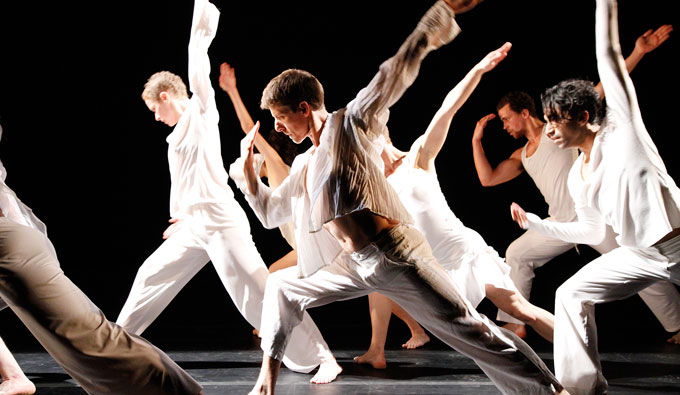
In conjunction with this week’s APAP/NYC 2012 Conference, New York Live Arts is hosting “Live Artery,” an exciting series of performances consisting of previously featured pieces and works in progress. Taking place January 6-8 in the David R. White Studio, Jerome Robbins Studio, and Bessie Schönberg Theater, the mini-festival includes Juliana F. May / MAYDANCE’s Gutter Gate, Jodi Melnick’s Solo, Deluxe version, Reggie Wilson’s theREVISITATION, Yasuko Yokoshi’s Bell,, David Neumann’s Restless Eye,, Levi Gonzalez’s intimacy, and Bill T. Jones / Arnie Zane Dance Company presenting excerpts from Story/Time, Body Against the Body, and D-Man in the Waters. During the weekend, the Live Lounge in the lobby will offer complimentary wine and snacks, free WiFi, and a place for performers, presenters, fans, and others to congregate.

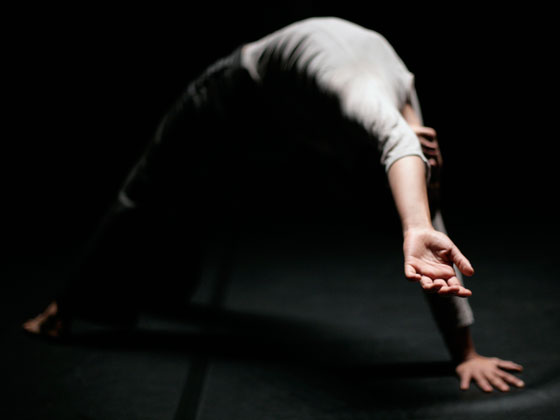
Update: First presented at Dance Theater Workshop in February 2011, Juliana F. May / MAYDANCE’s Gutter Gate made an extremely welcome return January 6-7 to the space, now known as New York Live Arts, as part of the annual APAP/NYC Conference. With the audience sitting in a single row of folding chairs on three sides of the stage, Ben Asriel, Madeline Best, Anna Carapetyan, Eleanor Smith, and Maggie Thom emerge in the center with chairs of their own, Joan Baez’s rollicking country cover of Bob Dylan’s “Simple Twist of Fate” playing on the soundtrack, begining a thrilling sixty minutes of abstract movement inspired by Aristotle’s theories of causality and necessity. The dancers remove the chairs and run around the floor individually and in unison, removing parts of their clothing as they stop, pause, approach the audience, break off into pairs, put their clothing back on, then take it off again. Soon they are making guttural sounds that threaten to cross the line into questionable performance art but always manage to stay on track as the dancers’ communicate with one another and the audience via different forms of verbal and physical language, including flopping breasts and penis and Thom’s darting eyes, which perform a dance all their own. The movements are beautiful, devolving into ever-more elemental gestures, coinciding with Chris Seeds’s electronic score, which eventually fades into silence.

EMILY JOHNSON/CATALYST: THE THANK-YOU BAR

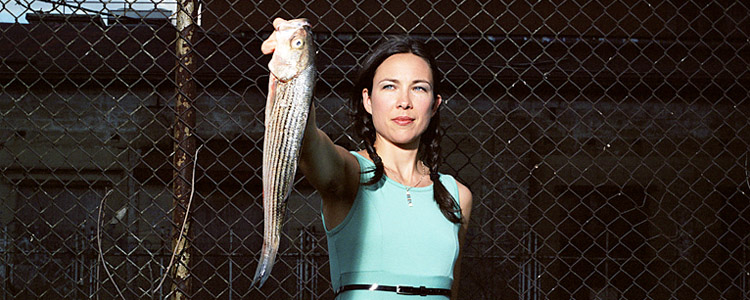
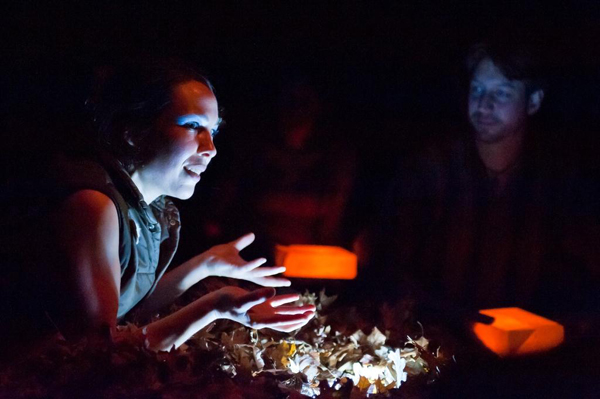
Emily Johnson offers the audience glowing surprises in THE THANK-YOU BAR (photo by Ian Douglas)

New York Live Arts
Bessie Schönberg Theater
219 West 19th St. between Seventh & Eighth Aves.
Through November 12, $15-$20
212-691-6500
www.newyorklivearts.org
www.catalystdance.com

Every once in a while, something comes along that’s so delightfully fresh and invigorating, so new, that you want to shout about it from the rooftop and out windows so everyone can know about it. (Well, at least in the old days. Now you can just write about it on your blog.) Emily Johnson’s The Thank-you Bar is just such an experience. To say too much about it would be giving it away, but for about an hour, Johnson and composers James Everest and Joel Pickard of BLACKFISH put on a dazzlingly original display of dance, video, live music, storytelling, and performance art, filled with surprises that at times engage the audience in the offbeat goings-on. Johnson is a charming performer and ringleader with a sly sense of humor, beaming with a contagious smile as she comments directly and indirectly on the very serious concepts of home and individual identity. A native Alaskan of Yup’ik descent, the Minneapolis-based Johnson has reconfigured the piece specifically for New York Live Arts, where it continues through Saturday night. We won’t say any more about it, but you can read Johnson discuss it in our twi-ny talk here.

TWI-NY TALK: EMILY JOHNSON

Emily Johnson explores home and heritage in THE THANK-YOU BAR (photo by Cameron Wittig)

THE THANK-YOU BAR
New York Live Arts
Bessie Schönberg Theater
219 West 19th St. between Seventh & Eighth Aves.
November 9-12, $15-$20
212-691-6500
www.newyorklivearts.org
www.catalystdance.com

“I want to make work that looks at identity and cultural responsibility — that is beautiful and powerful — full of myth and truth at the same time,” choreographer Emily Johnson explains in her mission statement. “I want to be grounded in my heritage, supported by my community, and giving back — always.” Born in Alaska of Yup’ik descent and based in Minneapolis, Johnson has been creating site-specific dance installations in collaboration with visual artists and musicians since 1998, exploring ideas of home, identity, and the natural world through different modes of storytelling. Her latest multimedia performance piece is The Thank-you Bar, running at New York Live Arts from November 9 to 12. A collaboration with musicians James Everest and Joel Pickard of BLACKFISH, who will play a special set on the final night, the performance installation also includes beadwork by Karen Beaver and paper sculptures by Krista Kelley Walsh. The extremely eloquent and thoughtful Johnson carefully considered our questions for our latest twi-ny talk; she will also participate in a preshow chat on November 9 with NYLA artistic director Carla Peterson as well as a discussion on November 11 with dancer-choreographer Reggie Wilson following the 9:30 show.

twi-ny: In her Context Notes about The Thank-you Bar on the New York Live Arts blog, Biba Bell is taken by your voiceover “What is becoming more clear to me is what I’m missing,” asking the questions “How many moments are passed, paused or pregnant with the sense of what is missed — something, someone, someplace? What do they sound like, smell like, and how do they feel?” What are some of the things you are missing, and how do they drive your artistic creation?

Emily Johnson: I said that — about the missing — because I am feeling years accumulate. What is absent is becoming an acute pain and it makes me feel old, most simply because of what has already gone by. I have missed my niece and nephew growing up because I was in Minneapolis, making dance, while they were in Alaska. I miss many, many mornings with my grandma — casual mornings of coffee, where we sit around, she doing crosswords until a story comes out. If I’m not around, I simply miss the story and I miss the time. And this creates the yearning — or heightens it, at the very least. I long for these stories. I long for the time with my elders, the time with my niece and nephew and rest of my family. And it points to what might not be: How much longer can I wait to learn the Yup’ik language, helped along by my grandma — the only one in my family who speaks it? How much longer can my body make do without feeling the ground of Alaska beneath my feet on a regular, day in and day out basis? What disservice do I do my life when I let these things pass me by?

Eventually, time runs out. Every summer I go home for the salmon run and I am trying to imprint the process of putting the salmon up (cleaning, smoking, kippuring, freezing . . .) into my brain so that when it comes my time to take charge of making it happen I will be able to do so. These are some of the things I am missing, and the absence and the longing are so real that it creates a new version of life. Biba’s questions about sounds, smell, feel — this is exactly what drives me. As I created The Thank-you Bar, a work very much about missing home/land, I thought about how our bodies miss, how our minds remember — not a scientific how, but a how related to our own perceptions of our experiences. When a thread of a Crystal Gayle song comes on, I am brought back to the jukebox at my grandma’s bar; when I think about the mountains near my Alaskan home, my chest aches and for some reason it also feels like I am diving into a very cold lake, exhilarating my being. And the thoughts about where and when also make me think of the future.

When I make dances, I try to imagine the future. I get curious about what images, reactions, or stories the audience might remember four days after seeing a performance. This leads me to structure dances with a focused attention on the smallest of details: what the audience might walk on as they enter the space, what they might smell during a particular story. . . . It makes me consider what I can leave out of the equation so as to let conjecture and interpretation have a role in the room.

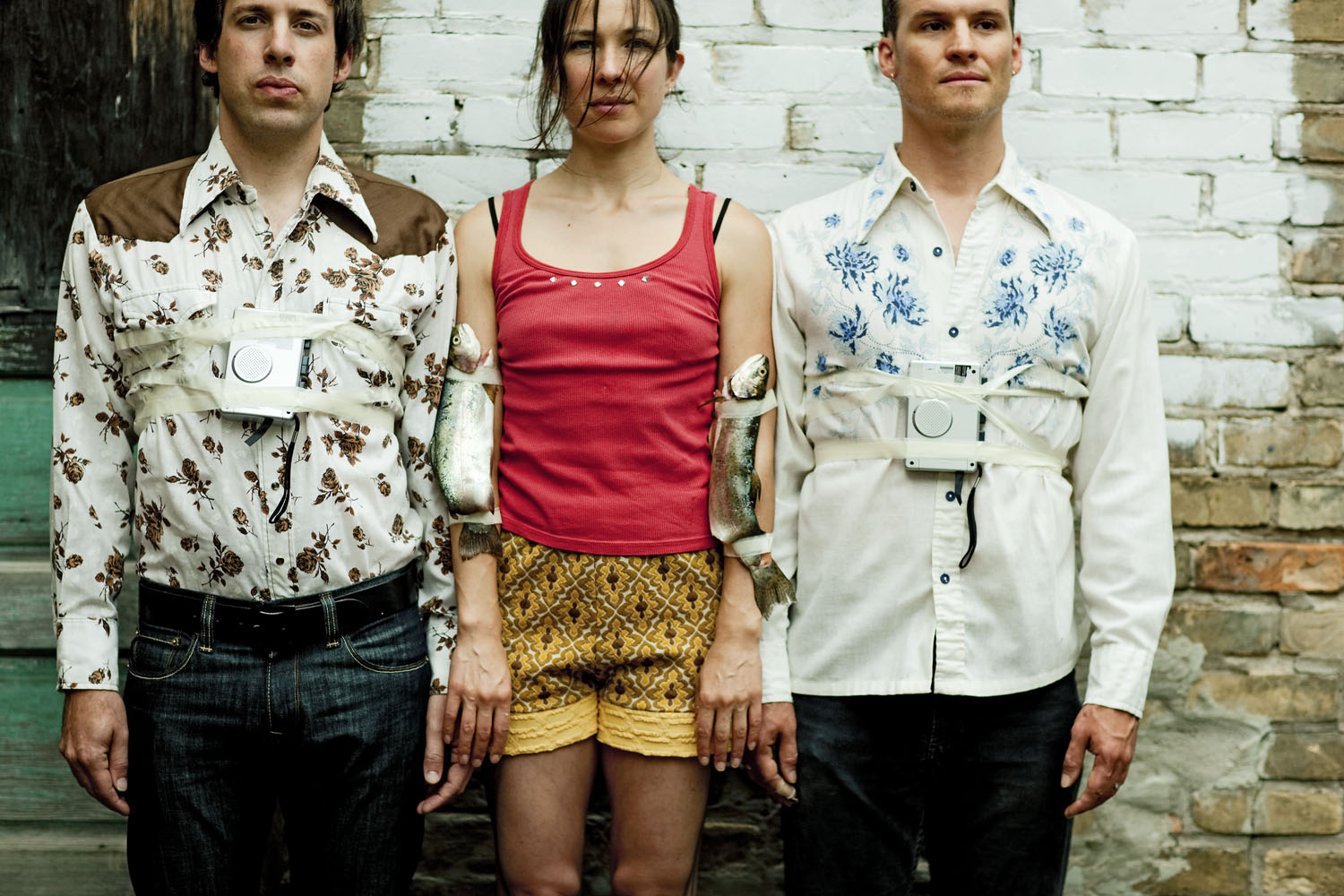
Emily Johnson has teamed up with James Everest and Joel Pickard of BLACKFISH and others in THE THANK-YOU BAR (photo by Cameron Wittig)

twi-ny: The Thank-you Bar and its companion exhibit, “This Is Displacement,” explore the idea of home. You were born in Alaska, you’re based in Minneapolis, and you’re now presenting the New York premiere of a work that has previously been performed in Oklahoma, Houston, and other locations. Where is home for you?

Emily Johnson: The most specific, locating answer is that I have two homes: one in Minneapolis, the other in Alaska. I love both places, and the home in Minneapolis is actually more concrete: it has my stuff in it. The home in Alaska feels expansive and like it goes on for thousands of years, probably because it doesn’t actually have any walls. I don’t have a living space in Alaska, but it’s where I come from and where I continually return to.

To be honest, I try to build another home for myself and audiences in The Thank-you Bar. Does this mean I am searching? Does this mean I believe we can adapt to any longing, and dislocation? I build the home by trying to bring attention to the building we are in and the people who are gathered in the room. I try to imagine the walls gone; I try to imagine what was here before the current incarnation. I want the feeling of “home” to lead to a kind of intimacy so that people feel comfortable, responsible even, for it. I think we tend to look at things as static when, in reality, our bodies and places house past, present, and future, at once. It’s anything but static and it’s kind of exciting to tap into.

twi-ny: You collaborated with James Everest and Joel Pickard of BLACKFISH on The Thank-you Bar, and the duo will be playing a special concert on November 12. What is it about their music that draws you to them and made you want to work with them?

Emily Johnson: BLACKFISH music is dramatically mind altering for me. When James [Everest], Joel [Pickard], and I started work, part of our process was to improvise together in a room, daily. We’ve continued that process, as much as we can when we tour, and out of it James and Joel created their project, BLACKFISH. As BLACKFISH, they perform improvised concerts in conjunction with our tours. I love their concerts — and I love that they’ve developed this entire project out of The Thank-you Bar. On the twelfth, they’re releasing a gorgeous limited edition, letter-pressed, eight-CD collection of some of the concerts they’ve recorded over the past two years. John Scott heard their concert in Vermont this summer and has since worked with them for music for his new work. He very endearingly asked my permission first.

In The Thank-you Bar, they don’t play as BLACKFISH; they play as James and Joel. What I most appreciate about them is their specificity and dedication to improvisation. The music they composed for The Thank-you Bar is set; it came from improvisations, from bouts of memory and discussions of the jukebox I mentioned (that at my grandma’s was filled with classic country). The sound of dislocation and rerouting to find home is what they built for The Thank-you Bar. It makes me want to work with them again and again.

One day, early in the process, I was rehearsing in a separate studio. I came down and they told me to sit on the floor. They proceeded to play music that layered inch by inch and sound by sound, as they appeared and disappeared, until a reverberating chorus echoed off the walls. I remember slapping the floor and exclaiming/laughing at the genius of it. Them: missing. Music: building. We’ve kept it. They basically choreographed the beginning of the dance.
JOHN KELLY: FIND MY WAY HOME

John Kelly’s FIND MY WAY HOME has found its way home at New York Live Arts

New York Live Arts
Bessie Schönberg Theater
219 West 19th St. between Seventh & Eighth Aves.
October 21-23, 25-29, $15-$40
212-691-6500
www.newyorklivearts.org
www.johnkellyperformance.org

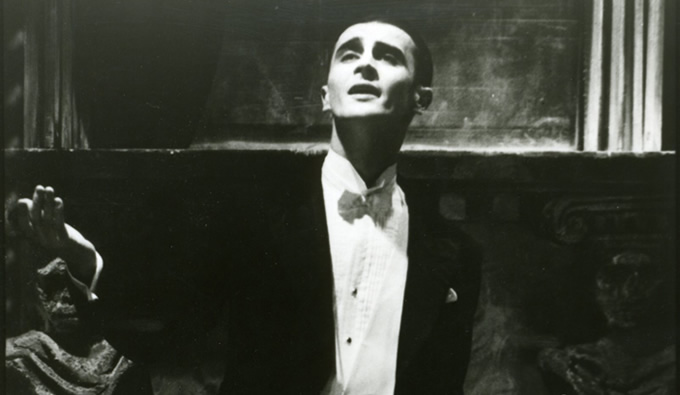
Over the past several years, innovative multidisciplinary performance artist John Kelly has been revisiting past works while also continuing to challenge himself and his audience in exciting new pieces, whether it’s a final restaging of Pass the Bluttwurst, Bitte at La MaMa last year or the world premiere of the highly adventurous The Escape Artist at P.S. 122 this past April. Kelly is currently revising his Bessie Award-winning Find My Way Home at New York Live Arts, the new name for the space where it was commissioned in 1988, by the former Dance Theater Workshop. (So one could say that is has indeed found its way home.) Set during the Great Depression, Find My Way Home, which recently held open rehearsals at the Museum of Arts and Design as part of that institution’s Risk + Reward series, is a reimagining of the Orpheus myth that also incorporates elements of the AIDS epidemic of the 1980s. Featuring eleven dancers and singers and film projections, Find My Way Home runs at NYLA through October 29; there will be a preshow talk October 25 with Lucy Sexton and a postshow talk October 28 with Bonnie Marranca. Kelly is a mesmerizing performer with an endlessly creative mind who is always worth watching, no matter what he is doing, so we cannot recommend this show highly enough.

John Kelly reimagines the tale of Orpheus and Eurydice in wonderful new production of FIND MY WAY HOME

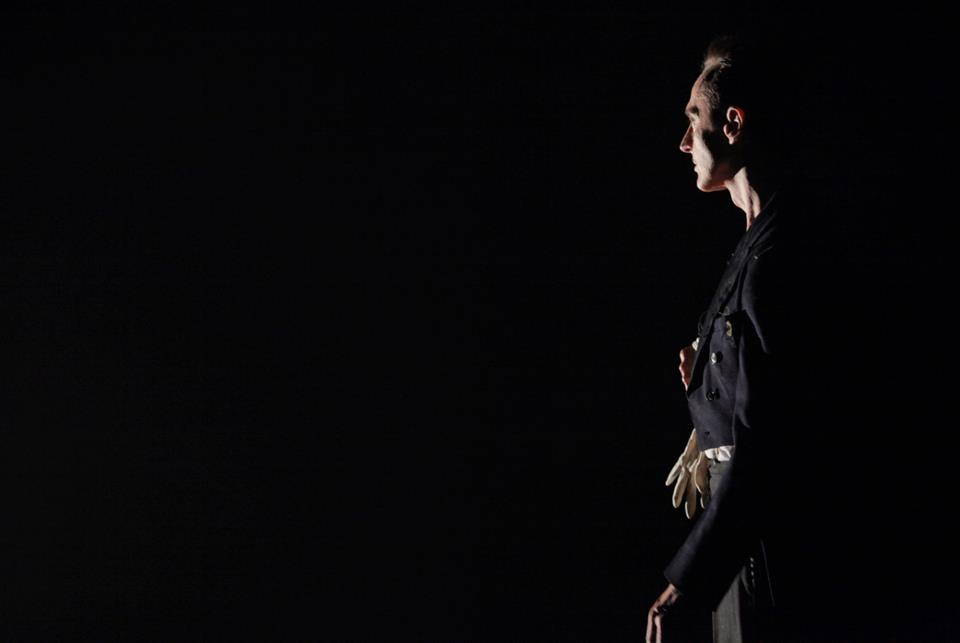
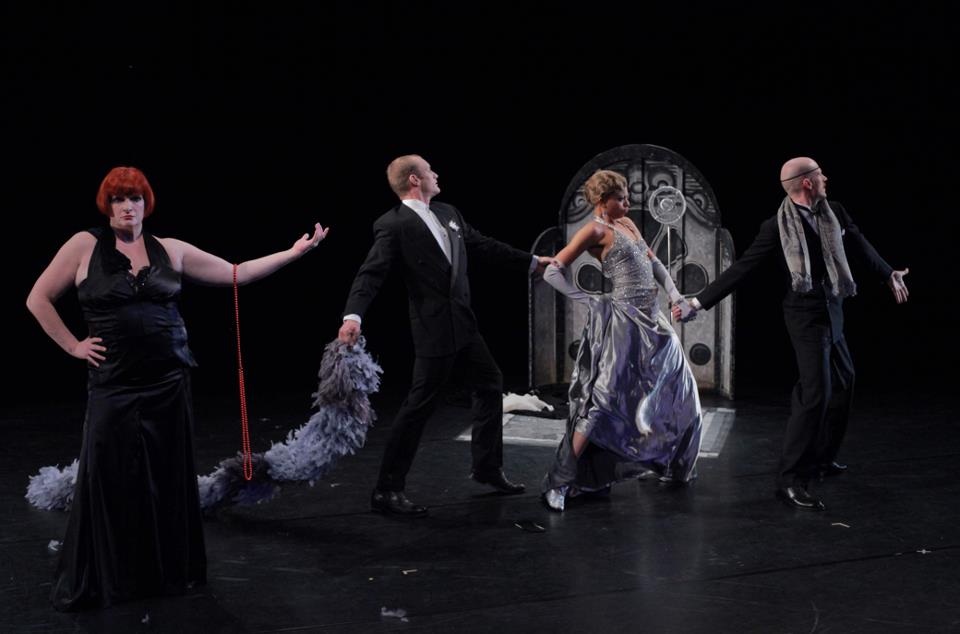
Update: When John Kelly first presented Find My Way Home at Dance Theater Workshop in 1988, it was infused with the growing AIDS epidemic, dealing with the horrific loss being suffered particularly in the arts community. He brought it back ten years later, and he has revised it yet again, in a wonderfully fresh version running at New York Live Arts through October 29. Even though Find My Way Home 3.0 is set during the Great Depression, it is hard not to think of the current financial crisis and the Occupy Wall Street movement, as the multimedia production opens with obscenely wealthy aristocrats (Daniel Squire, Cecelia Jones, Aaron Mattocks, and original cast member Marleen Menard) treating parlour maid Eurydice (Kyle de Camp, also returning from the original production) like a slave, the rich abusing the poor. Radio crooner Orfeo (Kelly) arrives and sings in front of a faux fireplace, focusing his attention on the maid, and the two soon run away together, Orfeo ripping off Eurydice’s French maid outfit to reveal a sexy red dress. But their love comes to a screeching halt when a car runs them over, killing Eurydice and blinding Orfeo, who then travels to the Underworld to try to get her back and rekindle their passionate flame. Find My Way Home features virtually no dialogue, instead playing out like an old-time silent film, going back and forth between black and white and color, with live musical accompaniment by pianist Alan Johnson, cellist Mary Wooten, and vocalists Philip Anderson, Amanda Boyd, Gregory Purnhagen, and Barbara Rearick. Carefully choreographed movement, Anthony Chase’s ghostly filmed projections, and Stan Pressner’s lighting design — which includes an effective strobe light scene and another in which Orfeo crawls across windowlike rectangles glowing across the floor — combine with popular songs by Cole Porter, Noël Coward, and George Gershwin and classical music and opera pieces by Alban Berg, Claude Debussy, Giuseppe Verdi, and of course, Christoph Willibald Gluck’s Orfeo ed Eurydice to create a stirring production that honors its past while still remaining relevant today. (To further that, a lobby exhibition displays several of Kelly’s 1988 preparatory drawings, a video of rehearsals for the original production, and the remaining section of set designer Huck Snyder’s backdrop; Snyder died of AIDS in 1993 at the age of thirty-nine.) It is absolutely thrilling that Find My Way Home has indeed found its way home.

CROSSING THE LINE: RACHID OURAMDANE

Rachid Ouramdane will explore political ideology and torture in two presentations at FIAF’s Crossing the Line Festival (photo © Patrick Imbert)

New York Live Arts
Bessie Schönberg Theater
219 West 19th St. between Seventh & Eighth Aves.
ORDINARY WITNESSES: Tuesday, October 11, $24-$30, 6:30, and Wednesday, October 12, $15, 7:30
WORLD FAIR: Thursday, October 14, and Friday, October 15, $24-$30, 7:30
212-691-6500
www.newyorklivearts.org
www.rachidouramdane.com

Paris-based dancer-choreographer Rachid Ouramdane, who founded the L’A company in 2007, will be presenting a pair of fascinating programs at New York Live Arts as part of the “Endurance/Resistance/Inspiration” section of the French Institute Alliance Française’s fifth annual Crossing the Line Festival. On October 11 & 12, Ordinary Witnesses examines torture, memory, and identity in a violent world. Ouramdane, who interviewed victims of torture in putting together the evening-length piece, writes that Ordinary Witnesses takes place “at the edges of civilization and the gateways to barbarity. The instant where people exit humanity to be cast into the jaws of torture.” He continues, “Doing a portrait of people who lived through torture is an attempt to depict the unpresentable. . . . It is about trying to grasp the imagination of those who experienced such atrocities, so that this experience does not remain hushed up. It is also about awareness of history’s repeated violence now that torture seems to be tolerated and even legitimate at the very core of our democracies.” Ouramdane will give a preshow talk on October 11 and participate in a conversation with the PEN American Center’s Larry Siems following the October 12 show. On October 14 & 15, Ouramdane will stage World Fair, an exploration of the human body as it relates to social and political ideology, performed by Ouramdane and multi-instrumentalist Jean-Baptiste Julien, with an artist talk following the October 14 show.

Rachid Ouramdane’s ORDINARY WITNESSES offers an extraordinary look at torture

Update: The son of an Algerian father who was tortured, Rachid Ouramdane has been making the sociopolitical physical in such works as Cover, Discreet Death, and Far . . . , examining memory and identity through multimedia presentations involving progressive movement. On October 11 he and his Paris-based L’A company performed the mesmerizing Ordinary Witnesses at New York Live Arts, part of FIAF’s Crossing the Line interdisciplinary international arts festival. The show begins with a man’s voice detailing his emotions — or lack thereof — as he describes his reaction to having been the victim of torture. He speaks in French, his words translated on the back wall. After several minutes, Lora Juodkaite, Mille Lundt, Jean-Claude Nelson, Georgina Vila-Bruch, and Jean-Baptiste André emerge onto Sylvain Giraudeau’s dark, bare stage, their faces blank as they walk slowly around a rectangular video frame lying flat on the floor and, in one corner, a grid of sixty spotlights that go on and off at various intervals and at different levels of brightness (at times evoking interrogation lights). The dancers occasionally stop, fall to the floor, adopt yogalike poses, and then move on as Jean-Baptiste Julien’s subtle electronic score, including the low buzz of feedback from an onstage electric guitar, hovers ominously above them. At one point a female dancer breaks into a nearly endless twirl, spinning around and around in a dizzying display of agility and sheer breathlessness; watching her, one wonders just how long she can continue, the audience wanting to call out and stop the torture but too amazed to do so. Although it does get repetitive and goes on slightly too long — perhaps echoing the repetitiveness of torture itself — Ordinary Witnesses is an emotionally powerful work that makes its purposes very clear, right from the start. There are still tickets left for the second and final performance on October 12, which will be followed by a discussion between Ouramdane and Larry Siems. Ouramdane will also be presenting his solo work, World Fair, at New York Live Arts October 14-15.

RISK + REWARD: PERFORMANCE WITHOUT BOUNDARIES

John Kelly will welcome MAD visitors into open rehearsals of his updated version of FIND MY WAY HOME

Museum of Arts & Design
2 Columbus Circle at 58th St. & Broadway
Through December 8
212-299-7777
www.madmuseum.org

The Museum of Art & Design’s extremely promising inaugural Risk + Reward performance series kicked off last Saturday with Sarah Maxfield’s all-day site-specific “Knowing the Score: An Investigation of Improvisational Structures” and continues this week with John Kelly presenting a work-in-progress reexamination of his 1988 piece Find My Way Home, which was previously revised in 1998. On September 28 from 3:00 to 6:00 and September 29 from 7:00 to 9:00, museumgoers will be able to watch Kelly conduct open rehearsals for the multimedia dance-theater project, which moves the Greek myth of Orpheus, the god of music, to the Great Depression. On September 30 at 7:00, Kelly will stage a ticketed ($15-$18) concert version of the production. Last December, Kelly, whose many risks always lead to myriad rewards, revisited his wonderful Pass the Blutwurst, Bitte, at La MaMa, so we can’t wait to see what he does with Find My Way Home, which will be presented in full October 21-29 at New York Live Arts. Risk + Reward continues October 10 with the social-intervention-based performance “A New Discovery: Queer Immigration in Perspective”; on November 11-12 with Me, Michelle, a new duet about Cleopatra by choreographers Jack Ferver and Michelle Mola in conjunction with Performa 11; and concludes December 8 with “Benjamin Fredrickson, Artist,” a first-ever one-man show by the photographer dealing with his life and work.

TWI-NY TALK: BILL T. JONES

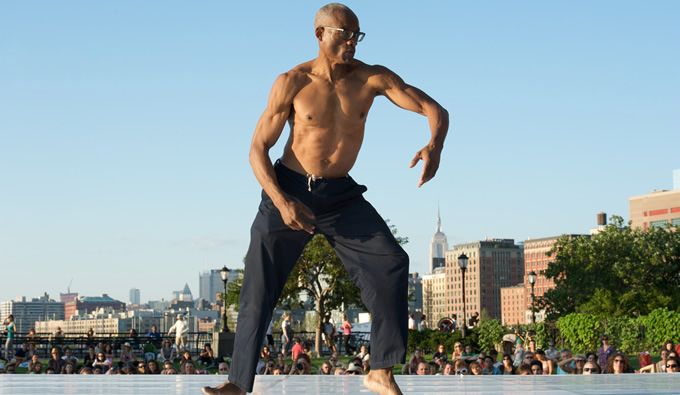
Kennedy Center honoree and two-time Tony winner Bill T. Jones begins his company’s inaugural New York Live Arts season this week

BODY AGAINST BODY
New York Live Arts
Bessie Schönberg Theater
219 West 19th St. between Seventh & Eighth Aves.
September 16-24, $32-$40 ($15 on 9/20)
212-691-6500
www.newyorklivearts.org

Last December was a big month for two-time Tony-winning choreographer Bill T. Jones (Spring Awakening, Fela!). The Florida-born dance legend, who formed the highly influential Bill T. Jones / Arnie Zane Dance Company in 1982, was awarded the prestigious Kennedy Center Honor, which he called “one of the highest moments in my life,” and he also teamed up with Dance Theater Workshop to create the artist-led New York Live Arts, which is dedicated to producing, presenting, and educating in its mission “to become a place for dance that is vital to the fabric of social and cultural life in New York, America, and beyond.”

This week Bill T. Jones / Arnie Zane Dance kicks off the inaugural New York Live Arts season with the exciting Body Against Body program: “Monkey Run Road” (1979), “Continuous Replay” (1977/1991), and “Valley Cottage: A Study” (1980) will be performed September 16, 18, 21, 23, and 25, with “Duet x 2” (1982), “Continuous Replay,” and “Blauvelt Mountain” (1980) scheduled for September 17, 20, 22, and 24. “Valley Cottage” and “Monkey Run Road” are being performed in New York for the first time since their premieres. “Continuous Replay” will also feature live music played by John Oswald or DJ Spooky as well as a rotating cast of guest performers, including Matthew Rushing from Alvin Ailey, Janet Eilber and Blakeley White-McGuire from Martha Graham, Arthur Aviles from Typical Theater, Elena Demyanenko from Trisha Brown, Jennifer Goggans from Merce Cunningham, Megan Sprenger from mvworks, and Richard Move from MoveOpolis! Jones will take part in a preshow talk with Marcia B. Siegel on September 21 and a postshow discussion with Janet Wong, DTW/NYLA artistic director Carla Peterson, and the nine-member Bill T. Jones company on September 23. The premiere gala takes place September 15. Amid this flurry of activity, Jones was able to squeeze in some time to answer a few questions from twi-ny.

twi-ny: Last December, when the merger between Bill T. Jones/Arnie Zane Dance Company and Dance Theater Workshop was announced, you said, “We are doing something that supposedly can’t be done.” Now you are about to present your first season together. How did you, in fact, get it done?

Bill T. Jones: At the core of this merger was collaboration, and that’s exactly how this inaugural season came together. Carla Peterson spearheaded the curation process, and our talented staff and board of directors have worked tirelessly to bring ideas and resources to the table to make this institution a leader in the performing arts community and a home for movement-based artists. I am very excited about the artists on our season and am proud of the new programs we’re building.

New York Live Arts season kicks off with Bill T. Jones’s “Body Against Body” program

twi-ny: For your first series of performances at NYLA, you are revisiting some of your most iconic works, including the third iteration of “Continuous Replay.” Why did you choose these particular works for this inaugural season?

BTJ: Body Against Body is a program that the company premiered earlier this year (at the ICA/Boston) and we’re now touring it extensively in the upcoming season. It only seemed fitting that we would open the inaugural season of New York Live Arts with this program: It consists of some of the earliest pieces that Arnie Zane and I created together — two of which [“Valley Cottage” and “Blauvelt Mountain”] we premiered at Dance Theater Workshop in the early ’80s.

The newest reconstruction on the program, which will premiere at New York Live Arts, is “Valley Cottage: A Study.” This work has not been seen since Arnie and I first performed it in 1981. I think collectively these seminal works give audience members a glimpse of my roots as a choreographer while also acknowledging New Yorks Live Arts’ foundation, rooted in both my company’s and Dance Theater Workshop’s history and legacy. I like to think of it as a looking back to look forward.