Tag Archives: this week at the new york film festival

NEW YORK FILM FESTIVAL: CHILD OF GOD

Scott Haze in CHILD OF GOD

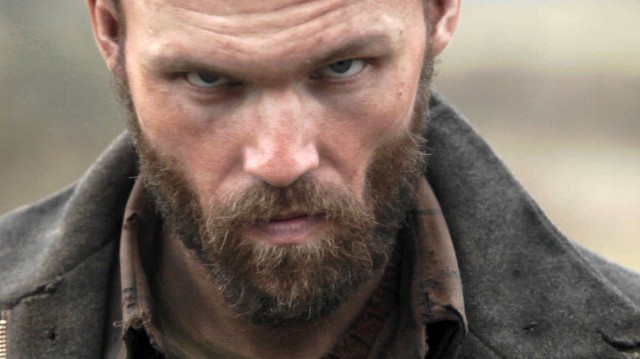
Scott Haze plays a deeply disturbed man trying to get what he believes is his in CHILD OF GOD

CHILD OF GOD (James Franco, 2013)
Film Society of Lincoln Center
Walter Reade Theater, 165 West 65th St. between Broadway & Amsterdam Ave.
Sunday, September 29, 10:15 pm
Francesca Beale Theater, 144 West 65th St. between Broadway & Amsterdam Ave.
Tuesday, October 1, 12 noon
Festival runs September 27 – October 13
212-875-5601
www.filmlinc.com

In James Franco’s faithful, brutally compelling adaptation of Cormac McCarthy’s third novel, 1973’s Child of God, Scott Haze gives a courageous, unforgettable performance as Lester Ballard, a deeply disturbed man wreaking havoc on his small rural community in Sevier County in the Tennessee mountains. “His name was Lester Ballard, child of God, much like yourself, perhaps,” a narrator intones as the film opens. But Lester is not like everyone else. He is almost more animal than man, his speech hard to understand, his face hairy and rough, his gait hurried and uneven, a reclusive soul with no ability to differentiate between right and wrong, more at home in the woods and in caves than living among other people. When he lowers his head slightly and stares right into the camera, he evokes Charles Manson filtered through Charles Bukowski, with more than a touch of Jack Nicholson in The Shining; there doesn’t seem to be an ounce of humanity in him. (McCarthy has noted that Ballard was inspired at least in part by real-life serial killer Ed Gein, who also inspired Old Leatherface in The Texas Chainsaw Massacre and Norman Bates in Psycho.) Having been kicked off his family’s land, an angered Lester sleeps in a ramshackle cabin, venturing out primarily to kill an animal for food or to seek other carnal pleasures in his own, primal way. When he sees a young couple having sex in a car, his instinct is to get rid of the boy and take the girl for himself, with no thought of the consequences.
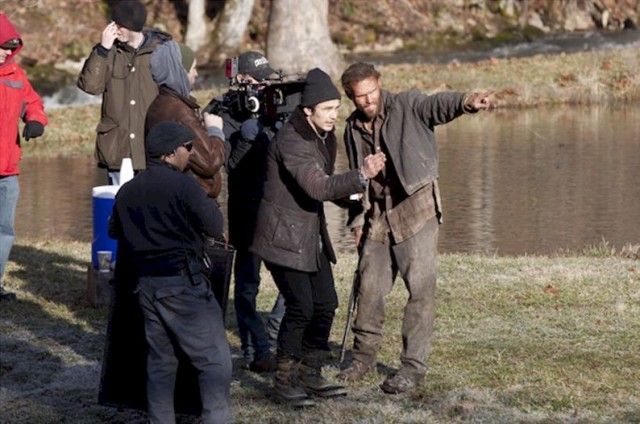
James Franco

Director and cowriter James Franco discuss a scene in adaptation of Cormac McCarthy’s CHILD OF GOD

Lester is being watched closely by the aptly named Sheriff Fate (Tim Blake Nelson) and Deputy Cotton (Jim Parrack), but there’s no predicting what he will do next, and to whom. He’s a danger to everyone he meets, yet Franco, who cowrote the script with his friend and producer Vince Jolivette, manages to make Lester a somewhat sympathetic figure, despite his horrific existence, which soon includes necrophilia. No matter how despicable his actions are, it is hard not to want him to get away with it all, as Franco builds a shocking compassion for Lester from the very first scene, when John Greer (Brian Lally), a neighbor who is determined to buy the Ballard property at auction, viciously bashes in Lester’s skull. The highly literate, ubiquitous Franco, who has also adapted William Faulkner’s As I Lay Dying and is in preproduction on The Sound and the Fury, stays true to both the spirit and the intricacies of McCarthy’s story; every scene but one was taken directly from the book, which Franco fell in love with when he read it in graduate school. Child of God is by no means an easy film to watch, and it is sure to elicit a multitude of extreme reactions, both positive and negative, reminiscent of the response to Lars von Trier’s controversial 2009 New York Film Festival selection, Antichrist. But no matter where you stand on the film itself, it’s impossible not to be blown away by Haze’s remarkably intense performance, his every word and movement absolutely thrilling to behold. Child of God, in which both Franco and Jolivette play small roles, will screen twice at the fifty-first New York Film Festival, on September 29 at the Walter Reade Theater, followed by a Q&A with Jolivette and Haze, and again on October 1 at the Francesca Beale Theater.

NEW YORK FILM FESTIVAL: A TOUCH OF SIN

A TOUCH OF SIN

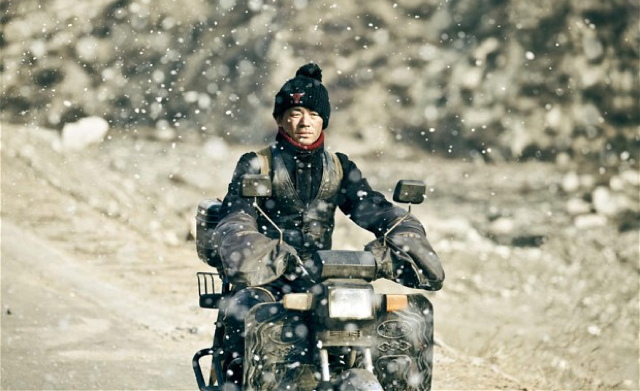
Zhao San (Wang Baoqiang) is one of four protagonists who break out into sudden acts of shocking violence in Jia Zhangke’s A TOUCH OF SIN

A TOUCH OF SIN (TIAN ZHU DING) (Jia Zhangke, 2013)
Film Society of Lincoln Center
Alice Tully Hall, 1941 Broadway at 65th St.
Saturday, September 28, 6:00
Francesca Beale Theater, 144 West 65th St. at Amsterdam Ave.
Wednesday, October 2, 8:30
Festival runs September 27 – October 13
212-875-5601
www.filmlinc.com

During his sixteen-year career, Sixth Generation Chinese filmmaker Jia Zhangke has made both narrative works (The World, Platform, Still Life) and documentaries (Useless, I Wish I Knew), with his fiction films containing elements of nonfiction and vice versa. Such is the case with his latest film, the powerful A Touch of Sin, which explores four based-on-fact outbreaks of shocking violence in four different regions of China. In Shanxi, outspoken miner Dahai (Jiang Wu) won’t stay quiet about the rampant corruption of the village elders. In Chongqing, married migrant worker and father Zhao San (Wang Baoqiang) obtains a handgun and is not afraid to use it. In Hubei, brothel receptionist Ziao Yu (Zhao Tao, Jia’s longtime muse and now wife) can no longer take the abuse and assumptions of the male clientele. And in Dongguan, young Xiao Hui (Luo Lanshan) tries to make a life for himself but is soon overwhelmed by his lack of success. Inspired by King Hu’s 1971 wuxia film A Touch of Zen, Jia also owes a debt to Max Ophüls’s 1950 bittersweet romance La Ronde, in which a character from one segment continues into the next, linking the stories. In A Touch of Sin, there is also a character connection in each successive tale, though not as overt, as Jia makes a wry, understated comment on the changing ways that people connect in modern society. In depicting these four acts of violence, Jia also exposes the widening economic gap between the rich and the poor and the social injustice that is prevalent all over contemporary China — as well as the rest of the world — leading to dissatisfied individuals fighting for their dignity in extreme ways. A gripping, frightening film that earned Jia the Best Screenplay Award at Cannes this year, A Touch of Sin is an official selection of the fifty-first New York Film Festival, screening September 28 at Alice Tully Hull and October 2 at the Francesca Beale Theater, with Jia and Zhao participating in a Q&A following the first show. (The film then opens October 4 at Lincoln Plaza and the IFC Center.)
NEW YORK FILM FESTIVAL: MANAKAMANA

MANAKAMANA

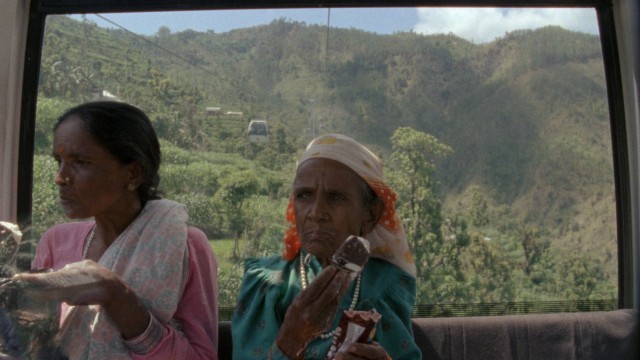
A mother and daughter eat ice cream in experimental documentary MANAKAMANA

MANAKAMANA (Stephanie Spray & Pacho Velez, 2013)
Film Society of Lincoln Center
Walter Reade Theater, 165 West 65th St. at Amsterdam Ave.
Saturday, September 28, 1:30
Howard Gilman Theater, 144 West 65th St. at Amsterdam Ave.
Monday, September 30, 3:30
Festival runs September 27 – October 13
212-875-5601
www.filmlinc.com
www.manakamanafilm.com

If you’re an adventurous filmgoer who likes to be challenged and surprised, the less you know about Pacho Velez and Stephanie Spray’s Manakamana, the better. But if you want to know more, here goes: Evoking such experimental films as Michael Snow’s Wavelength, Hollis Frampton’s Zorns Lemma, and Andy Warhol’s Screen Tests as well as the more narrative works of such unique auteurs as Jim Jarmusch and Abbas Kiarostami, Manakamana is a beautiful, meditative journey that is sure to try your patience at first. The two-hour film, which requires a substantial investment on the part of the audience, takes place in a cable car in Nepal that shuttles men, women, and children to and from the historic Manakamana temple, on a pilgrimage to worship a wish-fulfilling Hindu goddess. With Velez operating the stationary Aaton 7 LTR camera — the same one used by Robert Gardner for his 1986 documentary Forest of Bliss — and Spray recording the sound, the film follows a series of individuals and small groups as they either go to or return from the temple, traveling high over the lush green landscape that used to have to be traversed on foot before the cable car was built. A man and his son barely acknowledge each other; a woman carries a basket of flowers on her lap; an elderly mother and her middle-age daughter try to eat melting ice-cream bars; a pair of musicians play their instruments to pass the time.

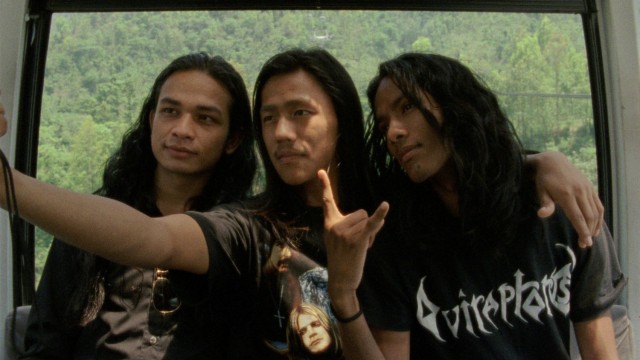
A heavy metal band takes a picture of themselves in meditative documentary

A heavy metal band takes a picture of themselves in meditative documentary

Each trip has its own narrative, which must be partly filled in by the viewer as he or she studies the people in the cable car and the surroundings, getting continually jolted as the car glides over the joins. The film is a fascinating look into human nature and technological advances in this era of surveillance as the subjects attempt to act as normal as possible even though a camera and a microphone are practically in their faces. Produced at the Sensory Ethnography Laboratory at Harvard, Manakamana consists of eleven uncut shots of ten-to-eleven minutes filmed in 16mm, using rolls whose length roughly equals that of each one-way trip, creating a kind of organic symbiosis between the making and projecting of the work while adding a time-sensitive expectation on the part of the viewer. A film well worth sticking around for till the very end — and one that grows less and less claustrophobic with each scene — Manakamana is screening September 28 and 30 in the Motion Portraits section of the fifty-first New York Film Festival at Lincoln Center.

NYFF OPENING ACT: NIGHT AND DAY

Sungam (Youngho Kim) battles displacement and loneliness in Hong Sang-soo’s NIGHT AND DAY

NIGHT AND DAY (BAM GUAN NAT) (Hong Sang-soo, 2008)
Film Society of Lincoln Center, Walter Reade Theater
165 West 65th St. at Amsterdam Ave.
Friday, September 20, 9:00
Series runs September 20-26
212-875-5601
www.filmlinc.com

Korean writer-director Hong Sang-soo returned to the New York Film Festival for the fifth time with Night and Day, a character-driven tale about displacement and loneliness. Youngho Kim stars as Sungam, a married painter in his forties who flees South Korea for France after having been turned in for smoking marijuana with U.S. tourists. A fish out of water in Paris, he settles into a Korean neighborhood, spending most of his time with two young art students, Yujeong (Eunhye Park) and Hyunju (Minjeong Seo). He also meets an old girlfriend, Minsun (Youjin Kim), who is still attracted to him. And every night he calls his wife, Sungin (Sujung Hwang), wondering when he’ll be able to return home. Hong (Woman Is the Future of Man, Tale of Cinema) tells the story in a diary-like manner, with interstitials acting like calendar pages. Sometimes a day can be filled with talk of art, a party, and a chance encounter, while others can consist of a brief, random event with no real bearing on the plot, reminiscent of Jim Jarmusch’s Stranger Than Paradise, just without the existential cynicism and dark humor. As with 2006’s Woman on the Beach, Hong lets Night and Day go on too long (it clocks in at 141 minutes), with too many inconsequential (even if entertaining) vignettes, but it’s so much fun watching Youngho’s compelling performance that you just might not care about the length. Night and Day is screening September 20 at 9:00 as part of the Film Society of Lincoln Center’s “NYFF: Opening Act” series, featuring sixteen films from directors whose latest works will be shown at the fifty-first New York Film Festival, which runs September 27 through October 13. “NYFF: Opening Act” also includes outstanding films as Spike Jonze’s Adaptation., Paul Greengrass’s Bloody Sunday, Hirokazu Kore-eda’s Maborosi, Joel Coen’s Miller’s Crossing, and Kiyoshi Kurosawa’s Pulse. Hong’s delightful Nobody’s Daughter Haewon screens at this year’s New York Film Festival on September 29 and 30.

A TRIBUTE TO AMOS VOGEL AND “FILM AS A SUBVERSIVE ART”: AMOS VOGEL AND CINEMA 16

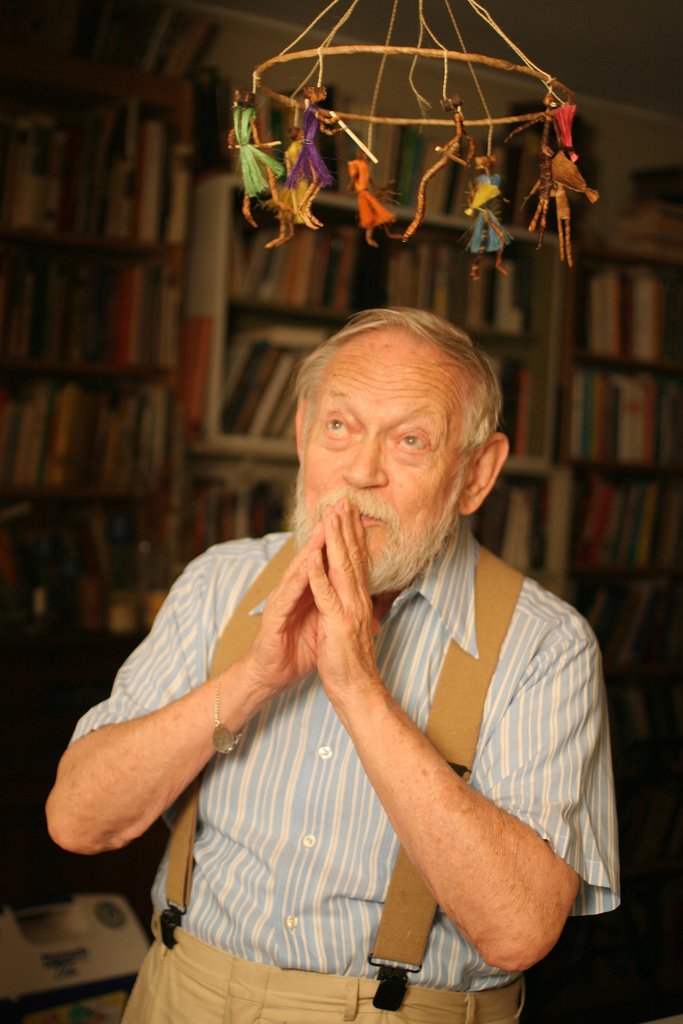
Amos Vogel

Amos Vogel’s continuing impact on the world of independent, foreign, and experimental film is the focus of series at Anthology Film Archives

FILM AS A SUBVERSIVE ART: AMOS VOGEL AND CINEMA 16 (Paul Cronin, 2003)
Anthology Film Archives
32 Second Ave. at Second St.
Thursday, March 7, 9:00
Series runs through March 16
212-505-5181
anthologyfilmarchives.org

Vienna-born Amos Vogel was one of the all-time-great film programmers, running Cinema 16 from 1947 into the 1960s, where he screened alternative, avant-garde, foreign-language, scientific, and other controversial works that had never before been seen in America. In the documentary Film as a Subversive Art, named after Vogel’s seminal 1974 book on experimental film, director Paul Cronin follows him as he walks around the Village, stopping by familiar places where his career began. Vogel also opens up his home and office to the camera for a fascinating look into his unique world. A radical leftist, he eagerly fought censorship to bring new ideas to adventurous moviegoers. All the while he was involved in a wonderful love story with his wife of more than sixty years, Marcia. Vogel, who died last April at the age of ninety-one — and should have been included in the Oscar segments devoted to those film people who passed away in 2012 — also was the founder and first director of the New York Film Festival. Oh, he was also the professor who got me into the NYU Cinema Studies graduate school program, so I might be somewhat biased — and probably wouldn’t even be writing this without him, something I reminded him of every time I would see him at the New York Film Festival. But judging from the people who showed up when this film was screened at the 2003 Tribeca Film Festival, including filmmakers, teachers, and other programmers, I’m not the only one who realized Vogel’s importance to cinema and New York City. The film is screening March 7 at 9:00 at Anthology Film Archives as part of the series “A Tribute to Amos Vogel and Film as a Subversive Art,” celebrating his lasting impact on the world of film. At the beginning of the book, Vogel writes, “This is a book about the subversion of existing values, institutions, mores, and taboos — East and West, Left and Right — by the potentially most powerful art of the century. It is a book that trafficks in scepticism towards all received wisdom (including its own), towards eternal truths, rules of art, ‘natural’ and man-made laws, indeed whatever may be considered holy. It is an attempt to preserve for a fleeting moment in time — the life of this book — the works and achievements of the subversives of film.” Vogel has preserved these moments a whole lot longer than that. The film will be preceded by Andre St. Laurent’s 1963 documentary Camera Three: New York Film Festival 1963, a half-hour look into the founding of the New York Film Festival by Vogel and Richard Roud, featuring such directors as Adolfas Mekas and Joseph Losey.

NYFF50: LIKE SOMEONE IN LOVE

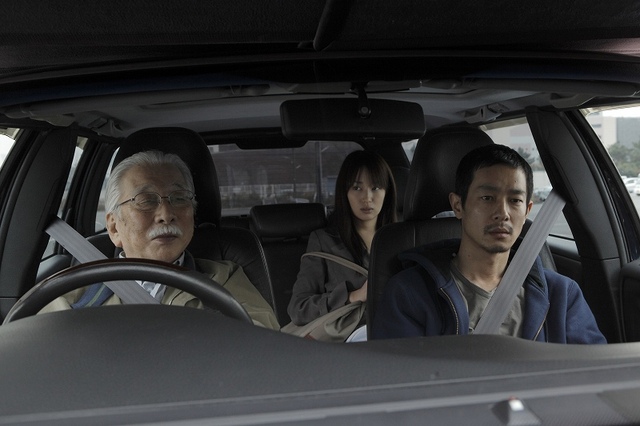
The lives of three very different individuals intertwine in Abbas Kiarostami’s remarkable LIKE SOMEONE IN LOVE

NEW YORK FILM FESTIVAL MAIN SLATE: LIKE SOMEONE IN LOVE (Abbas Kiarostami, 2012)
Film Society of Lincoln Center, Alice Tully Hall
1941 Broadway at 66th St.
Monday, October 8, Francesca Beale Theater, 6:15
Festival runs through October 14
212-875-5601
www.filmlinc.com

Following the Tuscany-set Certified Copy, his first film made outside of his home country, master Iranian auteur Abbas Kiarostami heads to Japan for the beautifully told Like Someone in Love. Rin Takanashi stars as Akiko, a sociology student supporting herself as an escort working for bar owner and pimp Hiroshi (Denden). An older, classy businessman, Hiroshi insists that Akiko is the only person to handle a certain client, so, despite her loud objections, she is put in a cab and taken to meet Takashi (Tadashi Okuno), an elderly professor who seems to just want some company. But soon Akiko unwittingly puts the gentle old man in the middle of her complicated life, which includes her extremely jealous and potentially violent boyfriend, Noriaki (Ryō Kase), and a surprise visit from her grandmother (Kaneko Kubota). Taking its title from the song made famous by, among others, Ella Fitzgerald, Like Someone in Love is an intelligent character-driven narrative that investigates different forms of love and romance in unique and engaging ways. Kiarostami (Taste of Cherry, Close-Up) and cinematographer Katsumi Yanagijima, who has worked on numerous films by Takeshi Kitano, establish their visual style from the very beginning, as an unseen woman, later revealed to be Akiko, is on the phone lying to her abusive boyfriend about where she is, the camera not moving for extended periods of time as people bustle around her in a crowded bar. As is often the case with Kiarostami, who has said that his next film will be set in Italy, much of the film takes place in close quarters, including many in cars, both moving and parked, forcing characters to have to deal with one another and face certain realities they might otherwise avoid. Takanashi is excellent as Akiko, a young woman trapped in several bad situations of her own making, but octogenarian Okuno steals the show in the first lead role of a long career that has primarily consisted of being an extra. The soft look in his eyes, the tender way he shuffles through his apartment, and his very careful diction are simply captivating. Despite his outstanding performance, Okuno is committed to returning to the background in future films, shunning the limelight. A jazz-filled film that at times evokes the more serious work of Woody Allen, another director most associated with a home base but who has been making movies in other cities for a number of years now, Like Someone in Love is like a great jazz song, especially one in which the notes that are not played are more important than those that are.

NYFF50 HBO DIRECTORS DIALOGUE: ABBAS KIAROSTAMI

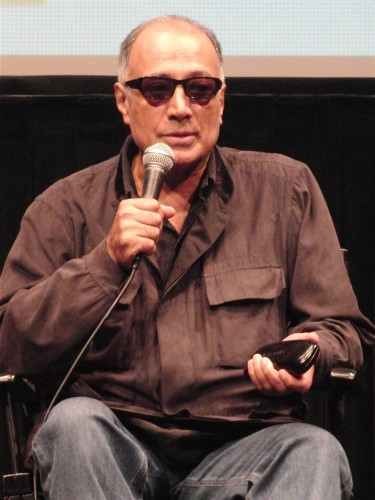
The always engaging Abbas Kiarostami will talk about his life and career in a special Directors Dialogue at the fiftieth New York Film Festival (photo by twi-ny/mdr)

Film Society of Lincoln Center, Bruno Walter Auditorium
111 Amsterdam Ave. at 66th St.
Saturday, October 6, $15, 6:00
Festival runs through October 14
212-875-5601
www.filmlinc.com

A decade ago, master Iranian filmmaker Abbas Kiarostami was denied a visa to come to the New York Film Festival to present his latest film, Ten. “It’s a terrible sign of what’s happening in my country today that no one seems to realize or care about the kind of negative signal this sends out to the entire Muslim world,” festival director Richard Peña said at the time. Ten years later, Kiarostami (Close-Up, Taste of Cherry) will be making a special appearance at the fiftieth New York Film Festival, the last one organized by Peña, who is stepping down after twenty-five years. Kiarostami will be speaking with Brooklyn-born writer Phillip Lopate at the Bruno Walter Auditorium on October 6 at 6:00 as part of the HBO Directors Dialogue series. A visual artist who had an exceptional dual show at MoMA and PS1, “Image Maker,” in 2007, Kiarostami has brought the remarkable Like Someone to Love to this year’s festival; the film, set in Japan and featuring outstanding performances by Tadashi Okuno and Rin Takanashi, will have its second and final screening October 8 at the Francesca Beale Theater. Kiarostami is a fascinating figure, a stylish cool cat in ever-present dark glasses who has an engaging knowledge of art and cinema that always makes for a lively discussion. The series continues October 7 with David Chase in conversation with Scott Foundas and October 13 with Robert Zemeckis speaking with Peña.