Dušan Makavejev’s WR: Mysteries of the Organism is part of NYFF centenary tribute to cofounder Amos Vogel
NEW YORK FILM FESTIVAL
Film Society of Lincoln Center
Howard Gilman Theater, Francesca Beale Theater
144 West 65th St. between Broadway & Amsterdam Ave.
September 25 – October 2
www.filmlinc.org/nyff2021
“This is a book about the subversion of existing values, institutions, mores, and taboos — East and West, Left and Right — by the potentially most powerful art of the century,” Amos Vogel writes in his seminal 1974 book, Film as a Subversive Art. “During half the time spent at the movies, the viewer sees no picture at all; and at no time is there any movement. Without the viewer’s physiological and psychological complicity, the cinema would not exist. The ‘illusion’ of film — so platitudinously invoked by journalists — is thus revealed as a far more intricate web of deception, involving the very technology of the film process and the nature of its victim’s perceptions. Could it be precisely during the periods of total darkness — 45 out of every 90 minutes we see — that our voracious subconscious, newly nourished by yet another provocative image, ‘absorbs’ the work’s deeper meaning and sets off chains of associations?”
When I was in college, a bunch of guys in my fraternity told me about a course they were signed up for, what they called “Monday Night at the Movies.” They couldn’t believe they could sit in a theater and watch movies while earning college credit. For me, it became a life-changing experience. Little did I know at the time — before the internet and social media — but the professor, Amos Vogel, was one of the most important figures in bringing experimental and foreign works to America, as founder of Cinema 16 and cofounder of the New York Film Festival. I was surprised when I was accepted into NYU’s master’s program in cinema studies but eventually realized that it was Professor Vogel’s recommendation that certainly had more than something to do with it. For years, I would see him at NYFF and remind him that without his help, I would not have been there, writing about film and other forms of art and culture, particularly those on the cutting-edge, pushing boundaries and setting off chains of associations.
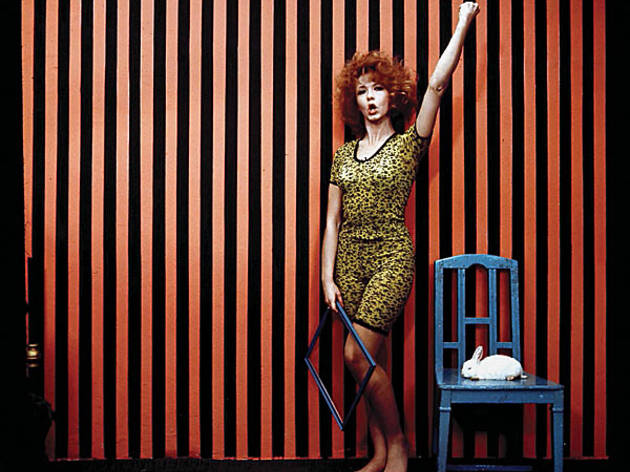
The fifty-ninth edition of the New York Film Festival is honoring the centennial of Vogel’s birth — he was born in Vienna on April 18, 1921, and passed away on April 24, 2012 — with a special Spotlight sidebar of seven programs paying tribute to his legacy. “Cinema 16” re-creates a May 1950 presentation that includes Sidney Peterson’s The Lead Shoes, Lester F. Beck’s Unconscious Motivation, John Huston’s The Battle of San Pietro, and three shorts by Oskar Fischinger. The other programs are dedicated to films Vogel screened at NYFF from 1963 to 1968: Glauber Rocha’s Barravento; Jiří Menzel, Jan Němec, Evald Schorm, Věra Chytilová, and Jaromil Jireš’s five-part Pearls of the Deep; Tony Conrad’s The Flicker (which I remember well from class) paired with Peter Emmanuel Goldman’s Echoes of Silence (“The New American Cinema”); Lebert Bethune’s Malcolm X: Struggle for Freedom, Santiago Álvarez’s Now, and David Neuman and Ed Pincus’s Black Natchez (“The Social Cinema in America, 1967”); 12th and Oxford Street Film Makers’ The Jungle, Jaime Barrios’s Film Club, and Maxine Tsosie and Mary J. Tsosie’s The Spirit of the Navajo (“Personal Cinema”); and Dušan Makavejev’s WR: Mysteries of the Organism — a still from the film, of star Milena Dravić pushing her right arm through an empty picture frame, standing next to a bunny on a chair, adorns the cover of Vogel’s book — and Robert Frerck’s Nebula II (“Film as a Subversive Art”).
Vogel’s approach to film was intrinsically linked to his approach to life, from the political to the personal. After taking the class, I began questioning the status quo everywhere, looking at my daily existence through a new lens, an outlook that continues to this day. “Art can never take the place of social action, and its effectiveness may indeed be seriously impaired by restrictions imposed by the power structure, but its task remains forever the same: to change consciousness,” he writes in his book. “When this occurs, it is so momentous an achievement, even with a single human being, that it provides both justifications and explanations of subversive art. The subversive artist performs as a social being. For if it is true that developments in philosophy, politics, physics, and cosmology have affected the evolution of modern art, and if the subversion of the contemporary filmmaker is thus fed by art itself, it is also directly related to society as a whole.”
He presciently argues back in 1974, “Wherever [the artist] turns, he sees exploitation and magnificent wealth, heart-rending poverty and colossal waste, the destruction of races and entire countries in the name of democracy or a new order, the denial of personal liberties on a global scale, the corruption of power and privilege, and the growing international trend toward totalitarianism. . . . It is in this sense that the subject of this book will always remain on the agenda, and that these pages are but a rough draft; for the subject of this book is human freedom, and its guardians, at all times and under all conditions, are the subversives.”
In his introduction to Paul Cronin’s 2014 biography, Be Sand, Not Oil: The Life and Work of Amos Vogel, Werner Herzog, a longtime friend of Vogel’s, writes, “We are, as a race, aware of certain dangers that surround us. We comprehend that global warming and overcrowding of the planet are real dangers for mankind. We have come to understand that the destruction of the environment is another enormous danger, that resources are being wasted at an extraordinary rate. But I believe that the lack of adequate imagery is a danger of the same magnitude.”
Before taking in any of the NYFF programs, be sure to watch Cronin’s lovely 2004 documentary Film as a Subversive Art: Amos Vogel and Cinema 16, about Vogel (and his ever-present smile), his beloved wife, Marcia, their life in Greenwich Village, and his devotion to cinema, which you can stream for free above. It does not lack for adequate imagery.
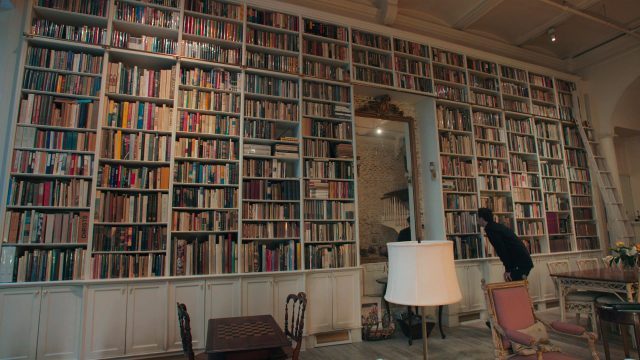
 “There’s so much more to a book than just the reading,” Maurice Sendak is quoted as saying in D. W. Young’s wonderfully literate documentary The Booksellers, screening at the New York Film Festival on October 7 and 9. I have to admit to being a little biased, as I work in the children’s book industry in another part of my life, and I serve as the managing editor on Sendak’s old and newly discovered works. The film follows the exploits of a group of dedicated bibliophiles who treasure books as unique works of art, buying, selling, and collecting them not merely for the money but for the thrill of it. “The relationship of the individual to the book is very much like a love affair,” Americana collector Michael Zinman explains.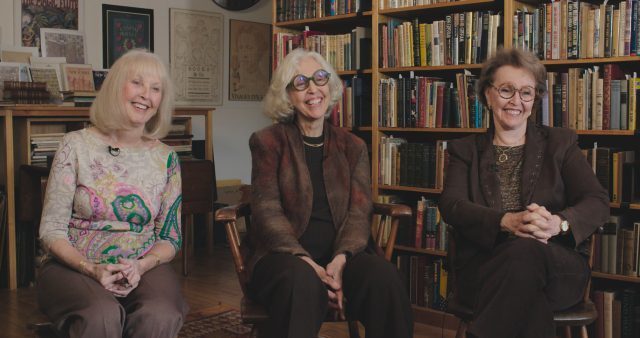
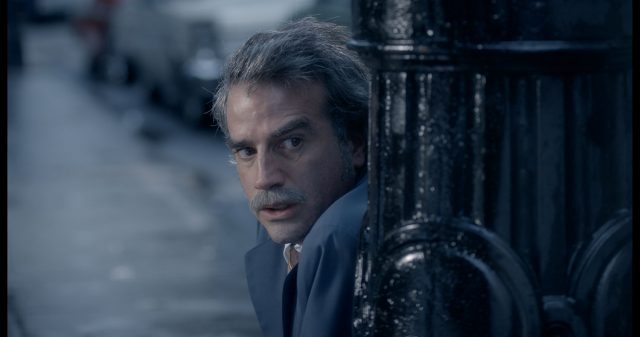
 “Jesus knew what he was doing; at the very cradle of civilization, we money brokers are the root of all evil. We’re to blame for everything that’s rotten in this world,” Humberto Brause (Daniel Hendler) says at the beginning of The Moneychanger, Uruguayan-Spanish writer-director Federico Veiroj’s fifth narrative feature, making its US premiere at the New York Film Festival on October 9 and 10. Hendler is terrific as Brause, playing the selfish, greedy businessman with a jittery unease, a man clearly uncomfortable in his own skin, especially as his world falls apart all around him.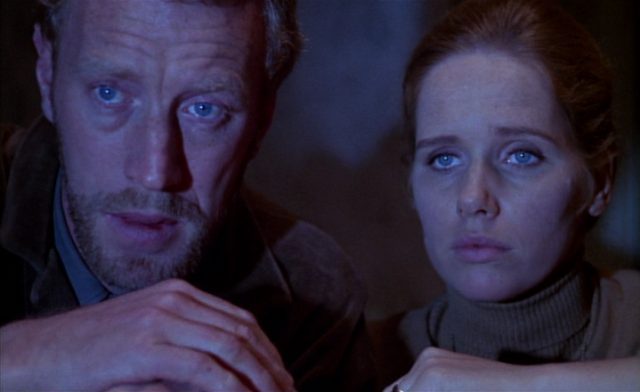
 The New York Film Festival’s Retrospective tribute to cinematographers continues October 2 with The Passion of Anna, the conclusion to Ingmar Bergman’s unofficial island trilogy that began with
 Eighty-eight-year-old Manfred Kirchheimer will be at Lincoln Center’s Francesca Beale Theater tonight to screen and discuss his latest work, the subtly dazzling Free Time, which had its world premiere yesterday in the Spotlight on Documentary section of the fifty-seventh annual New York Film Festival. The German-born, New York-raised Kirchheimer has taken 16mm black-and-white footage he and Walter Hess shot between 1958 and 1960 in such neighborhoods as Hell’s Kitchen, Washington Heights, Inwood, Queens, and the Upper East Side and turned it into an exquisite city symphony reminiscent of Helen Levitt, Janice Loeb, and James Agee’s classic 1948 short