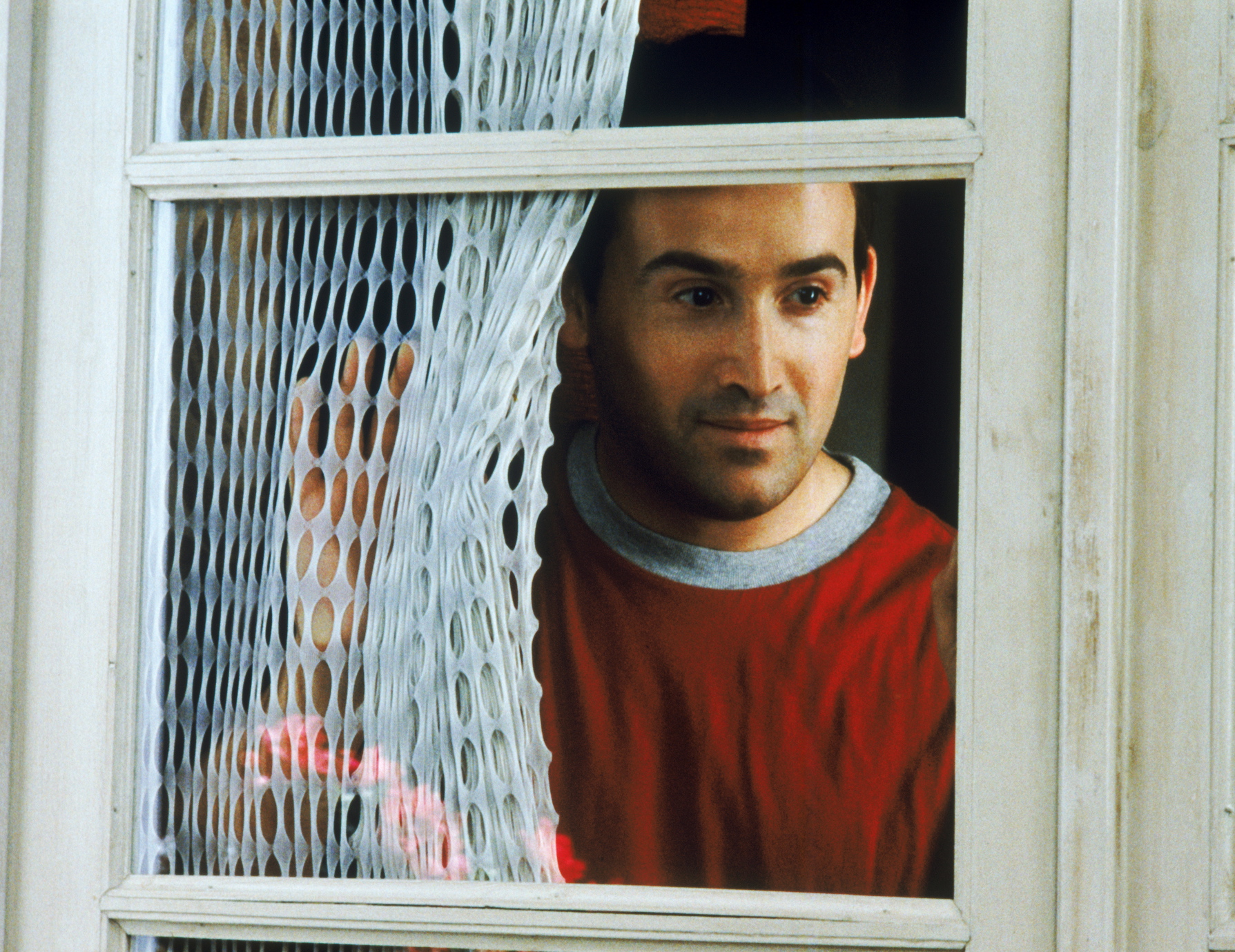
Javier Cámara is mesmerizing in Pedro Almodóvar’s unforgettable TALK TO HER
HABLE CON ELLE (TALK TO HER) (Pedro Almodóvar, 2002)
Film Society of Lincoln Center, Walter Reade Theater
165 West 65th St. at Amsterdam Ave.
Tuesday, August 28, 6:15
212-875-5601
www.filmlinc.com
 Pedro Almodóvar followed up his Oscar-winning Todo Sobre Mi Madre (All About My Mother) with the 2002 New York Film Festival selection Talk to Her, a remarkable story of two men who become friends as they take care of two female coma patients in a private facility. You won’t be able to take your eyes off wide-eyed Javier Cámara as the simple-minded and oddly dedicated male nurse Benigno, who oversees the needs of patient-dancer Alicia (Leonor Watling). Darío Grandinetti is excellent as writer Marco Zuloaga, who falls hard for bullfighter and eventual patient Lydia (Rosario Flores). There are long stretches of little or no dialogue, including a riotous silent film-within-the-film, and two performances by Pina Bausch’s Tanztheater, one featuring Bausch herself. A very clever Almodóvar slyly continues the art leitmotif by hiring a Spanish-speaking Geraldine Chaplin, daughter of the great silent-film star. Talk to Her, yet another treasure from one of the world’s most inventive filmmakers, is screening at the Walter Reade Theater as part of the ongoing series “50 Years of the New York Film Festival,” which continues with such fine works as Lars von Trier’s Dogville, Jia Zhang-ke’s The World, Cristi Puiu’s The Death of Mr. Lazarescu, and Jafar Panahi’s Offside. Individual tickets for the fiftieth anniversary of the New York Film Festival, which runs September 28 through October 14, go on sale to the general public on September 9.

 As soon as Stefano Savano heard about the people’s rebellion going on in Egypt’s Tahrir Square in January, the Italian filmmaker grabbed his camera and headed over to Cairo, where he had been many times before over the previous twenty years, and just started filming what he saw. As hundreds of thousands of Egyptians flooded the area, singing, protesting, and demanding that President Hosni Mubarak step down, Savano followed around various individuals and groups, including Elsayed, Noha, and Ahmed, getting them to share their thoughts on revolution and change, capturing intimate moments of their fight for freedom. When violence erupts, Savano fearlessly heads to the source, rocks flying through the air, bleeding men being carried past him. The film has no narration and no textual information; instead, Savano places the viewer right in the middle of the action, as if we’re there with him in Tahrir Square. “I’m not a journalist, and I don’t pretend to be one,” Savano pointed out in a Skype press conference following a New York Film Festival preview screening of the film last year. Over the course of two weeks last summer, Savano and Penelope Botroluzzi edited down thirty-five hours of visuals and twenty-five hours of sound into this ninety-minute inside look at democracy in action, although it does get repetitive in the second half. Once again Savona, whose previous films include 2002’s A Border of Mirrors, 2006’s Notes from a Kurdish Rebel, and last year’s Spezzacatene, focuses more on the human element than the political, adding a coda during the credits that places much of what went on before into intriguing perspective. Tahrir: Liberation Square will be screening June 11-17 as part of the Maysles Institute’s Documentary in Bloom series curated by Livia Bloom.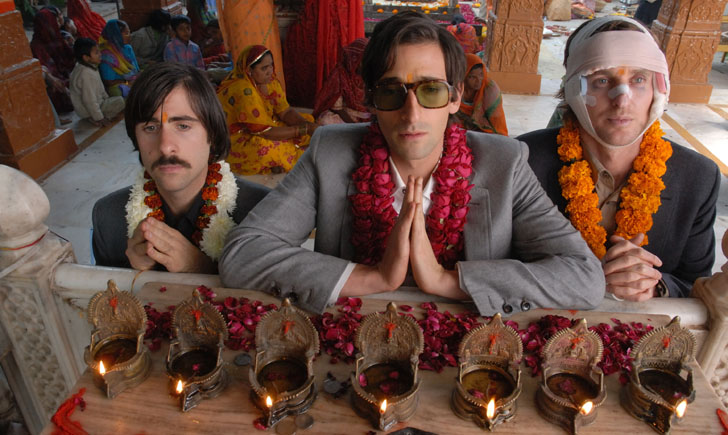
 Wes Anderson takes viewers on a wild ride through India aboard the Darjeeling Limited in this black comedy that opened the 2007 New York Film Festival. Francis (Owen Wilson), Peter (Adrien Brody), and Jack (cowriter Jason Schwartzman) are brothers who have not seen each other since their father’s funeral a year before, after which their mother disappeared. Having recently survived a terrible accident, Francis — looking ridiculous with his face and head wrapped in bandages — convinces them to go on a spiritual quest together to reestablish their relationship and help them better understand life. Peter and Jack very hesitantly decide to go along on what turns out to be a series of madcap adventures involving bathroom sex, bloody noses, jealousy, praying, cigarettes galore, running after trains, and savory snacks. Anderson (The Royal Tenenbaums,
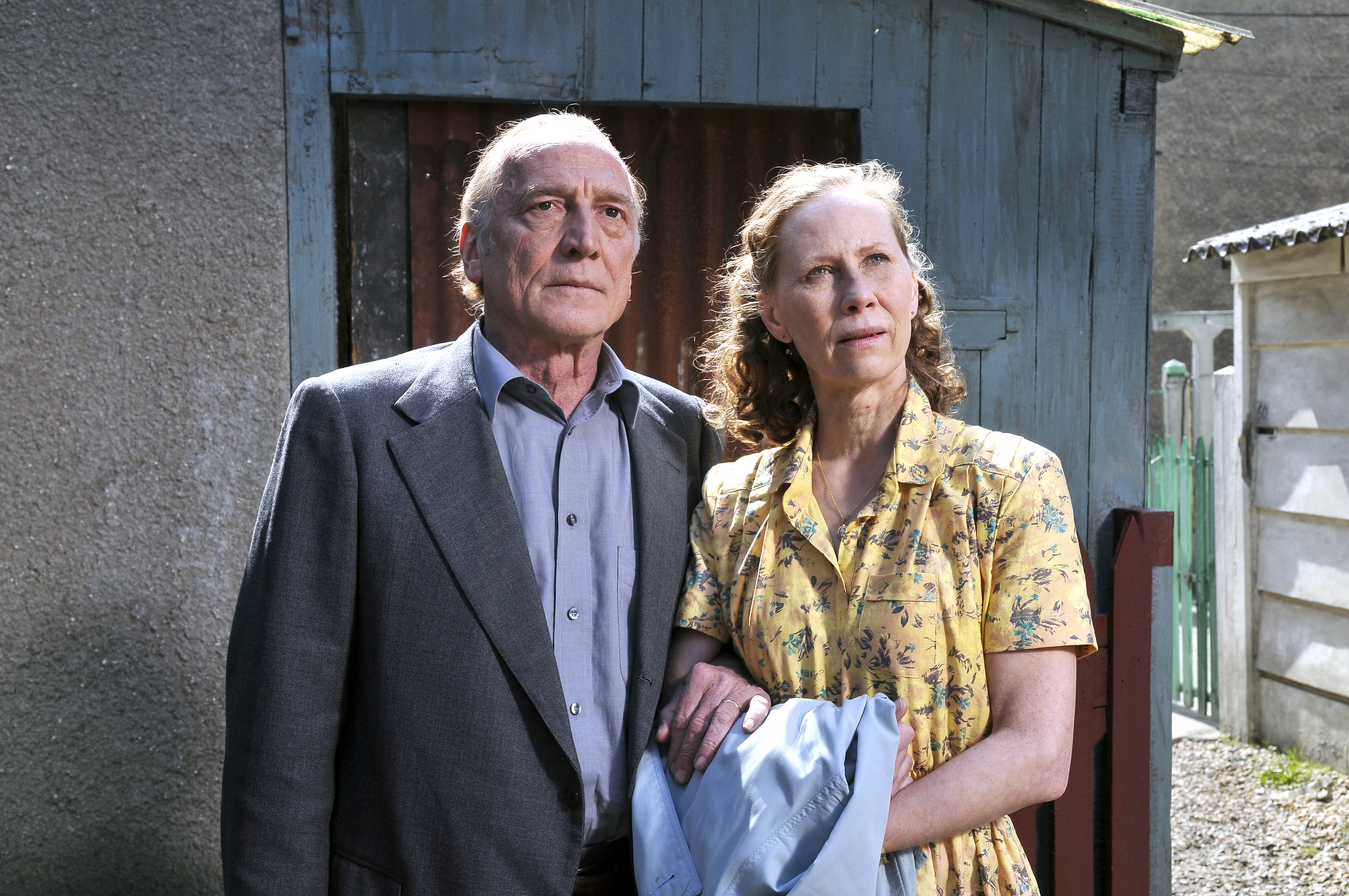
 For nearly thirty years, Finnish auteur Aki Kaurismäki (Leningrad Cowboys Go America, The Man Without a Past) has been making existential deadpan black comedies that are often as funny as they are dark and depressing. Has there ever been a film as bleak as 1990’s The Match Factory Girl, in which a young woman (Kati Outinen) suffers malady after malady, tragedy after tragedy, embarrassment after embarrassment, her expression never changing? In his latest film, the thoroughly engaging Le Havre, Kaurismäki moves the setting to a small port town in France, where shoeshine man Marcel Marx (André Wilms), a self-described former Bohemian, worries about his seriously ill wife (Outinen) while trying to help a young African boy (Blondin Miguel), who was smuggled into the country illegally on board a container ship, steer clear of the police, especially intrepid detective Monet (Jean-Pierre Darroussin), who never says no to a snifter of Calvados. Adding elements of French gangster and WWII Resistance films with Godardian undercurrents — he even casts Jean-Pierre Léaud in a small but pivotal role — Kaurismäki wryly examines how individuals as well as governments deal with illegal immigrants, something that has taken on more importance than ever amid the growing international economic crisis and fears of terrorism. Through it all, Marcel remains steadfast and stalwart, quietly and humbly going about his business, deadpan every step of the way. Wouter Zoon’s set design runs the gamut from stark grays to bursts of color, while longtime Kaurismäki cinematographer Timo Salminen shoots scene after scene with a beautiful simplicity. Winner of a Fipresci critics award at Cannes this year and Finland’s official entry for the Best Foreign Language Film Oscar, Le Havre, the first of a proposed trilogy, is another marvelously unusual, charmingly offbeat tale from a master of the form. A selection of the 2011 New York Film Festival, Le Havre is screening January 6 at 6:30 as part of the “Nordic Oscar Contenders” series at Scandinavia House, which begins January 4 with Pernilla August’s Swedish entry, Svinalängorna (Beyond), and concludes January 9 with Anne Sewitsky’s Norwegian drama Sykt lykkelig (Happy, happy).