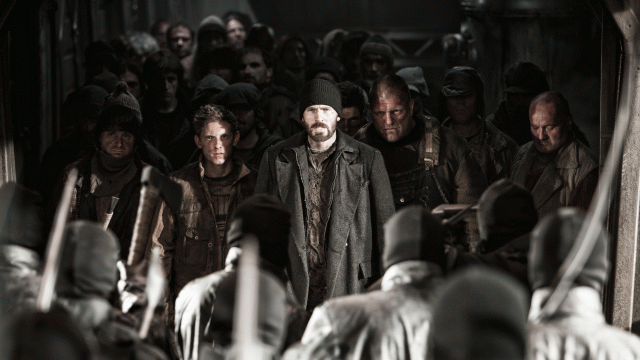
Curtis (Chris Evans) leads a revolt in Bong Joon-ho’s SNOWPIERCER
SNOWPIERCER (Bong Joon-ho, 2014)
MoMA Film, Museum of Modern Art
11 West 53rd St. between Fifth & Sixth Aves.
Sunday, November 30, 6:00
Series runs through January 16
Tickets: $12, in person only, may be applied to museum admission within thirty days, same-day screenings free with museum admission, available at Film and Media Desk beginning at 9:30 am
212-708-9400
www.moma.org
www.snowpiercer-film.com
 Korean director Bong Joon-ho, who had a huge international hit in 2006 with The Host and a major critical success with 2009’s Mother, makes his English-language feature debut with Snowpiercer, a nonstop postapocalyptic thrill ride that takes its place with such other memorable train films as The Great Train Robbery, From Russia with Love, The Train, and Murder on the Orient Express. It’s 2031, seventeen years after the chemical C7, which was supposed to end climate change, instead froze the earth, killing all living beings except for a group of survivors on board a train run by a perpetual motion machine. In the rear of the train, men, women, and children are treated like prisoners, beaten, tortured, dressed in rags, their only food mysterious gelatin blocks. Soldiers led by the cold-hearted Mason (Tilda Swinton) and the yellow-clad Claude (Emma Levie), whose outift brings virtually the only color to this dark, dank, deeply depressing setting, violently keep the peace as the two women heartlessly dictate orders and abscond with the children. But Curtis Everett (Chris Evans) and Edgar (Jamie Bell) hatch a plan to get past the guards and make their way to the front of the train in order to find out just what is really going on and to meet with Wilford, the wealthy entrepreneur running the engine. With the help of defiant mother Tanya (Octavia Spencer), elder statesman Gilliam (John Hurt), train engineer Namgoong Minsu (Bong regular Song Kang-ho), and Namgoong’s daughter, Yona (Go Ah-sung), Curtis attempts to lead a small revolution that is seemingly doomed to failure.
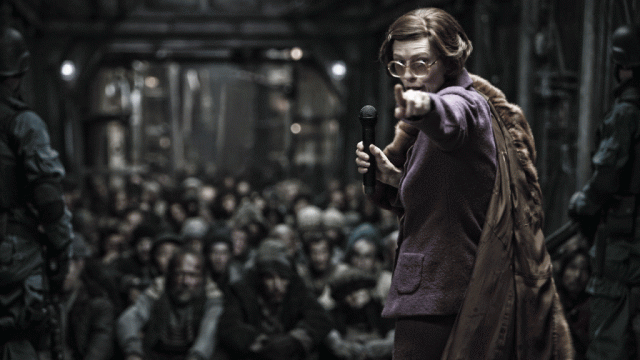
Mason (Tilda Swinton) has something to say about potential revolution on board train to nowhere
Inspired by the French graphic novel Le Transperceneige by Jean-Marc Rochette and Benjamin Legrand (who both make cameos in the film), Snowpiercer is a tense, gripping thriller that unfolds as a microcosm of contemporary society, intelligently taking on race, class, poverty, drug addiction, education, and corporate greed and power. Evans (Captain America, Push) is almost unrecognizable as Everett, a flawed hero trying to make things right, followed every step of the way by cold-blooded killer Franco the Elder (Romanian star Vlad Ivanov of Police, Adjective and 4 Months, 3 Weeks and 2 Days). The film features splendid production design by Ondrej Nekvasil; each train car offers a completely different look and feel as Curtis heads toward the front, leading to a finale that is everything the conclusion to the Matrix trilogy wanted to be. Bong (Memories of Murder), who cowrote the film with Kelly Masterson (Before the Devil Knows You’re Dead), doesn’t shy away from violence in telling this complex story – of course, it doesn’t hurt that one of the producers is Korean master Park Chan-woo (the Vengeance trilogy, Thirst), who recently made his first English-language film as well, last year’s Stoker. A fantastically claustrophobic chase film, Snowpiercer is screening November 30 at 6:00 in MoMA’s annual series “The Contenders” and will be followed by a Q&A with Swinton. The series, which consists of films the institution believes will stand the test of time, continues with such other 2014 works as Richard Linklater’s Boyhood (followed by a discussion with Linklater and costar Ethan Hawke), Paul Thomas Anderson’s Inherent Vice, Mike Leigh’s Mr. Turner, and Isao Takahata’s The Tale of Princess Kaguya.

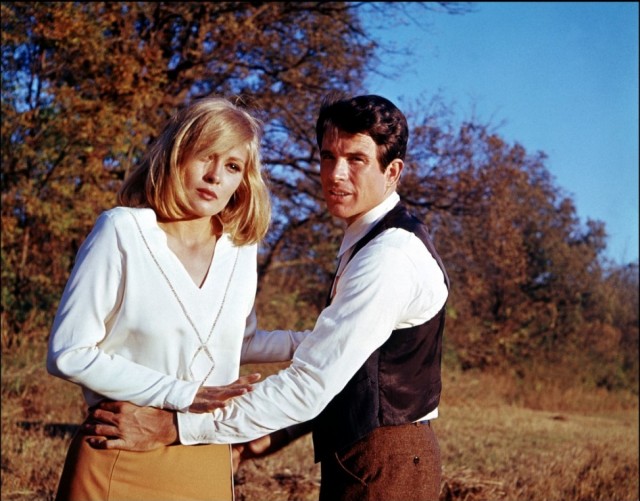
 Arthur Penn changed the course of Hollywood — and world cinema — in 1967 with Bonnie and Clyde, a film previously offered to such Nouvelle Vague luminaries as François Truffaut and Jean-Luc Godard. Cowritten by David Newman (Superman I-III) and Robert Benton (Kramer vs. Kramer), the film mythologizes the true story of depression-era bank robbers Clyde Barrow and Bonnie Parker, played magnificently by Warren Beatty and Faye Dunaway. At its heart, Bonnie and Clyde is a passionate yet unusual love story, filled with close-ups of the gorgeous Dunaway, who is first seen naked, running to her bedroom window confident and carefree, more a modern 1960s woman than a poor 1930s small-town waitress. Meanwhile, Barrow might know how to shoot a gun, but he’s a dud in bed; “I ain’t much of a lover boy,” he tells Bonnie early on, so their passion plays out in fast-moving car chases and shootouts rather than under the covers (while also playing off of Beatty’s already well-deserved reputation as a ladies’ man). They pick up an accomplice in gas-station attendant C. W. Moss (Michael J. Pollard) and are soon joined by Clyde’s brother, Buck (Gene Hackman), and his wife, Blanche (Estelle Parsons), and continue their rampage as heroic, happy-go-lucky hold-up artists, leading up to one of the most influential and controversial endings ever put on celluloid, an unforgettable finale of violent and poetic beauty. Penn, editor Dede Allen, and cinematographer Burnett Guffey redefined the gangster picture with their creative use of slow motion, long takes, and crowded shots, defying Hollywood conventions in favor of unique and innovative storytelling devices, allowing the film to work on multiple levels. Bonnie and Clyde is screening April 9-11 at 1:30 as part of MoMA’s ongoing series “An Auteurist History of Film,” which continues April 16-18 with John Boorman’s Point Blank and April 23-25 with Luis Buñuel’s Belle de Jour.