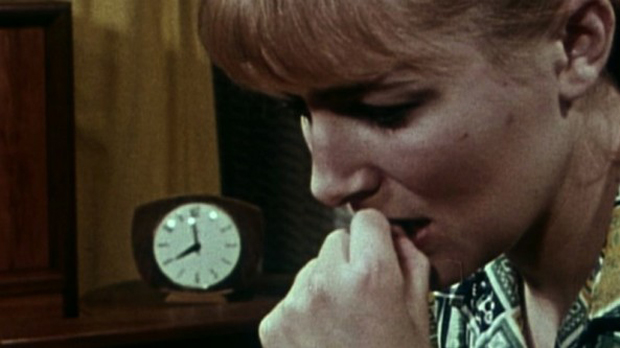
Time is off the essence in Christian Marclay’s twenty-four-hour film (© Christian Marclay)
Museum of Modern Art
11 West 53rd St. between Fifth & Sixth Aves.
Wednesday–Monday through January 21
Museum admission: $25 ($12 can be applied to the purchase of a film ticket within thirty days)
212-708-9400
www.moma.org
In 2010, the Whitney presented “Festival,” a thrilling interactive retrospective of the work of Christian Marclay, featuring multiple site-specific installations and live performances. The New York-based multidisciplinary artist followed that up with a supreme work of utter brilliance, the captivating twenty-four-hour video The Clock, which was initially shown at Chelsea’s Paula Cooper Gallery in early 2011 and reprised at the David Rubenstein Atrium as part of the Lincoln Center Festival this past summer. The sensational examination of time is now back for another run in the city, at MoMA through January 21. Screened in a large, dark gallery with three rows of roomy, comfortable couches in the Contemporary Galleries on the second floor, the film unfolds in real time, composed of thousands of clips from movies and television that feature all kinds of clocks and watches showing the minutes ticking away, as well as verbal mentions of the time. Masterfully edited so that it creates its own fluid narrative, The Clock seamlessly cuts from romantic comedies with birds emerging from cuckoo clocks to action films in which protagonists synchronize their watches, from thrillers with characters battling it out in clock towers to dramas with convicted murderers facing execution and sci-fi programs with mad masterminds attempting to freeze time. Marclay mixes in iconic images with excerpts from little-known foreign works, so audiences are kept on the edge of their seats, wondering what will come next, laughing knowingly at recognizable scenes and gawking at strange, unfamiliar bits.
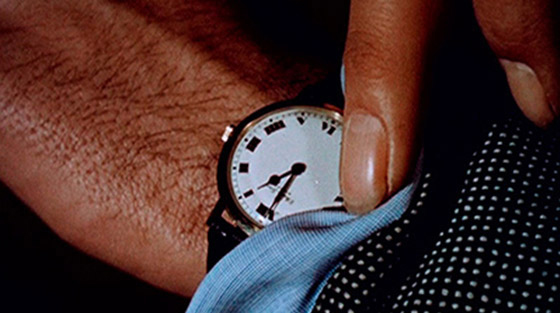
A MoMA visitor wonders just how much longer he’ll have to wait to get in to see Christian Marclay’s THE CLOCK (© Christian Marclay)
Part of the beauty of The Clock is that while time is often central to many of the clips, it is merely incidental in others, someone casually checking their watch or a clock visible in the background, emphasizing how pervasive time is — both on-screen and in real life. Americans spend an enormous amount of time watching movies and television, so The Clock is also a wry though loving commentary on what we choose to do with our leisure time. Although it is not necessarily meant to be viewed in one massive gulp, The Clock will be shown in its entirety January 4-6, 11-14, and 18-20, beginning at 10:30 am Friday and continuing through 5:30 Sunday. Since the film corresponds to the actual time, midnight should offer some fascinating moments, although you might be surprised by just how exciting even three o’clock in the morning can be. But expect huge crowds whenever you go — capacity is 170 (130 sitting, 40 standing, first-come, first-served, and you can stay as long as you want) — so be prepared to do something with all that valuable time spent on line. But wait you should — it’s well worth every second.

 For forty years, Belgrade-born performance artist Marina Abramović has been presenting cutting-edge, often controversial live works that redefine what art is. For her highly anticipated major career retrospective at MoMA in 2010,
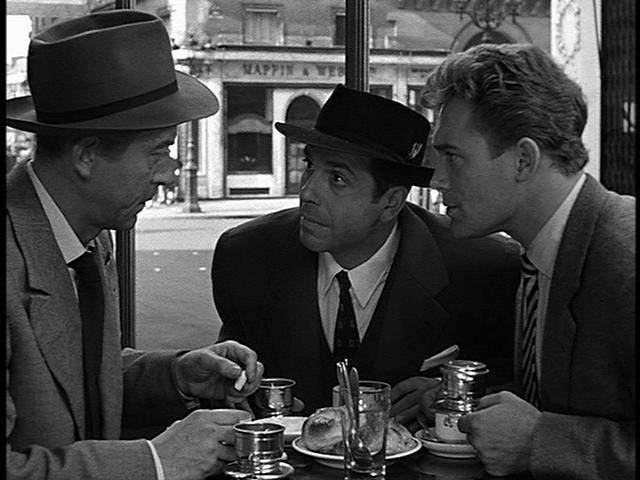
 After being blacklisted in Hollywood, American auteur Jules Dassin (The Naked City, Brute Force) headed to France, where he was hired to adapt Du Rififi Chez Les Hommes, a crime novel by Auguste le Breton that he made significant changes to, resulting in one of the all-time-great heist films. After spending five years in prison, Tony le Stephanois (Jean Servais) gets out and hooks up again with his old protégé, Jo le Suédois (Carl Möhner), who has settled down with his wife (Janine Darcy) and child (Dominique Maurin) for what was supposed to be a life of domestic tranquility. Joined by Mario Farrati (Robert Manuel), a fun-loving bon vivant with a very sexy girlfriend (Claude Sylvain), and cool and calm safecracker César le Milanais (Dassin, using the pseudonym Perlo Vita), the crew plans a heist of a small Mappin & Webb jewelry store on the Rue de Rivoli. Not content with a quick score, Tony lays the groundwork for a major take, but greed, lust, jealousy, and revenge get in the way in Dassin’s masterful film noir. The complex plan gets even more complicated as César falls for Viviane (Magali Noël), a singer who works at the L’Âge d’Or nightclub, which is owned by Pierre Grutter (Marcel Lupovici), who has taken up with Tony’s former squeeze, Mado (Marie Sabouret), and is trying to save his brother, Louis Grutter (Pierre Grasset), from a serious drug habit. (The club is named for Luis Buñuel’s 1930 film, which featured the same production designer as Rififi, Alexandre Trauner.) As the plot heats up, things threaten to explode in Dassin’s thrilling black-and-white film, which takes a series of unexpected twists and turns as it goes from its remarkably tense and highly influential heist scene to a wild climax. Dassin, who went on to make another of the great caper movies, 1964’s Topkapi, was named Best Director at Cannes for Rififi, which is screening August 26 as part of the MoMA series “Gaumont Thrillers: From Fantômas to A Gang Story,” which continues with such Gaumont-produced films as Georges Franju’s Eyes Without a Face, Maurice Pialat’s Police, Claude Chabrol’s Les Cousins, and Alain Corneau’s Serie noire.