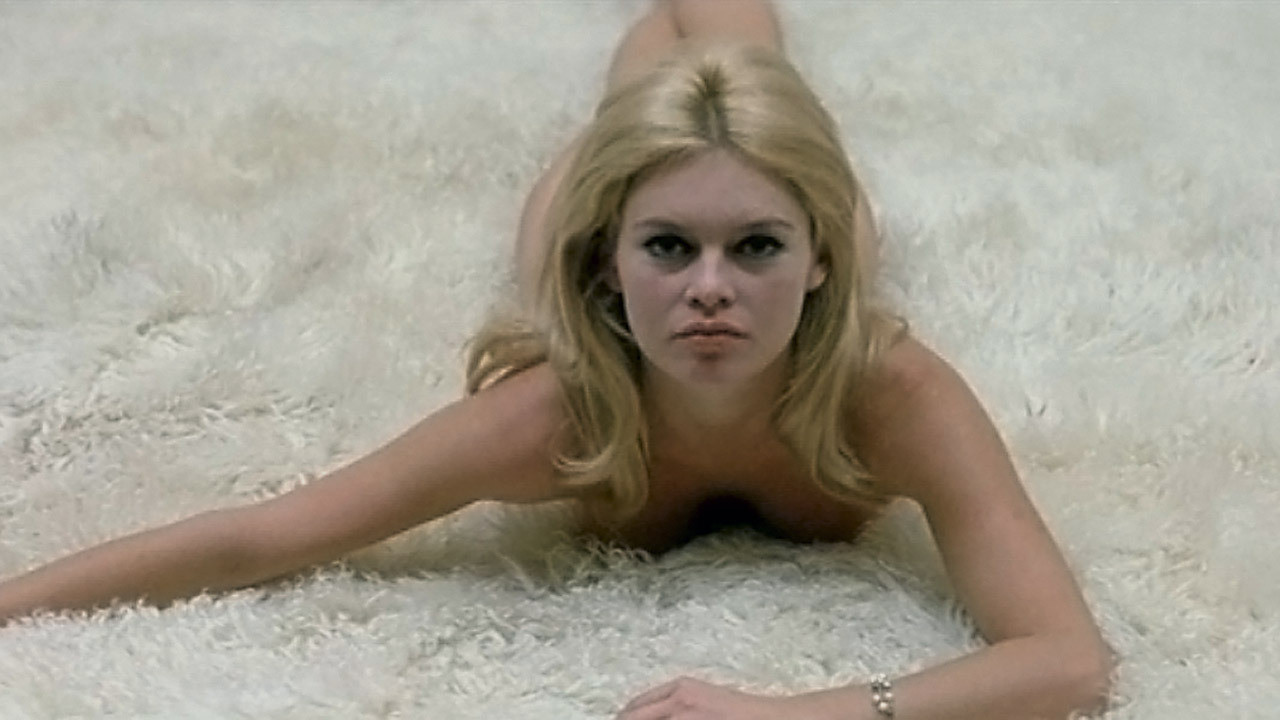
Brigitte Bardot shows off both her acting talent and beautiful body in Jean-Luc Godard’s CONTEMPT
CinémaTuesdays: CONTEMPT (LE MEPRIS) (Jean-Luc Godard, 1963)
French Institute Alliance Française, Florence Gould Hall
55 East 59th St. between Madison & Park Aves.
Tuesday, December 11, $10, 12:30 & 4:00
212-355-6160
www.fiaf.org
 French auteur Jean-Luc Godard doesn’t hold back any of his contempt for Hollywood cinema in his multilayered masterpiece Contempt. Loosely based on Alberto Moravia’s Il Disprezzo, Contempt stars Michel Piccoli as Paul Javal, a French screenwriter called to Rome’s famed Cinecittà studios by American producer Jeremy Prokosch (Jack Palance ) to perform rewrites on Austrian director Fritz Lang’s (played by Lang himself) adaptation of The Odyssey by ancient Greek writer Homer. Paul brings along his young wife, the beautiful Camille (Brigitte Bardot), whom Prokosch takes an immediate liking to. With so many languages being spoken, Prokosch’s assistant, Francesca Vanini (Giorgia Moll), serves as translator, but getting the various characters to communicate with one another and say precisely what is on their mind grows more and more difficult as the story continues and Camille and Paul’s love starts to crumble. Contempt is a spectacularly made film, bathed in deep red, white, and blue, as Godard and cinematographer Raoul Coutard poke fun at the American way of life. (Both Godard and Coutard appear in the film, the former as Lang’s assistant director, the latter as Lang’s cameraman — as well as the cameraman who aims the lens right at the viewer at the start of the film.)
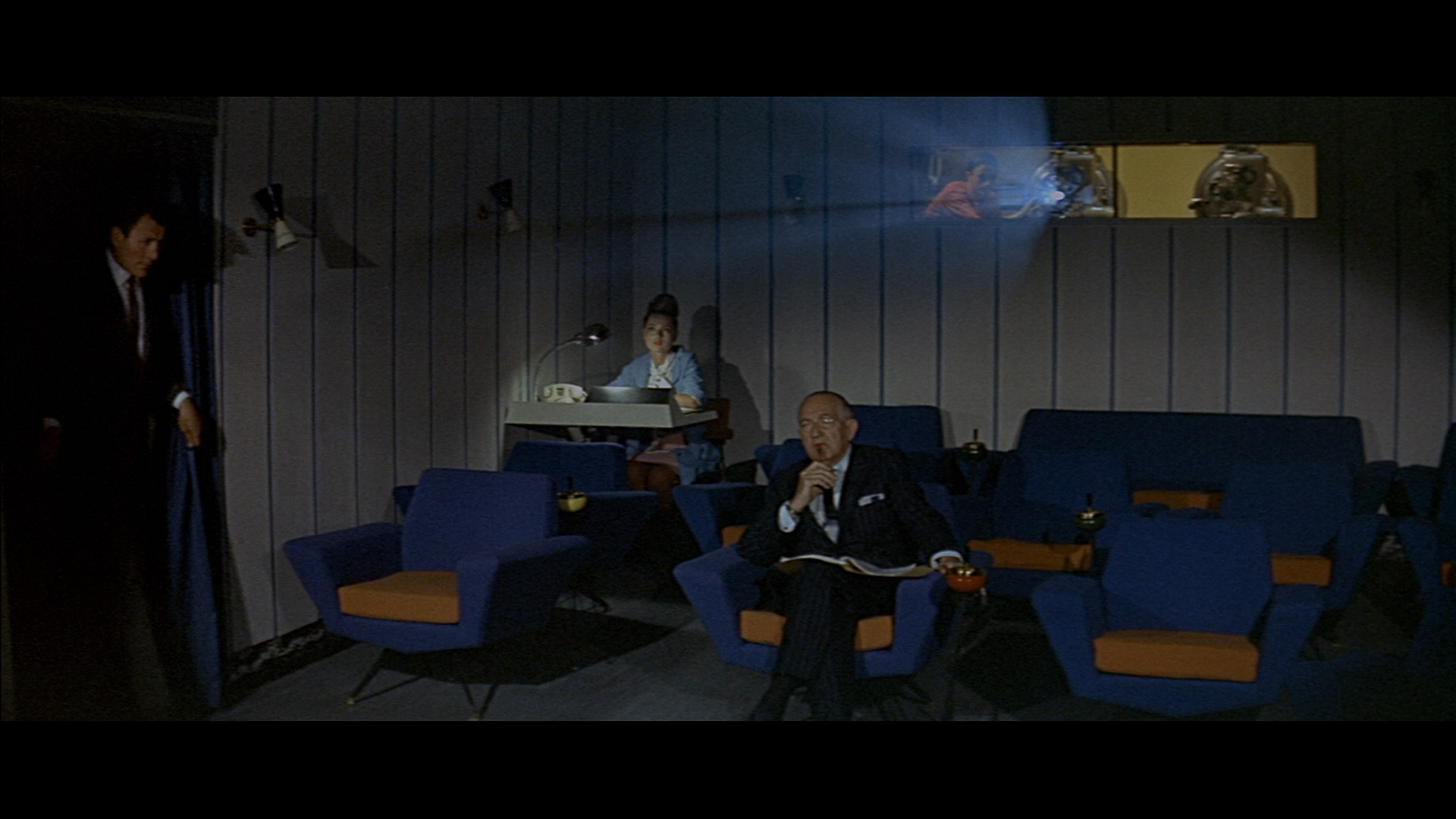
Producer Jeremy Prokosch (Jack Palance) doesn’t always have the kindest of words for director Fritz Lang in CONTEMPT
Bardot is sensational in one of her best roles, whether teasing Paul at a marvelously filmed sequence in their Rome apartment (watch for him opening and stepping through a door without any glass), lying naked on the bed, asking Paul what he thinks of various parts of her body (while Coutard changes the filter from a lurid red to a lush blue), or pouting when it appears that Paul is willing to pimp her out in order to get the writing job. Palance is a hoot as the big-time producer, regularly reading fortune-cookie-like quotes from an extremely little red book he carries around that couldn’t possibly hold so many words. And Lang, who left Germany in the mid-1930s for a career in Hollywood, has a ball playing a version of himself, an experienced veteran willing to put up with Prokosch’s crazy demands. Vastly entertaining from start to finish, Contempt is filled with a slew of inside jokes about the filmmaking industry and even Godard’s personal and professional life, along with some of the French director’s expected assortment of political statements and a string of small flourishes that are easy to miss but add to the immense fun, all set to a gorgeous romantic score by Georges Delerue. Contempt is screening December 11 as part of FIAF’s December CinémaTuesdays series “Brigitte Bardot, Femme Fatale,” which also includes Roger Vadim’s . . . And God Created Woman on the same day and René Clair’s The Grand Maneuver on December 18.
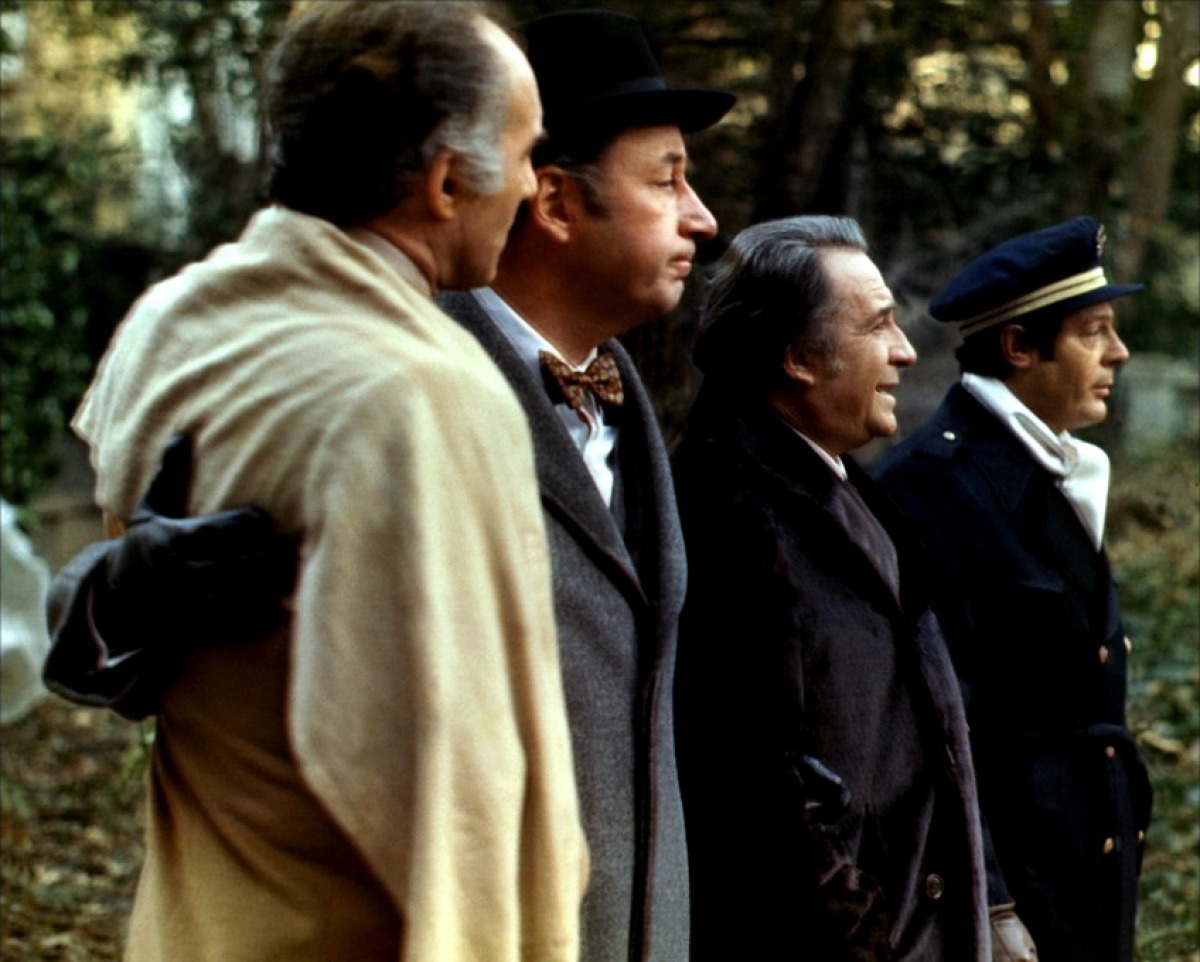
 Fed up with their lives, four old friends decide to literally eat themselves to death in one last grand blow-out. Cowritten and directed by Marco Ferreri (Chiedo asilo, La casa del sorriso), La Grande Bouffe features a cast that is an assured recipe for success, bringing together a quartet of legendary actors, all playing characters with their real first names: Marcello Mastroianni as sex-crazed airplane pilot Marcello, Philippe Noiret as mama’s boy and judge Philippe, Michel Piccoli as effete television host Michel, and Ugo Tognazzi as master gourmet chef Ugo. They move into Philippe’s hidden-away family villa, where they plan to eat and screw themselves to death, with the help of a group of prostitutes led by Andréa (Andréa Ferréol). Gluttons for punishment, the four men start out having a gas, but as the feeding frenzy continues, so does the flatulence level, and the men start dropping one by one. While the film might not be quite the grand feast it sets out to be, it still is one very tasty meal. Just be thankful that it’s not shown in Odoroma. Winner of the FIPRESCI Prize at the 1973 Cannes Film Festival, La Grande Bouffe is screening October 9 at 12:30, 4:00, and 7:00 as part of the FIAF CinémaTuesdays series “Films for Foodies!” The 7:00 showing will be introduced by pâtissier François Payard and series curator John Mariani and followed by a Q&A. The series continues October 16 with Roland Joffe’s Vatel (presented by Mariani and chef André Soltner), October 23 with Jean-Pierre Améris’s Romantics Anonymous (including a chocolate tasting with Mariani and chocolatier Laurent Gerbaud), and October 30 with Paul Lacoste’s Step Up to the Plate (presented by Mariani, chef Jean-Louis Gerin, and film producer Jaime Mateus-Tique). Bon appetit!
 Livia Bloom’s “Documentary in Bloom” series at the Maysles Cinema usually introduces new nonfiction films, but it has something a little different in store for December: the U.S. theatrical release of a thirty-six-year-old French work. It’s hard to believe that Daguerreotypes, Agnès Varda’s absolutely charming look at her longtime Parisian community, has never had a theatrical run in America, so it is exciting that her wonderful little tale is finally being shown on the big screen. In Daguerreotypes, Varda, who has made such New Wave classics as Cléo de 5 à 7 and Le Bonheur as well as such seminal personal documentaries as The Gleaners and I and The Beaches of Agnès, turns her camera on the people she and husband Jacques Demy lived with along the Rue Daguerre in Paris’s 14th arrondissement. Varda, who also narrates the seventy-five-minute film, primarily stands in the background while capturing local shopkeepers talking about their businesses and how they met their spouses as customers stop by, picking up bread, meat, perfume, and other items. Varda uses a goofy, low-rent magic show as a centerpiece, with many of the characters attending this major cultural event; the magician references the magic of both life and cinema itself, with Varda titling the film not only after the street where she lives but also directly evoking the revolutionary photographic process developed by Louis Daguerre in the 1820s and ’30s. Daguerreotypes will surely have a different impact now than it did back in the mid-1970s, depicting a time that already felt like the past but now feels like a long-forgotten era, when neighbors knew one another and lived as a tight-knit community. The film will be proceeded by the 1965 short Elsa la Rose, a twenty-minute documentary directed by Varda and Raymond Zanchi and narrated by Michel Piccoli that explores the loving relationship between French writers and communists Louis Aragon and Elsa Triolet.