Tag Archives: Michel Piccoli

60th ANNIVERSARY 4K RESTORATION: CONTEMPT

Brigitte Bardot shows off both her acting talent and beautiful body in Jean-Luc Godard’s Contempt

CONTEMPT (LE MEPRIS) (Jean-Luc Godard, 1963)
Film Forum
209 West Houston St.
June 30 – July 13
212-727-8110
www.filmforum.org

French auteur Jean-Luc Godard, who died last September at the age of ninety-one, didn’t hold back any of his contempt for Hollywood cinema in his multilayered masterpiece Contempt, which is being shown June 30 – July 13 in a sixtieth-anniversary 4K restoration at Film Forum. Loosely based on Alberto Moravia’s Il Disprezzo, Contempt stars Michel Piccoli as Paul Javal, a French screenwriter called to Rome’s famed Cinecittà studios by American producer Jeremy Prokosch (Jack Palance ) to perform rewrites on Austrian director Fritz Lang’s (played by Lang himself) adaptation of The Odyssey by ancient Greek writer Homer. Paul brings along his young wife, the beautiful Camille (Brigitte Bardot), whom Prokosch takes an immediate liking to. With so many languages being spoken, Prokosch’s assistant, Francesca Vanini (Giorgia Moll), serves as translator, but getting the various characters to communicate with one another and say precisely what is on their mind grows more and more difficult as the story continues and Camille and Paul’s love starts to crumble. Contempt is a spectacularly made film, bathed in deep red, white, and blue, as Godard and cinematographer Raoul Coutard poke fun at the American way of life. (Both Godard and Coutard appear in the film, the former as Lang’s assistant director, the latter as Lang’s cameraman — as well as the cameraman who aims the lens right at the viewer at the start of the film.)

Producer Jeremy Prokosch (Jack Palance) doesn’t always have the kindest of words for director Fritz Lang in Contempt

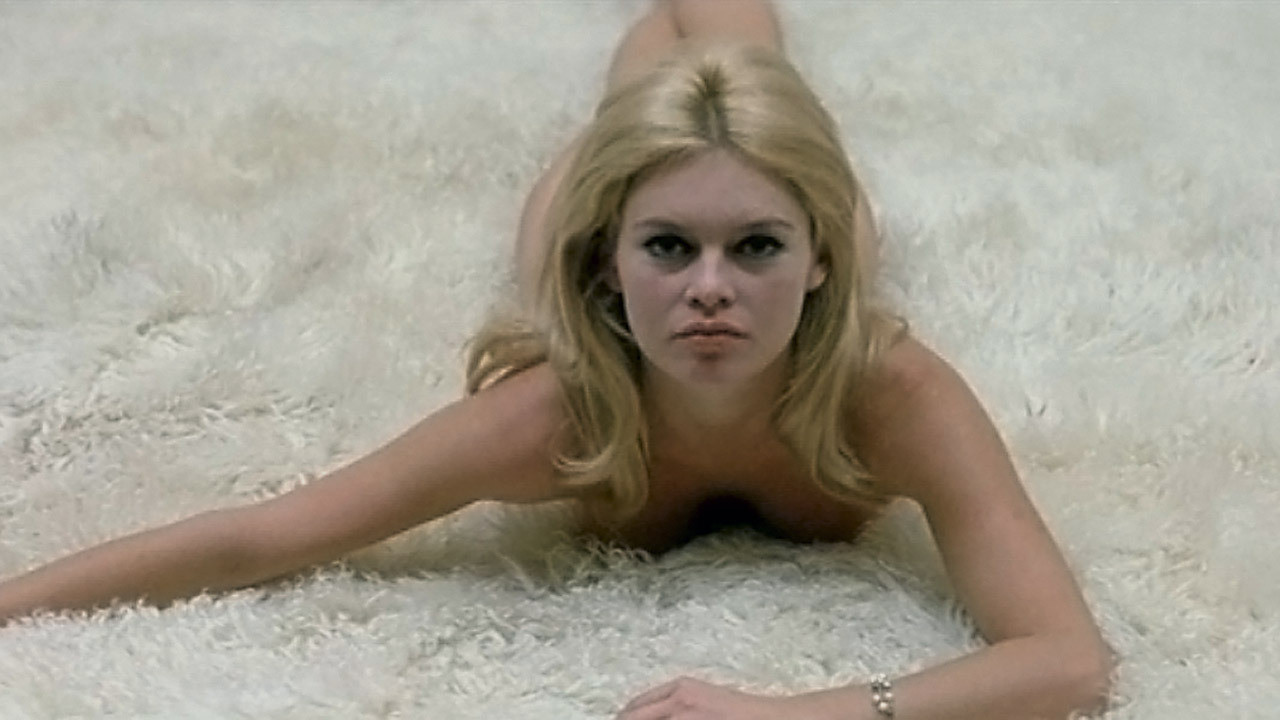
Bardot is sensational in one of her best roles, whether teasing Paul at a marvelously filmed sequence in their Rome apartment (watch for him opening and stepping through a door without any glass), lying naked on the bed, asking Paul what he thinks of various parts of her body (while Coutard changes the filter from a lurid red to a lush blue), or pouting when it appears that Paul is willing to pimp her out in order to get the writing job. Palance is a hoot as the big-time producer, regularly reading fortune-cookie-like quotes from an extremely little red book he carries around that couldn’t possibly hold so many words. And Lang, who left Germany in the mid-1930s for a career in Hollywood, has a ball playing a version of himself, an experienced veteran willing to put up with Prokosch’s crazy demands. Vastly entertaining from start to finish, Contempt is filled with a slew of inside jokes about the filmmaking industry and even Godard’s personal and professional life, along with some of the French director’s expected assortment of political statements and a string of small flourishes that are easy to miss but add to the immense fun, all set to a gorgeous romantic score by Georges Delerue.

LIVE SOUND CINEMA: DANGER: DIABOLIK (LIVE SCORE BY MORRICONE YOUTH)

Danger: Diabolik

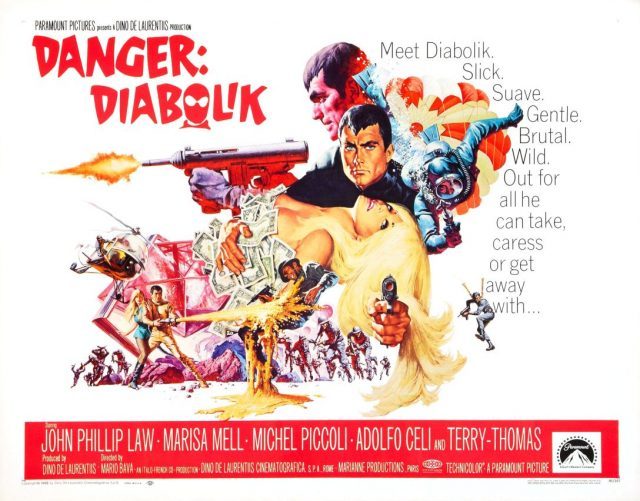
John Philip Law plays a criminal mastermind in Mario Bava’s Danger: Diabolik

DANGER: DIABOLIK (Mario Bava, 1968)
Nitehawk Cinema
136 Metropolitan Ave. between Berry St. & Wythe Ave.
Wednesday, January 23, 7:00
718-384-3980
nitehawkcinema.com

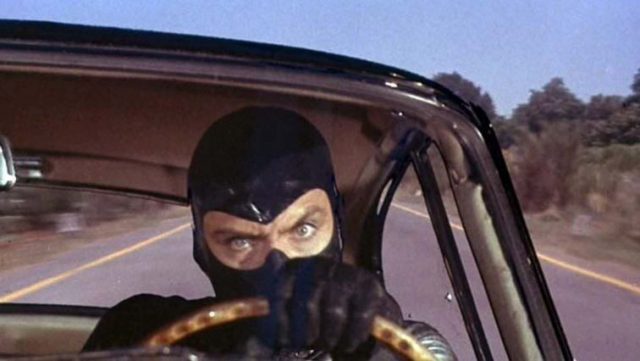
Nitehawk Cinema’s “Live Sound Cinema” series continues January 23 with an inspired selection: Morricone Youth performing a live re-score to Mario Bava’s Danger: Diabolik. The 1968 film was the last to be spoofed on Mystery Science Theater 3000 in 1999 — the year Morricone Youth was formed — prior to its 2017 reboot on Netflix, but don’t let that fool you; it’s no mere dated piece of schlock. The longtime underground fave has been steadily increasing its cred over the last decade, and deservedly so. The psychedelic crime thriller stars John Phillip Law as Diabolik, a criminal mastermind who pulls off seemingly impossible thefts right under the noses of the Minister of the Interior (Terry-Thomas), the intrepid Inspector Ginko (Michel Piccoli), and the frustrated chief of police (Claudio Gora), who eventually turns to mob boss Valmont (Adolfo Celi) for help. Wearing a body-hugging wetsuit of a costume, Diabolik is assisted by the love of his life, the gorgeous blonde Eva Kant (Marisa Mell), plotting their derring-do in an expansive underground lair. Based on the Italian comic book series by Angela and Luciana Giussani, the story rarely makes much sense, but it’s a hoot to watch, a trippy mix of Batman, James Bond, Robin Hood, and Austin Powers.

danger diabolik 2

The film was produced by Dino De Laurentiis, who fired the initial director and main cast, which included first George Raft and then Gilbert Roland as Diabolik’s archnemesis, and at one point considered Catherine Deneuve to play Eva, but ultimately giallo master Bava (Black Sunday, Planet of the Vampires) hired Mell. If some of the sets look familiar, it may be because De Laurentiis actually reused them, as well as actors, right after Diabolik finished shooting, going straight into production on another comic book movie, Roger Vadim’s Barbarella. Diabolik also features what very well might be Ennio Morricone’s grooviest soundtrack, which becomes a character unto itself; he might be most famous for composing the scores for myriad classic Westerns, but he also wrote music for Dario Argento, Elio Petri, and Pier Paolo Pasolini. The Nitehawk presentation is a great match of film and music; you can get a taste of what you’re in for here, when Morricone Youth performed to Danger: Diabolik at Nitehawk in 2013. And Beastie Boys fans should check out their 1998 video for “Body Movin’,” a campy tribute to the movie. “Live Sound Cinema” continues February 14 with Reel Orchestrette playing a live score to Buster Keaton’s 1925 classic, Seven Chances.

RATED X

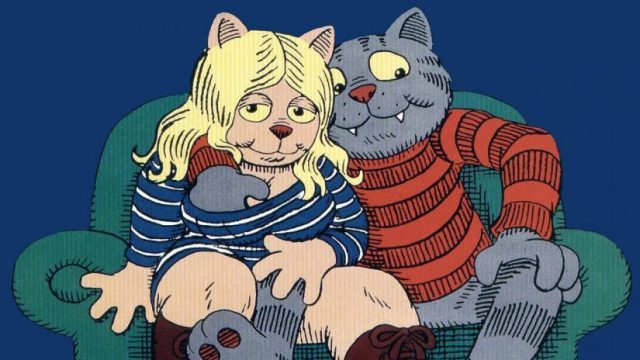
Ralph Bakshis animatedFritz the Cat is part of Quad tribute to X-rated cinema

Ralph Bakshi’s animated Fritz the Cat is part of Quad tribute to X-rated cinema

Quad Cinema
34 West 13th St. between Fifth & Sixth Aves.
Series runs December 14 – January 10
212-255-2243
quadcinema.com

In 1974, the promotional tag line for the porn sequel Emmanuelle II was “X was never like this.” While that film flaunted it, more mainstream movies treat the rating as a plague that could kill distribution and box office. The Quad is paying tribute to the controversial grade with “Rated X,” consisting of thirty-four films screening December 14 to January 10 that were either X-rated or had to make a few nips and tucks in order to avoid that tag. The films range from Stanley Kubrick’s A Clockwork Orange and John Schlesinger’s Midnight Cowboy to George A. Romero’s Dawn of the Dead and Tobe Hooper’s The Texas Chainsaw Massacre, from Marco Bellocchio’s Devil in the Flesh and Pedro Almodóvar’s Tie Me Up! Tie Me Down! to Vilgot Sjöman’s I Am Curious (Yellow) and Nagisa Oshima’s In the Realm of the Senses. Keep watching this space for additional reviews of this, um, titillating film fest.
LAST TANGO IN PARIS

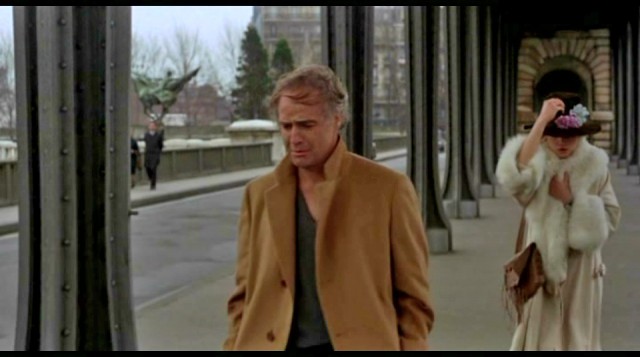
Marlon Brando and Maria Schneider star in Bernardo Bertolucci’s controversial Last Tango in Paris

LAST TANGO IN PARIS (ULTIMO TANGO A PARIGI) (Bernardo Bertolucci, 1972)
Saturday, December 15, 7.40
Sunday, December 16, 7:20
Friday, December 28, 8:35
Saturday, January 5, 8:55
www.fiaf.org

One of the most artistic films ever made about seduction, Bernardo Bertolucci’s controversial X-rated Last Tango in Paris is part of the Quad’s “Paris Stripped Bare” and “Pictures from the Revolution: Bertolucci’s Italian Period” series in addition to “Rated X.” Written by Bertolucci (The Conformist, The Spider’s Stratagem), who passed away in Rome in November at the age of seventy-seven, with regular collaborator and editor Franco Arcalli and with French dialogue by Agnès Varda (Le Bonheur, Vagabond), the film opens with credits featuring jazzy romantic music by Argentine saxophonist Gato Barbieri and two colorful and dramatic paintings by Francis Bacon, “Double Portrait of Lucian Freud and Frank Auerbach” and “Study for a Portrait,” that set the stage for what is to follow. (Bacon was a major influence on the look and feel of the film, photographed by Vittorio Storaro.) Bertolucci then cuts to a haggard man (Marlon Brando) standing under the Pont de Bir-Hakeim in Paris, screaming out, “Fucking God!” His hair disheveled, he is wearing a long brown jacket and seems to be holding back tears. An adorable young woman (Maria Schneider) in a fashionable fluffy white coat and black hat with flowers passes by, stops and looks at him, then moves on. They meet again inside a large, sparsely furnished apartment at the end of Rue Jules Verne that they are each interested in renting. Both looking for something else in life, they quickly have sex and roll over on the floor, exhausted. For the next three days, they meet in the apartment for heated passion that the man, Paul, insists include nothing of the outside world — no references to names or places, no past, no present, no future; the young woman, Jeanne, agrees. Their sex goes from gentle and touching to brutal and animalistic; in fact, after one session, Bertolucci cuts to actual animals. The film is nothing if not subtle.
LAST TANGO IN PARIS

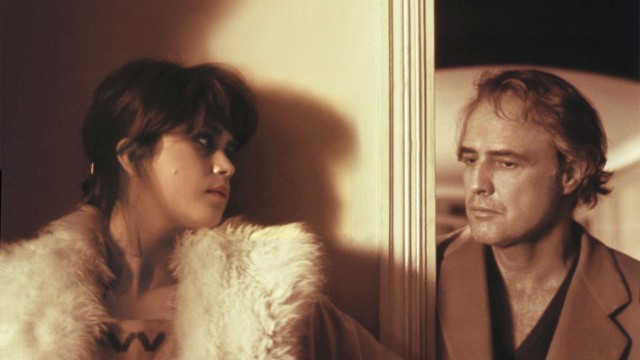
Jeanne (Maria Schneider) and Paul (Marlon Brando) share a private, sexual relationship in Last Tango in Paris

The lovers’ real lives are revealed in bits and pieces, as Paul tries to recover from his wife’s suicide and Jeanne deals with a fiancée, Thomas (Jean-Pierre Léaud), who has suddenly decided to make a film about them, without her permission, asking precisely the kind of questions that Paul never wants to talk about. When away from the apartment, Jeanne is shown primarily in the bright outdoors, flitting about fancifully and giving Thomas a hard time; in one of the only scenes in which she’s inside, Thomas makes a point of opening up several doors, preventing her from ever feeling trapped. Meanwhile, Paul is seen mostly in tight, dark spaces, especially right after having a fight with his dead wife’s mother. He walks into his hotel’s dark hallway, the only light coming from two of his neighbors as they open their doors just a bit to spy on him. Not saying anything, he pulls their doors shut as the screen goes from light to dark to light to dark again, and then Bertolucci cuts to Paul and Jeanne’s apartment door as she opens it, ushering in the brightness that always surrounds her. It’s a powerful moment that heightens the difference between the older, less hopeful man and the younger, eager woman. Inevitably, however, the safety of their private, primal relationship is threatened, and tragedy awaits.
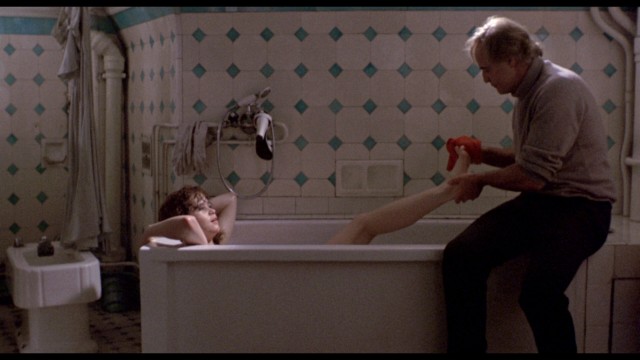
Jeanne and Paul develop a complicated sexual relationship in LAST TANGO

Jeanne and Paul develop a complicated sexual relationship in Last Tango

“I’ve tried to describe the impact of a film that has made the strongest impression on me in almost twenty years of reviewing. This is a movie people will be arguing about, I think, for as long as there are movies,” Pauline Kael wrote in the New Yorker on October 28, 1972, shortly before Last Tango closed the tenth New York Film Festival. “It is a movie you can’t get out of your system, and I think it will make some people very angry and disgust others. I don’t believe that there’s anyone whose feelings can be totally resolved about the sex scenes and the social attitudes in this film.” More than forty years later, the fetishistic Last Tango in Paris still has the ability to evoke those strong emotions. The sex scenes range from tender, as when Jeanne tells Paul they should try to climax without touching, to when Paul uses butter in an attack that was not scripted and about which Schneider told the Daily Mail in 2007, “I felt humiliated and to be honest, I felt a little raped, both by Marlon and by Bertolucci. After the scene, Marlon didn’t console me or apologise. Thankfully, there was just one take.” At the time of the shooting, Brando was forty-eight and Schneider nineteen; Last Tango was released between The Godfather and Missouri Breaks, in which Brando starred with Jack Nicholson, while Schneider would go on to make Michelangelo Antonioni’s The Passenger with Nicholson in 1975. Brando died in 2004 at the age of eighty, leaving behind a legacy of more than forty films. Schneider died in 2011 at the age of fifty-eight; she also appeared in more than forty films, but she was never able to escape the associations that followed her after her breakthrough performance in Last Tango, which featured extensive nudity, something she refused to do ever again. Even in 2018, Last Tango in Paris is both sexy and shocking, passionate and provocative, alluring and disturbing, all at the same time, a movie that, as Kael said, viewers won’t easily be able to get out of their system.
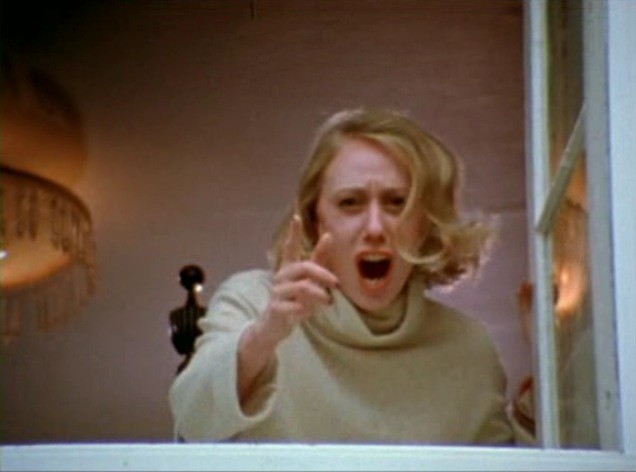
DESPERATE LIVING

Peggy Gravel’s quaint suburban life is about to go to hell in John Waters’s Desperate Living

DESPERATE LIVING (John Waters, 1977)
Friday, December 21, 8:35
Wednesday, December 26, 8:35
Wednesday, January 2, 8:35
quadcinema.com

A turning point in his career, John Waters’s Desperate Living is an off-the-charts bizarre, fetishistic fairy tale, the ultimate suburban nightmare. Mink Stole stars as Peggy Gravel, a wealthy housewife suffering yet another of her mental breakdowns. In the heat of the moment, she and the family maid, four-hundred-pound Grizelda Brown (Jean Hill), kill Peggy’s mild-mannered husband, Bosley (George Stover), and the two women end up finding refuge in one of the weirdest towns ever put on celluloid, Mortville, where MGM’s The Wizard of Oz and Babes in Toyland meet Russ Meyer’s Faster, Pussycat! Kill! Kill! (with some Kenneth Anger, Jack Smith, and Douglas Sirk thrown into the mix as well). “I ain’t your maid anymore, bitch! I’m your sister in crime!” Grizelda declares. Peggy and Grizelda move into the “guest house” of manly Mole McHenry (Susan Lowe) and her blonde bombshell lover, Muffy St. Jacques (Liz Renay). Mortville is run as a kind of fascist state by the cruel and unusual despot Queen Carlotta (Edith Massey), an evil shrew who enjoys being serviced by her men-in-leather attendants, issues psychotic proclamations, and is determined that her daughter, Princess Coo-Coo (Mary Vivian Pearce), stop dating her garbage-man boyfriend, Herbert (George Figgs). (Wait, Mortville has a sanitation department?) Camp and trash combine like nuclear fission as things get only crazier from there, devolving into gorgeous low-budget madness and completely over-the-top ridiculousness, a mélange of sex, violence, and impossible-to-describe lunacy that Waters himself claimed was a movie “for fucked-up children.”
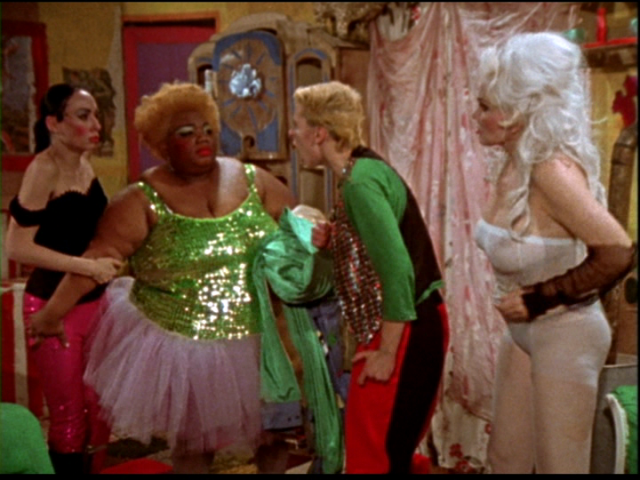
DESPERATE LIVING

John Waters’s Desperate Living is a celebration of camp and trash, an extremely adult and bizarre fairy tale

The opening scenes of Peggy’s meltdown are utterly hysterical. When a neighbor hits a baseball through her bedroom window and offers to pay for it with his allowance, she screams, “How about my life? Do you get enough allowance to pay for that? I know you were trying to kill me! What’s the matter with the courts? Do they allow this lawlessness and malicious destruction of property to run rampant? I hate the Supreme Court! Oh, God. God. God. Go home to your mother! Doesn’t she ever watch you? Tell her this isn’t some communist day-care center! Tell your mother I hate her! Tell your mother I hate you!” The sets and costumes are deranged — and perhaps influenced Pee-wee’s Playhouse — the relatively spare score is fun, and the acting is, well, appropriate. The first half of the film is better than the second half, but it’s still a delight to watch Waters, who wrote, directed, and produced the film, which was shot in a kind of lurid Technicolor by Charles Ruggero, take on authority figures (beware of Sheriff Shitface), gender identity, class structure, hero worship, beauty, race, crime, nudity, and, of course, at its very heart, love and romance.
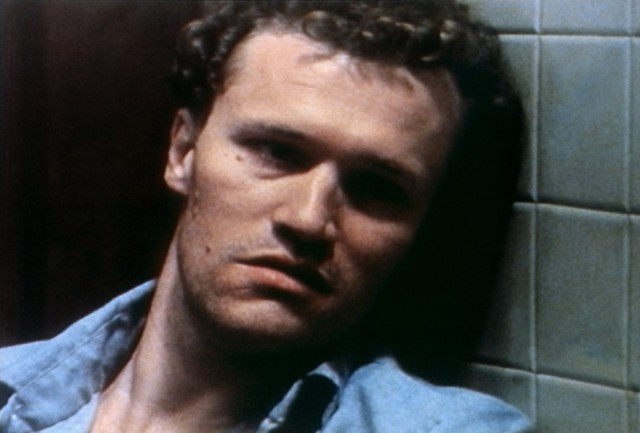
MIchael Rooker stars as a troubled murderer in HENRY: PORTRAIT OF A SERIAL KILLER

Michael Rooker stars as a troubled murderer in Henry: Portrait of a Serial Killer

HENRY: PORTRAIT OF A SERIAL KILLER (John McNaughton, 1986)
Thursday, December 27, 6:45
Saturday, January 5, 1.00
quadcinema.com

More than thirty years ago, when director John McNaughton (Mad Dog and Glory, Wild Things) was asked by executive producers Malik B. and Waleed B. Ali to make a low-budget horror film, he and cowriter Richard Fire decided to base their tale on the exploits of serial killer Henry Lee Lucas, whose story McNaughton had just seen on 20/20. The result was this creepy, dark, well-paced effort starring Michael Rooker as Henry, a brooding, casual serial killer who can’t quite remember how he murdered his mother. Henry lives in suburban Chicago with ex-con Otis (Tom Towles), whose sexy young sister, Becky (Tracy Arnold), comes to stay with them to get away from her abusive husband. As the relationship among the three of them grows more and more complicated, Henry continues to kill people — and get away with it. The opening tableau of some of Henry’s murder victims — the actual killings aren’t shown in the beginning — is beautifully done, although it also fetishizes violence against women, which is extremely disturbing. (Several of the victims are played by the same woman, Mary Demas, in different wigs.) Henry: Portrait of a Serial Killer, which was not released until 1989 because of its graphic content, was nominated for six Independent Spirit Awards in 1990, and Rooker was named Best Actor at the Seattle International Film Festival.
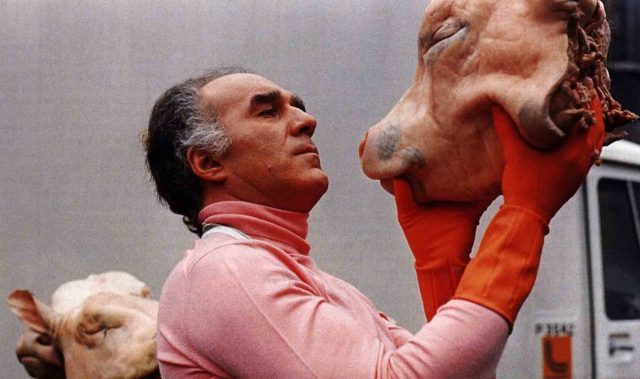
Michel Piccoli prepares to make a pig of himself in La Grande Bouffe

Michel Piccoli prepares to make a pig of himself in La Grande Bouffe

LA GRANDE BOUFFE (THE BIG FEAST) (BLOW-OUT) (Marco Ferreri, 1973)
Tuesday, January 1, 5:30
Friday, January 4, 9:15
quadcinema.com

Fed up with their lives, four old friends decide to literally eat themselves to death in one last grand blow-out. Cowritten and directed by Marco Ferreri (Chiedo asilo, La casa del sorriso), La Grande Bouffe features a cast that is an assured recipe for success, bringing together a quartet of legendary actors, all playing characters with their real first names: Marcello Mastroianni as sex-crazed airplane pilot Marcello, Philippe Noiret as mama’s boy and judge Philippe, Michel Piccoli as effete television host Michel, and Ugo Tognazzi as master gourmet chef Ugo. They move into Philippe’s hidden-away family villa, where they plan to eat and screw themselves to death, with the help of a group of prostitutes led by Andréa (Andréa Ferréol). Gluttons for punishment, the four men start out having a gas, but as the feeding frenzy continues, so does the flatulence level, and the men start dropping one by one. While the film, which won the FIPRESCI Prize at the 1973 Cannes Film Festival, might not be quite the grand feast it sets out to be, it still is one very tasty meal. Just be thankful that it’s not shown in Odoroma. Bon appetit!
MICHEL PICCOLI

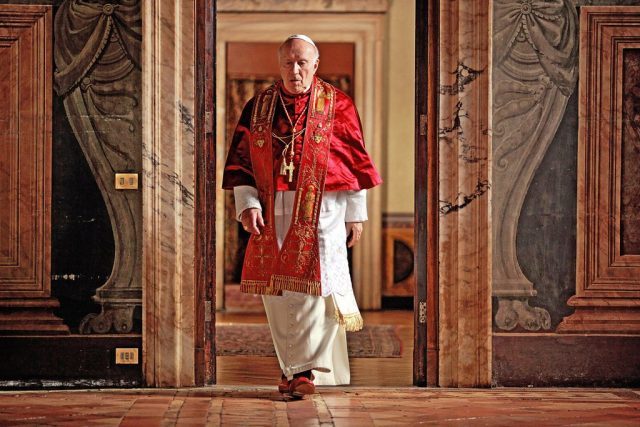
Michel Piccoli stars as the Holy Father in Nanni Moretti We Have a Pope

Michel Piccoli stars as the Holy Father in Nanni Moretti’s We Have a Pope

Film Forum
209 West Houston St.
March 16-22
212-727-8110
filmforum.org

Here in the States, French actor Michel Piccoli might not have the name recognition of Gérard Depardieu, Jean-Paul Belmondo, Alain Delon, or Yves Montand, but the Paris-born thespian has quite a resume, consisting of more than 150 films and Best Actor awards from Cannes and Berlin. Among the myriad internationally renowned directors he has worked with are Louis Malle, Jean Renoir, Jean-Luc Godard, Alfred Hitchcock, Sergio Corbucci, René Clair, Liliana Cavani, Marco Bellocchio, Jacques Demy, Jean-Pierre Melville, Jacques Rivette, Leos Carax, Manoel de Oliveira, Theodoros Angelopoulos, Bertrand Tavernier, and Nanni Moretti. In conjunction with the March 23 premiere of a new 4K restoration of Luis Buñuel’s Belle de Jour, in which Piccoli plays Henri Husson, who gets Séverine Serizy (Catherine Deneuve) interested in a local brothel, Film Forum is presenting a seventeen-film celebration of the ninety-two-year-old Piccoli’s wide-ranging career, which dates back to the mid-1940s. Below is a look at three Piccoli faves.

Michel Piccoli prepares to make a pig of himself in La Grande Bouffe

Michel Piccoli prepares to make a pig of himself in La Grande Bouffe

LA GRANDE BOUFFE (THE BIG FEAST) (BLOW-OUT) (Marco Ferreri, 1973)
Saturday, March 17, 4:10
Sunday, March 18, 7:15
Monday, March 19, 4:20
Thursday, March 22, 9:50
filmforum.org

Fed up with their lives, four old friends decide to literally eat themselves to death in one last grand blow-out. Cowritten and directed by Marco Ferreri (Chiedo asilo, La casa del sorriso), La Grande Bouffe features a cast that is an assured recipe for success, bringing together a quartet of legendary actors, all playing characters with their real first names: Marcello Mastroianni as sex-crazed airplane pilot Marcello, Philippe Noiret as mama’s boy and judge Philippe, Michel Piccoli as effete television host Michel, and Ugo Tognazzi as master gourmet chef Ugo. They move into Philippe’s hidden-away family villa, where they plan to eat and screw themselves to death, with the help of a group of prostitutes led by Andréa (Andréa Ferréol). Gluttons for punishment, the four men start out having a gas, but as the feeding frenzy continues, so does the flatulence level, and the men start dropping one by one. While the film might not be quite the grand feast it sets out to be, it still is one very tasty meal. Just be thankful that it’s not shown in Odoroma. Winner of the FIPRESCI Prize at the 1973 Cannes Film Festival, La Grande Bouffe is screening March 17, 18, 19, and 22 in Film Forum’s Michel Piccoli series. Bon appetit!

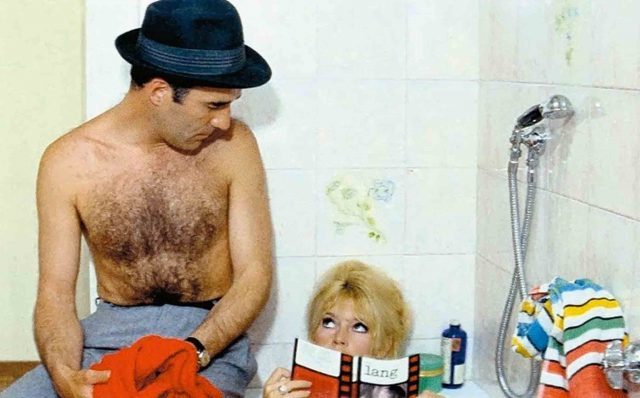
A barechested Michel Piccoli gets a bit of contempt from Brigitte Bardot in Jean-Luc Godard film

A barechested Michel Piccoli gets a bit of contempt from Brigitte Bardot in Jean-Luc Godard masterpiece

CONTEMPT (LE MEPRIS) (Jean-Luc Godard, 1963)
Saturday, March 17, 2:00 & 7:00
Sunday, March 18, 3:20 & 9:45
filmforum.org

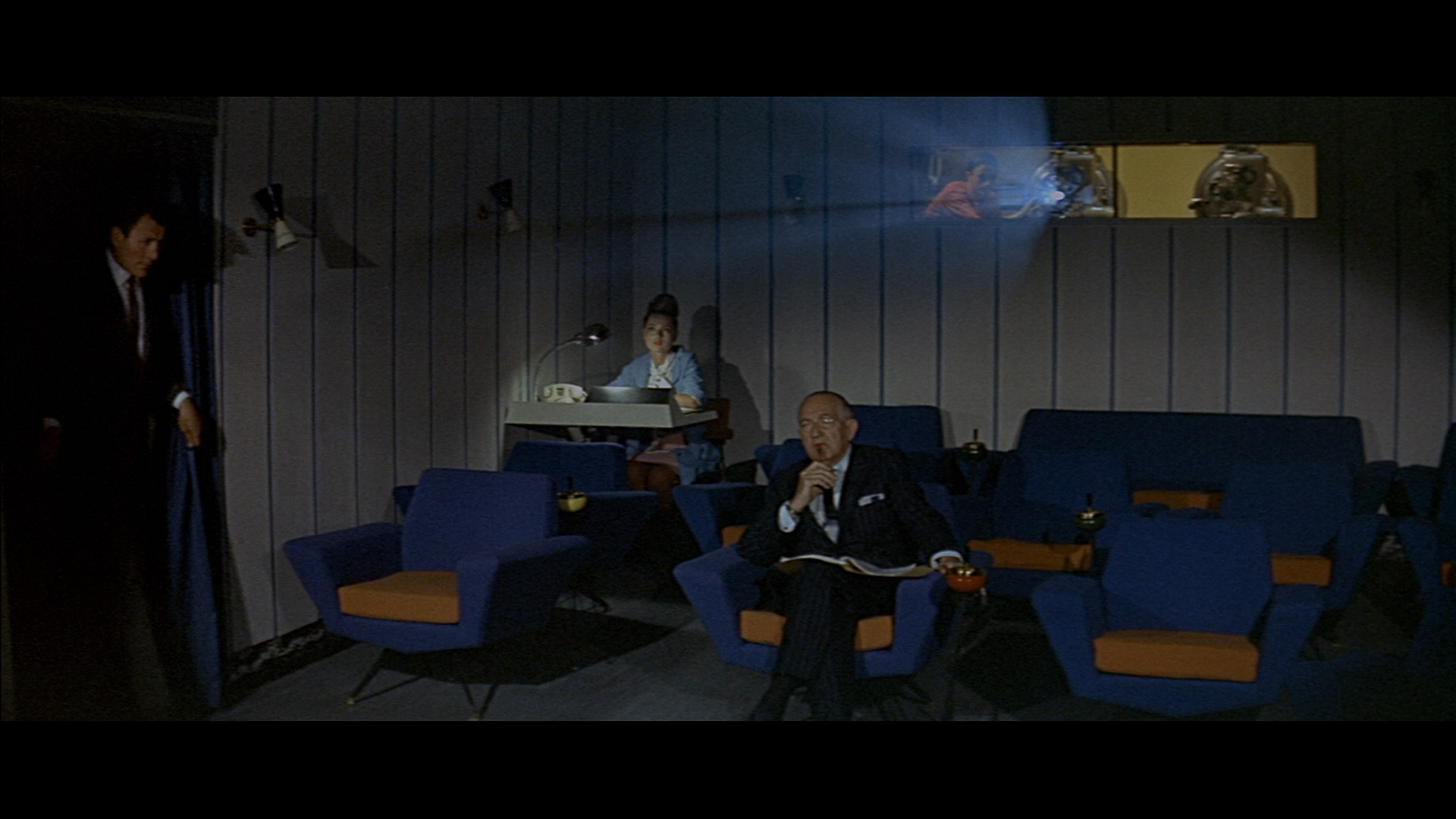
French auteur Jean-Luc Godard doesn’t hold back any of his contempt for Hollywood cinema in his multilayered masterpiece Contempt. Loosely based on Alberto Moravia’s Il Disprezzo, Contempt stars Michel Piccoli as Paul Javal, a French screenwriter called to Rome’s famed Cinecittà studios by American producer Jeremy Prokosch (Jack Palance ) to perform rewrites on Austrian director Fritz Lang’s (played by Lang himself) adaptation of The Odyssey by ancient Greek writer Homer. Paul brings along his young wife, the beautiful Camille (Brigitte Bardot), whom Prokosch takes an immediate liking to. With so many languages being spoken, Prokosch’s assistant, Francesca Vanini (Giorgia Moll), serves as translator, but getting the various characters to communicate with one another and say precisely what is on their mind grows more and more difficult as the story continues and Camille and Paul’s love starts to crumble. Contempt is a spectacularly made film, bathed in deep red, white, and blue, as Godard and cinematographer Raoul Coutard poke fun at the American way of life. (Both Godard and Coutard appear in the film, the former as Lang’s assistant director, the latter as Lang’s cameraman — as well as the cameraman who aims the lens right at the viewer at the start of the film.)
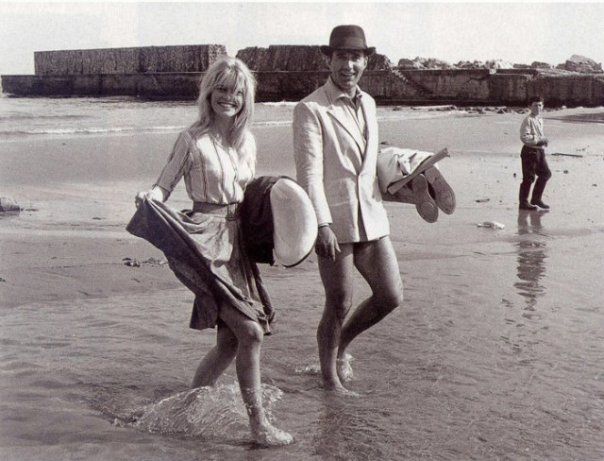
Brigitte Bardot and Michel Piccoli take a break from filming Jean-Luc Godards Contempt

Brigitte Bardot and Michel Piccoli take a break from filming Jean-Luc Godard’s Contempt

Bardot is sensational in one of her best roles, whether teasing Paul at a marvelously filmed sequence in their Rome apartment (watch for him opening and stepping through a door without any glass), lying naked on the bed, asking Paul what he thinks of various parts of her body (while Coutard changes the filter from a lurid red to a lush blue), or pouting when it appears that Paul is willing to pimp her out in order to get the writing job. Palance is a hoot as the big-time producer, regularly reading fortune-cookie-like quotes from an extremely little red book he carries around that couldn’t possibly hold so many words. And Lang, who left Germany in the mid-1930s for a career in Hollywood, has a ball playing a version of himself, an experienced veteran willing to put up with Prokosch’s crazy demands. Vastly entertaining from start to finish, Contempt is filled with a slew of inside jokes about the filmmaking industry and even Godard’s personal and professional life, along with some of the French director’s expected assortment of political statements and a string of small flourishes that are easy to miss but add to the immense fun, all set to a gorgeous romantic score by Georges Delerue. Contempt is screening March March 17, 18, 19, and 22 in Film Forum’s Michel Piccoli series.

Michel Piccoli is nearly unrecognizable in

Michel Piccoli is nearly unrecognizable in Jacques Demy’s Une Chambre en Ville

UNE CHAMBRE EN VILLE (A ROOM IN TOWN) (Jacques Demy, 1982)
Sunday, March 18, 1:30
filmforum.org

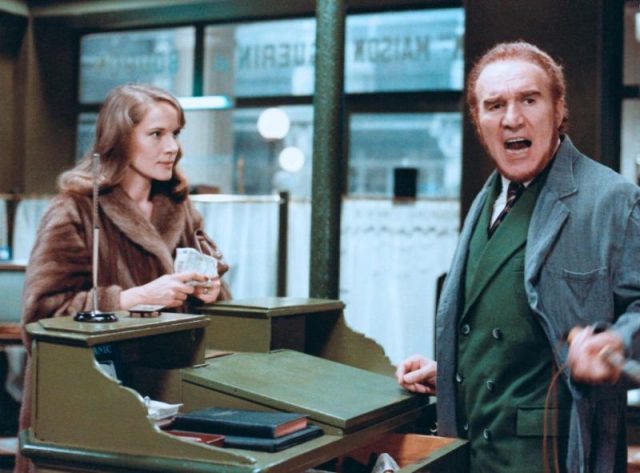
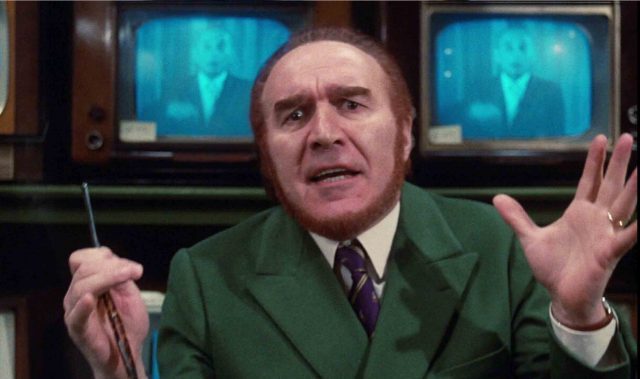
From the very opening of Une Chambre en Ville (A Room in Town), French New Wave director Jacques Demy announces that the 1982 musical melodrama is going to be something a little different. As a rising sun changes color over a construction site across the Loire River, what appear to be closing credits run up the screen, set to Michel Colombier’s romantic score, as if the film is ending. But Demy and cinematographer Jean Penzer are only getting started, shifting from black-and-white to color to black-and-white again as they cut to the hard streets of 1955 Nantes, where a shipyard strike is under way. Riot police are in a stand-off with hundreds of male and female strikers, characters on both sides singing instead of talking and shouting — in a scene that eerily evokes Tom Hooper’s Les Misérables, which came thirty years later. Soon the intricate plot unfolds, as the striking, and broke, François Guilbaud (Richard Berry), who is renting a room from former baroness Margot Langlois (Danielle Darrieux) and dating doe-eyed Violette Pelletier (Fabienne Guyon), instantly falls for femme fatale Edith Leroyer (Dominique Sanda), Mme. Langlois’s recently married daughter, who is already fed up with her impotent cheapskate of a husband, television salesman Edmond Leroyer (Michel Piccoli). The over-the-top drama plays out in wonderfully garish rooms of deep, intoxicating colors, which are echoed by Rosalie Varda’s (daughter of Demy and Agnès Varda) costumes, which even go so far as to have Violette wearing violet and Edith going bare beneath her luxurious fur coat, with no one changing clothes over the course of the two days in which the story takes place. As the strike continues, the main characters connect with one another in good and bad ways, especially when straight razors and guns are involved.

Michel Piccoli plays television salesman Edmond Leroyer in underrated Jacques Demy gem

Michel Piccoli plays television salesman Edmond Leroyer in underrated Jacques Demy gem

Writer-director Demy, who transformed the movie musical in the 1960s with The Umbrellas of Cherbourg and The Young Girls of Rochefort (the latter also featuring Darrieux), includes no Hollywood-like set pieces in Une Chambre en Ville, no dancing, no choruses — essentially, no real songs at all. Instead, all of the dialogue is sung by the actors (or dubbed in by someone else) as if in regular conversation. Inspired by a real shipyard strike in his hometown of Nantes in 1955, Demy takes on such concepts as wealth, class, authority, home, family, and, most of all, love — both real and imagined, unrequited and lustful — in the vastly underrated film, which is quite entertaining and very funny despite its dark themes. And be on the lookout for more echoes of Les Misérables throughout. A recent digital restoration of Une Chambre en Ville is screening March 18 in Film Forum’s Michel Piccoli series.

CABARET CINEMA — SOUNDTRACK: THE YOUNG GIRLS OF ROCHEFORT

The Young Girls of Rochefort

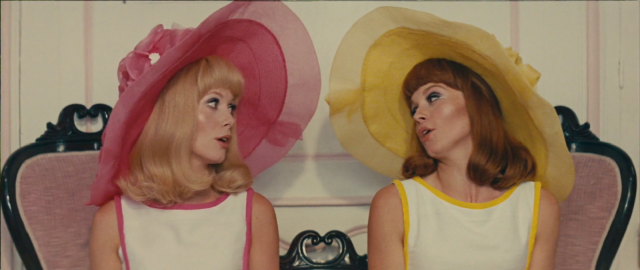
Real-life sisters Catherine Deneuve and Françoise Dorléac play Gemini twins in Jacques Demy’s The Young Girls of Rochefort

THE YOUNG GIRLS OF ROCHEFORT (LES DEMOISELLES DE ROCHEFORT) (Jacques Demy, 1967)
Rubin Museum of Art
150 West 17th St. at Seventh Ave.
Friday, October 27, $10, 9:30
Series continues Friday nights through April 28
212-620-5000
rubinmuseum.org

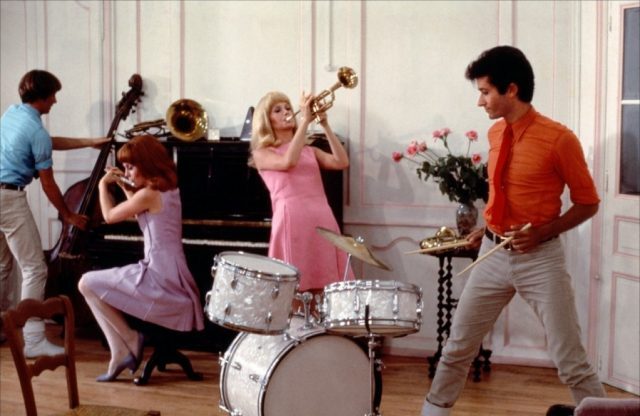
When asked why he chose The Young Girls of Rochefort for the Rubin Museum Cabaret Cinema series “Soundtrack,” being held in conjunction with the exhibition “The World Is Sound,” movie executive Jack Lechner explained, “In addition to being the single biggest influence on Damien Chazelle’s La La Land, Jacques Demy’s The Young Girls of Rochefort is the sheerest expression of pure joy in the history of movies — a nonstop celebration of song, dance, and romantic idealism.” Demy’s 1967 pastel-colored romp is all that and more, a swirling, twirling two-hour-plus party of music, missed connections, and murder. In the port town of Rochefort, a fair has come to town, including hot-to-trot carnies Etienne (George Chakiris, with songs overdubbed by Romuald) and Bill (Grover Dale, José Bartel), who spend a lot of time hanging out at a café right next to the town square, owned by Yvonne Garnier (Danielle Darrieux, the only one who does her own singing), who has grown twin girls, dance instructor Delphine (Catherine Deneuve, Anne Germain) and piano teacher Solange (Françoise Dorléac, Claude Parent), as well as a young son, Booboo (Patrick Jeantet, Olivier Bonnet). Local gallery owner Guillaume Lancien (Jacques Riberolles, Jean Stout) is in love with Delphine, but she wants nothing to do with him. Music store owner Simon Dame (Michel Piccoli, Georges Blaness) is trying to arrange a meeting between Solange, who has written a symphony, with his very successful conservatory friend, Andy Miller (Gene Kelly, Donald Burke). Meanwhile, blond sailor and painter Maxence (Jacques Perrin, Jacques Revaux) has drawn a picture of his ideal woman — a dead ringer for Delphine — but circumstances keep preventing them from bumping into each other. Meanwhile, the perky Josette (Geneviève Thénier, Alice Gerald) serves such regulars as Dutrouz (Henri Crémieux) and Pépé (René Bazart) in the café. Over the course of one rather long weekend, characters fall in and out of love, uncover family secrets, and keep missing one another as they sing and dance as if it’s the most natural thing in the world. And who’s to argue with them.

The Young Girls of Rochefort

Sound is a key element in multiple ways in one of the grandest musicals ever made

Recently restored with the participation of Demy’s widow, fellow Nouvelle Vague master Agnès Varda, The Young Girls of Rochefort is a genuine treat for the eyes and ears. Deneuve and Dorléac are utterly delightful as the Gemini twins, wearing candy-colored dresses and dramatic hats (the glorious costumes are by Jacqueline Moreau and Marie-Claude Fouquet), everything gorgeously photographed by Ghislain Cloquet. (Sadly, Dorléac, Deneuve’s older sister in real life) died in a car accident a few months before the film was released; she was only twenty-five.) Demy wrote and directed the film, including penning the lyrics for Michel Legrand’s wide-ranging score, even giving an inside nod to the composer. While his previous film, 1964’s The Umbrellas of Cherbourg, featured every piece of dialogue being sung, The Young Girls of Rochefort mixes it up, much like the dancing, choreographed by Norman Maen; at any moment, some characters are dancing and others just sitting or walking, sometimes noticing each other with quick moves, and sometimes not, almost as if the worlds of fantasy and reality are side-by-side. Of course, this being Demy (Model Shop, Une chambre en ville), it’s not all sweetness and light. There’s a violent murderer on the loose, the military is marching through town, and Guillaume seems to be rather handy with a gun. “Trouble is everywhere,” Yvonne says. Several times Maxence notes that his return to Nantes, Demy’s own hometown, is “immi-Nantes,” and that goofy joke is one of the many sly elements that keeps the film sharp and edgy; the plot is built around everything being imminent to the point of intoxicating ridiculousness. In addition to also kvelling over abstract art (“Braque, Picasso, Klee, Miró, Matisse — that’s life!” Maxence declares), the film is surprisingly feminist. Delphine and Solange regularly add little quips, almost under their breath, refusing to be taken for floozies no matter how sexist and misogynist some of their suitors might be. And then, at the end, Demy literally and figuratively opens and closes one last door. The Young Girls of Rochefort is screening at the Rubin at 9:30 on October 27 and will be introduced by Lechner; “Soundtrack” continues Friday nights through December 15 with such other sound-specific films as Michael Powell and Emeric Pressburger’s I Know Where I’m Going, Gus Van Sant’s Elephant, and Lars von Trier’s Dancer in the Dark.

CINEMATOGRAPHER CAROLINE CHAMPETIER: SHAPING THE LIGHT — THE INNOCENTS / HOLY MOTORS

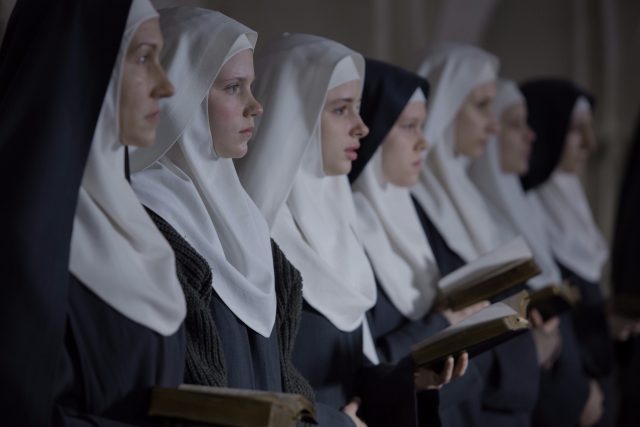
A convent of nuns reexamine their faith following tragedy in Les Innocentes

Polish nuns reexamine their faith following unspeakable tragedy during WWII in Les Innocentes

CinéSalon: THE INNOCENTS (LES INNOCENTES) (AGNUS DEI) (Anne Fontaine, 2016)
French Institute Alliance Française, Florence Gould Hall
55 East 59th St. between Madison & Park Aves.
Tuesday, October 24, $14 ($23 for both films), 4:00
Series continues Tuesdays through October 31
212-355-6100
www.fiaf.org
www.musicboxfilms.com

FIAF’s CinéSalon series “Cinematographer Caroline Champetier: Shaping the Light” continues the celebration of the career of the César-winning French director of photography October 24 with two of her best films, Anne Fontaine’s Les Innocentes and Léos Carax’s Holy Motors, each of which will be followed by a Q&A and wine and beer reception with Champetier. Inspired by a true story, Les Innocentes is a haunting tale of a French WWII Red Cross doctor, Mathilde Beaulieu (Lou de Laâge), who is secretly summoned by Sister Maria (Agata Buzek) to help a nun give birth in a remote Polish convent. She soon discovers that several of the Benedictine nuns are pregnant, the result of brutal rapes by Soviet soldiers. The Mother Superior (Agata Kulesza) doesn’t want any outsiders to know what happened, out of both shame and fear, but the babies, and the nuns themselves, may not survive without obstetric care. Mathilde, a Communist, is stationed at a mobile surgical hospital in Warsaw, where she primarily assists Samuel (Vincent Macaigne), a Jewish doctor tending to wounded soldiers after the war, in December 1945; she gets into trouble with Samuel when she refuses to even hint at where she is disappearing to. As the due dates for the multiple births draw close, so does the danger surrounding Mathilde and the nuns.

Les Innocentes was nominated for four Césars, Best Film, Best Director, Best Original Screenplay — even though it was based on the diaries of French Resistance doctor Madeleine Pauliac — and Best Cinematography, by Champetier (Of Gods and Men, Toute une nuit), who does an exquisite job with her camera throughout the film, which is beautifully directed by Fontaine (Coco Before Chanel, Gemma Bovery). In scene after scene, amid a palette dominated by black, white, and brownish gray, a light glows near the center of the screen, from candles, open doorways, windows, and snow to a fire, lamps, truck headlights, and even the white parts of the nuns’ habits, giving the film a chiaroscuro look reminiscent of canvases by Georges de la Tour. It’s like a flicker of hope at the center of tragedy, or birth coming out of death as the nuns and the doctors reexamine their faith, their basic belief system, and the concept of motherhood. De Laâge, who was nominated twice for the Most Promising Actress César, gives a heartfelt, honest performance as Mathilde, as she goes back and forth between her duties with the Red Cross and her deep-set desire to help the nuns. Champetier’s camera loves her face, which often melts into the shot like a figure in a classical painting. Les Innocentes is a powerful look at some of the many innocent victims of war and how far people will go to protect their secrets. Les Innocentes is screening October 24 at 4:00 at FIAF, followed by a Q&A and wine and beer reception with Champetier.

Léos Carax’s HOLY MOTORS is a dazzling tribute to Paris, cinema, and the art of storytelling

Léos Carax’s Holy Motors is a dazzling tribute to Paris, cinema, and the art of storytelling

CinéSalon: HOLY MOTORS (Léos Carax, 2012)
Tuesday, October 24, $14 ($23 for both films), 7:30
www.fiaf.org
www.holymotorsfilm.com

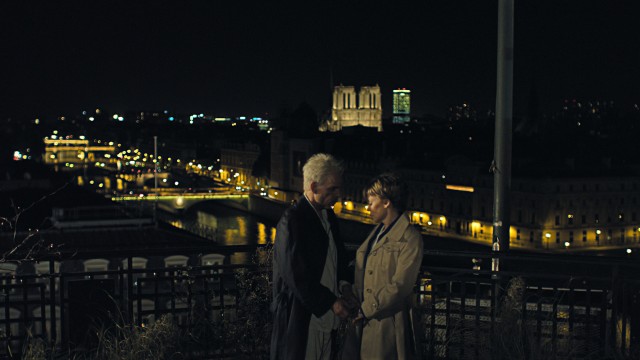
French writer-director Léos Carax (Boy Meets Girl, Mauvais Sang) has made only five feature films in his thirty-plus-year career, a sadly low output for such an innovative, talented director, but in 2012 he gave birth to his masterpiece, the endlessly intriguing, confusing, and exhilarating Holy Motors. His first film since 1999’s POLA X, the work is a surreal tale of character and identity, spreading across multiple genres in a series of bizarre, entertaining, and often indecipherable set pieces. Holy Motors opens with Carax himself playing le Dormeur, a man who wakes up and walks through a hidden door in his room and into a movie theater where a packed house, watching King Vidor’s The Crowd, is fast asleep. The focus soon shifts to Carax alter ego Denis Lavant as Monsieur Oscar, a curious character who is being chauffeured around Paris in a white stretch limo driven by the elegant Céline (Édith Scob). Oscar has a list of assignments for the day that involve his putting on elaborate costumes — including revisiting his sewer character from Merde, Carax’s contribution to the 2009 omnibus Tokyo! that also included shorts by Michel Gondry and Bon Joon-ho — and becoming immersed in scenes that might or might not be staged, blurring the lines between fiction and reality within, of course, a completely fictional world to begin with. It is as if each scene is a separate little movie, and indeed, Carax, whose middle name is Oscar, has said that he made Holy Motors after several other projects fell through, so perhaps he has melded many of those ideas into this fabulously abstruse tale that constantly reinvents itself.

Stunningly photographed by Caroline Champetier, former president of the French Association of Cinematographers, the film is also a loving tribute to Paris, the cinema, and the art of storytelling, with direct and indirect references to Franz Kafka, E. T. A. Hoffman, Charlie Chaplin, Lon Chaney, Eadweard Muybridge, Georges Franju, and others. (Scob, who starred in Franju’s Eyes Without a Face, at one point even pulls out a mask similar to the one she wore in that classic thriller.) The outstanding cast also features Kylie Minogue, who does indeed get to sing; Eva Mendes as a robotic model; and Michel Piccoli as the mysterious Man with the Birthmark. Holy Motors is screening October 24 at 7:30 at FIAF, followed by a Q&A and wine and beer reception with Champetier. “Cinematographer Caroline Champetier: Shaping the Light” concludes October 31 with Margarethe von Trotta’s Hannah Arendt and Jean-Luc Godard’s Grandeur et décadence d’un petit commerce de cinema.

FUTURE IMPERFECT — THE UNCANNY IN SCIENCE FICTION: HOLY MOTORS

Léos Carax’s HOLY MOTORS is a dazzling tribute to Paris, cinema, and the art of storytelling

Léos Carax’s Holy Motors is a dazzling tribute to Paris, cinema, and the art of storytelling

HOLY MOTORS (Léos Carax, 2012)
MoMA Film, Museum of Modern Art
11 West 53rd St. between Fifth & Sixth Aves.
Tuesday, August 8, 7:00
Series runs through August 31
212-708-9400
www.moma.org
www.holymotorsfilm.com

French writer-director Léos Carax (Boy Meets Girl, Mauvais Sang) has made only five feature films in his thirty-plus-year career, a sadly low output for such an innovative, talented director, but in 2012 he gave birth to his masterpiece, the endlessly intriguing, confusing, and exhilarating Holy Motors. His first film since 1999’s POLA X, the work is a surreal tale of character and identity, spreading across multiple genres in a series of bizarre, entertaining, and often indecipherable set pieces. Holy Motors opens with Carax himself playing le Dormeur, a man who wakes up and walks through a hidden door in his room and into a movie theater where a packed house, watching King Vidor’s The Crowd, is fast asleep. The focus soon shifts to Carax alter ego Denis Lavant as Monsieur Oscar, a curious character who is being chauffeured around Paris in a white stretch limo driven by the elegant Céline (Édith Scob). Oscar has a list of assignments for the day that involve his putting on elaborate costumes — including revisiting his sewer character from Merde, Carax’s contribution to the 2009 omnibus Tokyo! that also included shorts by Michel Gondry and Bon Joon-ho — and becoming immersed in scenes that might or might not be staged, blurring the lines between fiction and reality within, of course, a completely fictional world to begin with. It is as if each scene is a separate little movie, and indeed, Carax, whose middle name is Oscar, has said that he made Holy Motors after several other projects fell through, so perhaps he has melded many of those ideas into this fabulously abstruse tale that constantly reinvents itself.

The film is also a loving tribute to Paris, the cinema, and the art of storytelling, with direct and indirect references to Franz Kafka, E. T. A. Hoffman, Charlie Chaplin, Lon Chaney, Eadweard Muybridge, Georges Franju, and others. (Scob, who starred in Franju’s Eyes Without a Face, at one point even pulls out a mask similar to the one she wore in that classic thriller.) The outstanding cast also features Kylie Minogue, who does indeed get to sing; Eva Mendes as a robotic model; and Michel Piccoli as the mysterious Man with the Birthmark. Holy Motors is screening August 8 in the MoMA series “Future Imperfect: The Uncanny in Science Fiction,” which includes seventy films from around the world that question what is human; the festival continues through August 31 with such other unusual works as Felipe Cazals’s El año de la peste, David Cronenberg’s Shivers and Videodrome, Alex Proyas’s Dark City, the aforementioned Eyes Without a Face, and Geoff Murphy’s The Quiet Earth and Nozim To’laho’jayev’s Budet laskovyi dozhd (“There Will Come Soft Rains”), introduced by Neil deGrasse-Tyson.