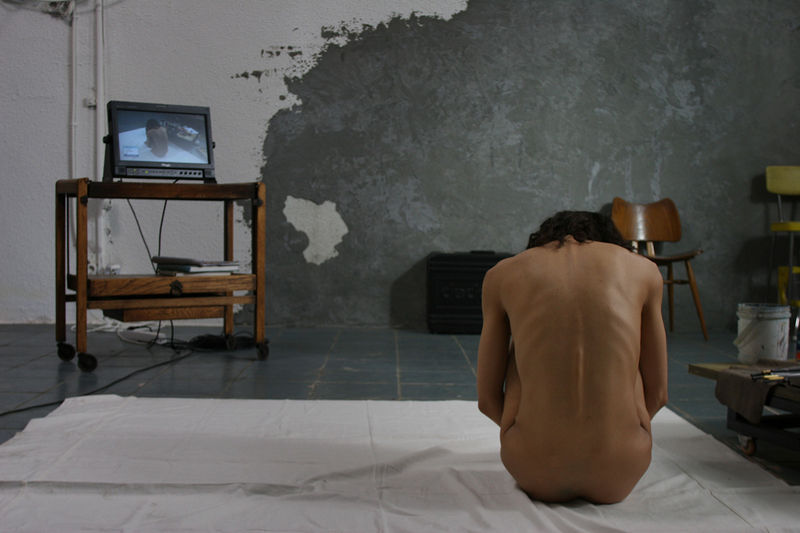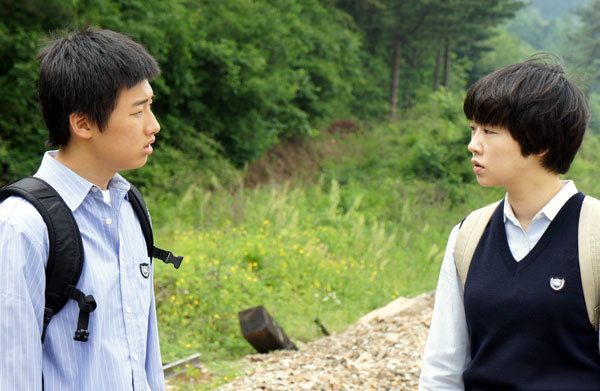
ROMANCE JOE is made up of an interweaving collection of related narratives built around the suicide of a famous actress
GEMS OF KOREAN CINEMA: ROMANCE JOE (RO-MAEN-SEU-JO) (Lee Kwang-kuk, 2011)
Tribeca Cinemas
54 Varick St. at Laight St.
Tuesday, September 11, free, 7:00
212-759-9550
www.koreanculture.org
www.tribecacinemas.com
 Following in the footsteps of his mentor, Hong sang-soo, for whom he served as assistant director for five years, Lee Kwang-kuk’s debut film, Romance Joe, is a complex, engaging narrative about the art of storytelling. Made up of interweaving tales that eventually come together in surreal ways, mixing fantasy and reality, Romance Joe begins as an elderly mother and father (Kim Su-ung and Park Hye-jin) arrive in Seoul to surprise their son, a film director, but they are informed by his friend, Seo Dam (Kim Dong-hyeon), that he has disappeared after the suicide of a popular actress and has given up the film business. Soon Dam is telling his friend’s parents his own idea for a screenplay, about a determined young boy (Ryu Ui-hyeon) who runs away from home to find his mother at the only address he has for her, a teahouse brothel, where the owner, Re-ji (Shin Dong-mi), isn’t sure what to do with him. Meanwhile, Lee (Jo Han-cheol), a director with one hit under his belt and now facing writer’s block, has been left at a country inn without his cell phone, forced to finish his next screenplay. He orders coffee that is delivered by the movie-obsessed Re-ji, who tells him the story of Romance Joe (Kim Yeong-pil), a suicidal film director who relates a story of his own from his youth, when he (Lee David) saved a girl he loved, Cho-hee (Lee Chae-eun), after she slit her wrist in a forest. The various narratives — flashbacks, stories within stories, the modern-day framing, and script ideas — slowly merge in fascinating and confusing ways, reminiscent of such Hong films as Oki’s Movie, Like You Know It All, and Tale of Cinema. Although suicide is a major theme running through all of the stories, Romance Joe is not a sad melodrama; instead, it is an entertaining, thoughtful, if overly long exploration of narrative in film. Romance Joe, which was part of this year’s “New Directors, New Films” series at MoMA and Lincoln Center, is screening for free September 11 at Tribeca Cinemas, kicking off the Korean Cultural Service film series “Gems of Korean Cinema,” which focuses on indie works and continues September 25 with Moon Si-hyun’s Home Sweet Home and October 9 with Kim Joong-hyun’s Choked.
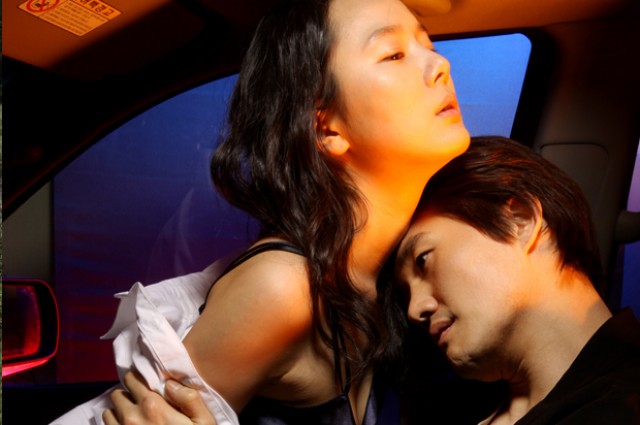
 A soap-opera melodrama that morphs into an erotic thriller, Secret Love tells the intense story of a complex and dangerous love triangle in modern-day Korea. Shortly after a whirlwind courtship, Yeon’s (Yoon Jin-seo) new husband, Jin-woo (Yoo Ji-tae), lapses into a coma that he might never awake from. Yeon is soon shocked to meet Jin-woo’s twin brother, Jin-ho (also played by Yoo Ji-tae), who recently emerged from a coma himself. As Yeon and Jin-ho grow closer, their relationship threatens to go to the next level — but when Jin-woo suddenly and unexpectedly arises from his coma, the love triangle becomes overwhelmed by betrayal, uncontrollable passion, and mistaken identity. Directed by Kwon Ji-yeon and cowriter Ryoo Hoon-I (who penned the screenplay with Park Hyun-soo), Secret Love, which is also known as The Secret River, uses water as an underlying motif, with many scenes taking place over a river, in the shower or bath, or at an aquarium. Although it begins slowly and sappy, the film picks up speed as hidden passions explode and danger lurks at every twist and turn. Secret Love is screening for free July 10 at
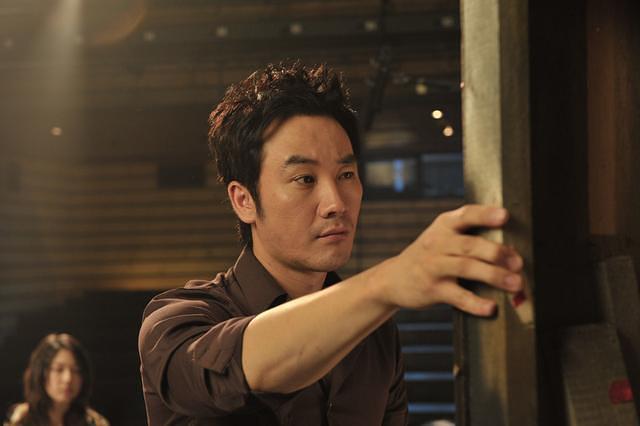
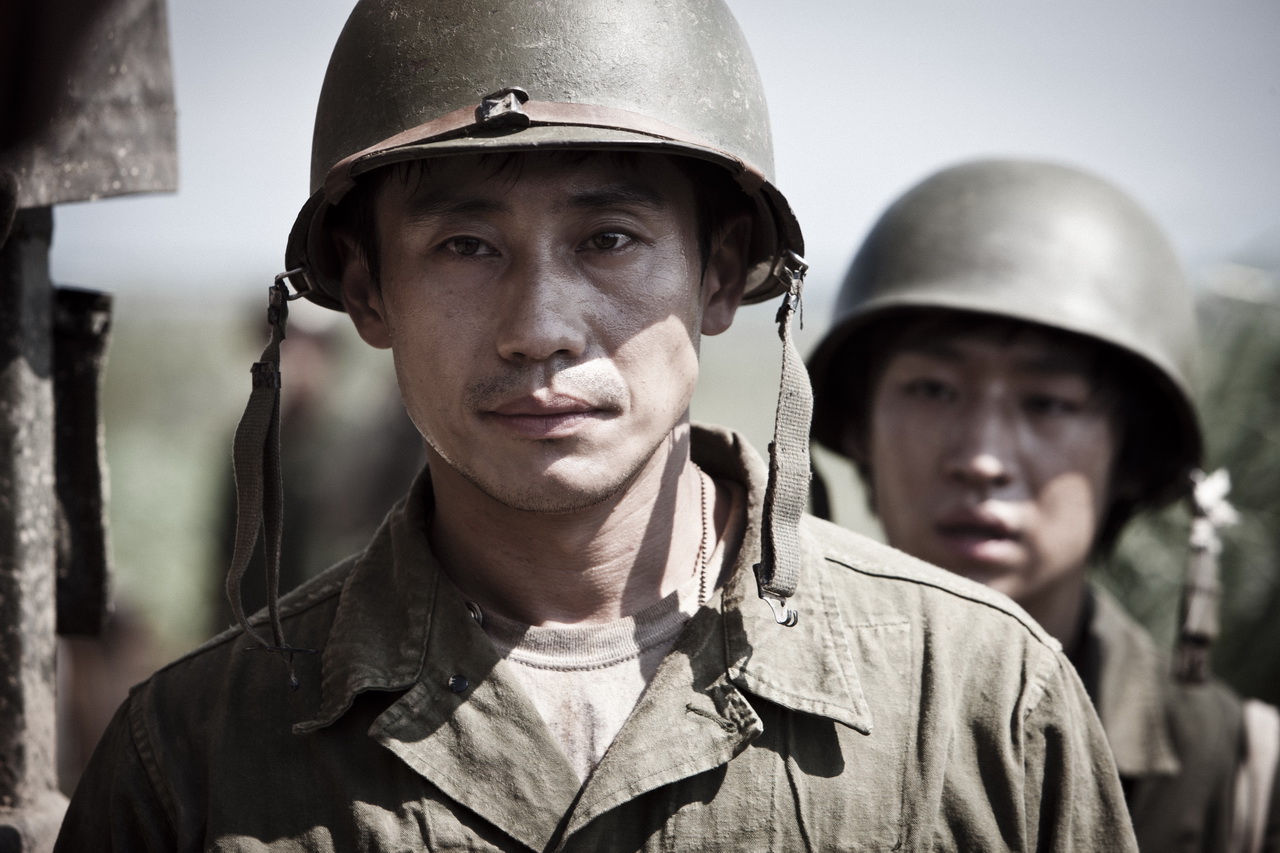
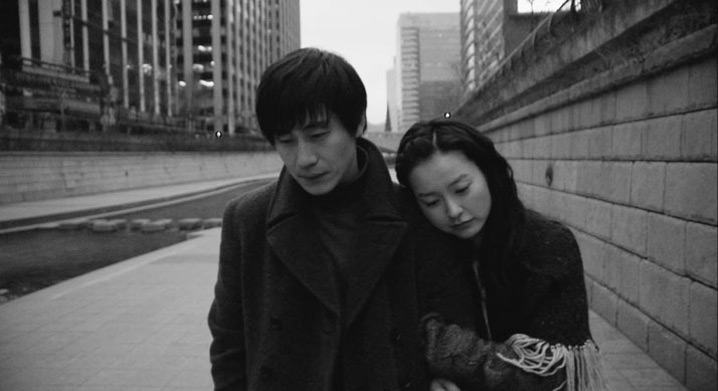
 Longtime Korean film critic Jung Sung-il makes a sparkling debut as writer-director with the masterful Café Noir. Inspired by Goethe’s The Sorrows of Young Werther and Dostoevsky’s White Nights, Jung has created a visually stunning three-hour epic of unrequited and lost love. Shin Ha-gyun stars as Young-soo, a teacher who falls in love with the married Mee-yeon (Moon Jeong-hee), the mother of one of his students. But when Mee-yeon’s husband returns after an extended business leave, she wants to end the affair, but Young-soo has different, far more devious plans. In the second half of the film, Young-soo protects a stranger, Sun-hwa (Jung Yu-mi), from a stalker and becomes obsessed with her story of waiting by the river for a man who had stayed at her grandmother’s hotel where she works. Meanwhile, another woman named Mee-yeon (Kim Hye-na), who delivers relationship-ending packages, enters Young-soo’s life as well, taking him for a liberating ride on her motorcycle. Jung and cinematographer Kim Jun-young go from color to black and white in Café Noir, creating deeply atmospheric scenes interspersed with long, extended shots of numerous locations in Seoul, from Namsan and Sung-Buk-Dong to Cheonggye Stream and Han River. Jung fills the poetic film with direct and indirect nods to such Korean directors as Park Chan-wook, Bong Joon-ho, Hong Sang-soo, and Kim Ki-duk as he tells his offbeat, unusual tale. “I, along with my camera, my crew and cast, wandered around in Seoul,” Jung explains in his director’s note. “The movie’s ‘dead time’ is the real time of Korea, the time in which our despair dwells. Goethe, Frankfurt 1774. Dostoevsky, St. Petersburg 1848. Seoul, 2009. Dead times. No more deaths.” As dark as that sounds, Café Noir is an exhilarating cinematic experience. Café Noir is screening June 21 at 7:00, concluding the latest, and free, Korean Movie Night series at Tribeca Cinemas, “The Hidden Gems of Indie Cinema,” focusing on smaller, independent films from South Korea.