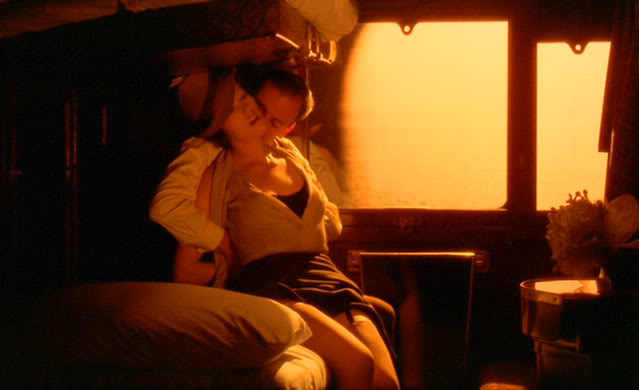
Jean-Paul Trintignant tries to find his place in the world in Bernardo Bertolucci’s lush masterpiece, THE CONFORMIST
THE CONFORMIST (IL CONFORMISTA) (Bernardo Bertolucci, 1970)
Anthology Film Archives
32 Second Ave. at Second St.
Monday, July 15, 9:00; Friday, July 19, 9:15; and Sunday, July 21, 8:45
Series runs July 10-21
212-505-5181
www.anthologyfilmarchives.org
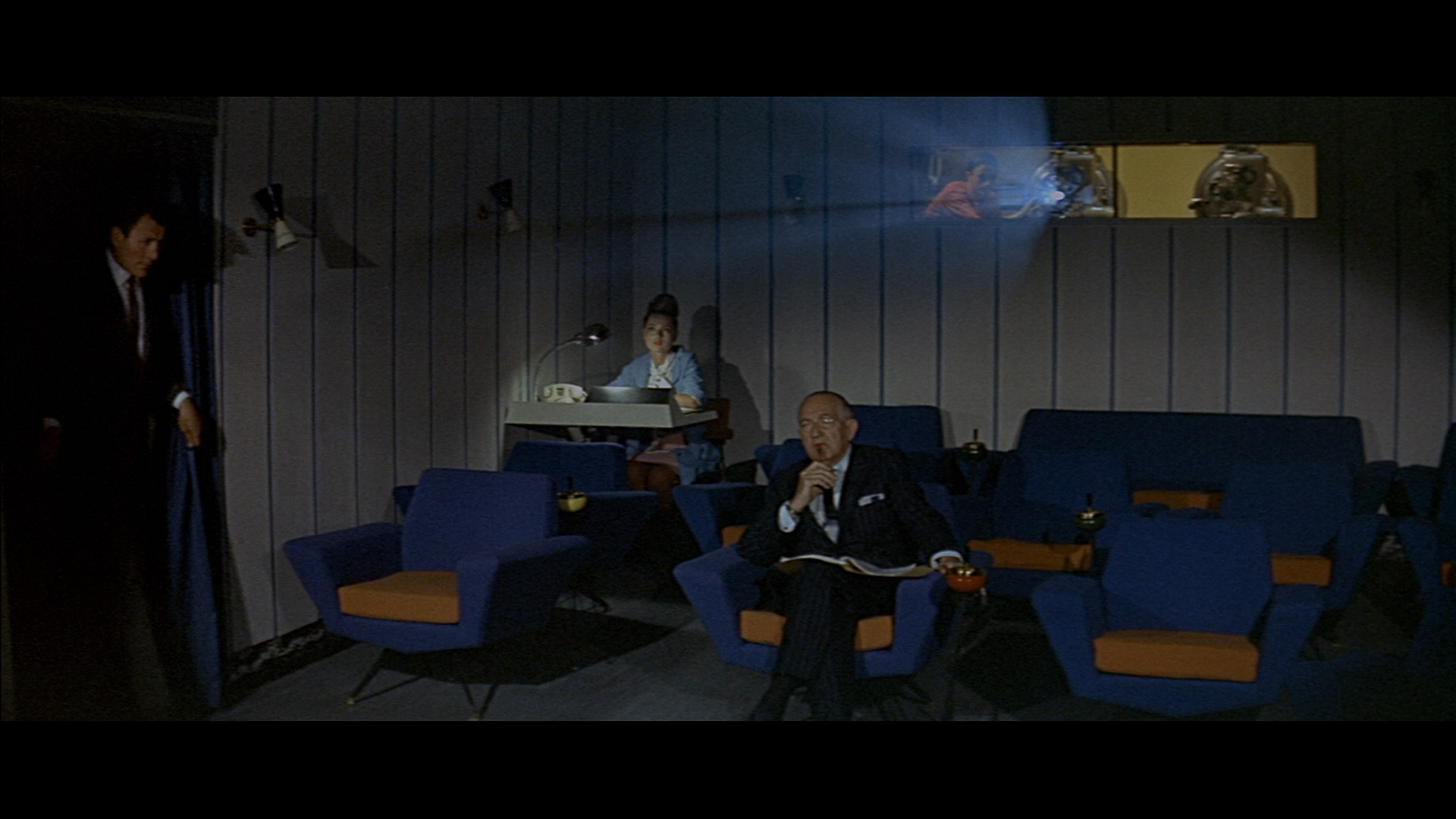
 Based on the novel by Alberto Moravia, Bernardo Bertolucci’s gorgeous masterpiece, The Conformist, is a political thriller about paranoia, pedophilia, and trying to find one’s place in a changing world. Jean-Louis Trintignant (And God Created Woman, Z, My Night at Maud’s) stars as Marcello Clerici, a troubled man who suffered childhood traumas and is now attempting to join the fascist secret police. To prove his dedication to the movement, he is ordered to assassinate one of his former professors, the radical Luca Quadri (Enzo Tarascio), who is living in France. He falls for Quadri’s much younger wife, Anna (Dominique Sanda), who takes an intriguing liking to Clerici’s wife, Giulia (Stefania Sandrelli), while Manganiello (Gastone Moschin) keeps a close watch on him, making sure he will carry out his assignment. The Conformist, made just after The Spider’s Stragagem and followed by Last Tango in Paris, captures one man’s desperate need to belong, to become a part of Mussolini’s fascist society and feel normal at the expense of his real inner feelings and beliefs. An atheist, he goes to church to confess because Giulia demands it. A bureaucrat, he is not a cold-blooded killer, but he will murder a part of his past in order to be accepted by the fascists (as well as Bertolucci’s own past, as he makes a sly reference to his former mentor, Jean-Luc Godard, by using the French auteur’s phone number and address for Quadri’s). Production designer Ferdinando Scarfiotti and cinematographer Vittorio Storaro bathe the film in lush Art Deco colors as Bertolucci moves the story, told in flashbacks, through a series of set pieces that include an erotic dance by Anna and Giulia, a Kafkaesque visit to a government ministry, and a stunning use of black and white and light and shadow as Marcello and Giulia discuss their impending marriage. The Conformist is a multilayered psychological examination of a complex figure living in complex times, as much about the 1930s as the 1970s, as the youth of the Western world sought personal, political, and sexual freedom. The Conformist is screening July 15, 19, and 21 as part of the Anthology Film Archives series “agnès b. selects,” consisting of ten films chosen by the Versailles-born fashion designer that, she explains, “taught me to appreciate other points of view, seen from a different angle, showing passion and the wounds, of every sort, that left their mark on me forever.” Among her other selections are Lindsay Anderson’s If, François Truffaut’s Fahrenheit 451, Godard’s La Chinoise, Ken Loach’s Family Life, and Akira Kurosawa’s Dodes’ka-Den.
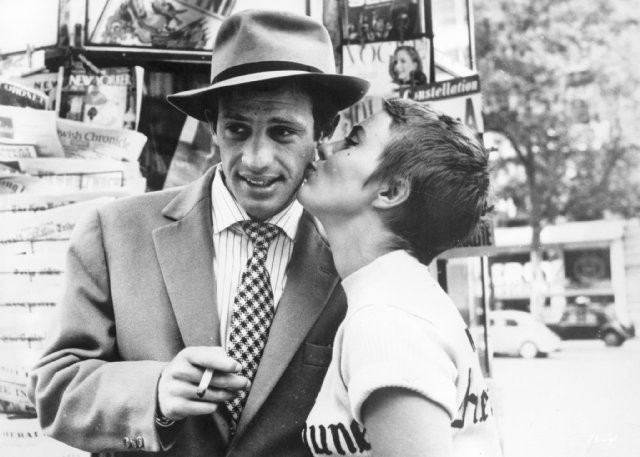
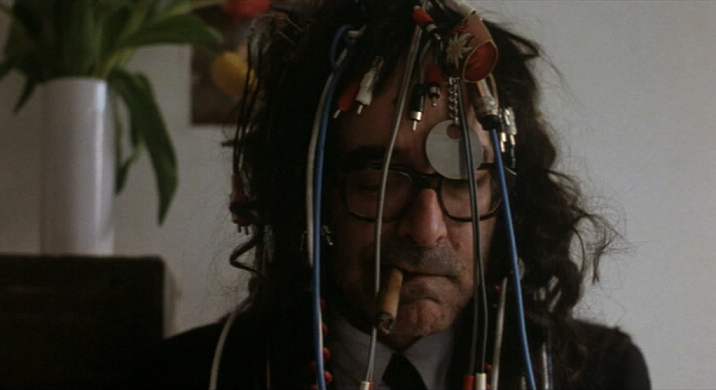
 At the 1985 Cannes Film Festival, producer Menahem Golan, who would go on to make several movies nominated for the Golden Raspberry (Cannonball Run, Cobra), somehow got French auteur Jean-Luc Godard to agree to direct a new version of King Lear, signing the contract on a napkin. Unfortunately, things didn’t go quite as planned, resulting in Godard’s incomprehensible, unintelligible, extremely hard-to-follow Shakespeare flick. Theater director Peter Sellars — he of the Eraserhead-like hairdo — stars as William Shakespeare Jr. the Fifth, a descendant of the Bard’s who is trying to put his famous ancestor’s plays back together in a post-Chernobyl world. After Norman and Kate Mailer get in an argument about turning the script into a gangster picture, Sellars meets Learo (a muttering Burgess Meredith) and his daughter, Cordelia (a monotone Molly Ringwald). Also on hand for this twisted fairy tale are French director Leos Carax (Pola X, Holy Motors) as Edgar, Julie Delpy as Virginia, Woody Allen as Mr. Alien, and Godard himself as the wacky Professor Pluggy. Elements of the play occasionally show up, but it is nearly impossible to figure out just what the hell is going on. By the time it all starts making the least bit of sense and even becomes intriguingly poetic, it’s over. In his inimitable style, Godard subversively defies all expectations, making a film that is about everything, nothing, and no thing. He takes on virtue and power, art and nature, text and image, and storytelling itself, but in this case he ends up with an unwatchable mess. Still not available on DVD, King Lear is having a rare screening January 11 at 7:00 and 9:30 at 92YTribeca, with the early show followed by a Q&A with critics Simon Abrams, Bilge Ebiri, and Richard Brody. When he selected the film for the 2009 New Yorker Festival, Brody wrote, “I consider Godard’s King Lear to be his greatest artistic achievement; in a Y2K poll, I ranked it among the ten best movies ever made.” It should be quite interesting hearing him defend that choice on Friday night.
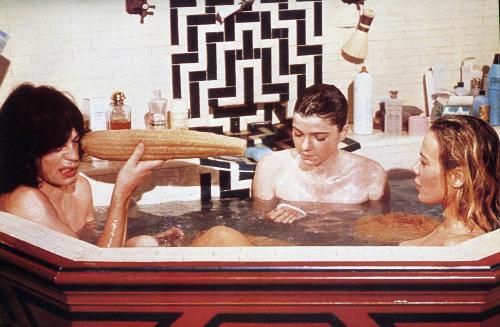
 A British gangster on the run hides out with a psychedelic rock star in this strangely enticing film from Donald (The Demon Seed) Cammell and Nicolas Roeg (making his big-screen directorial debut). James Fox didn’t know what he was getting into when he signed on to play Chas, a mobster who finds sanctuary with mushroom-popping rock-diva has-been Turner, played with panache by Mick Jagger. Throw in Anita Pallenberg, a fab drug trip, and the great “Memo to Turner” scene and you have a film that some consider the real precursor to MTV, some think a work of pure demented genius, and others find to be one of the most pretentious and awful pieces of claptrap ever committed to celluloid. We fall somewhere in the middle of all of that. Performance is screening November 23-24 as part of the MoMA tribute “The Rolling Stones: 50 Years on Film,” celebrating the group’s golden anniversary, which includes appearances in New Jersey and Brooklyn next month. Throughout their career, the Stones have gotten some of the world’s greatest directors to make live concert films of their shows, most of which are part of this series, which continues through December 2 with such other films as Hal Ashby’s Let’s Spend the Night Together, Martin Scorsese’s Shine a Light, Albert and David Maysles and Charlotte Zwerin’s Gimme Shelter, and Jean-Luc Godard’s Sympathy for the Devil in addition to Kenneth Anger’s Invocation of My Demon Brother and more.