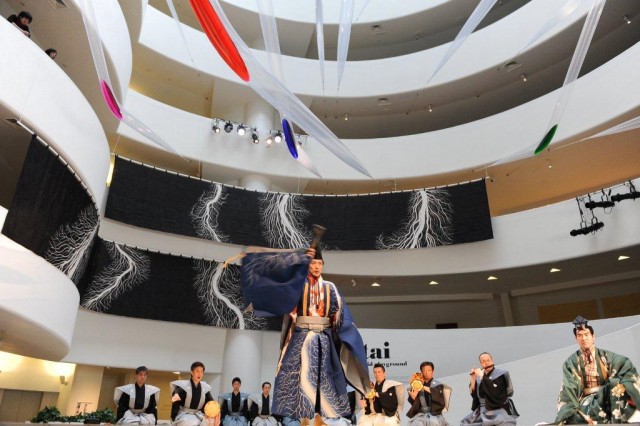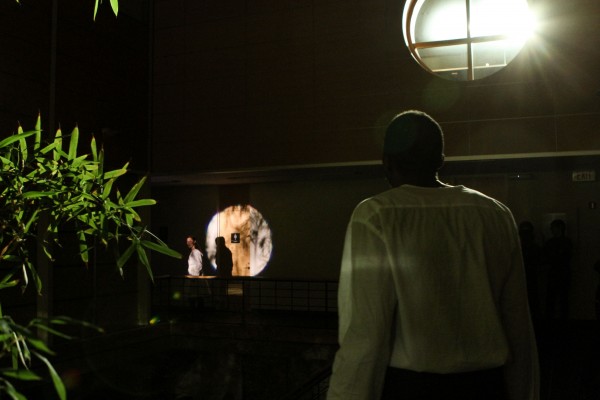
Luna (Jenny Seastone Stern) and Terri (Julian Rozzell Jr.) take audience on multimedia journey through Japan Society and the universe in OUR PLANET (photo by Julie Lemberger / www.julielemberger.com)
Japan Society
333 East 47th St. at First Ave.
November 20-24, December 5-8, $28, 7:30
212-715-1258
www.japansociety.org
In the past few years, several site-specific shows have led audiences through historic, landmarked, and/or unusual buildings, going into rooms not otherwise open to the public. An adaptation of Joseph Roth’s Hotel Savoy took place throughout the Goethe-Institut, Sleep No More is still packing them in all over the McKittrick Hotel, and Manna-Hatta served as a guided tour not only of the history of Manhattan but of much of the James A. Farley Post Office as well. Now Our Planet, inspired by Thornton Wilder’s Our Town, uses the lobby, pond, offices, basement, exhibition rooms, stage, and more of Japan Society to tell its audiovisual story of the birth — and eventual death — of the world. “I think everyone should see this building . . . in a really peculiar, interesting way and have this text be the vehicle for that exploration,” director Alec Duffy, who fell in love with the building while working there for a year, explains in a promotional video for the site-specific show. And Our Planet, a Japan Society commission in celebration of the sixtieth anniversary of its performing arts program, is certainly peculiar and interesting.
Julian Rozzell Jr. stars as Terri, who leads thirty visitors through the beginning of the play; he is soon met by Jenny Seastone Stern as Luna, the moon. The two play house and discuss the state of the world in a fun scene that takes place inside Mariko Mori’s appropriately titled “Rebirth” exhibition. Speaking both metaphorically and metaphysically, Terri and Luna explore life on the micro level, involving Luna’s family, and on the macro level, involving the entire universe. In several of the locations, Nobuyuki Hanabusa’s motion graphics, consisting of geometric shapes and patterns, lines, stars, and more, are projected onto unique spaces, from elevator doors to a specially designed platform on the floor that reflects onto a ceiling mirror, taking the audience on a cosmic trip through the galaxy. The text, translated by Katsunori Obata and Miharu Obata and adapted by Aya Ogawa from Yukio Shiba’s award-winning Japanese production, Wagahoshi, is often mysterious and sometimes way out there, but just go with it, putting your faith in Rozzell J. and Seastone Stern, who are both beguiling and enchanting as they each deliver long monologues and take the audience on a multimedia journey through space, time, and the historic Japan Society building. Our Planet continues with six performances December 5-8, with each show limited to thirty people, so get your tickets now if you want to see this very peculiar, interesting work.

 We used to think that Aki Kaurismäki’s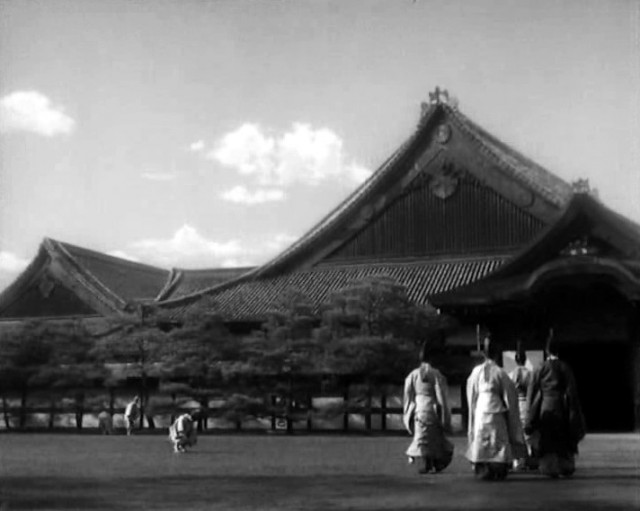
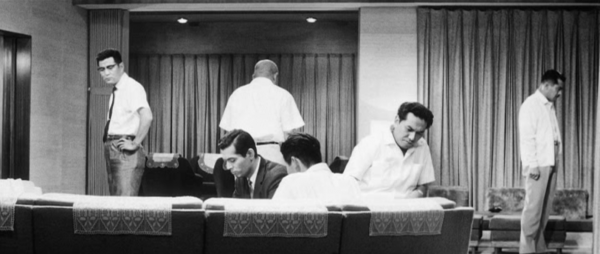
 On the verge of being forced out of the company he has dedicated his life to, National Shoes executive Kingo Gondo’s (Toshirō Mifune) life is thrown into further disarray when kidnappers claim to have taken his son, Jun (Toshio Egi), and are demanding a huge ransom for his safe return. But when Gondo discovers that they have mistakenly grabbed Shinichi (Masahiko Shimazu), the son of his chauffeur, Aoki (Yutaka Sada), he at first refuses to pay. But at the insistence of his wife (Kyogo Kagawa), the begging of Aoki, and the advice of police inspector Taguchi (Kenjiro Ishiyama), he reconsiders his decision, setting in motion a riveting police procedural that is filled with tense emotion. Loosely based on Ed McBain’s 87th Precinct novel King’s Ransom, Akira Kurosawa’s High and Low is divided into two primary sections: the first half takes place in Gondo’s luxury home, orchestrated like a stage play as the characters are developed and the plan takes hold. The second part of the film follows the police, under the leadership of Chief Detective Tokura (Tatsuya Nakadai), as they hit the streets of the seedier side of Yokohama in search of the kidnappers. Known in Japan as Tengoku to Jigoku, which translates as Heaven and Hell, High and Low is an expert noir, a subtle masterpiece that tackles numerous socioeconomic and cultural issues as Gondo weighs the fate of his business against the fate of a small child; it all manages to feel as fresh and relevant today as it probably did back in the ’60s.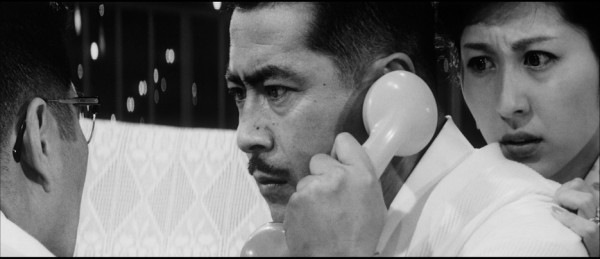
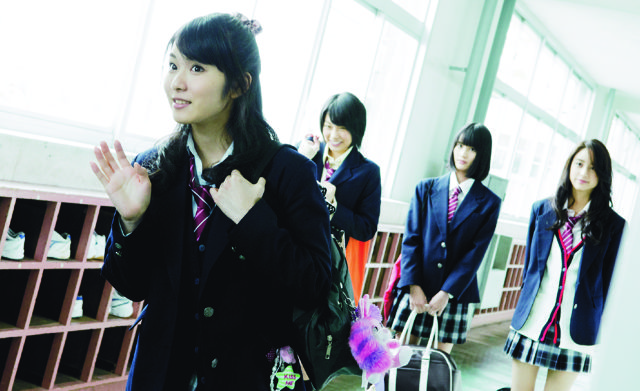
 Life goes completely out of whack when a massively popular student suddenly and mysteriously disappears in Daihachi Yoshida’s splendid examination of the trials and travails of high school, The Kirishima Thing. With no advance warning, superstar athlete and dreamy stud Kirishima can’t be found, missing class and volleyball practice, thoroughly confusing his friends and teammates. His girlfriend, the beautiful Risa (Mizuki Yamamoto), doesn’t know where he is. Risa’s clique of cool girls, including Sana (Mayu Matsuoka), Mika (Kurumi Shimizu), and Kasumi (Ai Hashimoto), start growing apart. The not extremely talented Koizumi (Taiga) is forced to replace Kirishima on the volleyball team. Aya (Suzuka Ohgo) plays sax on a rooftop while actually spying on her secret crush, the handsome Hiroki (Masahiro Higashide), who is Sana’s girlfriend and Kirishima’s best friend. Another of Kirishima’s friends, Ryuta (Motoki Ochiai), shows up to school with ridiculously curly hair. And Kasumi begins spending more time with nerd-geek Ryoya (Ryunosuke Kamiki), who decides to defy his film teacher by going ahead and making the zombie flick Student Council of the Living Dead. Tensions heat up, fears rise to the surface, and standard hierarchical relationships go significantly off kilter as Kirishima’s unexplained absence affects everyone’s position in high school society and makes them reexamine the purpose of their young lives. Based on the omnibus novel Kirishima, Bukatsu Yamerutteyo (“Did You Hear Kirishima Quit?”) by Ryo Asai, The Kirishima Thing cleverly deals with genre clichés as Yoshida (Permanent Nobara, The Wonderful World of Captain Kuhio) and cowriter Kohei Kiyasu tackle the myriad issues that face teenagers on a daily basis, evoking both Beckett and Kurosawa through a John Hughes-like lens with scenes that are retold from multiple viewpoints but don’t provide any firm answers. Winner of Best Picture, Best Director, Most Popular Film, and Outstanding Achievement in Editing at the 2013 Japan Academy Prize awards show, The Kirishima Thing is screening July 14 at 7:30 at Japan Society as part of the Japan Cuts series, a copresentation with the New York Asian Film Festival.