Japanese punk culture explodes in Sogo Ishii’s mind-blowing BURST CITY
FESTIVAL OF NEW JAPANESE FILM: BURST CITY (BAKURETSU TOSHI) (爆裂都市) (Sogo Ishii, aka Gakuryū Ishii, 1982)
Japan Society
333 East 47th St. at First Ave.
Saturday, July 23, 10:00
Series runs July 14-24
212-715-1258
www.japansociety.org
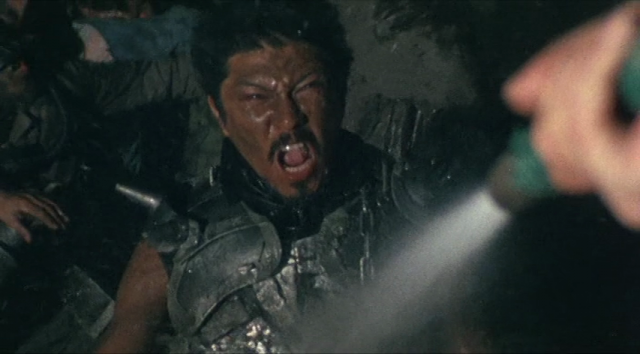
 “These streets have calmed down quite a bit, sir,” a man tells his yakuza boss at the beginning of Sogo Ishii’s crazy, nonstop thrill ride, Burst City, which is screening July 23 at 10:00 in Japan Society’s tenth annual Japan Cuts Festival. Conceived as a platform to showcase several early 1980s Japanese punk bands, including the Battle Rockers, the Roosters, the Stalin, and Inu, the film is a fast-paced, psychotic journey through a postapocalyptic nightmare world where disenchanted youth gather for hard-driving music and car races while they protest the construction of a nuclear facility on the outskirts of what’s left of Tokyo. It’s a crazy conflagration of Mad Max, The Warriors, A Clockwork Orange, Quadrophenia, Koyaanisqatsi, Streets of Fire, Rebel without a Cause, Star Wars, and Rude Boy, with lots of screaming, violence, and singing and very little dialogue or plot. It’s essentially a two-hour free-for-all, an explosive release of urban angst where there are no rules, no winners, and no losers (save for one unfortunate couple). And the music, produced by Roosters leader Shozo Kashiwagi, kicks some serious ass.
The large, spectacularly costumed cast features such longtime character actors as Takanori Jinnai and Shigeru Muroi, but aside from a minor subplot about an unwilling prostitute, the film is not driven by narrative or Method acting. Art director Shigeru Izumiya, who also appears in the film, creates sinister sets that promise the coming destruction, photographed by Norimichi Kasamatsu (Face, Villain) in an ever-changing cycle of lurid color and grainy black-and-white and lunatic editing that makes MTV videos of the time look like home movies of boring families. The art/decoration is credited to Katsuro Ogami and Junji Sakamoto; Sakamoto went on to become a successful director in his own right, making such films as My House, Someday, Face, and Danchi; the latter two are being shown at the 2016 Japan Cuts festival as well. Sogo Ishii, who recently changed his name to Gakuryū Ishii, has also directed such works as Panic in High School, Electric Dragon 80.000V, and Isn’t Anyone Alive? Bursting with a high-powered energy that never lets up, Burst City is screening in the “Flash-Back / Flash-Forward” section of Japan Cuts, along with Ishii’s latest film, Bitter Honey, in which a young woman (Fumi Nikaido) embodies a human-size goldfish.
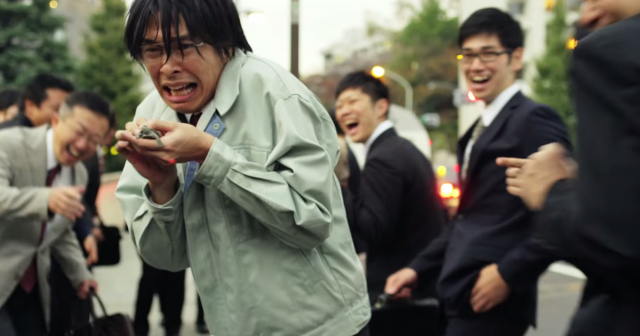
 Unpredictable Japanese writer-director Sion Sono defies expectations once again with Love & Peace, a wacky tokusatsu tale that has been gestating for more than two decades but has finally hit the big screen, with all its crazy madness. One of six films Sono (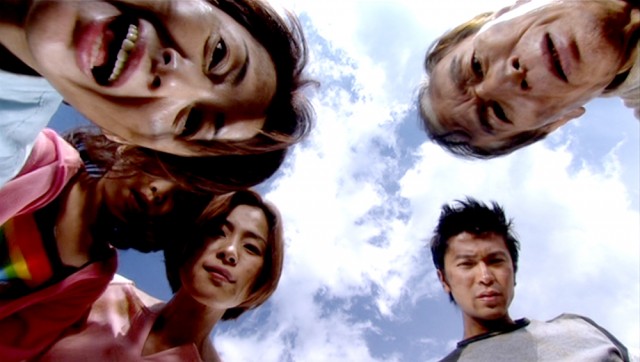
 “Let’s forget any accidents by singing and dancing!” is the cry of the Katakuris, a seemingly cursed family in one of the craziest dark musical comedies you’re ever likely to see. Japanese genre king Takashi Miike, who has made more than 120 films in his twenty-five-year career, outdid himself in 2001’s The Happiness of the Katakuris, an endlessly inventive tale of a disaster-ridden clan that moves to the middle of nowhere to run a country inn, lured by a rumor that a railroad will be built nearby. Masao Katakuri (Kenji Sawada) is a laid-off department-store shoe salesman who has big dreams, supported by his devoted wife and former work colleague, Terue (Keiko Matsuzaka). Their daughter, Shizue (Naomi Nishida), is a divorced single mother who falls for suspicious navy officer Richard Sagawa (Kiyoshiro Imawano), while their son, Masayuki (Shinji Takeda), is a disgraced financier. Masao’s elderly father, Jinpei (Tetsurō Tamba), likes killing birds and playing with the family dog, Pochi. The film is narrated by Terue’s young daughter, Yurie (Tamaki Miyazaki), who is sharing her memories of one very bizarre summer. Desperate for paying customers at the bed and breakfast they have dubbed White Lovers, the family is excited when a guest finally arrives, but alas, he is there only to commit suicide. Afraid that news of his death would ruin any chances of success, the Katakuris decide to cover it up by burying the man and not reporting anything to the police. And when subsequent guests end up dead as well — in bizarre, ridiculous ways — there is no turning back.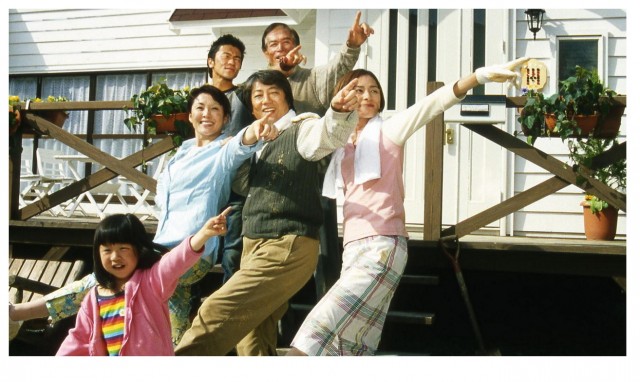
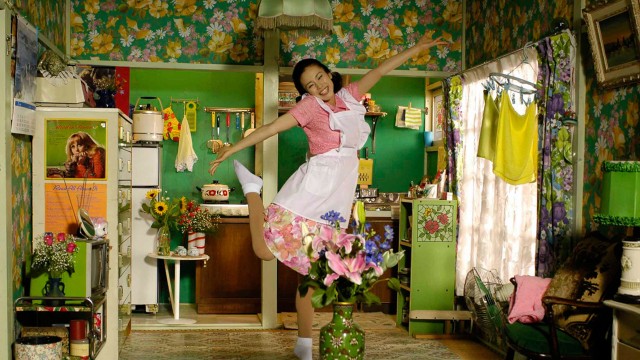
 We called Tetsuya Nakashima’s 2004 hit, Kamikaze Girls, the “otaku version of Jean-Pierre Jeunet’s Amelie,” referring to it as “fresh,” “frenetic,” “fast-paced,” and “very funny.” His feature-length follow-up, the stunningly gorgeous Memories of Matsuko, also recalls Amelie and all those other adjectives, albeit with much more sadness. Miki Nakatani (Ring, Silk) stars as Matsuko, a sweet woman who spent her life just looking to be loved but instead found nothing but heartbreak, deception, and physical and emotional abuse. But Memories of Matsuko, is not a depressing melodrama, even if Nakashima (Confessions, The World of Kanako) incorporates touches of Douglas Sirk every now and again. The film is drenched in glorious Technicolor, often breaking out into bright and cheerful musical numbers straight out of a 1950s fantasy world. As the movie begins, Matsuko has been found murdered, and her long-estranged brother (Akira Emoto) has sent his son, Sho (Eita), who never knew she existed, to clean out her apartment. As Sho goes through the mess she left behind, the film flashes back to critical moments in Matsuko’s life — and he also meets some crazy characters in the present. It’s difficult rooting for the endearing Matsuko knowing what becomes of her, but Nakashima’s remarkable visual style will grab you and never let go. And like Audrey Tatou in Amelie, Nakatani — who won a host of Japanese acting awards for her outstanding performance — is just a marvel to watch. Memories of Matsuko is a fine choice to conclude Japan Society’s rather eclectic 2016 Globus Film Series “Japan Sings! The Japanese Musical Film.” As curator Michael Raine notes, “The ubiquity of music and song in postwar Japanese cinema became an anti-naturalist resource for modernist filmmakers to characterize social groups (Twilight Saloon,