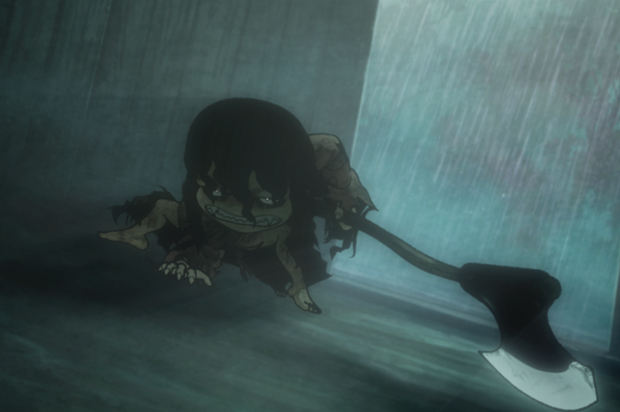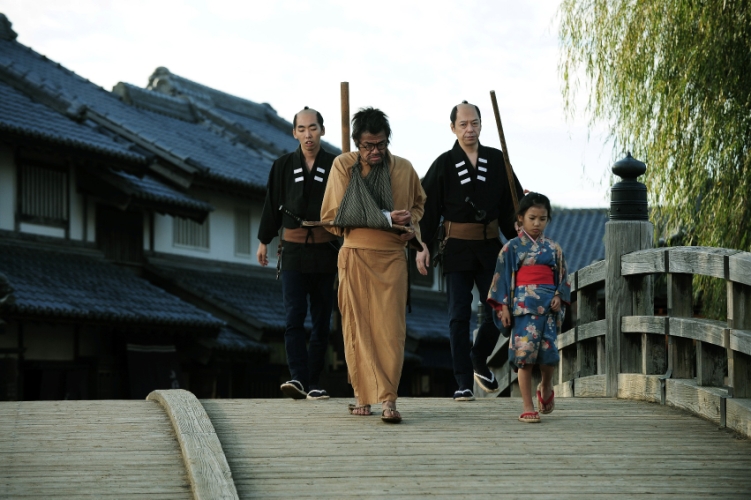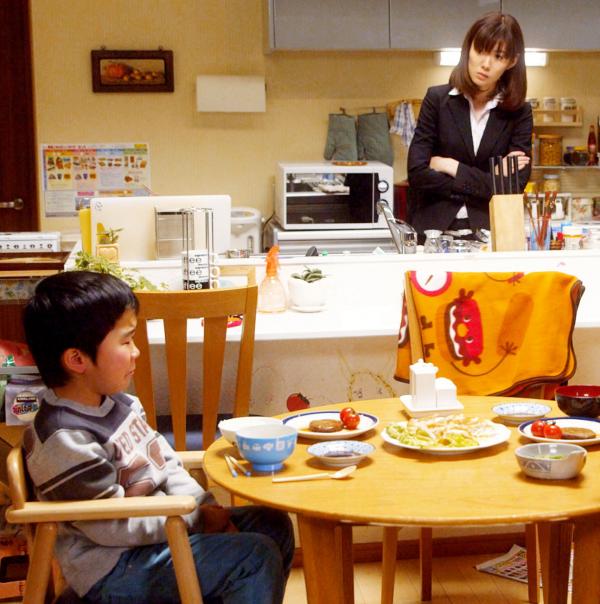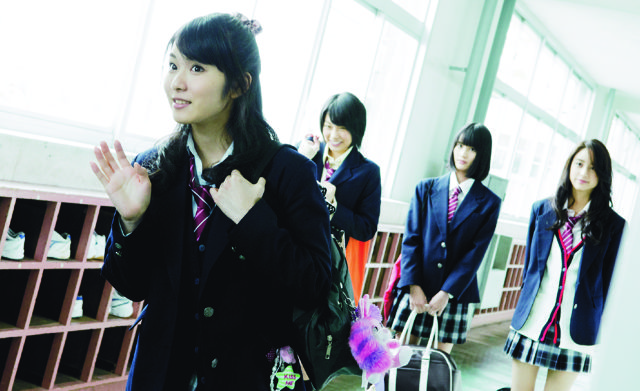
Life is turned upside down and inside out when a high school hero suddenly and unexpectedly disappears in THE KIRISHIMA THING
THE KIRISHIMA THING (Daihachi Yoshida, 2012)
Japan Society
333 East 47th St. at First Ave.
Sunday, July 14, 7:30
Japan Cuts series continues through July 28
212-715-1258
www.subwaycinema.com
www.japansociety.org
 Life goes completely out of whack when a massively popular student suddenly and mysteriously disappears in Daihachi Yoshida’s splendid examination of the trials and travails of high school, The Kirishima Thing. With no advance warning, superstar athlete and dreamy stud Kirishima can’t be found, missing class and volleyball practice, thoroughly confusing his friends and teammates. His girlfriend, the beautiful Risa (Mizuki Yamamoto), doesn’t know where he is. Risa’s clique of cool girls, including Sana (Mayu Matsuoka), Mika (Kurumi Shimizu), and Kasumi (Ai Hashimoto), start growing apart. The not extremely talented Koizumi (Taiga) is forced to replace Kirishima on the volleyball team. Aya (Suzuka Ohgo) plays sax on a rooftop while actually spying on her secret crush, the handsome Hiroki (Masahiro Higashide), who is Sana’s girlfriend and Kirishima’s best friend. Another of Kirishima’s friends, Ryuta (Motoki Ochiai), shows up to school with ridiculously curly hair. And Kasumi begins spending more time with nerd-geek Ryoya (Ryunosuke Kamiki), who decides to defy his film teacher by going ahead and making the zombie flick Student Council of the Living Dead. Tensions heat up, fears rise to the surface, and standard hierarchical relationships go significantly off kilter as Kirishima’s unexplained absence affects everyone’s position in high school society and makes them reexamine the purpose of their young lives. Based on the omnibus novel Kirishima, Bukatsu Yamerutteyo (“Did You Hear Kirishima Quit?”) by Ryo Asai, The Kirishima Thing cleverly deals with genre clichés as Yoshida (Permanent Nobara, The Wonderful World of Captain Kuhio) and cowriter Kohei Kiyasu tackle the myriad issues that face teenagers on a daily basis, evoking both Beckett and Kurosawa through a John Hughes-like lens with scenes that are retold from multiple viewpoints but don’t provide any firm answers. Winner of Best Picture, Best Director, Most Popular Film, and Outstanding Achievement in Editing at the 2013 Japan Academy Prize awards show, The Kirishima Thing is screening July 14 at 7:30 at Japan Society as part of the Japan Cuts series, a copresentation with the New York Asian Film Festival.
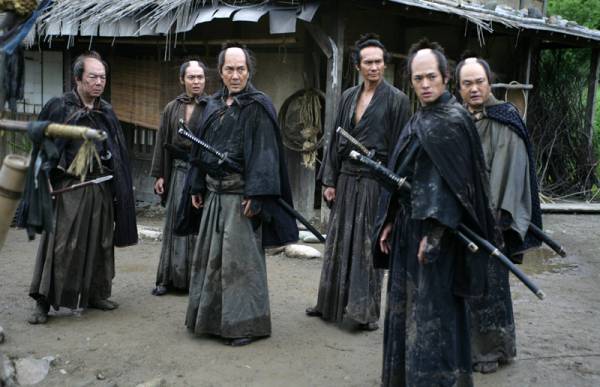
 Japanese director Takashi Miike’s first foray into the samurai epic is a nearly flawless film, perhaps his most accomplished work. Evoking such classics as Kurosawa’s Seven Samurai, Mizoguchi’s 47 Ronin, Aldrich’s The Dirty Dozen, and Eastwood’s High Plains Drifter, 13 Assassins is a thrilling tale of honor and revenge, inspired by a true story. In mid-nineteenth-century feudal Japan, during a time of peace just prior to the Meiji Restoration, Lord Naritsugu (Gorô Inagaki), the son of the former shogun and half-brother to the current one, is abusing his power, raping and killing at will, even using his servants and their families as target practice with a bow and arrow. Because of his connections, he is officially untouchable, but Sir Doi (Mikijiro Hira) secretly hires Shinzaemon Shimada (Kôji Yakusho) to gather a small team and put an end to Naritsugu’s brutal tyranny. But the lord’s protector, Hanbei (Masachika Ichimura), a former nemesis of Shinzaemon’s, has vowed to defend his master to the death, even though he despises Naritsugu’s actions. As the thirteen samurai make a plan to get to Naritsugu, they are eager to finally break out their long-unused swords and do what they were born to do. “He who values his life dies a dog’s death,” Shinzaemon proclaims, knowing that the task is virtually impossible but willing to die for a just cause. Although there are occasional flashes of extreme gore in the first part of the film, Miike keeps the audience waiting until he unleashes the gripping battle, an extended scene of blood and violence that highlights death before dishonor. Selected for the 2009 Cannes Film Festival and nominated for the Silver Lion at the 2010 Venice Film Festival, 13 Assassins is one of Miike’s best-crafted tales; nominated for ten Japanese Academy Prizes, including Best Picture, Best Director, Best Screenplay (Daisuke Tengan), Best Editing (Kenji Yamashita), Best Original Score (Koji Endo), and Best Actor (Yakusho), it won awards for cinematography (Nobuyasu Kita), lighting direction (Yoshiya Watanabe), art direction (Yuji Hayashida), and sound recording (Jun Nakamura). 13 Assassins is screening at Japan Society on July 21 at 8:20 as part of the Japan Cuts sidebar “Focus on Kôji Yakusho” and will be introduced by the actor; the July 20-21 mini-festival also includes such other Yakusho vehicles as his directorial debut, Toad’s Oil, as well as Shuichi Okita’s The Woodsman and the Rain, the New York premiere of Masato Harada’s Chronicle of My Mother, Kiyoshi Kurosawa’s Cure, and Masayuki Suo’s original Shall We Dance?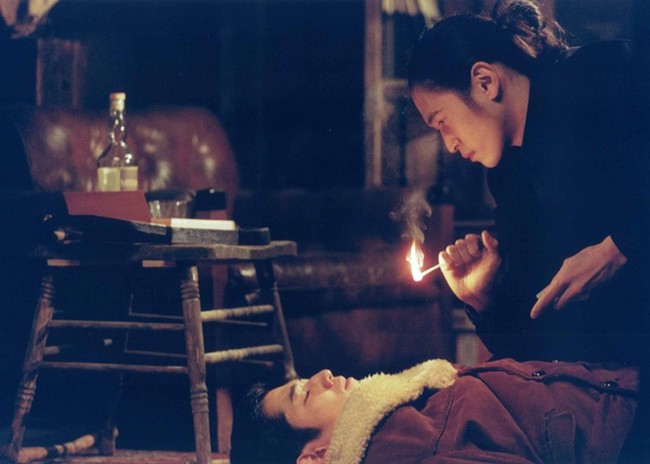
 Two years ago, Japanese auteur Toshiaki Toyoda presented