Japanese punk culture explodes in Sogo Ishii’s mind-blowing BURST CITY
FESTIVAL OF NEW JAPANESE FILM: BURST CITY (BAKURETSU TOSHI) (爆裂都市) (Sogo Ishii, aka Gakuryū Ishii, 1982)
Japan Society
333 East 47th St. at First Ave.
Saturday, July 23, 10:00
Series runs July 14-24
212-715-1258
www.japansociety.org
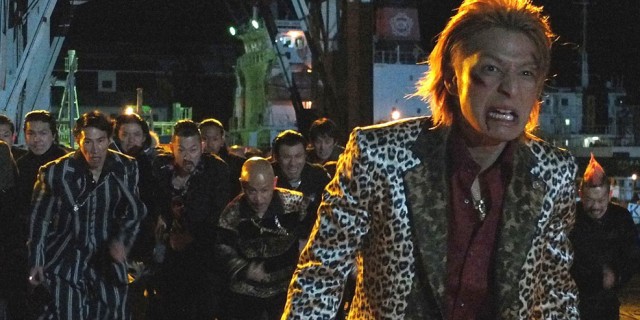
 “These streets have calmed down quite a bit, sir,” a man tells his yakuza boss at the beginning of Sogo Ishii’s crazy, nonstop thrill ride, Burst City, which is screening July 23 at 10:00 in Japan Society’s tenth annual Japan Cuts Festival. Conceived as a platform to showcase several early 1980s Japanese punk bands, including the Battle Rockers, the Roosters, the Stalin, and Inu, the film is a fast-paced, psychotic journey through a postapocalyptic nightmare world where disenchanted youth gather for hard-driving music and car races while they protest the construction of a nuclear facility on the outskirts of what’s left of Tokyo. It’s a crazy conflagration of Mad Max, The Warriors, A Clockwork Orange, Quadrophenia, Koyaanisqatsi, Streets of Fire, Rebel without a Cause, Star Wars, and Rude Boy, with lots of screaming, violence, and singing and very little dialogue or plot. It’s essentially a two-hour free-for-all, an explosive release of urban angst where there are no rules, no winners, and no losers (save for one unfortunate couple). And the music, produced by Roosters leader Shozo Kashiwagi, kicks some serious ass.
The large, spectacularly costumed cast features such longtime character actors as Takanori Jinnai and Shigeru Muroi, but aside from a minor subplot about an unwilling prostitute, the film is not driven by narrative or Method acting. Art director Shigeru Izumiya, who also appears in the film, creates sinister sets that promise the coming destruction, photographed by Norimichi Kasamatsu (Face, Villain) in an ever-changing cycle of lurid color and grainy black-and-white and lunatic editing that makes MTV videos of the time look like home movies of boring families. The art/decoration is credited to Katsuro Ogami and Junji Sakamoto; Sakamoto went on to become a successful director in his own right, making such films as My House, Someday, Face, and Danchi; the latter two are being shown at the 2016 Japan Cuts festival as well. Sogo Ishii, who recently changed his name to Gakuryū Ishii, has also directed such works as Panic in High School, Electric Dragon 80.000V, and Isn’t Anyone Alive? Bursting with a high-powered energy that never lets up, Burst City is screening in the “Flash-Back / Flash-Forward” section of Japan Cuts, along with Ishii’s latest film, Bitter Honey, in which a young woman (Fumi Nikaido) embodies a human-size goldfish.
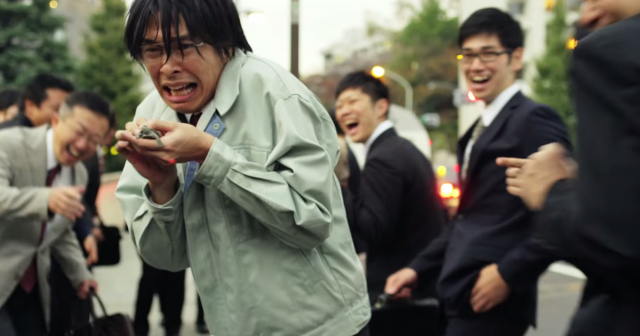
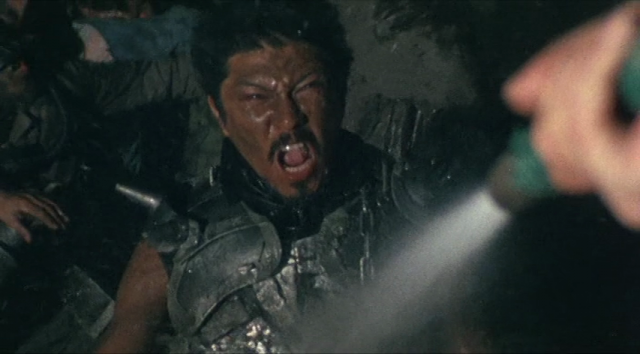
 Unpredictable Japanese writer-director Sion Sono defies expectations once again with Love & Peace, a wacky tokusatsu tale that has been gestating for more than two decades but has finally hit the big screen, with all its crazy madness. One of six films Sono (
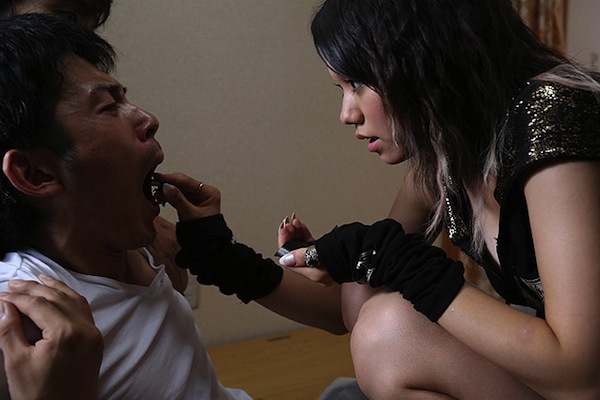
 Shingo Wakagi’s Asleep is a quiet gem of a film, a poignant drama about three women’s relationship with beds and sleep. Sakura Ando stars as Terako, a young woman who is sleeping most of her life away. The only time she wakes up and gets out of bed is when her married lover, the somewhat older Mr. Iwanaga (Arata Iura), calls her to make a date. Terako’s best friend and former roommate, Shiori (Mitsuki Tanimura), recently committed suicide shortly after complaining about the difficulties of her job as a soineya, providing companionship — but not sex — by lying in bed with strangers who do not want to sleep alone. And Terako soon discovers that Iwanaga’s wife is languishing in a hospital bed in a deep coma. As Terako cares more and more for Iwanaga, she finds it harder and harder to get out from under the covers, trying to hide from a life surrounded by loneliness and death.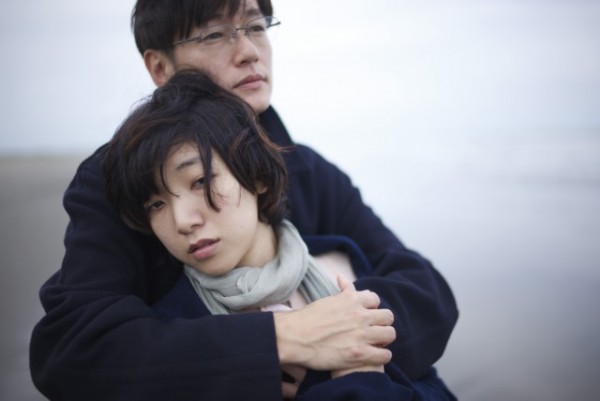
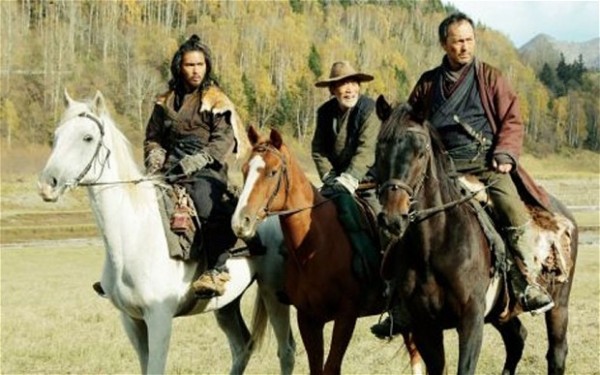
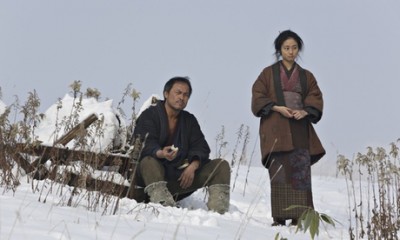
 For more than half a century, Hollywood has remade a plethora of Asian films, from The Magnificent Seven (Seven Samurai) to The Departed (Infernal Affairs), from Shall We Dance? (Sharu wi Dansu?) to The Grudge (Ju-On), among so many others. But there’s a relatively new trend in which Japan, Korea, and China are now remaking American films, including Ghost: Mouichido Dakishimetai (Ghost), Wo Zhi Nv Ren Xin (What Women Want), and Saidoweizu (Sideways). One of the latest, and best, is Japanese-born Korean director Lee Sang-il’s spectacularly honest and faithful remake of Clint Eastwood’s 1992 Oscar-winning revisionist Western, Unforgiven — in some ways returning the favor of Eastwood’s having starred in Sergio Leone’s 1964 spaghetti Western A Fistful of Dollars, a remake of Akira Kurosawa’s Yojimbo. In Unforgiven, Ken Watanabe, who was nominated for an Academy Award for his performance in The Last Samurai and starred in Eastwood’s Letters from Iwo Jima, plays Jubei Kamata, the Japanese version of Eastwood’s William Munny.