A couple considers rekindling their romance in Hong Sang-soo’s NOBODY’S DAUGHTER HAEWON
Museum of the Moving Image
35th Ave. at 36th St., Astoria
Through June 19
718-777-6888
www.movingimage.us
The Museum of the Moving Image’s seventeen-day, eighteen-film retrospective of the work of South Korean auteur Hong Sang-soo heads into its final weekend with his five latest works, as Hong continues his exploration of the creation of art and cinema itself. (The museum previously celebrated Hong’s oeuvre with a 2012 series that consisted of five films.) The festival, which began with such works as The Day a Pig Fell into the Well, On the Occasion of Remembering the Turning Gate, and Virgin Stripped Bare by Her Bachelors, concludes June 17-19 with In Another Country, Our Sunhi, Nobody’s Daughter Haewon, HaHaHa, and Hill of Freedom.
IN ANOTHER COUNTRY (DA-REUN NA-RA-E-SUH) (Hong Sang-soo, 2012)
Friday, June 17, $12, 7:00
www.movingimage.us
 Hong Sang-soo continues his fascinating exploration of cinematic narrative in In Another Country, although this one turns somewhat nasty and tiresome by the end. After being duped in a bad business deal by a family member, an older woman (Youn Yuh-jung) and her daughter, Wonju (Jung Yumi), move to the small seaside town of Mohjang, where the disenchanted Wonju decides to write a screenplay to deal with her frustration. Based on an actual experience she had, she writes three tales in which a French woman named Anne (each played by an English-speaking Isabelle Huppert) comes to the town for different reasons. In the first section, Anne is a prominent filmmaker invited by Korean director Jungsoo (Kwon Hye-hyo), who has a thing for her even though he is about to become a father with his very suspicious wife, Kumhee (Moon So-ri). In the second story, Anne, a woman married to a wealthy CEO, has come to Mohjang to continue her affair with a well-known director, Munsoo (Moon Sung-keun), who is careful that the two are not seen together in public. And in the final part, Anne, whose husband recently left her for a young Korean woman, has arrived in Mohjang with an older friend (Youn), seeking to rediscover herself. In all three stories, Anne searches for a lighthouse, as if that could shine a light on her future, and meets up with a goofy lifeguard (Yu Jun-sang) who offers the possibility of sex, but each Anne reacts in different ways to his advances. Dialogue and scenes repeat, with slight adjustments made based on the different versions of Anne, investigating character, identity, and desire both in film and in real life. Hong wrote the film specifically for Huppert, who is charming and delightful in the first two sections before turning ugly in the third as Anne suddenly becomes annoying, selfish, and irritating, the plot taking hard-to-believe twists that nearly undermine what has gone on before. As he has done in such previous films as Like You Know It All, The Day He Arrives, Tale of Cinema, and Oki’s Movie, Hong weaves together an intricate plot that is soon commenting on itself and coming together in unexpected, surreal ways, but he loses his usual taut narrative thread in the final, disappointing section.

A drunken night at a sake restaurant reveals some hard truths in another bittersweet Hong Sang-soo cinematic tale
NOBODY’S DAUGHTER HAEWON (NUGU-UI TTAL-DO ANIN HAEWON) (Hong Sang-soo, 2013)
Sunday, June 19, $12, 2:00
www.movingimage.us
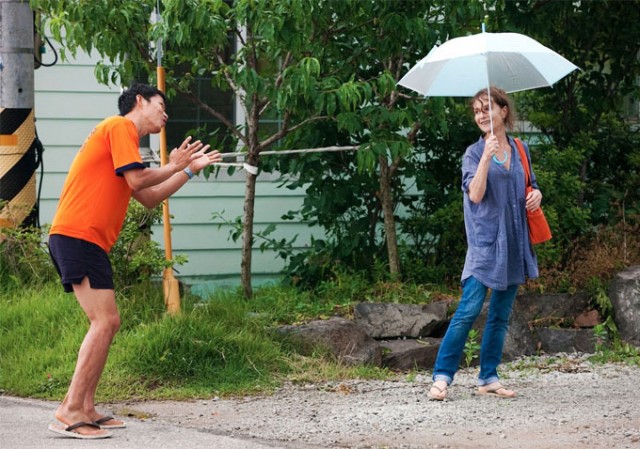
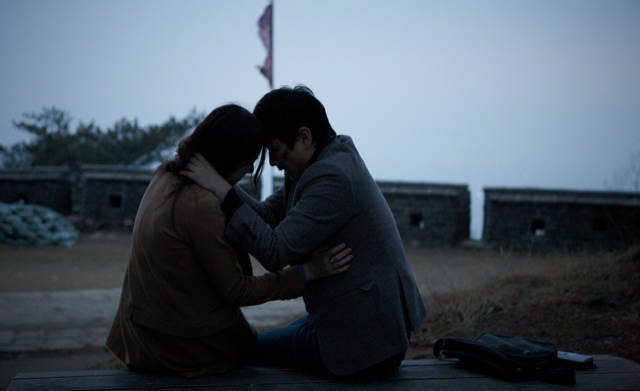
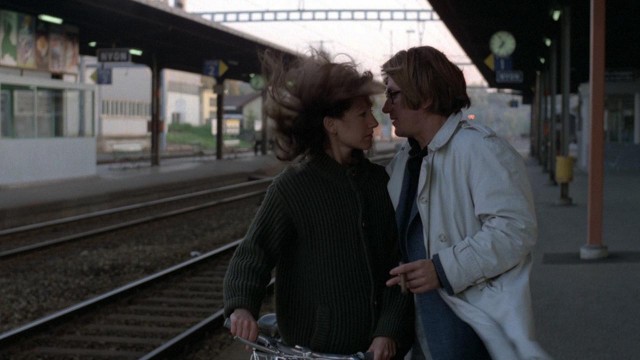
In South Korean director Hong Sang-soo’s bittersweet tale Nobody’s Daughter Haewon, nearly everyone who meets college student Haewon (Jeong Eun-chae) tells her that she’s “pretty,” from her mother (Kim Ja-ok), who has decided to pack up and move to Canada, to legendary star Jane Birkin (playing herself), whom she bumps into on the street, to a hot bookstore owner, to fellow students and teachers. Rather stuck up and direct on the outside but much more tender and lost on the inside, Haewon reaches out to a former lover, film professor Seongjun (Lee Sun-kyun), who is married with a baby. As they contemplate rekindling their affair, they wind up getting drunk on sake with a group of Seongjun’s students, who suspect the teacher-student romance and clearly do not like Haewon. Meanwhile, Haewon, who is reading Norbert Elias’s The Loneliness of the Dying, is intrigued by the flirtations of another film professor, Jungwon (Kim Eui-sung), who teaches in San Diego. From Seoul’s West Village to the historic Fort Namhan, Haewon tries to find her place in the world as writer-director Hong employs a chronological narrative that combines her dreams with reality over the course of a few weeks in springtime. Hong has explored similar terrain in previous films, but there’s just enough of an edge to Nobody’s Daughter Haewon to prevent it from feeling repetitive and more of the same. As always, Hong favors long establishing shots and a stationary camera that suddenly and awkwardly zooms in, instantly reminding viewers that they are watching a film. However, the scene in the restaurant goes on for several minutes with no cuts or camera movements, letting the acting and the dialogue tell the story without cinematic interference. Nobody’s Daughter Haewon also clocks in at a mere hour and a half, much shorter than most of his earlier work, which tends to go on way too long, but this one feels a little lighter in substance as well.
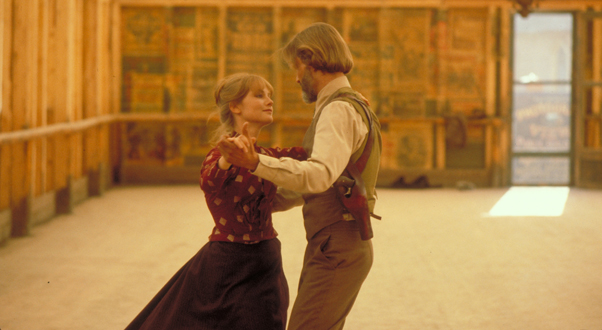
 When I was a kid in school, one of the first movies I ever reviewed was Heaven’s Gate, Michael Cimino’s brazenly overbudget famous Hollywood disaster. Incensed that professional film critics were obsessed with the meta surrounding the making of the epic Western instead of simply taking it for what it was, I was determined to treat it like any other movie, forgetting about all the behind-the-scenes gossip and tales of financial gluttony. And what I found back then was that it was a noble failure, a bold exercise in genre that had its share of strong moments but ultimately fell apart, leaving me dissatisfied and disappointed but glad I had seen it; I did not want my three-plus hours back. In fact, I probably would have checked out the rumored five-hour version if it had been shown, hoping it would fill in the many gaps that plagued the official theatrical release. More than thirty years later, Cimino’s follow-up to his Oscar-winning sophomore effort, The Deer Hunter, has returned in a 216-minute digital restoration supervised by Cimino, and it does indeed shed new light on the unfairly ridiculed work, which is still, after all this time, a noble failure. Inspired by the 1882 Johnson County War in Wyoming, the film stars Kris Kristofferson as Jim Averill, a Harvard-educated lawman hired by a group of immigrants, called “citizens,” whose livelihood — and lives — are being threatened by a wealthy cattlemen’s association run by the elitist Frank Canton (Sam Waterston). The association has come up with a kill list of 125 citizens, offering fifty dollars for each murder, a plan that has been authorized all the way up to the president of the United States. Leading the way for the cattlemen is hired killer Nate Champion (Christopher Walken), who has a particularly fierce aversion to the foreign-speaking immigrants. With a major battle on the horizon, Averill and Champion also fight for the love of the same woman, the luminous Ella Watson (Isabelle Huppert), a successful madam who soon finds herself in the middle of the controversy.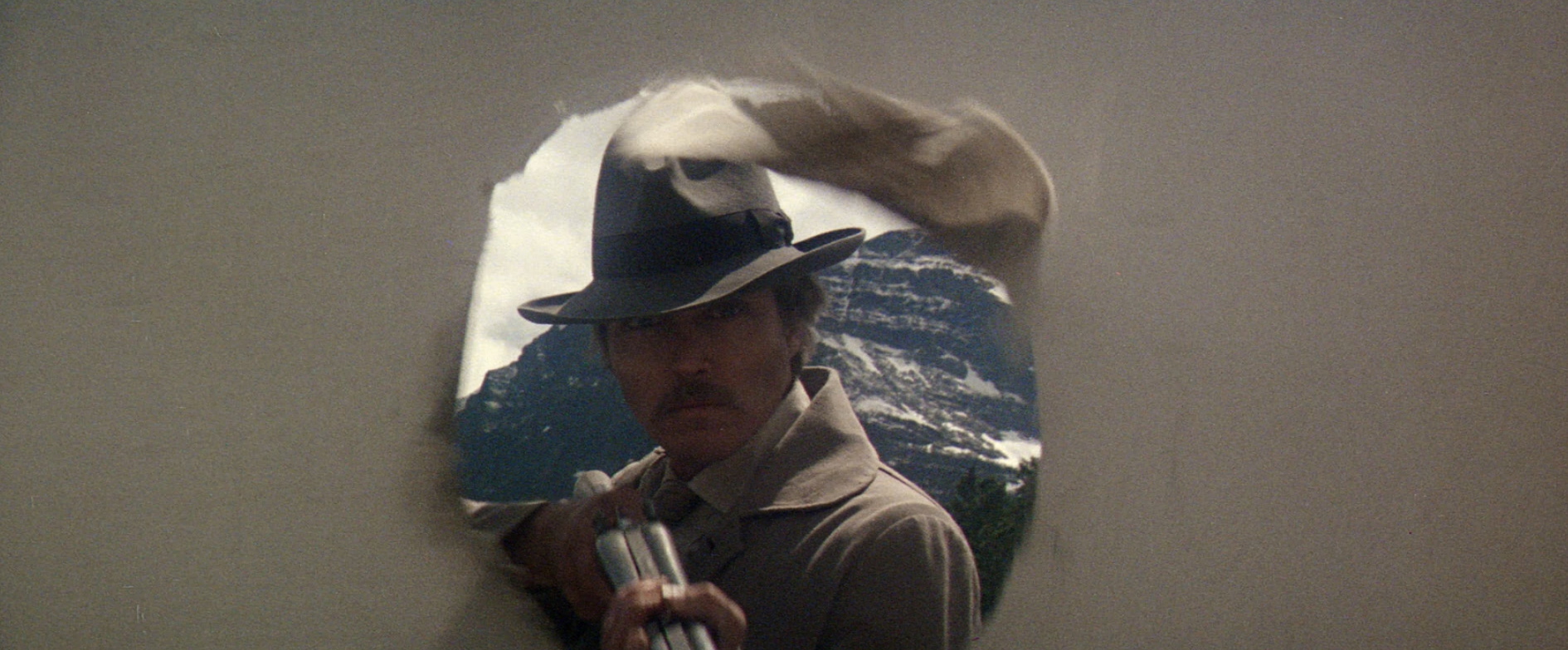
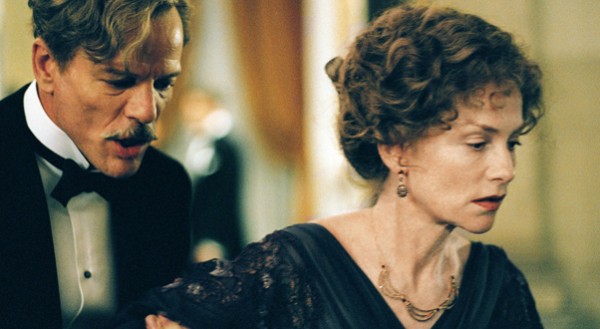
 Jean Hervey (Pascal Greggory) thinks he has the perfect life. He is a wealthy businessman with a beautiful home and a gorgeous wife, Gabrielle (Isabelle Huppert). At their fancy Thursday-night dinner parties, he gets to show off everything he has to all the right people. But then one day he comes home from work to find a letter waiting for him: Gabrielle has left him for another man. Suddenly his carefully constructed world — including a sexless marriage and servants who dress and undress him — comes tumbling down in an instant, only to be turned upside down again when Gabrielle immediately returns, having changed her mind, but not necessarily for the most loving of reasons. For the rest of the film, Greggory and Huppert act up a storm as they try to deal with the tragic consequences both publicly and privately. Based on the Joseph Conrad short story “The Return,” Gabrielle is a powerful, gripping turn-of-the-century drama that is staged theatrically by director and cowriter Patrice Chéreau, who knows how to get inside his characters (see Intimacy, Queen Margot, or The Wounded Man). While Hervey delivers monotone voice-over monologues in black-and-white, the more lively Gabrielle is depicted in color, her red hair a striking contrast to her bland, brown-gray husband. Most of the film takes place within the confines of their fabulous home, which becomes more and more like a prison as they fight for survival. A stunning achievement — though not an easy film to watch — Gabrielle is screening March 2 at 3:20 as part of the Film Society of Lincoln Center series “Patrice Chéreau: The Love That Dares,” which pays tribute to the stage and film director, who passed away in October at the age of sixty-eight. The festival continues through March 5 with such other Chéreau works as Intimacy, Queen Margot, The Flesh of the Orchid, and The Wounded Man.