Ai Weiwei lets the camera follow him everywhere in revealing documentary about art and activism
NEW YORK’S DOCUMENTARY FESTIVAL — AI WEIWEI: NEVER SORRY (Alison Klayman, 2011)
IFC Center
323 Sixth Ave. at West Third St.
Tuesday, November 13, $16.50, 9:15
212-924-7771
www.docnyc.net
aiweiweineversorry.com
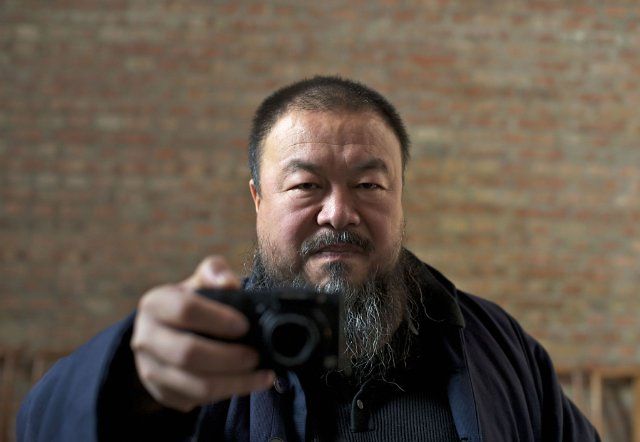
 “I consider myself more of a chess player,” Ai Weiwei says at the beginning of Never Sorry, Alison Klayman’s revealing documentary about the larger-than-life Chinese artist and dissident. “My opponent makes a move, I make a move. Now I’m waiting for my opponent to make the next move.” Over the last several years, Ai has become perhaps the most famous and controversial artist in the world, primarily since he participated in the design of Beijing National Stadium, known as the Bird’s Nest, for the 2008 Summer Olympics, then denounced the Games on political grounds. Ai gives director, producer, and cinematographer Klayman, making her first full-length film, remarkable access to his personal and professional life as he gets physically abused by Chinese police, prepares to open major exhibits in Munich and London, and visits with his young son, Ai Lao, the result of a tryst with Wang Fen, an editor on his underground films. Klayman speaks with Ai Weiwei’s devoted wife, Lu Qing, an artist who publicly fought for his freedom when he disappeared in 2011; his mother, Gao Ying, who spent time in a labor camp with her dissident-poet husband, the late Ai Quing; and such fellow Chinese artists and critics as Chen Danqing, Feng Boyi, Hsieh Tehching, and Gu Changwei, who speak admiringly of Ai’s dedication to his art and his fearless search for the truth. A round man with a long, graying bear, Ai is a fascinating, complicated character, a gentle bull who openly criticizes his country because he loves it so much. He is a social media giant, making documentaries that are available for free on the internet and revolutionizing the way Twitter and the blogosphere are used. Ai risks his own freedom by demanding freedom for all, calling for government transparency before and after he is secretly arrested, not afraid of the potential repercussions. And he is also a proud cat lover — more than forty felines regularly roam around his studio — eagerly showing off one talented kitty that has a unique way of opening a door. Ai Weiwei: Never Sorry shows Ai to be an honorable, supremely principled human being who has deep respect for the history of China and a fierce determination to improve its future, no matter the personal cost. The film completed its extended run at the IFC Center on November 8, but it will have an encore screening there on November 13, with Klayman on hand, as part of the DOC NYC festival, a week of nonfiction screenings that also includes such works as Emad Burnat and Guy Davidi’s 5 Broken Cameras, with Michael Moore in attendance; Rob Fruchtman and Lisa Fruchtman’s Sweet Dreams, with the directors and special guests participating in a discussion; and Mary Kerr’s Radioman, with the iconic New York character there to talk about himself and the film.
(To find out more about Ai Weiwei’s art, specifically his recent projects in New York City, please follow these links: “Sunflower Seeds,” “Circle of Animals: Zodiac Heads,” “Ai Weiwei: New York Photographs 1983-1993,” and “1001 Chairs for Ai Weiwei.”
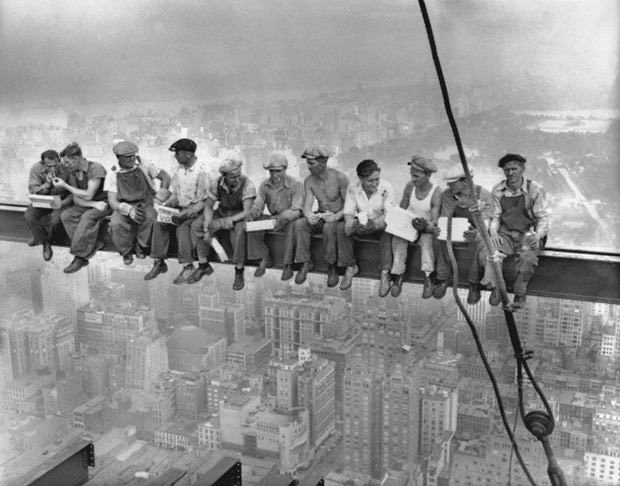
 Seán Ó Cualáín puts one of the most iconic photographs ever of New York City under the microscope in the interesting yet too often slipshod documentary Men at Lunch. In 1932, a photographer snapped a picture of eleven construction workers having lunch while sitting atop a girder on what would become the sixty-ninth floor of the RCA Building in Rockefeller Center. The men are casually talking, having a smoke, and holding white cardboard lunchboxes while dangling their feet some 850 feet in the air, a bustling city below them, Central Park sprawled out behind them. Narrated by Fionnula Flanagan (Ulysses, Waking Ned Devine), the film delves into who the men might be, attempts to figure out whether it was indeed Charles C. Ebbets who took the photo, and seeks to put the picture into the social and cultural context of the depression and the wave of immigration, focusing on the Irish (the film is an Irish production), many of whom went into the construction industry. “This is a photograph in which every element of photography and of New York City kind of come together with spectacular panache,” filmmaker Ric Burns says. But while Ó Cualáín employs captivating archival footage as he tries to solve the photograph’s many mysteries, he extends the focus too far, biting off more than he can chew in a mere seventy minutes, as a handful of talking heads and Niall Murphy’s text make grand statements about the human condition in the twentieth century that are too often a reach, then spends too much time with a pair of Irish characters who believe they are related to two of the men in the picture. Still, the part of the film that zeroes in on the taking of the photograph is absolutely fascinating. Men at Lunch is making its U.S. premiere at the DOC NYC festival November 10 at the SVA Theatre and November 14 at the IFC Center, with Ó Cualáín on hand at the first screening to talk about the film.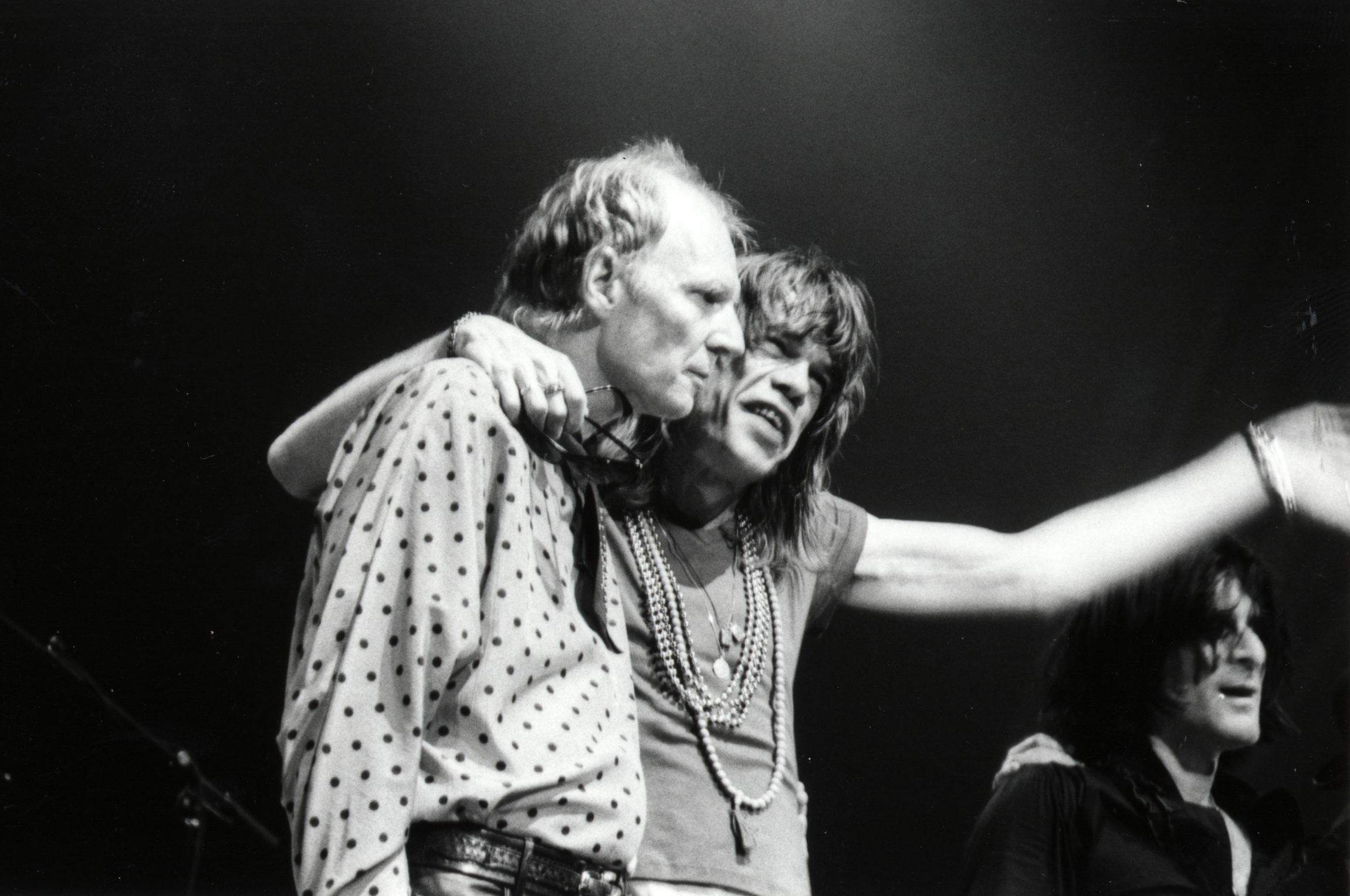
 New York Doll is an unforgettable documentary about Arthur “Killer” Kane, a man who went to the heights of ecstasy as a member of the New York Dolls in the early 1970s, hit the depths of depression in the late 1980s, and rediscovered himself in the 1990s as a Mormon librarian. As bassist for the New York Dolls, Kane, dressed wildly in heavy makeup and women’s clothes, anchored the glam rock idols, which also included David Johansen, Sylvain Sylvain, Johnny Thunders, and Jerry Nolan. The band dissolved after only two studio albums, and while the rest of the band remained in the music business (Thunders and Nolan died in the early ’90s), Kane’s drug- and alcohol-addled life spiraled downward. As Johansen started showing up in mediocre Hollywood movies (Married to the Mob, Scrooged, Car 54, Where Are You?) and his alter ego, Buster Poindexter, could be heard singing “Hot, Hot, Hot” at every bar mitzvah and wedding in town, Kane languished in obscurity until, in 1989, after a ridiculous suicide attempt, he became a Mormon. Fellow Mormon Greg Whiteley follows Kane around with a handheld camera as the former underground rock star goes about his daily life, working in a Mormon Family History Center library in California, taking the bus to work, hanging out with old ladies, paying “rent” on his pawned basses, and living a simple existence — until he gets a call from British pop star Morrissey, who wants the Dolls to reunite for the 2004 Meltdown festival in London. Kane is a soft-spoken, earnest, gentle man who seems a little bit off yet genuine, but this is what he’s been waiting for — although he is also afraid of failure yet again. Whiteley intersperses classic Dolls songs (“Looking for a Kiss,” “Lonely Planet Boy,” “Private World,” “Puss ‘n’ Boots,” “Trash,” and Johnny Thunders’s “You Can’t Put Your Arms Round a Memory”) with talking heads who share their love of the band (including Sir Bob Geldof, Chrissie Hynde, Mick Jones from the Clash, Blondie’s Clem Burke, and especially Morrissey, who is always seen in extreme close-up and is oh-so-serious), although we wish the film included more music, of a higher quality. Yet the remarkable story and ridiculously bizarre ending, which has a This Is Spinal Tap quality to it throughout — except it’s very real — rises above it all to create one of the best rockumentaries we’ve ever seen.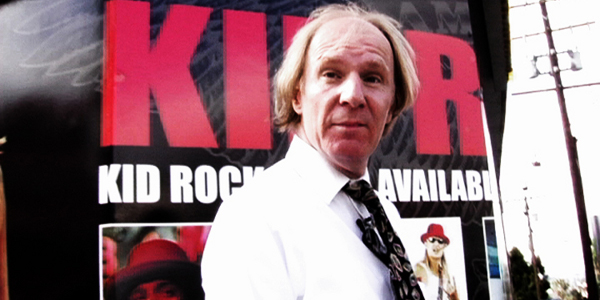

 Craig Cataldo, also known as Craig Schwartz, is a New York icon. Better known as Radioman, he travels across the city on an old bicycle, wearing a boombox around his neck like a treasured jewel. The life of this eccentric character is now on view in the entertaining documentary Radioman. Although many might assume that Radioman is a crazy homeless drunk — something he did struggle with in the past — it turns out that Radioman is a beloved figure in the film world, appearing in more than one hundred films and television shows. He devotes his life to being an extra and hanging out on movie sets, where he converses with the stars and approaches his bit parts like they are starring roles. The documentary, directed by British filmmaker Mary Kerr, features a slew of celebrities singing the praises of Radioman, including George Clooney, Helen Mirren, Whoopi Goldberg, Tina Fey, Meryl Streep, Ron Howard, and, most philosophically, Josh Brolin and Robin Williams. Kerr follows Radio, as he’s known to his closer friends, as he does his thing on local film sets, discusses his childhood and the difficult time when he was arrested and hospitalized against his will, shows off his frighteningly cramped and bug-infested apartment, and travels to Hollywood to try to get into some Oscar parties. A gregarious, well-spoken, and occasionally crude fellow with a big, scraggly gray beard, Radioman, who looks much older than his sixty-one years, is like a giant old teddy bear that you just can’t get yourself to throw away because it means that much to you. Radioman is screening November 9 and 15 at the IFC Center, with Kerr and Radioman on hand to talk about the work, as part of DOC NYC, a weeklong celebration of nonfiction film at IFC and the SVA Theatre comprising more than seventy documentaries, along with panel discussions and master classes. Among the other highlights are Artifact, about Jared Leto’s band, Thirty Seconds to Mars, and their battle with their record label; Eddie Adams: Saigon ’68, which tells the story of the iconic photograph of a gun pointed at the head of a Vietnamese man; Informant, about activist and FBI mole Brandon Darby; and Plimpton! Starring George Plimpton as Himself, a look at the life and career of the beloved participatory journalist.