Tag Archives: ifc center

QUEER/ART/FILM: HUSH . . . HUSH, SWEET CHARLOTTE

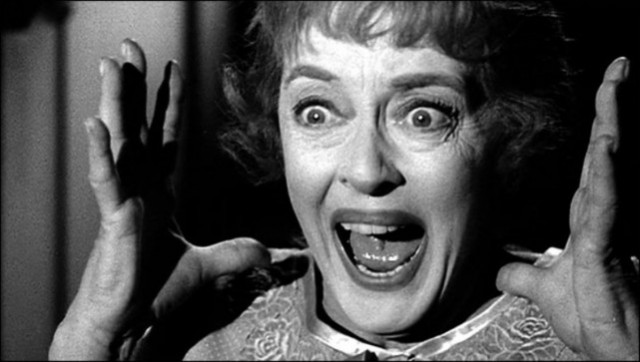
Bette Davis is a scream in cult classic HUSH . . .  HUSH, SWEET CHARLOTTE

Bette Davis is a scream in cult classic HUSH . . . HUSH, SWEET CHARLOTTE

HUSH . . . HUSH, SWEET CHARLOTTE (Robert Aldrich, 1964)
IFC Center
323 Sixth Ave. at Third St.
Monday, September 21, 8:00
212-924-7771
www.ifccenter.com

Hot on the heels of their success with What Ever Happened to Baby Jane?, director Robert Aldrich and star Bette Davis sought to make a kind of thematic sequel again with Joan Crawford, another campy psychological thriller about jealousy, family, and the wounds of time. Crawford pulled out of the production, but she was replaced by one of Davis’s good friends, Olivia de Havilland, which added a terrific edge to what became another hit, Hush . . . Hush, Sweet Charlotte. The film is screening September 21 at 8:00 as part of the monthly IFC Center series “Queer/Art/Film,” curated by Adam Baran and Ira Sachs, consisting of influential works selected by gay artists. Hush . . . Hush, Sweet Charlotte was chosen by self-described “actor, playwright, novelist, screenwriter, director, and drag legend” Charles Busch (The Tale of the Allergist’s Wife, Die Mommie Die!), who will be on hand for a postfilm discussion. “I had my father take me to the opening day,” Busch says on the IFC Center website. “The stars were there, promoting the film. I was transfixed, studying how a legendary actress behaves.” The film is set on a Louisiana plantation where Charlotte Hollis (Davis) lives as a recluse with her devoted housekeeper, the batty Velma Cruther (Agnes Moorehead). It is 1964, thirty-seven years after Charlotte’s lover, the married John Mayhew (Bruce Dern), was brutally behanded and beheaded at a party thrown by Charlotte’s father, the controlling Big Sam (Victor Buono, who also appeared in Baby Jane). The Hollis mansion must be torn down to make way for a bridge, but Charlotte refuses to leave, causing major headaches for the sheriff (Wesley Addy) and the construction foreman (George Kennedy). Charlotte’s poor cousin, Miriam Deering (de Havilland), arrives to help the deeply tortured Charlotte, but Miriam and family doctor Drew Bayliss (Joseph Cotten) seem to have other plans. Meanwhile, kindly old reporter Harry Willis (Cecil Kellaway) starts poking around, trying to get to the truth behind all the mystery and madness.

Hush . . . Hush, Sweet Charlotte is a grisly southern gothic centered on the relationship between the crazed Charlotte and the calm, collected Miriam, allowing Davis and de Havilland to play off each other beautifully, the former chewing up huge swaths of scenery, the latter cleaning it all up neatly with a spritz of cold menace. The supporting cast, which features numerous Twilight Zone veterans and a cameo by Mary Astor in her final role, provides able support as Aldrich (The Dirty Dozen, Kiss Me Deadly) wishes a fond farewell to the Old South in striking black-and-white, courtesy of cinematographer Joseph F. Biroc, who also worked with Aldrich on such diverse films as The Flight of the Phoenix, The Killing of Sister George, and The Longest Yard. Composer Frank De Vol is responsible for the chilling soundtrack. It’s all great fun, with legitimate scares, helping it earn seven Oscar nominations, including for Moorehead, Biroc, and De Vol (as well as for art direction, costume design, editing, and song). It should be quite a blast getting Busch’s take on this cult classic. “Queer/Art/Film” continues October 9 with Agnès Varda’s Vagabond (with K8 Hardy) and November 23 with Alan Parker’s Fame (with Kia LaBeija).
WELCOME TO LEITH

Documentary looks at issues of hate and free speech in rural North Dakota town

Documentary looks at issues of hate and free speech in rural North Dakota town

WELCOME TO LEITH (Michael Beach Nichols & Christopher K. Walker, 2015)
IFC Center
323 Sixth Ave. at Third St.
Opens Wednesday, September 9
212-924-7771
www.welcometoleithfilm.com
www.ifccenter.com

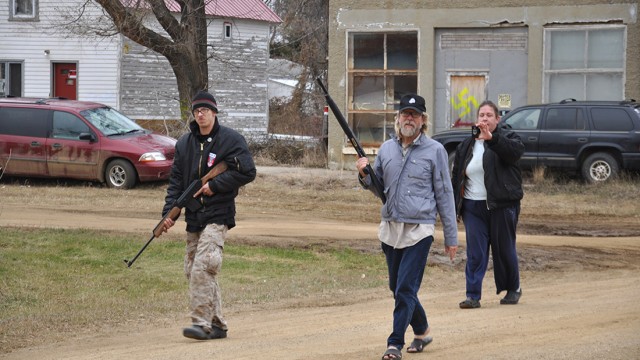
In 2012, white supremacist leader Craig Cobb began buying up plots of land in Leith, North Dakota, a rural community of twenty-four people in the middle of nowhere, with the intention of taking over the local government and spreading his message of hate. Michael Beach Nichols and Christopher K. Walker document the ensuing battle between the interlopers and the town residents in Welcome to Leith, which opens September 9 at the IFC Center. Inspired by an August 2013 New York Times article about Cobb and Leith, director, producer, and cinematographer Nichols and director, producer, and editor Walker headed to North Dakota, where people on both sides of the escalating controversy gave them remarkable access. As Cobb — and instigator, inciter, manipulator, and provocateur — his right-hand man, Kynan Dutton, Vanguard News Network operator Alex Linder, White Aryan Resistance founder Tom Metzger, Jeff Schoep of the National Socialist Movement, and members of other hate groups support what they believe is essentially a legal coup, Mayor Ryan Schock, Sheriff Steve Bay, photographer Gregory Bruce, Southern Poverty Law Center journalist Ryan Lenz, prosecutor Todd Schwarz, and the citizens of Leith examine their options to fight Cobb, who has brought fear and the concrete threat of potential violence to the small, peaceful community, reminiscent of what a group of neo-Nazis did in Skokie in 1977-78. Nichols and Walker, who previously collaborated on Flex Is Kings, incorporate archival footage, town meetings, courtroom scenes, new interviews, and scary video shot by Dutton’s girlfriend, Deborah Henderson, to create a frightening look at race-baiting, the First and Second Amendments, the U.S. legal system, and, most of all, the rising issue of hate in modern-day America. The film plays out like an edge-of-your-seat thriller, but it’s all too real. Leith might seem a long way away geographically, but it’s a lot closer than you might think.

WIM WENDERS: PORTRAITS ALONG THE ROAD

Wim Wenders

Extensive Wim Wenders retrospective at the IFC Center will feature numerous appearances by the eclectic auteur

IFC Center
323 Sixth Ave. at West Third St.
August 28 – September 24
212-924-7771
www.ifccenter.com
www.wim-wenders.com

One of the most eclectic, iconoclastic auteurs in the history of cinema, German author, director, and photographer Wim Wenders has built an impressive film resume over the last forty-five years, from music and dance documentaries to road movies and postapocalyptic tales, from mysteries and fantasies to gripping emotional dramas and a Hawthorne adaptation. The IFC Center is celebrating his career with a wide-ranging four-week series featuring dozens of his full-length and short films, from 1972’s The Goalie’s Anxiety at the Penalty Kick to a sneak preview of his newest work, Every Thing Will Be Fine, including the New York City premiere of Palermo Shooting and the world premiere of the 4K restoration of The State of Things. Wenders will be at the IFC Center for Q&As following select screenings of The American Friend, Buena Vista Social Club, Kings of the Road, Pina, Tokyo-Ga, Paris, Texas, and other films; in addition, Wenders, who just turned seventy, will sign copies of his latest photography book, Wim Wenders: Written in the West, Revisited, after the Q&A following the 7:20 screening of Palermo Shooting on September 2, and he will participate in the special discussion “Liquid Space: A Conversation on 3D” on September 6.

WE COME AS FRIENDS

WE COME AS FRIENDS

WE COME AS FRIENDS documents the continued exploitation of Africa by America, Europe, and China

WE COME AS FRIENDS (Hubert Sauper, 2014)
IFC Center
323 Sixth Ave. at Third St.
Opens Friday, August 14
212-924-7771
www.wecomeasfriends.com
www.ifccenter.com

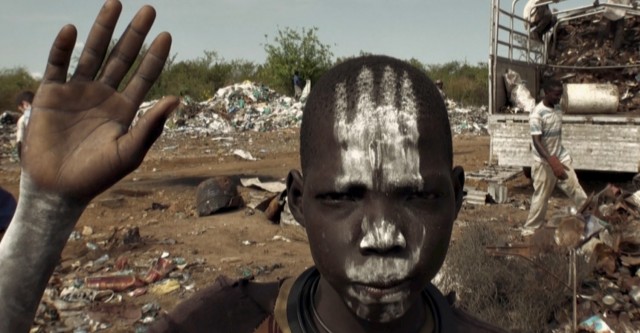
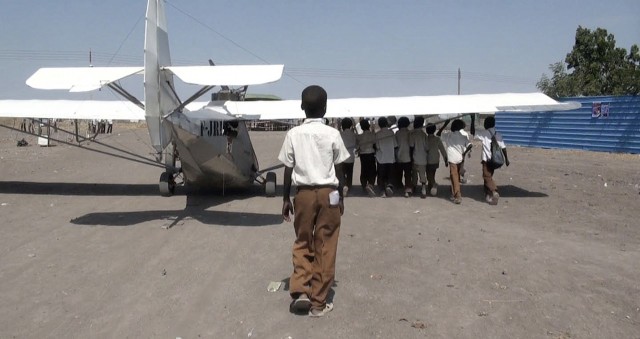
As Hubert Sauper’s We Come as Friends opens, a naked young African boy is walking down a deserted road, carrying an empty plastic water bottle. He smiles into the camera as he heads toward the blazing hot sun. The scene recalls Jamie Uys’s The Gods Must Be Crazy, a 1980 comedy in which the arrival of an empty Coke bottle, dropped from the sky, has a profound effect on a South African tribe living in solitude in the Kalahari Desert. But We Come as Friends is no fictional farce as a filmmaker, not a Coke bottle, drops from the sky to let Africans reveal how world powers are still employing old methods of colonialism to exploit, and essentially steal, valuable resources from African nations in the twenty-first century. “Did you know that the moon belongs to the white man?” a man asks early on. In the 2014 documentary Concerning Violence: Nine Scenes from the Anti-Imperialistic Self-Defense, Swedish filmmaker Göran Hugo Olsson used rare archival footage to explore European colonialism through the words of Frantz Fanon’s 1961 book, The Wretched of the Earth. In We Come as Friends, French-based filmmaker Sauper, whose life was threatened after he made the Oscar-nominated Darwin’s Nightmare, which examined the wide-ranging impact of the introduction of the Nile perch to Lake Victoria in Tanzania, journeys to Africa in Sputnik, a tiny plane he built himself, to uncover the current wave of colonialism as South Sudan prepares to vote on its independence in 2011. Sauper meets with villagers, warlords, international diplomats, Christian missionaries, soldiers, Arab and Chinese workers, and others while photographing various military operations, burials, and protests. “The local people have to learn how to need money — and how to give up their ancestors’ land,” Sauper narrates. And of course, they do so at ridiculously cheap prices that recall the purchase of Manhattan from the Native Americans.

Sputnik

Hubert Sauper travels to Sudan in homemade plane he names “Sputnik”

It’s infuriating how so many people go on record still referring to Africans as if they are savages or children, unable to take care of themselves. “It is easy to pick out natural resources and leave,” Hillary Clinton is shown saying. “We don’t want to see a new colonialism in Africa.” But that’s precisely what is happening, and it’s all about the oil — and the answer is a whole lot more complicated than trying to throw a Coke bottle off the edge of the planet. The film is a startling piece of investigative journalism by a brave explorer willing to risk his life to show the world the truth. Sauper is like an alternate Captain Kirk — who, the director has noted in interviews, is a kind of space-age imperialist himself, based on Captain James Cook — traveling through Africa in his own Enterprise, boldly going where no one has gone before. Winner of the Peace Film Prize at the Berlinale and a Special Jury Award for Cinematic Bravery at Sundance, We Come as Friends opens August 14 at the IFC Center, with Sauper participating in several Q&As over the weekend, including on Friday night at the 7:40 show moderated by the Yes Men’s Jacques Servin (who participated in the making of the film), Saturday afternoon at 2:45 with Marshall Curry (Street Fight), and Saturday night at 7:40 with Josh Fox (Gasland).

SINISTER SATURDAYS: LET THE RIGHT ONE IN

LET THE RIGHT ONE IN

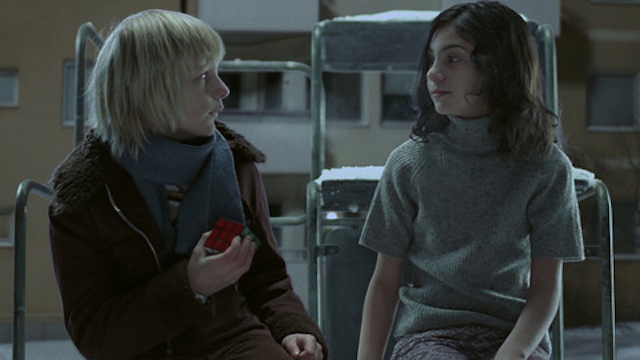
Oskar (Kåre Hedebrant) and Eli (Lina Leandersson) discover a different kind of love in LET THE RIGHT ONE IN

WAVERLY MIDNIGHTS: LET THE RIGHT ONE IN (LÅT DEN RÄTTE KOMMA IN) (Tomas Alfredson, 2008)
IFC Center
323 Sixth Ave. at Third St.
Saturday, August 15, 12 midnight
212-924-7771
www.ifccenter.com

On August 21, Sinister II will be unleashed on the world, the sequel to the 2012 horror hit Sinister, which starred Ethan Hawke and Juliet Rylance. (The sequel doesn’t feature any similarly familiar names.) In preparation for the release, Sinister II director Ciarán Foy has selected films that inspired him, creating the brief Waverly Midnights series “Sinister Saturdays” at the IFC Center. The frightfest began August 8 with Gore Verbinski’s remake of The Ring and concludes August 22 with Sinister, but the real gem is the original Swedish thriller Let the Right One In, a chilling yet tender coming-of-age story about friendship and the meaning of family. In a snow-covered Stockholm suburb, twelve-year-old Oskar (Kåre Hedebrant) is severely bullied by Conny (Patrik Rydmark), Andreas (Johan Sömnes), and Martin (Mikael Erhardsson). The frail, blond Oskar dreams of getting even, but he always backs down. But then he meets the dark-haired, somewhat feral Eli (Lina Leandersson, dubbed by Elif Ceylan), who has moved in next door in their apartment complex. While Oskar lives with his divorced mother (Karin Bergquist) — his father (Henrik Dahl) has moved out to the country — Eli lives with Håkan (Per Ragnar), an older father figure who goes out to gather what Eli needs to survive: blood. But the aging Håkan begins encountering difficulties, forcing Eli to go out and hunt down her own food. As people start to go missing in the small community, Eli and Oskar’s friendship begins to blossom, two outsiders coming to terms with who they are. But when Oskar suddenly strikes back, Conny’s older brother, Jimmy (Rasmus Luthander), gets involved, and the stakes get a whole lot higher.

LET THE RIGHT ONE IN

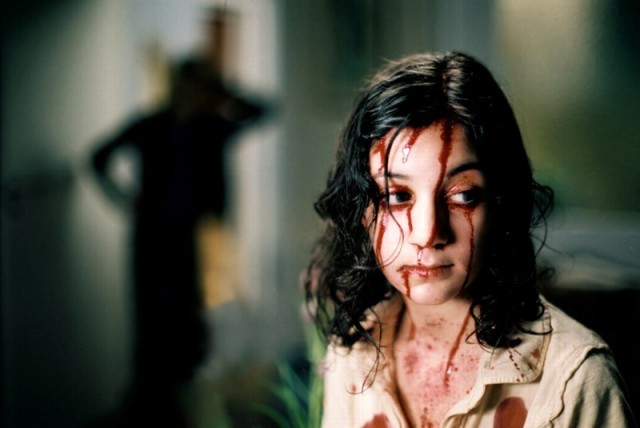
Eli (Lina Leandersson) is not quite your average twelve-year-old girl in tender Swedish horror film

Based on the 2004 novel by John Ajvide Lindqvist, Let the Right One In is a gripping horror film that is one of the best of the young century. By making the protagonists children with common adolescent problems, Lindqvist, who wrote the screenplay, and director Tomas Alfredson (Tinker Tailor Soldier Spy) create a more realistic setting, so the scares are that much more intense. Hedebrant and Leandersson have a magical chemistry, their tentativeness and fears intoxicating. They exist in a world that is meant only for them; all of the adults are essentially peripheral, whether parents, teachers, or community members wondering what is going on, and the other kids are merely in their way. And it’s all about that very moment; they both might be twelve, but Eli is going to be that age forever while Oskar gets older. The atmosphere is thick and tense throughout, elevated by Hoyte van Hoytema’s inventive cinematography and Johan Söderqvist’s dramatic score, performed by the Slovak National Symphony Orchestra. Despite some very memorable scenes involving shocking violence, at its heart Let the Right One In is a sweetly innocent love story, albeit with a few unusual complications. Matt Reeves directed a 2010 English-language remake starring Kodi Smit-McPhee and Chloë Grace Moretz, and the National Theatre of Scotland staged a terrific theatrical adaptation that played at St. Ann’s Warehouse earlier this year, but there’s still nothing like the original, a visually stunning and psychologically adept fresh new take on the vampire legend.

PHOENIX

PHOENIX

Nelly Lenz (Nina Hoss) tries to recapture her past in Christian Petzold’s PHOENIX

PHOENIX (Christian Petzold, 2014)
IFC Center, 323 Sixth Ave. at Third St., 212-924-7771
Lincoln Plaza Cinema, 1886 Broadway between 62nd & 63rd Sts., 212-757-2280
Opens Friday, July 24
www.ifcfilms.com

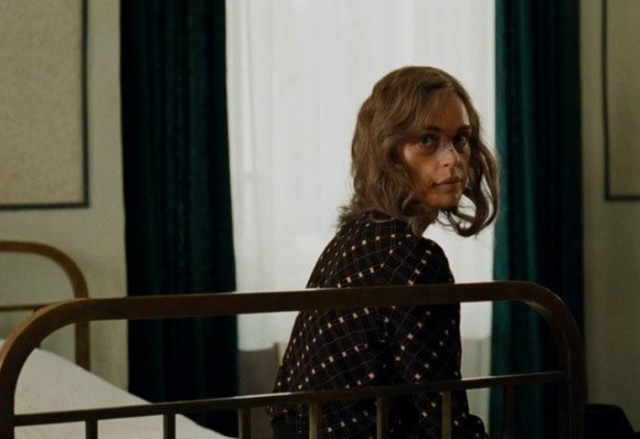
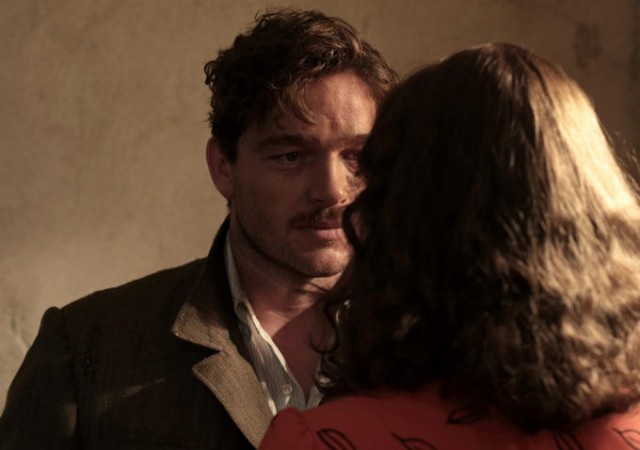
Christian Petzold’s Phoenix is a mesmerizing noir set in 1945 Berlin, where an Auschwitz survivor tries to reestablish her identity, but going home turns into a strange, painful, and dangerous journey. Nina Hoss is riveting as Nelly Lenz, a nightclub singer who is the only member of her family to have made it out of the war alive. Reentering Germany from Switzerland, she seems like a ghost or a mummy, her face swathed in bandages after having been severely disfigured by a gunshot wound. Wealthy enough to afford special facial reconstruction surgery, she is offered the chance to look like anyone she wants; the doctor gently suggests an entirely new appearance would be best, but she defiantly demands her own face back. Cared for by a companion, Lene Winter (Nina Kunzendorf), a fellow Jew who helps Holocaust survivors and wants to move to Palestine with her, Nelly seems psychologically frozen, tentative and frightened of the future. Instead of looking forward, she decides to go back to her non-Jewish husband, Johnny (Ronald Zehrfeld), now called Johannes. He has disowned his past so thoroughly that he doesn’t recognize Nelly as his wife, returned from the concentration camp, instead believing her to be a survivor who resembles her just enough to enable him to cash in on Nelly’s inheritance. As he grooms her to walk and talk like Nelly, reminiscent of what Jimmy Stewart does to Kim Novak in Alfred Hitchcock’s Vertigo, she begins finding out things about him that are deeply troubling, including the nightmarish possibility that he might have been the one who betrayed her to the Nazis.

PHOENIX

Johnny (Ronald Zehrfeld) doesn’t realize what’s right in front of him in gripping post-WWII noir

Tense and unnerving, Phoenix was inspired by Alexander Kluge’s An Experiment in Love, Hubert Monteilhet’s Return from the Ashes, Harun Farocki’s “Switched Women,” and oral histories from the Shoah Foundation. (Farocki, who passed away in July 2014, collaborated with Petzold on the screenplay.) Hoss and Zehrfeld, who previously worked together in Petzold’s gripping 2012 psychological thriller, Barbara, have an appropriately uneasy chemistry, keeping things off balance as former lovers who pursue an unusual courtship, he unwilling to acknowledge what’s right in front of him, she desperate to be recognized for who she was, and is. It’s a kind of eerie cat-and-mouse game, with more than a touch of Stockholm Syndrome, that intelligently examines a fascinating German amnesia about the war and its victims on a very personal scale. Kunzendorf (Scene of the Crime, Years of Love) is excellent as Lene, a forward-thinking woman who wants to start a new life with Nelly yet is unable to drag her away from her obsession with Johnny, while Zehrfeld (Finsterworld) has just the right amount of trepidation as Johnny pursues his selfish goal. But Hoss, in her sixth film with Petzold (Jerichow, Something to Remind Me), is simply extraordinary, her every movement utterly captivating, portraying complex emotions with remarkable skill. And the ending is simply brilliant, unforgettable. Once it gets past a few minor incongruities, Phoenix rises high, a spellbinding story of a twisted relationship in 1945 Germany that calls upon ancient myth, modern psychology, a nation’s guilt, and love and longing for the past to evoke universal themes — while posing some very difficult questions for everyone.

JELLYFISH EYES

JELLYFISH EYES

Masashi (Takuto Sueoka) and cuddly cute Kurage-bo have to save their strange Japanese town in Takashi Murakami’s JELLYFISH EYES

JELLYFISH EYES (Takashi Murakami, 2015)
IFC Center
323 Sixth Ave. at West Third St.
Opens Wednesday, July 15
212-924-7771
www.jellyfisheyesthemovie.com
www.ifccenter.com

Japanese artist and brand name Takashi Murakami — his 2008 exhibition at the Brooklyn Museum was unironically titled “© Murakami” — brings his unique take on his country’s culture and history to the big screen in his feature debut, Jellyfish Eyes. In his catalog essay “Flat Boy vs. Skinny: Takashi Murakami and the Battle for ‘Japan,’” Dick Hebdige wrote, “Combining shock and awe in equal measure with a destruction/solicitation strategy aimed at winning over jaded hearts and minds, Superflat functions like the ancient Trojan horse to penetrate the art and fashion world’s defenses and to neutralize whatever vestiges remain in the age of the corporate-sponsored art opening of the hermeneutics of suspicion.” That shock and awe is at the center of Murakami’s film, a battle for Japan as seen through the eyes of children, the only ones left with any semblance of humanity in a post-Hiroshima, post-Fukushima world. Sixth grader Masashi Kusakabe (Takuto Sueoka) has just moved to a strange suburban town with his recently widowed mother, Yasuko (Shizuko Amamiya). Masashi instantly makes a new friend, Kurage-bo, a ridiculously adorable jellyfish-like flying creature who goes with him everywhere. Once at school, Masashi discovers that all of the kids have a F.R.I.E.N.D. (the acronym comes from “life-Form, Resonance, Inner Energy, Negative emotion, Disaster prevention”), a kind of avatar/yōkai reminiscent of the daemons in Philip Pullman’s His Dark Materials trilogy. Some of the boys engage their cute or scary buddies in fights akin to bullying, controlling them with electronic devices that evoke the global obsession with smartphones and video games. Masashi makes a real friend in Saki Amamiya (Himeka Asami), a fellow student who abhors fighting and protects herself with her hairy oversize companion, Luxor. As the adults get caught up in strict rules, religious cults, and an unhealthy obsession with safety, a quartet of kids known as the Black Cloaked Four — Blue Dragon (Masataka Kubota), White Tiger (Shota Sometani), Black Tortoise (Hidemasa Shiozawa), and Vermilion Bird (Ami Ikenaga) — is working with Masashi’s uncle, Naoto (Takumi Saito), to capture enough negative energy to destroy and rebuild Japan. Oh, did we mention that this is a kids movie?
JELLYFISH EYES

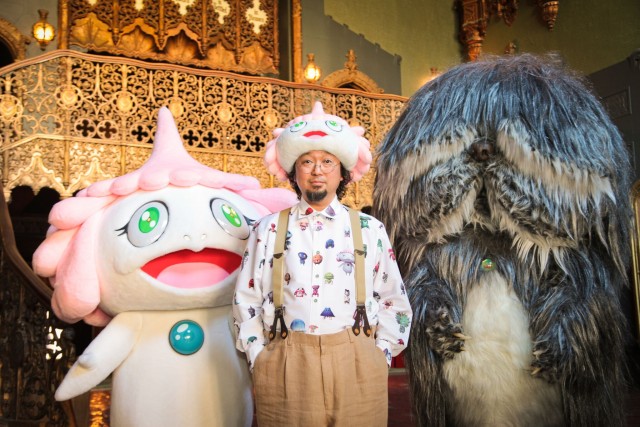
JELLYFISH EYES director Takashi Murakami playfully poses with some F.R.I.E.N.D.s (photo by Chika Okazumi)

It comes as no surprise that Jellyfish Eyes is a bright, colorful film set in a magical otaku/kawaii-crazed society (designed by art director Nori Fukuda), like Murakami’s paintings and sculptures come to life, with dazzling hues jumping off the screen; only the symbol of the Black Cloaked Four, the yin and yang sign, is in cold black-and-white. The F.R.I.E.N.D.s, from Masashi’s Kurage-bo and Saki’s Luxor to Tatsuya’s evil Yupi and Juran’s violent Shimon, as well as Koh’s Ko2, a large-scale, round-eyed anime girl, are tailor made for merchandising, and they are indeed available for purchase. Murakami has always had a dark side, perhaps never so clear as in his most recent exhibition, “In the Land of the Dead, Stepping on the Tail of a Rainbow,” a reaction to the devastation of the 2011 earthquake and tsunami, and it’s at the center of Jellyfish Eyes, the first of a proposed trilogy. But it’s also part of the problem, creating a murkiness and confusion in a narrative that doesn’t always make sense. The soundtrack, by KZ (livetune) and Yoshihiro Ike, is treacly sweet to a fault, and Murakami overdoes the CGI fight scenes. He’s also not shy about declaring this a message picture; “In the wake of 3/11, the damage sustained by Japan runs deep. We must all do our best to emerge from that shadow,” he has stated in reference to the film, as well as “In a sense, one of the few places in which the darkness still lurks in our time is inside mobile phones. Their screens are pitch black.” Murakami and screenwriter Jun Tsugita liberally borrow from such familiar tales as Godzilla, Where the Wild Things Are, Pokémon, and E.T. the Extra-Terrestrial, and the overload of cultural references threaten to pull Jellyfish Eyes down. But Sueoka’s charming innocence and Kurage-bo’s angelic delightfulness eventually triumph over the film’s various shortcomings. Jellfyish Eyes opens July 15 at the IFC Center, with Murakami on hand for a Q&A at the 7:00 show on Wednesday night.