Tag Archives: ifc center

TICKET ALERT: MULTIPLE MANIACS

MULTIPLE MANIACS

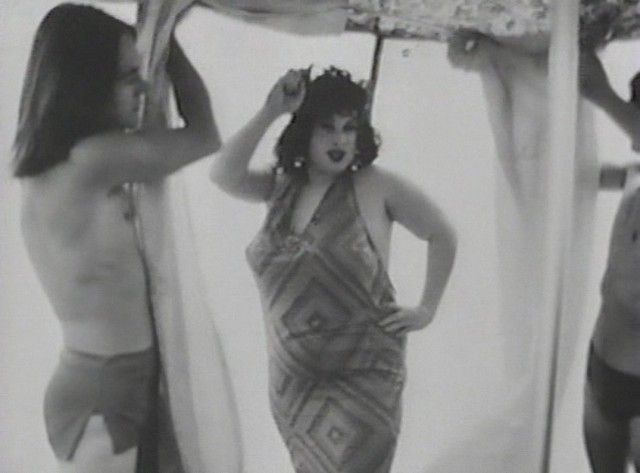
Divine is the star of “Cavalcade of Perversions” in John Waters’s splendidly lurid MULTIPLE MANIACS

MULTIPLE MANIACS (John Waters, 1970)
IFC Center
323 Sixth Ave. at West Third St.
Friday, August 5, 7:20 & 9:40
Other screenings to be announced August 1 at 6:00
212-924-7771
www.ifccenter.com
www.janusfilms.com

John Waters will be at IFC Center on August 5 for two special screenings of a newly restored version of one of the Baltimore-born auteur’s craziest early works, Multiple Maniacs, made when the King of Bad Taste, serving as writer, director, producer, cinematographer, and editor, was only twenty-four. The extremely low budget romp begins with barker Mr. David (David Lochary) inviting people into “Lady Divine’s Cavalcade of Perversions,” proclaiming, “This is the show you want. . . . the sleaziest show on earth. Not actors, not paid imposters, but real, actual filth who have been carefully screened in order to present to you the most flagrant violation of natural law known to man.” Of course, that serves as the perfect introduction to the cinematic world of Waters, one dominated by the celebration of sexual proclivities, fetish, salaciousness, indecency, violence, and marginalized weirdos living on the fringes of society. Lady Divine, played by Divine, turns out to be a cheat, the freak show just a set-up for a robbery. Soon Divine is jealous of David’s relationship with Bonnie (Mary Vivian Pearce), hanging out with her topless daughter, Cookie (Cookie Mueller), and being led into a church by the Infant of Prague (Michael Renner Jr.), where she’s brought to sexual ecstasy by Mink (Mink Stole). There’s also rape, murder, Jesus (George Figgs), the Virgin Mary (Edith Massey), and the famed Lobstura. Shot in lurid black-and-white, Multiple Maniacs is a divine freak show all its own, an underground classic that redefined just what a movie could be, a crude, disturbing tale that you can’t turn away from. Waters will participate in a Q&A following the 7:20 show and will introduce the 9:40 show; more screenings of this restored version, from Janus Films, will be announced on August 1 at 6:00 pm.

COLD CASES — THE DEPARTMENT Q TRILOGY AND THE NEW NORDIC NOIR: JAR CITY

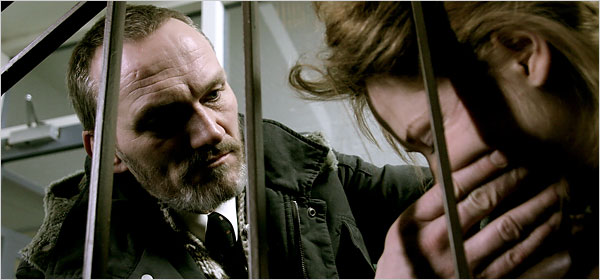
Inspector Erlendur (Ingvar E. Sigurdsson) finds more than he bargained for in tense thriller based on award-winning Icelandic book

JAR CITY (MYRIN) (Baltasar Kormákur, 2006)
IFC Center
323 Sixth Ave. at West Third St.
Tuesday, June 21, 8:00, and Wednesday, June 22, 11:20 am
Series runs June 17-23
212-924-7771
www.ifccenter.com

Writer-director Baltasar Kormákur’s adaptation of Arnaldur Indriðason’s award-winning novel Jar City is a bleak but compelling police procedural that focuses on a fact-based controversial government initiative that is cataloging genetic research on all Icelandic families. When an aging man named Holberg (Thorsteinn Gunnarsson) is murdered in his home, brooding inspector Erlendur (Ingvar E. Sigurdsson) heads the investigation into the death, leading him to a thirty-year-old rape, a dirty cop, a trio of criminals (one of whom has been missing for a quarter century), a woman who killed herself shortly after her four-year-old daughter died, and a doctor who collects body parts. The divorced Erlendur also has to deal with his troubled daughter (Augusta Eva Erlendsdottir), a pregnant drug addict who hangs out with some very sketchy company. Meanwhile, a mysterious man (Atli Rafn Sigurdarson) is up to something following the traumatic death of his young daughter. Kormakur weaves together the story line of the two fathers side by side — in the book, the unidentified man appears only near the conclusion, although who he is still remains a mystery for most of the film — centering on the complex relationship between parents and children and what gets passed down from generation to generation, both on the outside and the inside. Sigurdsson plays Erlendur with a cautious seriousness, the only humor coming from the way he treats his goofy partner, Sigurdur Oli (Bjorn Hlynur Haraldsson). Iceland’s entry for the 2007 Best Foreign Language Film Oscar and winner of the Crystal Globe at the Karlovy Vary International Film Festival, Jar City is a dark, tense intellectual thriller. Indriðason has turned Erlendur into a continuing character in such follow-ups as Silence of the Grave and Voices; we were hoping Kormákur and Sigurdsson would do the same, but instead the director has gone on to make such Hollywood fare as Contraband, 2 Guns, and Everest. Jar City will be screening on June 22 and 23 in the IFC Center series “Cold Cases: The Department Q Trilogy and the New Nordic Noir,” which runs through June 23 and includes such other cool films as Daniel Espinosa’s Easy Money, Henrik Ruben Genz’s Terribly Happy, and Morten Tyldum’s Headhunters.

HUMAN RIGHTS WATCH FILM FESTIVAL 2016: GROWING UP COY

GROWING UP COY

Timely documentary details one family’s legal and moral fight over child gender identity

GROWING UP COY (Eric Juhola, 2016)
Thursday, June 16, 7:00, IFC Center, 323 Sixth Ave. at West Third St., 212-924-7771
Friday, June 17, 6:30, Film Society of Lincoln Center, Walter Reade Theater, 165 West 65th St. between Eighth Ave. & Broadway, 212-875-5050
Festival runs June 10-19
ff.hrw.org/new-york
growingupcoy.com

“To me, this is a story about two parents who love their children, who love this particular child who is transgender, and who want the very best things in the world for her,” Michael Silverman of the Transgender Legal Defense & Education Fund says at the beginning of Growing Up Coy, a poignant and timely documentary about one family’s public fight to allow one of their children to legally establish her gender identity. When she was eighteen months old, Coy Mathis, who was born male but was unhappy that way, began displaying distinct female tendencies, exhibiting extreme displeasure when treated as a boy. She began kindergarten in the conservative town of Fountain, Colorado, as male but soon chose to transition, identifying as female. “She started asking us, when are we going to take her to the doctor so that she can be a girl, and when are we going to get the doctors to cut her penis off,” her mother, Kathryn Mathis, says in the film. “That was when it became a problem, and we reassured her that we would do everything we could so that she would be happiest as an adult.” Coy was initially given permission to use the girls bathroom, but in first grade, in late 2012, the school changed its policy and she was denied access. Kathryn, a photographer, and her husband, former Marine and full-time student Jeremy, decided to fight back, engaging in a legal battle that they eventually brought to the press when the school administration refused to acknowledge Coy’s gender choice. Soon the Mathises, who have five children under the age of eight — Dakota, who is is autistic, Auri, and triplets Coy, Max, and Lily, who has cerebral palsy and quadriplegia — are being both celebrated and excoriated on social media, in newspaper columns, and by talking heads on television, but they are determined to do whatever it takes, even if it includes making Coy the poster child in a heated debate over a controversial issue that most people don’t fully understand. “She doesn’t want to have to explain who she is and talk about how she’s different,” Kathryn says. “She just wants to be.”

Director and producer Eric Juhola and his husband, producer and editor Jeremy Stulberg, who previously collaborated on Off the Grid: Life on the Mesa, follow Coy and her family as they meet with child psychologist Tara Eastcott, discuss legal matters with Silverman, and participate in interviews with local and national media, including a high-profile sit-down with Katie Couric. The Mathises, who married when Kathryn was seventeen and Jeremy twenty-one, speak honestly and intelligently about the situation, fully aware of what they are doing and the potential ramifications, even when their relationship becomes strained because of it. They are clearly loving parents who want what’s fair and right for their children and are willing to take personal risks for the future of their family as well as the nation, although they do not consider themselves activists. “We know that once we do this, there’s no going back,” Kathryn says. Growing Up Coy is having its world premiere at the Human Rights Watch Film Festival, screening on June 16 at 7:00 at IFC Center and June 17 at 6:30 at the Walter Reade Theater, both followed by a Q&A with Juhola, Silverman, Stulberg, and HRW Bernstein Fellow Ryan Thoresen. The Mathis family has recently sought privacy; although they participated in the making of the film, they are not currently scheduled to make any public appearances in conjunction with it.

COLD CASES — THE DEPARTMENT Q TRILOGY AND THE NEW NORDIC NOIR: THE PUSHER TRILOGY

Mads Mikkaelsen has a tough go of it in the Pusher trilogy

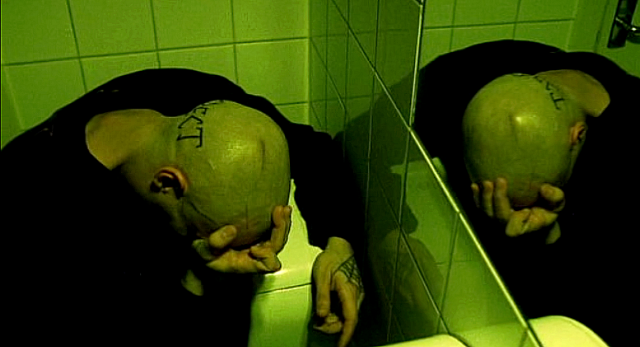
Mads Mikkelsen has a tough go of it in Nicolas Winding Refn’s Pusher trilogy

THE PUSHER TRILOGY (Nicolas Winding Refn, 1996, 2004, 2005)
IFC Center
323 Sixth Ave. at West Third St.
Pusher: Friday, June 17, 1:25, and Monday, June 20, 6:00
With Blood on My Hands: Friday, June 17, 3:30, and Monday, June 20, 8:15
I’m the Angel of Death: Friday, June 17, 5:30, and Monday, June 20, 10:15
Series runs June 17-23
212-924-7771
www.ifccenter.com
www.pusherthemovie.co.uk

Danish filmmaker Nicolas Winding Refn’s Pusher trilogy is a gritty, violent, brutal, and brilliant look at the devastation wrought by drugs. In Pusher (1996), Kim Bodnia stars as Frank, a small-time hood who loses both the money and the drugs when a deal goes bad. Over the course of a week, he grows more and more desperate as druglord Milo (Zlatko Buric) and his henchman, Radovan (Slavko Labovic), grow more and more impatient, preparing to do some serious damage to Frank. Pusher II: With Blood on My Hands (2004) focuses on Tonny (Mads Mikkelsen), Frank’s former partner who has just been released from prison. Addled by a beating he took, Tonny gets lost in a drug haze, trying to prove himself a worthy criminal to his big-time father, the Duke (Leif Sylvester Petersen), while also refusing to accept that he might be the father of Charlotte’s (Anne Sorensen) child. With the whole world crashing in on him, Tonny goes to extreme measures that affect everybody in his sphere. The gritty, powerful trilogy concludes with Refn’s masterwork, Pusher III: I’m the Angel of Death (2005), this time with Milo in the forefront. While preparing for his daughter’s (Marinela Dekic) twenty-fifth birthday party, he discovers that a major score has changed significantly, and he is forced to deal directly with a new generation of drug dealers — and by himself, because his cooking has made his crew sick. Shuttling between the ever-worsening situation, NA meetings, and his daughter’s party, Milo is faced with some deadly choices. Buric is spectacular as the aging druglord who does not like what he sees as he takes stock of his life. While the first two films feature hard-driving punk music, classical music slows things down in the far more contemplative conclusion. To add to the remarkable realism, many of the supporting actors were actual criminals. The grand finale is unforgettable, a multilayered, deeply philosophical, and extremely violent statement on the nature of drugs and the men and women addicted to that life. You can see all three films back-to-back-to-back on June 17 and 20 at IFC Center in the series “Cold Cases: The Department Q Trilogy and the New Nordic Noir,” which runs June 17-23 and includes such other cool films as Mikkel Norgaard’s Department Q threesome (A Conspiracy of Faith, The Absent One, The Keeper of Lost Causes), the original Swedish Girl with the Dragon Tattoo trilogy, Baltasar Kormákur’s Jar City, and Erik Skjoldbjærg’s Insomnia.

THE MUSIC OF STRANGERS: YO-YO MA AND THE SILK ROAD ENSEMBLE

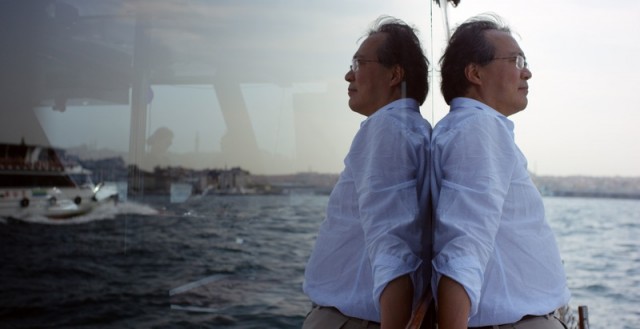
Yo-Yo Ma

Yo-Yo Ma leads the Silk Road Ensemble around the world in Morgan Neville documentary

THE MUSIC OF STRANGERS: YO-YO MA AND THE SILK ROAD ENSEMBLE (Morgan Neville, 2016)
Angelika Film Center, 18 West Houston St. at Mercer St., 212-995-2570
Lincoln Plaza Cinema, 1886 Broadway between 62nd & 63rd Sts., 212-757-2280
Opens Friday, June 10
themusicofstrangers.film

About midway through The Music of Strangers: Yo-Yo Ma and the Silk Road Ensemble, the renowned international group performs an exhilarating song in a studio that leaves them just as thrilled as the audience. Renowned cellist Ma might be the heart of the ensemble, but it’s the joy of creating and playing music no matter what that makes this documentary soar. And music is something that director Morgan Neville clearly understands, having previously made the Oscar-winning 20 Feet from Stardom as well as Muddy Waters: Can’t Be Satisfied, Respect Yourself: The Stax Records Story, and Johnny Cash’s America. In The Music of Strangers, Neville traces the history of the Silk Road Ensemble, named for the thousands-of-years-old trading route across Asia, from China to the Mediterranean. Born as an improvised gathering of musicians at Tanglewood in 2000, it became a venture that tours the world, promoting collaboration and celebrating international interaction. “The idea of culture is not so much to preserve tradition but to keep things alive and to evolve things,” says Ma, who has had to deal with accusations of cultural appropriation and dilution. Neville focuses on five members of the ensemble: Ma, the Paris-born Chinese-American cellist who has been a star his whole life (archival footage shows him at age seven with Leonard Bernstein, performing for President Kennedy and first lady Jacqueline); Chinese pipa virtuoso Wu Man, the first Chinese artist to play at the White House; Kinan Azmeh, a Syrian clarinetist who is the artistic director of the Damascus Festival Chamber Music Ensemble; Cristina Pato, a rock star on the gaita, the Galician bagpipe; and Iranian Kayhan Kalhor, a three-time Grammy nominee who is an expert on the kamancheh, the Persian bowed lute. Each shares stories of their personal history, focusing on their relationship with their native countries, which have undergone major changes over the last fifteen years.

They also explain how they almost didn’t continue after the events of 9/11, fearful of their Arabic connections and wondering whether proceeding with their mission was the right thing to do. “Everybody in the face of disaster reexamines who they are and their purpose,” Ma says, referring to their decision to go on. But their music transcends genre, history, and politics. “My intention is to represent my culture and the contribution that this very old culture made to human life,” Kalhor, who has been exiled from Iran, notes. And Ma adds, “The clearest reason for music, for culture, is it gives us meaning.” But Wu Man sums it all up: “There’s no East or West; it’s just a globe.”The Music of Strangers opens June 10 a the Angelika and Lincoln Plaza; Azmeh will give a special performance and participate in a Q&A following the 7:05 show on June 11 at Lincoln Plaza and the 5:00 show on June 12 at the Angelika, moderated by World Music Institute artistic director Par Neiburger. The Silk Road Ensemble has also released a companion album, Sing Me Home, which features such songs as “Green (Vincent’s Tune),” “Little Birdie,” “Ichichila,” “St. James Infirmary Blues,” and “Going Home,” featuring such guest artists as Bill Frisell, Abigail Washburn, Toumani Diabate, Sarah Jarosz, Gregory Porter, and Roomful of Teeth.

HUMAN RIGHTS WATCH FILM FESTIVAL 2016: ALMOST SUNRISE

ALMOST SUNRISE

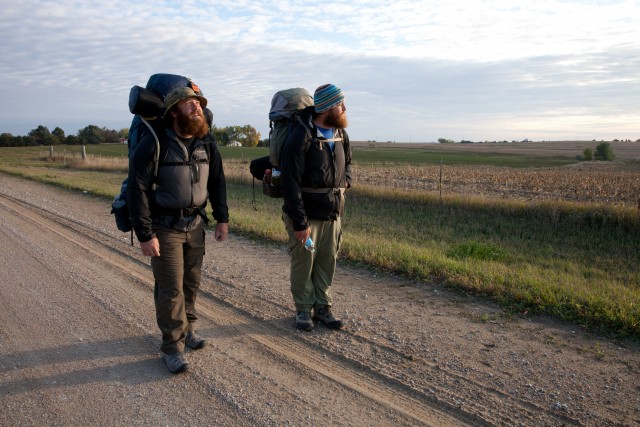
Anthony Anderson and Tom Voss go for a long walk to promote military veterans’ health issues in ALMOST SUNRISE

ALMOST SUNRISE (Michael Collins, 2016)
Saturday, June 11, 9:15, Film Society of Lincoln Center, Walter Reade Theater, 165 West 65th St. between Eighth Ave. & Broadway, 212-875-5050
Monday, June 13, 6:30, IFC Center, 323 Sixth Ave. at West Third St., 212-924-7771
Festival runs June 10-19
ff.hrw.org/new-york
sunrisedocumentary.com

Michael Collins’s emotionally gripping documentary, Almost Sunrise, is built around an absolutely shocking statistic: According to the Department of Veteran Affairs, twenty-two U.S. veterans commit suicide every day. That’s one self-inflicted death every sixty-five minutes. In the film, two young veterans of Operation Iraqi Freedom, facing depression and suicidal thoughts themselves, decide to walk from their homes in Milwaukee, Wisconsin, to Los Angeles, California, in order to clear their own heads and raise awareness of this horrifying issue. Tom Voss and Anthony Anderson, a pair of big, bushy-haired men, became media darlings as they continued what became known as Veterans Trek, meeting with local press along the way and occasionally being joined by other veterans and supporters for parts of the 2,700-mile walk. But for much of the time, it’s just them against the elements, wandering across long stretches of deserted highways in the middle of nowhere, photographed beautifully by Clarissa de los Reyes. The two men intimately open up to Collins, who is with them every step of the pilgrimage; they share their thoughts about their families and speak dramatically about “moral injury,” a form of PTSD that the film describes as “a wound to the soul, caused by participation in events that violate one’s deeply held sense of right and wrong.” Similar distress is examined in Sonia Kenneback’s National Bird, in which military personnel working in the U.S. drone program try to deal with how they will never know the results of their classified operations, whether they hit the correct targets or whether they caused so-called collateral damage to innocent civilians.
In Almost Sunrise, Emmett Cullen, a close friend of Voss’s who served alongside him in Iraq, explains, “After you see enough people getting hurt, and see other people get killed, you start to write yourself off in a way. You’re kind of resigned to the fact that you might as well just consider yourself already dead, and if you make it home, you’re lucky. ’Cause that’s the only real mental shift you can make to make it through those kinds of scenarios without kind of freaking out,” adding, “Mentally, you’re processing the situation you’re in, and the dangers, but you’re not feeling it. So that carries over to civilian life when you get out.” Both Voss and Anderson share their struggles with that transition, reaching deep inside themselves. The section near the end in which Voss turns to holistic breathing techniques feels tacked on, almost like an infomercial for that specific healing process, regardless of its success. But the rest of Almost Sunrise, which features a score by Adam Crystal and music by Yuka Honda and Nels Cline, is a sobering look at what soldiers go through in war and some of the profound psychological issues they have to face when they come home. Almost Sunrise is screening twice at the 2016 Human Rights Watch Film Festival, on June 11 at 9:15 at IFC Center and June 13 at 6:30 at the Walter Reade Theater, both followed by a Q&A with Collins, producer Marty Syjuco, Voss, and Anderson, with his wife, Holly.

THE WITNESS

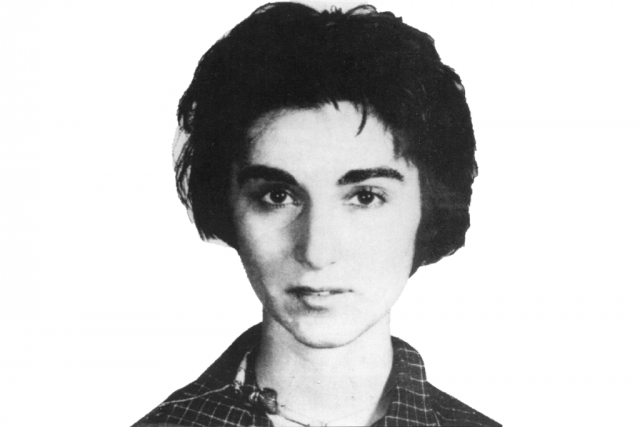
Kitty Genovese

The murder of Kitty Genovese is reinvestigated by one of her brothers in THE WITNESS

THE WITNESS (James Solomon, 2015)
IFC Center
323 Sixth Ave. at West Third St.
Opens Friday, June 3
212-924-7771
www.ifccenter.com
www.thewitness-film.com

The main image used to promote James Solomon’s debut documentary, The Witness, is a 1961 black-and-white photograph of Kitty Genovese. In the portrait, she stares back at the viewer almost accusingly; in light of her famous death three years later, it is as if she is calling us all out for the events that happened during and after her murder. In 1964, Genovese was killed by an assailant on a Kew Gardens street while, as the New York Times reported, thirty-eight neighbors heard the screams, looked out their windows, and did nothing. Forty years later, the paper reexamined the case and their coverage and found numerous holes in their original story. That set Kitty’s brother, Bill Genovese, who was sixteen when his sister was killed, on an obsessive mission to find out the truth about what really went down on March 13, 1964, and afterward, when New York City was publicly decried across the world as an awful oasis of urban apathy. Genovese hooked up with screenwriter Solomon (The Conspirator, The Bronx Is Burning) and spent eleven years reinvestigating the case — the two men had actually met in 1999, when Solomon was collaborating on a never-realized fictionalization of the story with Joe Berlinger and Alfred Uhry for HBO. The Witness plays out like a police procedural as Genovese follows every crumb he possibly can, meeting with witnesses, detectives, his sisters’ friends, and such journalists as Gabe Pressman, Mike Wallace, and Abe Rosenthal, the Times editor who wrote the book Thirty-Eight Witnesses: The Kitty Genovese Case, which helped turn the sordid tale into legend. “The story doesn’t make any sense to me,” Pressman admitted he thought back in 1964, although no one would question the Newspaper of Record. But Genovese does just that, and what he discovers is nothing short of shocking.

While The Witness sheds fascinating new light on the case — among the things that Genovese finds out is that the police were called and that his sister did not die alone in an apartment vestibule — it also, at long last, humanizes Kitty Genovese. No longer is she a mysterious figure whose unanswered screams came to represent all that was wrong with New York City in the 1960s but instead is revealed as a gregarious, popular young woman with a zest for life. By no means a criminal, she’s been memorialized by that 1961 photo, actually a mug shot taken after she was arrested on minor charges for bookmaking, having been a small player in a numbers racket from the lively bar where she worked. And that’s not the only way her character has been misrepresented over the years. However, the film moves way too slowly, and just as some of Bill’s siblings want him to stop his obsessive pursuit, there are many moments when you’ll want him to stop as well, particularly when he’s meeting with Steven Moseley, the son of Kitty’s killer, Winston Moseley, and when Bill and Solomon re-create the murder with an actress. Genovese was so deeply wounded by his sister’s death that he enlisted in the Marines and ended up losing both legs in Vietnam; he is seen at times making his way up stairs and driving and getting out of his car, inspirational moments that will have you cheering for him. Ultimately, The Witness proves that we can’t always believe what we read, even if it’s in the New York Times, while also absolving the city of at least some of its perceived sins of the past. The Witness opens at IFC Center on June 3; director James Solomon and Bill Genovese will be on hand for Q&As following the 7:05 show on June 3 (moderated by Sarah Heyward), the 7:05 show on June 4 (moderated by Clyde Haberman), and the 2:50 show on June 5 (moderated by Richard Price).