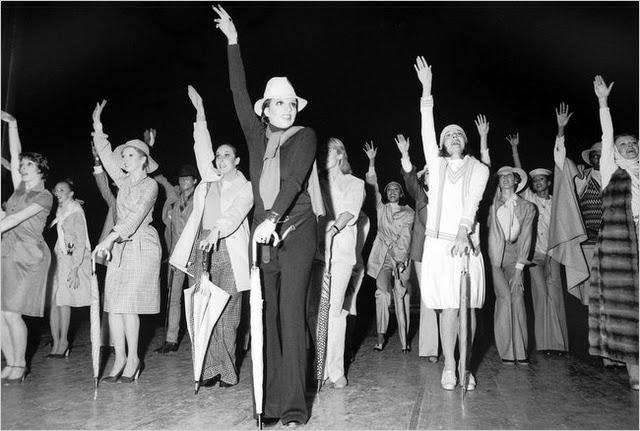
Liza Minnelli was among the participants when the Americans battled the French at the Palace of Versailles in 1973
CinéSalon: VERSAILLES ’73: AMERICAN RUNWAY REVOLUTION (Deborah Riley Draper, 2012)
French Institute Alliance Française, Florence Gould Hall
55 East 59th St. between Madison & Park Aves.
Tuesday, May 26, $13, 4:00 & 7:30
212-355-6100
www.fiaf.org
www.versailles73movie.com
 The French Institute Alliance Française’s CinéSalon series “Haute Couture on Film,” part of the larger “Fashion at FIAF” festival, comes to a fitting close with Deborah Riley Draper’s fab 2012 doc, Versailles ’73: American Runway Revolution. In June 1919, Germany and the Allies signed a peace treaty at the palace of Versailles in France, where Louis XIV and his family lived until they had to flee in 1789. Nearly two hundred years later, the historic Château de Versailles was in disrepair, and American fashion doyenne Eleanor Lambert decided to do something about it, creating a high-society fundraiser featuring presentations by five French designers and five American designers. Deborah Riley Draper captures all of the backstage intrigue and surprising results in her debut full-length film, speaking with many of those who were on hand for what turned out to be an eye-opening, game-changing haute couture competition. “There are moments in history that change the course of history,” says Versailles ’73 model Alva Chinn. “That was a moment in history that changed the course of fashion history.” Among those sharing their perspectives on the Battle of Versailles, which pitted Yves Saint Laurent, Christian Dior, Hubert de Givenchy, Pierre Cardin, and Emanuel Ungaro against Anne Klein, Stephen Burrows, Bill Blass, Oscar de la Renta, and Halston, are Met Costume Institute curator-in-charge Harold Koda, Chambre Syndicale de la Haute Couture president Didier Grumbach, American actor and Halston assistant Dennis Christopher (Breaking Away), Château de Versailles chief curator Beatrix Saule, public relations executive and former Lambert assistant John Tiffany, Versailles ’73 patron Simone Levitt, former Halston assistant and Bill Blass executive Tom Fallon, photographer Charles Tracy, designer Burrows, and, most fabulously, participating models China Machado, Barbara Jackson, Charleen Dash, Pat Cleveland, Karen Bjornsen, Norma Jean Darden, Nancy North, Marisa Berenson, Bethann Hardison, Carla LaMonte, and Billie Blair, who are utterly delightful as they detail the fascinating goings-on.
The competition not only shed new light on American design and runway presentation but on the style and verve of black models, who brought a new energy to the world of international fashion. Narrated by King of Vintage Cameron Silver, the film features photographs and silent color footage from the event; it’s too bad that better material isn’t available from this seminal moment in twentieth-century haute couture, when the underdog Americans brought their A-game once again to the French. Versailles ’73: American Runway Revolution is being shown May 26 at 4:00 & 7:30; both screenings will be followed by a wine reception, and Macy’s fashion director Nicole Fischelis will introduce the later show.
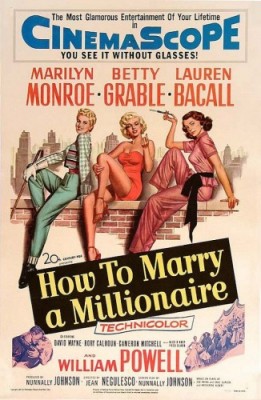
 Fox’s first CinemaScope romantic comedy, How to Marry a Millionaire, is not exactly a feminist’s dream, as a trio of gorgeous blonde models concoct a dubious plan to snare rich husbands in très chic 1950s Manhattan. Mastermind Schatze Page (Lauren Bacall), blind-as-a-bat Pola Debevoise (Marilyn Monroe), and far-from-genius Loco Dempsey (Betty Grable) move into a luxury Manhattan high-rise on Sutton Place when the previous tenant, Freddie Denmark (David Wayne), has to suddenly disappear because of tax problems. The three women are going for the gold, so Schatze refuses the constant attention of Tom Brookman (Cameron Mitchell), a man she thinks is a “gas pump jockey” but is actually one of the richest men in the city. Instead, she soon drapes herself all over aging widower and Texas cattleman J. D. Hanley (William Powell), while Loco goes away with married businessman Waldo Brewster (Fred Clark) and Pola takes up with mysterious oil baron J. Stewart Merrill (Alex D’Arcy). But no one ends up with who they brought to the dance in this outdated, old-fashioned, often annoying, yet still fun farce.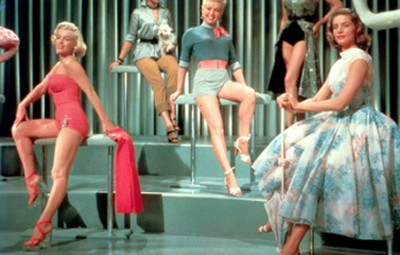

 “We’ll have as much fun as we can,” Robert de la Chesnaye (Marcel Dalio) says in Jean Renoir’s 1939 comic masterpiece, the madcap farce The Rules of the Game. And oh, what fun it is. Renoir, the son of Impressionist painter Pierre-Auguste Renoir, skewers love and lust among France’s idle rich on the eve of WWII, the haute bourgeoisie fiddling in their own self-defeating way while their country is about to burn. Banned by the government for being “too demoralizing,” The Rules of the Game follows a group of men and women, both servants and masters, as they jump from bed to bed, sometimes in full view of their spouse. It’s 1939, but even with war on the horizon, a fanciful coterie of friends and acquaintances have gathered for a weekend at Château de la Colinière, the country estate owned by Robert, who is married to Christine (Nora Grégor) but has been fooling around with Geneviève de Marras (Mila Parély). Christine, meanwhile, is being wooed by aviator André Jurieux (Roland Toutain), who has just flown solo across the Atlantic, and the dapper Monsieur de St. Aubin (Pierre Nay). Newly hired domestic Marceau (Julien Carette) has the hots for Christine’s maid, Lisette (Paulette Dubost), whose extremely jealous husband, Edouard Schumacher (Gaston Modot), is Robert’s game warden, prowling the grounds with a rifle he is ready to use. And in the middle of it all is Octave (Renoir), a bear of man who is friends with André and Christine and a former lover of Lisette’s. Borrowing elements from Alfred de Musset’s Les caprices de Marianne and Pierre-Augustin Caron de Beaumarchais’s Le mariage de Figaro, Renoir depicts French society as a bunch of silly, selfish fools, and even though in the credits, over delightful music by Mozart, he calls it “A Dramatic Fantasy” that “does not claim to be a study of manners,” he later referred to it as “an exact description of the bourgeoisie of our time.” Its truthfulness is what helped make the film a critical and popular failure upon its initial release, leading Renoir to cut nearly a half hour in a desperate attempt to save it.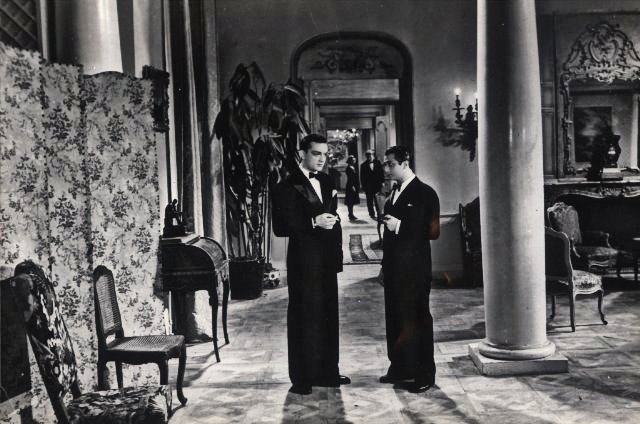

 Back in October, a