Tag Archives: film forum

THE CONFORMIST

Jean-Paul Trintignant tries to find his place in the world in Bernardo Bertolucci’s lush masterpiece, The Conformist

THE CONFORMIST (Bernardo Bertolucci, 1970)
Film Forum
209 West Houston St.
January 6-19
212-727-8110
www.filmforum.org

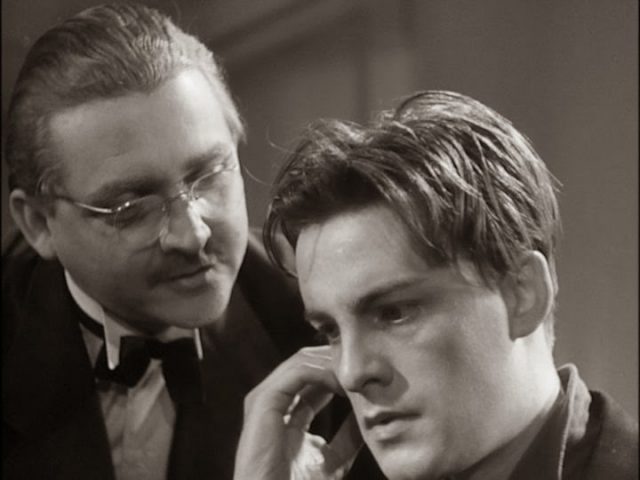
Based on the novel by Alberto Moravia, Bernardo Bertolucci’s gorgeous masterpiece, The Conformist, is a political thriller about paranoia, pedophilia, and trying to find one’s place in a changing world, and you can experience it in all its glory in a 4K digital restoration at Film Forum. Jean-Louis Trintignant (And God Created Woman, Z, My Night at Maud’s) stars as Marcello Clerici, a troubled man who suffered childhood traumas and is now attempting to join the fascist secret police. To prove his dedication to the movement, he is ordered to assassinate one of his former professors, the radical Luca Quadri (Enzo Tarascio), who is living in France. He falls for Quadri’s much younger wife, Anna (Dominique Sanda), who takes an intriguing liking to Clerici’s wife, Giulia (Stefania Sandrelli), while Manganiello (Gastone Moschin) keeps a close watch on him, making sure he will carry out his assignment.

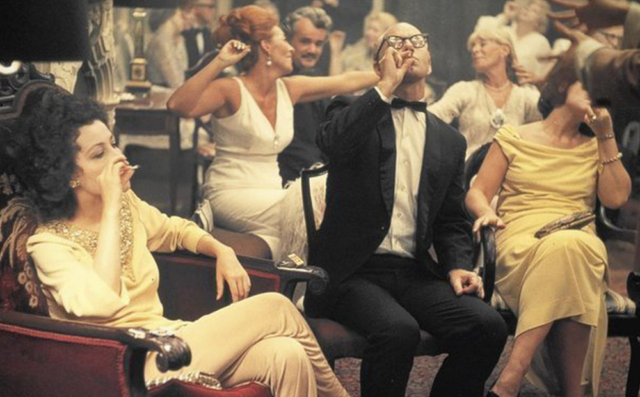
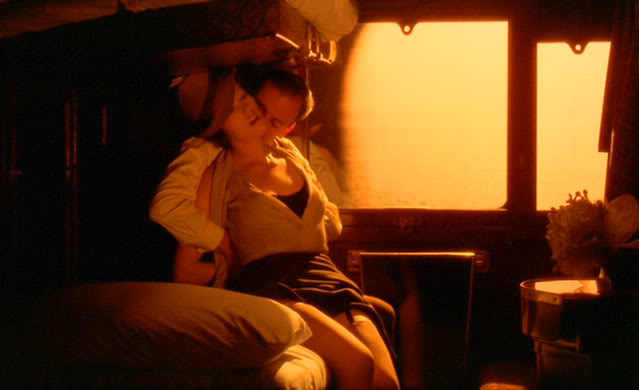
The Conformist, made just after The Spider’s Stragagem and followed by Last Tango in Paris, captures one man’s desperate need to belong, to become a part of Mussolini’s fascist society and feel normal at the expense of his real inner feelings and beliefs, not unlike the indoctrination too many people get sucked into today via online hate groups. An atheist, he goes to church to confess because Giulia demands it. A bureaucrat, he is not a cold-blooded killer, but he will murder a part of his past in order to be accepted by the fascists (as well as Bertolucci’s own past, as he makes a sly reference to his former mentor, Jean-Luc Godard, by using the French auteur’s phone number and address for Quadri’s). Production designer Ferdinando Scarfiotti and cinematographer Vittorio Storaro bathe the film in lush Art Deco colors as Bertolucci moves the story, told in flashbacks, through a series of set pieces that include an erotic dance by Anna and Giulia, a Kafkaesque visit to a government ministry, and a stunning use of black and white and light and shadow as Marcello and Giulia discuss their impending marriage. The Conformist is a multilayered psychological examination of a complex figure living in complex times, as much about the 1930s as the 1970s, as the youth of the Western world sought personal, political, and sexual freedom.

PARIS, TEXAS

PARIS, TEXAS

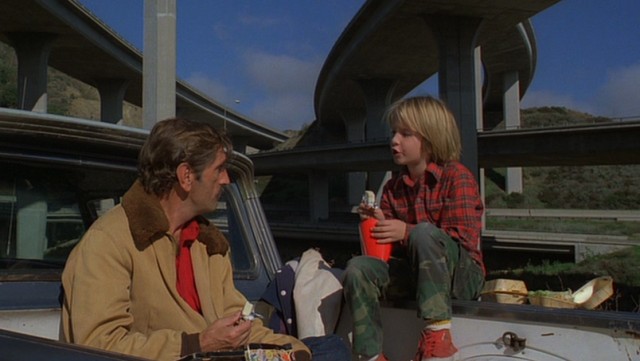
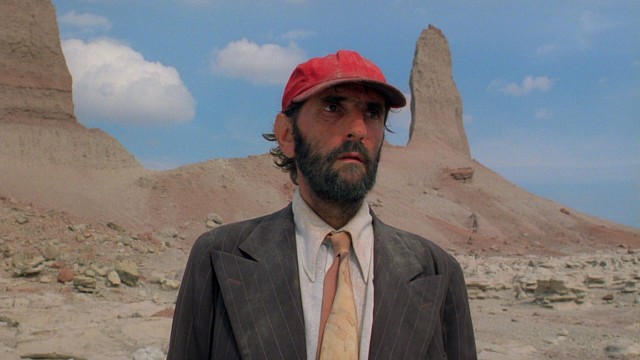
Harry Dean Stanton gives a staggering performance as a lost soul in Paris, Texas

PARIS, TEXAS (Wim Wenders, 1984)
Film Forum
209 West Houston St.
November 25 – December 1
212-727-8110
filmforum.org

Winner of both the Palme d’Or and the Critics Prize at the 1984 Cannes Film Festival, Wim Wenders’s Paris, Texas is a stirring and provocative road movie about the dissolution of the American family and the death of the American dream. Written by Sam Shepard and adapted by L. M. Kit Carson, the two-and-a-half-hour film opens with a haggard man (Harry Dean Stanton) wandering through a vast, deserted landscape. A close-up of him in his red hat, seen against blue skies and white clouds, evokes the American flag. (Later shots show him looking up at a flag flapping in the breeze, as well as a graffiti depiction of the Statue of Liberty.) After he collapses in a bar in the middle of nowhere, he is soon discovered to be Travis Henderson, a husband and father who has been missing for four years. His brother, Walt (Dean Stockwell), a successful L.A. billboard designer, comes to take him home, but Travis, remaining silent, keeps walking away. He eventually reveals that he is trying to get to Paris, Texas, where he has purchased a plot of land in the desert, but he avoids discussing his past and why he walked out on his wife, Jane (Nastassja Kinski), and son, Hunter (Hunter Carson, the son of L. M. Kit Carson and Karen Black), who is being raised by Walt and his wife, Anne (Aurore Clément). An odd man who is afraid of flying, has a penchant for arranging shoes, and falls asleep at key moments, Travis sets out with Hunter to find Jane and make something out of his lost life.

PARIS, TEXAS

Travis (Harry Dean Stanton) and Hunter (Hunter Carson) bond while searching for Jane in Wim Wenders road movie

Longtime character actor Stanton (Repo Man, Wise Blood) is brilliant as Travis, his long, craggy face and sad, puppy-dog eyes conveying his troubled soul and buried emotions, his slow, careful gait awash in loneliness and desperation. The scenes between Travis and Jane are a master class in acting and storytelling; Stanton and Kinski (Tess, Cat People) will break your heart over and over again as they face the hardest of truths. Wenders and regular cinematographer Robby Müller use a one-way mirror to absolutely stunning effect in these scenes about what is hidden and what is revealed in a relationship. Wenders had previously made the Road Movie Trilogy of Alice in the Cities, The Wrong Move, and Kings of the Road, which also dealt with difficult family issues, but Paris, Texas takes things to another level. Ry Cooder’s gorgeous slide-guitar soundtrack is like a requiem for the American dream, now a wasteland of emptiness. (Cooder would later make Buena Vista Social Club with Wenders. Another interesting connection is that Wenders’s assistant director was Allison Anders, who would go on to write and direct the indie hit Gas Food Lodging.) A uniquely told family drama, Paris, Texas is rich with deft touches and subtle details, all encapsulated in the final shot. (Don’t miss what it says on that highway billboard.)

MILOŠ FORMAN 90

MILOŠ FORMAN 90
Film Forum
209 West Houston St.
September 9-22
212-727-8110
filmforum.org

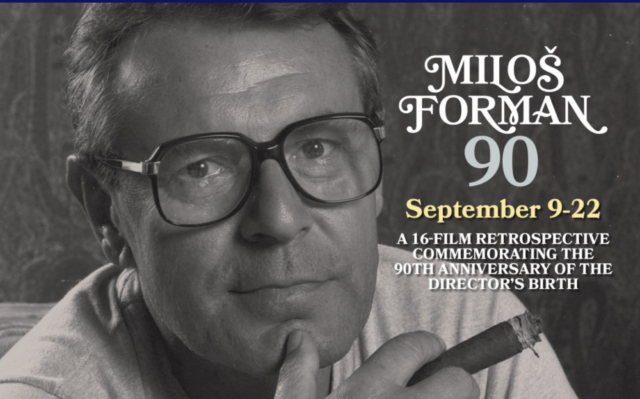
Upon the death of master Czech filmmaker Miloš Forman in 2018 at the age of eighty-six, film curator and producer Irena Kovarova wrote in Czech Film magazine, “When Miloš Forman was a young boy, he and his parents dressed up in their Sunday best and headed over to the cinema in Čáslav for the future filmmaker’s first moviegoing experience. They took their seats and the opera Bartered Bride began on screen — as a silent film. In Forman’s telling of this story, he would always pause when delivering the paradox of this moment. Then he would continue, revealing that to his great delight, the audience, knowing the opera by heart, began to sing along. From that moment on, cinema was forever fixed in his mind as a communal experience. Miloš Forman was a remarkable storyteller. For the screen and in person. You’d hear him tell the same stories from his career on many occasions, but you’d never see him bored with his own words. They were perfectly crafted and he was incredibly generous with his audience. He knew the story worked and he was there to bring his listeners joy with his delivery, which in turn warmed his heart. He was a man larger than life: his baritone voice strong, and his r’s rolled and resounding. One believed when in his presence that his first love was for people, and he made sure that everyone around him could feel it.”

Miloš Forman celebration at Film Forum takes off with Taking Off

Kovarova is serving as the consultant on the Film Forum series “Miloš Forman 90,” celebrating the ninetieth anniversary of the director’s birth in Caslav. The two-week festival consists of all twelve of his feature films, from 1964’s Black Peter to 2006’s Goya’s Ghosts, in addition to several documentaries (Czechoslovakia, 1967) and Alfréd Radok’s 1956 Old Man Motor Car, in which Forman makes a brief appearance. Radok was a major influence on Forman; the two went on to work together at the multimedia theater company Laterna Magika.

The series boasts such beloved classics as One Flew Over the Cuckoo’s Nest, Ragtime, and Amadeus in addition to Man on the Moon, Hair, and Valmont. Kovarova will introduce the September 15 showing of Audition, the September 17 screenings of Old Man Motor Car The Firemen’s Ball, and the September 20 screening of Věra Chytilová’s 1982 documentary, Chytilová versus Forman. Producer Michael Hausman will introduce the 1968 counterculture favorite Taking Off (starring Buck Henry!) on September 9 at 8:30; screenwriter Michael Weller will introduce Ragtime on September 11 at 3:40; screenwriters Scott Alexander and Larry Karaszewski will introduce the 6:00 screening of Man on the Moon on September 12 and, on the same day, participate in a Q&A following the 8:30 screening of The People vs. Larry Flynt; producer Paul Zaentz will introduce the September 16 screening of Amadeus and the September 19 screening of Goya’s Ghosts.

MY OLD SCHOOL

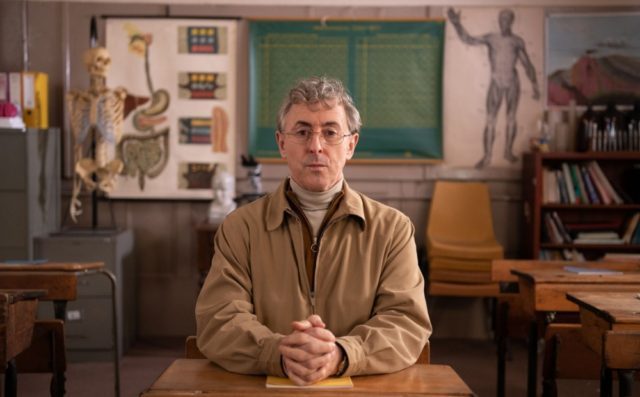
Alan Cumming stars as Scottish hoaxer Brandon Lee in My Old School

MY OLD SCHOOL (Jono McLeod, 2022)
Film Forum
209 West Houston St.
Opens Friday, July 22
212-727-8110
filmforum.org

“To rewind your life and be someone different — what would possess someone to do that?” Nicola asks at the beginning of Jono McLeod’s brilliantly eccentric hybrid documentary, My Old School.

Sam adds, “Anything’s possible here. I’m telling you, this guy is a charmer. He’s not what you think he is; he never was.”

In 1993, a new student named Brandon Lee entered prestigious Bearsden Academy in Scotland. Although he appeared to be significantly older than the rest of his classmates, some of whom initially assumed he was a teacher, he continued going to school and even starred as marine lieutenant Joseph Cable in Bearsden’s production of South Pacific. But it turned out that Brandon was not who he said he was, leading to a major scandal.

Jono McLeod uses animation flashbacks to tell strange tale in hybrid documentary

In 1995, it was announced that Scots actor Alan Cumming would portray Brandon in a movie, but it never got made. Instead, nearly thirty years later, Cumming is finally playing the man who eventually got caught pulling off a hoax of epic proportions. But Cumming doesn’t speak a word in the film; Brandon agreed to tell his story to McLeod, who was one of his Bearsden classmates, but he refused to appear on camera. So, sitting in a school desk, Cumming expertly lip syncs Brandon’s extremely strange tale of ambition, deception, and just plain weirdness.

It’s a bravura performance, reminiscent of Deirdre O’Connell’s Tony-winning role in Dana H., in which she portrayed playwright Lucas Hnath’s mother, sitting in a chair as she lip synced the story of an abduction from an interview Hnath conducted with the real Dana. Cumming, a Tony-winning stage actor himself (Cabaret, Macbeth), uses small gestures and movements and his alluring eyes to convey Brandon’s state of mind without ever getting out of his seat; George Geddes’s camera is as curious as we are, exploring his face and body in extreme close-ups as if looking for cracks in his armor.

In his debut feature film, McLeod, a former reporter and current television documentarian, uses multiple ways to share the bizarre chronicle: In addition to interviewing the main subject, McLeod speaks with more than a dozen of Brandon’s classmates, who also sit at school desks as they relate what happened from beginning to end. They do so with both humor and wonder, laughing and smiling as they describe the details of Brandon’s subterfuge; McLeod gets several teachers to go on the record as well.

McLeod presents their testimonials in playful animation (courtesy Rory Lowe), inspired by MTV’s Daria, interspersing real news reports and other archival footage, all seamlessly edited with quirky delight by Berny McGurk. Some of the cartoon characters are voiced by actors, including Clare Grogan as Mrs. Ogg, Joe McFadden as Mr. MacLeod, Juliet Cadzow as Brandon’s grandmother, Michele Gallagher as Mrs. Thomson, Camilla Kerslake as Brandon’s opera-diva mother, Gary Lamont as Mr. MacKinnon, Carly McKinnon as science teacher Miss MacKichan, Brian O’Sullivan as Mr. Gunn, Dawn Steele as Mrs. Nolan, Wam Siluka Jr. as Stefen (who lovingly admits how Brandon changed his life), and, most notably, the one and only Lulu (To Sir, with Love) as mean Mrs. Holmes. Lulu also sings the cover version of Steely Dan’s “My Old School” over the closing credits, during which McLeod pairs childhood photos of the students and teachers with their animated versions.

It’s a tour de force of storytelling, and what a story it tells. The less you know going in, the better, but regardless, it’s one hundred minutes of utter fun and amazement, particularly potent in 2022, when personal identity is at the forefront of so much discussion. My Old School opens July 22 at Film Forum; there will be Q&As with McLeod after the 7:50 screenings on Friday and Saturday night.

“1962 . . . 1963 . . . 1964”

“1962 . . . 1963 . . . 1964”
Film Forum
209 West Houston St.
July 22 – August 11
212-727-8110
filmforum.org

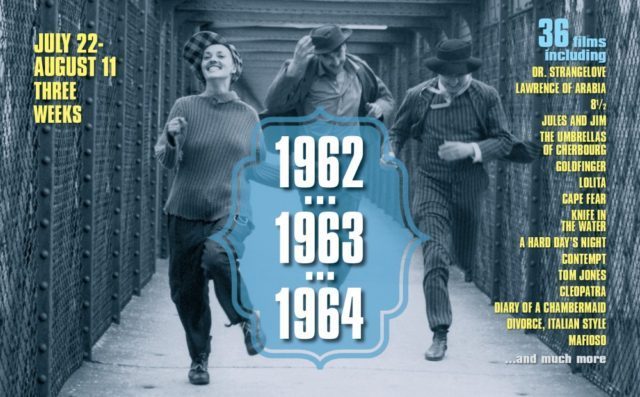
The years 1962, 1963, and 1964 were like no others in the history of America, and that evolving zeitgeist was captured on celluloid as the Hollywood studio system faded away. Film Forum is celebrating those three years with “1962 . . . 1963 . . . 1964,” a three-week series consisting of thirty-five cinematic works that, together, form a fascinating time capsule of the era. There are films by François Truffaut, David Lean, Stanley Kubrick, John Ford, Agnès Varda, Vittorio De Sica, Federico Fellini, Francis Ford Coppola, Alfred Hitchcock, Luis Buñuel, Sergio Leone, and many others, in multiple genres, with superstars ranging from Clint Eastwood, Marcello Mastroianni, and Sean Connery to Peter Sellers, Paul Newman, and the Fab Four.

The July 22 screening of Lolita will have a special prerecorded introduction from film critic and historian Stephen Farber. Below are select reviews from the festival, which is being held in conjunction with the Jewish Museum exhibition “New York: 1962-1964” and Film at Lincoln Center’s “New York, 1962-1964: Underground and Experimental Cinema.”
KNIFE IN THE WATER

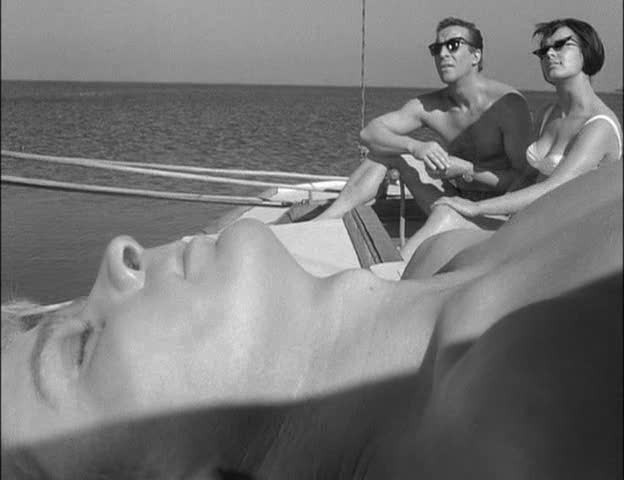
A young hitchhiker (Zygmunt Malanowicz) throws a kink in a couple’s sailing plans in Roman Polanski’s Knife in the Water

KNIFE IN THE WATER (NÓŻ W WODZIE) (Roman Polanski, 1962)
Saturday, July 23, 5:10, and Monday, July 25, 6:20
filmforum.org

“Even discounting wind, weather, and the natural hazards of filming afloat, Knife in the Water was a devilishly difficult picture to make,” immensely talented and even more controversial Roman Polanski wrote in his 1984 autobiography, Roman by Polanski. That is likely to have been a blessing in disguise, upping the ante in the Polish filmmaker’s debut feature film, a tense three-character thriller set primarily on a sailboat, filmed on location. Upper-middle-class couple Andrzej (theater veteran Leon Niemczyk) and Krystyna (nonprofessional actor Jolanta Umecka) are on their way to their sailboat at the marina when a young hitchhiker (drama school grad Zygmunt Malanowicz) forces them to pull over on an otherwise empty road. Andrzej and the unnamed man almost immediately get involved in a physical and psychological pissing contest, with Andrzej soon inviting him to join them on their sojourn, practically daring the hitchhiker to make a move on his wife.

Once on the boat, the two men continue their battle of wills, which becomes more dangerous once the young man reveals his rather threatening knife, which he handles like a pro. Lodz Film School graduate Polanski, who collaborated on the final screenplay with Jerzy Skolimowski (The Shout, Moonlighting) after initially working with Jakub Goldberg, envelops the black-and-white Knife in the Water — the first Polish film to be nominated for a Best Foreign Language Film Oscar and winner of the Critics’ FIPRESCI Prize at the 1962 Venice Film Festival — in a highly volatile, claustrophobic energy, creating gorgeous scenes intimately photographed by cinematographer Jerzy Lipman, from Andrzej and Krystyna in their small car to all three trying to find space on the boat amid the vast sea and a changing wind. Many of the shots are highlighted by deep focus in which one character is shown in close-up in the foreground with the others in the background, alerting the viewer to various potential conflicts — sexual, economic, class- and gender-based — all underscored by Krzysztof T. Komeda’s intoxicating jazz score featuring saxophonist Bernt Rosengren.
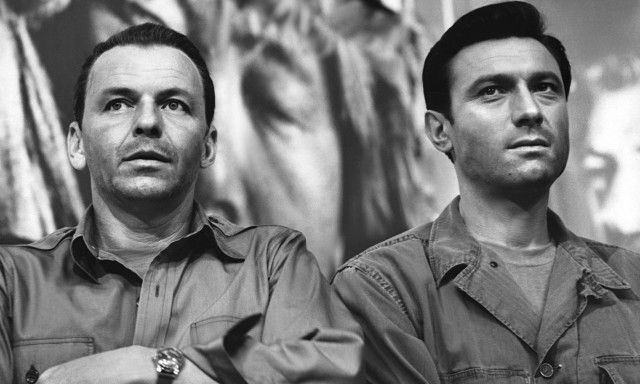
THE MANCHURIAN CANDIDATE

Bennett Marco (Frank Sinatra) and Raymond Shaw (Laurence Harvey) need to clear their heads in The Manchurian Candidate

THE MANCHURIAN CANDIDATE (John Frankenheimer, 1962)
Tuesday, July 26, 5:30, and Wednesday, August 10, 2:35
filmforum.org

John Frankenheimer’s unconventional Cold War conspiracy noir, The Manchurian Candidate, is, quite simply, one of the greatest political thrillers ever made. Ten years after fighting in Korea, Maj. Bennett Marco (Frank Sinatra) remains in the military, working in intelligence. He is haunted by terrifying nightmares in which his unit, led by Sgt. Raymond Shaw (Laurence Harvey), is at a woman’s gardening club lecture that turns into a Communist brainwashing session orchestrated by the menacing Dr. Yen Lo (Khigh Dheigh) of the Pavlov Institute. Meanwhile, the decorated but clearly tortured Shaw has to deal with his power-hungry mother, Mrs. Iselin (Angela Lansbury), who is manipulating everyone she can to ensure that her second husband, the McCarthy-like Sen. John Yerkes Iselin (James Gregory), becomes the Republican vice presidential nominee. As Marco gets to the bottom of the mystery, the clock keeps ticking toward an inevitable crisis with lives on the line and the very future of democracy at stake.

Written by George Axelrod based on the book by Richard Condon (Winter Kills, Prizzi’s Honor), The Manchurian Candidate is a tense, gripping work that feels oddly prescient when seen today. Frankenheimer (Birdman of Alcatraz, Seven Days in May, Seconds) keeps the suspense at Hitchockian levels, particularly as the finale nears, while throwing in doses of dark satire and complex romance. Shaw tries to reconnect with his lost love, Jocelyn Jordan (Leslie Parrish), daughter of erudite Democratic Sen. Thomas Jordan (John McGiver), while Marco is intrigued by Eugenie Rose Cheyney (Janet Leigh); their meeting scene in between cars on a train is an offbeat joy, thought to be impacted by Leigh’s real-life breakup with Tony Curtis that very day. Sinatra, whose previous films included From Here to Eternity and Suddenly — he played a presidential assassin in the latter — once again gets to show off his strong acting chops, especially in a long, uncut scene with Harvey (Room at the Top, Darling) and a fierce fight with Harvey’s servant, Chunjin (Ocean Eleven’s Henry Silva).

Oscar nominee Lansbury relishes her role as Shaw’s villainous mother (in reality, she was only three years older than he was), manipulating her blowhard husband like a puppet. The dramatic music is by composer David Amram (Pull My Daisy), the moody cinematography by Lionel Lindon (All Fall Down, I Want to Live!), with narration by Paul Frees, who went on to voice such cartoon characters as Burgermeister Meisterburger in Santa Claus Is Comin’ to Town and Santa Claus in Frosty the Snowman, in addition to many others. Among the New York City landmarks featured in the film are Central Park and the old Madison Square Garden. And you’ll never look at the Queen of Diamonds or play solitaire quite the same way again. The film’s cultlike status was enhanced because it was out of circulation for a quarter of a century until Sinatra, claiming he hadn’t known that he had owned the the rights since 1972, rereleased it in 1988.
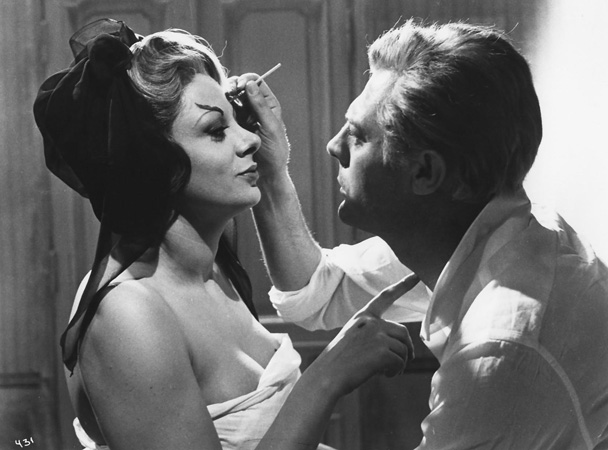
Guido Anselmi (Marcello Mastroianni) is in a bit of a personal and professional crisis in Fellini masterpiece

8½ (Federico Fellini, 1963)
Friday, July 29, 6:00, and Monday, August 1, 8:00
filmforum.org

“Your eminence, I am not happy,” Guido (Marcello Mastroianni) tells the cardinal (Tito Masini) halfway through Federico Fellini’s self-reflexive masterpiece 8½. “Why should you be happy?” the cardinal responds. “That is not your task in life. Who said we were put on this earth to be happy?” Well, film makes people happy, and it’s because of works such as 8½. Fellini’s Oscar-winning eighth-and-a-half movie is a sensational self-examination of film and fame, a hysterically funny, surreal story of a famous Italian auteur who finds his life and career in need of a major overhaul. Mastroianni is magnificent as Guido Anselmi, a man in a personal and professional crisis who has gone to a healing spa for some much-needed relaxation, but he doesn’t get any as he is continually harassed by producers, screenwriters, would-be actresses, and various other oddball hangers-on.

He also has to deal both with his mistress, Carla (Sandra Milo), who is quite a handful, as well as his wife, Luisa (Anouk Aimée), who is losing patience with his lies. Trapped in a strange world of his own creation, Guido has dreams where he flies over claustrophobic traffic and makes out with his dead mother, and his next film involves a spaceship; it doesn’t take a psychiatrist to figure out the many inner demons that are haunting him. Marvelously shot by Gianni Di Venanzo in black-and-white, scored with a vast sense of humor by Nino Rota, and featuring some of the most amazing hats ever seen on film — costume designer Piero Gherardi won an Oscar for all the great dresses and chapeaux — is an endlessly fascinating and wildly entertaining exploration of the creative process and the bizarre world of filmmaking itself.
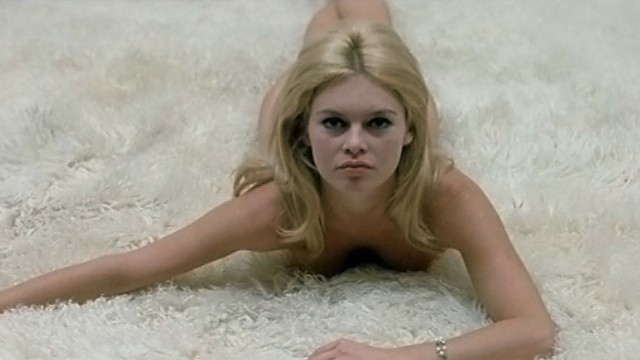
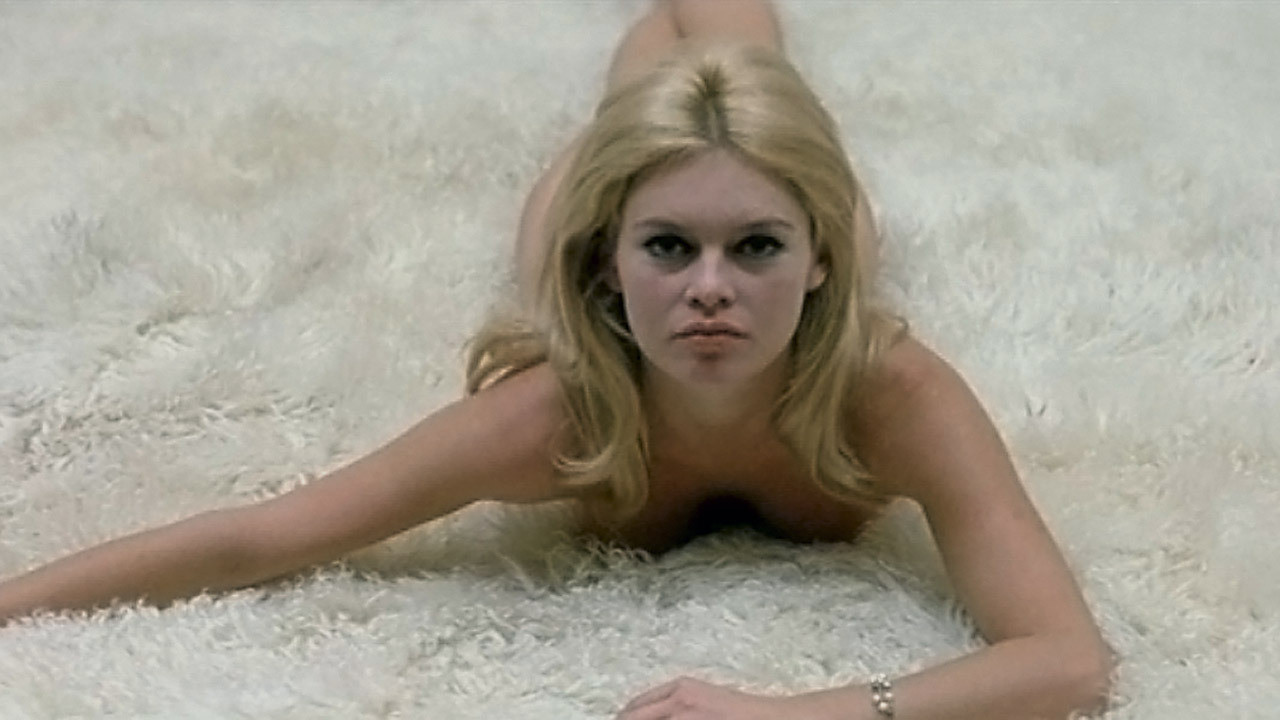
Brigitte Bardot shows off both her acting talent and beautiful body in Jean-Luc Godard’s Contempt

CONTEMPT (LE MEPRIS) (Jean-Luc Godard, 1963)
Saturday, July 30, 8:00, and Tuesday, August 9, 8:15
filmforum.org

French auteur Jean-Luc Godard doesn’t hold back any of his contempt for Hollywood cinema in his multilayered masterpiece Contempt. Loosely based on Alberto Moravia’s Il Disprezzo, Contempt stars Michel Piccoli as Paul Javal, a French screenwriter called to Rome’s famed Cinecittà studios by American producer Jeremy Prokosch (Jack Palance ) to perform rewrites on Austrian director Fritz Lang’s (played by Lang himself) adaptation of The Odyssey by ancient Greek writer Homer. Paul brings along his young wife, the beautiful Camille (Brigitte Bardot), whom Prokosch takes an immediate liking to. With so many languages being spoken, Prokosch’s assistant, Francesca Vanini (Giorgia Moll), serves as translator, but getting the various characters to communicate with one another and say precisely what is on their mind grows more and more difficult as the story continues and Camille and Paul’s love starts to crumble. Contempt is a spectacularly made film, bathed in deep red, white, and blue, as Godard and cinematographer Raoul Coutard poke fun at the American way of life. (Both Godard and Coutard appear in the film, the former as Lang’s assistant director, the latter as Lang’s cameraman — as well as the cameraman who aims the lens right at the viewer at the start of the film.)

Bardot is sensational in one of her best roles, whether teasing Paul at a marvelously filmed sequence in their Rome apartment (watch for him opening and stepping through a door without any glass), lying naked on the bed, asking Paul what he thinks of various parts of her body (while Coutard changes the filter from a lurid red to a lush blue), or pouting when it appears that Paul is willing to pimp her out in order to get the writing job. Palance is a hoot as the big-time producer, regularly reading fortune-cookie-like quotes from an extremely little red book he carries around that couldn’t possibly hold so many words. And Lang, who left Germany in the mid-1930s for a career in Hollywood, has a ball playing a version of himself, an experienced veteran willing to put up with Prokosch’s crazy demands. Vastly entertaining from start to finish, Contempt is filled with a slew of inside jokes about the filmmaking industry and even Godard’s personal and professional life, along with some of the French director’s expected assortment of political statements and a string of small flourishes that are easy to miss but add to the immense fun, all set to a gorgeous romantic score by Georges Delerue.
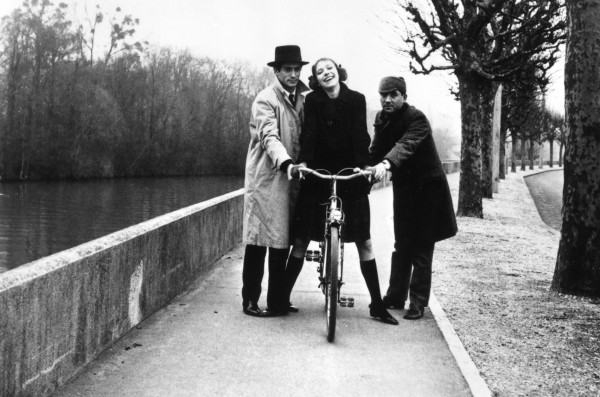
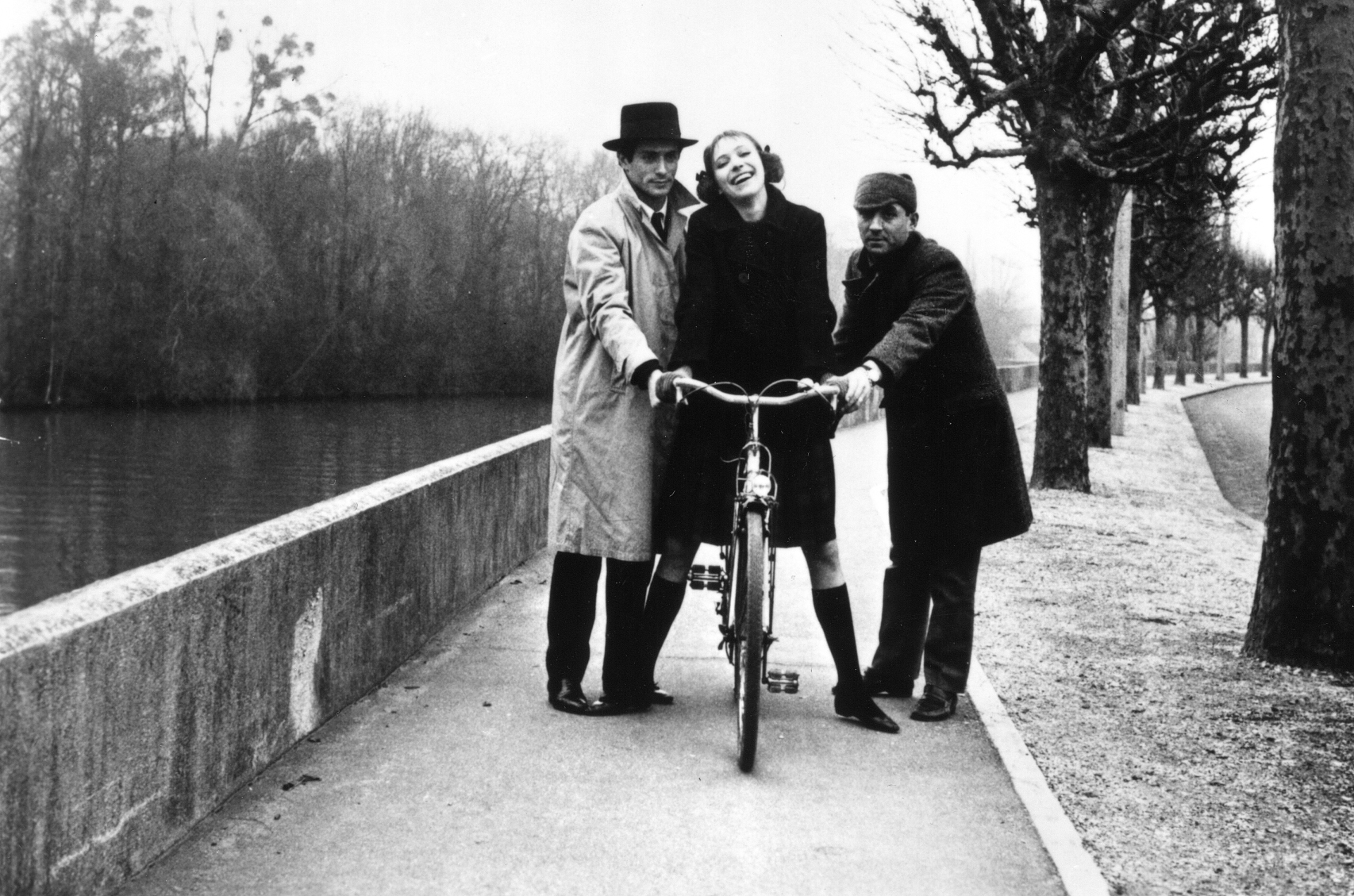
Jean-Luc Godard’s Band of Outsiders is a different kind of heist movie

BANDE À PART (BAND OF OUTSIDERS) (Jean-Luc Godard, 1964)
Tuesday, August 2, 8:10, Wednesday, August 3, 12:30, and Tuesday, August 9, 6:10
filmforum.org

When a pair of disaffected Parisians, Arthur (Claude Brasseur) and Franz (Sami Frey), meet an adorable young woman, Odile (Anna Karina), in English class, they decide to team up and steal a ton of money from a man living in Odile’s aunt’s house. As they meander through the streets of cinematographer Raoul Coutard’s black-and-white Paris, they talk about English and wealth, dance in a cafe while director Jean-Luc Godard breaks in with voice-over narration about their character, run through the Louvre in record time, and pause for a near-moment of pure silence. Godard throws in plenty of commentary on politics, the cinema, and the bourgeoisie in the midst of some genuinely funny scenes. One of Godard’s most accessible films, Band of Outsiders is no ordinary heist movie; based on Dolores Hitchens’s novel Fool’s Gold, it is the story of three offbeat individuals who just happen to decide to attempt a robbery while living their strange existence, as if they were outside from the rest of the world. The trio of ne’er-do-wells might remind Jim Jarmusch fans of the main threesome from Stranger Than Paradise (1984), except Godard’s characters are more aggressively persistent.
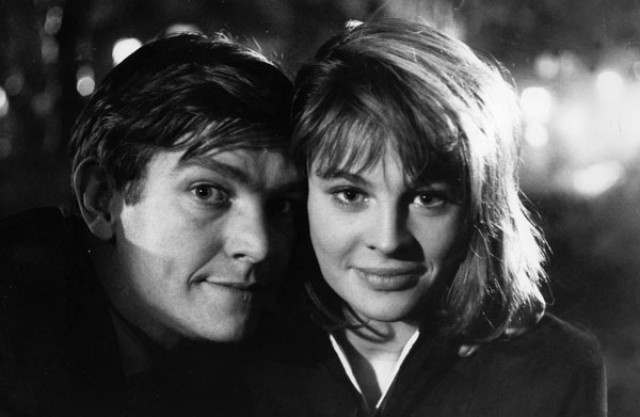
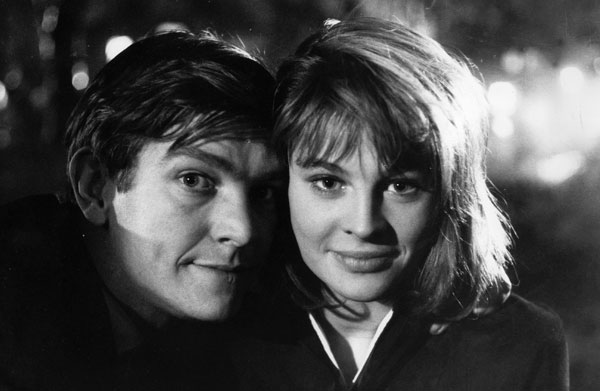
Tom Courtenay and Julie Christie get close in John Schlesinger’s Billy Liar

BILLY LIAR (John Schlesinger, 1963)
Wednesday, August 3, 2:40 & 6:00
filmforum.org

Based on the novel by Keith Waterhouse (which he also adapted into a play with Willis Hall and which later became a musical), John Schlesinger’s Billy Liar is a prime example of the British New Wave of the 1950s and 1960s, which features work by such directors as Lindsay Anderson, Joseph Losey, Ken Russell, Nicolas Roeg, and Karel Reisz. Tom Courtenay stars as William Fisher, a ne’er-do-well ladies’ man who drudges away in a funeral home and dates (and lies to) multiple women, all the while daydreaming of being the president of the fictional country of Ambrosia. Billy lives in his own fantasy world where he can suddenly fire machine guns at people who bother him and be cheered by adoring crowds as he leads a marching band. Reminiscent of the 1947 American comedy The Secret Life of Walter Mitty, in which Danny Kaye dreams of other lives to lift him out of the doldrums, Billy Liar is also rooted in the reality of post-WWII England, represented by Billy’s father (Wilfred Pickles), who thinks his son is a no-good lazy bum. Shot in black-and-white by Denys Coop (This Sporting Life, Bunny Lake Is Missing), the film glows every time Julie Christie appears playing Liz, a modern woman who takes a rather fond liking to Billy. The film made Christie a star; Schlesinger next cast her in Darling, for which she won the Oscar for Best Actress.
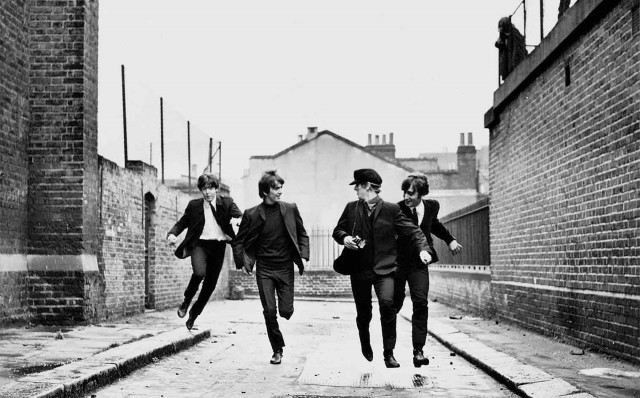
A HARD DAY’S NIGHT

The Beatles’ A Hard Day’s Night gets back to Film Forum for 1962-63-64 series

A HARD DAY’S NIGHT (Richard Lester, 1964)
Friday, August 5, 2:35 & 9:25, Saturday, August 6, 12:30 & 4:35
filmforum.org

The Beatles recently invaded America again with Peter Jackson’s three-part documentary Get Back, about the making of Let It Be. The Film Forum series takes us back to their debut movie, the deliriously funny anarchic comedy A Hard Day’s Night. Initially released on July 6, 1964, in the UK, AHDN turned out to be much more than just a promotional piece advertising the Fab Four and their music. Instead, it quickly became a huge critical and popular success, a highly influential work that presaged Monty Python and MTV while also honoring the Marx Brothers, Buster Keaton, Jacques Tati, and the French New Wave. Directed by Richard Lester, who had previously made the eleven-minute The Running Jumping & Standing Still Film with Peter Sellers and would go on to make A Funny Thing Happened on the Way to the Forum, Petulia, and The Three Musketeers, the madcap romp opens with the first chord of the title track as John Lennon, Paul McCartney, George Harrison, and Ringo Starr are running down a narrow street, being chased by rabid fans, but they’re coming toward the camera, welcoming viewers into their crazy world. (George’s fall was unscripted but left in the scene.) As the song blasts over the soundtrack, Lester introduces the major characters: the four moptops, who are clearly having a ball, led by John’s infectious smile, in addition to Paul’s “very clean” grandfather (Wilfrid Brambell, who played a dirty old man in the British series Steptoe and Son, the inspiration for Sanford and Son) and the band’s much-put-upon manager, Norm (Norman Rossington). Lester and cinematographer Gilbert Taylor (Dr. Strangelove or: How I Learned to Stop Worrying and Love the Bomb, Repulsion, Star Wars) also establish the pace and look of the film, a frantic black-and-white frolic shot in a cinema-vérité style that is like a mockumentary taking off from where François Truffaut’s 400 Blows ends.

The boys eventually make it onto a train, which is taking them back to their hometown of Liverpool, where they are scheduled to appear on a television show helmed by a hapless director (Victor Spinetti, who would star in Help as well) who essentially represents all those people who are dubious about the Beatles and the sea change going on in the music industry. Norm and road manager Shake (John Junkin) have the virtually impossible task of ensuring that John, Paul, George, and Ringo make it to the show on time, but there is no containing the energetic enthusiasm and contagious curiosity the quartet has for experiencing everything their success has to offer — while also sticking their tongues out at class structure, societal trends, and the culture of celebrity itself. Lester and Oscar-nominated screenwriter Alun Owen develop each individual Beatle’s unique character through press interviews, solo sojourns (the underappreciated Ringo goes off on a kind of vision quest; George is mistaken by a fashion fop for a model), and an endless stream of spoken and visual one-liners. (John sniffs a Coke bottle; a reporter asks George, “What do you call your hairstyle?” to which the Quiet One replies, “Arthur.”) Oh, the music is rather good too, featuring such songs as “I Should Have Known Better,” “All My Loving,” “If I Fell,” “Can’t Buy Me Love,” “I’m Happy Just to Dance with You,” “This Boy,” and “She Loves You.” The working name for the film was Beatlemania, but it was eventually changed to A Hard Day’s Night, based on a Ringo malapropism, forcing John and Paul to quickly write the title track. No mere exploitation flick, A Hard Day’s Night is one of the funniest, most influential films ever made, capturing a critical moment in pop-culture history and unleashing four extraordinary gentlemen on an unsuspecting world. Don’t you dare miss this glorious eighty-five-minute explosion of sheer, unadulterated joy.
MAI ZETTERLING: TORMENT

Torment

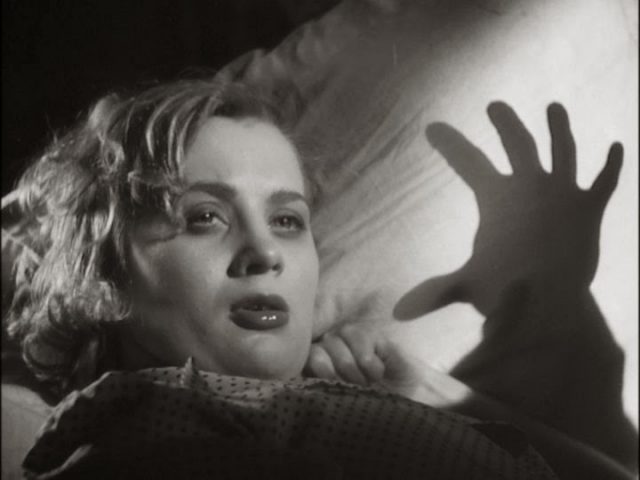
Tobacco-shop clerk Bertha Olsson (Mai Zetterling) is terrified of life in Alf Sjöberg’s Torment

TORMENT (FRENZY) (HETS) (Alf Sjöberg, 1944)
Film Forum
209 West Houston St.
Saturday, May 7, Monday, May 9, Friday, May 13, Tuesday, May 17
Series runs May 6-19
212-727-8110
filmforum.org

Film Forum pays tribute to Swedish actress, director, and novelist Mai Zetterling with a two-week, twenty-one-film retrospective featuring works directed by Basil Dearden, Nicolas Roeg, Ingmar Bergman, Alf Sjöberg, Christina Olofson, Ken Loach, and Zetterling, among others, ranging from 1944 to 1990. A passionate feminist, Zetterling studied at the National Theater in Sweden, became a star in England, had affairs with Herbert Lom and Tyrone Power, left Hollywood (avoiding the blacklist), and passed away in 1994 at the age of sixty-eight. “It feels like I’m a long way away from pretty much every norm there is,” she said.

One of the series highlights is Sjöberg’s intense 1944 expressionistic noir, Torment, which had its US premiere at the Museum of Modern Art in 1962. Although directed by Sjöberg, Torment, also known as Frenzy, was written by Bergman, who also served as assistant director and made his directing debut in the final scene, which Bergman added at the insistence of the producers when Sjöberg was not available. A kind of inversion of Josef von Sternberg’s The Blue Angel, the film is set in a boarding school where high school boys are preparing for their final exams and graduation. They are terrified of their sadistic Latin teacher, whom they call Caligula (Stig Järrel), a brutal man who wields a fascistic iron fist. He particularly has it out for Jan-Erik Widgren (Alf Kjellin), the son of wealthy parents (Olav Riégo and Märta Arbin) who think he should be doing better in school. One night Jan-Erik helps out a troubled woman in the street, tobacco-shop clerk Bertha Olsson (Zetterling), who is being mentally and physically tormented by an unnamed man who ends up being Caligula. The stakes get higher and the teacher becomes even harder on Jan-Erik when he finds out the young man is having an affair with the wayward woman. When tragedy strikes, Jan-Erik’s soul is in turmoil as lies, threats, and danger grow.

Torment

A sadistic teacher (Stig Järrel) torments a student (Alf Kjellin) in Ingmar Bergman–written Torment

The twenty-five-year-old Bergman was inspired to write his first produced film script by his experience in boarding school, which led to a public disagreement with the headmaster. In a public letter to the headmaster, Bergman explained, “I was a very lazy boy, and very scared because of my laziness, because I was involved with theater instead of school and because I hated having to be punctual, having to get up in the morning, do homework, sit still, having to carry maps, having break times, doing tests, taking oral examinations, or to put it plainly: I hated school as a principle, as a system and as an institution. And as such I have definitely not wanted to criticize my own school, but all schools.” Throughout his career, Bergman would take on institutions, including religion and marriage, but his defiance began with this hellish representation of education, which oppresses all the boys in some way, including Jan-Erik’s best friend, self-described misogynist Sandman (Stig Olin), and the geeky Pettersson (Jan Molander). While the headmaster (Olof Winnerstrand) knows how frightened the boys are of Caligula, he is willing to go only so far to protect them. The opening credits are shown over a dreamlike sequence of Jan-Erik and Bertha desperately holding on to each other, but Torment is so much more than a treacly melodrama, as if Sjöberg (Miss Julie, Ön) is setting us up for one film before switching gears into an ominous, haunting thriller.

Järrel, who played an evil, jealous teacher in his previous film, Hasse Ekman’s Flames in the Dark, is indeed scary as the devious, malicious Caligula, while adding more than a touch of sadness. Zetterling, in her breakthrough role — she would go on to star in such films as Dearden’s Frieda and Roeg’s The Witches and direct such feminist works as Loving Couples and The Girls — brings a touching vulnerability to Bertha, a young woman who can’t find happiness. It’s all anchored by Kjellin’s (Madame Bovary, Ship of Fools) central performance, so rife with emotion it evokes German silent cinema. Torment suffers from Hilding Rosenberg’s overreaching score, although it is usually offset by Martin Bodin’s cinematography, filled with lurching shadows and deep mystery. The film was produced by Victor Sjöström, the legendary director of The Phantom Carriage, The Divine Woman, The Wind, and so many others in addition to his work as an actor, starring as Professor Isak Borg in another Bergman masterpiece, 1957’s Wild Strawberries, and as the conductor in 1950’s To Joy.

“Mai Zetterling” includes such other films as Sidney Gilliat’s Only Two Can Play, Bergman’s Music in the Dark, Sjöberg’s Iris and the Lieutenant, Loach’s Hidden Agenda, and Gustaf Edgren’s Sunshine Follows Rain in addition to Zetterling’s own Loving Couples (her debut as a director), Night Games (based on her unfinished novel), We Have Many Names, The Moon Is a Green Cheese, several shorts, and other features, many in new restorations courtesy of the Swedish Film Institute. Cinema historian Jane Sloan will be at Film Forum for a Q&A following the 1:00 screening of The Girls on May 7, while avant-garde filmmaker and curator Vivian Ostrovsky will introduce the 6:10 showing of the film on May 8; in addition, actress Harriet Andersson and Kajsa Hedström of the SFI will record intros for special screenings.

HIT THE ROAD

Panah Panahi’s Hit the Road tells the story of a clandestine family journey

HIT THE ROAD (Panah Panahi, 2021)
Film Forum
209 West Houston St.
Opened Friday, April 22
212-727-8110
filmforum.org

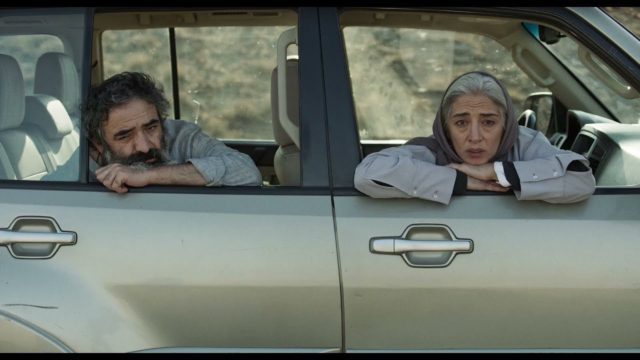
Panah Panahi’s debut feature, Hit the Road, is a gorgeously told tale about a family’s secret journey across the vast hinterlands of Iran. Writer-director Panahi lets the details filter out in dribs and drabs, like air whistling through a barely opened window on their drive down deserted paths through brown and gray mountainous, past arid landscapes toward lush green vistas with flowing rivers. Every shot is magisterial in scope, from the confines of their crowded car to the seemingly endless countryside that threatens danger as much as it offers freedom.

Fear hovers over the family as their trip continues, as they worry about being followed or that they can be discovered through a forbidden smartphone. Names are seldom used, except for their ailing rescue dog, Jessy; all the other characters are relatively anonymous, as if our knowing too much about them would increase the threat level. The father, Khosro (Hassan Majnooni), sits in the back, his itchy, broken left leg in a long cast; his ridiculously adorable and extremely smart six-year-old boy (Rayan Sarlak) is almost always by his side or on top of him, chattering away, understanding more about the world than six-year-old boys should. In the front, the concerned mother (Pantea Panahiha) anguishes over their every move while their grown son (Amin Simiar) drives on in virtual silence. They cheerily sing to old Iranian pop tunes on the radio while avoiding mentioning the specifics of their odyssey as they get closer to their destination.

“I think I’m losing it. What next?” the mother tells her husband, asking, “Do you ever think about the future?” He replies, “This is my future.”

They make several stops on the way, which cinematographer Amin Jafari often photographs from a far distance, with little or no camera movement, as if a landscape painting with people in the background has come to life. A handful of scenes last between three and six minutes without any cuts, especially later in the film, lending it a feeling of reality that transcends mere artifice. (The seamless editing is by Ashkan Mehri and Amir Etminan.) A long talk between the father and the older son is beautifully touching, as is a fantastical moment between Khosro and the younger child that evokes a previous mention of Stanley Kubrick’s 2001: A Space Odyssey. The temporary break from the tense reality was signaled from the very beginning, when the boy touches piano keys drawn on his father’s cast and we can hear the music, which also introduces us to Payman Yazdanian’s lovely, evocative score.

Beautiful landscapes appear throughout Panah Panahi’s Hit the Road

Panahi is the son of Iranian auteur Jafar Panahi (Offside This Is Not a Film), who apprenticed under Iranian master Abbas Kiarostami (Close-Up, Taste of Cherry), both of whom have made films that take place primarily in cars, including his father’s Taxi and 3 Faces, on which Panah served as coeditor with Mastaneh Mohajer, and Kiarostami’s Ten. But with Hit the Road, which Panah produced with Mohajer, the younger Panahi finds his own path, balancing high comedy with the hard choices his characters have to make, taking viewers on a memorable cinematic adventure that doesn’t have to spell everything out to hold us firmly in its poetic grasp.