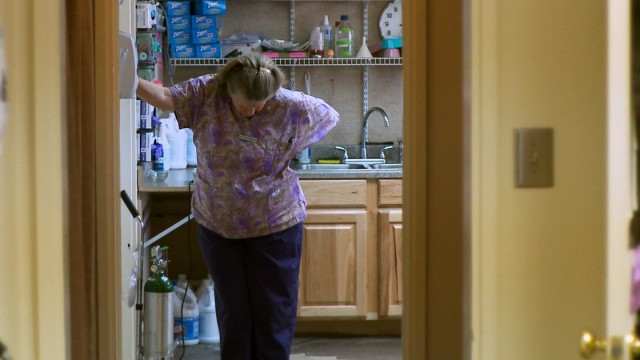
Dr. Susan Robinson has to make difficult choices when deciding whether to perform a late abortion
AFTER TILLER (Martha Shane & Lana Wilson, 2013)
Film Forum, 209 West Houston St., 212-727-8110
Film Society of Lincoln Center, Walter Reade Theater, Elinor Bunin Munroe Film Center, 212-875-5600
Opens Friday, September 20
www.aftertillermovie.com
 In After Tiller, directors and producers Martha Shane and Lana Wilson manage to humanize one of the most contentious, controversial, and complicated issues of our age: late abortion. In May 2009, Dr. George Tiller, who specialized in third-trimester abortions, was assassinated in front of his clinic in Wichita, Kansas. That left only four doctors in the United States who performed late abortions, each of whom had either trained or worked with Dr. Tiller. “It was absolutely no question in any of our minds that we were going to keep on doing his work,” one of those four doctors, Susan Robinson, says in the film. As After Tiller begins, Dr. Robinson works with Dr. Shelley Sella at Southwestern Women’s Options in Albuquerque, New Mexico, Dr. LeRoy Carhart is a former U.S. Air Force colonel who operates the Abortion & Contraception Clinic of Nebraska, and Dr. Warren Hern is director of the Boulder Abortion Clinic in Colorado. Shane and Wilson follow these four dedicated doctors who continue doing their work despite the personal danger associated with their profession, including harassment, murder, assault, and bombings. “When I walk out the door, I expect to be assassinated,” Dr. Hern says. The filmmakers show the doctors in their offices, meeting with women who are requesting late abortions for various reasons; Shane and Wilson also follow the abortion providers into their homes as they go on with their daily lives, offering an intimate portrait of these men and women who are so often called monsters but are firm in their belief that what they are doing is important and absolutely necessary, performing their jobs with care and understanding. However, Dr. Hern wonders if he should stop providing late abortions and just settle down peacefully with his new wife and adopted son, while Dr. Carhart and his wife opt to move out of Nebraska after a law change and meet resistance as they try to move their clinic to Maryland or Virginia.
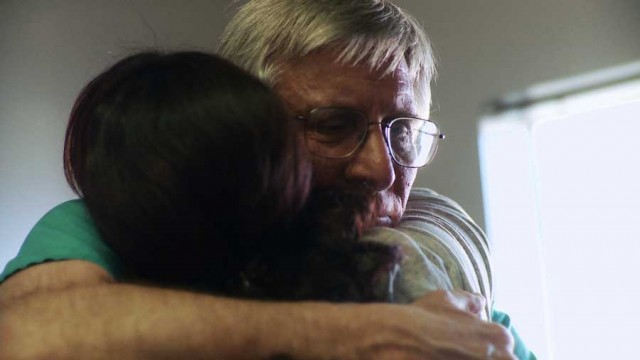
Dr. Warren Hern is one of only four doctors in America who provides late abortions
The film also reveals that deciding to perform a late abortion is often an extremely difficult choice for the doctors as well as the patients and not something the providers do automatically when a woman comes to them. One of the most compelling scenes occurs when Drs. Sella and Robinson have a heart-wrenching disagreement over whether to proceed with a late abortion for a young woman, evaluating whether her reason is valid enough and lamenting that the ability of the woman to tell her story could affect the final decision. It’s a pivotal moment that also brings into focus the concerns of the American people; while less than one percent of the abortions performed in the country occur in the third trimester, the procedure is often the centerpiece of the antiabortion movement, but even pro-choice supporters will find themselves questioning the efficacy of all late abortions. The women come to the doctors for many reasons, ranging from the health of the child to economic situations to admitting that they either didn’t know or refused to accept that they were pregnant until it was too late. “It’s guilt no matter which way you go,” one desperate patient, whose child would be born with severe disabilities and would likely die within a year, tells Dr. Sella. “Guilt if you go ahead and do what we’re doing, or bring him into this world and then he doesn’t have any quality of life.” Although Shane and Wilson include footage of protestors, news reports, and congressional hearings, After Tiller is a powerful, deeply emotional documentary about the doctors and patients who must make impossible choices and live with their decisions for the rest of their lives. The film, which raises fascinating, difficult questions for which there are no easy answers, opens September 20 at Film Forum and the Film Society of Lincoln Center. Shane (Bi the Way) and Wilson will be at Film Forum on September 20-21 at the 8:10 screenings and September 22 at 4:30 to discuss the film; they will also participate in a series of Q&As at Lincoln Center, including September 20 at 7:00 with NARAL Pro-Choice New York, September 21 at 7:00 with the New York Abortion Access Fund, September 22 at 3:00 with Nancy Northup of the Center for Reproductive Rights, and September 26 at 7:00 with Dr. Sara Miller of the Reproductive Health Access Project, in addition to a panel discussion on September 23 at 7:00 with Kassi Underwood of Exhale.
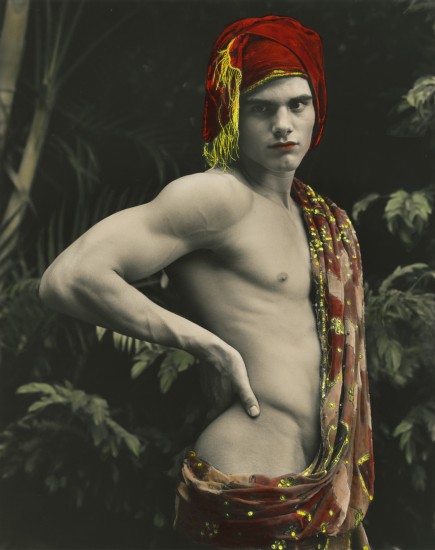
 Fashion photographer Bruce Weber, who directed the seminal Chet Baker doc Let’s Get Lost a quarter century ago, made this fun hodgepodge of still photos, old color and black-and-white footage, and new interviews and voice-over narration back in 2001. You might not know much about Frances Faye, but after seeing her perform in vintage Ed Sullivan clips and listening to her manager/longtime partner discuss their life together, you’ll be searching YouTube to check out a lot more. The film also examines how Weber selects and treats his male models, who are often shot in homoerotic poses for major designers (and later go on to get married and have children). As a special treat, Jan-Michael Vincent’s extensive full-frontal nude scene in Daniel Petrie and Sidney Sheldon’s 1974 Buster and Billie is on display here, as are vintage clips of Sammy Davis Jr., adventurer Sir Wilfred Thesiger, former Vogue editor Diana Vreeland, and Robert Mitchum singing in a recording studio with Dr. John. The film is about model Peter Johnson and Weber as much as it is about the cult of celebrity; Weber gets to chime in on Elizabeth Taylor, Montgomery Clift, Clark Gable, Frank Sinatra, Arthur Miller, and dozens of other famous names and faces. Though an awful lot of fun, the film is disjointed, lacking a central focus, and the onscreen titles, end credits, and promotional postcards are chock-full of typos — perhaps emulating a Chinese takeout menu, hence the film’s title? Chop Suey is screening November 20 at 7:00 as part of Film Forum’s “Bruce Weber” series and will be preceded by Weber’s twelve-minute 2008 short, The Boy Artist; the series continues through November 21 with a 35mm print of Let’s Get Lost, 1987’s Broken Noses, about former Olympian boxer Andy Minsker, 2004’s A Letter to True, a tribute to Weber’s dog, and a compilation of shorts, videos, commercials, and works in progress.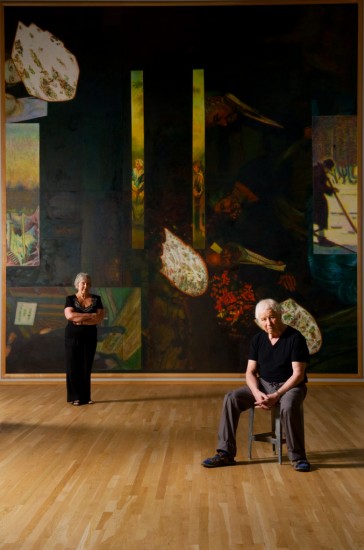
 “Epic and boring,” Russian newspaper Vedomosti wrote in a review of Ilya and Emilia Kabakov’s highly anticipated 2008 Moscow exhibition; the same can be said about Amei Wallach’s documentary about the renowned Russian art couple, Ilya and Emilia Kabakov: Enter Here. Wallach assembled the same team she worked with on 2008’s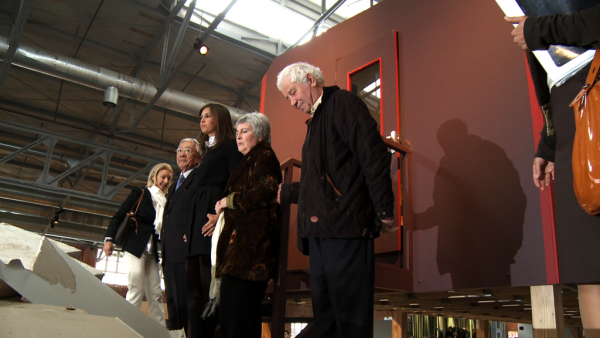
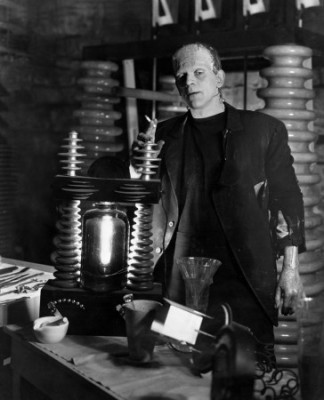
 At the start of James Whale’s Frankenstein, actor Edward Van Sloan, who plays Dr. Waldman in the film, steps out from behind a curtain and tells the audience that what they are about to see “is one of the strangest tales ever told. It deals with the two great mysteries of creation; life and death. I think it will thrill you. It may shock you. It might even horrify you. So, if any of you feel that you do not care to subject your nerves to such a strain, now’s your chance to uh, well — we warned you!” Instead of staying away, people flocked to the theaters, making Frankenstein such a hit that Universal produced a sequel, although it took longer than expected. At the beginning of Whale’s 1935 follow-up, Bride of Frankenstein, Mary Wollstonecraft Shelley (Elsa Lanchester) tells Percy Bysshe Shelley (Douglas Walton) and Lord Byron (Gavin Gordon), “The publishers did not see that my purpose was to write a moral lesson, the punishment that befell a mortal man who dared to emulate god,” letting them know that there was more to her story, picking up where the first movie left off. The Monster (Boris Karloff again, billed only by his last name) has survived the fire, and he is on the loose. Dr. Henry Frankenstein (Colin Clive, reprising his role as the godlike creator) has survived as well and is ready to finally marry his sweetheart, Elizabeth (Valerie Hobson, taking over for an ill Mae Clarke).