Tag Archives: Ennio Morricone

NITEHAWK CABIN FEVER MIDNITE SCREENINGS: THE THING

THE THING

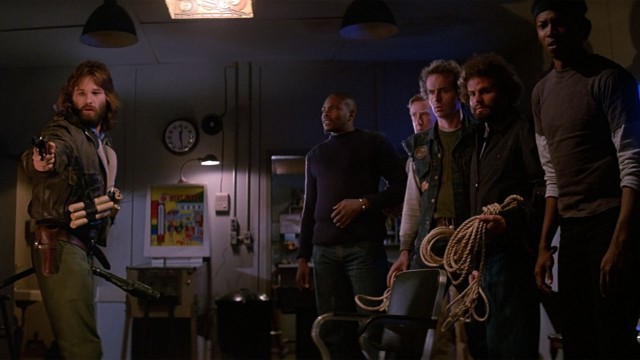
A crew of scientists in Antarctica can’t believe its latest discovery in John Carpenter’s THE THING

THE THING (John Carpenter, 1982)
Nitehawk Cinema
136 Metropolitan Ave. between Berry St. & Wythe Ave.
Friday, February 19, and Saturday, February 20, 12:10 am
Series continues through February 27
718-384-3980
www.nitehawkcinema.com

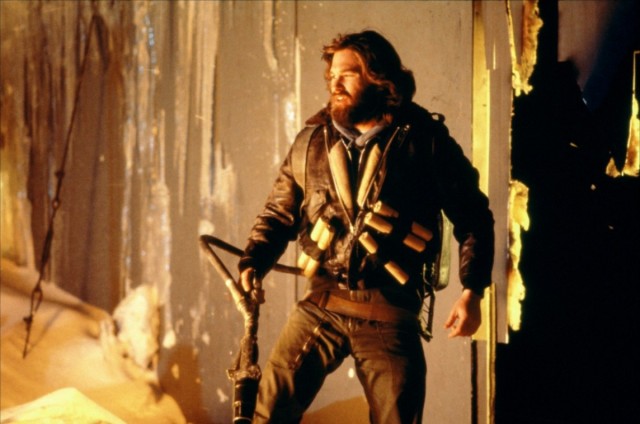
“What were they doing flying that low, shooting at a dog, at us?” meteorologist Bennings (Peter Maloney) asks Dr. Copper (Richard Dysart) after watching a Norwegian helicopter pilot pursue a dog in the Antarctic, at the beginning of John Carpenter’s The Thing. “Stir crazy. Cabin fever. Who knows?” the doc answers, more than justifying Nitehawk Cinema’s inclusion of the cult film in its February Midnite series Cabin Fever. Carpenter’s 1982 remake of Christian Nyby’s 1951 Cold War sci-fi classic, The Thing from Another World, adds touches of Invasion of the Body Snatchers and Alien, with Kurt Russell leading an all-star cast of familiar character actors set up like a Vietnam War platoon. Russell is the cowboy-hat-wearing R. J. MacReady, part of a group of men at U.S. National Science Institute Station 4 in the frozen Antarctic. The crew also includes soft-spoken biologist Dr. Blair (Wilford Brimley), pot-smoking hippie assistant mechanic Palmer (David Clennon), nice guy geophysicist Vance Norris (Charles Hallahan), dedicated dog handler Clark (Richard Masur), funkster cook Nauls (T. K. Carter), assistant biologist Fuchs (Joel Polis), excitable communications officer Windows (Thomas G. Waites), serious station commander M. T. Garry (Donald Moffat), and skeptical chief mechanic Childs (Keith David). Soon some kind of monster from outer space is on the loose, able to disguise itself as other living creatures, making everyone suspicious of one another, the paranoia growing along with the terror and violence.
THE THING

Kurt Russell fights a foreign terror in John Carpenter’s remake of Cold War classic

Based on John W. Campbell Jr.’s novella Who Goes There?, The Thing was the third of former child star Russell’s four films with Carpenter, following Elvis and Escape from New York and preceding Big Trouble in Little China and Escape from L.A. The film was shot by longtime Carpenter and Robert Zemeckis cinematographer Dean Cundey (Halloween, Back to the Future) and written by Bill Lancaster, Burt’s son, who died in 1997 at the age of forty-nine after penning only three scripts: the first two Bad News Bears movies along with The Thing. Carpenter composed the creepy, pulsating music for most of his films, but he got spaghetti Western genius Ennio Morricone to write the score this time around. (Carpenter is about to set out on his first-ever concert tour, coming to New York City in July, playing music from his films as well as songs from his recent albums.) Carpenter’s wife at the time, Adrienne Barbeau, is the voice of the fantastically old-fashioned Chess Wizard computer game that frustrates MacReady. The special effects, by Rob Bottin (The Fog, RoboCop) and Oscar winner Stan Winston (Aliens, Jurassic Park), hold up pretty well, as does the general feeling of peril, although, like with many Carpenter films, the plot doesn’t always make sense. But Carpenter is nothing if not a master of dark mood, and he nails it again in this thriller. The first of Carpenter’s Apocalypse Trilogy (to be followed by Prince of Darkness and In the Mouth of Madness), The Thing is being shown February 19-20 at 12:10 am as part of Nitehawk Cinema’s February Midnite: Cabin Fever series, which concludes February 26-27 with Stanley Kubrick’s The Shining.

AN AUTEURIST HISTORY OF FILM: DAYS OF HEAVEN

DAYS OF HEAVEN

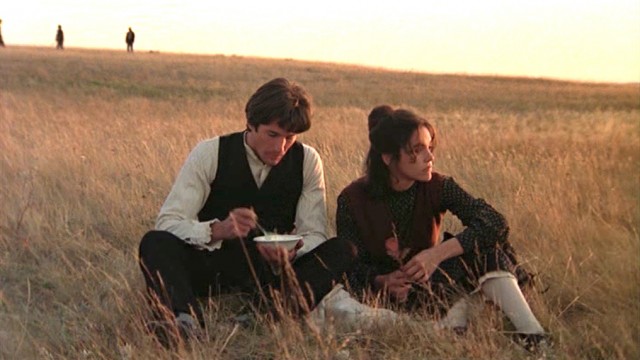
Bill (Richard Gere) and Abby (Brooke Adams) try to get by in tough times in Terrence Malick’s DAYS OF HEAVEN

DAYS OF HEAVEN (Terrence Malick, 1978)
MoMA Film, Museum of Modern Art
The Lewis B. and Dorothy Cullman Education and Research Building
4 West 54th St. between Fifth & Sixth Aves.
August 6-8, 1:30
Tickets: $12, in person only, may be applied to museum admission within thirty days, same-day screenings free with museum admission, available at Film and Media Desk beginning at 9:30 am
212-708-9400
www.moma.org

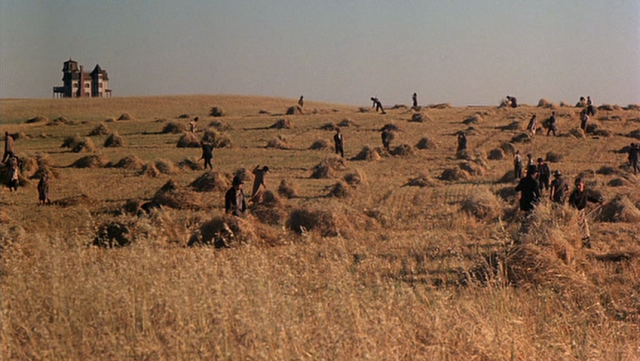
Justifiably recognized as one of the most beautiful films ever made, writer-director Terrence Malick’s sophomore effort, Days of Heaven, is a visually breathtaking tale of love, desperation, and survival in WWI-era America. After accidentally killing his boss (Stuart Margolin) in a Chicago steel mill, Bill (Richard Gere) immediately flees to the Texas Panhandle with his girlfriend, Abby (Brooke Adams), and his much younger sister, Linda (Linda Manz). Because they are unmarried, Bill and Abby pretend to be brother and sister — evoking the biblical story of Abraham introducing his wife Sarah as his sibling — and get a job working in the wheat fields owned by a reserved, possibly ill farmer (Sam Shepard) who is instantly smitten with Abby. Soon a complex love triangle develops in which money, class, and power play a key role. As beautiful as the main characters are — Gere and Shepard particularly are shot in ways that emphasize their tender but rugged good looks — they are outshone by the gorgeous landscapes and sunsets photographed by Nestor Almendros (who won an Oscar for Best Cinematography) and Haskell Wexler, as well as Jack Fisk’s stunning art direction, all of which were directly inspired by Edward Hopper’s “House by the Railroad” and Andrew Wyeth’s “Christina’s World,” among other paintings. Like Stanley Kubrick’s Barry Lyndon, freezing nearly any frame will produce an image that could hang in a museum.
DAYS OF HEAVEN

The award-winning DAYS OF HEAVEN is one of the most beautiful-looking movies ever made

The soundtrack is epic as well, composed by Ennio Morricone along with songs by Leo Kottke and Doug Kershaw (who plays the fiddler). It took two years for Malick and editor Bill Weber to assemble the vast amount of footage they shot into a comprehensible story, helped by the late addition of Manz’s character’s voice-over narration, but the results were well worth all of the time and effort. Days of Heaven came five years after Malick’s breakthrough debut, Badlands, and it would be another twenty years before his next film, The Big Red One, then seven more until 2005’s The New World. Finally, this master auteur is on a roll, already in the midst of his fifth feature project this decade. Days of Heaven is screening August 6-8 at 1:30 as part of MoMA’s ongoing series “An Auteurist History of Film,” which continues August 13-15 with Francis Ford Coppola’s Apocalypse Now Redux and August 20-22 with Martin Scorsese’s Raging Bull.

TICKET ALERT: ENNIO MORRICONE AT BARCLAYS CENTER

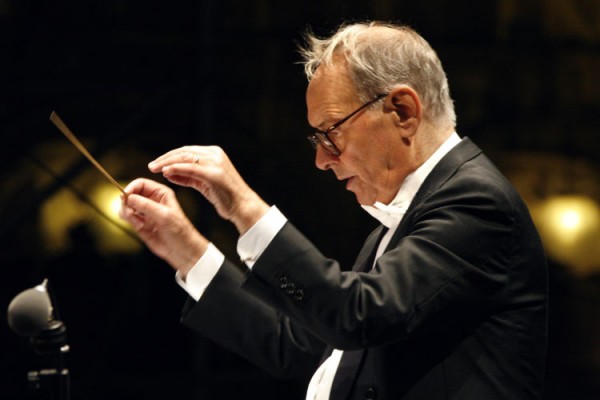
Tickets have just gone on sale to see movie maestro Ennio Morricone at Barclays Center next March

Tickets have just gone on sale to see movie maestro Ennio Morricone at Barclays Center next March

THE MUSIC THE MOVIES THE LEGEND: ENNIO MORRICONE US TOUR 2014
Barclays Center
620 Atlantic Ave.
Sunday, March 23, $80-$355, 7:00
917-618-6700
www.barclayscenter.com
www.enniomorricone-usa-2014.com

Maestro Ennio Morricone will be performing in New York City for the first time in more than six years, leading an orchestra and choir of more than two hundred on March 23 at Barclays Center in Brooklyn. Born in Rome in 1928, the composer of such classic soundtracks as Once Upon a Time in the West, The Battle of Algiers, The Mission, Cinema Paradiso, and The Good, the Bad, and the Ugly will conduct pieces from throughout his long and storied career, which includes five Oscar nominations (and an honorary Academy Award), three Grammys, and myriad other international honors. His U.S. “tour” consists of two appearances, March 20 at the Nokia Theatre in Los Angeles, followed by the March 23 show in Brooklyn. Tickets are now on sale for this rare opportunity to see one of cinema’s all-time greats in action.

JOHN ZORN SELECTS: INVESTIGATION OF A CITIZEN ABOVE SUSPICION

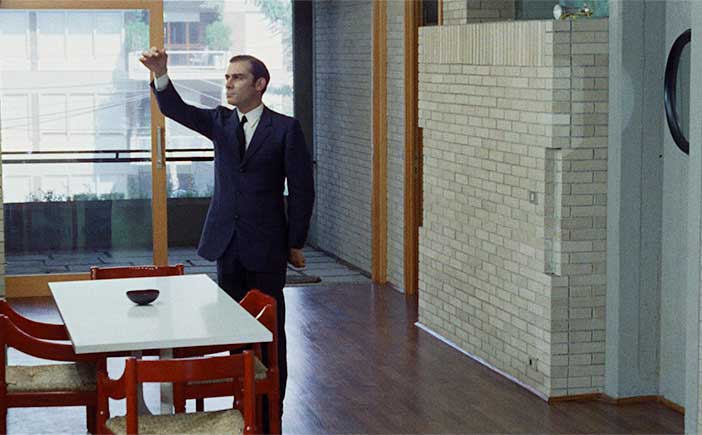
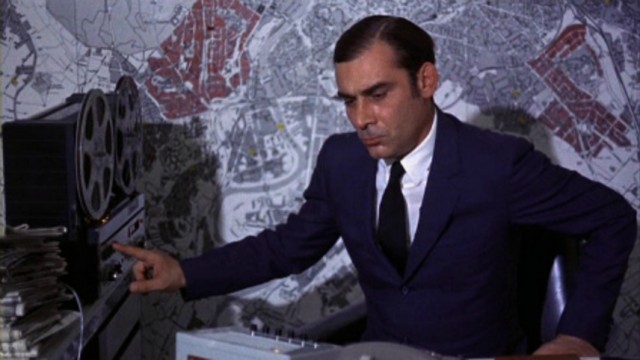
Gian Maria Volontè stars as a man seemingly above the law in Elio Petri’s 1970 Italian absurdist farce

INVESTIGATION OF A CITIZEN ABOVE SUSPICION (INDAGINE SU UN CITTADINO AL DI SOPRA DI OGNI SOSPETTO) (Elio Petri, 1970)
Anthology Film Archives
32 Second Ave. at Second St.
Sunday, September 15, 9:00, and Friday, September 27, 9:00
Series runs September 12-30
212-505-5181
www.anthologyfilmarchives.org

As Investigation of a Citizen Above Suspicion begins, a man (Gian Maria Volontè) kills a woman (Florinda Bolkan) in the midst of some rather kinky sex. The man then goes out of his way to leave behind evidence tying him to the brutal crime, including making sure he is spotted as he exits the woman’s building complex. It is soon revealed that he is the former head of homicide in Rome who has just been promoted to chief of political intelligence, his victim a married lover of his who enjoyed acting out real murder cases with him. “How will you kill me this time?” she asks in a flashback, not knowing where their games will ultimately lead. For the rest of Elio Petri’s (A Quiet Place in the Country) absurdist farce, the man practically dares his colleagues to catch him as he continues to build a case against himself and rails against criminal and political terrorists and subversives in neo-fascist romps, filmed in daring close-up, that emphasize the importance of keeping the masses repressed. Shot in broad colors and featuring a playful score by Ennio Morricone, Investigation of a Citizen Above Suspicion is an enticing police procedural — in which the culprit is the man in charge of the case — as well as a satiric look at the state of Italian politics in 1970, as social unrest and sexual freedom grew throughout Europe and America. “Repressing all those evils is to cure them,” the man declares in a fiery speech to his department. Volontè (A Fistful of Dollars, For a Few Dollars More) clearly has a ball as a man who either wants to be caught or is out to prove that he is indeed above the law, Petri carefully keeping his motive ambiguous in this wonderful black comedy.

John Zorn chose INVESTIGATION OF A CITIZEN ABOVE SUSPICION for series because of its playful Ennio Morricone score

John Zorn chose INVESTIGATION OF A CITIZEN ABOVE SUSPICION for series because of its playful Ennio Morricone score

Winner of the Oscar for Best Foreign Language Film and the Grand Prize at Cannes, Investigation of a Citizen Above Suspicion is screening September 15 and 27 as part of the Anthology Film Archives series “John Zorn Selects,” comprising a dozen works chosen by the master experimental musician and Anthology composer-in-residence on the occasion of his sixtieth birthday, focusing on the soundtracks. “Morricone has written so many dynamic and brilliant scores in his huge career (often for Leone) but few have had as original and striking an orchestration as this one,” Zorn explains about Investigation. “The jew’s harp takes a major role here, adding, as so often is the case with Ennio’s scores, a feeling of irony and commentary on the sardonic vibe and black humor of the story. After recording The Big Gundown, my Morricone tribute album, Walter Hill called me in to score one of his Hollywood films. What he wanted was IRONY – which he asked for a bit too often in the form of Cyro Baptista’s cuica ‘laughing’ at the onscreen action. I couldn’t do it then and I can’t do it now. I have no idea why people think they hear ‘irony’ or ‘sarcasm’ in my work. There is NONE and never has been. My score was junked and saved me from being offered further work in the Hollywood dream factory.” The festival runs through September 30 and includes such other films as Roy William Neill’s Frankenstein Meets the Wolf Man, Roman Polanski’s Chinatown, Sidney J. Furie’s The Ipcress File, and Irving Lerner’s Murder by Contact. From September 20 to 28, Anthology will present “A Pocketful of Firecrackers: The Film Scores of John Zorn,” consisting of such films as Marc Levin’s Protocols of Zion, Michael Glawogger’s Workingman’s Death, and Joseph Dorman’s Sholom Aleichem: Laughing in the Darkness, but the real highlight are two nights of Zorn performing live to short films.

DJANGO UNCHAINED

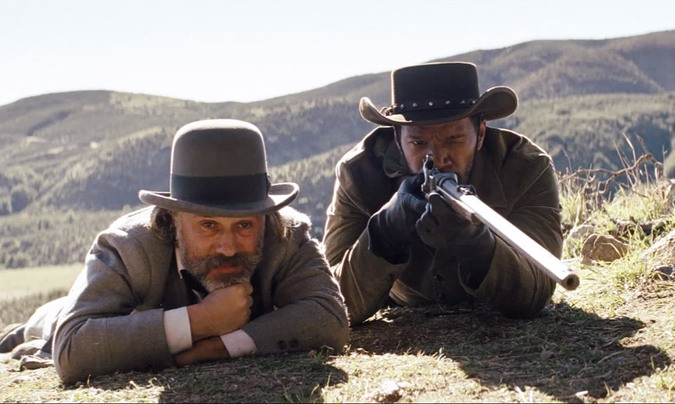
Oscar winners Christoph Waltz and Jamie Foxx spot a target in Quentin Tarantino’s wild take on the spaghetti Western

DJANGO UNCHAINED (Quentin Tarantino, 2012)
Opened Tuesday, December 25
www.unchainedmovie.com

Multigenre master Quentin Tarantino, who as writer-director has taken on the gangster film (Reservoir Dogs), pulp movies (Pulp Fiction), Blaxploitation (Jackie Brown), the martial arts (Kill Bill, Vols. I & II), grindhouse (Death Proof), and WWII (Inglourious Basterds) with nearly universally acclaimed results, has now turned his attention to the spaghetti Western, resulting in yet another awesome achievement. A Southern Western that in many ways is the black version of Inglourious Basterds, Django Unchained is set immediately before the Civil War, as bounty hunter and former dentist King Schultz (Oscar winner Christoph Waltz) obtains a slave named Django (Oscar and Grammy winner Jamie Foxx) in order to track down the wanted Brittle brothers (Cooper Huckabee, Doc Duhame, and M. C. Gainey) and collect a substantial reward. Schultz has promised Django his freedom and some cash in return for his assistance, but the two stick together as they go off in search of Django’s wife, Broomhilda Von Shaft (Kerry Washington), who was brutally taken away from him and now works on the Candyland plantation owned by the slick, smooth Calvin J. Candie (Leonardo DiCaprio) and run by an Uncle Tom slave known as Stephen (Samuel L. Jackson). As with most Tarantino films, things get a little violent by the end, an operatic barrage of blood and guts that would make Sam Peckinpah proud. Tarantino, who appeared in Takashi Miike’s 2007 Sukiyaki Western Django and plays a small part here as well, continues his reign as the King of the Revenge Film with Django Unchained, another movie that is, at its heart, another celebration of movies themselves. Tarantino masterfully toys with cinematic conventions, tongue often firmly in cheek, evoking a stream of Western classics, including The Wild Bunch, The Searchers, Blazing Saddles, and, of course, Sergio Corbucci’s 1966 Django — he even gives a small part to Franco Nero, who played the title role in the Corbucci flick. Tarantino also adds beautifully absurd humor, primarily in the form of a riotous scene with masked marauders, a perhaps overly liberal use of the N-word, a vast array of familiar faces rounding out the cast (Don Johnson, Dennis Christopher, Bruce Dern, Tom Wopat, James Russo, Jonah Hill, Robert Carradine, and James Remar inexplicably in two roles), and, as usual, a killer soundtrack, ranging from new music by Ennio Morricone, John Legend, and Anthony Hamilton to a spectacularly out-of-place song by the late Jim Croce. He even references German literature in the form of the famous myth of Siegfried and Brunhilde. Yes, the film is too long, too violent, and too filled with stereotypes, and the story comes together a little too easily, but heck, it’s still about as much fun as you’re gonna have at the movies this year.

INVESTIGATION OF A CITIZEN ABOVE SUSPICION

Gian Maria Volontè stars as a man seemingly above the law in Elio Petri’s 1970 Italian absurdist farce

INVESTIGATION OF A CITIZEN ABOVE SUSPICION (INDAGINE SU UN CITTADINO AL DI SOPRA DI OGNI SOSPETTO) (Elio Petri, 1970)
Film Forum
209 West Houston St.
September 28 – October 4
212-727-8110
www.filmforum.org

As Investigation of a Citizen Above Suspicion begins, a man (Gian Maria Volontè) kills a woman (Florinda Bolkan) in the midst of some rather kinky sex. The man then goes out of his way to leave behind evidence tying him to the brutal crime, including making sure he is spotted as he exits the woman’s building complex. It is soon revealed that he is the former head of homicide in Rome who has just been promoted to chief of political intelligence, his victim a married lover of his who enjoyed acting out real murder cases with him. “How will you kill me this time?” she asks in a flashback, not knowing where their games will ultimately lead. For the rest of Elio Petri’s (A Quiet Place in the Country) absurdist farce, the man practically dares his colleagues to catch him as he continues to build a case against himself and rails against criminal and political terrorists and subversives in neo-fascist romps, filmed in daring close-up, that emphasize the importance of keeping the masses repressed. Shot in broad colors and featuring a playful score by Ennio Morricone, Investigation of a Citizen Above Suspicion is an enticing police procedural — in which the culprit is the man in charge of the case — as well as a satiric look at the state of Italian politics in 1970, as social unrest and sexual freedom grew throughout Europe and America. “Repressing all those evils is to cure them,” the man declares in a fiery speech to his department. Volontè (A Fistful of Dollars, For a Few Dollars More) clearly has a ball as a man who either wants to be caught or is out to prove that he is indeed above the law, Petri carefully keeping his motive ambiguous in this wonderful black comedy. Winner of the Oscar for Best Foreign Language Film and the Grand Prize at Cannes, Investigation of a Citizen Above Suspicion will be screening in a new DCP restoration at Film Forum September 28 through October 4, with Sony restoration expert Grover Crisp on hand to introduce the 7:30 screening on opening night.

SPAGHETTI WESTERNS: ONCE UPON A TIME IN THE WEST

Charles Bronson was perhaps never more likable than in ONCE UPON A TIME IN THE WEST

ONCE UPON A TIME IN THE WEST (Sergio Leone, 1968)
Film Forum
209 West Houston St.
Wednesday, June 20, 3:05
Series runs through June 21
212-727-8110
www.filmforum.org

One of the grandest Westerns ever made, this Sergio Leone masterpiece features an all-star cast that includes Henry Fonda, Charles Bronson, Jason Robards, Woody Strode, Keenan Wynn, Lionel Stander, and Jack Elam, all enhanced by Ennio Morricone’s epic score and Tonino delli Colli’s never-ending extreme close-ups. (The opening shot of a fly crawling over Elam’s grimy face is unforgettable.) Fonda was never more evil, and Bronson was perhaps never more likable. The film is a huge step above most of Leone’s spaghetti Westerns, partially because of the cast, but also because of the script help he got from Italian horrormeister Dario Argento and iconic filmmaker Bernardo Bertolucci. Once Upon a Time in the West is screening on June 20 as part of Film Forum’s Spaghetti Westerns series, which concludes this week with such films as The Ruthless Four, Hellbenders, Death Rides a Horse, and The Good, the Bad and the Ugly.