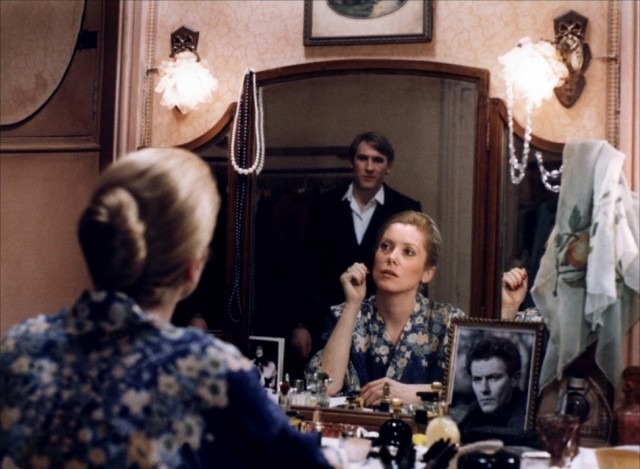
Catherine Deneuve and Gérard Depardieu star in François Truffaut’s gripping WWII melodrama THE LAST METRO
CINÉSALON: THE LAST METRO (LE DERNIER METRO) (François Truffaut, 1980)
French Institute Alliance Française, Florence Gould Hall
55 East 59th St. between Madison & Park Aves.
Tuesday, October 27, $14, 4:00 & 7:30 (later screening introduced by Olivia Bransbourg)
212-355-6100
www.fiaf.org
 FIAF’s CinéSalon series “Theater & Cinema” concludes October 27 with François Truffaut’s powerful Oscar-nominated WWII melodrama, The Last Metro. Set in Vichy France during the German occupation, the film takes place in and around the Théâtre Montmartre, which has been taken over by movie-star actress (and non-Jew) Marion Steiner (Catherine Deneuve) after her husband, Jewish theater director Lucas Steiner (Heinz Bennent), has apparently escaped the Nazi regime. But in fact Lucas is hiding out in the theater’s basement, where he has translated a Norwegian play, aptly titled Disappearance, and is directing it from below. The cast and crew of Disappearance include ladies’ man Bernard Granger (Gérard Depardieu) as Marion’s love interest; costume designer Arlette Guillaume (Andréa Ferréol), who refuses Bernard’s advances because of a secret reason; young actress Nadine Marsac (Sabine Haudepin), who will do just about anything to get parts; stage manager Raymond Boursier (Maurice Risch), who is deeply dedicated to the theater; and Jean-Loup Cottins (Jean Poiret), the stand-in director for Lucas. Only Marion knows where Lucas is, but danger grows when critic, publisher, and Nazi collaborator Daxiat (Jean-Louis Richard) starts sniffing around a little too much.
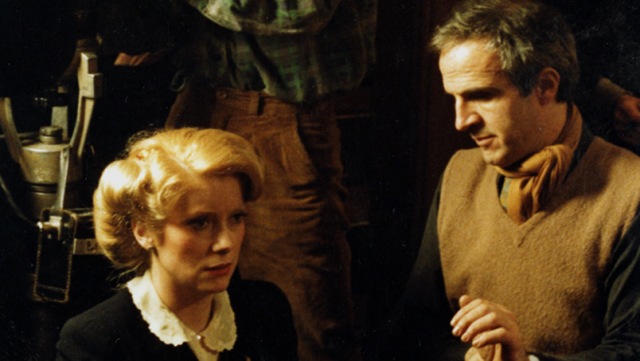
Catherine Deneuve on-set with director François Truffaut during the making of THE LAST METRO
Genre lover Truffaut reaches deep into his cinematic bag of tricks in The Last Metro, paying tribute to film noir, romantic melodrama, war movies, and even musicals as he references Casablanca, The Phantom of the Opera, The Diary of Anne Frank, Gaslight, To Be or Not to Be, The Golden Coach, Notorious, and Cabaret. He takes on anti-Semitism, anti-homosexuality, and anti-humanism in general while setting up a compelling love triangle that is echoed in the play-within-a movie, which is staged on a dramatic, surreal pink Expressionistic set. Depardieu and Deneuve, who went on to make such other films together as Claude Berri’s Fort Saganne, André Téchiné’s Changing Times, and François Ozon’s Potiche, might not be Bogart and Bergman, but they are a magnetic duo, Depardieu’s hulking, brutishly handsome presence dominating confined spaces, Deneuve’s refined, radiant beauty glowing amid a predominantly drab palette. The film uses the metaphor of theater as a way to escape reality, whether on an individual basis or during an international crisis, but of course Truffaut is also citing film as its own escape, a place where people flock to when times are both good and bad. The Last Metro — the title refers to the final train of the night, which passengers must catch in order to not break the strict curfew — is a beautifully made picture, the second in Truffaut’s planned trilogy of films about entertainment, following 1973’s Day for Night and preceding the never-finished L’Agence Magique. Winner of a 1990 César for Best Film of the 1980s in addition to ten previous Césars, including Best Film, Best Director (Truffaut), Best Actor (Depardieu), Best Actress (Deneuve), Best Cinematography (Nestor Almendros), Best Music (Georges Delerue), Best Production Design (Jean-Pierre Kohut-Svelko), and Best Writing (Truffaut and Suzanne Schiffman), The Last Metro is screening at 4:00 and 7:30 on October 27 in Florence Gould Hall; the later show will be introduced by French publisher and fragrance designer Olivia Bransbourg.
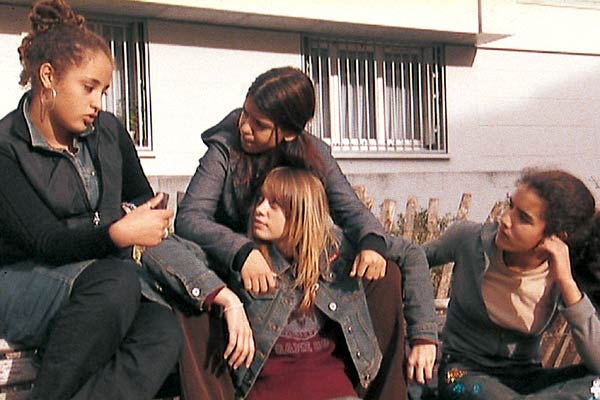


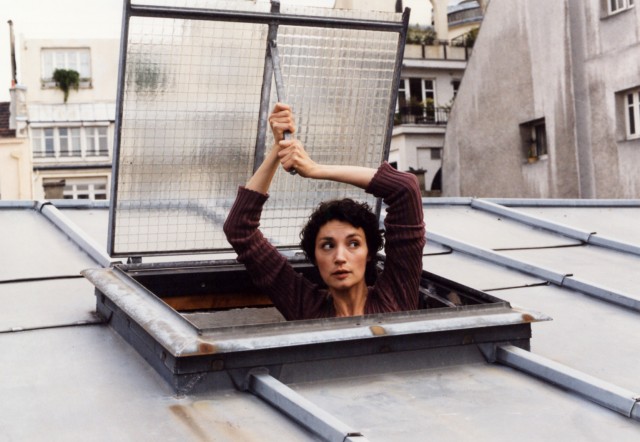
 Jacques Rivette’s Va Savoir is a long, talky French movie about very beautiful, very complicated, sex-crazed men and women — and it just might be the master filmmaker’s crowning glory, a magnificent masterpiece that deserved its slot as the New York Film Festival’s opening night selection back in 2001. This erotically charged, very funny drama is set around a traveling theater company’s return to Paris to put on Pirandello’s As You Desire Me in the original Italian. Ugo (Sergio Castellitto), the director and costar of the play, is romantically involved with Camille (Jeanne Balibar), the lead actress, who visits her former lover Pierre (Jacques Bonnaffé), a philosopher with a thing for Heidegger, who is now living with Sonia (Marianne Basler), a dance instructor who is being chased by Arthur (Bruno Todeschini), a ne’er-do-well whose half sister, Do (Hélène de Fougerolles), has taken a liking to Ugo and offers to help him find an unpublished ghost play by Carlo Goldini, which her mother (Catherine Rouvel) just might have. Every minute of this film is pure magic, and at the center of it all is the fantastique Camille, an instinctual, graceful actress whom everyone — men and women — fall in love with, played by the fantastique, instinctual, graceful Balibar, whom audiences will fall in love with as well. French film enthusiasts should watch for Claude Berri in a small role. Lovingly photographed by William Lubtchansky and edited by his wife, Nicole Lubtchansky, Va Savoir is screening at 4:00 and 7:30 on September 29 in FIAF’s CinéSalon series “Theater & Cinema”; the later show will be introduced by Mathieu Bauer. (FIAF is screening the 154-minute version, not the 220-minute director’s cut.) The Tuesday festival continues through October 27 with such other stage-related dramas as Olivier Assayas’s Clouds of Sils Maria, Arnaud Desplechin’s Esther Kahn, Abdellatif Kechiche’s Games of Love and Chance, and François Truffaut’s The Last Metro.
 For his third stage adaptation in ten years, following 1994’s Death and the Maiden and 2011’s Carnage, Roman Polanski created a marvelous, multilayered examination of the intricate nature of storytelling, consumed with aspects of doubling. David Ives’s Tony-nominated play,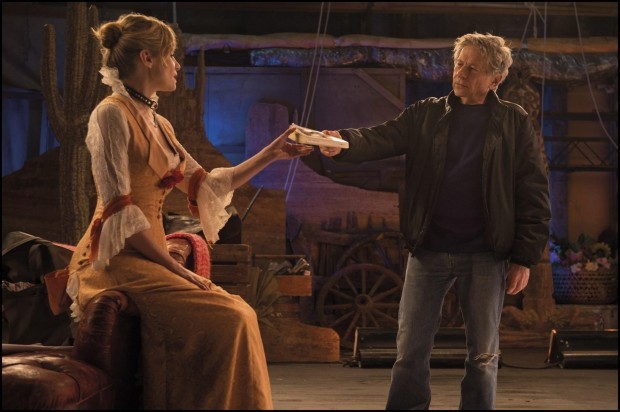
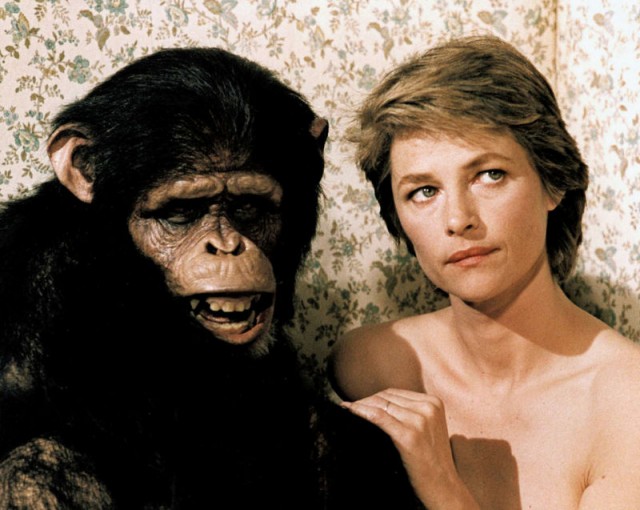
 It’s rather hard to tell how much Japanese auteur Nagisa Ôshima is monkeying around with his very strange 1986 movie, Max, Mon Amour, a love story between an intelligent, beautiful woman and a chimpanzee. The director of such powerful films as Cruel Story of Youth; Merry Christmas, Mr. Lawrence; Taboo; and In the Realm of the Senses seems to have lost his own senses with this surprisingly straightforward, tame tale of bestiality, a collaboration with master cinematographer Raoul Coutard, who shot seminal works by Truffaut and Godard; screenwriter Jean-Claude Carrière, who has written or cowritten nearly ninety films by such directors as Pierre Étaix (who plays the detective in Max), Luis Buñuel, Volker Schlöndorff, Philippe Garrel, and Miloš Forman; and special effects and makeup artist extraordinaire Rick Baker, the mastermind behind the 1976 King Kong, the Michael Jackson video Thriller, Ratboy, Hellboy, and An American Werewolf in London, among many others. Evoking Bedtime for Bonzo and Ed more than Planet of the Apes and Gorillas in the Mist, Max, Mon Amour is about a well-to-do English family living in Paris whose lives undergo a rather radical change when husband Peter Jones (Anthony Higgins) catches his elegant wife, Margaret (Charlotte Rampling), in bed with a chimp. Margaret insists that she and the chimp, Max, are madly in love and somehow convinces Peter to let her bring the sensitive yet dangerous beast home, which confuses their son, Nelson (Christopher Hovik), and causes their maid, Maria (Victoria Abril), to break out in ugly rashes. Peter, a diplomat, works for the queen of England, so as he prepares for a royal visit to Paris, he also has to deal with this new addition to his ever-more-dysfunctional family.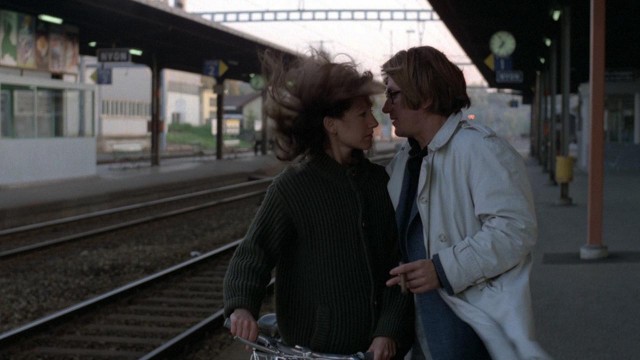
 In 1980, Jean-Luc Godard told journalist Jonathan Cott, “When you have a first love, a first experience, a first movie, once you’ve done it, you can’t repeat it,” the French auteur said about his latest film, Every Man for Himself, which he considered his “second first” film. “If it’s bad, it’s a repetition; if it’s good, it’s a spiral. It’s like when you return home — to mountains and lakes, in my case — you have a feeling of childhood, of beginning again. But in films, it’s very seldom that you have the opportunity to make your first film for the second time.” For Godard, whose real first film was 1960’s Breathless and who went on to make such other avant-garde masterworks as Contempt, Pierrot le Fou, Masculine Feminine, and Two or Three Things I Know About Her, Every Man for Himself might have been somewhat of a return to narrative, but only as Godard can do it. He still plays with form and various technological aspects, including a fascination with slow motion and an unusual, often very funny use of incidental music, and his manner of episodic storytelling would not exactly be called traditional. Sometimes it’s good, and sometimes it’s bad. Jacques Dutronc stars as mean-spirited, self-obsessed Swiss television director Paul Godard, who has recently broken up with his girlfriend, Denise Rimbaud (Nathalie Baye), who wants to leave their apartment in the city for the idyllic greenery of the country. (Yes, the characters have such names as Godard and Rimbaud, and the voice of Marguerite Duras shows up.) Paul then meets a prostitute, Isabelle Rivière (Isabelle Huppert), who is interested in Paul and Denise’s apartment, planning on bettering her life even as she still must submit to the whims of her clients, including a businessman who orchestrates a strange orgy that would make Secretary’s James Spader proud.